Members Area Logout

Obituary: Vale “The Maestro” Kerry McGlynn – Guru, Mentor, Friend and King of Cool

By Brett Free

If ever a man was in his element – in his “zone” – it was Kerry McGlynn at the Main Bar of the FCC during the Friday Night Swill.

This is not what defined “Maestro McGlynn” as a person – far from it. But this is where Kerry brought to bear, on a regular basis, all the elements that made him such a “Master of the Dark Arts” where government PR, off-record chats, and background briefings “between us girls” met the hard-nosed, cynical coalface of Hong Kong’s local and international press corps.

Kerry often quipped that he worked for the Ministry of Truth. This always elicited loud guffaws, as well as a nod and a wink from those who got the joke. This was Kerry’s clever way of disarming those he met – a self-deprecating nod to the fine line that ex-hacks like himself had to walk to fulfil the role of a “government spokesman” while engaging the media in a meaningful way.

And it worked. After all, someone who took the mickey out of himself wasn’t your bog-standard government spinmeister – he was more like “one of us”, an ex-journo who understood the media and knew he had to earn their trust and respect. And that he did in large measure.

Kerry’s Friday night forays epitomised his reputation as a bloke that everyone seemed to know or wanted to meet and was genuinely happy to see.

Within seconds of entering the Club, Kerry was talking to someone. Sometimes in the foyer, or on the steps leading to the bar. The Snug was a fertile ground for engagement – though for just a “quiet” word or two. In the Main Bar – left, right and centre – Kerry had spotted someone, or someone had spotted Kerry, and there ensued a quick chat, a bit of banter, a “call me” or “talk to you later” and plenty of laughs. Everyone loved Kerry’s laugh, it was contagious.  

For those waiting for him at the bar, Kerry’s arrival was always noticed but the big question was: When would he finally arrive? It was often 15 or 20 minutes before “K”, “K-ster” or  “Kerrance” as he was known to different friends, had run the gauntlet of correspondents, contacts, confidantes and acquaintances before plonking down his card, opening a tab, and starting a session with a cleansing Prosecco before settling down to his regular Pinot Grigio (Members pour). And then, holding court for the rest of the night.

Front desk staff always greeted “Mr McGlynn” with a smile and a warm welcome, as did staff all over the Club and his regular haunts such as the Hong Kong Cricket Club. Kerry didn’t just say hello – he knew most staff by name, asked how they were, what they were doing, and how their families were going.

This genuine warmth and interest in people was a trait that endeared Kerry to all he met – from the small potatoes to the “grown ups” he advised in government and, later, business circles.

His silky-smooth voice would put people at ease, whether a young colleague needing calm reassurance, or a loh baan or taipan seeking advice on a thorny communications conundrum.  

To those who worked with him, Kerry was indeed the “guru”, the Prince of PR, the King of Cool and the Sultan of Suave to boot. He was approachable, inquisitive, widely read, and possessed a razor-sharp news sense. He was humble, kind, empathetic, accommodating and fair – he looked out for the little guys and gals – but also a tough task master when it came to the standards required to perform at a high level in the PR world. Rarely critical or negative, Kerry led by example, set the bar high and then did what he could to lift his team.  

He always provided honest, unvarnished advice, even if those he was briefing didn’t want to hear it. When Kerry spoke, people listened – not because they had to, but because they wanted to hear what he had to say.

Kerry’s work ethic, sense of a“fair go” and strong desire to chart his own course were shaped by his upbringing in a large, working-class Irish Catholic family in Sydney’s tough inner west. He dropped out of school aged 15 and eventually scored a job as a copy boy on the Daily Mirror. He landed a prized cadetship on his 17th birthday in 1958.

Kerry cut his teeth in the highly competitive Sydney media scene at a time when journos worked hard and played even harder. In his heart, he was always a newspaper man.    

In 1963, aged just 22, he upped stumps and headed to the U.K. to work on Fleet Street for Australian Consolidated Press. It was in the U.K. that he met the love of his life, Jenny. Realising that she was “the one”, they married in Bournemouth in 1965. They returned to Sydney in 1968, where Kerry worked for Sydney’s The Daily Telegraph and Sunday Telegraph.

Kerry with wife Jenny and Harold the Giraffe, the much-loved LEAP Mascot

He joined the Government Information Services (GIS) as a direct recruit Senior Information Officer in 1974. After just six years, he was posted to the London Office in 1980 for a two-and-a-half-year stint to help raise Hong Kong’s profile ahead of the Handover negotiations. This was the prime overseas posting in those days because of the link it played between Whitehall and the Hong Kong Government.  

At the end of 1982 Kerry returned to Hong Kong to work in the-then Public Relations Division responsible for monitoring local and international news coverage on Hong Kong and providing a pithy summary of key issues and coverage to government leaders at “morning prayers” every day at 8:00 am.

Within a decade of starting at GIS, Kerry was promoted to Assistant Director in February 1984 – a stellar rise considering the norm in those days was at least five years in each rank of Senior, Principal and Chief Information Officer before being considered for testing as a Directorate Officer. As ever, Kerry was ahead of the game.

Kerry defied the norms again in 1987 when appointed head of the Hong Kong Economic and Trade Office in New York (NYETO). These overseas postings were and still are jealously guarded by the Administrative Officer (AO) grade, so Kerry’s highly unusual posting did not go unnoticed. He seized the opportunity and challenge to represent the “New York of the East” in the Big Apple itself. His proactive approach and engagement of media, political and business contacts in New York and beyond – coupled with his natural charm and love of Hong Kong – was a benchmark for such postings.

The last Governor’s arrival in July 1992 heralded a seismic shift in the way the UK chose to handle the transition to 1997 – and opened the door for Kerry to assume a role that would coalesce all he had learned in 37 years of journalism and government PR.

Kerry’s  appointment as Chris Patten’s Press Secretary in 1993 gave full play to his potential and knowledge as a trusted and vital member of the Governor’s “inner circle” of political aides and advisers, the likes of which Hong Kong had never seen. Kerry was in his element and thrived – not without its stresses and strains. But this is where he was always meant to be and wanted to be, in the thick of the action.

Chris Patten and Kerry

Patten’s modus operandi as a seasoned politician ensured that Kerry, his main connection to the media, was in the loop on all matters big and small. This trust and access enabled Kerry to speak with authority to local and foreign press – and contribute strategically in meetings with the government’s top echelon. Kerry remained close friends with Patten and wife Lavender after 1997, and rumour has it that Patten even adopted Kerry’s signature fashion quirk of wearing non-matching socks.     

After Patten’s departure, Kerry returned to the Information Services Department as DDO – Deputy Director (Overseas) – responsible for Hong Kong’s international media, promotion, marketing and engagement with international stakeholders such as chambers of commerce, the HKTDC and the HKTB.

It is a mark of his foresight that while still at Government House – with all that was going on in the run up to 1 July, 1997 – Kerry turned his mind to how Hong Kong might be positioned and promoted after the reversion of sovereignty. This was the genesis of BrandHK, but the Asian financial crisis in 1998 put it on the back burner for a few years. “Asia’s World City” was eventually launched with considerable fanfare in May 2001.

Kerry also commissioned workshops at the HKCEC for hundreds of senior officials to help them understand the thinking behind BrandHK, and reinforce the notion that everyone had a role to play in Hong Kong’s positioning as Asia’s World City. Again, another first.  

Post-97 Kerry’s talent and skills as a storyteller and speech writer were put to good use by Anson Chan and Donald Tsang, the two most senior officials embodying the continuity and stability that Hong Kong needed on the international stage at the time. As the key transition leaders for the HKSAR, both Anson and Donald knew well how Kerry operated, and sought his input and counsel.

“Kerry has done sterling service to Hong Kong during his time with ISD and afterwards,” former Chief Executive Donald Tsang told The Correspondent, the FCC magazine. “I always treasured his wise counsel and will never forget his unwavering support when we travelled overseas together to promote and fend for Hong Kong.”

Kerry retired from ISD in January 2002, returning to Sydney with wife Jenny to reunite with his daughters Kate and Lucy and their families. Sadly, Jenny was bravely battling cancer at the time and passed away in October 2004 – leaving a massive hole in the lives and hearts of Kerry and his daughters.

Kerry wholeheartedly supported Jenny’s work to establish the Life Education Activity Programme (LEAP) in Hong Kong, which since its launch in 1994 has provided healthy living education to more than two million school children. In honour of his wife, and to continue contributing to Hong Kong, Kerry continued serving on the LEAP board and was even sending out fundraising appeals the day before he died.

After Jenny’s passing, Kerry returned to Hong Kong to provide strategic communications advice to the government in the run up to and staging of the World Trade Organization’s Ministerial Conference in December 2005.

He was then snapped up by Cathay Pacific as a special adviser to the CEO, after which he became a special adviser to the CEO of Swire Properties. CLP also made good use of his PR talent and writing skills. It was during this time that he courted the second love of his life, “LV”, whose infectious laugh and caring nature endeared her to all of K’s friends.   

Kerry drew a line under his time in Hong Kong in October 2016 – 42 years after first setting foot in the city. Back in Sydney, he spent plenty of time with his family, grandchildren and friends, and set up home in the inner-west suburb of Balmain. He remained remarkably well informed on Hong Kong affairs.  

Kerry was not without some health challenges, but he did not share this news widely. He just preferred to “get on with it”. He battled and beat lung cancer, losing a third of a lung in the process. This impaired his lung function, which was a contributing factor in his diagnosis a few years ago with incurable pulmonary hypertension.

Kerry bravely fought this scourge for as long as he could but succumbed on 11 September, 2025 with his daughters and LV by his side. True to form as an ex-hack with a penchant for explaining the who, what, where, when and why, Kerry prepared his own death notice to be posted on Facebook. He chose a photo which is quintessential Kerry – quietly confident, impeccably dressed and with just a twinkle of mischief in his eyes. This announcement came as a huge shock to most of his friends who had no idea that he had been so ill.

“Not the way I intended to go but, as they say, life’s a bitch and then you die. I love you all.”

Kerry McGlynn

We love you too, mate.

Brett Free retired as ISD Deputy Director in early 2022. Kerry McGlynn chaired the selection panel that hired him in 1993.

Kerry surrounded by his loving family in Sydney on the day he passed away after a brave battle

How to be an ethical journalist in 2025 — an FCC panel discussion

By Hugo Novales

Newsrooms across the globe are facing increasing ethical challenges in their daily work.

AI-generated content, political pressure and bias, the dangers of reporting in conflict zones, internet and visa restrictions — all of these (and more) are just a few examples of the hurdles the average journalist must overcome in pursuit of fair and accurate reporting.

With all these challenges, how can a journalist maintain their professional integrity?

To answer this question, FCC Correspondent Governor Jennifer Jett hosted a fully-booked Club Lunch with two ethics experts: Selina Cheng, Chairperson of the Hong Kong Journalists Association (HKJA), and Eric Wishart, the Standards and Ethics Editor at AFP and author of the new book Journalism Ethics: 21 Essentials from Wars to Artificial Intelligence (2024).

The first topic the panel discussed was the idea of “good Hong Kong stories.”

John Lee, Chief Executive of the Hong Kong Special Administrative Region, has been promoting this idea of “good Hong Kong stories” as far back as July 2022. He included this concept in his Policy Address in October of the same year.

“Good Hong Kong stories” has been met with confusion and skepticism among Hong Kong newsrooms — most notably Hong Kong Free Press, which summarized its failed efforts to engage with the local government in a January 2024 feature story.

Eric Wishart. Photo: FCC

“One thing I hear is that journalists are supposed to tell good stories about Hong Kong. That’s not our job. We’re not propagandists. We should neither tell good nor bad. We should just tell what’s happening,” said Wishart, a former FCC President.

Cheng also said concepts like “good Hong Kong stories” and other top-down initiatives may conflict with the objective of journalism, especially the work of investigative journalists and other reporters working with sensitive information.

“Are you supposed to be a watchdog and speak for those who are voiceless, bring to the surface things that society didn’t know, or are you supposed to channel and agenda, promote values that are allowed?” she said.

Cheng was also asked about censorship and self-censorship in Hong Kong, and in particular how journalists should proceed with their daily work when the lines between what can and cannot be reported aren’t so clear.

First, Cheng explained the differences between censorship and self-censorship. She defined censorship as a situation where a news story doesn’t get published or is deleted after it’s published, while self-censorship is a choice by the individual journalist as to whether they should write about a specific topic out of concern for their job security or personal safety.

Selina Cheng. Photo: FCC

“If you want to live longer, you’ve got to play it safe,” she said, highlighting how self-censorship has become more common not just in Hong Kong, but in other regions across the world including the United States.

Cheng also gave broader advice to journalists and newsrooms who wish to maintain their audience amidst an ever-evolving social media landscape that sees not only newsrooms, but social media influencers, independent news companies, government-run media organizations, and other online entities all competing for attention from daily internet users.

The solution: maintain consistency with the quality of your work — and most importantly, your ethics code — in order to continuously deliver a product that your followers need.

“We already know that people are not just consuming information from news, they’re consuming from a whole host of other channels. If you’re not being relevant to your news readers, your consumers, they’re not going to like you anymore,” she advised.

The panel also discussed the proper methods for reporting on mental health and suicide, how to maintain objectivity despite having personal opinions, false balance, and other journalism-related topics.

To watch the full discussion, please visit the FCC’s YouTube channel:

FCC Clare Hollingworth Fellowship 2025 – 2026 – Applications Open

FCC Clare Hollingworth Fellowship – Applications Open
The Foreign Correspondents’ Club, Hong Kong is accepting applications for the Clare Hollingworth Fellowship, named after the preeminent and path-breaking journalist.

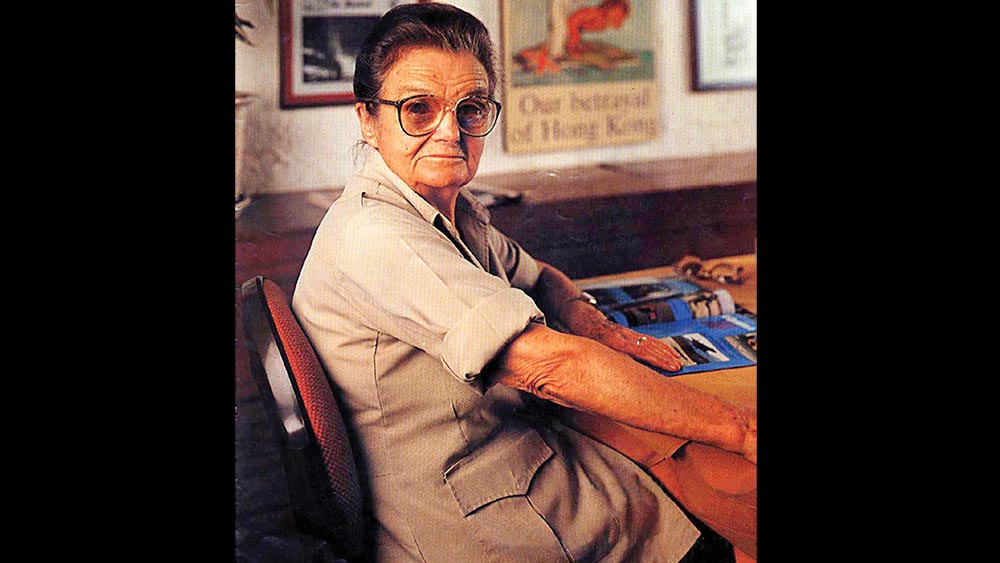
Clare Hollingworth

Ms. Hollingworth had a remarkable career as a foreign correspondent with the scoop of the century as a 27-year-old when she reported on Germany’s invasion of Poland in 1939. Ms. Hollingworth was also a treasured member of the FCC for more than 40 years who made significant contributions to the intellectual and professional life of the FCC.
The Hollingworth Fellowship honours early career journalists and current journalism school students in Hong Kong. Journalists and journalism students from all fields of professional study are eligible. Applications close on October 13, 2025. The fellowship will run for one calendar November 1, 2025 – October 31, 2026.
Overview of key features of the fellowship:
  • Complimentary access to all FCC professional talks, official gatherings and conferences;
  • Unlimited access to the FCC facilities including the gym and workroom;
  • FCC monthly dues and the membership fee are waived for the fellowship period; and
  • Networking opportunities with senior newsroom leaders
For details on past fellows, please see below:
  1. Jennifer Creery and Tiffany Liang
  2. Mary Hui and Jessie Pang
  3. Hillary Leung and Amy Sood
  4. Teele Rebane, Simran Vaswani and Hayley Wong
  5. Mithil Aggarwal, Eudora Wang and Aruzhan Zeinulla
  6. Kriti Gandhi and Jay Ganglani
Fellows Requirements and Expectations
  • Produce and contribute a piece in their field for the FCC (e.g. long-form article for the FCC magazine, The Correspondent; photographic exhibition for the Bar, video piece for the website)
  • Assist in the organization of virtual and in-person events for journalists
  • Actively contribute to the intellectual and professional life of the FCC
Eligibility Criteria

Candidates must meet all of the following criteria to apply:

  • At least two years’ journalism experience with a proven track record of developing stories in any sector or medium. Applications are welcome from candidates from foreign news organisations as well as local news organisations in Hong Kong
  • Be 30 years of age or under at the time the fellowship begins
  • Be a resident of Hong Kong at the time of application and a resident of Hong Kong for the duration of the Fellowship
Application Process and Material

Applications must be submitted in English by October 13, 2025. Late or incomplete applications will not be accepted. Only chosen candidates will be notified by writing. All files must be submitted in either PDF or MS Word format to [email protected] with the subject line
Attn: First Name / Last Name of Applicant, Clare Hollingworth Fellowship Application. Applications should include:

  • Two pieces of published work, or in the case of a journalism student, two essays of no more than 2000 words each
  • A 500-word statement of intent for the piece that the Fellow will contribute to the FCC
  • Please send two written references from suitable referees, e.g. senior editor or journalism school dean again with the same subject line: Attn: First Name / Last Name of Applicant, Clare Hollingworth Fellowship Application. The reference letters should be sent to The Foreign Correspondents’ Club, Hong Kong, North Block, 2 Lower Albert Road, Central, Hong Kong or emailed to [email protected]. When submitting your application, please note in the covering email that the references have been sent via post. Reference letters should specify how long the referee has known the applicant and in what capacity, comments on the applicant’s potential to make an impact in the field of journalism, and any relevant prior experience.
  • Recent resume of no more than 2 pages
  • Provide a valid HKID card number.
 

Improving literacy in Hong Kong — an FCC panel discussion

By Hugo Novales

According to the Progress in International Reading Literacy Study of 2021, only 16% of parents in Hong Kong read with their children — far below the international average of 42%. Only 32% of Hong Kong’s youth say they are confident with their reading skills (still below the 43% international average) and just 14% of the city’s parents actually enjoy reading.

To discuss how Hong Kong can improve its literacy rates and foster a love for reading in both children and adults, the FCC held a Club Lunch panel featuring representatives from three literacy-focused charities in Hong Kong.

Sitting on the panel was Christine Choi, Director of Elephant Community Press; Matthew Coulson, Executive Director of Kids4Kids; and Manoj Dhar, the Co-Founder and CEO of Integrated Brilliant Education. The three charity leaders sat with Morgan Davis, then the First Vice President of the Club (now President) and Convenor of the Club’s Charity Committee.

Davis first began the discussion by asking the panel about how they define literacy and how children can become more interested in reading every day. The panel agreed that modern technology — particularly TV, smartphones, and videogames — posed a bit of a challenge to developing children’s interest in reading. However, they also advised that parents should provide opportunities for their children to improve their literacy by reading books featuring topics that interest them — without restriction.

Matt Coulson. Photo: FCC

“There shouldn’t be boundaries based upon your age of what you should and shouldn’t read. You just have to have partners who are there to support you in what you’re reading and helping you to understand them,” said Matt Coulson, who admitted to being an avid reader when growing up.

Coulson finds that by allowing children to pick any age-appropriate books that interest them will help them develop a positive relationship with reading that they will then carry with them for the rest of their lives.

Christine Choi has a different approach to engaging children with reading. At Elephant Community Press, she leads creative writing workshops for kids. By having children not just read storybooks but also having them attempt to write their own stories, Choi has seen children develop higher interest and proficiency with reading.

“If kids can see why writing and reading [are] useful to them, how adults around them use it in real life, then there’s meaning for them [about] why they should learn to read,” Choi said.

Christine Choi. Photo: FCC

Manoj Dhar, the final panelist, also encouraged parents to become more involved with their children’s education. From his experience at IBEL, he has noticed the tendency that many parents have to simply leave the most critical components of child-raising to their domestic helpers, including reading. He also noted the local education system’s preference to assign homework and promote memorisation versus learning through an enjoyable process.

While it may be difficult to overhaul Hong Kong’s entire educational system, Dhar remained firm that parents must remain responsible for the outcome of their child’s educational success.

Manoj Dhar. Photo: FCC

“The parents have to remember that the moment they’ve given birth to a child, it’s a lifelong responsibility,” Dhar said.

The panel also discussed AI’s impact on reading and writing, finding bookstores in Hong Kong, and other cultural barriers that impact literacy in Hong Kong.

To watch the full discussion, please visit the FCC’s YouTube channel:

We measure site performance with cookies to improve performance.