
The HKJA and HKPPA issued the following statement condemning attacks on journalists in North Point.
Inside the Hong Kong protests, as told by the reporters and photographers on the ground
The challenges facing journalists and photographers covering the Hong Kong protests were discussed by members of the media who have been on the ground since the demonstrations began in June.
Jennifer Creery, senior reporter for Hong Kong Free Press; Damon Pang, multimedia journalist for Radio Television Hong Kong (RTHK); AFP photographer Anthony Wallace, freelance journalist Eric Cheung, and Chris Yeung, chairperson of the Hong Kong Journalists Association, revealed their thoughts on the protests during the August 8 club lunch.
From covering the demonstrations as part of a small team to dodging tear gas, the panel detailed the ups and downs on reporting on the frontline.
Watch the video here.
How the U.S.-China trade war is impacting Asia
The effect of the U.S-China trade war on South East Asia was the topic of discussion at a breakfast briefing featuring a leading economic expert.
Ernest Bower, founder and CEO of BowerGroupAsia Inc. and founder and chairman of AkarAsia Inc. which is pioneering the field of digital advocacy and the use of artificial intelligence as a policy and business tool across Asia, gave his insights into how the dispute has affected China’s inbound and outbound investment.
Having arrived in Hong Kong from Washington on Monday, during the city-wide strike, Bower also commented on the ongoing protests as well as giving the view from Washington.
Watch the full talk here.
All you need to know about the legal risks of covering the Hong Kong protests
Valuable advice on how to cover the Hong Kong protests was given to journalists by a leading legal expert at the FCC.
Sharron Fast, Deputy Director of Master of Journalism Programme and lecturer from The Journalism and Media Studies Centre at the University of Hong Kong, covered a wide range of topics and took questions from the audience – including members and journalists – at the August 6 breakfast briefing. The event was the latest in a series of workshops on covering the Hong Kong protests, now in their tenth week.
What to do if arrested, whether you should hand over your mobile phone, and the legal risks around trespassing were all discussed at the event.
Watch the video here.
HKJA statement on August 5 general strike call
The Hong Kong Journalists Association has issued the following statement regarding the call for a general strike in Hong Kong on Monday, August 5.
HKJA and HKPPA issue statement on police violence
The Hong Kong Journalists Association and the Hong Kong Press Photographers Association issued the following statement over the police targeting of journalists after violence at a protest outside Kwai Chung police station on Tuesday, July 30.
Amnesty International Hong Kong
Amnesty International issues statement over rioting charges
Amnesty warns that rioting charges brought against 44 protestors was a “chilling warning” to anyone considering taking part in future protests.
https://www.amnesty.org/en/latest/news/2019/07/hong-kong-charges-protesters-chilling-warning/
FCC statement expressing grave concern over reports of police violence against journalists in Hong Kong
The Foreign Correspondents’ Club expresses grave concern over multiple eyewitness reports and widely circulating video footage that show police officers engaging in violent acts against journalists during the protest in Kwai Chung on Tuesday night.
The reports and video appear to show a photojournalist being shoved to the ground, reporters being chased by police officers swinging batons and police discharging pepper spray toward reporters and photographers with press identification who were observing and photographing events from a safe distance and who appeared not to be interfering with police operations. At least one journalist reportedly needed hospital treatment after being hit with pepper spray.
These actions by members of the Hong Kong Police Force are unacceptable and constitute a violation of the right under Hong Kong law for journalists to cover protests free of intimidation or violence by authorities.
The repeated and consistent reports of police violence against journalists covering the protests have become too many for the Hong Kong government to ignore. Given this deteriorating situation, the FCC reiterates its demand that the government follow the advice of numerous prominent Hong Kong organizations, along with civic and political leaders, and establish an independent commission of inquiry to investigate all forms of violence and intimidation directed at journalists since the start of the protests in June. We urge that such investigations be thorough and transparent.
The FCC also calls on the Commissioner of Police to publicly address these worrying reports and to clearly state that the HKPF respects freedom of the press and the right of journalists to cover events, including police operations, unfettered and free of violence and threats.
The Foreign Correspondents’ Club stands with the Hong Kong Journalists Association, the Hong Kong Photojournalist Association and with freelance and unaffiliated journalists in condemning acts of violence directed at the media and in demanding the Hong Kong government and police respect Hong Kong’s long tradition of press freedom.
IPI statement on Hong Kong
The International Press Institute has issued the following statement expressing its concern over the “failure of the Hong Kong government to publicly condemn and investigate” attacks on journalists during the current series of protests.
RSF open letter to Carrie Lam
Reporters Without Borders (RSF) has published an open letter to Chief Executive Carrie Lam calling on her to take “immediate and proactive action” to protect press freedom in Hong Kong. Here is the full text:
_Page_1.jpg)
_Page_2.jpg)
Security expert Stevo Stephen briefs journalists on how to stay safe covering protests
More than 100 Hong Kong journalists and Hong Kong Journalists Association members attended a talk on how to cover protests safely following a weekend of demonstrations in the city that saw violence break out, resulting in the injuries of dozens of people, among them reporters.
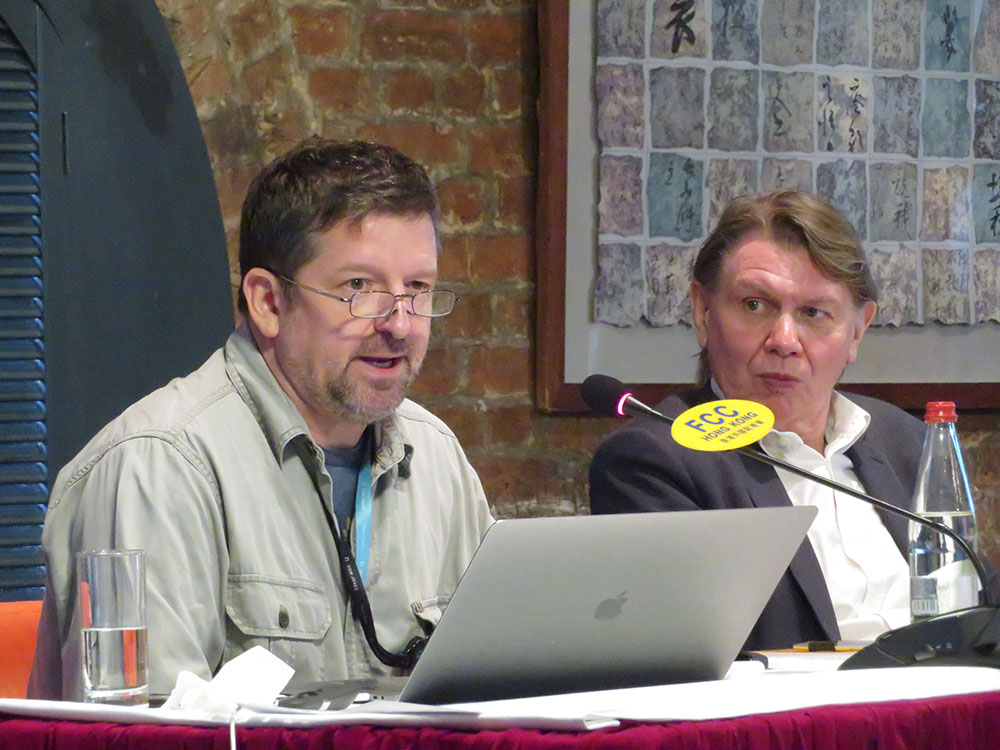 Stevo Stephen at the FCC. Photo: FCC
In the first of a series of FCC workshops focused on the protests in Hong Kong, security expert Stevo Stephen gave a briefing on the safest and most effective ways of covering demonstrations and street violence.
Stephen, APAC and Africa News Risk Senior Manager for the Wall Street Journal, demonstrated the best equipment to use when covering protests, including protective wear. The former private security expert, who has a background with the British Commandos, shared his knowledge on how journalists can interact with the police and demonstrators, particularly when violence breaks out.
Future FCC workshops will include sessions on the use of technology in covering the protests and the kinds of legal risks media face. With the launch of the workshops, the FCC is furthering its goal of promoting press freedom in Hong Kong by acting as a forum for education and discussion.
Watch the video
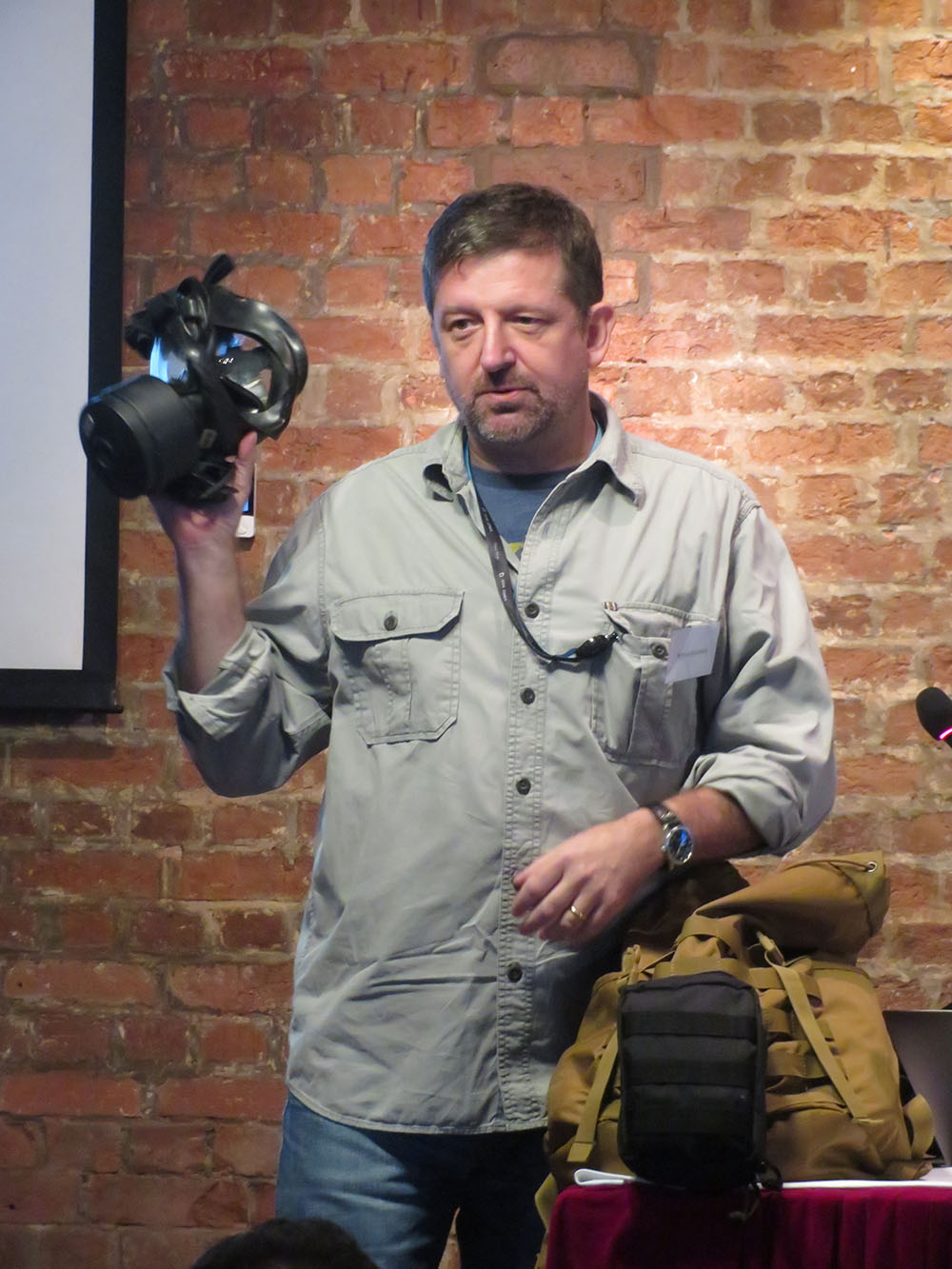 Stevo Stephen at the FCC. Photo: FCC
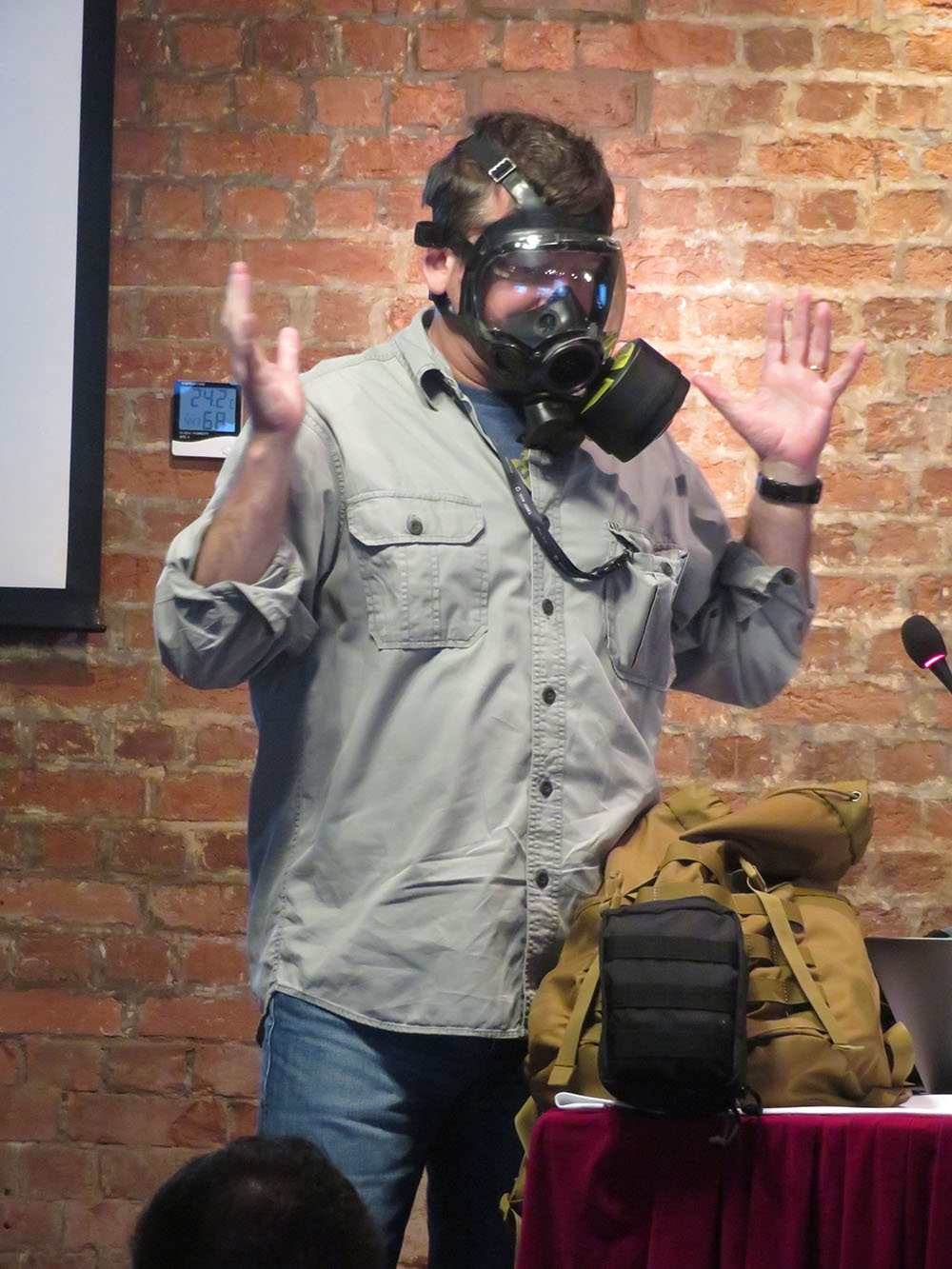 Stevo Stephen at the FCC. Photo: FCC
 Stevo Stephen at the FCC. Photo: FCC