Members Area Logout

Hong Kong will never have genuine democracy, but city can slow down the march towards authoritarianism – Benny Tai

It is the duty of every Hongkonger to defend the rule of law from the encroachment of authoritarian rule of law, said Benny Tai, warning that Beijing continues to move the “political red line” as it attempts to stamp out dissent.
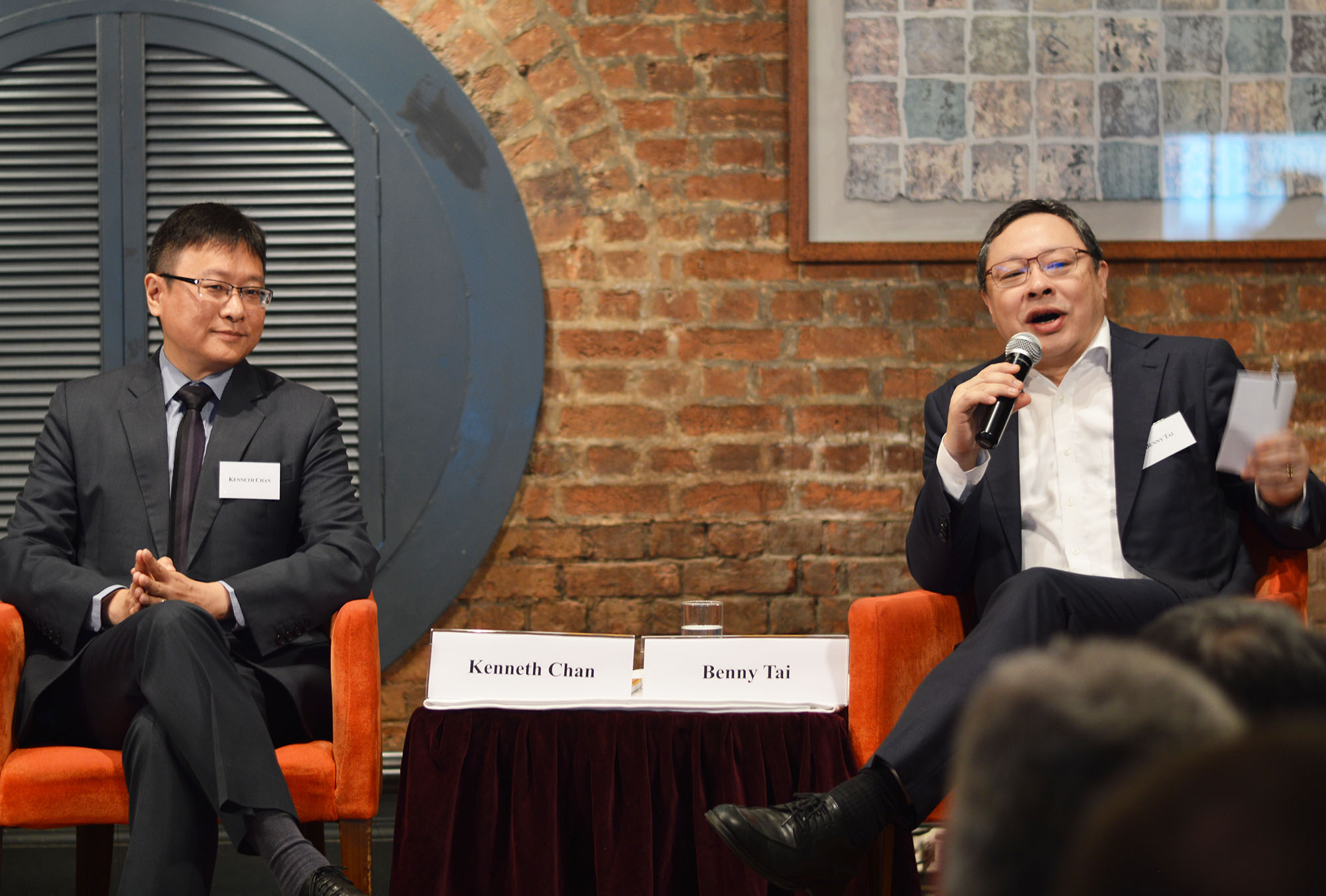
Kenneth Chan, left, and Benny Tai discuss the erosion of Hong Kong's freedoms. Photo: Sarah Graham/FCC Kenneth Chan, left, and Benny Tai discuss the erosion of Hong Kong’s freedoms. Photo: Sarah Graham/FCC

The co-founder of the 2014 Occupy Central movement which saw thousands bring the centre of Hong Kong to a standstill for two weeks as they demanded democracy, said the city would never have genuine democracy, but added: “I can still see hope. My hope is on the civil society in Hong Kong… I hope that we can slow down the process of authoritarianism in Hong Kong.”

Tai, an associate professor at Hong Kong University, was speaking at a debate alongside Kenneth Chan, former LegCo member for the Civic Party and associate professor of political science at Baptist University of Hong Kong. FCC President Florence de Changy told the sold-out June 12 club lunch that representatives from pro-Beijing camps, including Regina Ip and Holden Chow, were also invited to the debate on whether Hong Kong’s freedoms were under threat, but they had said they were not available.

The strategy of the Communist Party of China (CCP) was to authoritarianise Hong Kong by twisting the rule of law and legal procedures, Tai said. Responding to a question about the recent six-year jail term handed out to localist Edward Leung for his involvement in the Mong Kok riots, Tai said the sentence demonstrated an “over-emphasis on social order”.

He said: “Under the spirit of our common law system, judges have space to consider what was the reason behind the destruction of social order and the defendants’ intentions in terms of the law. I want to ask whether it would be wise to use the law to suppress all this dissatisfaction with the existing order, without dealing with the reasons why the people are rising up. If this is not addressed, then I can foresee there may be more conflicts in the future.”

Chan spoke of the pressures faced by universities in the city as they try to win funding from donors who are often pro-establishment. He admitted that Baptist University donors had threatened to “turn the tap off” because its students “were not behaving” politically.

He talked of the threat to academics’ jobs due to their social and political activism, adding that nobody should be removed from their positions for this reason. He added: “Looking forward I’m afraid I have to sound a little pessimistic because of the chilling effects coming down on each one of us.”

Chan described Hong Kong as a city where “increasingly you have to not look unpatriotic” before declaring: “Welcome to 1984, though this is 2018.”

Minimum Spending Requirement: an Update

Dear fellow members,

Further to the FCC’s announcement on November 1 of the introduction of a HK$300
a month minimum spending requirement in January, members have given us feedback and suggestions that were carefully reviewed during our last Board meeting.

The board of governors has decided that as many members frequently travel, the spending requirement will be levied and collected quarterly (in March, June, September and December). This means for example, if from January through March, you spend HK$800, there will be an additional HK$100 charge to your bill for March.

As mentioned before, you can also meet the minimum spending requirement by buying take-away wine.

On behalf of the board of governors, thank you for your understanding and we look forward to your continued support of the club.

Yours sincerely,

Florence de Changy
FCC President


Update: Introduction of a Minimum Spending Requirement

20 November 2017
Dear fellow members,
Further to the FCC’s announcement on November 1 of the introduction of a HK$300 a month minimum spending requirement in January, members have given us feedback and suggestions that were carefully reviewed during our last Board meeting.

The board of governors has decided that as many members frequently travel, the spending requirement will be levied and collected quarterly (in March, June, September and December). This means for example, if from January through March, you spend HK$800, there will be an additional HK$100 charge to your bill for March.

As mentioned before, you can also meet the minimum spending requirement by buying take-away wine.

On behalf of the board of governors, thank you for your understanding and we look forward to your continued support of the club.

Yours sincerely,
Florence de Changy
FCC President


Income Statement – April 2018

April 21, 2018 Board minutes

FCC joins Hong Kong media groups to protest journalist’s arrest

We strongly condemn the violent arrest of a Now TV News cameraman who was reporting on a human rights issue in Beijing, and demand mainland authorities refrain from any further suppression of the work of journalists.

A screen shot from a video showing the violent arrest of a Now TV News cameraman. A screen shot from a video showing the violent arrest of a Now TV News cameraman.

The Beijing-based cameraman from Hong Kong was among a large group of journalists covering a hearing of the Beijing Lawyers Association on the quashing of the professional accreditation of human rights lawyer Xie Yanyi on Wednesday morning.

The cameraman holds a press card issued by mainland authorities and produced this identification when requested by a public security officer. When he asked to have the identification back, at least five men including uniformed public security officers pushed him onto the ground. They handcuffed him and took him into a police vehicle before subsequently releasing him. The authorities have not given him any explanation for the arrest of the cameraman, who sustained bruises to different parts of his body during the incident. We call on Chief Executive Carrie Lam Cheng Yuet-ngor to present to the Central Government the Hong Kong people’s concerns over such attacks against journalists.

This is the second attack against a Hong Kong journalist within a week. An iCable News journalist was punched by two village officials while reporting on the 10th commemoration of the Sichuan earthquake.  We urge the mainland authorities to protect the personal safety of Hong Kong journalists and their legal right to report.

Signed by:

Hong Kong Journalists Association, Ming Pao Staff Association, RTHK Program Staff Union, Next Media Trade Union, Hong Kong Press Photographers Association, Independent Commentators Association and the Foreign Correspondents’ Club.

Typhoon notice and arrangement

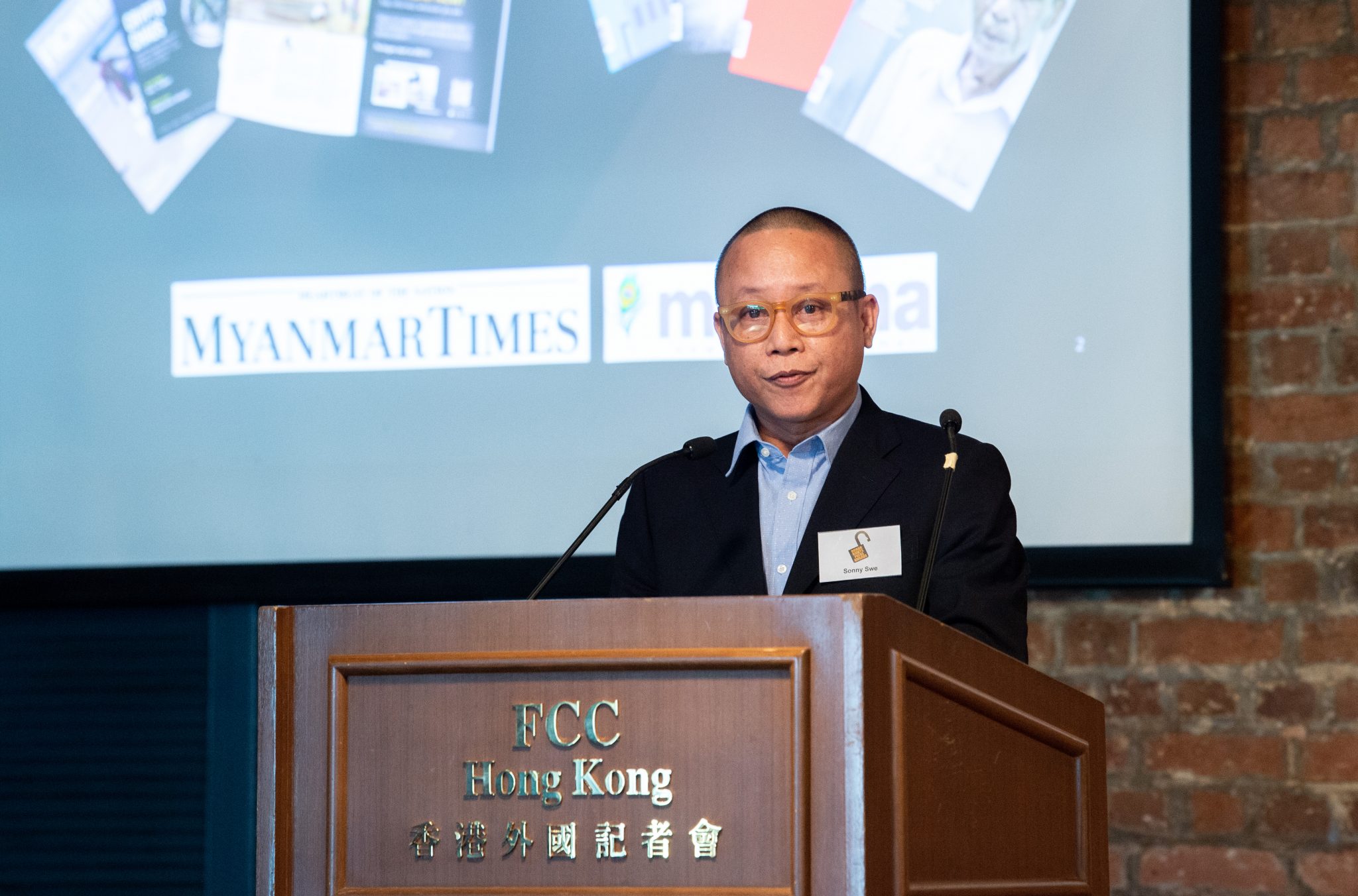
Sonny Swe talks of press freedom struggle at 22nd Human Rights Press Awards

Myanmar media pioneer Sonny Swe spoke of his struggle to maintain press freedom in Myanmar, where he was jailed for eight years in a media crackdown.

Keynote speaker Sonny Swe. Photo: Jayne Russell Keynote speaker Sonny Swe. Photo: Jayne Russell

Speaking at the 22nd Human Rights Press Awards, Sonny said that the state of press freedom in Myanmar currently resembled the dark days of military rule, adding that it was a “critical moment” for the media there.

When Aung San Suu Kyi, a former prisoner herself, won the 2015 Myanmar election, Sonny said, there was hope for press freedom under the new government. in the same year, Sonny launched the Frontier Myanmar magazine. However, he said under the new government more journalists than ever had been arrested, many of them covering the Rohingya crisis in Myanmar’s Rakhine state.

Sonny said access to information was also becoming a bigger challenge, and self-censorship was on the rise.

He said the issue of press freedom had always been an “uphill travel” in Myanmar, and vowed to continue fighting for it.

“I am standing behind the truth, and I am standing for the truth, freedom, freedom of the press, freedom of speech, freedom of expression. I will always fight for this because I know firsthand how it feels to have this taken away from you,” he said.

The Human Rights Press Awards recognise top rights-related reporting from around Asia, with the goal of increasing respect for people’s basic rights and focusing attention on threats to those freedoms.

Human Rights Press Awards – fundraising appeal

Dear Member,

For more than two decades, the FCC has proudly hosted the Human Rights Press Awards, rewarding work by journalists who shine a light on overlooked abuses across Asia. The Awards are a flagship FCC event in line with a core mission of the club: to stand up for press freedom across Asia.

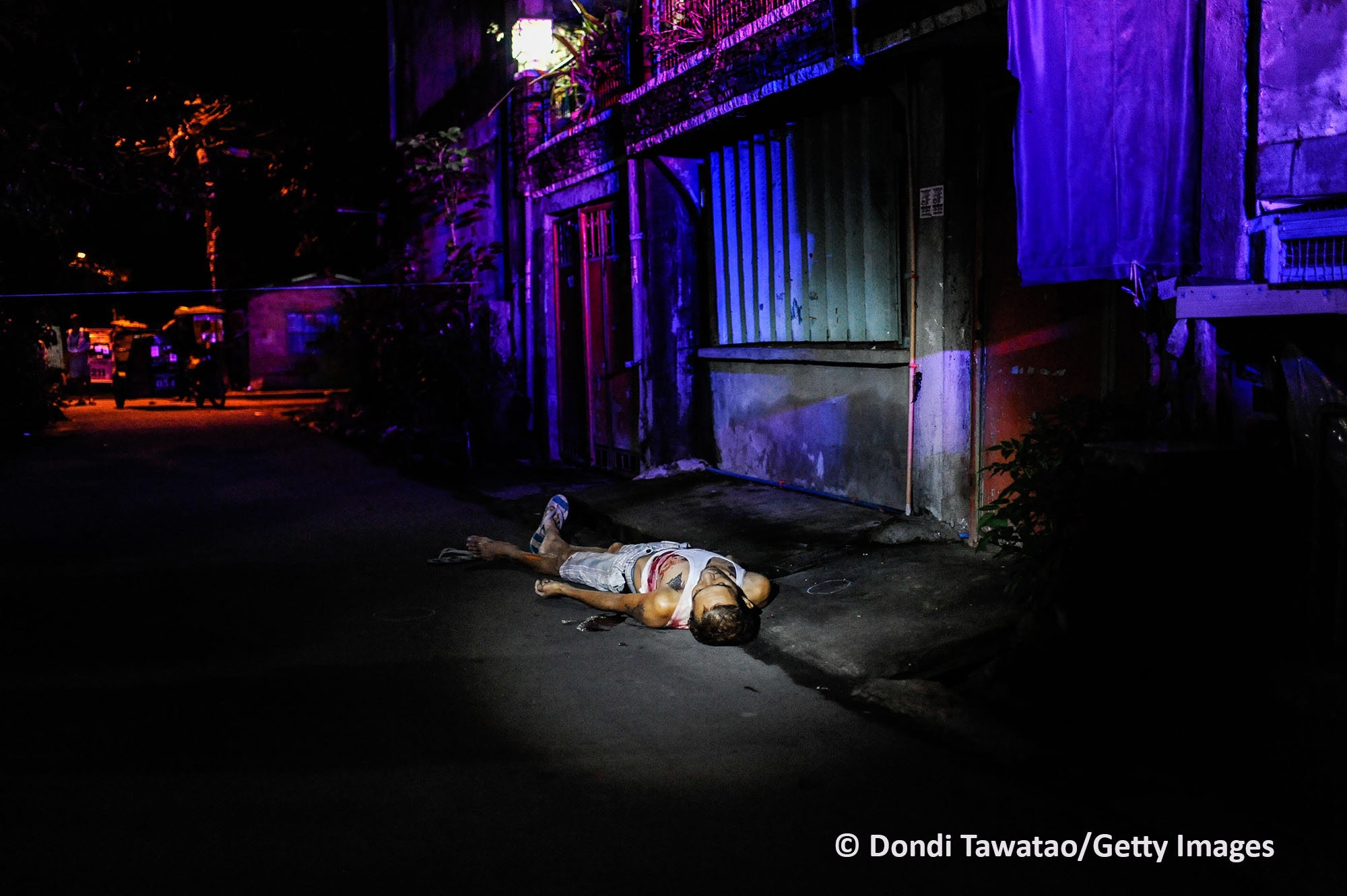
Merit, Photography Feature, 21st Human Rights Press Awards. Photo by Dondi Tawatao/Getty Images Merit, Photography Feature, 21st Human Rights Press Awards. Photo by Dondi Tawatao/Getty Images

This year, the Awards are particularly important as the environment becomes ever-more repressive for journalists. Critical media outlets in Cambodia and the Philippines were threatened with closure. New “Fake News” laws risk criminalising free speech in Malaysia. Two Reuters journalists face as many as 14 years in prison in Myanmar. And as I write these lines, we are coming to terms with the terrible news of the April 30 attack in Afghanistan that killed ten journalists in two separate incidents, including highly respected AFP chief photographer Shah Marai.

The 2018 Awards that will be announced on May 12 have had a record number of submissions: 414 stories, photos, commentaries, videos, multimedia and radio pieces, in total. One judge called it the “best slate of entries in years”.

The FCC is the biggest sponsor of the Awards, which are run jointly with Amnesty International Hong Kong and the Hong Kong Journalists’ Association. As the Awards have grown, so has the workload and expense. A few private donors already contribute, but we would greatly appreciate even further support from our Club’s members.

We hope to find in particular one-off financial support for the HK$5,000 cost of flying in the event’s keynote speaker – a newspaper publisher from Myanmar who spent years in jail.

As a member of the FCC, you can make a financial donation, as small or as large as you see fit, directly from your account to the HRPA.

If you wish to find out more about the HRPA, please visit the website which also features a video on the making of this year’s awards. If you would like to have a private discussion about donations or other ways to contribute, do not hesitate to contact Sarah Stewart ([email protected]), co-convenor of the Press Freedom Committee and a Governor of the FCC.

I thank you very much in advance for your generous support of these Awards that reward and celebrate the many brave reporters across the region.

Sincerely,

Florence de Changy
President

“Yes I would like to support the HRPA” 

Why ASEAN isn’t ready to replicate the European Union

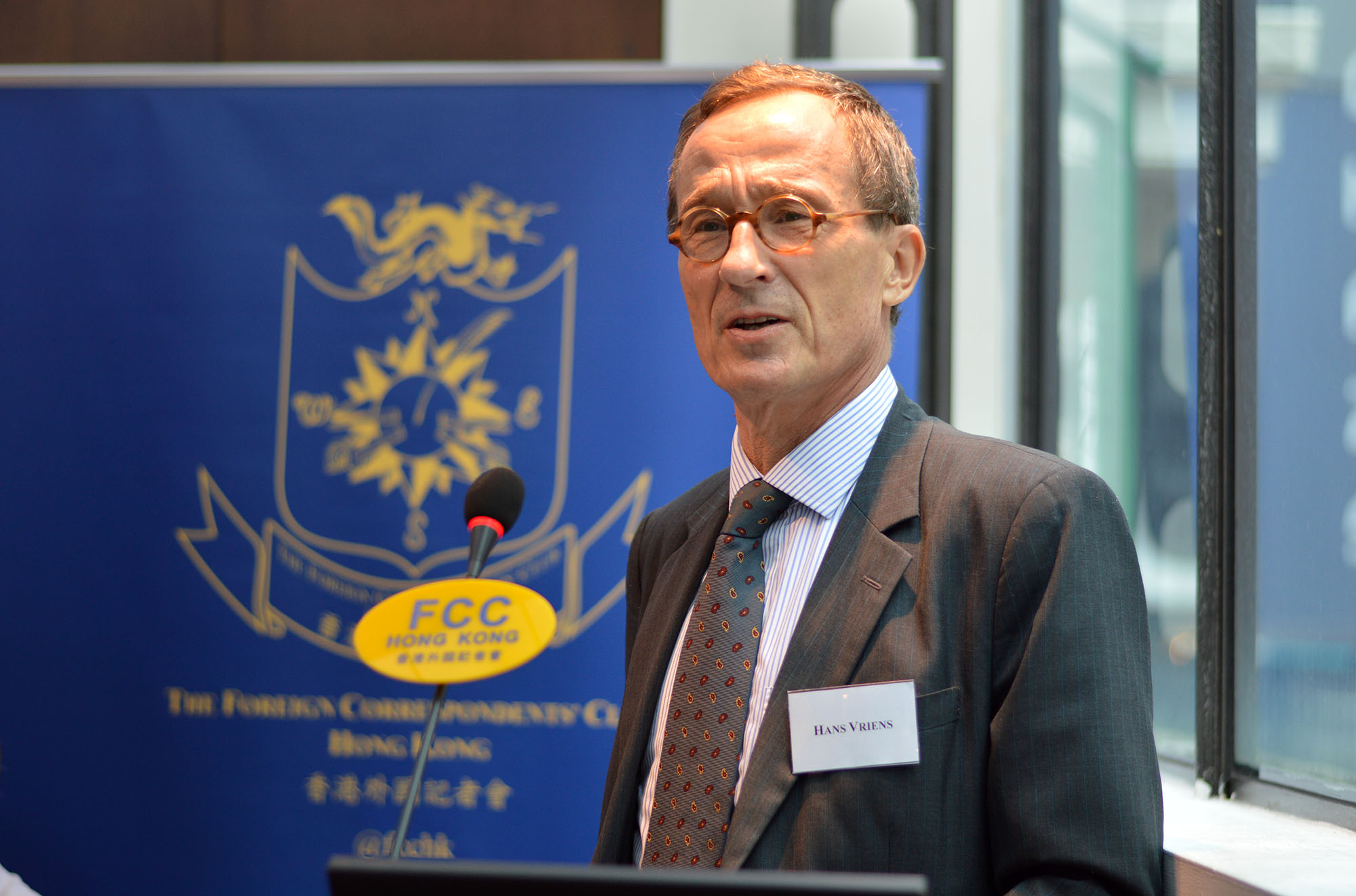
A highly ambitious ASEAN wants to create a genuine integrated market much like the European Union (EU) – but it has some way to go, according to Southeast Asia expert Hans Vriens.

Hans Vriens shared his expert knowledge of ASEAN with FCC members and guests. Photo: Sarah Graham/FCC Hans Vriens shared his expert knowledge of ASEAN with FCC members and guests. Photo: Sarah Graham/FCC

Despite its aim to build a single market that would see the free flow of goods, investment and skilled labour, the Association of Southeast Asian Nations (ASEAN) will face challenges for a variety of reasons, many of them governmental, said Vriens, whose club lunch on May 4 sought to answer the question of whether ASEAN was an economic powerhouse in the making, or back to being tribute states of China. The answer, he concluded, was yes and no.

“Not a single government leader in the ASEAN is pushing for this,” he said, adding that member states were not yet serious about giving up their sovereignty.

Vriens, Managing Partner of Vriens & Partners, outlined the major differences between ASEAN’s Economic Community (AEC) and the EU, including that currently there was no parliament, no ASEAN law, a myriad of political systems, and no plan for a monetary union.

“So do not be misled by talk about an ASEAN Economic Community,” Vriens, a past president of the FCC, said.

ASEAN was formed in August 1967 by Indonesia, Malaysia, the Philippines, Singapore and Thailand. It was later joined by Brunei, Cambodia, Laos, Myanmar and Vietnam. Further regional integration saw the creation of ASEAN Plus Three to include China, Japan and South Korea. Much like the EU, it aims to encourage economic growth among its members, as well as social progress. The AEC was established in 2015.

Another reason why regional harmony was not yet in ASEAN’s grasp was China’s growing influence in the region, and in particular the fierce competition between China and Japan over railroads. The Philippines and Vietnam were also involved in disputes with China over sovereignty in the South China Sea, Vriens said.

While ASEAN was diverse with an emerging middle class and relatively low GDP per capita, it faces big challenges, said Vriens. Poor education and infrastructure, coupled with low quality universal healthcare and poverty, were hurdles to overcome, he said.

Vriens examined political developments in Indonesia, Singapore, Thailand, Myanmar, the Philippines, Vietnam and the Philippines. The rise in populist presidents like the Philippines’ Rodrigo Duterte could be positive because “they want to build to show progress”.


We measure site performance with cookies to improve performance.