Members Area Logout

Duterte’s Violent Populism: Why Filipinos support the man who “out-Trumps Trump”

Filipinos support controversial President Rodrigo Duterte despite many fearing that his bloody war on drugs could target them, said an expert on politics in the Philippines.

Mark R. Thompson shared insights into the presidency of Rodrigo Duterte. Photo: Sarah Graham/FCC Mark R. Thompson shared insights into the presidency of Rodrigo Duterte. Photo: Sarah Graham/FCC

The tough talking president and former lawyer has drawn criticism from human rights advocates for his open encouragement of the extrajudicial killings of drug users in the country. Prof Thompson said it the number of deaths so far is unclear but that it is certain to be more than the 3,000 killings that took place during the last year of Ferdinand Marcos’ presidency. Human Rights Watch puts the number at more than 12,000. Duterte offers cash rewards to police who carry out the executions which human rights groups like Amnesty International have pointed to as an economy of murder.

Duterte swept to power in 2016 because he was straight talking, and his pledges to clean up the country’s drug problem resonated with so-called ABC voters – the elites, upper and middle classes. His election came after a succession of tumultuous presidencies in predecessors Ferdinand Marcos (1965-1986), Corazon Aquino (1986-1992), Fidel Ramos (1992-1998), Joseph Estrada (1998-2001), Gloria Arroyo (2001-2010) and Benigno Aquino III (2010-2016).

Mark R. Thompson, professor and head of the Department of Asian and International Studies (AIS), told the November 7 club lunch that Duterte’s approval rating was currently at around 80% – much higher than his American counterpart Donald Trump’s 35%. Unsurprisingly, this was not the only comparison between the two men. “Duterte out-Trumps Trump in terms of his language,” he said. “He’s willing to say things as they are and this gives Filipinos a sense of authenticity.”

For many Filipinos, this state violence has created a sense of political order amidst weak institutions, he added.

Duterte famously called former U.S. President Barack Obama the “son of a whore”.

When he took office in 2016, Duterte openly broke with liberal reformers to declare his violent crackdown on drugs. Estimates at the time put the number of drug users in the country at 1.8 million of the 100 million population. Duterte later revised this figure to 3 million.

Prof Thompson, author of The Anti-Marcos Struggle, said most of the drugs are likely to come from China, and that in a recent case the Chinese authorities tipped off the Philippines to a smuggling ring that it was claimed was linked to Duterte’s son, Paolo.

Relations between China and the Philippines have in the past been strained amid court actions over the sovereignty of islands in the South China Sea. However, Duterte was quick to publicly realign himself with China as he cooled his relationship with the United States.

Despite moves to intimidate his opponents at home and abroad – the Commission on Human Rights has become a target, with Duterte threatening to abolish the Philippines’ National Human Rights Institution (NHRI) – Prof Thompson believes that the country is not yet an authoritarian state. “The press is largely uncensored,” said Prof Thompson, co-author of The Vote in the Philippines: Electing a Strongman. “Courts are not yet officially gagged but they are intimidated.”

September 23, 2017 Board minutes

Income Statement – September 2017

From Banker to Buddhist Nun: Emma Slade on her journey to enlightenment

A former high-flying banker who became a Buddhist nun after being held hostage spoke of her journey to a life dedicated to helping those less fortunate.

Emma Slade, standing in front of a photo from her days as a high-flying banker, told FCC members about her journey to becoming a Buddhist nun. Photo: Sarah Graham/FCC Emma Slade, standing in front of a photo from her days as a high-flying banker, told FCC members about her journey to becoming a Buddhist nun. Photo: Sarah Graham/FCC

Emma Slade was a Cambridge Graduate and international banker – based in New York, London and Hong Kong –  when, during the height of the Asian debt crisis, she was taken hostage while on business in Jakarta.

The terrifying experience of being trapped “in a room with a man with a gun” was traumatic, leaving Ms Slade feeling a “complete loss of control over my life and my body”. After returning to her banking job, Ms Slade suffered flashbacks of her ordeal and to cope she immersed herself in yoga. This was her first step towards Buddhism and a journey on a path that led her to Bhutan where she was granted permission to study to become a Buddhist Nun.

After more than three years of practicing Buddhism with her Lama, she became the only Western woman to be ordained in Bhutan. She then founded a charity – Opening Your Heart To Bhutan – to help disadvantaged children, and has written a book of her life story, Set Free: A Life-Changing Journey from Banking to Buddhism in Bhutan. All proceeds from the sale of the book will go to the charity.

When asked by a guest about the commitment of becoming a Buddhist nun, including taking a vow of celibacy, Ms Slade said: “Individual desire is not really part of a nun’s existence. You’re dedicating your life to others absolutely 100%.” She added that she had felt a “ravenous hunger” for spirituality and said there was “absolutely nothing I miss” about her former high-flying life. “For me, I have gained so much and lost nothing,” she said.

Ms Slade joked about taking a vow of celibacy, saying: “My mum… is quite a character… one of her friends said ‘Celibacy? You’re very young to be celibate’. And my mum said ‘You know, this is much better because she was useless with her boyfriends’.”

Earlier this year, Ms Slade’s work in Bhutan was recognised in her native United Kingdom with the Point of Hope Award, presented to her by Prime Minister Theresa May.

Ms Slade talked of her hopes that mental wellbeing will increasingly take centre stage as an inspiring and important subject and believes the tools – or Buddhist principals – of mindfulness, compassion and renunciation can play an important role in mental wellbeing and freedom.

Censorship: How China is tightening its grip on Hong Kong

Hong Kong is feeling the creeping hand of censorship from President Xi Jinping as he exercises a tightening of control over the city and mainland China, said expert Jeffrey Wasserstrom.

Jeffrey Wasserstrom spoke about how censorship works in China. Photo: Sarah Graham/FCC Jeffrey Wasserstrom spoke about how censorship works in China. Photo: Sarah Graham/FCC

The disappearance of the Hong Kong booksellers, the silencing of previously vocal critics of China, and the flooding of pro-China posters around the city during the 20th anniversary of the Handover celebrations are all signs of tightening control, said Wasserstrom, Chancellor’s Professor of History at the University of California at Irvine.

During his appearance at the club on November 3, Wasserstrom detailed censorship in China through the decades, outlining how traditionally Communist Party leaders had swung between a tightening and loosening of control over the information people shared and received. He told how in the era of Deng Xiaoping, Chinese citizens were not free enough to publicly criticise him, but they were not forced to praise him either. He said in the 1990s political jokes were rife, with citizens allowed to be apolitical, with less pressure to express their loyalty.

But the era of Xi Jinping and “his elevation in status” has not only seen a crackdown on freedom of expression and information, but also increased pressure to praise China’s leader or risk being seen as disloyal, he said.

And he warned that a general concept that, until now, applied a different set of rules to Hong Kong was coming to an end. Wasserstrom described how, rather than One Country, Two systems – the framework around which Hong Kong will be reintegrated with the mainland – there had been One Country, Three Systems. He explained this as one set of rules applied in Tibet and Xinjiang; a second set of rules applying to the mainland; and a third set of rules that allowed Hong Kong media to freely report on issues including the pro-democracy movement. But the case of the missing booksellers, along with a push for a China-approved national curriculum, was a sign that this third rule no longer applied to Hong Kong.

The event, titled Xi’s Dreams, Orwell’s Nightmares: Censorship in Today’s China, compared the dystopian visions of writers George Orwell and Aldous Huxley to make the point that China’s censorship campaign is two-pronged: it blocks information coming in but at the same time bombards its citizens with the propaganda it wants them to see – “a culture of distraction and entertainment”. While Huxley’s Brave New World was seen as a critique of capitalism an imperialism, Orwell’s 1984 had much darker undertones.

Wasserstrom also touched upon a recent article by journalist Louisa Lim, who commented on new research on the effects on China’s censorship on its young people which revealed that many of those who were given unlimited access to the internet failed to use it. The report quotes American writer Neil Postman: “What Orwell feared were those who would ban books. What Huxley feared was that there would be no reason to ban a book, for there would be no one who would want to read one.”

He noted the increase in China-centric posters around Hong Kong suggested efforts to spread propaganda had become more obvious, and said future signs to look out for would be banks in the city using the Belt and Road Initiative to promote themselves

Referring to Hong Kong and the silencing of some well-known anti-establishment figures, Wasserstrom used the metaphor of the canary in the mineshaft: “One other thing that can happen to a canary is it can find it possible to keep breathing but is unable to sing,” he said, before adding: “We need not just to keep watching the dramatic moments when the canaries disappear and die, but when they stop singing.”

Amnesty International investigating possibility of genocide in Rohingya crisis

The persecution of the Rohingya people is a humanitarian crisis, but evidence is yet to determine whether genocide has occurred, said Amnesty International’s Southeast Asia and Pacific regional director.

Dr James Gomez talked about the Rohingya crisis at the FCC on November 1. Photo: Sarah Graham/FCC Dr James Gomez talked about the Rohingya crisis at the FCC on November 1. Photo: Sarah Graham/FCC

Dr James Gomez told members attending a club cocktail event on human rights crises in the region that evidence had so far shown the systematic burning of Rohingya villages in the Rakhine region of Myanmar, and that women and children were separated and some subjected to rape. However, reports that men and boys of fighting age were taken into forests and executed were still being investigated.

Dr Gomez said genocide was “a very technical and legal term” and that satellite imagery was being used to determine whether there were mass graves in forest areas.

The displacement of the Rohingya, described as the world’s most persecuted people , and made up mostly of Muslims, is the biggest crisis currently facing the Asia Pacific region. Since violence broke out in northern Rakhine state on 25 August this year, when militants killed government forces, Myanmar’s military has launched a “clearance operation” that has been described as ethnic cleansing, resulting in the deaths of more than 1,000 people. It has also forced 600,000 to flee their homes and seek refuge in neighbouring Bangladesh.

Nicholas Bequelin, Amnesty’s regional director for East Asia, spoke about China's role in the crisis. Photo: Sarah Graham/FCC Nicholas Bequelin, Amnesty’s regional director for East Asia, spoke about China’s role in the crisis. Photo: Sarah Graham/FCC

Myanmar refuses to recognise Rohingya as citizens, and places restrictions on their freedom of movement, access to medical assistance, education and other basic services. The de facto head of Myanmar’s government, Aung San Suu Kyi, has been criticised for remaining silent on the militia campaign against the Rohingya.

Amnesty International, a non-profit organisation that promotes human rights and has a global supporter base of seven million, has spent the last few weeks investigating materials submitted by international aid workers, journalists, medics and witnesses to the ongoing oppression of the Rohingya. It is the responsibility of Dr Gomez, a former Singaporean politician, to verify that material to determine whether crimes against humanity have occurred.

He told the FCC event on November 1: “There was systematic and targeted burning of Rohingya villages and houses. People were shot as they fled.” He added that evidence from medics on the ground had shown bullet wounds in the backs and backs of legs of victims.

FCC board member and journalist Florence de Changy was one of the audience members to pose a question. Photo: Sarah Graham/FCC FCC board member and journalist Florence de Changy was one of the audience members to pose a question. Photo: Sarah Graham/FCC

Dr Gomez said those responsible for the violence against the Rohingya were Myanmar’s Western Command, and Light Infantry 33 and 99 divisions. He said Amnesty International was also investigating the role of the senior general commander of the Myanmar military.

Of Aung San Suu Kyi, he said she was isolated and “sitting on a thin crust” with her party, the National League for Democracy, because there appeared to be no communication with other “old boy’s club” members.

China also took some criticism for not participating in diplomatic discussions on the matter due to its economic interests in Myanmar. Nicholas Bequelin, Amnesty’s regional director for East Asia, said that for China to claim with any credibility that the situation in Myanmar was only an internal issue was “ridiculous”.

Florence de Changy announced as new FCC president after Juliana Liu steps down

Florence de Changy has been elected President until the end of this term (May 2018). Florence de Changy has been elected President until the end of this term (May 2018).

Dear Fellow Members,

At last Saturday’s board meeting FCC President Juliana Liu stepped down as her employment with BBC was ceasing on the same day. Her new job does not allow her to keep her “Correspondent” status, a sine qua non to be President of the Club.

The board passed a unanimous motion of thanks to Juliana Liu to acknowledge the tremendous work achieved during her time at the helm of the FCC.

As First Vice-President, in accordance with the Articles of the Club, I stepped in to chair the meeting. I was then elected President until the end of this term (May 2018). Victor Mallet (Financial Times) was elected First Vice-President. And Daniel Ten Kate (Bloomberg) was co-opted to fill the vacant Correspondent seat, as the non-elected correspondent with the highest number of votes at the last elections.

As far as I am concerned, I have  been a Foreign correspondent since I left France in 1991 where I worked for Le Figaro and RFI. I currently report for the French daily Le Monde and RFI (Radio France International). I have been based in Hong Kong since 2007 after Taiwan, Malaysia, New Zealand and Australia.

It is a great honour and a privilege that has abruptly fallen on me. I’ll do my utmost to be up to the tasks and challenges ahead, with the help and support of all the other board members and the wonderful staff of the Club.

Best regards,
Florence de Changy

FCC expresses concern over the exclusion of major news organisations from China’s political unveiling

The Foreign Correspondents’ Club, Hong Kong, is concerned at the unexplained barring of several major international news organisations from the most important political event in China in the last five years.

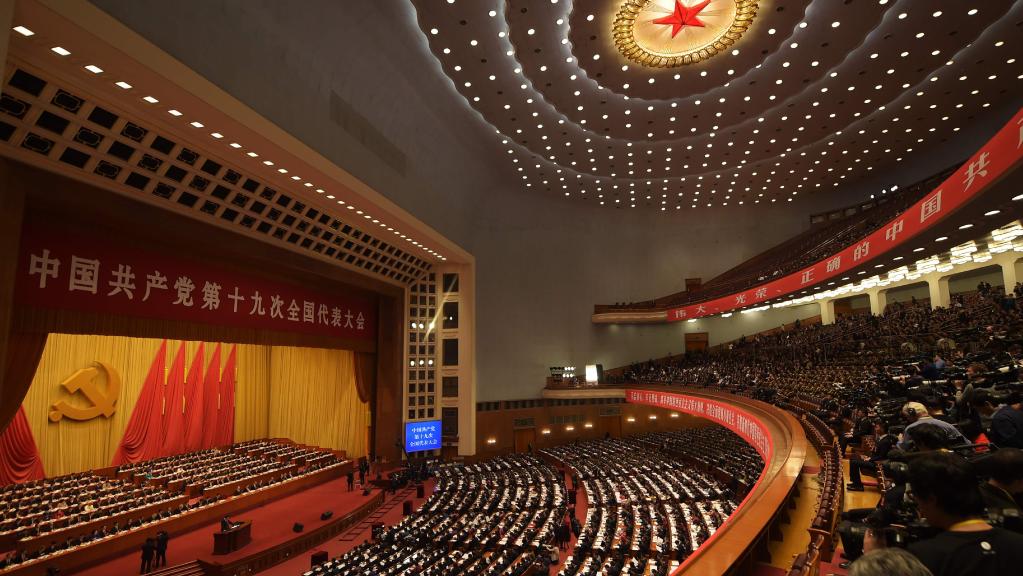
The BBC, the Financial Times, the Economist, the New York Times and the Guardian were all denied access to the unveiling of the new Politburo Standing Committee in the Great Hall of the People in Beijing. Photo: AFP The BBC, the Financial Times, the Economist, the New York Times and the Guardian were all denied access to the unveiling of the new Politburo Standing Committee in the Great Hall of the People in Beijing. Photo: AFP

The BBC, the Financial Times, the Economist, the New York Times and the Guardian were all denied access to the unveiling of the new Politburo Standing Committee in the Great Hall of the People in Beijing on the morning of October 25.

Chinese government officials did not explain why these particular news organisations were all excluded from the carefully stage-managed event attended by some 2,000 journalists. A statement from the congress media centre said that space was limited on Wednesday and noted that the media concerned had been able to attend previous briefings.

However, it seems almost certain that they were likely barred simply because of their, at times, critical coverage of China and Chinese politics.

As the Foreign Correspondents Club of China noted in a statement yesterday: “Using media access as a tool to punish journalists whose coverage the Chinese authorities disapprove of is a gross violation of the principles of press freedom.”

Restricting media access to key political events is an ominously retrograde step for a country and government that claims to be open and transparent. Moreover, it contrasts sharply with the relatively free and open access given to foreign journalists at Communist Party Congresses in the 1980s and 90s when the country was just re-emerging on the world stage.

If China wants to be seen as responsible leader of the global community it should honour President Xi Jinping’s claim that the country “welcomes objective reporting and constructive suggestions” and allow both domestic and foreign journalists to do their job.

Successful Scots reveal highs and lows of life as entrepreneurs

left to right: Andy C. Neilson, Co-Founder, King & Country; Malcolm Offord, Founder, Badenoch & Co. Photo: FCC/Sarah Graham

Go with your gut instinct in business and learn from your mistakes – that was the advice from serial entrepreneur and co-founder of Wan Chai’s famous Joe Bananas bar at a lively club lunch.

Andy C. Neilson, also co-founder of military and civilian miniatures shop King & Country, joined fellow entrepreneurial Scot and founder of Badenoch & Co. Malcolm Offord in sharing the secrets of their successes – and failures. The pair spoke during the event titled From Scotland to Hong Kong: How Entrepreneurs Compete On the World Stage on October 25.

Both are at the helm of several thriving businesses, though Offord is based in Edinburgh, Scotland, where he is chairman of Badenoch & Co, which invests in emerging Scottish manufacturing companies. Among the many titles he holds, he is also a director of Cashmaster International Ltd which supplies leading retailers with top-of-the-range count-by-weight cash devices; and chairman of the National Museums Scotland development board.

Neilson, on the other hand, is a Hong Kong stalwart. He left his job as a Royal Marine Commando in “depressing” Britain in 1977 to join what was then Hong Kong’s Royal Police. After two years on a paltry junior inspector salary of HK$2,500 per month, Neilson, who had studied graphic design at art college in Scotland, moved first to the public relations arm of the police, then to the Government Information Service.

It wasn’t long before new opportunities came his way – opportunities that would only have been available in Hong Kong. “The one thing that impressed me once I got here was the wealth of opportunity,” he said.

With Laura, his first wife, Neilson set up a freelance graphic design studio which soon led to a weekly cartoon in the South China Morning Post. Not long after Laura took a job in the popular Bull & Bear pub in Hutchison House, the couple decided to open their own bar. Mad Dogs in Wyndham Street, named after the Noël Coward song but without the Englishmen – “…we wanted a British-sounding name but, being Scottish, there was no way we’d keep Englishmen.” – opened its doors in 1984.

It was such a success that Neilson and his wife went on to open the legendary Joe Bananas – named after an infamous gangster – in Wan Chai. King & Country, one of the world’s major designers and producers of all-metal, hand-painted 1:30 scale military and civilian miniatures, was their next venture.

By his own admission Neilson said he had made plenty of mistakes along the way despite managing several thriving businesses. One such error of judgment was not buying the building which was home to Mad Dogs. The owner offered it to him in the late 1980s for HK$6m. Because Neilson had only recently opened Mad Dogs, into which he’d ploughed all his money, so he said no. He was offered it again a year later for the slightly increased sum of HK$8m. This time all his cash was tied up in Joe Bananas, so he again was unable to take up the offer. The building later sold for HK$80m. “That’s a case of when you miss the boat,” Neilson said.

Offord started out as a law graduate at Edinburgh University but he “hated the subject”. Nonetheless, he went on to have a successful 27-year career in the City of London. But his passion these days is a focus on encouraging Scotland’s growth through manufacturing. To that end he is also chairman of Borders Whisky Distillery in the Scottish Highlands, with its newest distillery undergoing a £10 million refurbishment to turn a disused industrial site in Hawick into a modern distillery.

As chairman of the National Museums Scotland development board he has also been instrumental in the ambitious 15-year refurbishment project taking place there. The museum is home to several exhibitions with ties to China, including the largest collection of bones outside the country. He wants to highlight the success of Scots abroad. He said: “It’s about collections sent back from around the world by Scots who went overseas and were successful in foreign lands.”

During the lengthy whisky distilling process Offord said he would produce gin using plants from Kew Gardens that were harvested from overseas by the top ten ‘plant hunters’, all of whom were Scottish.

Harassment of journalists in China: reporters covering 19th Party Congress prevented from conducting interviews

Here are the latest reports of harassment against journalists covering events in China, courtesy of our colleagues at the FCC China.

INCIDENT REPORT – submitted October 2017
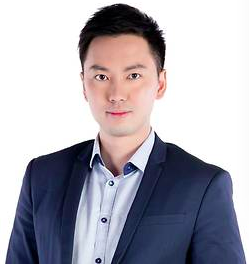
Jeremy Koh. Photo: Channel News Asia Jeremy Koh. Photo: Channel News Asia

by Jeremy Koh, Channel News Asia

I was in Tonghua speaking with an elderly man in a park when suddenly a few men started surrounding us. Sensing that things were not quite right, the old man left the place first. When I tried to leave, I was stopped by propaganda officials. Shortly after, police came and asked me to go to a police station. There, I was detained for about five hours as they repeatedly asked me what I was doing in town. Finally, they made me sign a statement saying that I spoke with the old man. I was then picked up by the propaganda officials who sent me back to the hotel.

The next morning, when I went down to the lobby at 7am, the propaganda folks were waiting for me, so there was no way I could conduct any other interviews.

I’ve been followed by authorities on several occasions throughout China over the last few months. Was followed by authorities near the North Korean border in Changbai and Ji’an; in Liangjiahe where Xi spent 7 years; in Northeastern China when I tried to speak to retrenched workers, etc. In some places, I was told I was not allowed to conduct interviews in their region without prior permission from the propaganda office.

INCIDENT REPORT – submitted October 2017

From a western media organisation

After the 19th party congress opening, where we had been told by delegates that the “ordinary people” loved Xi Jinping, we wanted to try to consult some of the ordinary people. We went to a nearby shopping district (Xidan) to try to film some street scenes and speak to passers-by, but were immediately stopped by black-uniformed Teqin security guards.

We explained that we were covering the congress, showing both 19th congress accreditation and journalist cards, and were allowed to film from the public street, and speak to anyone who agreed to speak to us, but they told us we were not allowed, claiming the whole Xidan district is under special administrative order (because it is such an important area) and we must apply for permission from their headquarters before we can film anywhere in the district.

There was no violence, but they covered our lens and ordered us to stop.  We argued the case for a while, and were eventually allowed to film a few minutes of footage, but under no circumstances to speak to anyone.  After a few minutes we left and tried again further away, again on a public street.  As we were vox-popping people another security guard approached us, photographed us and the women we were speaking to on his phone, and told them and us to go.

INCIDENT REPORT – submitted July 2017

From a western media organisation

We travelled to Shenyang early on Friday 14th July to cover the death of Liu Xiaobo. As we approached the hospital, we were initially stopped and gestured to move away by two plain clothes men, while another filmed us on a mobile phone.  We kept walking, past another guy also filming us, and then sending photos or video of us by wechat. Closer to the hospital entrance, we were surrounded by at least five men, all in plainclothes, several with earpieces plainly visible.  They put hands over our lenses and shouted at us. Nothing too physical, just close quarters intimidation, shouting and gesturing. We identified ourselves as accredited journalists, showing the blue cards, which were on lanyards around our necks, and explaining we were allowed to film on the street outside the hospital.  A number of others were filming us, and appeared to be sending voice messages via wechat.  We tried to move away from them, but they repositioned around us several times.

…another plain clothes man circled him and kept close watch in the restaurant where he was sitting…

One of our colleagues had stayed on the far side of the road to keep an eye on what was happening – another plain clothes man circled him and kept close watch in the restaurant where he was sitting.

After a while of showing our press cards and explaining calmly that we were entitled to be there, they did back off to an extent and we were able to film for a few minutes, but then another man, also in plain clothes came and flashed his police badge at us, identifying himself as ‘policeman of china’ and demanding to see and photograph our passports, visas, and press cards, which we kept hold of while he did so.  He moved away and we continued filming, and trying to speak to people, but the security guys were still close by so it was very difficult to speak to anyone, and people were clearly reluctant to talk.

We moved back across the road to do a live broadcast, which we did with another apparently plain clothes security guy sitting a couple of metres from us.

Once we had moved away from the hospital area we had no further problems.  When we checked into our hotel there was a young guy of similar profile to the normal security types, who arrived at the same time as us, and sat beside the check-in desk, so likely he was also surveillance, but impossible to say with certainty.

Wechat messages between two of our team that mentioned Liu Xiaobo never arrived.  We tested this a few times after realising what was happening, and found that two of us could send and receive messages mentioning Liu Xiaobo, but the other two couldn’t.

We also had great difficulty getting anyone to speak to us on record about Liu Xiaobo.  A number of people just didn’t reply to messages or pick up the phone, and one told us he had been visited three times already by state security services and could not accept our interview.

INCIDENT REPORT – submitted July 2017

From a western media organisation

After the death of Liu Xiaobo and the disappearance of his widow, Liu Xia, we went to the Beijing compound where she had been living in late July.  There was a barrier to stop cars going in, but no barrier on pedestrian gate so we walked in on foot.  Within ten metres we were stopped by security guards.  One man got in front of me and repeatedly shoved me with his arm against my chest, while radioing his colleagues.  We explained that we were accredited journalists, not causing any trouble, and trying to go to the address of Liu Xia.  Several more men (all wearing black private security uniform) surrounded us, all yelling, putting hands over our camera lens, and pushing me and the cameraman around.  One man grabbed me by the shoulders and shoved me hard.

He grabbed my hand so hard, his nail broke the skin on my hand and left a bleeding thumbnail imprint

By this stage we were retreating back out of the compound onto the main road, but attempting to take some last shots from there.  Another man in black t-shirt appeared, apparently even more angrily and tried to grab the small camera I was filming with.

He grabbed my hand so hard, his nail broke the skin on my hand and left a bleeding thumbnail imprint (this was on the public street, not inside the compound).  They continued aggressively jostling and threatening our team until we got back into the car, where one man lunged at the window as we drove away.

As we pulled out we realised a police car was following directly behind, so began trying to secure our footage.  We were followed until we left the area, and drove around for a while before returning to try another entrance to the compound.  This time there were a mixture of plain clothes security personnel (with earpieces), two uniformed officers, and a couple of private security guards.  It was less physical, but they put hands over our lenses, photographed our IDs, and told us to leave, despite being in a public park, and not inside the residential compound.

The residential compound issue is tricky – technically the police and private security say we are in the wrong because we do not have permission from the resident to be filmed, so we do not have permission to be inside the compound, but if the person is under house arrest and being held incommunicado, it is impossible to reach them to gain permission.  This seems to be exploited by security services.

—————————-

We measure site performance with cookies to improve performance.