Members Area Logout

Fox could cause ‘enormous damage’ on election night, Stelter warns

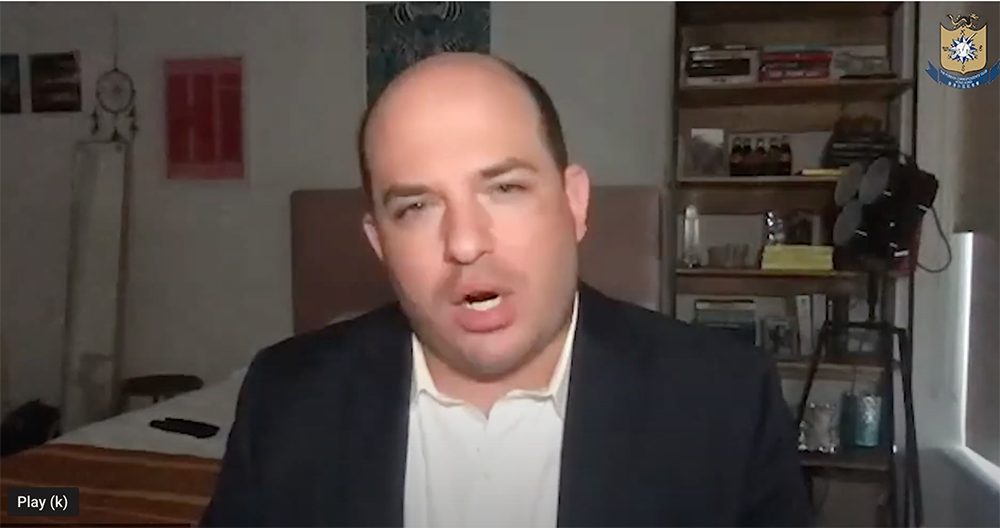
How Fox News reports the upcoming U.S. election will be crucial in how the result is accepted, CNN’s Brian Stelter said in an FCC webinar.
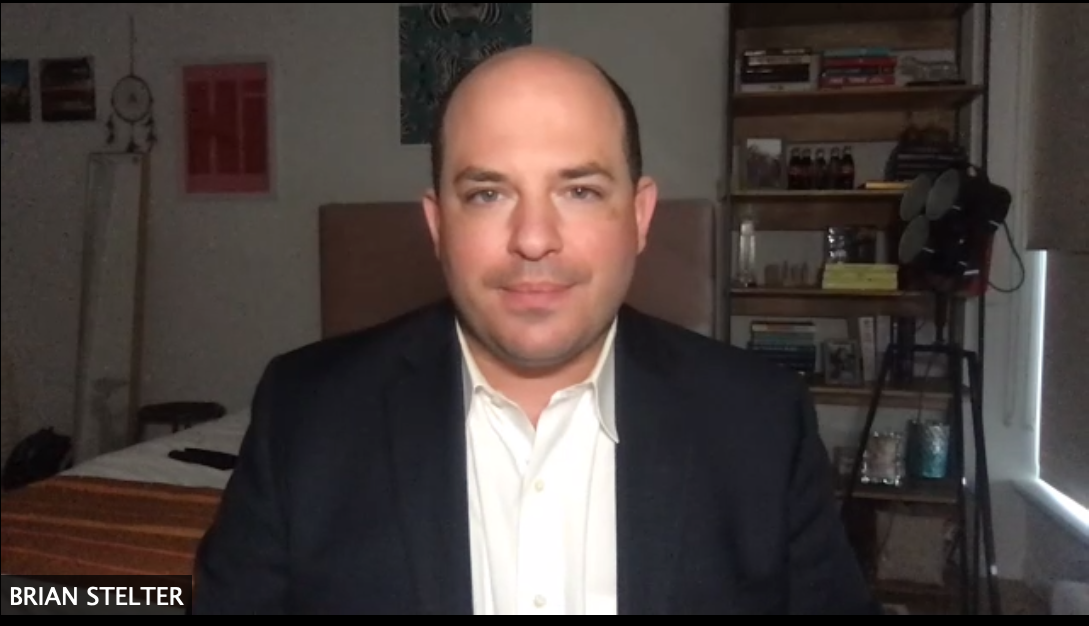
Brian Stelter is interviewed by Eric Wishart on September 8, 2020. Brian Stelter is interviewed by Eric Wishart on September 8, 2020.

Election night coverage on America’s most watched cable network could be a ‘tug of war’ between its opinion side – anchors like Sean Hannity and Tucker Carlson – and its ‘well-respected decision desk’ that analyses the data and calls races, said Stelter, who hosts CNN’s Reliable Sources.

“Fox has a huge responsibility in the hours after election night, assuming there’s not a winner right away,” he said. “Will this be a house divided, where the news side is saying that votes are still being counted, and Trump’s side is saying ‘Trump won, Trump won, shut it down, stop the counting, Trump won’?

“Will we be in this situation where there are two contradictory, confusing messages coming from the two sides of the house?”

He added that America ‘by and large accepts the result as television networks announce it’ and said if Sean Hannity and ‘those guys at Fox on the opinion side decided to contest the result or go along with whatever Trump is tweeting, it’s going to do enormous damage’.

Stelter reiterated that the Murdoch family, headed by media mogul Rupert, and the head of Fox News have a ‘huge responsibility’ around the channel’s reporting of the election, ‘and I hope they live up to it’.

Stelter’s latest book, Hoax: Donald Trump, Fox News and the Dangerous Distortion of the Truth, goes behind the scenes to examines the relationship between the president and the news channel, talking to current and former Fox insiders about President Trump’s ‘obsession’ with the network.

He pointed out that Trump was being fed misinformation by Fox News that he would then publicly reference as fact. This, Stelter said, led him to use ‘hoax’ in the book title rather than Trump’s previously favoured ‘fake news’, particularly after the president and Fox News both played down the outbreak of COVID-19 by using the term.

“I think the book is doing well because this is the part of the Trump story that still is not fully understood, which is his addiction to Fox News. I would argue that it’s a uniquely American problem to have a president so obsessed with a television channel,” he said.

The tug of war between the news side and opinion side meant that instead of reporting the news, Fox talks about the news. Other networks, he said, were ’tethered to the truth’ by vigorous vetting and standards processes prior to a segment airing.

Asked if CNN’s criticism of Trump by anchors such as Chris Cuomo and Don Lemon made it just as partisan as Fox, he said: “If Joe Biden comes into office and says that it’s sunny at his inauguration when it’s raining – and that really happened, Trump lied about the weather on day one – we will fact check him to the ends of the earth. I actually think the coverage would be harsher.”

Being ‘centre of the pro-Trump universe’, Fox News and its anchors wielded huge influence in America, Stelter said. Sean Hannity, a former mentor to Stelter who came to prominence at the channel following the resignation of disgraced Fox News mastermind, Roger Ailes, had become ‘an adviser to the president, a confidante, a friend to the president’.

The extreme relationship between president and news network was emphasised by Stelter when he revealed that Trump had kept Chinese President Xi Jinping waiting so he could speak to Hannity.

“He really did keep the Chinese president waiting… It does speak to the power dynamic here. Trump is prioritising Hannity… he has to wait his turn to call into Hannity’s show. He’ll still do a 20-minute rant first and then have the president come on the show. It speaks to the power imbalance here and I think when we look back at the Trump years… we will say this addiction to television, this reliance on Fox, hurt the Trump presidency,” Stelter said.

Writing in his book about Ailes, who resigned in 2016 as Fox chairman and CEO amid allegations of sexual misconduct, Stelter said he was still missed at the network because he ‘was tough on Trump sometimes, he knew how to reign Trump in when necessary’.

“One popular view on Fox is that if Ailes were in charge there’d be a strong leader, at least someone would be firmly in charge and would have tried to control Trump in a way that no one at Fox does today,” Stelter said.

Watch the video

FCC Restrictions Further Relaxed

FCC Restrictions Further Relaxed
      
Dear Members:
The Hong Kong government starting Friday September 11 will further ease anti-virus restrictions, notably allowing four guests per table rather than two. The club will comply with the following:
               
All restaurants will continue to close at 10 p.m. every day. Last orders for food must be made by 9:00 p.m. while drinks last orders must be made by 9:30 p.m.
The takeaway menu is available from 11 a.m. to 10 p.m., though last orders must be made by 9:00 p.m. The menu can be downloaded from our website at fcchk.org. Please place orders with the FCC Restaurant at 2844 2806 or [email protected]. Orders will be confirmed by a phone call.
Up to four people will now be allowed at tables in all outlets and the number of guests per member will be extended to two.
All outlets will remain at 50% capacity. Please book ahead.
No in-person events or live performances will be held at this time. Virtual events via Zoom will continue.
The gym is open yet the sauna and steam room remain closed. No more than four people are allowed at a time. Wearing a mask in the gym is required while exercising under the government’s rules. Please pre-register with the gym attendant at 2844 2849.
The Workroom will be open from 8 a.m. to 10 p.m.
In keeping with government requirements and best practices, all members, guests and staff must wear face masks except when eating or drinking. Hand sanitizer must be used. The FCC will continue the check-in, temperature-taking and declaration measures upon entry to the club, as well as the frequent cleaning protocols throughout the building.
The staff will continue to take future bookings for banquets and we hope to plan in-person club events soon.
Thank you for your continued support of the FCC.
9 September 2020


Summer reads as recommended by some of the FCC’s distinguished guests

With countries around the world in and out of lockdown due to COVID-19, this summer has provided an opportunity for many to catch up on some good books.

So if you’re looking for recommendations, look no further than the FCC’s long list of distinguished Zoom guests. From Noam Chomsky to Lingling Wei – themselves celebrated authors – we’ve collated a list of recommended summer reads as endorsed by our guest speakers.

Noam Chomsky

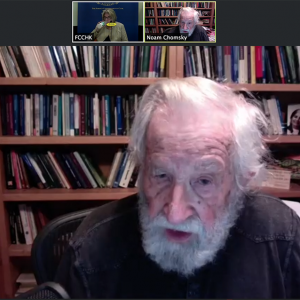
The world’s most influential public intellectual and linguist joined a Zoom webinar on August 7. He recommended two of his own books that examine the media: Manufacturing Consent: The Political Economy of the Mass Media by Edward S. Herman and Noam Chomsky, and Necessary Illusions: Thought Control in Democratic Societies 


Mary E. Gallagher

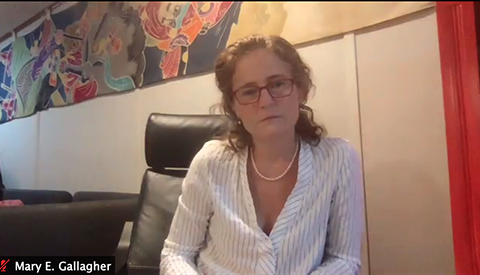
Mary E. Gallagher, professor at The University of Michigan and director of the Lieberthal-Rogel Center for Chinese Studies, joined a panel discussion on August 12 on the new China-U.S. Cold War. Her recommended reads exploring American history were Hillbilly Elegy: A Memoir of a Family and Culture in Crisis by J. D. Vance, Strangers in Their Own Land: Anger and Mourning on the American Right by Arlie Russell Hochschild, and The Politics of Resentment: Rural Consciousness in Wisconsin and the Rise of Scott Walker (Chicago Studies in American Politics) by Katherine J. Cramer.


Bonnie Glaser

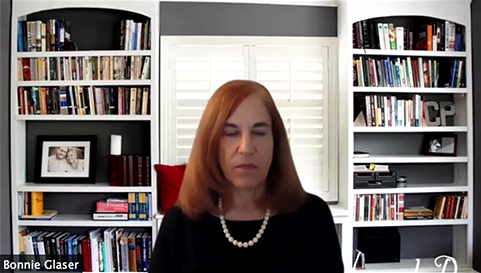
Bonnie Glaser, senior adviser for Asia and the director of the China Power Project at the Center for Strategic and International Studies (CSIS), appeared on a panel discussion on August 12 on the new China-U.S. Cold War. She recommended reads exploring American history. Her recommendations, which focused on China, were China’s Western Horizon: Beijing and the New Geopolitics of Eurasia by Daniel Markey; Superpower Interrupted: The Chinese History of the World by Michael Schuman; and The Three-Body Problem by Cixin Liu.


Stan Grant

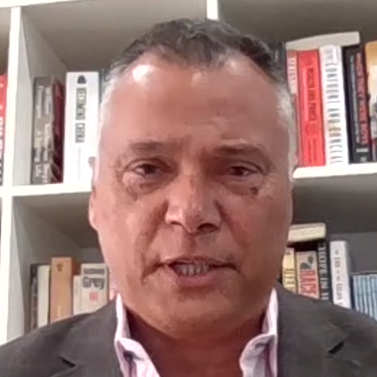
Award-winning journalist and filmmaker, Stan Grant, appeared via Zoom on August 18, and recommended the following books: The Light That Failed: Why the West Is Losing the Fight for Democracy  by Stephen Holmes and Ivan Krastev, Without God: Michel Houellebecq and Materialist Horror by Louis Betty, and The Devil in History: Communism, Fascism, and Some Lessons of the Twentieth Century by Vladimir Tismaneanu.


Garry Kasparov

Garry Kasparov, former world chess champion, democracy campaigner and author of Deep Thinking: Where Machine Intelligence Ends and Human Creativity Begins, was our special guest on August 27 when he discussed China and U.S. politics. He was reading three books: Mythos: The Greek Myths Retold and Heroes: Mortals and Monsters, Quests and Adventures by Stephen Fry and Churchill: Walking with Destiny by Andrew Roberts.


Kishore Mahbubani

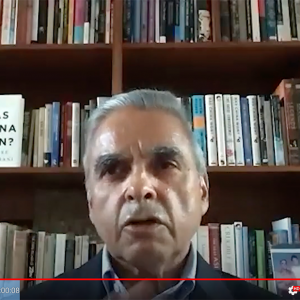
Kishore Mahbubani, Asia scholar and author of Has China Won?: The Chinese Challenge to American Primacy, recommended A Different Sky by Meira Chand, a book that tells the story of his home country, Singapore, when he joined us on August 10.


Suzanne Nossel

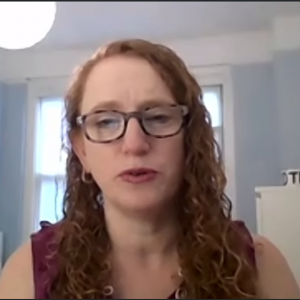
Suzanne Nossel, CEO of PEN America and author of Dare to Speak: Defending Free Speech for All, appeared by Zoom on August 5 and recommended a book by our guest from a month earlier, John BoltonThe Room Where It Happened: A White House Memoir . She also endorsed Intimations: Six Essays by Zadie Smith.


Admiral Bill Owens

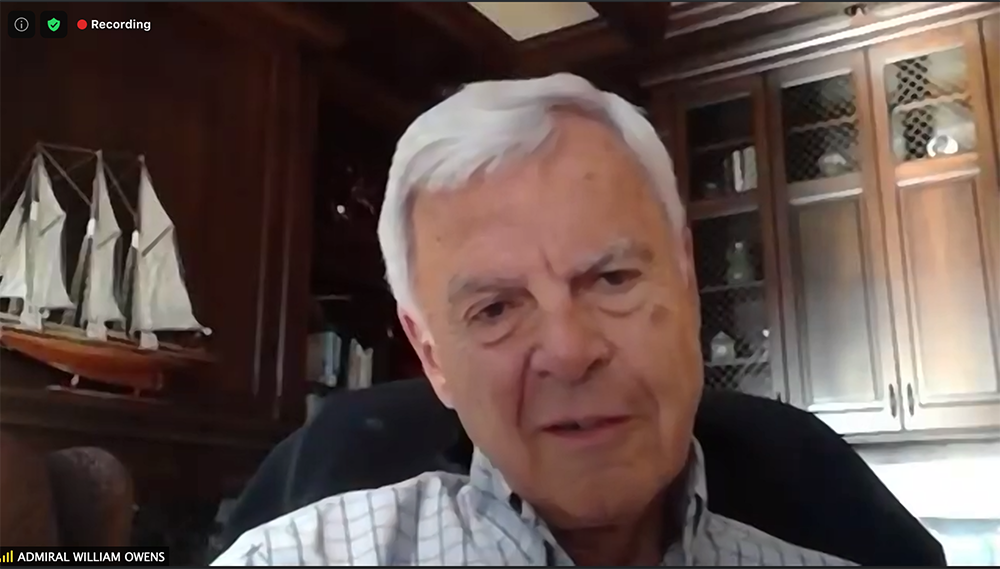
Admiral Bill Owens, formerly the vice chairman of the U.S. Joint Chiefs of Staff, revealed he was reading America in the World: A History of U.S. Diplomacy and Foreign Policy when he appeared at a September 2 webinar.


Brian Stelter

Brian Stelter is interviewed by Eric Wishart on September 8, 2020.

Appearing via Zoom on September 8, CNN’s Reliable Sources anchor said he’d be reading Bob Woodward’s new book, Rage, and No Rules Rules: Netflix and the Culture of Reinvention by Reed Hastings and Erin Meyer.


Joseph Stiglitz

Joseph Stiglitz talks to Club President Jodi Schneider on September 15, 2020.

The winner of 2001’s Nobel Memorial Prize in Economics appeared via Zoom on September 15 and recommended his most recent book, People Power, and Profits: Progressive Capitalism for an Age of Discontent; and Paul Begala’s You’re Fired: The Perfect Guide to Beating Donald Trump.


Lingling Wei

Lingling Wei, Wall Street Journal reporter and author of Superpower Showdown: How the Battle Between Trump and Xi Threatens a New Cold War, admitted during an August 12 panel discussion that lockdown had introduced her to the children’s classic, The Lorax (Classic Seuss) by Dr Seuss. She was also reading Wild Swans: Three Daughters of China by Jung Chang.

FCC Again Expresses Concern on Journalists’ Visas, Asks for Answers

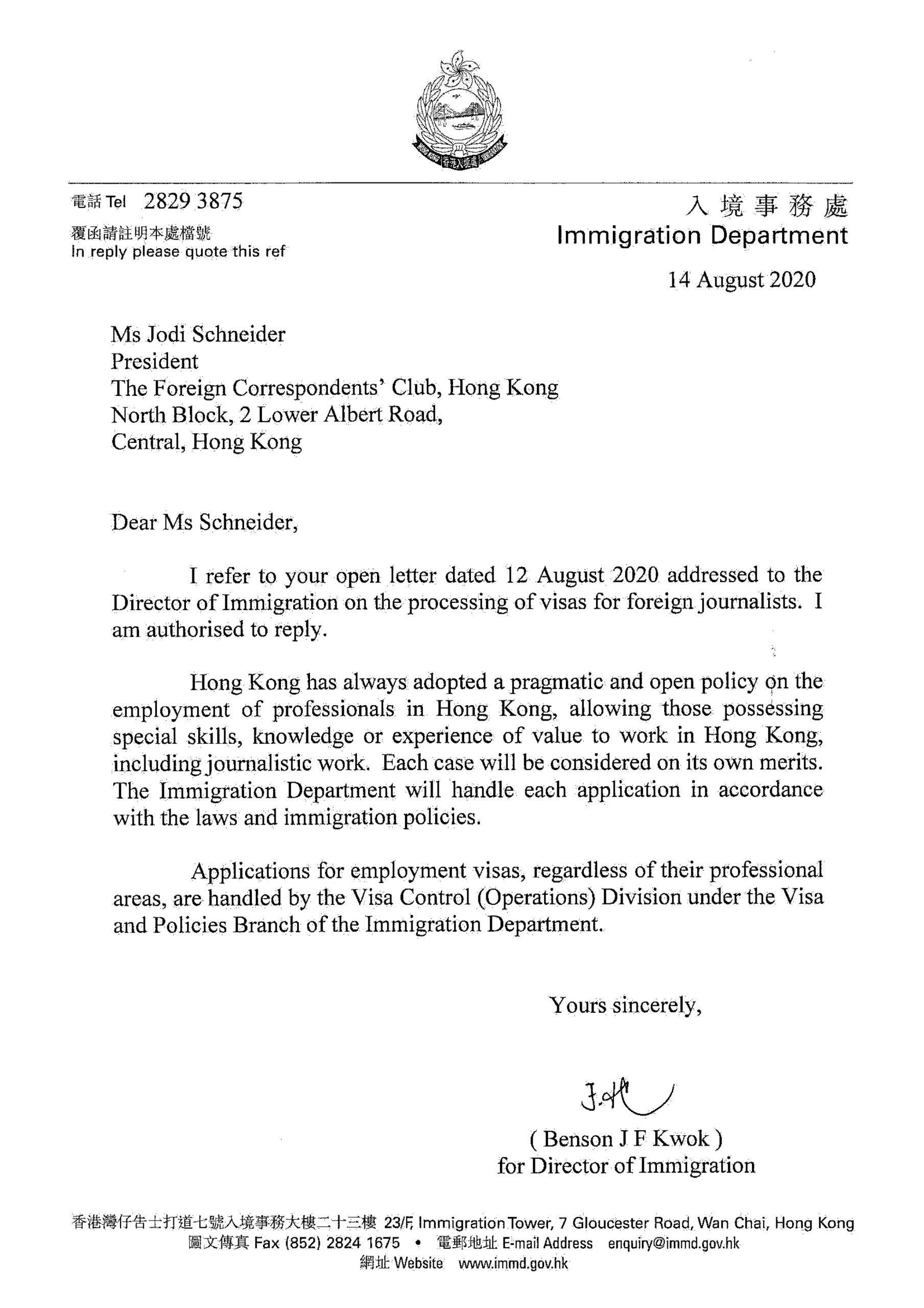
The Foreign Correspondents’ Club, Hong Kong, on 27 August 2020, received a second response to a letter to the Director of Hong Kong Immigration, Au Ka-wang, asking for answers about the system for issuing journalist visas in Hong Kong. However, just like the earlier response of August 14, this latest letter still did not answer — or even address — our very specific questions about widely reported changes to the visa policy for working journalists since the imposition of the national security law.

This continued inability or unwillingness to answer specific questions is deeply troubling, and can only lead to increased speculation that the reports of a new visa procedure for foreign journalists must indeed be accurate.

This comes amid reports of a work visa being denied for a Hong Kong publication after a months-long wait and further reports of unusual processing delays affecting foreign correspondents for a number of publications that in some cases have prevented journalists from working in Hong Kong. It also follows earlier suggestions by the Chinese government that more foreign journalists could face repercussions in response to U.S. actions.

The FCC again states its strong opposition to undermining press freedom by delaying or denying visas to journalists working in the city, using journalists’ visas as a weapon in international disputes or taking action against journalists for decisions made by their home countries.

We again call on Hong Kong authorities, as we did in our two open letters, to urgently answer our questions regarding the issuing of visas:

1) Is there now a national security unit handling foreign media visas applications within the immigration department, as press reports have said?

2) What particular criteria are applied when a journalist’s visa application is being considered?

3) Are journalists being singled out for special treatment that is delaying the granting or renewal of work visas?

4) Does the immigration department recognise that journalism involves multi-tasking so a change of duties, for example from desk editing to reporting, does not breach the terms of the visa?

Hong Kong thrives on the free flow of information. Its role as a global financial hub depends on its reputation as an international centre that respects press freedom. Restricting journalists in Hong Kong through their visa status and interfering with the ability of the press here to report freely will only damage Hong Kong’s reputation on the world stage.

FCC

2 September, 2020

Why the Taiwan Issue Is the Greatest Threat to U.S.-China Relations – Admiral Bill Owens

The issue of Taiwan’s political status is the bigger threat to an already tense relationship between China and the United States, even more so than sovereignty of the South China Sea, according to a former top U.S. military official.

Admiral Bill Owens talks to FCC President Jodi Schneider on September 2. Admiral Bill Owens talks to FCC President Jodi Schneider on September 2.

Admiral Bill Owens, formerly the vice chairman of the U.S. Joint Chiefs of Staff, said in an FCC webinar on Sept. 2 that Taiwan independence was more serious to China than issues in the South China Sea and the trade war with the U.S.

The claim comes the day after Beijing warned the United States to stop building its diplomatic relationship with Taiwan, branding the U.S.-Taiwan Relations Act as “illegal” and “invalid”. Taiwan is embroiled in a decades-long dispute with China over whether it will be repatriated with the mainland. The country is currently led by the Democratic Progressive Party (DPP), which favours independence from China.

“Of course we should all be worried about what might happen in the South China Sea. A skirmish of some kind can turn into something that is much more serious,” said Owens, adding: “But in terms of the sheer seriousness of the way the government in Beijing takes the issue of Taiwan versus the issue of the South China Sea, I think they view Taiwan as much more important than the South China Sea.

“It’s all about Taiwan. It’s about what happens in Taiwan,” said Owens, who retired in 1996 after 35 years in the Navy. “The Chinese have said in many many ways… if there is a declaration of independence in Taiwan, we will take military action to preclude that from happening. Those are pretty serious words.”

If military action were to occur between the U.S. and China over Taiwan “our world will never be the same”, Owens said, adding that he hoped to see “appropriate diplomacy between the U.S. and China behind the scenes”, whether that be with the Trump administration or a Biden government.

In his new book, China-US 2039: The Endgame? Building Trust Over Future Decades, Owens, who embarked on a career in business after retiring from the military and founded Red Bison Technology Group in 2015, puts forward several policy recommendations that could steer the two countries away from conflict.

He argued that thinking long term – “the Chinese do this very well” – is the key to cementing closer diplomatic relations and suggested that over the next 20 years, America and China could achieve improved ties.

Owens, whose 35-year service in the U.S. Navy included participation in Vietnam and Desert Storm, spoke about Hong Kong’s recently enacted national security law and said it was his view that China wanted the city to remain a thriving international financial hub.

“I think Hong Kong has always needed a form of a national security law like some of the things that are in the national security law that was forced on Hong Kong by the Chinese. It’s too bad it had to happen that way and I think from the West standpoint I would pray that a year from now we will not see as many issues of China interfering in Hong Kong as much of the Western press would have us believe,” he said.

Owens said he thinks the Chinese government understands “the great importance of Hong Kong in the international trade and monetary systems”.

“I couldn’t imagine that they would want to do anything that looks like a Tiananmen Square or an involvement that seems too much,” he said.

Responding to a question about whether President Donald Trump could be removed from the White House by force if he were to lose in November and contest the results of the presidential election, Owens pointed to non-military tools to potentially remove the president.

“I’m sure the Joint Chiefs all feel … that it is there to serve the nation – it’s not a Trump military or a Biden military, it’s a U.S. military and it will be very difficult to get them to do anything that is viewed as political. So I pray that what you suggest doesn’t happen,” he said.

When asked who was winning the 5G race – America or China – Owens, a former CEO of telecoms firm, Nortel, said he thought “it’s a tie” but made an impassioned case for the implementation of Wi-Fi worldwide.

Watch the video

Alliance for Journalists’ Freedom calls for Chinese authorities to release CGTN anchor, Cheng Lei

The Alliance for Journalists’ Freedom (AJF) promotes press freedom and the right of journalists to report the news in freedom and safety. It also campaigns in the Asia–Pacific region, wherever journalists are censored, threatened, imprisoned or killed. This is their statement on the detention of Australian CGTN anchor, Cheng Lei.

The Alliance for Journalists’ Freedom calls for Chinese authorities to provide due process to Australian TV journalist Cheng Lei, and release her immediately pending any judicial proceedings, in line with the International Covenant on Civil and Political Rights (which China has signed). It also calls on the authorities in China to ensure that any judicial proceedings follow due process.

On Monday, Foreign Minister Marise Payne confirmed that her department had been told, on August 14, of Ms Cheng’s detention in Beijing. According to the ABC, she is being held under what is known as “residential surveillance at a designated location”. In effect, she has been imprisoned without charge and under Chinese law, could remain there for up to six months without access to lawyers or her family.

AJF spokesman Peter Greste said, “We are deeply troubled by Cheng Lei’s unjustified detention. Nothing in her life suggests she is a spy, a terrorist or a criminal of any sort. In the absence of evidence, the only conclusion we can come to is that she is being used as a hostage in a wider diplomatic spat between Australia and China, or perhaps because of some critical comments she may have made. Either way, it is simply unacceptable.

“Her detention without charge sends a very clear message to the rest of the world and the media community in particular – that China has little respect for the role of journalists in public debate and seems willing to use high profile figures for political and diplomatic leverage.”

Cheng was born in China but grew up in Australia and studied at the University of Queensland. For the past eight years, she has worked as an on-air anchor and reporter for the English-language TV news service, CGTN. Since her detention, her profile has disappeared from the network’s website and her videos have been taken down.

In a video released by the Australian Global Alumni, an international relations initiative by the Department of Foreign Affairs and Trade, Cheng said, “the beauty of an Australian education is more about what it doesn’t teach. It doesn’t teach you to just follow orders. It allows you that freedom to think for yourself, to question even textbooks, even professors, to judge for yourself, which is critical in journalism.”

The AJF believes that a free, vibrant media benefits everyone apart from those with things to hide, and is fundamental to any functioning society regardless of its political system. The AJF campaigns for legislative reform and the freedom of journalists across the Asia-Pacific region.

Leave so you can fight another day – Kasparov’s message to Hong Kong’s democracy activists

Leaving Hong Kong would be a “wise choice” for the city’s prominent pro-democracy activists rather than face prison or worse, says former chess world champion turned democracy campaigner Garry Kasparov.

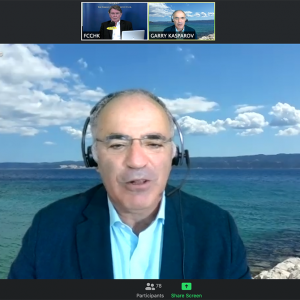
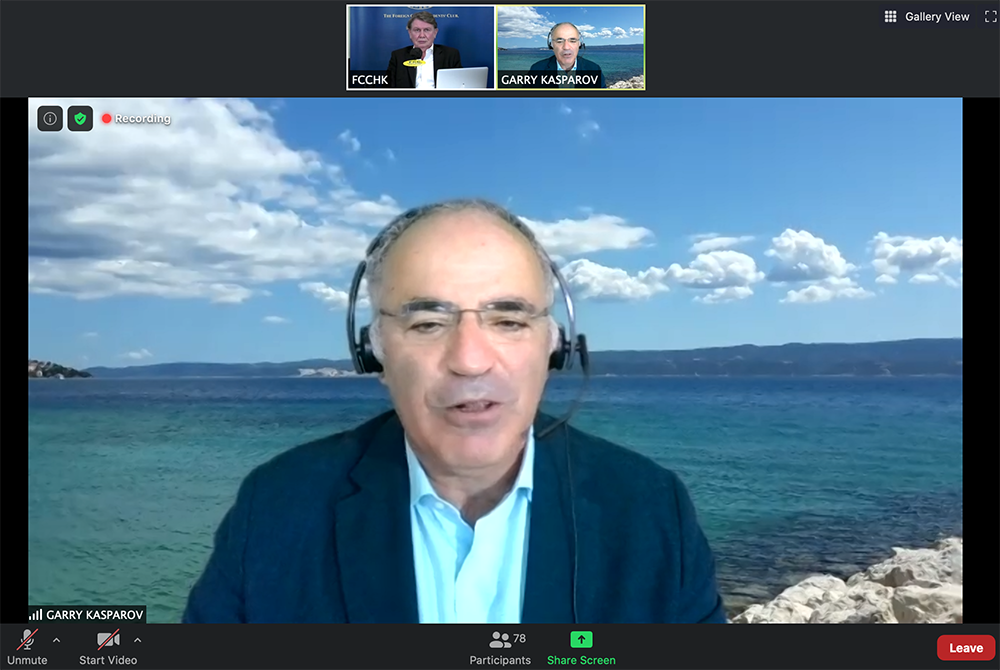
Garry Kasparov talks to FCC first-vice president, Eric Wishart. Garry Kasparov talks to FCC first-vice president, Eric Wishart.

Speaking at an FCC webinar on August 27, Kasparov – himself exiled from his home country of Russia – said he hoped that a new wave of democracy movements around the world would make it safe for activists to return and rebuild Hong Kong.

Kasparov, who at the age of 22 became the world’s youngest ever chess champion, is a vocal human rights activist and was one of the first prominent Soviets to call for democratic reform. He was an early supporter of Boris Yeltsin’s push to break up the Soviet Union.

A fierce critic of Russian President Vladimir Putin, Kasparov left his home in Moscow to live in New York following a crackdown on dissidents in Russia.

He was speaking in a week that saw two Democratic Party lawmakers – Lam Cheuk-ting and Ted Hui – arrested in connection with last year’s pro-democracy demonstrations.

Kasparov, chairman of the Renew Democracy Initiative, said he hoped to see a “new wave of democracy movements” that would bring dictatorships to an end. This, he said, could herald a new era for Hong Kong.

When asked whether pro-democracy activists should seek exile, Kasparov said when he “recognised it would be jail or worse”, he left Russia.

He added: “The prominent people who believe they can play a role in rebuilding Hong Kong, I would say probably it’s a wise choice (to leave). China’s regime is not at the stage where they care about creating martyrs. You stay there, you fight, you’ll be in jail – you mentioned mainland China – maybe you will die.

“So I think it’s important that the core of this group is preserved because there will be a moment – maybe sooner than we think because as we can see in Belarus, these regimes are not stable and Putin now is experiencing great problems. Hopefully now … you see this the trend is going back to the eighties like a pendulum of history when we have a new wave of democracy movements around the world and when we’ll see these dictatorships are losing the momentum that unfortunately they gained on the geopolitical stage. Then I wish there will be enough people in Hong Kong to come back.”

Describing himself as “an incorrigible optimist by nature”, Kasparov said he believed “that China will also be free”.

Kasparov spoke about his desire to see President Donald Trump lose the November election. He discussed Trump’s close relationship with Putin – “please don’t call him president – he is what he is: a dictator” – comparing it to a KGB handler and his asset. He said he suspected that Trump’s connections to Russia “started much earlier than 2008/2009 when Russian money saved his crumbling empire from collapse”.

However, he was adamant that he would not visit Hong Kong in the future.

“I think that Hong Kong might not be on my travel list… I doubt very much in the foreseeable future I’ll be able to set my foot on Chinese soil or the soil controlled by the Chinese Communist Party,” he said.

Watch the video here
It’s farewell and bon voyage to Correspondent editor, Sue Brattle

The Foreign Correspondents’ Club bids farewell to Sue Brattle, a longtime member and outgoing editor of The Correspondent, as she embarks on a new chapter. Before she leaves Hong Kong, we asked her to reflect on her time helming the magazine.

Q: What first drew you to the position of editor of The Correspondent?

A: I was a reader of the magazine and was ghost-writing a book when I saw the contract advertised. I had flexible working hours, so thought I’d apply for the job – and got it! My thanks to Kate Whitehead and Adam White who interviewed me, and for being so supportive in my first year. I’m sure the new editor, Kate Springer, who has my very best wishes, will equally get terrific support from the current Communications Committee.

Q: What are you proudest of during your time as editor?

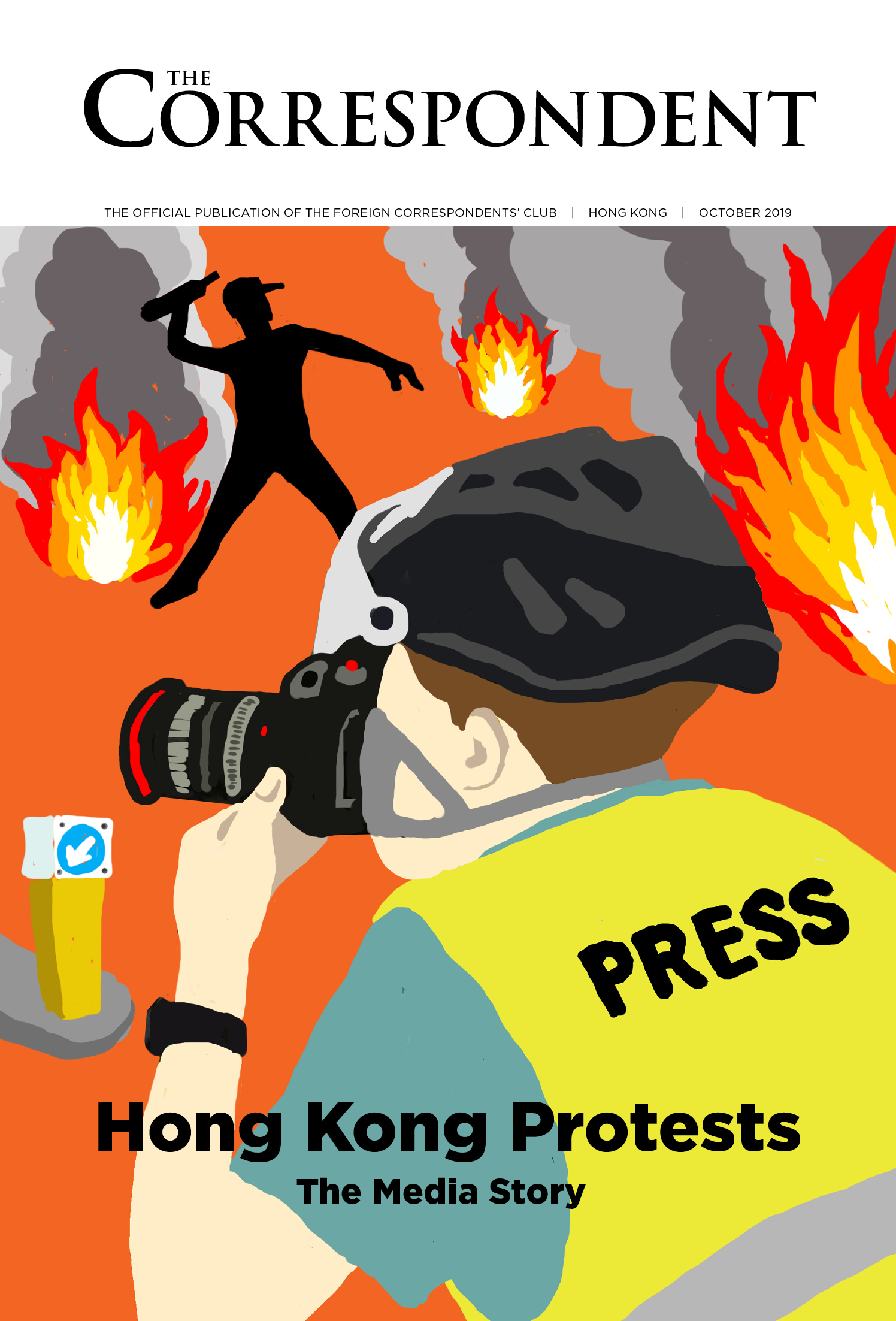
A: Definitely the protest issue of October 2019. By then the protests had become part of our landscape in Hong Kong, and I wanted to emphasise the human interest stories behind the media coverage. I approached around 25 members of the media and was bowled over by the response. I asked for personal reflections, as apolitical as possible, and that’s what I got. Some of the 20 or so pieces genuinely moved me, and I think it made for a strong issue of the magazine.

Q: What were the key challenges you faced while in this role?

A: Making the magazine timely, while being quarterly. I always tried to commission early in the three-month cycle, but gave writers and photographers as much leeway with deadlines as possible. I did most of the magazine in the three weeks before going to press, and the cover story and president’s message in the last hour or so. Also, I’d love for the Comms Committee to meet in the evening rather than at lunchtime, so members had more time to chew over ideas instead of needing to rush back to work.

Q: What are some of the most memorable stories you commissioned and worked on with reporters? 

I loved working with the students who wrote for the second protest issue, January 2020, and the coronavirus issue of April 2020. Their care and enthusiasm should be bottled! There are a few stars of the future among them. It was always a pleasure to work with journalists in the club who know Hong Kong inside out and can bring it alive. As every editor knows, there’s nothing like an idea landing in your inbox out of the blue from someone you can trust will deliver it on time. Oh, I also loved the club’s annual Journalism Conference and eventually had a team of reporters covering it.

It was always a pleasure to work with journalists in the club who know Hong Kong inside out and can bring it alive.

Q: What do you plan to do after leaving Hong Kong? 

A: Well, I’m sure you can hear the gods laughing at our plans … what a time to be on the move. Plan A was to go home to the UK, slowly, as an extended holiday. You never know, we may still manage that. Then we’ll sort out our house, which has had tenants for 14 years while we’ve been working abroad, and organise our next adventure. My husband and I launched a travel blog, Afaranwide.com, 18 months ago, and we’ll work on that wherever we are.

Q: What will you miss about Hong Kong?

A: The list is endless, but I really don’t want to lose the view from our balcony in Discovery Bay. The steady comings and goings of the ferry make me feel all’s well, whatever the reality is! And looking out onto the hills opposite us is definitely good for the soul. I doubt I’ll ever have such a privileged view again.

Sue Brattle is leaving Hong Kong for a move back to the U.K. Sue Brattle is leaving Hong Kong for a move back to the U.K.

Australia has a long way to go to before getting an indigenous prime minister – Stan Grant

The prospect of an indigenous Australian becoming prime minister or “anywhere near” is a long way off, according to award-winning journalist and author, Stan Grant.

Discussing the recent announcement of US Senator Kamala Harris as presidential hopeful Joe Biden’s running mate, the broadcaster said that while there were similarities between America’s struggle with racism and that of his own country, the chances of an Aborigine taking high office were remote.

“It has taken over 100 years for an indigenous person to make a federal government minister. There are now a few more indigenous represented at state and federal level, but we’re a long way from getting to the point where an indigenous politician would get anywhere near becoming prime minister in Australia,” he said, adding: “It’s something I can’t even envisage at the moment.”

Talking to CNN anchor, Kristie Lu Stout, he said the appointment of Harris, the daughter of African-American and Asian immigrants, was an “extraordinary achievement” and “a reflection, I think, of America’s journey”.

Grant, who recently became the first indigenous host in the 59-year history of the ABC Four Corners documentary program, shared his experiences of racism growing up and discussed what the Black Lives Matters movement means to indigenous Australians.

He said Americans and Australians share a history of institutionalised and structural racism that limits opportunities in life and places first nation people on the margins of society. The killing of George Floyd during his arrest in Minnesota sparked a global outrage that kicked off protests in several countries. For Grant, who has been at the forefront of the fight for the rights of indigenous Australians for decades, it was a pivotal moment.

“That experience of George Floyd and Black Lives Matter spoke to me very personally. It spoke to our shared history,” he said.

Grant told of his own experiences of racism growing up in Australia, where, as part of a group of Aboriginal school children, he was told by his headmaster that he’d never amount to anything. After relocating to Canberra, he and his siblings found themselves “in a world that was overwhelmingly white”.

And those in power in Australia are still overwhelmingly white, Grant said, pointing to institutions from government to media. Yet he said even today, to discuss racism in Australia was “a difficult conversation”.

“It’s a country where people come to escape history, not to confront history,” he said. “Yet if we don’t do that as a nation then we are forever diminished. You cannot keep people in chains forever and not think that at some point it isn’t going to come to the surface, and that’s what we’re seeing in the United States.”

Watch the video here

FCC Reissues Call for Answers on Journalists’ Visas After Hong Kong Immigration Response

On August 14, the Foreign Correspondents’ Club, Hong Kong, received a response to our letter to the Director of Hong Kong Immigration, Au Ka-wang, urging clarification over the issuance of journalist visas in Hong Kong. Today, we again call for answers to four specific areas of inquiry.  

Thank you for your response via Benson J F Kwok to the open letter from the Foreign Correspondents’ Club, Hong Kong, of 12 August 2020 regarding the processing of visas for foreign journalists.

While we appreciated the swift reply, the letter did not address or answer the four specific areas of inquiry we had regarding possible changes in the processing of visas for foreign journalists to work in Hong Kong.

Any new procedure for processing visas for foreign media in the Hong Kong SAR would be a major change and have significant implications for the many international media organisations and journalists based in Hong Kong. On behalf of the journalistic community in Hong Kong and the FCC membership, we are again urgently seeking clear answers to these four specific questions. We will include our earlier letter with the questions that we need answered, but here is a reminder of the key points:

1) Is there now a national security unit handling foreign media visa applications within the immigration department, as press reports have said?

2) What particular criteria are applied when a journalist’s visa application is being considered? 

3) Are journalists now being singled out for special treatment that is delaying the granting and renewal of visas? 

4) Does the immigration department recognise that journalism involves multi-tasking, so a change of duties, for example from desk editing to reporting on the ground, does not breach the terms of stay?

Yours sincerely,

Jodi Schneider

President

The Foreign Correspondents’ Club, Hong Kong

We measure site performance with cookies to improve performance.