Members Area Logout

U.S. Needs to ‘Find Patterns of Cooperation With China’: Ambassador Christopher Robert Hill

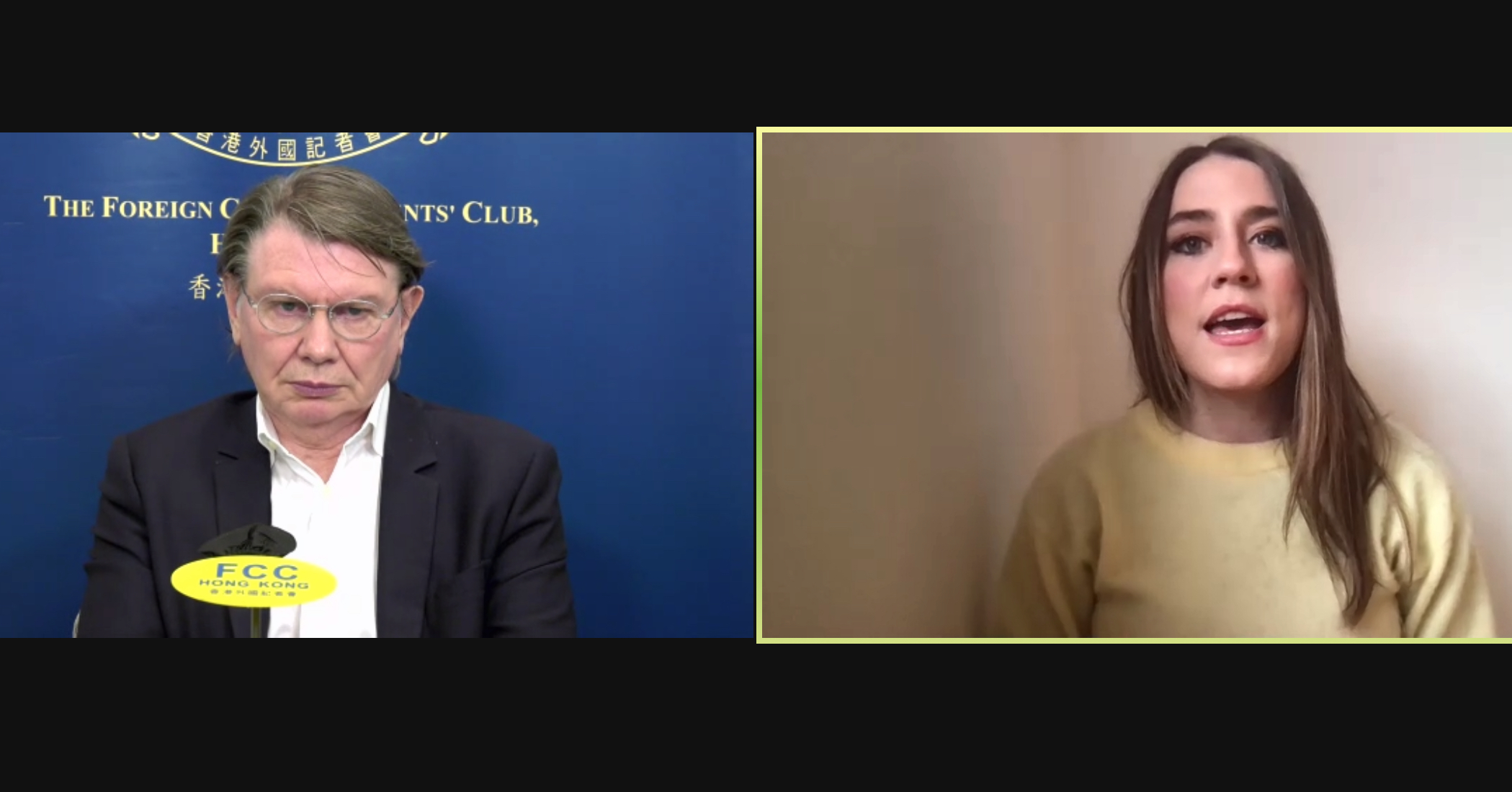
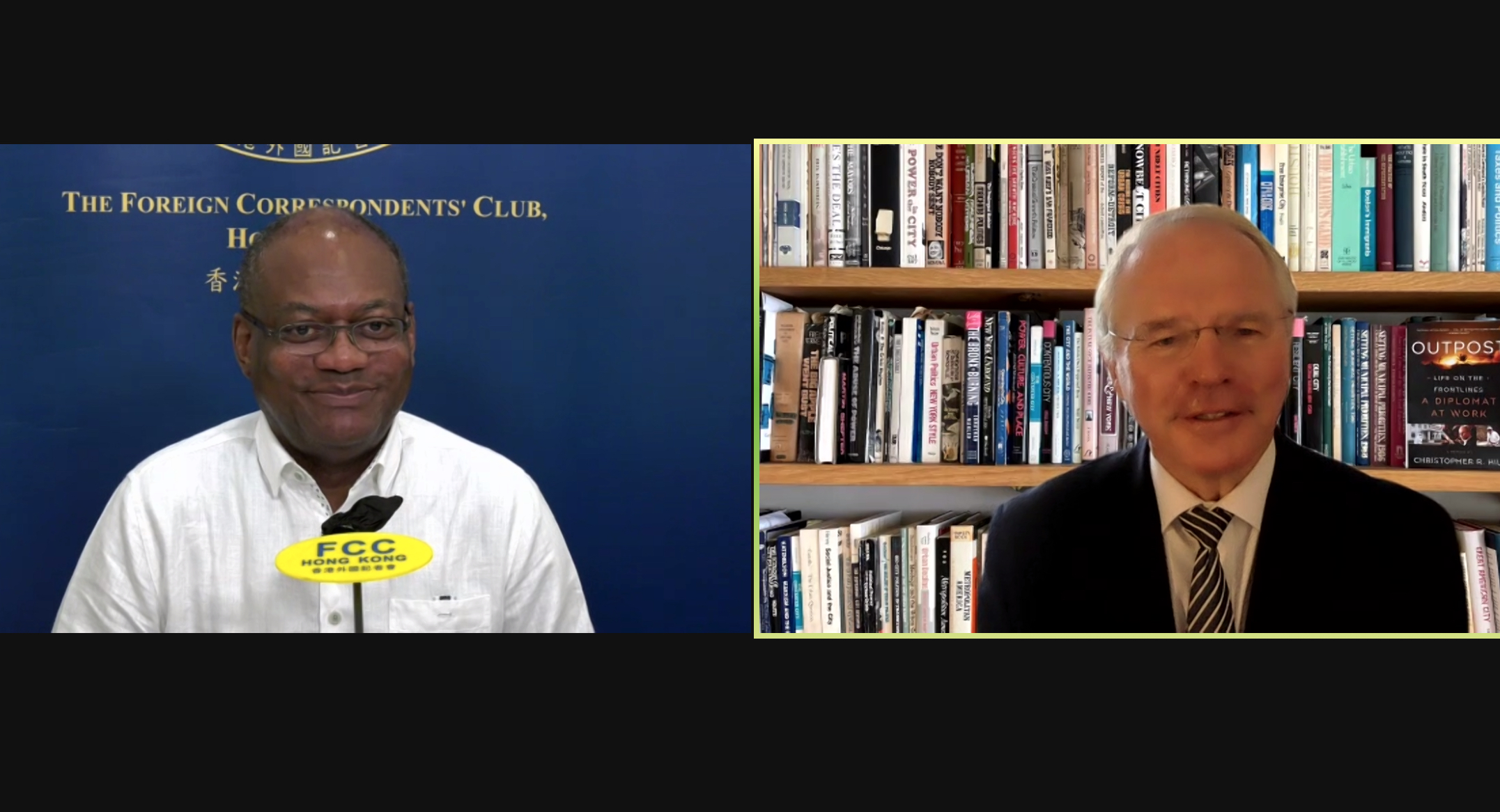
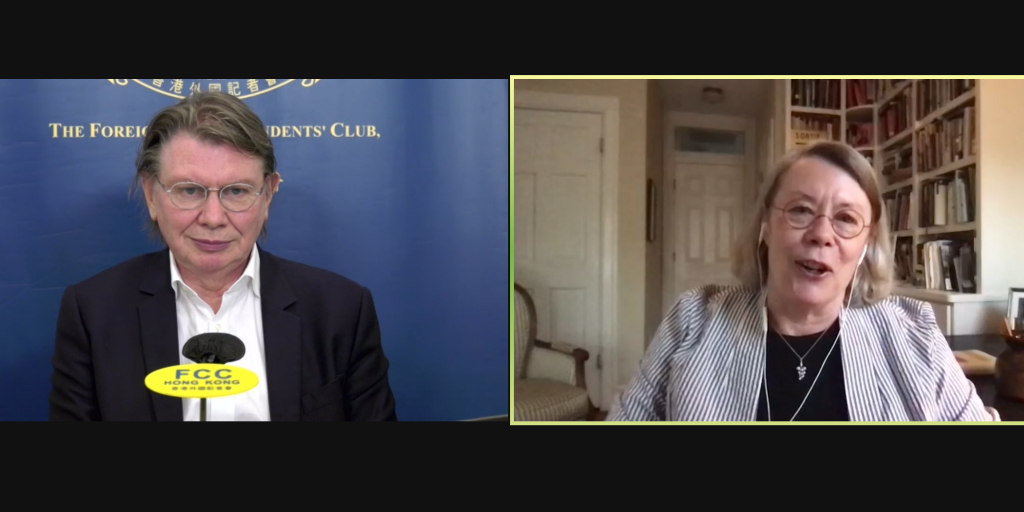
Ambassador Christopher Robert Hill FCC President Keith Richburg (left) and Ambassador Christopher Robert Hill (right)

The United States needs to be proactive in finding ways to communicate and collaborate more closely with China rather than pursuing a policy of decoupling, said Ambassador Christopher Robert Hill, a former career diplomat, in a talk hosted by the FCC. 

“I do believe that we need to find patterns of cooperation with China,” Hill said. “I think China is the number one foreign policy issue that this administration has to deal with, and with the understanding that we can no more change China than China can change us.”

The former Assistant Secretary of State for East Asian and Pacific Affairs, who is currently an adjunct professor at Columbia University’s School of International Public Policy, spoke on a range of topics relating to the U.S.-China relationship including Taiwan, the Quadrilateral Security Dialogue, trade agreements and the South China Sea.

Ambassador Hill said that he didn’t think the possibility of a military conflict in the region was imminent or even likely, though he acknowledged the possibility for surprises. “If you look through history at various wars and conflicts, accidents are often among the causes,” he told FCC President Keith Richburg during the talk.

One crucial area of cooperation for the two countries to focus on is North Korea’s nuclear weapons programme, said Hill, who was the head of the U.S. delegation to the Six Party Talks. 

“I think we need to see if we can come to an understanding with the Chinese that we need to get North Korea to abandon these weapons,” Hill said, adding that the key task at hand was to make the case that the country would have a better future without nuclear weapons. 

He also said that Pyongyang’s ultimate goal is to remove the American presence in South Korea.

“I think the North Koreans have the kind of vague notion that if they can just get the U.S. troops off the Korean Peninsula, somehow things will go more their way,” Hill said. “They need to be disabused of that in a big hurry.”

Commenting on the situation in Myanmar, Ambassador Hill described it as “an extremely frustrating issue” and called for multilateral cooperation to address the country’s crisis following the recent military coup. 

“We need a lot of discussions in the region including with India and China and, of course, our ASEAN partners,” Hill said. 

“We need Myanmar to understand that this is leading nowhere and no one supports them in the direction they’re going.”

Watch the full event:

Belt and Road Requires Greater Transparency and Better Decision-making to Succeed in the Future: FCC Panelists

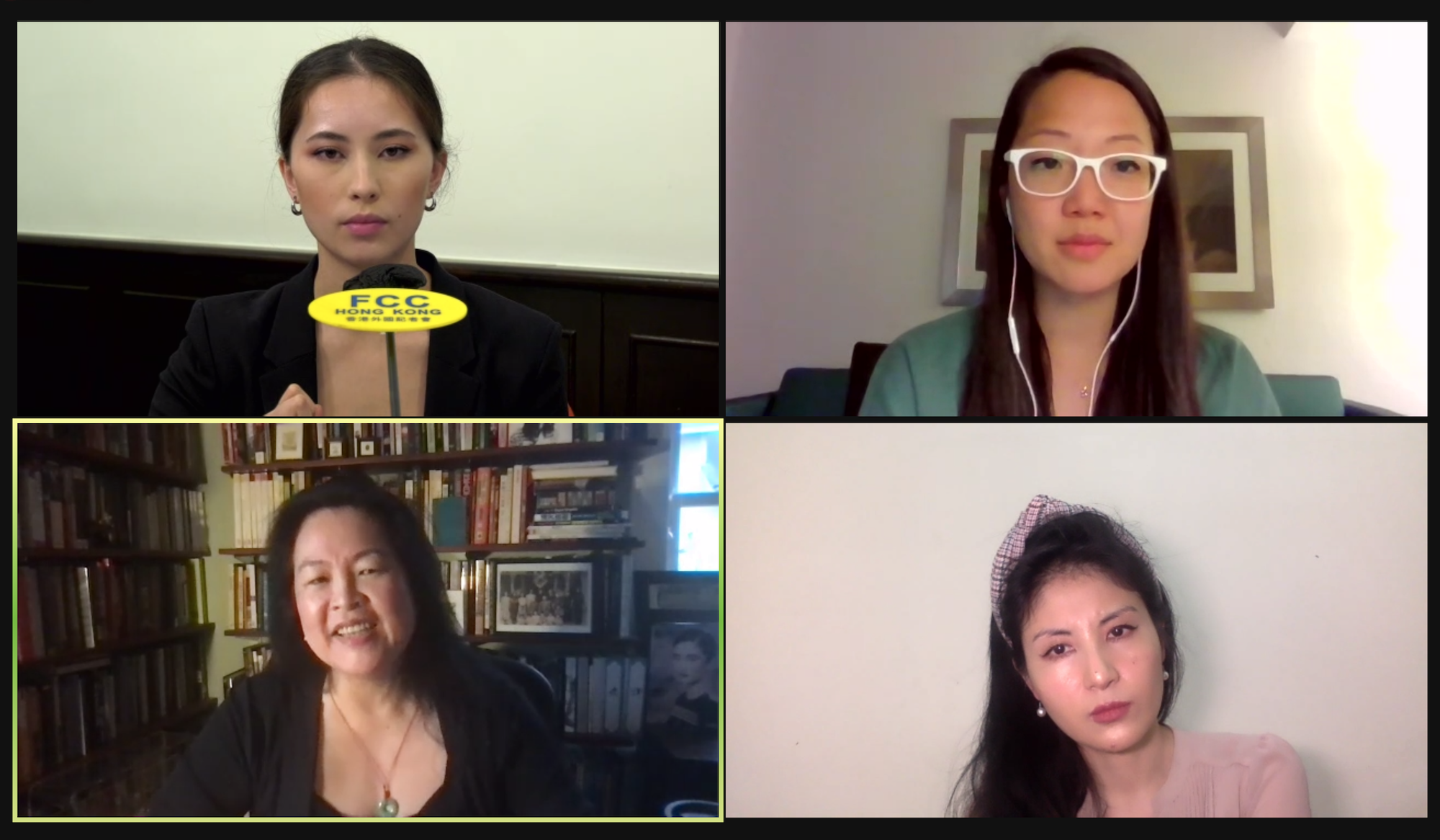
Clockwise from top left: Dan Strumpf, James Wang, Nargis Kassenova, Jonathan Hillman

Nearly eight years after it was first announced, the Belt and Road Initiative has a mixed record of successes and failures, but the panelists who participated in a discussion hosted by the FCC said that greater transparency from China and better decision-making from its partner countries were both necessary for the BRI to move forward in a positive direction.

“China needs to step up and follow international best practices, and increase transparency around lending,” said Jonathan Hillman, author of The Emperor’s New Road: China and the Project of the Century. At the same time, he said, “Recipient countries need to be their own best advocates and make decisions that aren’t just a sort-of short-term political play but in the best long-term economic interests of their countries.”

Harvard University’s Nargis Kassenova, an expert in Central Asian politics and security, echoed the call for greater transparency. She used the example of Tajikistan and Kyrgyzstan, two countries whose debt level to China is well documented, versus Turkmenistan, which she said has no transparency about its loans from China.

Despite some of the political and economic fallout in various countries participating in the BRI, James Wang, research director of the Bay Area Hong Kong Centre / Belt and Road Hong Kong Centre, said it goes both ways, with unstable regimes and uncertain economic situations posing their own threats to Chinese lenders and state-owned enterprises.

The panelists also spoke about the effects of the pandemic on China’s “Health Silk Road”, vaccine diplomacy and whether the U.S. and other Western nations could build a successful alternative to Belt and Road.

“The Health Silk Road is now being pushed and picking up momentum, but it did precede the pandemic,” Kassenova said. She added that the pandemic had complicated China’s standing in Central Asia, with demand for Russian vaccines outpacing demand for Chinese-made jabs.

Vaccines can certainly play a role in strengthening relations with other countries, Wang said, noting that it built on China’s history of sending doctors to developing nations in the past.

As for the U.S. creating its own version of the BRI in collaboration with allies, Hillman said that more choice and competition would be a good thing.

“I think we see along the Belt and Road, sometimes the worst-case outcomes are countries who just didn’t have an alternative.”

Watch the full discussion:

The Dark Side of Instagram You Haven’t Heard About

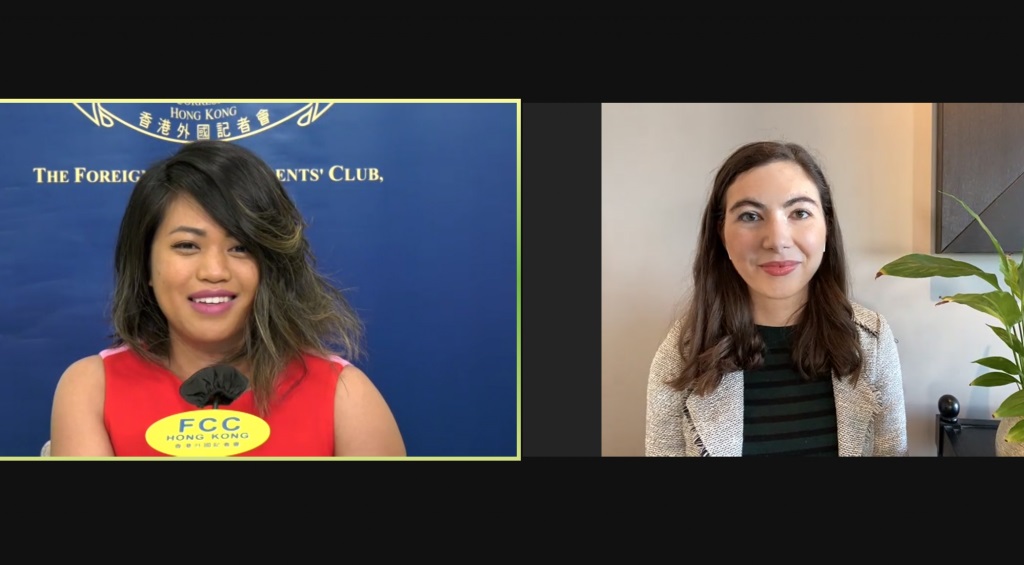
FCC Correspondent Member Governor Kristine Servando (left) and Bloomberg journalist Sarah Frier (right)

Instagram is typically thought of as a lighthearted platform for posting food photos and looking at your friends’ vacations snaps, but as Bloomberg journalist Sarah Frier, author of No Filter: The Inside Story of Instagram, explained in an FCC Zoom talk, it’s also rife with misinformation and illegal activity.

“There’s still a hell of a lot of fake news and misinformation on Instagram,” said Frier. “It is just hidden in these communities of people who follow it really intensely and maybe doesn’t bubble up into the mainstream the way a Trump tweet would.”

She said that a U.S. Senate investigation found that Russia had posted more misinformation on Instagram than Facebook during the 2016 presidential election. She also said the app is being used for illegal drug sales, human trafficking and, over the past year, the spread of health misinformation from some wellness influencers who peddle bad medical advice to beat Covid.

“It is harder to find the dark sides because of the lack of virality, but that doesn’t mean it’s impossible,” said Frier. “It’s harder to find manipulated media or false information in images as opposed to in text. And it’s harder to find it in video. So I think that it might be more difficult to clean up Instagram.”

Though Facebook, which owns Instagram, is regularly the subject of public criticism and negative publicity due to data privacy concerns, Frier said that Instagram has been spared even though all of its data is shared with Facebook. The two platforms share the same data usage and privacy policies, she explained.

“People have not been as critical of Instagram because they like Instagram,” Frier said. “The moment of reckoning for Instagram just simply hasn’t happened at the level that it should.”

Though Instagram has actively worked to create a wholesome ecosystem and amplify the voices of activists, the LGBTQ community, creatives and people of colour, Frier said the often-overlooked dark side of the app can no longer be ignored because of its outsized influence.

“This is an app that has had this tremendous influence on our culture, on our economy, on our sense of self, on what we consider to be relevant in our society.”

Watch the full event:

Panel: Long History of Anti-Asian Violence in the U.S. Must Be Fought With Education and Awareness

Asian Hate Panel Clockwise from top left: FCC Claire Hollingworth Fellow Jennifer Creery, Michelle He Yee Lee, Jiayang Fan, Eileen Cheng-yin Chow

 The mass shooting in Atlanta that took the lives of six women of Asian descent is another tragic event in the United States’ long history of anti-Asian violence and discrimination, three Asian American women writers and journalists — Eileen Cheng-yin Chow, Jiayang Fan and Michelle He Yee Lee – said in a panel hosted by the FCC. 

“Anti-Asian rhetoric may feel more scornful right now, but I think it is important to talk about the fact that this is not new,” said Lee, a reporter for The Washington Post and president of the American Asian Journalists Association. “This is part of our lived experience in this country.”

Chow, a visiting associate professor at Duke University, summarised a long history of anti-Asian legislation in the U.S. but noted that the country isn’t unique in this regard. 

“You can never talk about the U.S. or Europe and their anti-Asian sentiments without talking about a larger and longer history of colonialism and empire, and the ways in which, say, hypersexualisation of [Asian] women, are baked into the stories of these nations,” she said.

Fan, a staff writer at The New Yorker who published a piece titled “The Atlanta Shooting and the Dehumanization of Asian Women” in the wake of the killings, said the reactions to her story had been eye-opening. On March 16, a gunman killed eight people, including six women of Asian descent, at three Atlanta area spas.

“What struck me most deeply as I read through some of the responses to that piece is almost every Asian American woman I know has experienced some kind of sexualized racism, and how mundane and pervasive that sort of experience has been for us, to the extent that we almost brush it off as part of the American experience,” Fan said in the panel moderated by FCC First Vice President Eric Wishart. 

“I think that should really make us question what the American experience is for Asian American women.”

Moving forward, the panelists agreed that more education and awareness are needed for both journalists and the general public in order to combat anti-AAPI (Asian American Pacific Islander) hate. 

Chow said that government funding should be given to small grassroots organisations doing work in local communities like Red Canary Song, CCED (Chinatown Community for Equitable Development), The Butterfly Group and others. 

Fan said that money should be spent on the most vulnerable members of the community to assist with issues like mental health, financial literacy and finding employment.

Lee added that the Atlanta shooting had revealed the “cultural incompetency of newsrooms” and said that media outlets needed to do more to educate their journalists about AAPI communities year-round and not only in times of crisis. She also argued that it was time for Asian American journalists to be empowered to become more vocal.

“As Asians and as journalists, we’re not really wired to talk about ourselves or our experiences, but we’ve seen how far that has taken us and this is where we are now,” Lee said. “It needs to become the norm for journalists to share what it’s like to be an AAPI journalist during this moment so the rest of the country is aware.”

Watch the full discussion:

‘Wall Street Journal’ Correspondent Te-Ping Chen on ‘Land of Big Numbers,’ Her Collection of Stories Set in China

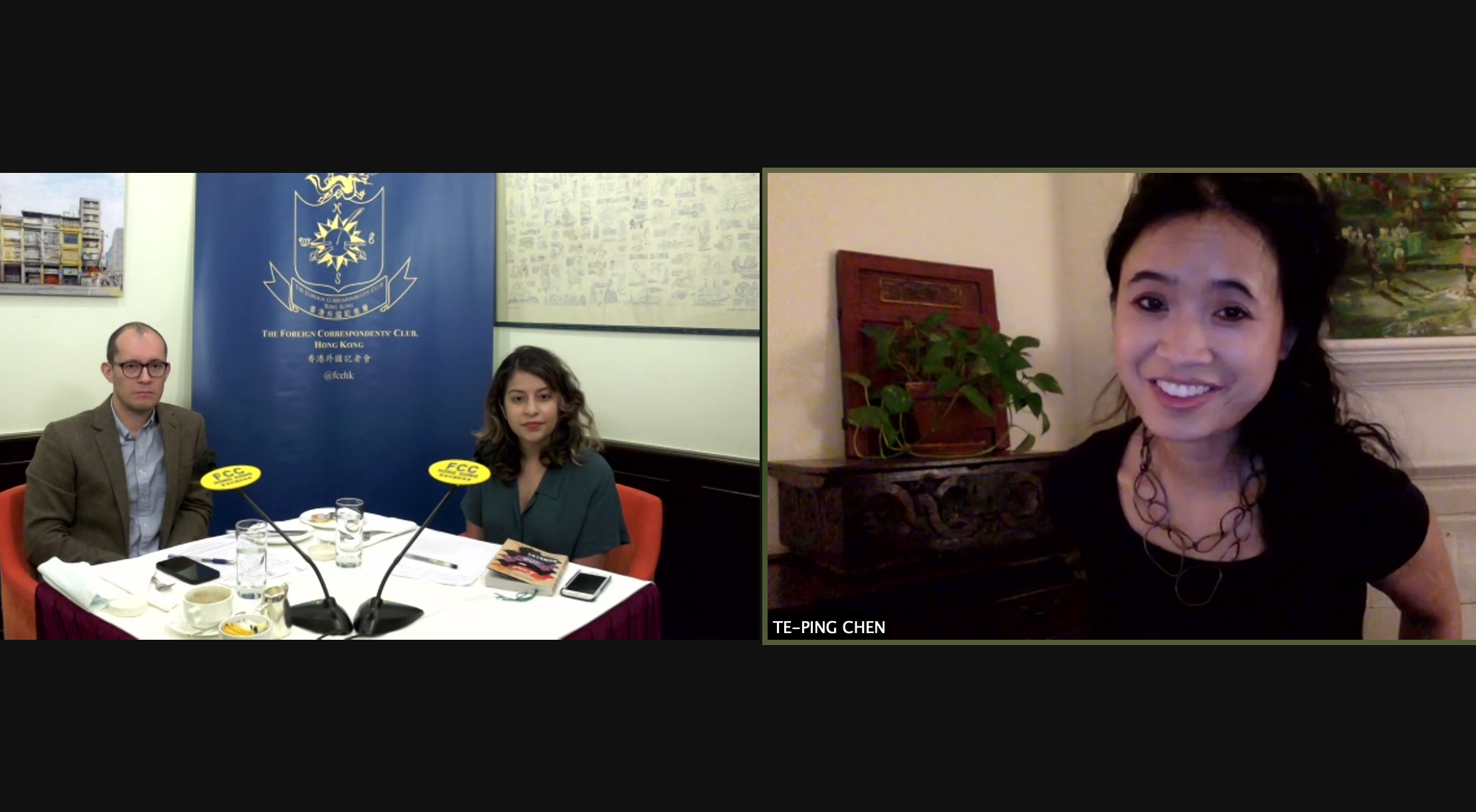
FCC Correspondent Governors Dan Strumpf and Shibani Mahtani (left) and Te-Ping Chen (right).

Journalism and fiction are, by definition, opposite forms of writing, but as writer Te-Ping Chen explained in a book talk hosted by the FCC, the two aren’t as different as you might think.

“In some ways, [writing] fiction and journalism is a similar process in as much as you are taking the material at hand,” Chen said, “except with fiction, the material at hand you can just draw from, in so many ways, a deeper universe around you.”

Formerly based in Hong Kong and Beijing, Chen is a correspondent for The Wall Street Journal and the author of Land of Big Numbers, a recently published collection of short stories largely set in China.

During the talk, moderated by FCC Correspondent Governor Shibani Mahtani, Chen recalled the experience of writing her stories in the morning before going to work in the WSJ’s Beijing bureau, and she said that being a journalist in China informed her work as a fiction writer. 

“I felt the sense of having the enormous privilege of getting to live in this country, and work in an occupation where my job was to try and understand it, and to travel and meet people and see things—what an extraordinary thing,” Chen said. 

“I also felt this extraordinary sense of stories and images and details that were arresting but maybe wouldn’t find their way into a news story, but still stayed with me and in many ways seeded some of the stories and characters and moments in this book.”

Though Land of Big Numbers has much to say about China, Chen described it as a human-centric collection of stories about “what it’s like to live in a society where your life choices feel constrained in many ways and things feel outside of your control, and how you try and create a sense of meaning for yourself.”

Chen also said she hoped that her book would give readers a better understanding of China and its people, in a way that news articles focused on politics and elites cannot.

“It’s always been a hard country to have a window on from the outside,” Chen said. 

“I really do hope that people who read the book will come away with a deeper sense of understanding for the place, which ultimately has to be rooted in a sense of the people and not just the government.” 

Watch the full event below:

Food Writer Fuschia Dunlop on Cultural Appropriation and the Complexity of Sichuanese Cuisine

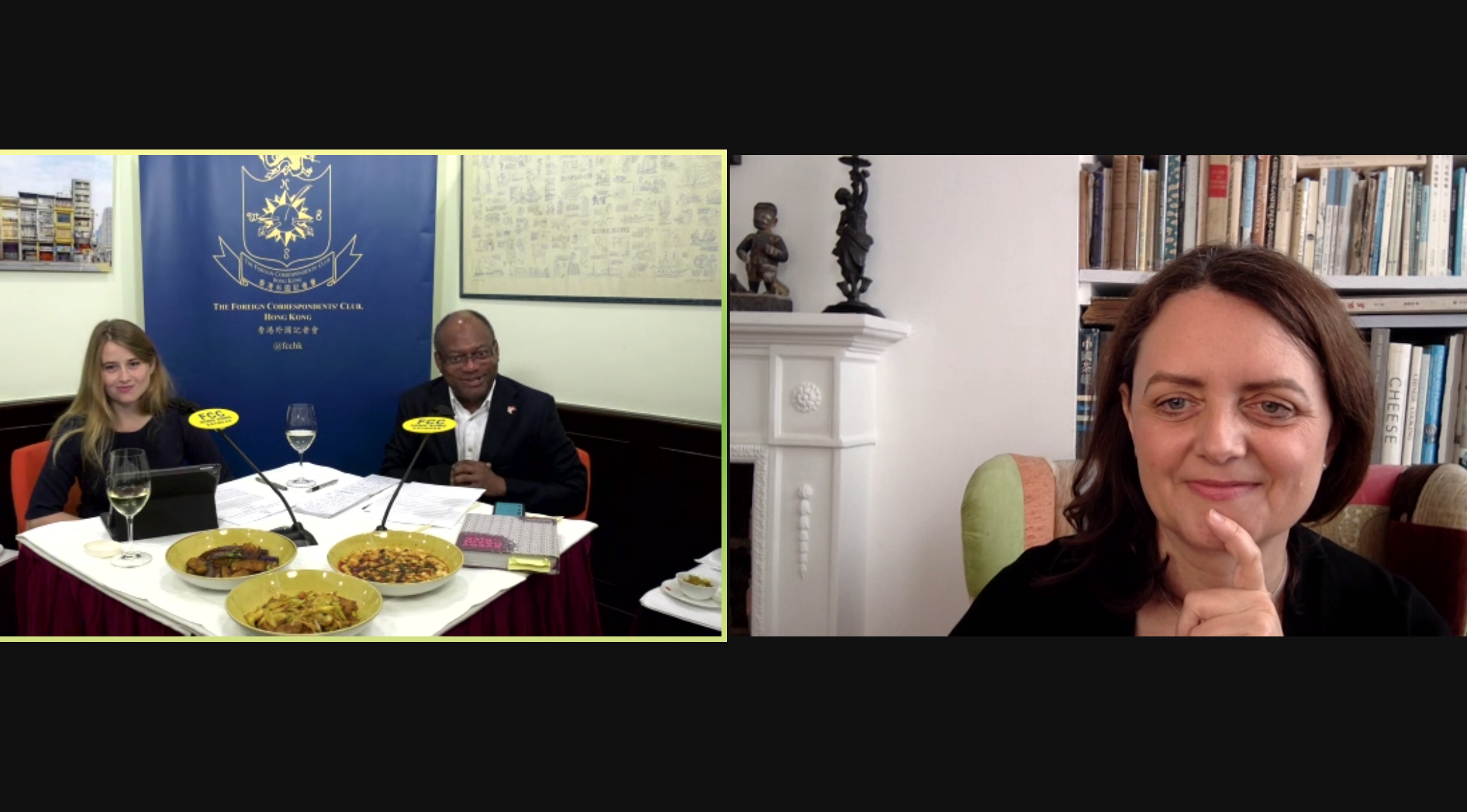
Fuchsia Dunlop FCC From left to right: FCC member Rebecca Bailey, FCC President Keith Richburg and Fuchsia Dunlop

English food writer and cookbook author Fuchsia Dunlop, an expert in Sichuan cuisine, recognised the importance of calling out cultural appropriation but also highlighted the benefits of intercultural exchange during a Zoom webinar hosted by the FCC. 

“I don’t think the solution is that you should be confined to the food from your own heritage,” Dunlop said. “I really think that it’s important for everyone that some people travel to foreign countries, learn other languages, immerse themselves in other cultures and become a kind of bridge. I think the healthy endpoint would be a place not where only Chinese people write about Chinese food, but where Chinese people, if they want to, will write about Italian food as well.”

Dunlop is the author of several cookbooks, most recently The Food of Sichuan, and she said that her work has always felt like a collaboration with people in China. Armed with her extensive culinary and cultural experience in Sichuan, Dunlop also cleared up a common myth about the province’s cuisine.

“Everyone says that Sichuanese food is hot and spicy, and that’s the cliche, both outside China and within China,” Dunlop said. “But actually, Sichuanese is a very subtle and exciting and varied cuisine.”

She went on to describe the “beautiful layering of flavour” in typical Sichuan dishes, including those that FCC President Keith Richburg and club member Rebecca Bailey tasted during the discussion. 

Dunlop also singled out mouthfeel, a literal translation of kougan in Mandarin, as a huge differentiator between Chinese cuisine and Western food. 

“One of the reasons I’ve written so much about texture and I talk about it quite a lot is I think that if you want to really, fully appreciate Chinese cuisine, you have to unlock this door to the appreciation of texture,” Dunlop said.

“I think that it’s very interesting gastronomically, and if you can open your mind and your palate as an outsider, then you have the chance to really get something about Chinese food that you may not have appreciated before.”

Watch the full event:

Why Publicly-Funded News Organisations Need ‘Firewalls’ to Protect From Political Influence

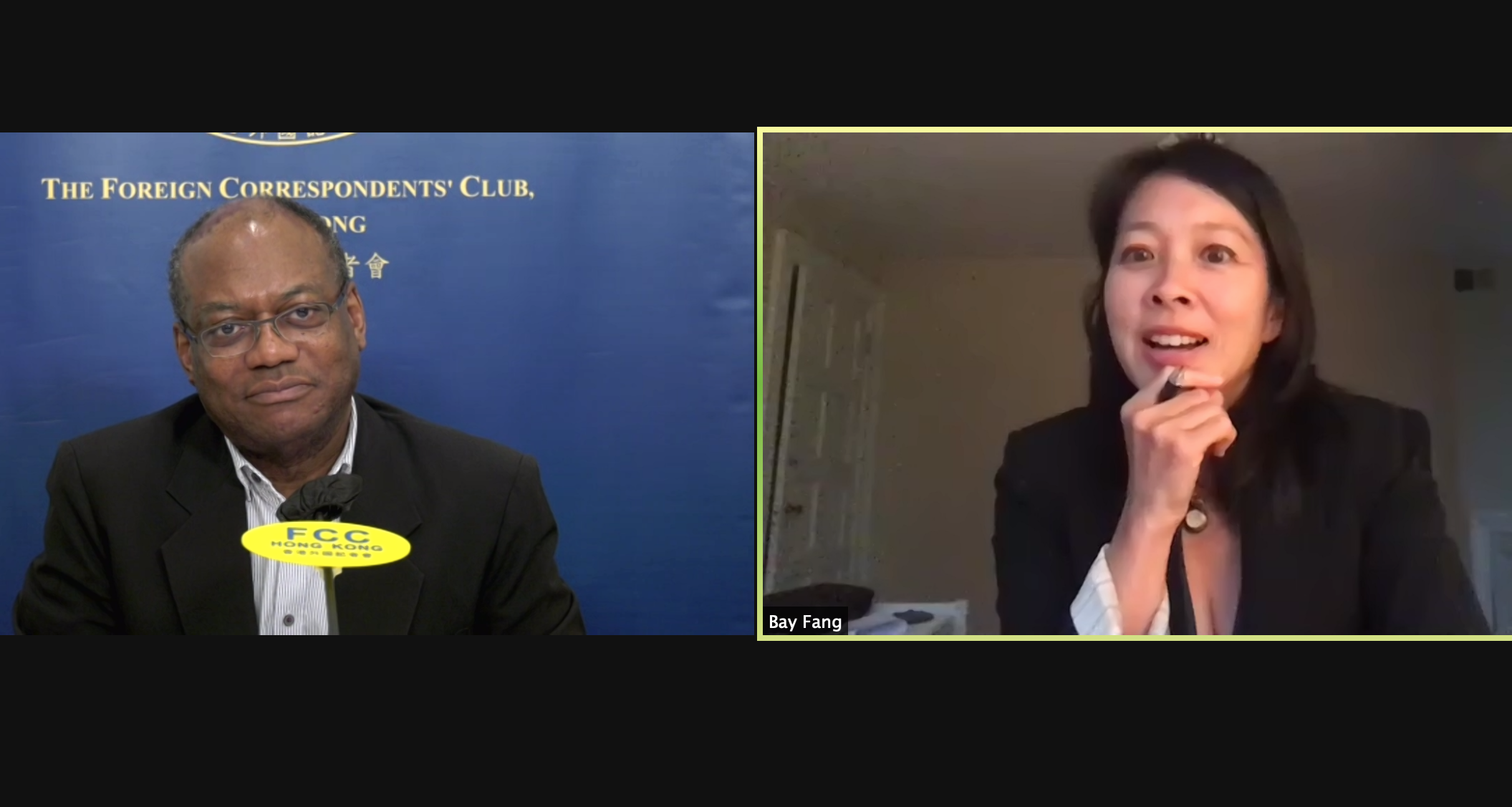
Bay Fang FCC President Keith Richburg and Radio Free Asia president Bay Fang

Publicly-funded news organisations require firm protections from political influence in order to maintain editorial independence and avoid becoming propaganda units, said Bay Fang, president of Radio Free Asia, in a Zoom webinar hosted by the FCC.

“One of the reasons that the firewall is so important, especially for a news organisation like [Voice of America] or RFA, is because we’re publicly funded,” Fang said. “Our job is not to do propaganda. Our job is to model what a free press can look like in countries that don’t have it.”

Without that editorial independence, Fang said, “The obvious attack that we would get from a country like China or any authoritarian country that we’re broadcasting to is, ‘They’re just doing the bidding of the government that runs them. They’re not really telling you the truth about what’s happening around you, so why listen to them?’”

Despite a separation between the U.S. government and RFA’s editorial operations, Fang herself is no stranger to political interference, as she explained to FCC President Keith Richburg. 

In June 2020, when Michael Pack was appointed CEO of the U.S. Agency for Global Media, he proceeded to fire Fang and other heads of broadcasting outlets under his control, replacing them with Trump loyalists. Pack was later asked by President Biden to submit his resignation on Inauguration Day, and Fang was reappointed to her former role a few days later. 

Now in its 25th year, Radio Free Asia produces broadcasts and online news in nine Asia languages, including Mandarin, Burmese and Uyghur. Fang spoke openly about the challenges facing RFA’s on-the-ground reporters, noting that some in Myanmar are currently in hiding, while six of their Uyghur reporters have had family members seized and placed into detention camps.

Despite the difficulties facing reporters, Fang said most had turned down offers either to leave dangerous locations or Radio Free Asia altogether. She attributed this to RFA’s mission and its reporters’ belief in it.

“I think our particular mission is unique,” Fang said. “To come here, you have to really believe in the mission.”

Watch the full discussion here:


How Three Women Correspondents Changed Modern War Reporting


FCC First Vice President Eric Wishart speaks to author Elizabeth Becker.

Three pioneering women correspondents — Frances FitzGerald, Catherine Leroy and Kate Webb — changed the nature of modern war reporting and even the course of history with their coverage of the Vietnam War, Elizabeth Becker said in an FCC book event.

“They expanded the lens, they looked at the country and the people, they brought a humanity that was missing,” Becker, author of You Don’t Belong Here: How Three Women Rewrote the Story of War, told FCC First Vice President Eric Wishart.

She explained how the three correspondents’ work was different from both previous war reporting and that of their male contemporaries.

In her book, Becker tells the inspiring story of how these three women from very different backgrounds made their own way to Vietnam and overcame sexism and other challenges to become well-respected war correspondents.

No stranger to war having covered the conflict in Cambodia, Becker noted the high mental and emotional costs of reporting in war zones, though she said that the difficult subject matter did not lead to bias in coverage.

“Once you see the pain and the destruction and the horror of war, your motivation is to be more objective, not less,” Becker said.

Watch the full conversation below:

Philippines’ Marawi Siege Offers Lessons on Battling Disinformation and Propaganda

When the Philippines launched the biggest military assault since World War II against Islamic State-linked extremists who seized the southern Philippine city, journalist Carmela Fonbuena, then working for Rappler, dropped into the centre of the action to cover the toll on ordinary citizens.

As the war dragged on for months, she found a parallel disinformation war playing out especially on social media, spreading inaccurate information about government operations or casualties — sowing fear, confusion, or worse, violence. She said false news can spread like wildfire because people “are so desperate for any information.”

“If we don’t fact-check information that’s spreading on the ground, that’s what people will believe if no one corrects it,” she told the FCC in a forum about her latest book Marawi Siege: Stories From the Front Lines.

“That to me highlights [journalists’] very important role in delivering important information during a crisis, whether it’s the Marawi siege or the coronavirus pandemic,” she said in a discussion moderated by FCC Correspondent Governor Kristine Servando.

And when reporters become targets of online harassment by individuals who disagree with facts on the ground, Fonbuena says it is important to build an emotional support network around oneself — and to avoid trolls. “I would rather spend time writing stories that more people will read than engage with a single individual who won’t be convinced,” she said.

View the rest of the video below, where she talked about lessons on how extremism spreads, war’s invisible toll on mental health, and the role of women in the front lines. Her book Marawi Siege can be ordered from [email protected] and shipped internationally.


Governments, journalists share responsibility for combating vaccine misinformation


FCC First Vice President Eric Wishart left) and First Draft APAC Bureau Editor Esther Chan (right)

Governments and journalists both have a role to play in combating the spread of COVID-19 vaccine-related misinformation, First Draft APAC Bureau Editor Esther Chan said In a virtual workshop hosted by the FCC, Hong Kong. With vaccination campaigns picking up speed around the world, Chan said that vaccination campaigns and misinformation go hand in hand.  “With vaccine rollout, misinformation also starts to proliferate online, and it can be because of a number of reasons: limited data about the vaccines, lack of confidence in its efficacy or even a lack of trust in the government,” she said. Chan began her presentation with a real-world example of a conspiracy theory that recently went viral in Hong Kong — that Chief Executive Carrie Lam and other government ministers did not in fact receive the Sinovac vaccine as they said, but rather the jab produced by Pfizer-BioNTech or AstraZeneca.  The basis for this rumour rested on the fact that the syringe used to administer the vaccine to Lam was longer and thinner than those that had been depicted in previous news coverage of the Sinovac jab.  “Even though this claim was unproven, it quickly went viral online,” Chan said. The Hong Kong government later confirmed that Lam and other officials had received the Sinovac vaccine, while pointing out that neither the Pfizer-BioNTech nor AstraZeneca jabs had arrived in the city yet.  An opinion poll conducted by the University of Hong Kong at the end of January showed that less than a third of the city’s residents trusted the Sinovac vaccine. In December, Lam had responded to speculation over the reasons for her government’s decision to buy 7.5 million doses of Sinovac by saying “some people with ulterior motives were spreading malicious rumours and publishing false information that stigmatises and politicises the vaccine purchase”. Attacking critics of the government’s vaccine policy was not the most constructive approach, Chan said in the workshop moderated by FCC First Vice President Eric Wishart. “How Carrie Lam described people who were critical of the Sinovac vaccine, that’s really not helpful because there’s already maybe an issue of trust in the Hong Kong government,” she said.  “It should really be an objective discussion instead of mixing politics in, so I feel like the government messaging is not really helping with the vaccine hesitancy in Hong Kong.” Similarly, she shared advice for journalists who are tasked with covering vaccine rollouts and misinformation. “When you notice something that is shaping how people think about an important issue like public health, you probably should address it but in a really careful way,” Chan said.  “Back it up with a lot of important scientific data that people really should know. Lead them from focusing on a rumour back to the facts.” The workshop also focused on social media’s role in spreading vaccine misinformation, which commonly follows narratives with six different themes. While Facebook and Twitter are often considered the primary platforms for spreading misinformation, Chan explained that Instagram also plays a significant role and is often overlooked because it’s harder to search for specific content on the visual-driven platform. For journalists and anyone else seeking resources about COVID-19 vaccine misinformation, Chan recommended using First Draft as an educational tool. The organisation offers an online Vaccine Insights Hub where you can sign up to watch 30-minute workshops — including a special recap session on Friday, March 5 — and receive a weekly newsletter. First Draft also offers an extensive free library of training materials to support journalists and members of the public in understanding and managing all types of disinformation. Watch the full workshop below:


We measure site performance with cookies to improve performance.