Members Area Logout

U.S. election disinformation worse than ever – Craig Silverman

The spread of disinformation and fake news is far worse than four years ago and is fuelling a deluge of lies in the run-up to the U.S. election, Buzzfeed media editor Craig Silverman said in an FCC panel discussion.

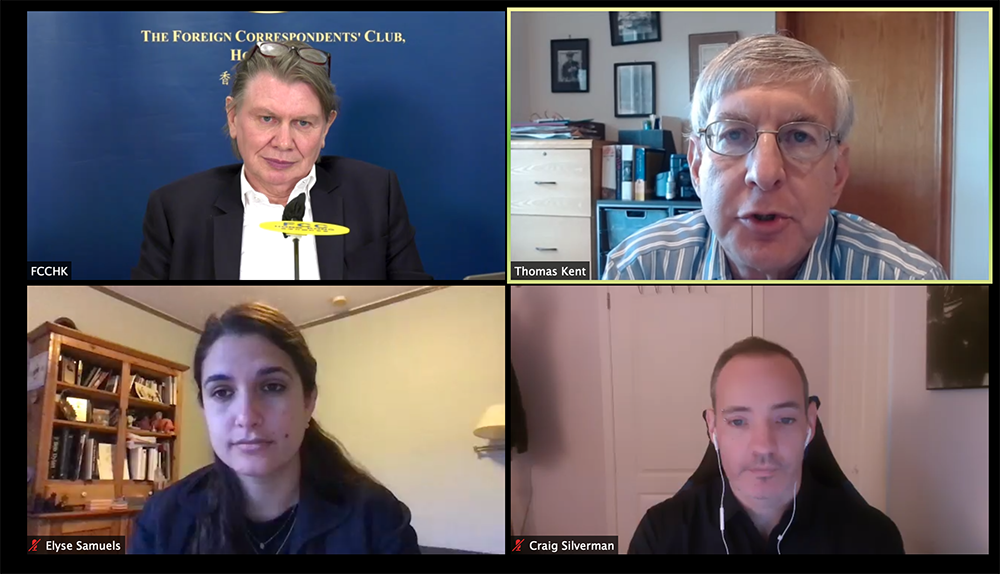
Eric Wishart interviews (clockwise) Thomas Kent, Craig Silverman, and Elyse Samuels. Eric Wishart (left) interviews (clockwise) Thomas Kent, Craig Silverman, and Elyse Samuels.

Silverman, creator of the Verification Handbook – For Disinformation and Media Manipulation, appeared with Elyse Samuels, video reporter for the Washington Post’s visual forensics team; and Thomas Kent, former president and CEO of Radio Free Europe/Radio Liberty and author of Striking Back: Overt and Covert Options to Combat Russian Disinformation in the October 15 webinar.

He said that conspiracy theories and an alternate reality ecosystem had flourished on the internet since the last election. In 2016, social media platforms were criticised for disseminating fake news ahead of the election of President Donald Trump.

“What’s incredible to me is thinking about what I was seeing in 2016 in the U.S. and how that just felt like an incredible high watermark for conspiratorial thinking infecting the mainstream, for viral falsehoods, gathering a huge amount of attention and interactions… And all of that seemed like ‘how could it get worse?’, and here we are,” Silverman said.

He criticised social media platforms for not doing enough to curb the continued rise of disinformation and fake news on their sites.

Twitter and Facebook were late to act against the spread of fake news due to a sense of American “free speech”. He said the firms were led by people “very much in favour of leaving up rather than taking down”.

Silverman acknowledged that platforms were beginning to crack down on disinformation. However, highlighting Facebook’s recent commitment not to accept political ads after the U.S. election polls close on November 3, he added: “It’s fair to point out a lot of this stuff is coming very close to the election. They’ve had four years and while they’re banking massive profits they have not really invested as much as they could have.”

Samuels discussed the rise in deep fakes – manipulated videos or photos – with the most common form being clips used out of context. As an example, she spoke of the recent controversy surrounding a Donald Trump campaign video in which White House coronavirus advisor Dr. Anthony Fauci appears to praise the president’s response to the COVID-19 pandemic. Dr. Fauci subsequently issued a statement saying his quote was taken out of context.

“It just shows how easy it is to take something out of context and change the narrative,” Samuels said.

She conceded that once a video clip had gone viral it was “harder to put the genie back into the bottle” but added that she hoped articles that debunked misinformation were having a positive effect.

Samuels said both the Trump and Biden campaigns were guilty of spreading disinformation, although she said there were more instances of the Trump campaign using this strategy.

Kent discussed interference in elections by Russia. Although the Kremlin was widely believed to have helped elect Trump in 2016, Kent argued that Russia is also “on the other side too”. He cited Russian-created content that was both critical and supportive of the Black Lives Matter movement.

“You can look at this in two ways: the classical explanation of this would be that the Russians are trying to hedge their bets, to have some allies on both sides depending on who wins the election,” he said. “However, the general thrust of Russian information operations in the United States has not been aimed particularly at making allies for Russia anywhere. Instead, it’s been aimed at sewing disruption in general in U.S. society.”

Kent suggested one solution to the divisive spread of disinformation was to change the way people think about politics and democratic values.

“The problem is we are too defensive; we spend all our time saying don’t believe this don’t believe that… If you want to affect the way people think about politics you need to present a positive message as well as a negative message,” he said.

Watch the video

Why COVID-19 has hurt China’s standing in Southeast Asia – Sebastian Strangio

China’s dominance in Southeast Asia has been hit by its response to the COVID-19 pandemic, according to author Sebastian Strangio.

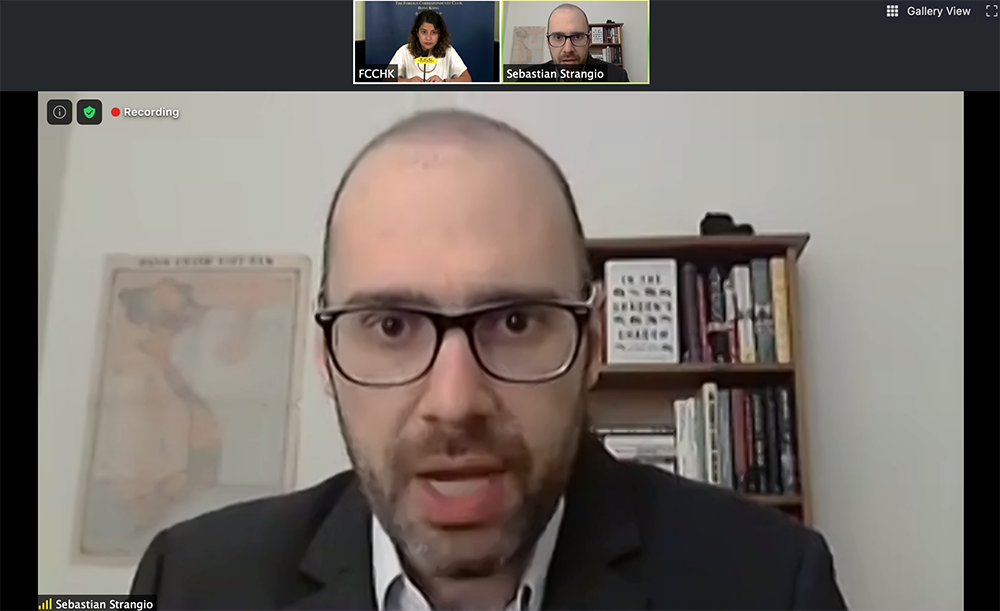
Sebastian Strangio talks to Shibani Mahtani on October 12. Sebastian Strangio talks to Shibani Mahtani on October 12.

The Southeast Asia editor of The Diplomat told an October 12 FCC webinar that the onslaught of the coronavirus had furthered a trend that was already underway in the region which was that the “image of both the United States and China are suffering in Southeast Asia”.

This trend was borne out before the pandemic in the surveys conducted by the ISEAS-Yusof Ishak Institute in Singapore that showed amongst elites and opinion leaders in the 10 nations of ASEAN “a pretty significant souring on both of these powers for different reasons”, Strangio said.

“What we see is a lot of Southeast Asia nations concerned about China’s initial response to the pandemic.. allowing it to get out in the first place. Concerns about the region’s over-reliance on China in terms of when the pandemic arose there – the first cases outside China arose in Thailand I think … Also the fact that China took the opportunity to assert its maritime sovereign claims in the South China Sea. I think in the affected nations that was seen with a great deal of negativity,” he added.

However, Strangio said he believed the pandemic would not ameliorate China’s main advantage in the region – its geographic proximity which, he said, is a “structural underpinning of Southeast Asian relations with China”. As COVID-19 and its  economic after-effects continue to ravage the region, he added, “China is looking more and more like an unavoidable economic partner”.

Strangio, author of In the Dragon’s Shadow: Southeast Asia in the Chinese Century, said China is currently reaffirming its commitment to Southeast Asia, assuring ASEAN partners that it will help the region recover from the virus physically (via its signing of vaccine access agreements), economically, and politically.

China, he said, has a basic security dilemma in that it has “formidable rivals” on every side: nuclear powers India and Russia, and “a string of U.S. treaty allies – Japan, South Korea, the Philippines, and Taiwan”. Southeast Asia is the one region in China’s neighbourhood that does not have an incumbent great power constricting the power of Chinese influence, Strangio said. This made it a region “relatively amenable to the extension of Chinese influence”. The Chinese economy relies heavily on the vital sea lanes of the South China Sea and wants to protect them, he said.

“China views itself as a dominant power in the region once again, it is reclaiming a mantle that it lost 150 years ago with the rise of western empires and I think what we can glean from its behaviour occasionally from the comments of its officials is that China wants the region to be deferential, it wants the region to acknowledge China’s size and prominence through deference to Chinese aims.”

On China’s relationship with the United States, Strangio said a Biden presidency would not bring any significant shift in America’s policy towards China, adding: “I think a corner has been turned that will not be reversed.”

Watch the video

“Wolf warrior” diplomacy ‘has hurt China’s global reputation’

China’s “wolf warrior” diplomacy has contributed towards its damaged global reputation, according to author and China scholar, Professor Rana Mitter.

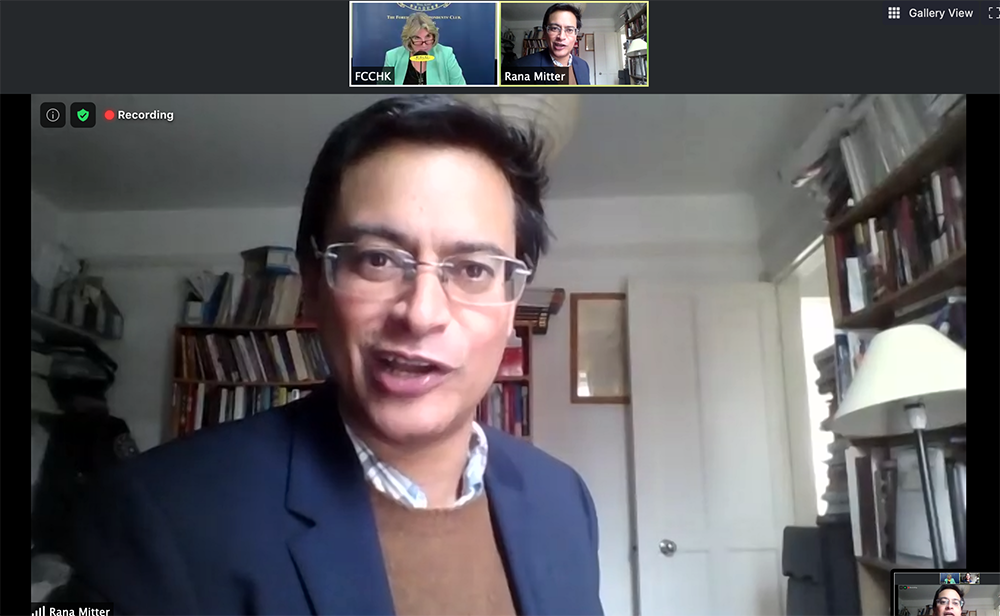
Professor Rana Mitter talks to FCC president, Jodi Schneider. Professor Rana Mitter talks to FCC president, Jodi Schneider.

Speaking in the week that new research showed unfavourable views of China has reached record highs, Mitter told an October 7 FCC webinar that the country’s often aggressive style of diplomacy could have influenced the United Kingdom ’s decision to drop Huawei as a provider of 5G.

The report from Pew Research Center found that sentiment towards China had grown more negative in recent years across many advanced economies, and in particular unfavourable option had soared in the past year.

Mitter, Director of the China Centre at the University of Oxford, noted that an escalation of “wolf warrior” diplomacy had appeared to occur at the peak of the COVID-19 pandemic. He added that there was a sense within the Chinese Communist Party that such an approach had “been really damaging to China’s reputation”.

“Anyone who thinks it’s been part of some great wider thought-through propaganda effort I think needs to look at the results of it,” he said, citing Huawei’s failed 5G bids. He added: “It seems to me if you were actually sitting in Beijing plotting and planning you would not do the things that have happened which, as we say in Britain, tends to suggest cock-up rather than conspiracy.”

While the research found China had firm support at home over its handling of the pandemic, “it’s got a very bad reputation in the global north and it will need to start from there in terms of thinking where are they going now”.

Addressing relations between the United States and China, Mitter said he believed a Joe Biden administration would lead to better diplomatic relations between the two countries.

President Donald Trump’s “aggressive rhetoric” and China’s “wolf warrior” mode response has led to a deterioration in relations between the world’s two largest economies. Mitter said he believed a change of government in the United States would reset the relationship.

My sense is if we have a Trump administration I think we’re going to go further down the route we are now which is with a huge amount of very confrontational rhetoric on both sides. People talk about Trump’s aggressive rhetoric – I think that’s true – China has been responding a lot in the ‘wolf warrior’ mode. Both of these things have to be acknowledged,” he said.

Mitter added that Democratic hopeful Biden would find a new way of addressing “the problems that involve dealing with a large, growing authoritarian powerful economy in the shape of China”. He acknowledged that “many people in western Europe” were concerned about China’s growth, its expanding military and its stance on Hong Kong.

The United States, he said, had abandoned alliances and “respect” for the post-1945 world order which was also problematic for Europe.

“The Biden administration, if there is one, would be able I think to pick up the phone to the EU, it would be able to talk to London … talk to Japan, talk to South Korea – all the people who for 75 years have been part of that wider ecosystem of shared norms and liberal norms… and actually say ‘let’s talk about how we do this together’,” Mitter said.

On the topic of Hong Kong, Mitter said it was important that authorities outline their vision for the city in the context of the new national security law, which was imposed on July 1. He said it was not clear from the outside what the various interest groups involved want to happen.

“And this is as true, I think, for those protesting as it is for those upholding what they would portray as being the current status quo,” he added.

Mitter discussed his latest book, China’s Good War: How World War II is Shaping a New Nationalism, which explores how influential World War Two is on today’s China. From this summer’s wartime blockbuster, The Eight Hundred, to the successful TV series, Autumn Cicada, the Second World War is “an historical obsession” in China.

He explained that U.S. participation in World War Two was ‘good’ in that it created a “narrative of moral purpose, of how America had stood up and fought against dark forces”. China, he said, has turned back to its World War Two experience, when over 10 million died, and 100 million people became refugees.

“All of this has gone to construct a narrative today and over the last 20-30 years in which China seeks to portray itself to the world as also having taken part in a ‘good’ war in the sense of a World War Two that helped make the world safe for decent forces rather than the forces of the axis power,” Mitter added.

Watch the video

How the Mulan controversy highlights Hollywood’s ‘greed’

China’s Communist Party has ‘weaponised’ the greed of America’s film industry, resulting in increasing self-censorship by Hollywood in its bid to reach Chinese audiences.

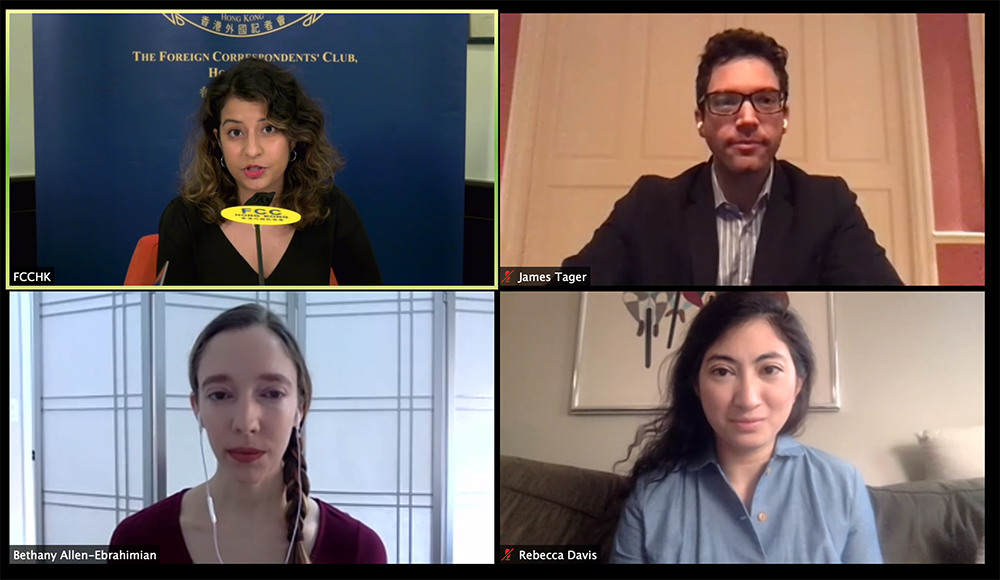
James Tager, Bethany Allen-Ebrahimian and Rebecca Davis are interviewed by the FCC's Shibani Mahtani. James Tager, Bethany Allen-Ebrahimian and Rebecca Davis are interviewed by the FCC’s Shibani Mahtani.

That was the consensus of a panel of experts discussing China’s influence over Hollywood during a webinar on October 5.

James Tager, Bethany Allen-Ebrahimian and Rebecca Davis were appearing just weeks after the release of Disney’s Mulan, a big-budget Hollywood retelling of the Chinese folklore, The Ballad of Mulan, which flopped at the Chinese Box Office. The movie, the most expensive ever directed by a female, was beset by controversy surrounding director, Niki Caro’s choice to film in Xinjiang. The region is home to Uighur Muslims who are oppressed the Chinese government, which has been accused of detaining hundreds of thousands in mass internment camps in what Allen-Ebrahimian described as “cultural and demographic genocide”. In the film’s credits, Disney thanks several government departments of Xinjiang, prompting an international backlash against the movie.      

“It was just shocking”, said Allen-Ebrahimian, China reporter at Axios. “It would have been bad no matter what but it landed in the midst of this controversy which is basically more or less about how powerful rich Americans and a powerful American corporation have sold out any semblance of values to the Chinese Communist Party.”

She speculated that either Disney had been “asked to put it in there to make Xinjiang look better and whitewash Xinjiang”, or that “whoever was in charge of this was so removed from all these debates and issues about human rights in China that they didn’t even realise what it would do”.

Either way, she said, Disney had failed to show “democratic morality”.

“Let’s be clear: this isn’t Chinese cultural pressure, this is Chinese government pressure. They’ve weaponised the greed of Americans,” Allen-Ebrahimian added.

Tager, deputy director of free expression research and policy at PEN America, discussed the organisation’s recent report on the topic. Titled Made in Hollywood, Censored in Beijing, it revealed how Hollywood’s most influential professionals are increasingly making decisions about their films in an effort to avoid antagonising Chinese officials who control whether their films gain access to the world’s second largest movie market.

He gave 2013’s Brad Pitt movie, World War Z, as an example of how Hollywood was pandering to Beijing’s desire to promote narratives of which it approves. In the original novel by Max Brooks, the virus that led to the zombie outbreak originated in China. Yet in the film, that storyline was dropped.

“Chinese regulators offer a carrot and stick to Hollywood studios determining their stance on cooperation with Chinese governmental censorship. The carrot is ‘well if we really like your movie we can offer better release dates, we can offer more preferential marketing buys… essentially we can create a more  favourable regulatory climate for your movie to succeed. We can remove barriers out of your way’. And the stick of course is ‘ultimately if we don’t like your movie we won’t show it within China’. They (CCP) are the sole gatekeeper to what is becoming the most important Box Office in the world.“

Only 34 foreign films per year are permitted for release in China, and the four big studios – Disney (which now owns 20th Century Fox), Paramount Pictures, Warner Bros., and Metro-Goldwyn-Mayer – dominate those slots. Scripts are checked by the Chinese government before permission is granted to shoot in the country. The origins of China’s censorship, said Allen-Ebrahimian, stem from the first Cold War and Hollywood’s subsequent depictions of Russians as ‘evil’ and ‘incompetent’, Allen-Ebrahimian said.

Tager and Davis agreed that Hollywood had come a long way in recent years in terms of diverse representation, with an increasing number of Asian and Asian American actors winning top roles.

Davis, China bureau chief for Variety, said that while Hollywood would continue in its bid to appeal to Asian audiences, there would be no Chinese/American co-productions in the near future.

She said a “total disengagement” and cinematic “decoupling” from China on Hollywood’s part would be “a tragedy” and that “we should still keep trying”.

Watch the video

Indonesia’s struggle with COVID-19 due to Widodo’s ‘lack of leadership’

Indonesia’s president, Joko Widodo, has shown a lack of leadership in the fight against COVID-19, according to the author of a book on the former furniture maker who took office six years ago.

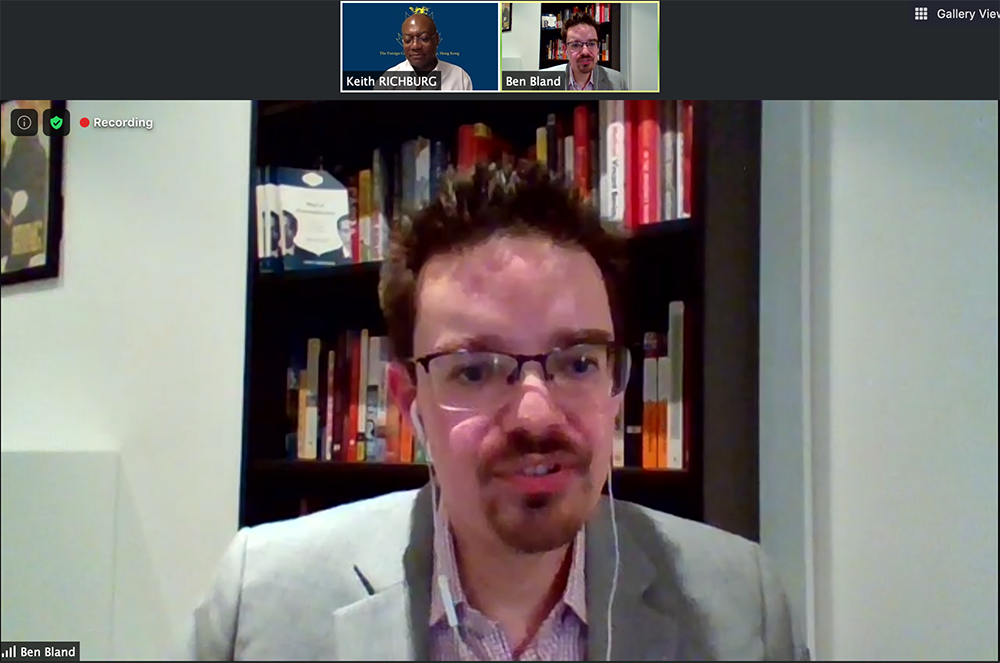
Ben Bland talks to Keith Richburg. Ben Bland talks to Keith Richburg.

Indonesia currently ranks 23rd of 217 countries in terms of the number of infections and deaths from coronavirus, with more than 250,000 infected and almost 10,000 dead at the time of writing.

Widodo, once considered the embodiment of hope and change, has shown himself in office to be a consummate pragmatist. But he is now being tested by the COVID-19 pandemic.

Benjamin Bland said that while many countries were experiencing second and third waves, Indonesia was similar to the United States in that it still in ‘an endless first wave’.

The author of Man of Contradictions: Joko Widodo and the Struggle to Remake Indonesia, described the effect on the country as ‘extremely concerning’, adding that the ‘majority of the workforce is employed informally’ – motorcycle taxi drivers, domestic helpers, for example – professions that cannot work from home. The result was increasing inequality as millions were pushed into poverty. Bland added that ‘very confused messaging’ from the government had aided the spread of COVID-19 and put pressure on a health system already deeply underfunded and stretched.

He said that the virus had increased Indonesia’s reliance on China, with the country now waiting for a vaccine from Beijing. Indonesia was already enjoying Chinese funding for various infrastructure projects, Bland said. On its relationship with China, Bland said Indonesia’s desire was to maintain strategic autonomy in the region ‘and keep out of trouble as much as possible’ which frustrates neighbouring Australia and Washington who see the country as potentially a ‘third force’ in Asia, pushing back against China.

In a wide ranging talk, he also touched on the threat of climate change to Indonesia. Its capital city, Jakarta, has sunk 2.5 metres in the last decade. Home to 10 million people, almost half the swampy city is below sea level. Widodo was, pre-COVID, instrumental in a plan to move the capital to Kalimantan on the island of Borneo. The plan is currently on hold.

On Widodo himself, Bland said the book had been difficult to write as he struggled to ‘get a handle on exactly what kind of leader he is’. Having only been in politics for nine years, and in power for six, Widodo has been given many labels – reformer, liberal, pragmatist, technocrat – with something in almost all.

Watch the video

Bishop Hill hospital plan curtailed following Town Planning Board decision

Plans for a large, looming hospital to be built on historic Bishop Hill, adjacent to the FCC, have been curtailed after the Town Planning Board officially supported height restrictions.

Plans for a new 25-storey hospital proposed by the Sheng Kung Hui (Anglican church) – occupants of the site since the 1840s – had prompted significant objections from those in the neighbouring area. In February, the Town Planning Board imposed an 80 metres height restriction on any newly-built structure on the northern part of the site. Then, in early September, the Town Planning Commission officially confirmed these height restrictions, which ensures that the historic atmosphere of Bishop Hill will not be overwhelmed by new developments.

Campaigner and FCC member, John Batten, said: “This is a good decision for Hong Kong. The Anglican Church should now take a good look at the wonderful history of Bishop Hill and give up any judicial review that it is considering to challenge the Town Planning Board’s decision.”

Room for cooperation with China if Biden wins U.S. election, says Joseph Stiglitz

The United States and China could enjoy greater cooperation if Joe Biden wins the Presidential Election in November, Nobel prize winner Joseph Stiglitz told an FCC webinar.

Joseph Stiglitz talks to Club President Jodi Schneider on September 15, 2020. Joseph Stiglitz talks to Club President Jodi Schneider on September 15, 2020.

He said the possibility of decoupling between the two nations depended on the results of the election, adding that there were ‘very strong strands in the United States that are very concerned’ about China’s human rights record and believe America should express its views on the matter.

Stiglitz, who was awarded the Nobel Memorial Prize in Economics in 2001, said the Trump administration had moved the relationship between China and the U.S. into issues of ‘second-rate importance, away from issues of real importance’.

“I hope we can cooperate, because we can cooperate if there is a restoration of democracy to Hong Kong, there’s respect for human rights, the Uyghurs… if there’s a movement away from the surveillance state… there’s lots of room for cooperation. But I worry about whether we’ll achieve that,” said Stiglitz.

On Hong Kong, Stiglitz – a professor at Columbia University – warned of the ‘profound effect’ the national security law would have on China’s relationship with the West.

The ‘ambiguity’ of the law itself is already making people ‘nervous’ about going to China, he said.

“I’m not very optimistic about Hong Kong. I think that the national security law is going to have big reverberations for all of China. I know a lot of people who are now nervous about going to China because they’ve been outspoken about democracy, about Hong Kong, about human rights and they worry ‘will they be entrapped by the new law?’” he added.

Stiglitz, author of several acclaimed books on economic policy, said Hong Kong is not being forgotten by the rest of the world, adding: “I think what is happening to Hong Kong is going to have a profound effect on the relationship between China and the West.”

Turning to the coronavirus pandemic, Stiglitz, author of People Power, and Profits: Progressive Capitalism for an Age of Discontent, said America’s handling of COVID-19 was ‘an utter disaster’ because the ‘pre-existing conditions were already bad’. He cited lower life expectancy under Trump, a lack of hospital beds and vital protective equipment, and the defunding of the Center for Disease Control as pre-existing conditions.

He said Trump’s ‘vaccine nativism’ was an ‘ugly aspect’ of the aftermath of the pandemic, which he said could only be solved by global solidarity, not by attempting to hoard a vaccine.

Stiglitz said Trump’s ‘America first’ stance had made it increasingly difficult for the United States to cooperate with other countries. He added that Trump ‘seems to have a love affair with every authoritarian figure in the world’.

“This is a global issue of the democracies of the world – Europe, the United States, Canada, Australia, New Zealand – versus authoritarian governments. It’s not a battle over the ideologies in the way that it was communism versus capitalism – it’s really a very simple battle between democracy and authoritarian respect for human rights,” he said.

Watch the video

Fox could cause ‘enormous damage’ on election night, Stelter warns

How Fox News reports the upcoming U.S. election will be crucial in how the result is accepted, CNN’s Brian Stelter said in an FCC webinar.

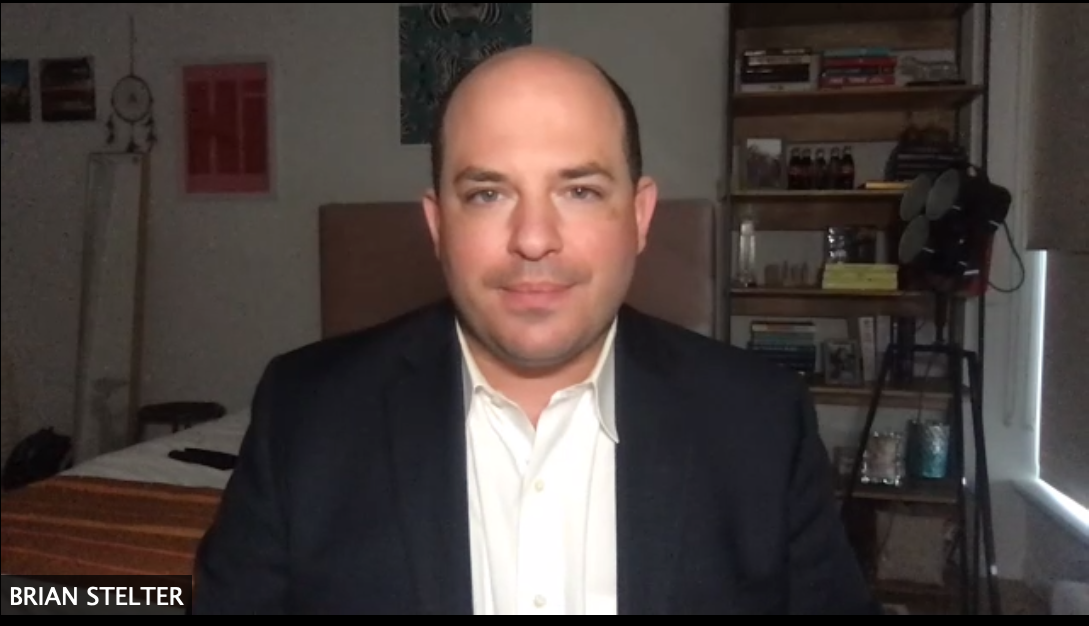
Brian Stelter is interviewed by Eric Wishart on September 8, 2020. Brian Stelter is interviewed by Eric Wishart on September 8, 2020.

Election night coverage on America’s most watched cable network could be a ‘tug of war’ between its opinion side – anchors like Sean Hannity and Tucker Carlson – and its ‘well-respected decision desk’ that analyses the data and calls races, said Stelter, who hosts CNN’s Reliable Sources.

“Fox has a huge responsibility in the hours after election night, assuming there’s not a winner right away,” he said. “Will this be a house divided, where the news side is saying that votes are still being counted, and Trump’s side is saying ‘Trump won, Trump won, shut it down, stop the counting, Trump won’?

“Will we be in this situation where there are two contradictory, confusing messages coming from the two sides of the house?”

He added that America ‘by and large accepts the result as television networks announce it’ and said if Sean Hannity and ‘those guys at Fox on the opinion side decided to contest the result or go along with whatever Trump is tweeting, it’s going to do enormous damage’.

Stelter reiterated that the Murdoch family, headed by media mogul Rupert, and the head of Fox News have a ‘huge responsibility’ around the channel’s reporting of the election, ‘and I hope they live up to it’.

Stelter’s latest book, Hoax: Donald Trump, Fox News and the Dangerous Distortion of the Truth, goes behind the scenes to examines the relationship between the president and the news channel, talking to current and former Fox insiders about President Trump’s ‘obsession’ with the network.

He pointed out that Trump was being fed misinformation by Fox News that he would then publicly reference as fact. This, Stelter said, led him to use ‘hoax’ in the book title rather than Trump’s previously favoured ‘fake news’, particularly after the president and Fox News both played down the outbreak of COVID-19 by using the term.

“I think the book is doing well because this is the part of the Trump story that still is not fully understood, which is his addiction to Fox News. I would argue that it’s a uniquely American problem to have a president so obsessed with a television channel,” he said.

The tug of war between the news side and opinion side meant that instead of reporting the news, Fox talks about the news. Other networks, he said, were ’tethered to the truth’ by vigorous vetting and standards processes prior to a segment airing.

Asked if CNN’s criticism of Trump by anchors such as Chris Cuomo and Don Lemon made it just as partisan as Fox, he said: “If Joe Biden comes into office and says that it’s sunny at his inauguration when it’s raining – and that really happened, Trump lied about the weather on day one – we will fact check him to the ends of the earth. I actually think the coverage would be harsher.”

Being ‘centre of the pro-Trump universe’, Fox News and its anchors wielded huge influence in America, Stelter said. Sean Hannity, a former mentor to Stelter who came to prominence at the channel following the resignation of disgraced Fox News mastermind, Roger Ailes, had become ‘an adviser to the president, a confidante, a friend to the president’.

The extreme relationship between president and news network was emphasised by Stelter when he revealed that Trump had kept Chinese President Xi Jinping waiting so he could speak to Hannity.

“He really did keep the Chinese president waiting… It does speak to the power dynamic here. Trump is prioritising Hannity… he has to wait his turn to call into Hannity’s show. He’ll still do a 20-minute rant first and then have the president come on the show. It speaks to the power imbalance here and I think when we look back at the Trump years… we will say this addiction to television, this reliance on Fox, hurt the Trump presidency,” Stelter said.

Writing in his book about Ailes, who resigned in 2016 as Fox chairman and CEO amid allegations of sexual misconduct, Stelter said he was still missed at the network because he ‘was tough on Trump sometimes, he knew how to reign Trump in when necessary’.

“One popular view on Fox is that if Ailes were in charge there’d be a strong leader, at least someone would be firmly in charge and would have tried to control Trump in a way that no one at Fox does today,” Stelter said.

Watch the video

Summer reads as recommended by some of the FCC’s distinguished guests

With countries around the world in and out of lockdown due to COVID-19, this summer has provided an opportunity for many to catch up on some good books.

So if you’re looking for recommendations, look no further than the FCC’s long list of distinguished Zoom guests. From Noam Chomsky to Lingling Wei – themselves celebrated authors – we’ve collated a list of recommended summer reads as endorsed by our guest speakers.

Noam Chomsky

The world’s most influential public intellectual and linguist joined a Zoom webinar on August 7. He recommended two of his own books that examine the media: Manufacturing Consent: The Political Economy of the Mass Media by Edward S. Herman and Noam Chomsky, and Necessary Illusions: Thought Control in Democratic Societies 


Mary E. Gallagher

Mary E. Gallagher, professor at The University of Michigan and director of the Lieberthal-Rogel Center for Chinese Studies, joined a panel discussion on August 12 on the new China-U.S. Cold War. Her recommended reads exploring American history were Hillbilly Elegy: A Memoir of a Family and Culture in Crisis by J. D. Vance, Strangers in Their Own Land: Anger and Mourning on the American Right by Arlie Russell Hochschild, and The Politics of Resentment: Rural Consciousness in Wisconsin and the Rise of Scott Walker (Chicago Studies in American Politics) by Katherine J. Cramer.


Bonnie Glaser

Bonnie Glaser, senior adviser for Asia and the director of the China Power Project at the Center for Strategic and International Studies (CSIS), appeared on a panel discussion on August 12 on the new China-U.S. Cold War. She recommended reads exploring American history. Her recommendations, which focused on China, were China’s Western Horizon: Beijing and the New Geopolitics of Eurasia by Daniel Markey; Superpower Interrupted: The Chinese History of the World by Michael Schuman; and The Three-Body Problem by Cixin Liu.


Stan Grant

Award-winning journalist and filmmaker, Stan Grant, appeared via Zoom on August 18, and recommended the following books: The Light That Failed: Why the West Is Losing the Fight for Democracy  by Stephen Holmes and Ivan Krastev, Without God: Michel Houellebecq and Materialist Horror by Louis Betty, and The Devil in History: Communism, Fascism, and Some Lessons of the Twentieth Century by Vladimir Tismaneanu.


Garry Kasparov

Garry Kasparov, former world chess champion, democracy campaigner and author of Deep Thinking: Where Machine Intelligence Ends and Human Creativity Begins, was our special guest on August 27 when he discussed China and U.S. politics. He was reading three books: Mythos: The Greek Myths Retold and Heroes: Mortals and Monsters, Quests and Adventures by Stephen Fry and Churchill: Walking with Destiny by Andrew Roberts.


Kishore Mahbubani

Kishore Mahbubani, Asia scholar and author of Has China Won?: The Chinese Challenge to American Primacy, recommended A Different Sky by Meira Chand, a book that tells the story of his home country, Singapore, when he joined us on August 10.


Suzanne Nossel

Suzanne Nossel, CEO of PEN America and author of Dare to Speak: Defending Free Speech for All, appeared by Zoom on August 5 and recommended a book by our guest from a month earlier, John BoltonThe Room Where It Happened: A White House Memoir . She also endorsed Intimations: Six Essays by Zadie Smith.


Admiral Bill Owens

Admiral Bill Owens, formerly the vice chairman of the U.S. Joint Chiefs of Staff, revealed he was reading America in the World: A History of U.S. Diplomacy and Foreign Policy when he appeared at a September 2 webinar.


Brian Stelter

Brian Stelter is interviewed by Eric Wishart on September 8, 2020.

Appearing via Zoom on September 8, CNN’s Reliable Sources anchor said he’d be reading Bob Woodward’s new book, Rage, and No Rules Rules: Netflix and the Culture of Reinvention by Reed Hastings and Erin Meyer.


Joseph Stiglitz

Joseph Stiglitz talks to Club President Jodi Schneider on September 15, 2020.

The winner of 2001’s Nobel Memorial Prize in Economics appeared via Zoom on September 15 and recommended his most recent book, People Power, and Profits: Progressive Capitalism for an Age of Discontent; and Paul Begala’s You’re Fired: The Perfect Guide to Beating Donald Trump.


Lingling Wei

Lingling Wei, Wall Street Journal reporter and author of Superpower Showdown: How the Battle Between Trump and Xi Threatens a New Cold War, admitted during an August 12 panel discussion that lockdown had introduced her to the children’s classic, The Lorax (Classic Seuss) by Dr Seuss. She was also reading Wild Swans: Three Daughters of China by Jung Chang.

Why the Taiwan Issue Is the Greatest Threat to U.S.-China Relations – Admiral Bill Owens

The issue of Taiwan’s political status is the bigger threat to an already tense relationship between China and the United States, even more so than sovereignty of the South China Sea, according to a former top U.S. military official.

Admiral Bill Owens talks to FCC President Jodi Schneider on September 2. Admiral Bill Owens talks to FCC President Jodi Schneider on September 2.

Admiral Bill Owens, formerly the vice chairman of the U.S. Joint Chiefs of Staff, said in an FCC webinar on Sept. 2 that Taiwan independence was more serious to China than issues in the South China Sea and the trade war with the U.S.

The claim comes the day after Beijing warned the United States to stop building its diplomatic relationship with Taiwan, branding the U.S.-Taiwan Relations Act as “illegal” and “invalid”. Taiwan is embroiled in a decades-long dispute with China over whether it will be repatriated with the mainland. The country is currently led by the Democratic Progressive Party (DPP), which favours independence from China.

“Of course we should all be worried about what might happen in the South China Sea. A skirmish of some kind can turn into something that is much more serious,” said Owens, adding: “But in terms of the sheer seriousness of the way the government in Beijing takes the issue of Taiwan versus the issue of the South China Sea, I think they view Taiwan as much more important than the South China Sea.

“It’s all about Taiwan. It’s about what happens in Taiwan,” said Owens, who retired in 1996 after 35 years in the Navy. “The Chinese have said in many many ways… if there is a declaration of independence in Taiwan, we will take military action to preclude that from happening. Those are pretty serious words.”

If military action were to occur between the U.S. and China over Taiwan “our world will never be the same”, Owens said, adding that he hoped to see “appropriate diplomacy between the U.S. and China behind the scenes”, whether that be with the Trump administration or a Biden government.

In his new book, China-US 2039: The Endgame? Building Trust Over Future Decades, Owens, who embarked on a career in business after retiring from the military and founded Red Bison Technology Group in 2015, puts forward several policy recommendations that could steer the two countries away from conflict.

He argued that thinking long term – “the Chinese do this very well” – is the key to cementing closer diplomatic relations and suggested that over the next 20 years, America and China could achieve improved ties.

Owens, whose 35-year service in the U.S. Navy included participation in Vietnam and Desert Storm, spoke about Hong Kong’s recently enacted national security law and said it was his view that China wanted the city to remain a thriving international financial hub.

“I think Hong Kong has always needed a form of a national security law like some of the things that are in the national security law that was forced on Hong Kong by the Chinese. It’s too bad it had to happen that way and I think from the West standpoint I would pray that a year from now we will not see as many issues of China interfering in Hong Kong as much of the Western press would have us believe,” he said.

Owens said he thinks the Chinese government understands “the great importance of Hong Kong in the international trade and monetary systems”.

“I couldn’t imagine that they would want to do anything that looks like a Tiananmen Square or an involvement that seems too much,” he said.

Responding to a question about whether President Donald Trump could be removed from the White House by force if he were to lose in November and contest the results of the presidential election, Owens pointed to non-military tools to potentially remove the president.

“I’m sure the Joint Chiefs all feel … that it is there to serve the nation – it’s not a Trump military or a Biden military, it’s a U.S. military and it will be very difficult to get them to do anything that is viewed as political. So I pray that what you suggest doesn’t happen,” he said.

When asked who was winning the 5G race – America or China – Owens, a former CEO of telecoms firm, Nortel, said he thought “it’s a tie” but made an impassioned case for the implementation of Wi-Fi worldwide.

Watch the video

We measure site performance with cookies to improve performance.