Members Area Logout

Is the Sino-British Joint Declaration dead? Two experts give their views

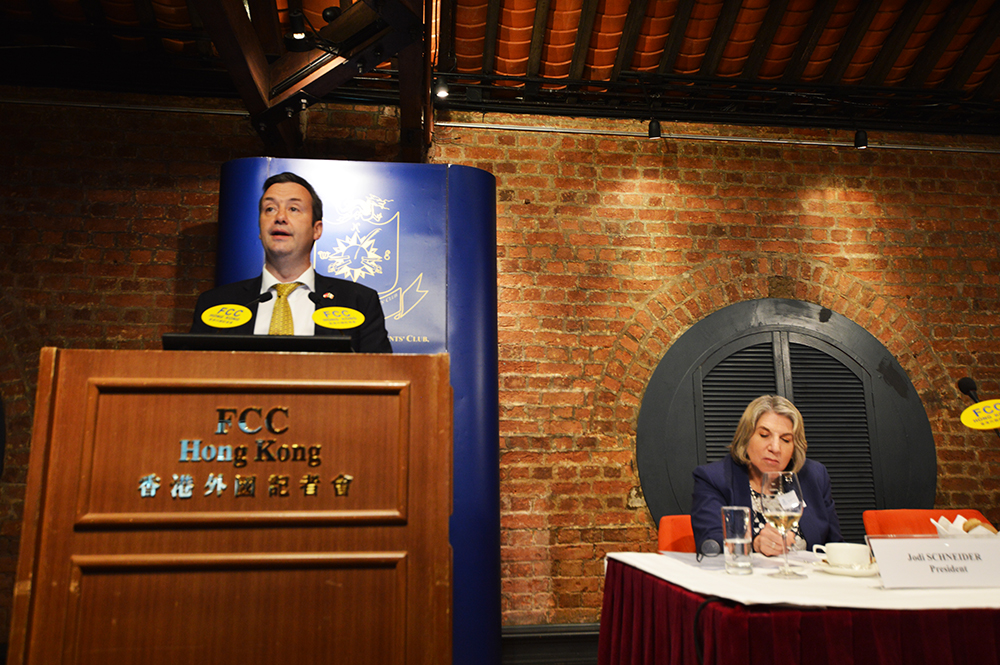
The question of whether the Sino-British Joint Declaration was dead was the topic of debate at a sold-out club lunch on August 29.

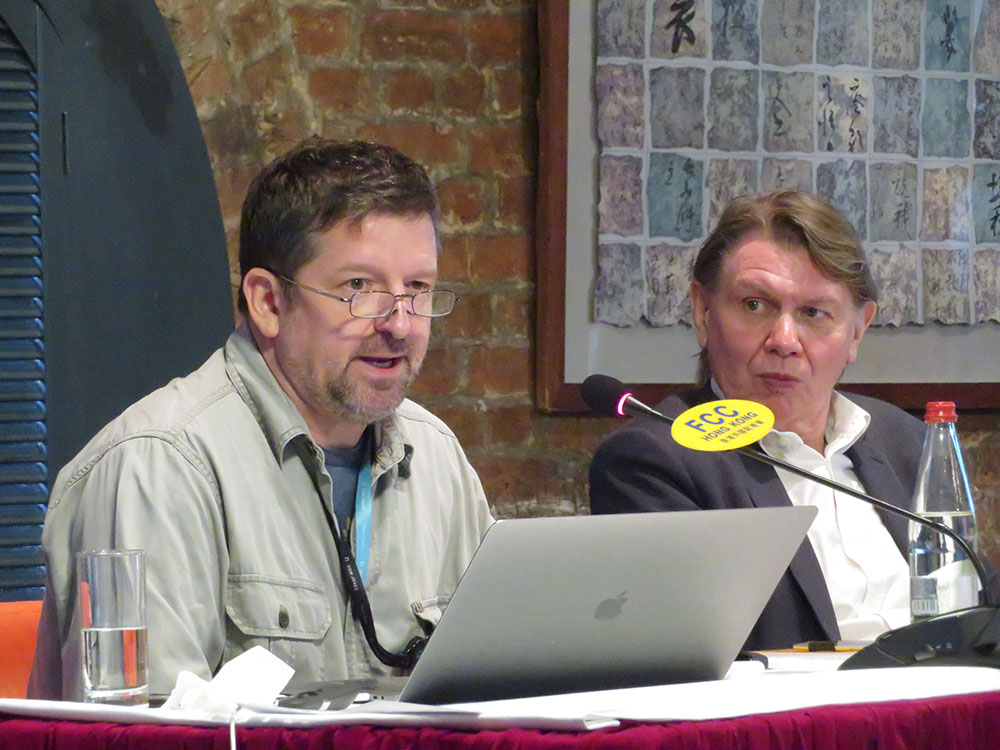
Left: Alan Hoo, Chairman of The Basic Law Institute, and, right lecturer at CUHK’s Centre for China Studies, Tim Summers. Photo: Sarah Graham/FCC Left: Alan Hoo, Chairman of The Basic Law Institute, and, right lecturer at CUHK’s Centre for China Studies, Tim Summers. Photo: Sarah Graham/FCC

Guest speakers Alan Hoo, Chairman of The Basic Law Institute, and lecturer at CUHK’s Centre for China Studies, Tim Summers, gave their views on the relevance of the document, drawn up between Britain and China as part of an agreement to hand sovereignty back to China.

Both speakers also gave their take on the current protests gripping Hong Kong, and what they determined to be the next steps to resolving the crisis.

Watch the video

Essential tips for Hong Kong journalists reporting suicide and mental health issues

The media’s role and its responsibilities in reporting suicide and mental health issues were outlined in a workshop for journalists, part of an FCC series focused on the Hong Kong protests.
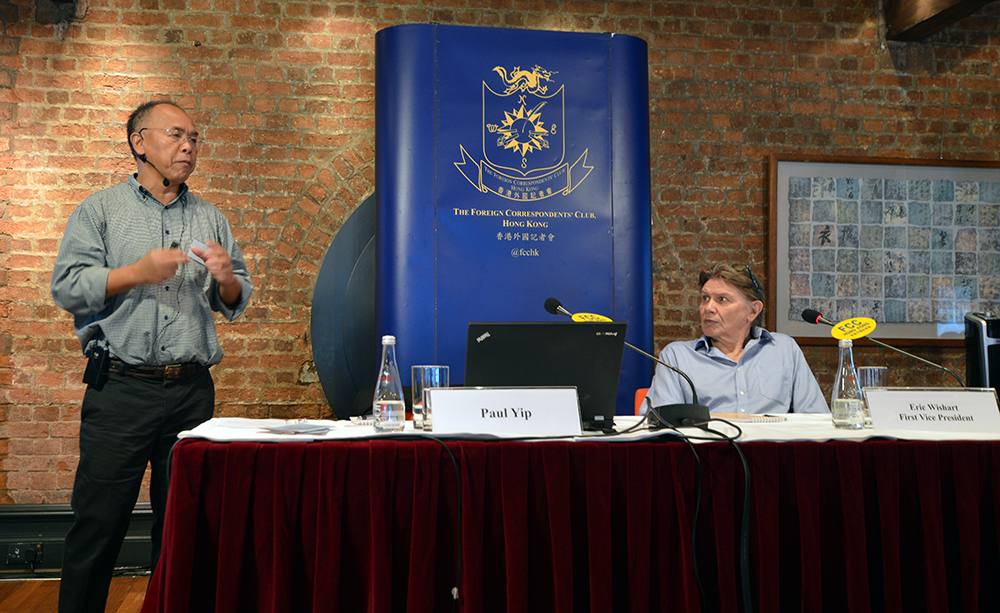
Professor Paul Yip, Director of the Centre of Suicide Research and Prevention at HKU, gives reporting tips to journalists. Photo: Sarah Graham/FCC Professor Paul Yip, Director of the Centre of Suicide Research and Prevention at HKU, gives reporting tips to journalists. Photo: Sarah Graham/FCC

Following rumours and speculation about a number of suicides that were directly linked by some Hong Kong media to the ongoing protests in the city–and giving details of how they were carried out–Professor Paul Yip, Director of the Centre of Suicide Research and Prevention at the University of Hong Kong, issued advice to journalists covering the topic at a breakfast briefing on August 27.

Prof Yip encouraged media professionals to provide more information around suicide prevention to help raise awareness of the support available to those experiencing mental health issues. He also advised journalists covering the Hong Kong protests to take rest for the sake of their own physical and mental health.

An audience member and representative of the Hong Kong Samaritans revealed that the nature of calls to the organisation’s hotline had recently changed, with many callers worried about the protests.

You can download the Centre of Suicide Research and Prevention’s recommendations on suicide and mental health reporting here.

The Hong Kong Samaritans website can be found here, and the 24/7 hotline number is 2896 0000.

Watch the breakfast briefing

Essential tips for journalists on digital security while covering Hong Kong protests

Digital security expert Lokman Tsui gave tips and insights into how journalists can take precautions to protect themselves, their work and their sources’ digital communications while covering politically sensitive events. 

What apps and email providers to use, how to adjust your phone settings to protect hackers and police interference, and what news organisations can do to better protect their reporters were topics that were covered during the August 13 briefing by the Assistant Professor at the School of Journalism and Communication, the Chinese University of Hong Kong.

The event took place the day after the club sent an open letter to Hong Kong Police Commissioner Stephen Lo outlining concerns over the deterioration in relations between the police and the media covering the Hong Kong protests. 

Watch the video here

Inside the Hong Kong protests, as told by the reporters and photographers on the ground

The challenges facing journalists and photographers covering the Hong Kong protests were discussed by members of the media who have been on the ground since the demonstrations began in June.

Jennifer Creery, senior reporter for Hong Kong Free Press; Damon Pang, multimedia journalist for Radio Television Hong Kong (RTHK); AFP photographer Anthony Wallace, freelance journalist Eric Cheung, and Chris Yeung, chairperson of the Hong Kong Journalists Association, revealed their thoughts on the protests during the August 8 club lunch.

From covering the demonstrations as part of a small team to dodging tear gas, the panel detailed the ups and downs on reporting on the frontline.

Watch the video here.

How the U.S.-China trade war is impacting Asia

The effect of the U.S-China trade war on South East Asia was the topic of discussion at a breakfast briefing featuring a leading economic expert.

Ernest Bower, founder and CEO of BowerGroupAsia Inc. and founder and chairman of AkarAsia Inc. which is pioneering the field of digital advocacy and the use of artificial intelligence as a policy and business tool across Asia, gave his insights into how the dispute has affected China’s inbound and outbound investment.

Having arrived in Hong Kong from Washington on Monday, during the city-wide strike, Bower also commented on the ongoing protests as well as giving the view from Washington.

Watch the full talk here.

All you need to know about the legal risks of covering the Hong Kong protests

Valuable advice on how to cover the Hong Kong protests was given to journalists by a leading legal expert at the FCC.

Sharron Fast, Deputy Director of Master of Journalism Programme and lecturer from The Journalism and Media Studies Centre at the University of Hong Kong, covered a wide range of topics and took questions from the audience – including members and journalists – at the August 6 breakfast briefing. The event was the latest in a series of workshops on covering the Hong Kong protests, now in their tenth week.

What to do if arrested, whether you should hand over your mobile phone, and the legal risks around trespassing were all discussed at the event.

Watch the video here.

Security expert Stevo Stephen briefs journalists on how to stay safe covering protests

More than 100 Hong Kong journalists and Hong Kong Journalists Association members attended a talk on how to cover protests safely following a weekend of demonstrations in the city that saw violence break out, resulting in the injuries of dozens of people, among them reporters.

Stevo Stephen at the FCC. Photo: FCC Stevo Stephen at the FCC. Photo: FCC

In the first of a series of FCC workshops focused on the protests in Hong Kong, security expert Stevo Stephen gave a briefing on the safest and most effective ways of covering demonstrations and street violence.

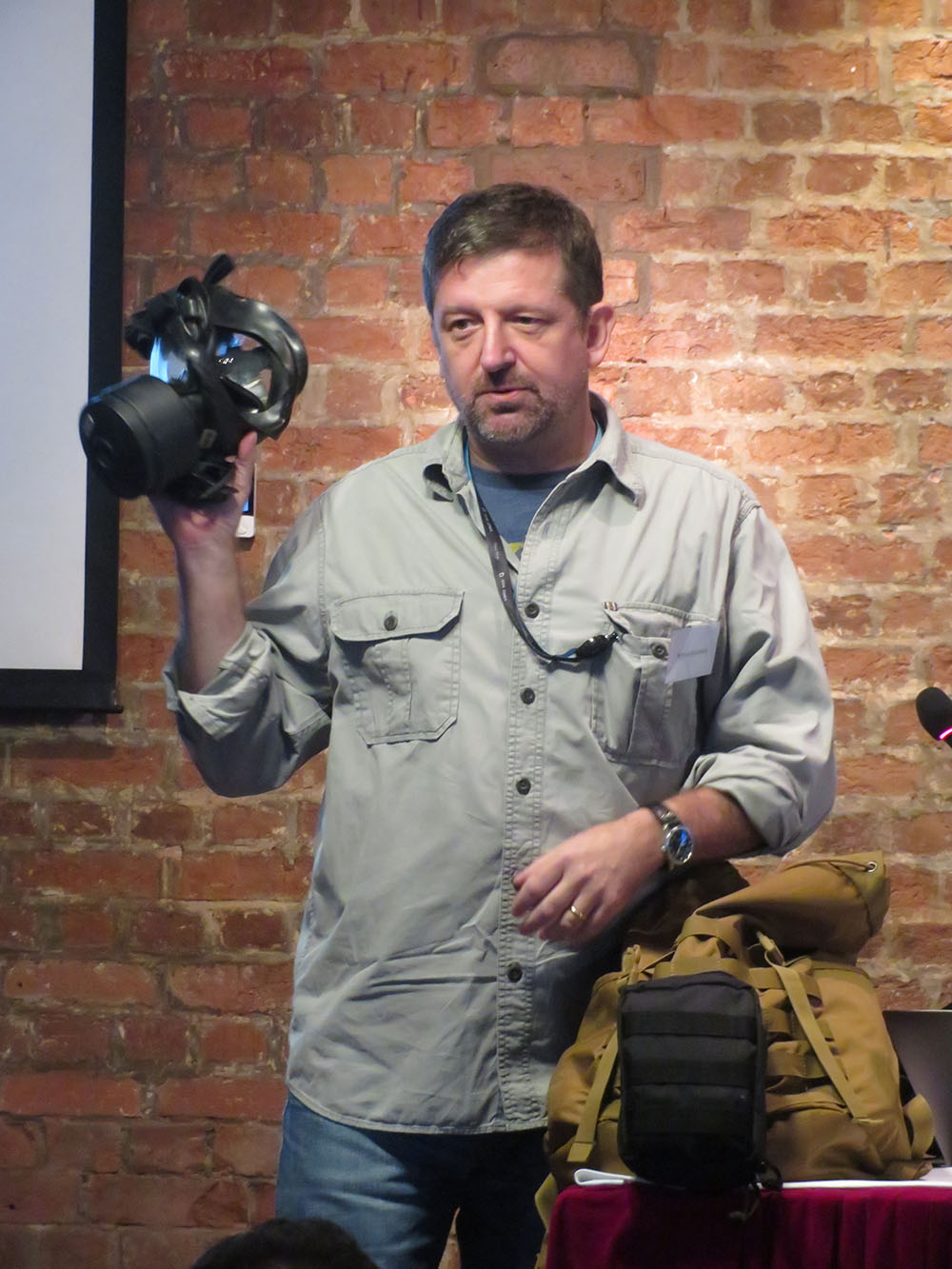
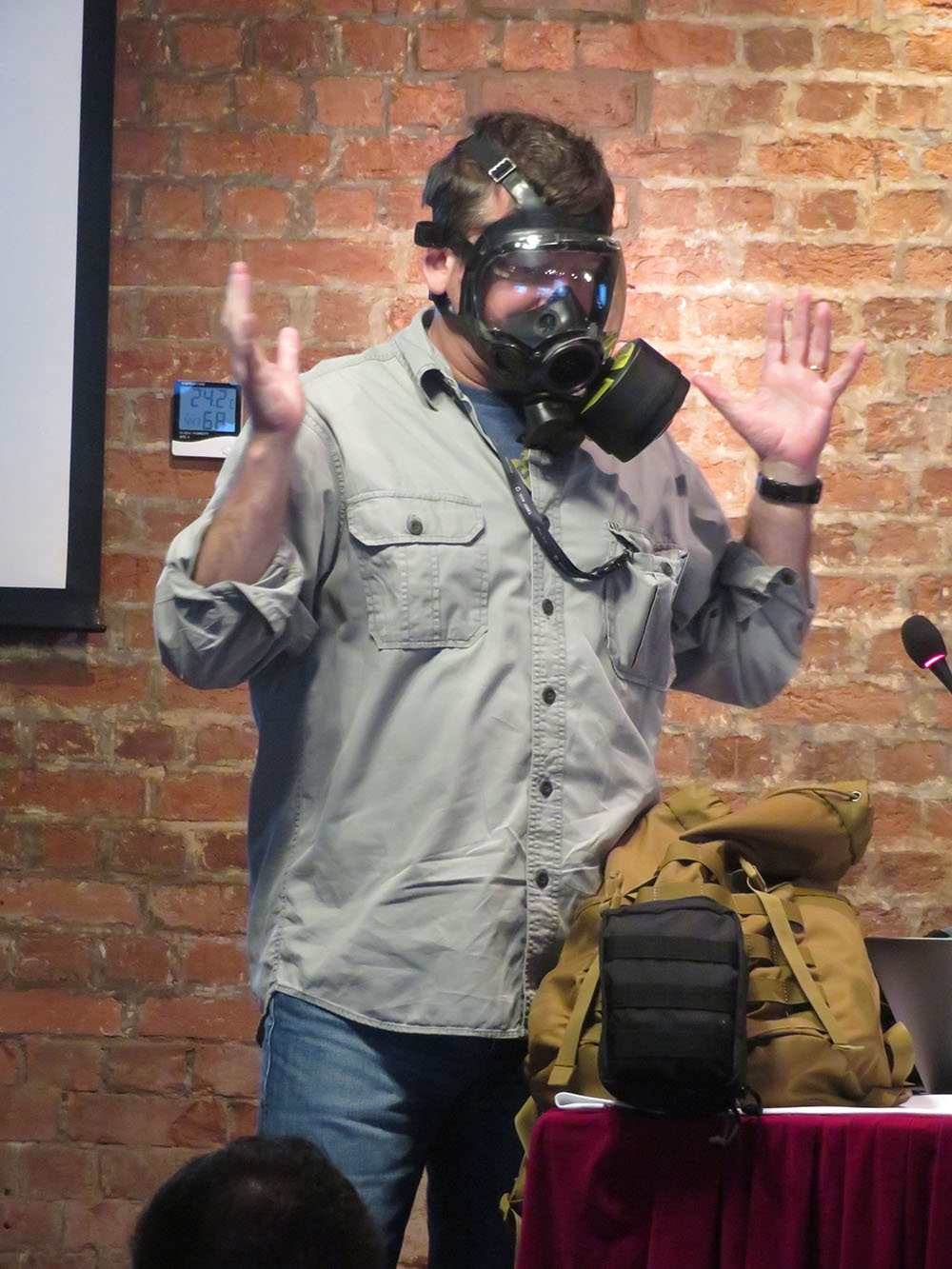
Stephen, APAC and Africa News Risk Senior Manager for the Wall Street Journal, demonstrated the best equipment to use when covering protests, including protective wear. The former private security expert, who has a background with the British Commandos, shared his knowledge on how journalists can interact with the police and demonstrators, particularly when violence breaks out.

Future FCC workshops will include sessions on the use of technology in covering the protests and the kinds of legal risks media face. With the launch of the workshops, the FCC is furthering its goal of promoting press freedom in Hong Kong by acting as a forum for education and discussion.

Watch the video


Stevo Stephen at the FCC. Photo: FCC Stevo Stephen at the FCC. Photo: FCC

Stevo Stephen at the FCC. Photo: FCC Stevo Stephen at the FCC. Photo: FCC

Hong Kong protests: Panel discusses next move for anti-extradition bill campaign

The manner in which protesters have demonstrated again the proposed Hong Kong extradition bill, and their next move, was discussed by a panel of experts at the club on July 10. 

Author and lawyer Antony Dapiran, reporter Mary Hui, and leader of the Civic Human Rights Front, Bonnie Leing Wing-Man, all gave their views on the ongoing political unrest in the city. 

Watch the video here. 

FCC announces recipients of inaugural Clare Hollingworth Fellowship

The Foreign Correspondents’ Club has chosen Mary Hui and Jessie Pang as recipients of the inaugural Clare Hollingworth Fellowship, named in honour of the preeminent and path-breaking journalist.

Mary Hui, left, and Jessie Pang. Mary Hui, left, and Jessie Pang.

The adjudicators noted the winners offer clear potential as future leaders both within the FCC and the wider Hong Kong journalism community.

“In its first year, we were pleased and gratified by the level of talent and potential of the applicants for the fellowship,” said Jodi Schneider, president of the FCC. “Mary and Jessie both exemplify the qualities we were seeking in Fellows.”

The Fellowship is aimed at early career journalists and current journalism school students in Hong Kong.

The open competition drew significant interest from a cross spectrum of applicants. The adjudicators noted the high standard of applicants and encouraged all to apply again next year.

“The fellowship is a key part of the FCC’s outreach efforts aimed at diversifying the membership base and bringing younger talent into the club,” Schneider said.

WINNERS

Mary Hui
Mary Hui is a correspondent with Quartz covering Asia business and geopolitics. She was previously a freelancer for publications including the New York Times and Washington Post.

Jessie Pang 
Jessie Pang is a recent graduate of Hong Kong University’s journalism program and is joining Reuters after an internship. Her previous freelance work appeared in publications including the Atlantic and HK01.

Further information on the Fellowship can be seen here: https://www.fcchk.org/clarehollingworth/

Brexit: Why, despite the European election results, nothing has changed since the 2016 referendum

The recent European election results actually show nothing has changed regarding Brexit in terms of how many voters want to leave the EU and how many wish to remain, says a leading British political scientist.

British political scientist, Philip Cowley, brought some clarity to the topic of Brexit when he appeared at the FCC on May 29. Photo: Sarah Graham/FCC British political scientist, Philip Cowley, brought some clarity to the topic of Brexit when he appeared at the FCC on May 29. Photo: Sarah Graham/FCC

Despite the newly-formed Brexit Party making huge gains in the poll, taking more than 30% of the total UK votes, the country is still almost evenly split on the issue and the results mirror those of the 2016 referendum.

“It’s British politics as it has been played out since 2014, just in its latest manifestation,” said Philip Cowley, Professor of Politics at Queen Mary University of London.

But what the results of last week’s elections did show was that voters want simple and powerful messages, as was seen from the two parties to gain the most: the Brexit Party’s push to simply leave Europe, and the Liberal Democrats’ adoption of the slogan, Bollocks To Brexit., said Cowley, author of a series of books on British general elections. The parties with the biggest losses – the Conservatives and Labour – campaigned on messages that were too nuanced, he suggested.

As a Conservative leadership contest kicked off with 11 names in the ring so far – “we’ve already hit a football team and I think we’ve got more to come” – Cowley said that although Boris Johnson was the bookies favourite to win, in every Tory leadership contest since 1965, the favourite has failed to be elected.

Watch the full video here

We measure site performance with cookies to improve performance.