Members Area Logout

FCC will remain ‘strong, steadfast voice for press freedom in Hong Kong’, pledges new president, Jodi Schneider

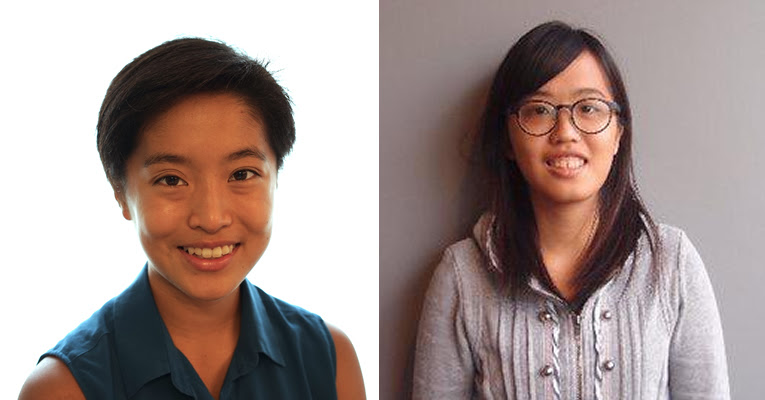
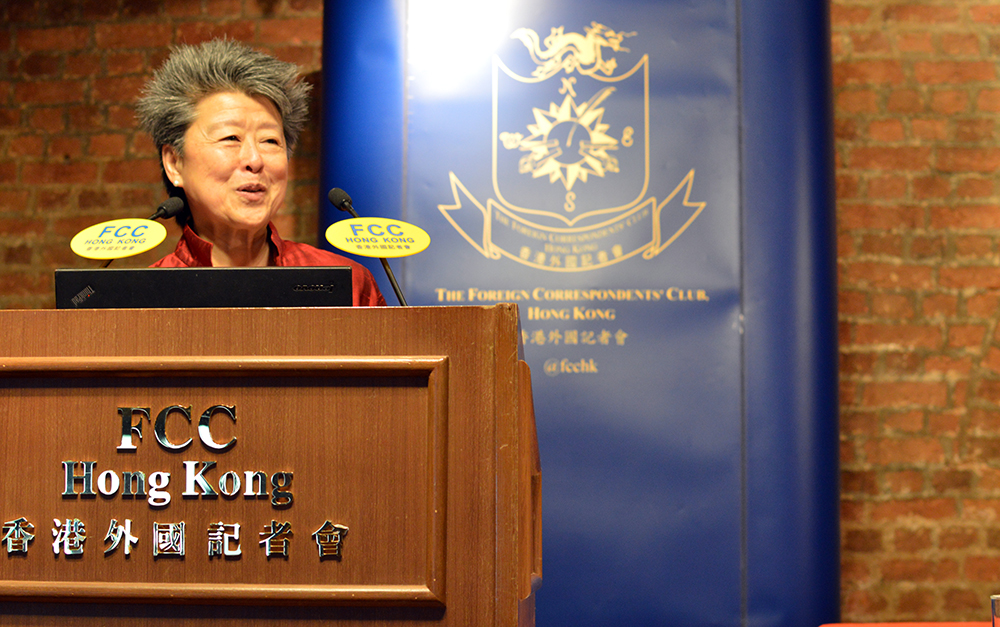
Senior Bloomberg editor Jodi Schneider pledged that the FCC Hong Kong would remain “a strong, steadfast voice for press freedom in Hong Kong, Asia and the world” as she was elected president of the prestigious press club.

Jodi Schneider. Jodi Schneider.

Ms. Schneider takes over from Florence de Changy as Club President, while Eric Wishart was elected First Vice-President, it was announced this week. Tim Huxley was voted Second Vice-President.

Ms. Schneider is Senior International Editor at Bloomberg News, based in Hong Kong, where she discusses world politics and policy on Bloomberg Television and Radio, and edits coverage via the Asia Editing Hub. She is a founder and co-lead of the Women’s Voices initiative in Asia and a co-lead of the Bloomberg Women’s Community in Hong Kong. While in Washington, D.C., she was active in the National Press Club, heading the Fourth Estate Committee.

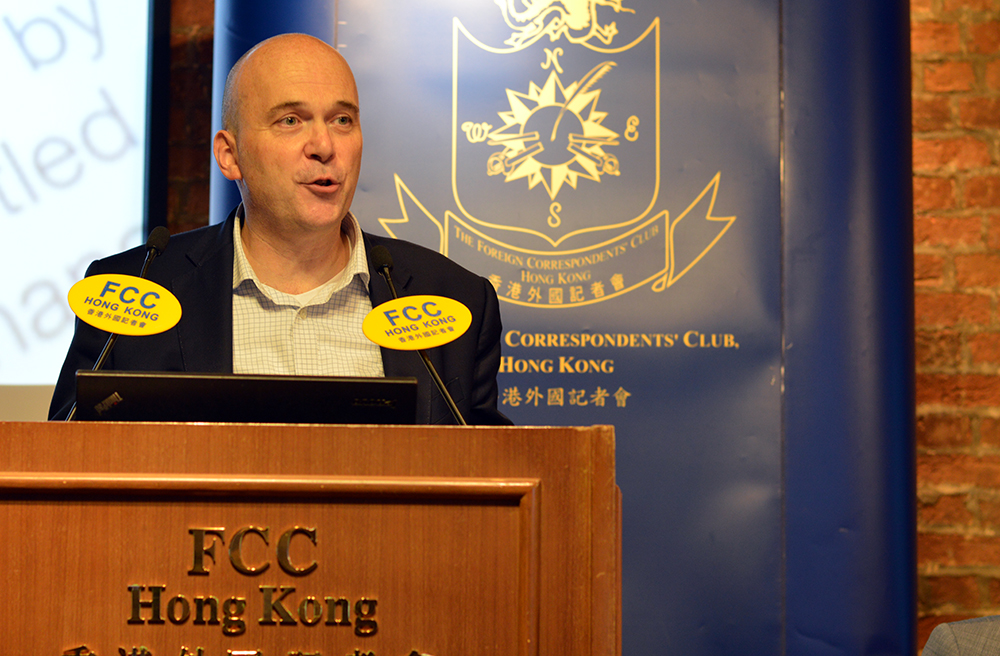
Eric Wishart. Eric Wishart.

Former AFP editor-in-chief, and past FCC president, Mr Wishart is responsible for special editorial projects for the Agency’s global news management. He teaches journalism part-time at Hong Kong University and Hong Kong Baptist University.

The FCC is one of the oldest and most famous press clubs in the world, having been established in China in 1943. Home to journalists and a host of other professionals, the members-only club provides a neutral platform for local and international speakers from the worlds of politics, business, sports and the arts. The club’s core mission is to promote and facilitate journalism of the highest standard, and to promote press freedom across the region.

“I am honoured to become the next president of the Foreign Correspondents’ Club of Hong Kong, undoubtedly one of the world’s great press clubs,” Ms. Schneider said. “As president, I will make a top priority the commitment to being a strong, steadfast voice for press freedom in Hong Kong, Asia and the world. We have a long tradition as a home for discussion and debate on press freedom issues and I will work to uphold that role.”

For the full election results, visit www.fcchk.org/election-2019

Video: James Bullard, President and CEO of the Federal Reserve Bank of St. Louis, on the U.S. Economy and Monetary Policy

The US economy and monetary policy was the topic of discussion when Dr. James Bullard, President and CEO of the Federal Reserve Bank of St. Louis, spoke at the FCC on May 22.

Watch the full video here

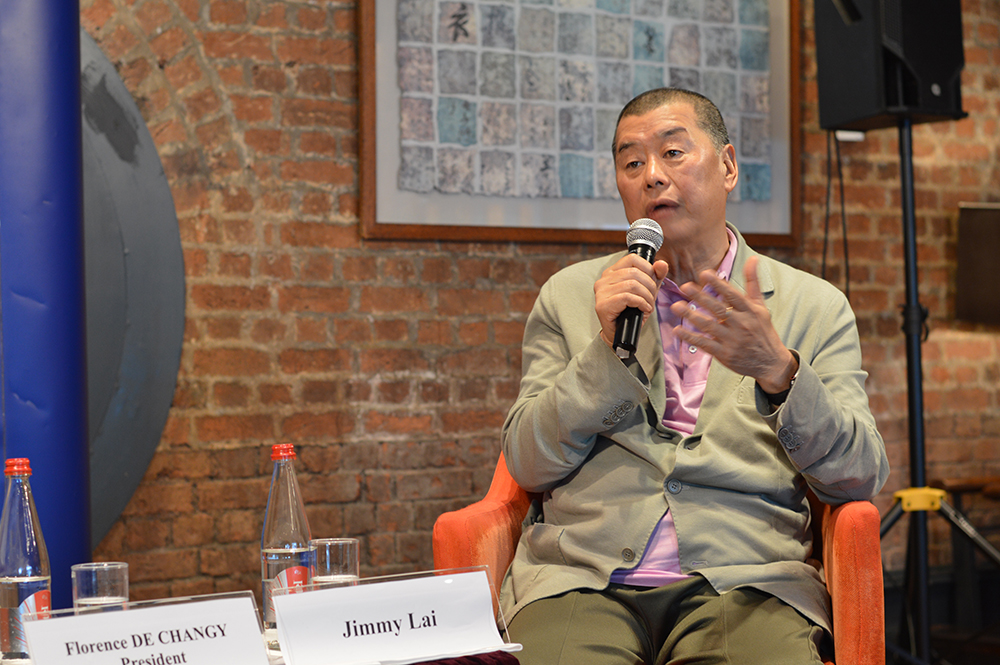
Media entrepreneur Jimmy Lai: Hong Kong Extradition Law is ‘the battle against the massacre of our freedom’

Hong Kong’s proposed changes to its extradition agreement with China will finish Hong Kong, warned media entrepreneur Jimmy Lai, as he called on residents to protest.

Jimmy Lai, founder and chairman of Hong Kong-listed Next Digital, at the May 20 club lunch. Photo: Sarah Graham/FCC Jimmy Lai, founder and chairman of Hong Kong-listed Next Digital, at the May 20 club lunch. Photo: Sarah Graham/FCC

If the bill passes, many foreign businesses will leave Hong Kong, Lai predicted, quoting a new and as yet unpublished survey that found 90% of businessmen in the city were against the proposed Fugitive Offenders Ordinance amendment bill that would allow the city to accept extradition requests from countries where there is no prior agreement. 

“This is the last battle. This is the battle against the massacre of our freedom,” Lai said at the May 20 club lunch.

The founder and chairman of Hong Kong-listed Next Digital, publisher of Apple Daily and Next Magazine, also described Hong Kong Chief Executive Carrie Lam as “evil” and gave this advice to young journalists: “It’s a risky business… but you’re fighting for society, which is worth fighting for, and that has a lot to give us as a person – the dignity, the pride, the reason to live.”

Watch the full video

Maria Ressa on press freedom, dictators, social media, and the day George Clooney made her coffee

The biggest battle for our generation is the battle for truth and as journalists, we must continue to fight for it, said Rappler founder and press freedom fighter Maria Ressa.

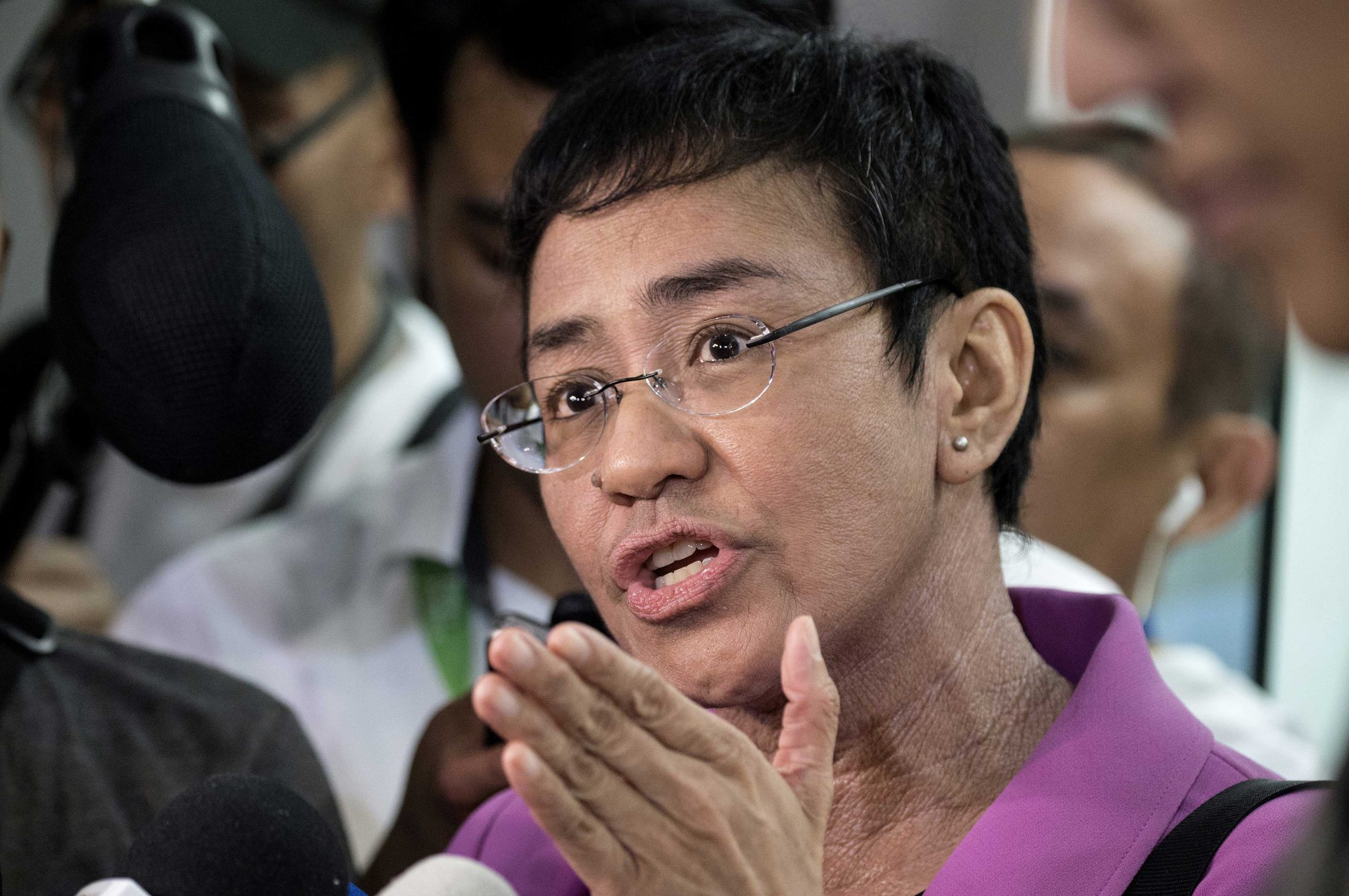
Maria Ressa at the May 17 club lunch. Photo: Sarah Graham/FCC Maria Ressa at the May 17 club lunch. Photo: Sarah Graham/FCC

Appearing at the FCC on a travel bond amid several pending court actions in the Philippines, the journalist at the centre of a harassment campaign directed by President Rodrigo Duterte discussed her country’s “descent into tyranny” but admitted that the pressure on her and her reporters “has made us stronger”.

During the lively May 17 guest appearance, Ressa gave her views on why so many populist leaders were being elected, in part blaming the rise of the internet and social media and their role in the spread of disinformation.

She also talked about the pressure that comes with being an international symbol of the fight for press freedom, which sees her traveling the world to meet global leaders and human rights advocates. In one anecdote, Ressa recalled a recent meeting with leading human rights lawyer, Amal Clooney, and her actor husband George, who made the two women Nespresso – for which the actor is global brand ambassador – as they discussed human rights issues.

Watch the full video

Heated debate over proposed Hong Kong extradition agreement with China

A proposed controversial extradition agreement between Hong Kong and China was the topic of lively debate when prominent lawyers with opposing views on the move discussed it at the FCC.

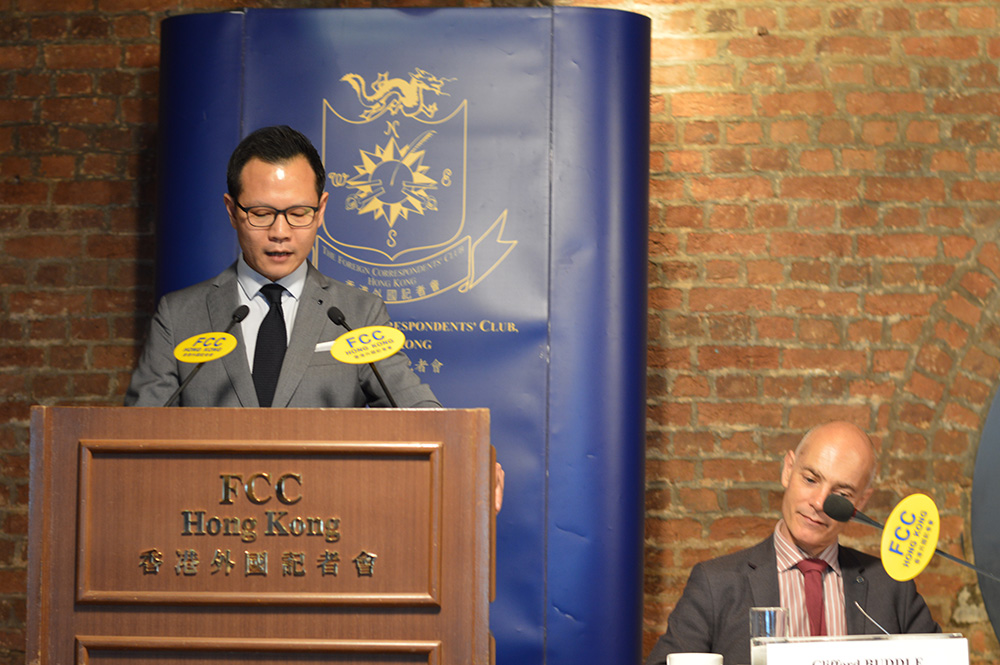
Dennis Kwok. Photo: Sarah Graham/FCC Dennis Kwok. Photo: Sarah Graham/FCC

Watch the video below

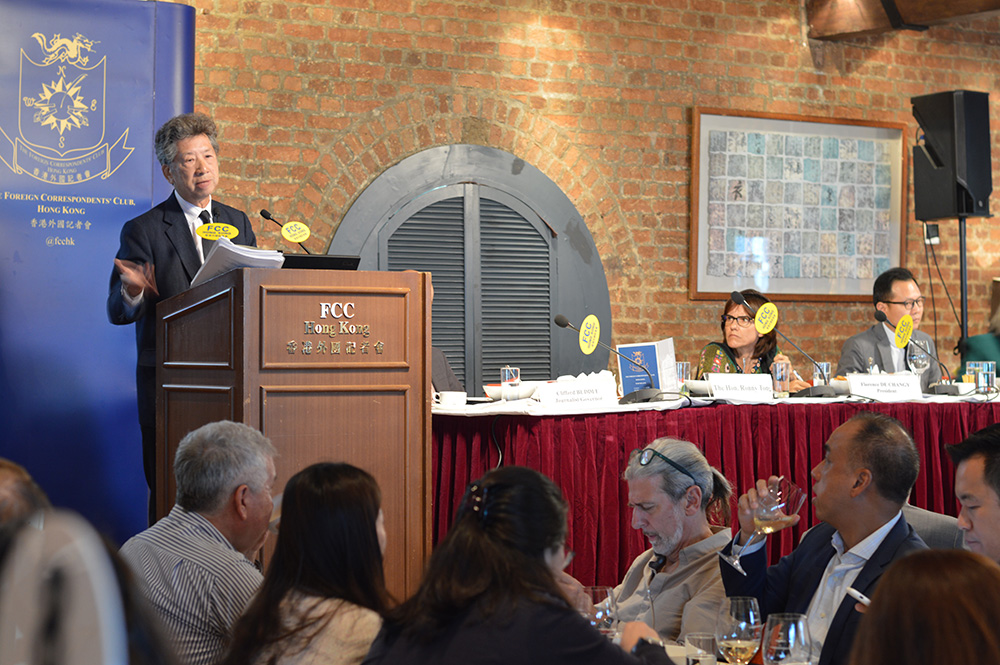
Days after an estimated 150,000 marched through Hong Kong in protest at the proposal, Ronny Tong, a non-official member of the Executive Council of Hong Kong, joined Legislative Council member Dennis Kwok to discuss whether the move was a knee-jerk reaction to the recent case of a Hong Kong citizen suspected of committing murder in Taiwan or a way in which China can legally abduct people from the city. Both men are co-founders of the Civic Party.

Ronny Tong. Photo: Sarah Graham/FCC Ronny Tong. Photo: Sarah Graham/FCC

Tong argued that the amendment would respect the human rights of those taken to the mainland under the agreement, and that extradition decisions would be taken having been considered by Hong Kong’s respected judiciary. He added that political crimes would be exempt from the agreement. Kwok, however, said he feared that once Article 23 was enacted, such crimes would fall under the agreement.

Watch the full May 2 debate here.

Rappler’s Maria Ressa to be keynote speaker at Human Rights Press Awards

The Human Rights Press Awards is delighted to announce that Maria Ressa, the co-founder of news website Rappler, will be the keynote speaker at the awards ceremony on May 16, 2019, at the Foreign Correspondents’ Club in Hong Kong.

Maria Ressa, Rappler Maria Ressa, Rappler

Maria has become synonymous with the battle against disinformation and attempts to discredit the media in the Philippines.

Rappler has repeatedly pushed to hold the government accountable and has exposed corruption within the police force, which has led the deadly crackdown against drugs.

Maria has turned Rappler into one of the region’s most influential news outlets, even as the government has attempted to silence her – she has been arrested twice this year and is currently out on bail.

The Human Rights Press Awards showcase the best work by journalists reporting on human rights in Asia – promoting and rewarding much-needed coverage in this important field.  For more than two decades the awards have been proudly organised by the FCC, Amnesty International, and the Hong Kong Journalists Association.

For media enquiries please contact Winnie Fu: [email protected]

+852 9197 3405

Hong Kong archives law ‘long overdue’

A modern, comprehensive and transparent archives law that covers all public bodies is long overdue in Hong Kong, argued the director of Hong Kong University’s Social Science Research Centre in response to the Law Reform Commission’s looking at legislation guaranteeing public access to information.

L-R: Don Brech, Prof. John Bacon-Shone, and Stacy Belcher Lee. Photo: Sarah Graham/FCC L-R: Don Brech, Prof. John Bacon-Shone, and Stacy Belcher Lee. Photo: Sarah Graham/FCC

Professor John Bacon-Shone added that record keeping was an essential element of an effective and accountable government when he appeared at the April 30 club lunch as part of a panel discussing the need for an archives law.

The Law Reform Commission has come up with a report looking at both the need for an archives law and legislation guaranteeing public access to information. The report has gone out to public consultation. Some journalists, historians and archivists think the proposals are too weak.

Joining Prof. Bacon-Shone were Don Brech, a member of the Archives Action Group and former Director of the HK Government Records Service; and HKU University Archivist and member of the Law Reform Commission Archives Law Sub-committee, Stacy Belcher.

One point of contention among panelists was the potential to charge members of the public for access to information. Prof. Bacon-Shone said there was no cost attached to copying digital records, as opposed to a small cost for photocopying paper records.

However, Belcher argued that there was in fact a significant cost to keep digital records, including electronic storage fees, and administrative costs in transferring and archiving digital information.

Watch the full talk here.

Book reveals the untold stories of those who fled China’s Communist Revolution

The personal stories of some of those who fled Shanghai in 1949 during the Communist Revolution feature in a new book, the first of its kind to be printed in English.

Author Helen Zia talked about her new book at the FCC. Photo: Sarah Graham/FCC Author Helen Zia talked about her new book at the FCC. Photo: Sarah Graham/FCC

Author Helen Zia interviewed hundreds of Chinese exiles over 12 years in her bid to reveal the struggles faced by those living in what until then had been Asia’s most cosmopolitan city. In the end, she selected the stories of four people from differing backgrounds to feature in the book, Last Boat Out of Shanghai: The Epic Story of the Chinese Who Fled Mao’s Revolution.

Zia told the FCC Club Breakfast on March 28 that her mother had always told her that she’d left China on the last boat out of Shanghai. Over the years, Zia said she met many exiles who all also repeated the claim that they were on that last boat.

She said that having told the stories of those who fled and the horrors they witnessed during the upheaval, she hoped that people would be more tolerant of refugees and appreciate their contribution to the societies they seek safety in.

Read more about Helen Zia’s book here.

Watch the full talk here.

Why journalism must adapt to survive, by ex-Guardian chief Alan Rusbridger

The digital revolution that has disrupted journalism is still in its infancy, says former Guardian editor-in-chief Alan Rusbridger, and news organisations need to adapt if they are to survive.

Former Guardian editor, Alan Rusbridger, is interviewed by FCC President Florence de Changy on March 27. Photo: Sarah Graham/FCC Former Guardian editor, Alan Rusbridger, is interviewed by FCC President Florence de Changy on March 27. Photo: Sarah Graham/FCC

Gone are the days when reporters hit ‘send’ on a story and head to the nearest pub, he told FCC members at a packed club dinner on March 27. Now the story begins at the point a journalist publishes their article. He cited Glenn Greenwald, the American journalist whose work breaking the Edward Snowden NSA leaks in 2013 earned the Guardian a Pulitzer Prize for public service. Greenwald famously interacts with his legions of readers as soon as his stories are published, enabling him to develop the piece further.

Rusbridger’s book, Breaking News: The Remaking of Journalism and Why It Matters Now, asks vital questions about the purpose of journalism at a time when 4 billion people can communicate with each other at the touch of a button. Questions like ‘is journalism is public service?’, and ‘is journalism better than the internet?’ are key themes of the book in which Rusbridger looks back at how the trade has evolved over the last few decades.

He cited divisive topics like Brexit and the election of US President Donald Trump as having had an impact – largely negative – on the way news organisations approached stories. He spoke of the “bullying, hectoring front pages” of the British press during the lead up to the referendum on Europe, adding that the role of the media should have been to inform citizens to help them make a decision.

Such behaviour, coupled with the rise of social media as an aggregator of news and a growing frustration with the ruling elite, had led to disassociation among readers who felt they were no longer being heard. The knock-on effect has been a consistent drop in revenue among most news organisations, leaving them scratching around for the business model that works for them.

Rusbridger himself steered the Guardian through the early days of the digital revolution and by the time he stepped down in 2015, a membership model had been established that saved the newspaper from the prospect of folding. Today, he said, the Guardian has £1 billion in the bank and expects to break even this year.

“There’s a new model beginning to develop,” Rusbridger said, “and it strikes me that all that investigative journalism that we did turned out to be the business model.”

Art in China and Africa explored by panel of experts

The relationship between China and Africa, seen through the eyes of artists, was explained at the FCC as Art Basel kicked off in Hong Kong.

Left to right: McKinsey's Georges Desvaux, Meg Maggio, Director, Pékin Fine Arts, Beijing and Hong Kong;  and photographic artist Pieter Hugo. Photo: Sarah Graham/FCC Left to right: McKinsey’s Georges Desvaux, Meg Maggio, Director, Pékin Fine Arts, Beijing and Hong Kong; and photographic artist Pieter Hugo. Photo: Sarah Graham/FCC

A panel featuring a photographic artist, a curator, and an expert on African and Asian growth strategies discussed the evolution of contemporary art in Asia.

Panelists included Natasha Becker, who curates exhibitions in Cape Town’s Goodman Gallery, as well as organising public programs in global art history at Clark Art Institute in Massachusetts.

Photographic artist Pieter Hugo discussed how his upbringing as South African apartheid ended influenced him to create portrait photography across Africa’s marginalized communities, in places including Rwanda, exploring how history had left its mark on the younger generation.

Watch the full talk here.

We measure site performance with cookies to improve performance.