Members Area Logout

Why feminism poses a threat to the Chinese government

China’s efforts to quash feminism have in fact galvanised the movement as women across the country choose not to have children in the face of a government propaganda campaign to try to boost failing birth rates, according to a new book.

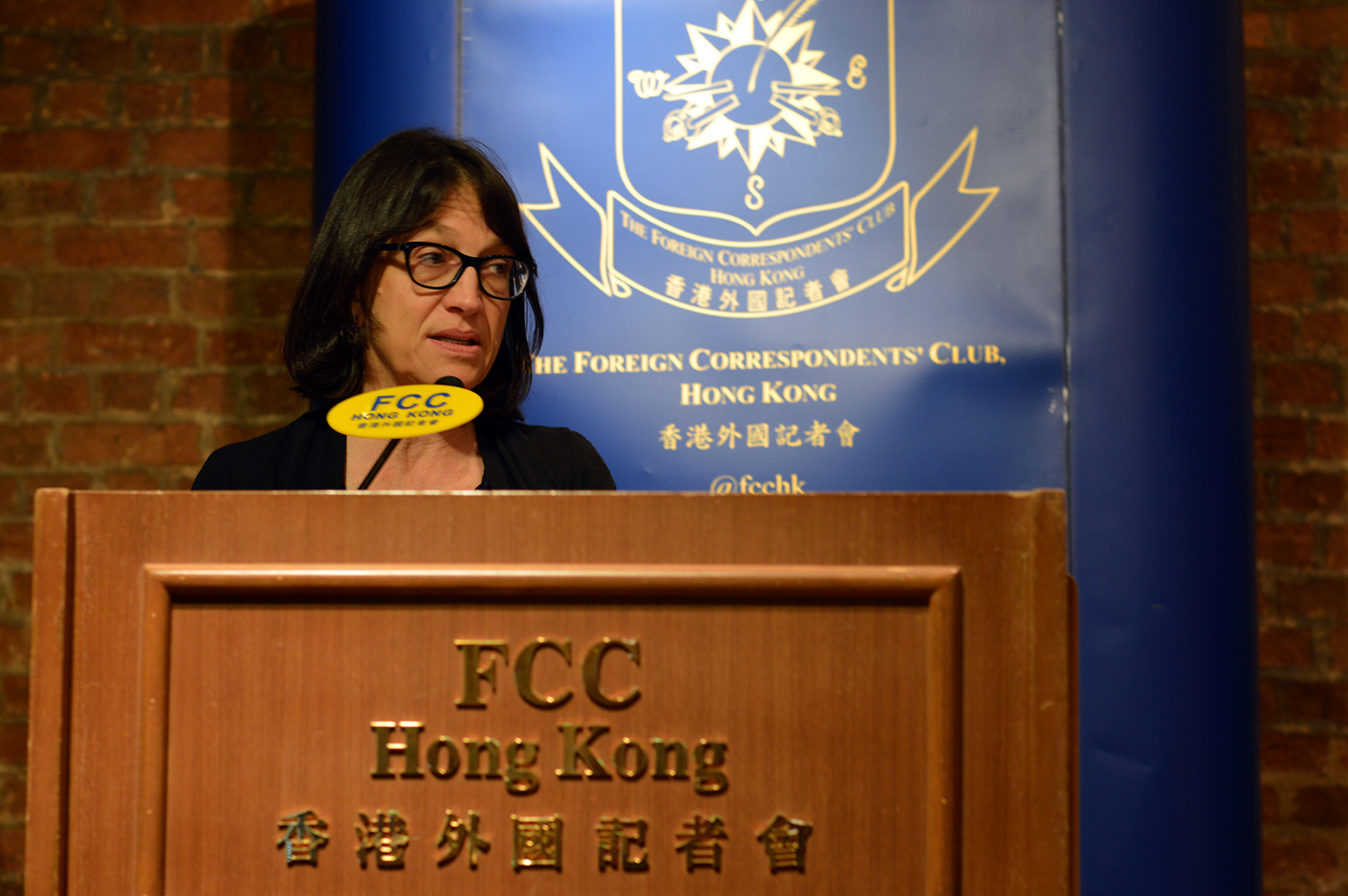
Author Leta Hong Fincher lifted the lid on China's feminist movement when she appeared at the FCC. Photo: Sarah Graham/FCC Author Leta Hong Fincher lifted the lid on China’s feminist movement when she appeared at the FCC. Photo: Sarah Graham/FCC

The male-dominated Communist Party sees the control of women and their bodies as key in preventing social unrest and maintaining stability across the country, said Leta Hong Fincher, author of Betraying Big Brother: The Feminist Awakening in China.

Since 2015, the Chinese government has been cracking down on feminism, beginning with the jailing of five feminist activists for 37 days. The Feminist Five became a global cause célèbre, not least because President Xi Jinping was about to co-host a UN conference in New York on women’s rights. Activists inundated social media with #FreetheFive messages and Hillary Clinton even spoke out on their behalf, tweeting: “Xi hosting a meeting on women’s rights at the UN while persecuting feminists? Shameless.”

However, despite apparently bowing to international pressure the clampdown goes on, most recently with the case of Yue Xin, the #MeToo activist and recent graduate of Peking University who has been missing – presumed detained – since trying to unionise workers two months ago.

“I would argue that the subjugation of women is absolutely key to Communist rule, exerting control over the entire population particularly in the last few decades with the advent of market reforms,” Hong Fincher said. “The government sees women primarily as reproductive tools and so they need to be confined to the home, to be baby breeders, raise children, take care of the elderly and tame the violent urges of men.”

Women in China are tired of the sexism they face in their daily lives, she said, and many wanted to pursue careers and further education rather than marry and have families. And more alarmingly for the government, they are willing to stand up for themselves.

Hong Fincher said the #MeToo movement was also spreading across China despite growing internet censorship and a lack of press freedom. Hong Fincher predicted that the crackdown on feminism would intensify as China’s economy slows and the workforce shrinks due to failing birth rates.

Watch the full talk here.

1MDB: The story behind the biggest corruption scandal in decades

The dogged investigation into the biggest and most far-reaching corruption scandal in recent history was revealed by the lone journalist who relentlessly pursued the story in the face of intimidation.

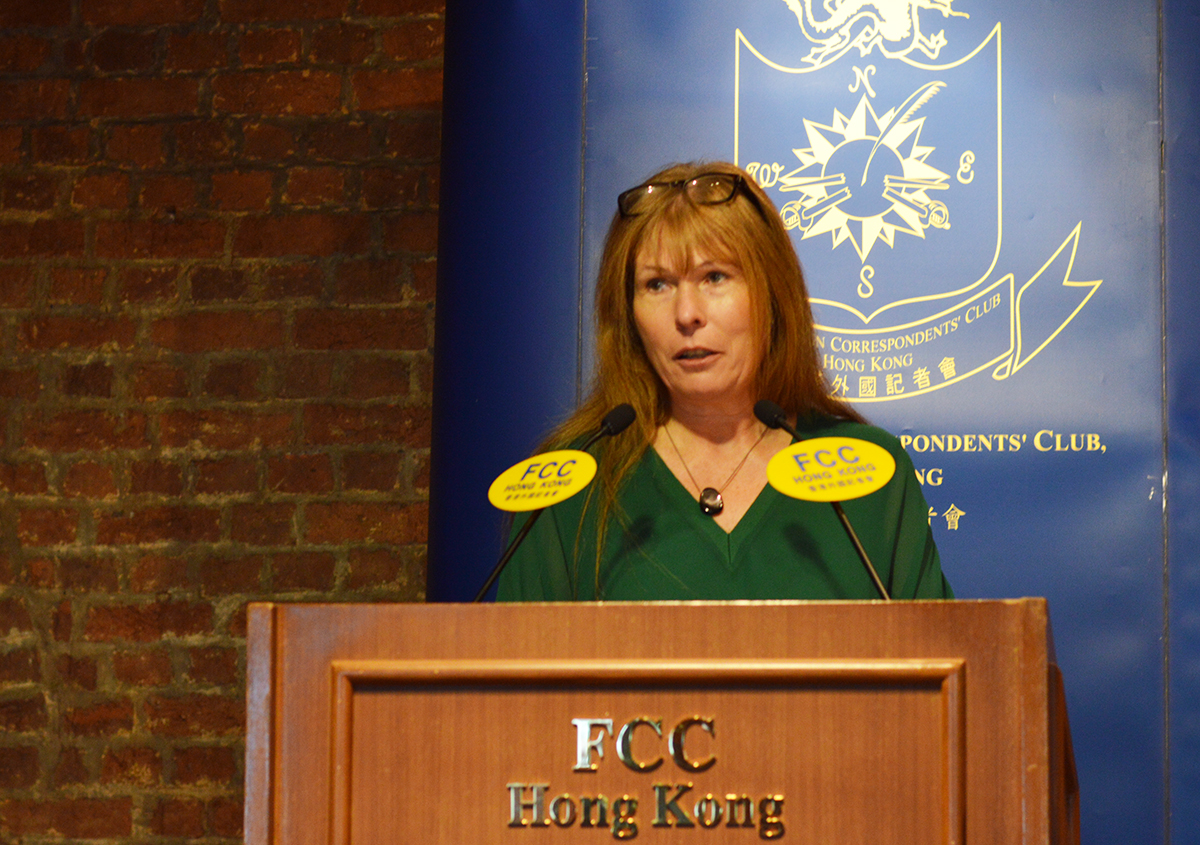
Clare Rewcastle Brown, the journalist whose probing of 1MDB corruption became a world scoop. Photo: Sarah Graham Clare Rewcastle Brown, the journalist whose probing of 1MDB corruption became a world scoop. Photo: Sarah Graham/FCC

Clare Rewcastle Brown worked for years on the scoop that exposed the 1Malaysia Development Berhad, a government-run strategic development fund designed to help improve the country’s infrastructure, as nothing more than a slush fund directly channelling millions of dollars into the accounts of President Najib Razak, tycoon Jho Low and other officials.

The exposé had repercussions around the world as it emerged that top banks and lawyers had facilitated the movement of money through their institutions, creaming massive profits for themselves.

Yet, despite figures like Low “operating in plain sight”, no news organisations were picking up the story, said Rewcastle Brown, author of the book The Sarawak Report: The Inside Story of the 1MDB Exposé.

“Why was that? Not just the cost factor of dedicating investigative journalists to long and expensive stories… the diplomatic and commercial issues – big outfits didn’t want to get kicked out of KL, as I was told on one occasion.

“With global news to cover and budgets depleted, newsrooms are simply forced to avoid taking on the sorts of targets who can afford lawyers who cost them money to defend their journalism. And for criminals in the business of ripping off the public, it simply is a business expense necessary to shut up comment and scrutiny.

“During the 1MDB exposes I watched it happen time and again as news organisations were silenced by big gun lawyers brought in to argue the toss by people who are now thankfully facing prosecution,” she said.

As she began to follow more leads in her investigation, Rewcastle Brown found herself at the centre of a fake news campaign on social media funded by the corrupt people she was examining, trying to smother the story she was working on.

Thanks to her determined coverage on her website, The Sarawak Report, the story was eventually picked up by international news organisations and became a global scandal that led to the fall of Malaysia’s political regime as well as officials and corrupt businessmen associated with abusing the fund.

And the repercussions of the story continue, with new arrests and charges making headlines every week.

Watch the full talk below.

Jonathan Miller on why murderous President Rodrigo Duterte is still so popular in the Philippines

He killed more of his citizens in 18 months than died in the Northern Ireland conflict over 30 years – yet Filipinos continue to support rough-talking President Rodrigo Duterte, largely because they believe he is building a better Philippines.

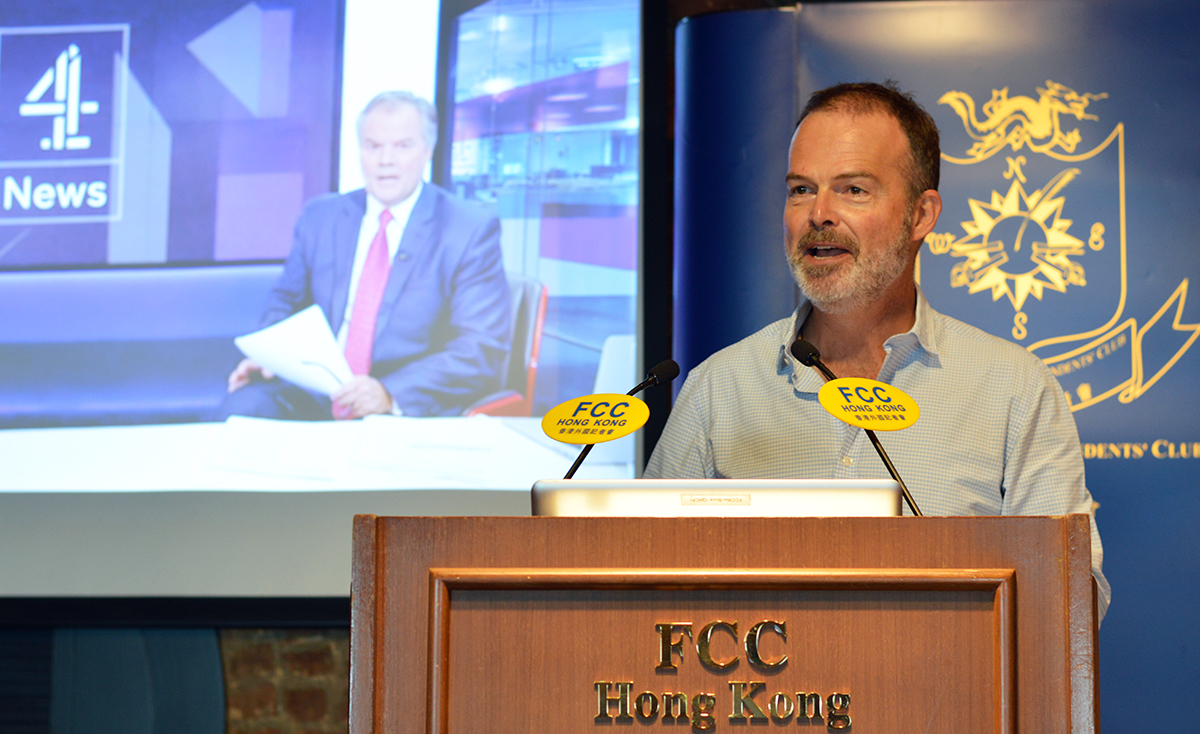
Jonathan Miller of Channel 4 News gave insights into President Rodrigo Duterte at the FCC. Photo: Sarah Graham/FCC Jonathan Miller of Channel 4 News gave insights into President Rodrigo Duterte at the FCC. Photo: Sarah Graham/FCC

Elected in a landslide victory in 2016, no-nonsense Duterte came from nowhere to sweep to victory, ousting the more liberal President Benigno Aquino III having led a presidential campaign based on stoking the fears of his people. Sound familiar?

“He (Duterte) is what Trump would be if there were no constraints on him at all,” said Channel 4 News Asia Correspondent, Jonathan Miller, at a November 5 club lunch where he talked about his latest book, a deeply researched biography of Rodrigo Duterte.

A man who uses disgusting language and has made numerous inappropriate comments about rape, Miller said Duterte’s worst crime is to normalise killing. Yet he remains popular among his people: “He does make Filipinos proud of their nation after years of this feckless, liberal leadership,” he added.

Miller, who holds the dubious honour of Duterte calling him a “son of a whore” – the same insult he threw at former US President Barack Obama, said Duterte encapsulates the very worst that an authoritarian populist leader can deliver.

Known as Duterte Harry during his reign as Mayor of Davao City after the Clint Eastwood character, he created death squads targeting drug dealers and other criminals that he said had “cleaned up the city “- a claim he continued to peddle as he made his bid for the presidency. However, the truth is that Davao City has the highest murder and rape rates in the country, according to the Philippine National Police (PNP).

This was the type of lie, said Miller, that convinced the majority of Filipinos to elect Duterte. Despite promising to protect the country’s poorest, it is those very people that are dying in his murderous war on drugs, Miller said. Although numbers are difficult to confirm, independent estimates put the number killed by the police at 20,000.

Another campaign promise to “reach the hands of my opponents” to bring an end to animosity resulted in his political opponent and fiercest critic, Leila de Lima, being arrested and jailed on trumped up drug charges. She has been designated a ‘prisoner of conscience’ by international human rights groups.

Duterte has also aligned himself with despots at home and abroad, declaring Russian president Vladimir Putin as his hero, and rehabilitating the Marcos family by allowing the reburial of ousted former dictator Ferdinand, and apparently paving the way for his only son, Ferdinand Jr., to become vice-president.

A 1998 psychiatric report on Duterte, compiled by a former president of the International Council of Psychologists at the request of his estranged wife while she petitioned for an annulment, concluded that Duterte was suffering from Antisocial Narcissistic Personality Disorder characterised by “gross indifference, insensitivity and self-centredness… a grandiose sense of self-entitlement… and a pervasive tendency to demean, humiliate others and violate their rights and feelings”, Miller said.

He went on to quote the report findings as detailed in his book, Duterte Harry: Fire and Fury in the Philippines: “For all his wrongdoings, he tends to rationalise and feel justified. Hence, he seldom feels a sense of guilt or remorse.”

Watch the full event here.

The challenges of being a writer called Geoff Dyer

When you’re a writer trying to find interesting topics to cover, it helps if there’s not another writer with exactly the same name.

Writer Geoff Dyer - no, not that one - talked about his work at the FCC. Photo: Sarah Graham/FCC Writer Geoff Dyer – no, not that one – talked about his work when he appeared at the FCC. Photo: Sarah Graham/FCC

This has proved both detrimental and beneficial over the years, says author Geoff Dyer – although whether the same can be said for the Financial Times reporter Geoff Dyer is a mystery.

“I feel I should articulate the disappointment that some of you may have felt when it turned out that it was this Geoff Dyer and not the other one,” he said, adding: “Our lives have really overlapped to an embarrassing degree.”

The Geoff Dyer who spoke at the November 1 club lunch (entitled Not a Reporter’: A Lunch with Writer Geoff Dyer) is the author of four novels and numerous non-fiction books – some of which have won literary awards – including travel books Jeff in Venice, Death in Varanasi, and Yoga for People Who Can’t be Bothered to Do It.

One of his other books, Another Great Day at Sea, detailed his short time spent on American aircraft carrier, the USS George H.W. Bush on active service in the Iranian Gulf – a job that was originally commissioned with the other Geoff Dyer in mind, and Dyer’s only attempt at ever being a reporter.

“For me it was, in some ways, the most boring book I’ve ever written, for a very simple reason. It was a bit like doing that most basic kind of journalism whereby you go and stay at a lovely please, you have the experience and then you write up your feelings about it. I had this amazing experience, it was absolutely incredible, so fascinating, then all I had to do really was transcribe the experience which is almost exactly what I’m not interested in doing as a writer. I’m not a reporter.

“It was only really quite late in the day that I started to enjoy it as I could put more and more of a stylistic spin on it,” Dyer said.

A man with a self-deprecating sense of humour, Dyer recalled amusing anecdotes from his career, including the time when he was commissioned by publishers to write a book on tennis but ended up turning in a book on the Russian filmmaker Andrei Tarkovsky.

Watch the full event here.

Trump-Kim summit achieved nothing when it comes to peace in the Korean peninsula, says journalist

When US President Donald Trump became the first American president to meet a leader of the Democratic People’s Republic of Korea (DPRK) in June 2018, it was hailed as a step forward in the peace process.

South Korean-born, American investigative journalist Suki Kim talked about her experiences in North Korea. Photo: Sarah Graham/FCC South Korean-born, American investigative journalist Suki Kim talked about her experiences in North Korea. Photo: Sarah Graham/FCC

Shortly before that meeting, North Korean leader Kim Jong-un met his southern counterpart, Moon Jae-in, in an historic summit that saw both sides briefly enter the other’s territory – the first time since the end of the Korean War in 1953. The two also agreed to work towards denuclearisation of the Korean peninsula in order to achieve lasting peace between the two nations.

Both summits, says South Korean-born, American investigative journalist Suki Kim, were a sideshow. At the October 31 club lunch Kim said that nothing had changed since the meetings, and that no steps toward denuclearisation had been made. She said rather than lay the blueprint for peace by disarmament, it was business as usual minus  the missile firing so often favoured by Kim Jong-un.

And she said for the North Korean dictator, the meetings had proven to be a great PR exercise that had in fact legitimised his regime.

“When you look at it over the past year, what has really changed?” Kim, author of The New York Times best-seller Without You, There Is No Us: Undercover Among the Sons of North Korean Elitesaid, adding that even the global conversation on human rights abuses in North Korea had quietened since Kim Jong-un increased his presence on the world stage.

Watch the full talk here.

Emmanuel Macron: Inside the French president’s first year

French President Emmanuel Macron has imposed a new style and rhythm in French politics, but now, in his second year as leader, he is facing tensions that could affect his standing on the global political stage.

Professor Alistair Cole gave his take on French President Emmanuel Macron's first year. Photo: Sarah Graham/FCC Professor Alistair Cole gave his take on French President Emmanuel Macron’s first year. Photo: Sarah Graham/FCC

Young, dynamic, energetic, brilliant, ruthless – “and perhaps a little bit arrogant” – Macron has symbolised the end of the “old world” of French politics and turned the presidency into a powerful institution that had been losing its way under Jacques Chirac, Nicolas Sarkozy, and to some extent, François Hollande, said Professor Alistair Cole, whose book, Emmanuel Macron and the re-making of France – will be published in March 2019.

He is someone who likes to be in control, but that control has been slipping recently, particularly in light of the widely-reported Alexandre Benalla incident. Benalla, a security official for Macron, was filmed hitting and stamping on a man at a Paris demonstration while dressed as a police officer. He has since been charged with violence, interfering in the exercise of public office and the unauthorised public display of official insignia. Cole, Professor of Politics and Dean of Internationalisation at Sciences Po Lyon, noted that Macron had hesitated in his response to the scandal, adding that the negative effects of the Benalla affair highlighted the dangers of this secretive leadership style and practice.

In the early part of his presidency, Macron came across as a straight talker, said Cole at the October 30 club lunch, due to his numerous “petit phrases and one-liners”. The most recent to make headlines was his telling unemployed French people to cross the street and find a job in a restaurant. This rhetoric has contributed to his growing image as “a rather arrogant, distant and elitist individual”.

Macron also ushered in a raft of reforms in his first year as president which cast him as a new ‘fast President’, including abolishing wealth tax and introducing a flat tax – moves that bolstered his image as the ‘President of the Rich’.

Macron has introduced a robust form of political expression based on an explicit rejection of the left and right, Cole said, and has raised France’s standing in the world.

“From the very beginning Macron has tried to measure himself up to the great and the good in politics,” said Cole, adding that he met with Tump and Putin shortly after being elected, demonstrating a very active role in foreign policy.

However, Cole said Macron is in danger of falling into the trap of Hubris – having a sense of exaggerated pride, overwhelming self-confidence and a contempt for others.

“The positive qualities of leadership – charisma, charm, persuasiveness, decisiveness and self-confidence – can in their turn produce more negative qualities of impetuosity, a refusal to listen or take advice, impulsiveness, recklessness and inattention to derail,” Cole said.

Watch the full event here.

Petition demanding explanation for Victor Mallet visa rejection handed to Hong Kong government

A petition of more than 15,000 signatures was handed to the Hong Kong government on Monday (October 8) by a coalition of media organisations demanding an explanation as to why foreign correspondent Victor Mallet’s visa renewal application was rejected.

L-R: Chris Yeung, HKJA chairman; Chris Slaughter, FCC board of governors; Florence De Changy, FCC President;, Geoff Crowthall, FCC Press Freedom Committee; and Legislative Council member Claudia Mo. Photo: Genavieve Alexander L-R: Chris Yeung, HKJA chairman; Chris Slaughter, FCC board of governors; Florence De Changy, FCC President;, Geoff Crothall, FCC Press Freedom Committee; and Legislative Council member Claudia Mo. Photo: Genavieve Alexander

The petition, launched on Saturday by the FCC, the Hong Kong Journalists Association (HKJA), Reporters Without Borders (RSF), the International Federation of Journalism (IFJ), Journalism Educators for Press Freedom, and the Independent Commentators Association, calls on Chief Executive Carrie Lam to give a full explanation of the unprecedented move.

Among those to go to the government’s Admiralty headquarters were HKJA chairman Chris Yeung and FCC President Florence De Changy.

Photo: Genavieve Alexander Photo: Genavieve Alexander

Mallet, the Financial Times’ Asia News Editor, has been a journalist for more than 30 years and has served as the FCC Vice President since 2017.

“As such, he hosted many FCC events on a wide range of topics, including one in August with Andy Chan Ho-tin, co-founder of the Hong Kong National Party which has since been banned. This event was strongly condemned by the Chinese authorities and the Hong Kong government though it was lawful and took place in the same professional manner as all other events hosted by the FCC. The same speaker had previously spoken to other forums,” the petition says.

See the Chinese version of the petition.

Malaysia’s new government will succeed in building a stable democracy, says minister

A shared experience of opposing a prime ministerial dictatorship will be the binding factor that will propel the new ruling coalition to make Malaysia a new democracy, says its deputy defence minister.

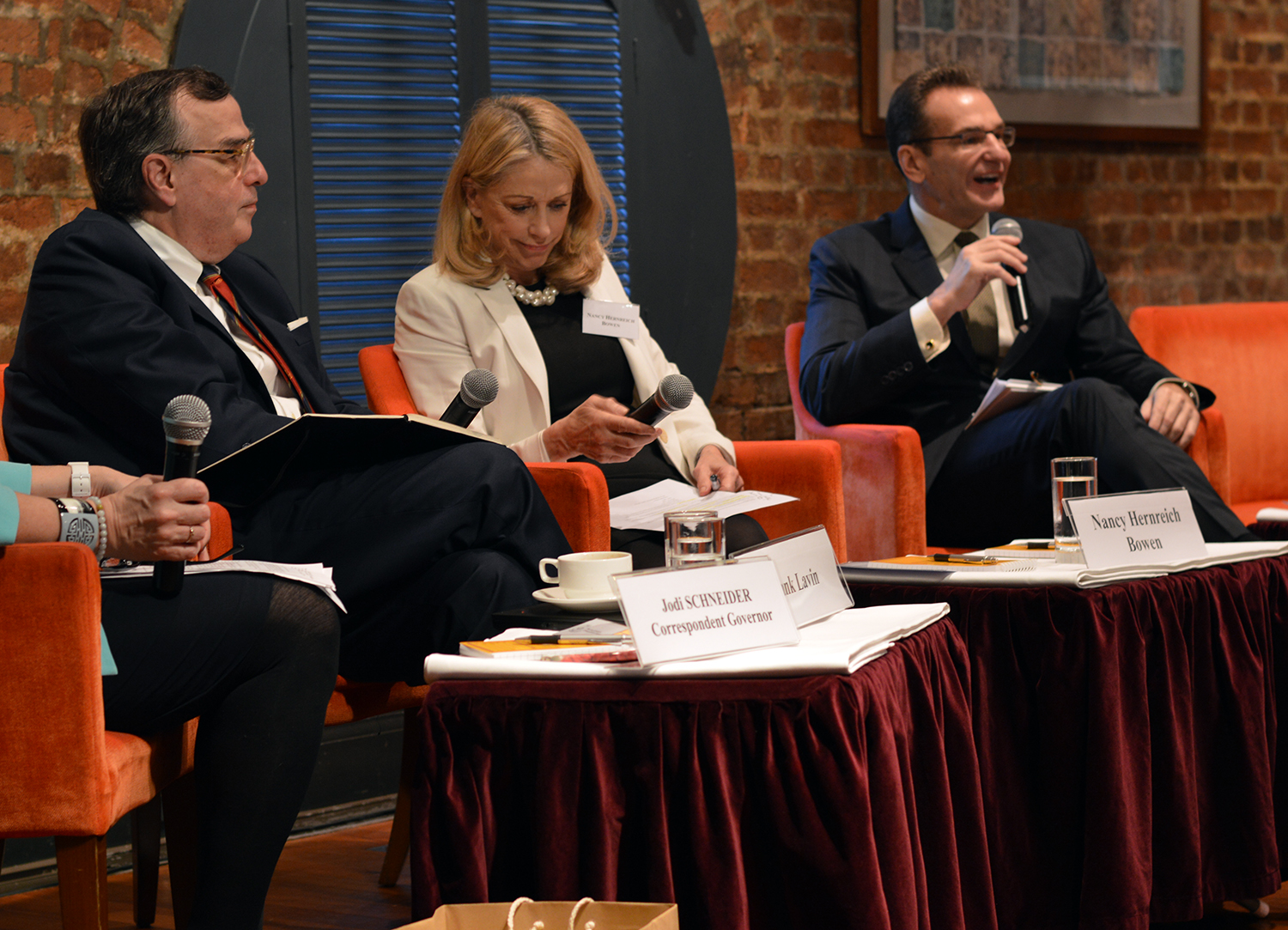
Left: Malaysia’s Deputy Defence Minister Liew Chin Tong, and right, Penang Institute’s Executive Director, Ooi Kee Beng, discussed the country's politics at the FCC. Photo: Sarah Graham/FCC Left: Malaysia’s Deputy Defence Minister Liew Chin Tong, and right, Penang Institute’s Executive Director, Ooi Kee Beng, discussed the country’s politics at the FCC. Photo: Sarah Graham/FCC

Speaking at the September 26 club lunch, Liew Chin Tong admitted that the new Pakatan Harapan government, which took power earlier this year, was elected largely because voters wanted to oust Prime Minister Najib Razak, whose Barisan Nasional party had been in power since the end of British colonial rule in 1957. Senior members of Razak’s government – himself included – had become embroiled in a huge corruption scandal, and the party had recently unveiled new taxes on goods and services to add to the country’s already high cost living. On September 19, Najib was arrested and charged over almost US$700 million alleged to have been transferred to his personal account.

Now Malaysia is led by a reformist alliance – a move 60 years in the making – and at its helm is 93-year-old Prime Minister Mahathir Mohamad, himself a former leader of Barisan Nasional who defected to the opposition in disgust at the emerging 1Malaysia Development Berhad (1MDB) corruption scandal. The party’s leader and probable next prime minister is Anwar Ibrahim, who until this year’s election was in prison on charges of abuse of power, but it set to take over from his former enemy Mahathir after the pair made a succession agreement.

Liew said that at all levels, the ruling coalition was trying to reform Malaysia’s institutions and build a strong economy, higher employment, a more cohesive country, and a stronger sense of national identity.

“In terms of national identity I see an opportunity in the context of 2020 (Vision 2020, the ideal introduced by Mahathir in 1991). 2020 talks about economy growth, advanced economy, but at the same time it also talks about ethnic relations. Instead of seeing Malaysians as Chinese or Indians, whether there’s an opportunity to see ourselves as a Malaysian Asian,” he said.

Liew conceded that, despite Mahathir’s past reputation as a racist with authoritarian attitudes, he would probably be remembered as the “democrat” when his successor takes over in two years.

Penang Institute’s Executive Director, Ooi Kee Beng, appearing alongside Liew at the event, added: “The greatest advantage I see with Mahathir is that he’s 93-years-old. How much damage can he do?”

Watch the video for more on the history of Malaysian politics

Why authoritarianism is not the only threat to academic freedom

Universities must remain autonomous if they are to enjoy unfettered freedom to teach and research, says a leading academic.

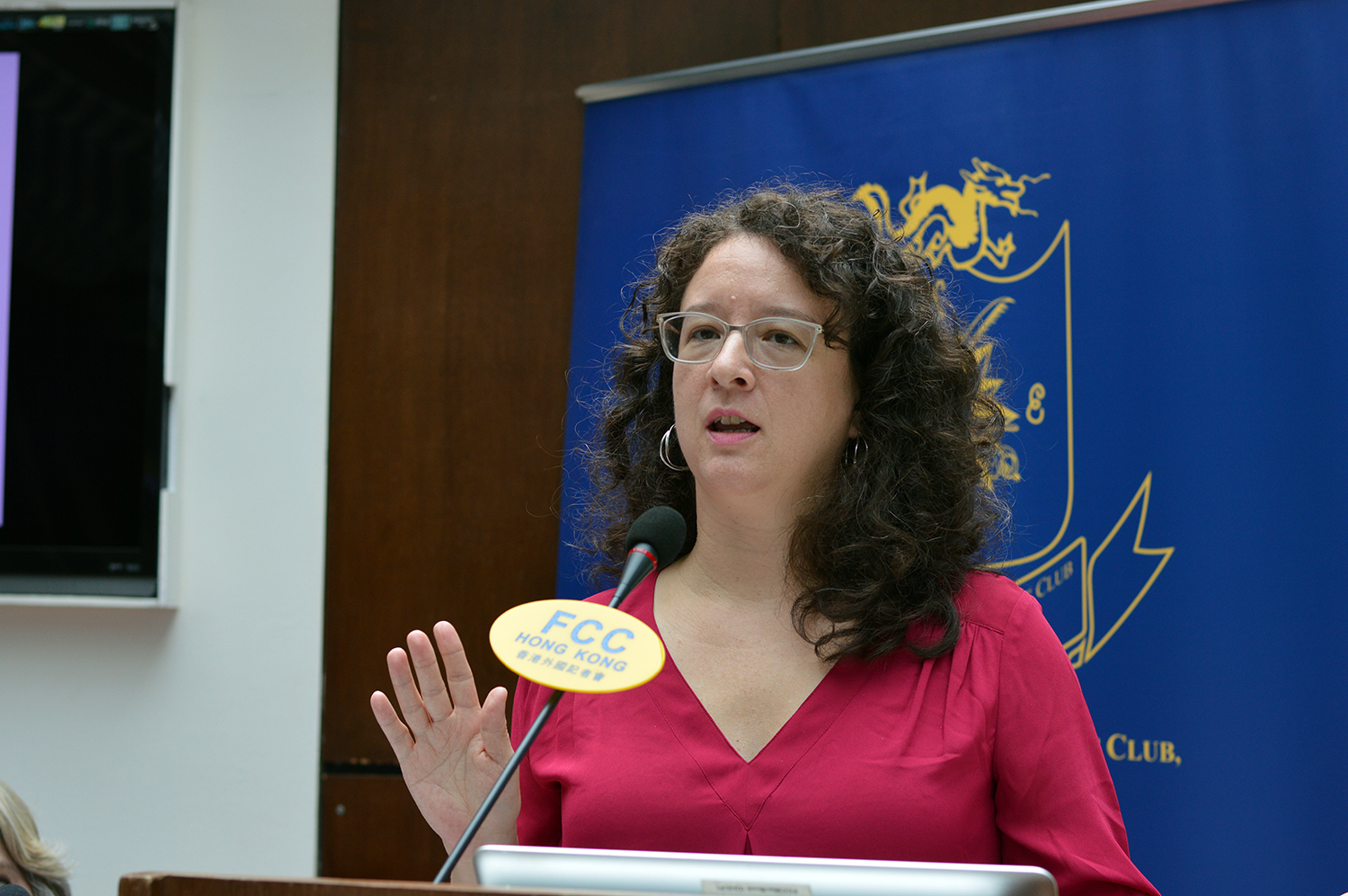
Dr Tim Pringle revealed the challenges facing academics around the world. Photo: Sarah Graham/FCC Dr Tim Pringle revealed the challenges facing academics around the world. Photo: Sarah Graham/FCC

Dr Tim Pringle was talking about threats to academic freedom, not just from authoritarian states as has recently made news headlines, but in seemingly liberal countries where democracy reigns.

“Authoritarianism isn’t limited in my view to authoritarian states,” he said, adding that there has been a return of authoritarian practices in notionally liberal and democratic states that he linked to the rise of populism.

Pringle gave examples of the United Kingdom, where 55% of academics believed their university autonomy had declined in recent years.

One of the problems was the definition of academic freedom, Pringle, said, which many had struggled to pin down: “In my sector, despite all the huffing and puffing, we’ve done a pretty poor job of defining this concept,” he said.

Indeed, a survey found that one third of UK academics felt they did not have a good working knowledge of what academic freedom meant.

Pringle explained that academic freedom is firstly the freedom to teach: course content, how you teach, who teaches, who shall be taught, methods of assessment. Secondly, it is the freedom to research: what you research, what methods do you use, what is the purpose of your research, what means did you use to disseminate it.

Pringle, a senior lecturer in Labour, Social Movements and Development at SOAS, University of London, identified several reasons why autonomy at learning institutions was being eroded.

“I would argue in my sector some of it comes through the application of market fundamentalism, short-term profits and accumulation, and commodification of public services including higher education. This had led to a rise in managerial dominance in institutions… which is required to impose these notions.“

He warned this was “creating a supermarket product to be picked by students.”

Obsession with university rankings – of academic freedom and autonomy as measurement criteria. so actually it’s in the interests of uni institutions protect their own autonomy.

Pringle, editor of The China Quarterly, which at the end of last year found itself at the centre of a censorship battle after 300 of its articles were withdrawn – but later reinstated – by Cambridge University Press, said carrying out research in China was “getting a lot harder”.

The presence of The Party at every level, from monitoring and rendering of university research to teaching activities, have been much more effective, he said. Appointments are vetted very carefully, he said, not just for a job interview but politically. Universities go through what they’ve said and researched in the past, Pringle said. He added this was not just limited to China – sometimes the limits to classroom discussion travelled further than China.

When asked about the impact to The China Quarterly following last year’s censorship row, Pringle said: “I imagine there will be some pushback – I would imagine there will be a drop in institutional subscriptions. There are indications that there might be already.” He added that in terms of mainland submissions, they’ve increased.

“I’m not saying I’m not worried,” he said, “It’s something I think about all the time.”

Watch the video.

Trump’s foreign policy achievements ‘largely negative’, says political expert

President Donald Trump’s “radical degree of ignorance” in foreign affairs has left his administration with a “far less coherent” foreign policy, according to a political expert.

Daniel W. Drezner gave a frank view on Donald Trump's foreign policy achievements. Photo: Sarah Graham/FCC Daniel W. Drezner gave a frank view on Donald Trump’s foreign policy achievements. Photo: Sarah Graham/FCC

Pulling out of multilateral agreements, diplomacy via Twitter, and mistaken assumptions about how negotiation works indicate that Trump’s accomplishments in foreign policy are “mostly negative”, said Daniel W. Drezner, Professor of International Politics, a non-resident senior fellow at the Brookings Institution, and a contributing editor at the Washington Post.

“He’s been at best mixed in terms of what he’s been able to do. Donald Trump has been far better at destroying things than creating things,” he told the September 14 club breakfast.

“Trump has pulled out of the Transpacific Partnership, he’s pulled out of the Paris Climate Change accords, he’s pulled out of the Iran Nuclear Deal, he’s pulled out of, I believe, UNESCO and a few other U.N. agreements,” Drezner said. “I think Trump was legitimately surprised that the TTP deal went forward without the United States, I think he thought it was going to collapse after that.”

He added that there were very few people currently serving in Trump’s administration that actually knew about Asia.

Drezner conceded that, in some areas, Trump had enjoyed success, citing the historic summit with North Korean leader Kim Jong-un; and his “relatively warm relationship” with Chinese President Xi Jinping, and Russian leader Vladimir Putin.

But, Drezner said, Trump had failed to deliver on significant promises made during his 2016 presidential campaign, namely pulling out of NAFTA (the North American Free Trade Agreement) and NATO.

Referring to the president as the Toddler-in-Chief, Drezner pointed to Trump’s approach as part of his failure to achieve a better foreign policy track record.

“Trump came in with a fair number of mistaken assumptions about how negotiation works in world politics and he’s only now just beginning to realise this fact. I think he really believed that the U.S. had serious coercive bargaining leverage vis-à-vis our allies without realising that if you are as blunt as Trump is on these issues you are almost generating antibodies that guarantee that allies are not going to make concessions,” he said.

Trump was a “zero-sum thinker when it comes to issues like trade”, he said, and operated based on the acronym WWOND – what would Obama not do.

Drezner said Trump was so unpopular globally among its allies – largely democracies – that leaders are reluctant to make concessions when it came to trade “because if they do so it’ll badly undercut their standing domestically”.

He pointed out that Trump’s unpopularity was making liberal internationalism great again, and that Americans were moving in the opposite direction to what Trump wants.

Drezner predicted that many countries would be tempted to wait out the Trump presidency until the next elected U.S. leader, who would likely reverse much of Trump’s achievements.

“Even if you’re a rival like China and you’re looking at what the United States is doing, your best strategy right now is to do absolutely nothing. Why should you take active or hostile measures against the United States when the United States appears to be engaging in self-immolation? You just want to stand back and let the U.S. continue to self-destruct,” Drezner concluded.

Watch the video.

We measure site performance with cookies to improve performance.