Members Area Logout

Revealed: How China’s millennials see themselves and the world

China’s millennials are immensely proud of what their country has achieved economically despite feeling ambivalent towards the ruling Communist Party, which they see as “deeply flawed” but “effective”, according to a new book on the country’s young.

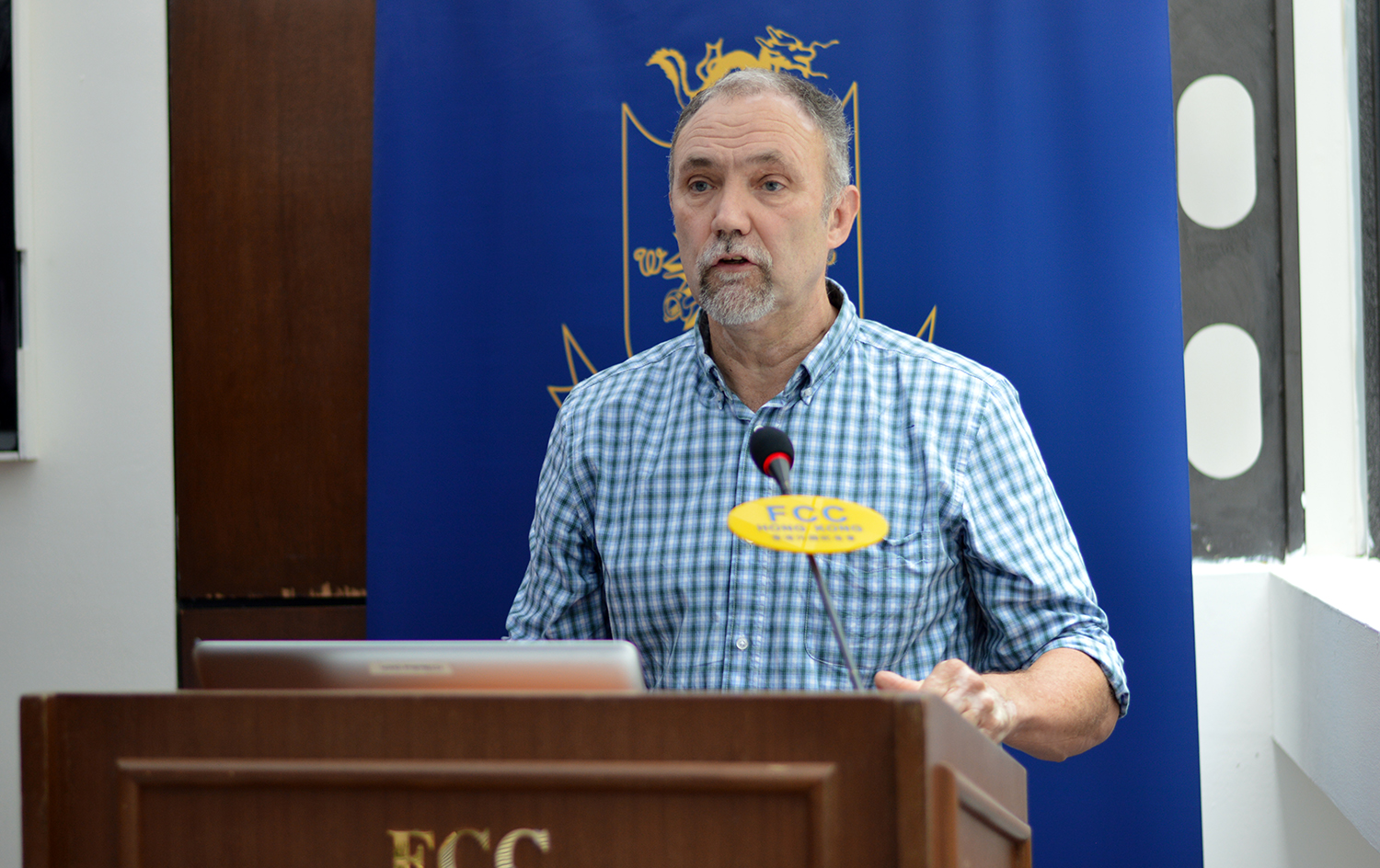
Zak Dychtwald, founder of Young China Group, gave insights into China's millennials. Photo: Sarah Graham/FCC Zak Dychtwald, founder of Young China Group, gave insights into China’s millennials. Photo: Sarah Graham/FCC

With more than 400 million people born between the early 1980s and mid-1990s, China is home to the largest group of millennials in the world. And they’re experiencing “the greatest rags to riches story” in the modern world, said Zak Dychtwald, author of the new book Young China: How the Restless Generation Will Change Their Country and the World.

Furthermore, witnessing China’s rise in the shadow of old China and its defining characteristic of poverty provides the cornerstone of several distinct differences between them and their western counterparts. Firstly, the sheer scale of the demographic compared with the U.S. sets them apart – there are five times more millennials in China than the U.S. In fact, there are more than in North America, Europe and the Middle East collectively, Dychtwald said, founder of the Young China Group, a think-tank and consultancy aimed at producing data on the millennial mindset.

Secondly, they are “extraordinarily competitive and hard working”, the 28-year-old said, adding that when he was growing up in California “going to swim practice” or playing video games, his Chinese counterparts were studying.

Thirdly, Dychwald said in his September 12 talk, China’s millennials felt proud of their country’s growth. He said that, unlike the U.S., which “elected someone… on the idea of making America great again”, young Chinese believe that “they’re becoming great now”, he said.

“This young generation has grown up interacting with the outside world far more than their parents,” said Dychwald, adding that many felt “less than enamoured” with foreign democratic governments.

Added to this is the anxiety they feel at trying to balance the expectations of their families with their yearning to grab opportunities and build good careers, he said.

Watch the video here.

Pakistan and China BRI partnership is a win-win situation despite heavy debt burden, says consul general

The US$62 billion economic partnership struck between Pakistan and China through the Belt and Road Initiative (BRI) is a win-win situation that benefits all involved, according to the Consul General of Pakistan in Hong Kong.

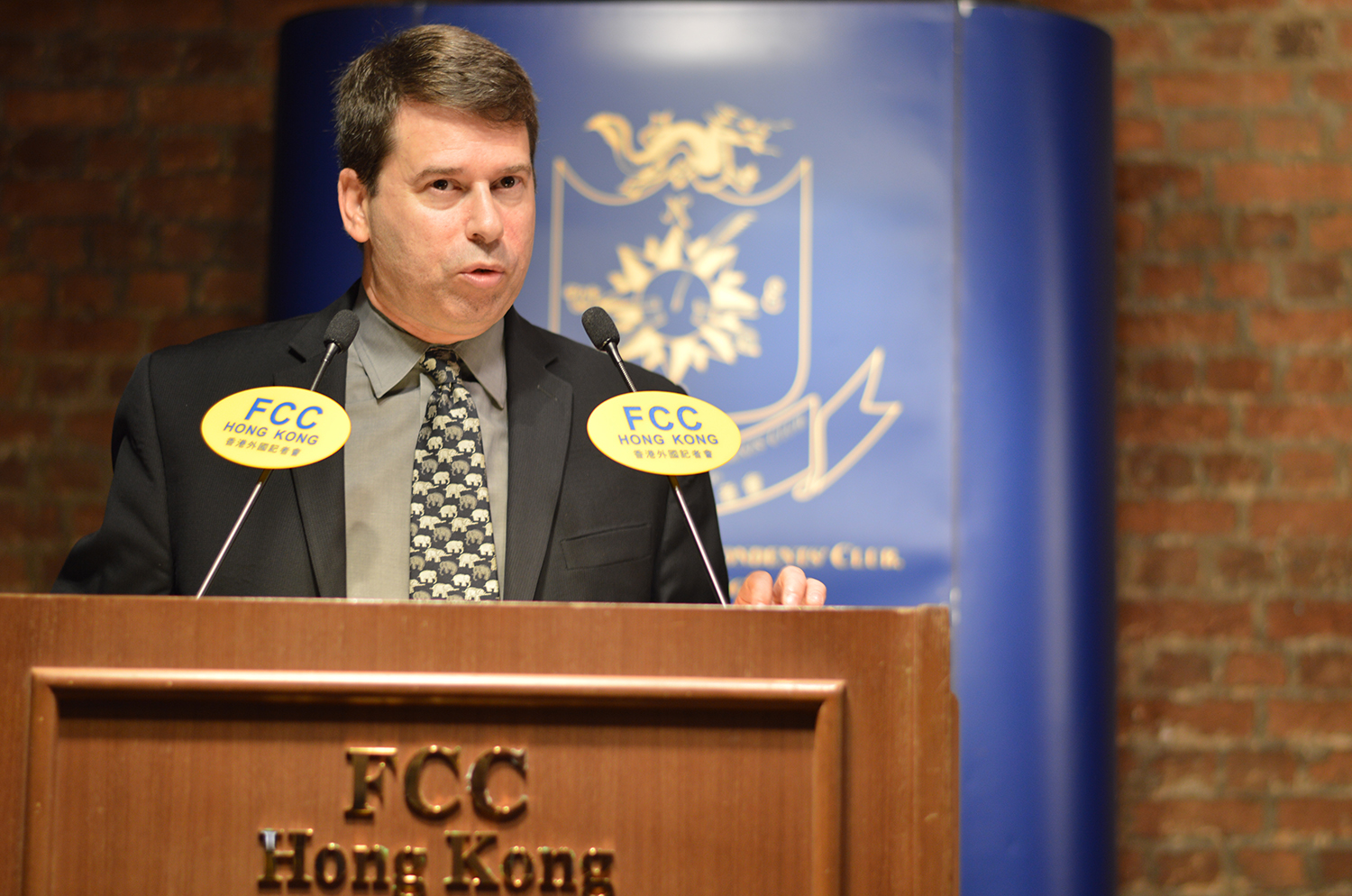
Abdul Qadir Memon, Consul General of Pakistan in Hong Kong, discussed BRI's impact on the country. Photo: Sarah Graham/FCC Abdul Qadir Memon, Consul General of Pakistan in Hong Kong, discussed BRI’s impact on the country. Photo: Sarah Graham/FCC

And should Pakistan default on the debt burden placed on the country via Chinese grants, loans and private equity handed out to improve infrastructure, it would, in a worst case scenario, consider liquidating some of its assets to pay off the debt, said Abdul Qadir Memon at the September 3 club lunch discussing how the BRI will impact the country.

The partnership has seen the creation of the China-Pakistan Economic Corridor (CPEC), an economic zone connecting the western region of China with the sea port of Gwadar in the Baluchistan province of Pakistan. The ambitious project is considered one of the flagships of the BRI, a return on which is estimated to top US$100 billion in the next few years.

In outlining the types of projects taking place within the CPEC – energy, transportation, road and rail building – Memon responded to some of the criticisms levelled at China since it announced the BRI in 2013. There are concerns in some countries that such an ambitious infrastructure plan is in fact a move towards global dominance and influence.

Memon said it was his belief that since Donald Trump became president of the United States in 2016, China has moved to fill the vacuum left by the U.S. and its “America First” policy, adding that “China’s pursuit of a larger role in the world coincided with America’s pursuit of a smaller world”.

But he said that he saw “no harm” in the economic relationship with China, adding: “As long as we do not see any desire of the Chinese leadership to meddle in our domestic affairs.”

When asked further about Pakistan’s sometimes tumultuous diplomatic relationship with America, Memon acknowledged that, as it was Pakistan’s biggest export market, it was important keep up diplomacy.

However, he said recent reports of a US$300 million cut to Pakistan’s aid by the U.S. were inaccurate: “It’s not aid to Pakistan. It’s the money the U.S. owes to Pakistan.” Memon added the money was owed for providing coalition logistics for air and ground support during America’s war on terror.

“We believe the United States wants to blame Pakistan for its defeat in Afghanistan… And we believe the United States is behaving like a bully who goes out, gets beaten in the street, comes home and beats his children,” he said.

Watch the full club lunch below.

Why autocracy with democratic characteristics is key to China’s success

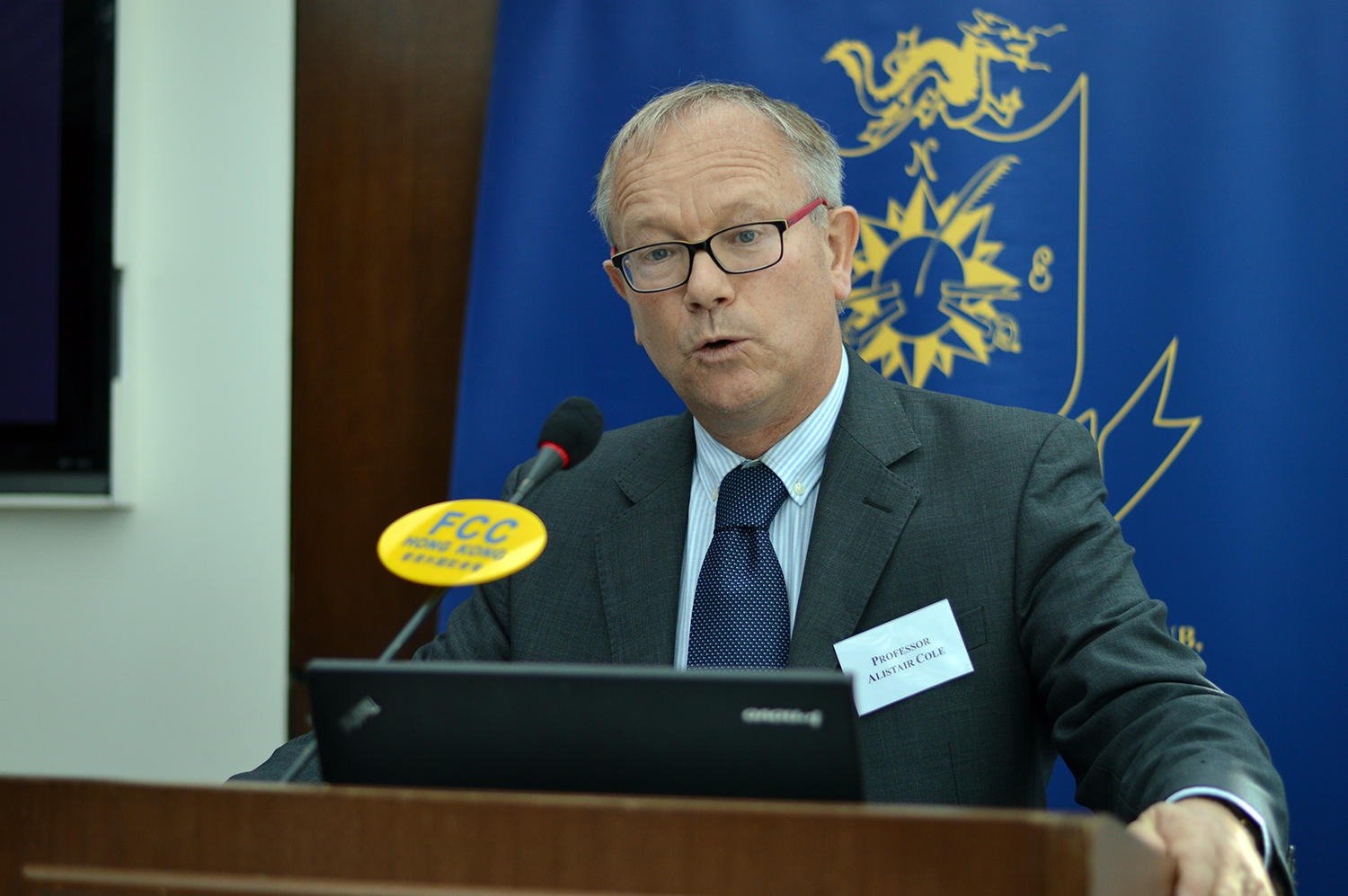
Autocracy alone is not the reason for China’s economic success, according to a political scientist who warned that President Xi Jinping is moving away from the “real” model that helped the country’s massive growth.

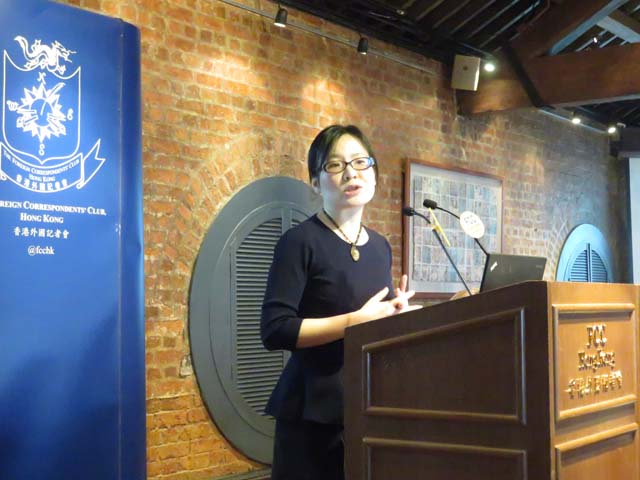
Professor Yuen Yuen Ang talked about the “real” China model. Photo: FCC Professor Yuen Yuen Ang talked about the “real” China model. Photo: FCC

The “real” China model, according to Professor Yuen Yuen Ang, is autocracy with democratic characteristics, introduced by former leader Deng Xiaoping when he implemented bureaucratic limits on power, competition and accountability. This enabled China to lift millions of people out of poverty as it became more adaptive and flexible, she said.

There are many different opinions when it comes to defining the China model, Prof Ang, Associate Professor of Political Science at the University of Michigan, said. Western mainstream media tends to label it a combination of autocracy –  or single party rule – with state ownership and control over the economy. Chinese commentator Zhang Weiwei described the China model as a “super-large population, super-size territory, super-long history, super-rich culture”. Daniel Bell, theorist, believed it to be a meritocracy.

And despite announcing at the 19th Party Congress in 2017 that the world could learn from “the Chinese solution for tackling the problems facing mankind”, the President Xi himself failed to elaborate on what that solution was.

Prof Ang, who has presented her work at academic, global development, and corporate venues around the world, including the World Bank, United Nations, U.K Department of International Development, and the OECD Development Center, believes the political foundation of China’s economic success lies in what she calls “directed improvisation”, the merging of top-down direction and bottom-up improvisations within China’s one-party regime. This creates the right conditions for local officials and governments to implement innovative development, she said.

To that end, Beijing becomes the director, rather than the dictator, she said. While some direction from Central Government was vague and broad – what Prof Ang referred to as “grey” command that is deliberately unclear, therefore permitting experimentation – other commands were clear in either permitting or forbidding an action.

An example, she said, could be seen in data that examines more than 4,000 policies issued by the State Council over the years. Of the “grey” policies, e-commerce and Artificial Intelligence showed the highest amount of ambiguity because, she said, these are new areas in which the government is happy to allow more experimentation. The sector showing the lowest ambiguity when it came to commands from Central Government was Special Economic Zones, “because they’re for foreigners, so when dealing with foreigners it’s important to make the rules clear”, Prof Ang said.

And while she acknowledged that some Western democracies were growing concerned that emerging countries were finding the autocratic element of the China model more appealing than liberal democracy, she added that there were three basic lessons for developing countries to learn from China: Learning does not equal copying; learn from both China’s success and failures; adapt China’s “directed improvisation” to democratic contexts.

She added that she was hopeful that the Chinese version of her book, How China Escaped the Poverty Trap, would help the Chinese public to understand that it was not autocracy that lifted them out of poverty.

“I remain optimistic that there’s still room for debating what are the factors that made China great,” she added.

Watch Yuen Yuen Ang’s talk here.

FCC bids farewell to Gilbert Cheng – pictures and video

Hundreds gathered at the FCC on Saturday night to wish good luck to General Manager Gilbert Cheng as he retires after 46 years at the club.

Host Chris Slaughter read messages from absent members past and present in between inviting attendees to take to the stage on the first floor to share their own memories of Gilbert.

At the end of the evening Gilbert himself gave a speech in which he insisted this wasn’t goodbye, adding that he’d now be able to drink at the club without being on duty. Following his speech, Gilbert was presented with a sparkling cake to celebrate his birthday the following day.

The event was broadcast live on Facebook, giving overseas former members an opportunity to wish Gilbert well in his retirement. You can read those comments below the Facebook video.

See our gallery of photos here, and watch the video of the night’s speeches below.

[sliderpro id=”5″]

There’s hope yet for Hong Kong when it comes to the race in AI technology, says tech expert

The deindustrialisation of Hong Kong’s tech industry over the last three decades has led to a shortage of talent in the field of Artificial Intelligence (AI), according to an expert who says he hopes increased government funding will plug the gap.

Professor Kam-Fai Wong gave a glimpse of the future at the FCC. Photo: Sarah Graham/FCC Professor Kam-Fai Wong gave a glimpse of the future at the FCC. Photo: Sarah Graham/FCC

A focus on training and subsequent careers in finance since the 1970s has meant the tech industry has been overlooked by students as an employment choice, says Professor Professor Kam-Fai Wong, of the Faculty of Engineering at The Chinese University of Hong Kong.

This explains why Hong Kong is nowhere to be seen in the top 15 of the Global AI Talent Report 2018, led by the US at number 1, the UK at number 2, with China at number 7, and an appearance for Singapore at number 10.

But Prof Wong was confident that Hong Kong’s close proximity to mainland China would also play a part in ending the deindustrialisation effect still affecting the city. In 2017, China laid out its plans to become the world leader in AI by 2030.

“I’m hoping after a few years there will be a rise in (university) admissions,” Prof Wong, who was recently appointed as one of the first batch of 61 national experts by the Chinese Association for Artificial Intelligence (CAAI), said.

Prof Wong’s talk on August 7, titled Artificial Intelligence: The New Global Arms Race, explored the areas and industries in which AI will – or in some cases already is – benefit the human race. From robot reporters in journalism to creating poems and music, AI will touch all our lives.

But while the march of the robots may make the lives of big business owners easier by cutting out the cost of paying humans to do work that can be automated, such a change will inevitably have an impact on wider society in terms of the types of job left for people.

It was the responsibility of governments, said Prof Wong, to ensure that the right framework was in place for everyone affected by AI.

And what about those wanting to find a job in the future away from robots? Get training in the service industry, said Prof Wong.

You can watch Prof Wong’s full talk here.

Hong Kong Media Moves: July 2018

Find out who’s moving where in Hong Kong’s busy media landscape, in association with Telum Media. Also, see job listings for the region.

Maggie Luo becomes the Hong Kong Bureau Chief of Sina Finance

As the newly-appointed Hong Kong Bureau Chief of Sina Finance, Maggie Luo helps oversee financial news in the region. She was with China Business Network in Hong Kong for the past five years, most recently as its Senior Correspondent.

Oliver Giles changes role at Hong Kong Tatler

Oliver Giles has recently assumed a new title as Art and Culture Editor of Hong Kong Tatler, working across print and digital platforms. He is a long-term Hongkonger who is passionate about art and architecture and has previously contributed to CNN, South China Morning Post, Forbes and a range of other publications.

Owen Churchill now US Correspondent for SCMP

Owen Churchill has recently joined South China Morning Post as a US Correspondent in Washington, DC, where he will cover US-China relations. He was the founding member of Sixth Tone in 2015, and has since focused on China and its politics, media, technology, arts, and culture.

To notify Telum about your move, or to sign up for Telum’s free alerts, please visit www.telummedia.com


CHINA JOBS

Diesel Progress International – freelance columnist

Global business magazine Diesel Progress International is looking for an English-speaking China-based freelancer to supply a regular column. DPI covers the products, technology and news of engine-powered equipment and component makers in the marine, on-highway and off-highway markets. Visit www.dieselprogress.com

We need a 500 word column, six times a year with the prospect of further assignments covering relevant industry news from China. Contact Ian Cameron. [email protected]

Bloomberg BNA Freelance Correspondent

Bloomberg BNA is seeking a freelance correspondent in Beijing, China, with several years reporting experience to write on trade developments involving China.

Must have the ability to write clearly and concisely about complex topics, and a highly developed nose for news. Freelancer would work remotely from Beijing, but collaborate with our editors in the Washington, D.C. area regularly via email and phone. Freelance positions offer a competitive pay rate commensurate with experience, and correspondents will be expected to file stories on a regular basis.

For consideration, please send a CV/resume and published hard news or news analysis writing samples to [email protected]

RTL/FD – News assistant

Dutch RTL Television (荷兰国际新闻电视台) and the Dutch Financial Daily (荷兰金融日报) are hiring! From our bureau in Sanlitun, you will be researching for and setting up (multimedia) productions on finance, business and economics for the newspaper, and broader China-features for our tv-channels and online platforms. The job requires you to be able to work under high time pressure, though in return offers you a high degree of flexibility. Expect one or two trips per month in which you will be assisting the journalist in the role of producer. A background in journalism, some TV-experience and basic knowledge of finance and economics are preferred, bilingual language skills (English + Chinese) are a must. Interested? Get in touch with Sjoerd den Daas and send a brief introduction incl. your salary expectations + CV to [email protected] 

News Assistant at Die Zeit

DIE ZEIT is a weekly publication, so we’re not that newsy. The position requires longtime research, ability to find story ideas besides the daily news cycles, good interview and field reporting skills and organizational efficiency to juggle different complex projects at the same time. Background in print journalism is welcome, but not mandatory. DIE ZEIT’s office is going to be a one-person-operation (me), so we’re going to be a small team of two. Since we don’t have daily deadlines, working hours will be flexible and up to individual arrangement. Please sent your CV and short application to [email protected]

Researcher, North East Asia, International Crisis Group

International Crisis Group is looking for a North East Asia researcher for its Hong Kong office. It’s a great opportunity to 事实求是 on foreign and security policy at a fascinating 历史交汇期 for China, 东亚 and the 国际体系. Requires excellent English and Mandarin Chinese. Reports to Senior Adviser for North East Asia. This is an entry-level position, about half administrative and half research work, ideal for energetic recent graduates. If interested please apply by 15 July online: http://jobs.crisisgroup.org/o/researcher-north-east-asia

News Assistant at The Straits Times 

The Straits Times is a Singapore-based English-language newspaper. We are looking for someone for its bureau in Beijing to do research and reporting as well as some administrative work. The person we are looking for is bilingual in Chinese and English and has experience in news reporting including writing news stories in English. Please write with your CV to Goh Sui Noi at [email protected]

From the brink of collapse to democracy and economic growth: the secret of Indonesia’s success

Indonesia’s return from the brink of collapse two decades ago is largely due to democracy and decentralisation, according to the author of a new book on the country’s remarkable political and economic turnaround.

Vasuki Shastry talks about his book, Resurgent Indonesia: From Crisis to Confidence, at the FCC. Photo: sarah Graham/FCC Vasuki Shastry talks about his book, Resurgent Indonesia: From Crisis to Confidence, at the FCC. Photo: sarah Graham/FCC

As the country prepares for next year’s critical elections, where popular President Joko ‘Jokowi’ Widodo faces fierce opposition and pressure to stand by his vision for a more inclusive and open Indonesia, author and well-known business and economics journalist Vasuki Shastry said the country’s transformation, “imperfect in many ways and still a work in progress”, would continue.

“The view was that 20 years ago Indonesia was either a failing state or a failed state and would essentially go the way of Yugoslavia,” said Shastry, whose book, Resurgent Indonesia: From Crisis to Confidence, examines the building blocks for the country’s transformation.

Southeast Asia’s largest nation was facing the spectre of famine triggered by factors including the 1998 Asian financial crisis and a devastating drought. Social unrest followed, and President Suharto resigned, ending his three-decades-long stewardship. Crunch time for the country, its new leaders decided to embrace democracy, and in doing so introduced fixed terms for the president, a fully-elected parliament which would exercise legislative powers, trade unions, and a free press.

Decentralisation has also played a significant role in Indonesia’s development, with power devolved from the provinces to the districts. This, Shastry told the July 16 club lunch, has reduced the threat of secessionist tendencies in the provinces, therefore removing the threat of East Timor’s secession in 1999. Decentralisation, however, has its own imperfections and has resulted in some local leaders building trophy projects with the limited and fragmented resources available.

The challenge now for Indonesia, Shastry said, was to build on its economic growth by creating an environment that allows more domestic and foreign investment.

Other areas that needed improvement were “the three Cs” – climate change, corruption, and culture. Huge swaths of Indonesia’s rainforest has been destroyed in order to accommodate more palm oil plantations. While the government accepts the devastating effect this has on climate change, Shastry said it has yet to articulate exactly what it will do to address the threat.

As for corruption, Indonesia has a strong institutional framework in the form of an independent Corruption Eradication Commission (KPK). However, the success of the agency is exemplified by the attempts of several members of parliament to dilute its remit and independence, he said.

“Any attempt to dilute the KPK I think would be a big step backward for Indonesia,” Shastry, Global Head of Public Affairs and Sustainability, Standard Chartered Bank, added.

As for culture, being home to the world’s largest Muslim population presents its own challenges, and has led some to accuse the country of allowing radicalism to flourish.

“We should not mistake religiosity for radicalism,” Shastry said.

Obituary: Anthony Paul, distinguished foreign correspondent and editor who remained a roving reporter at heart

By Brodie Paul and William Mellor

One of Asia Pacific’s most distinguished foreign correspondents, two-time FCC President and life member Anthony Paul, passed away in Brisbane on July 14, aged 81.

Partially obscured, Tony Paul in the shadow of Ambassador Graham Martin as the press crowd around the last US envoy to South Vietnam aboard the USS Blue Ridge following the fall of Saigon in 1975. Partially obscured, Tony Paul in the shadow of Ambassador Graham Martin as the press crowd around the last US envoy to South Vietnam aboard the USS Blue Ridge following the fall of Saigon in 1975.

Even among the pantheon of FCC greats, Tony’s career was unique. As a war correspondent for the Reader’s Digest – at the time the world’s largest selling magazine with a circulation of 23 million – he covered the 1975 fall of Saigon and Phnom Penh. Then, having reinvented himself as a business writer and editor, he went on to chronicle the rise of numerous other Asian cities and economies as the region boomed, most recently as an influential columnist with Fortune Magazine.

A 1977 book Tony co-wrote, Murder of a Gentle Land, exposed Pol Pot’s genocide in Cambodia at a time when many Asia-watchers remained in denial. Subsequent scoops included discovering that the leader of the post-war Malayan communist insurgency against British rule, Chin Peng, had not died in exile in China as many journalists believed, but was indeed alive and well and living just across the Thai border in Hatyai. In 1997, Tony tracked Chin Peng down and interviewed him over lunch at the British Club in Bangkok – an irony both of them enjoyed.

Based in Hong Kong for much of the period between 1972 and 1998, Tony was elected FCC President in 1977-78, then re-elected for a second term the following year. He was an honorary life member not only of the FCC, but also of the FCCT in Thailand and the Foreign Correspondents’ Club of Japan. During years covering conflict in the region, Tony had also acquired an enviable list of military and intelligence contacts, as a result of which he became the only journalist we know to have enjoyed membership of both the FCC and the Special Forces Club in London.

Tony Paul's FCC membership card. Tony Paul’s FCC membership card.

Indeed, when recent changes to the Special Forces Club membership rules were proposed limiting membership to only ex-services types, it was pointed out by a senior member who knew Tony in Asia that Tony would qualify for more campaign medals than many current members.

Apart from covering the Indochina conflict, he also reported on the Soviet-Afghan War (1978-82), and communist insurgencies in Thailand, Malaya, and the Philippines. After the 2002 U.S. invasion of Iraq, Tony, by then well into his 60s, returned to the fray with a reporting trip to Baghdad. Denied insurance and expenses for body armour by the Straits Times, for whom in semi-retirement he them wrote columns, Tony grew a bushy beard for protection to pass more easily as a local. He used to same ruse while visiting Pakistan to interview the then military dictator, Pervez Musharraf.

Tony faced his own last battle as courageously as he reported wars. After learning on June 29 that he had stage 4 oesophagal cancer, he instructed that he be allowed to die as speedily as possible with no visitors except close family, no chemotherapy, no fuss and no memorial service.

Never a dull moment spent with Tony, and many of those ‘moments’ were long lunches.

To many FCC correspondent and journalist members a generation younger, the tall, handsome and avuncular Tony Paul was a friend and mentor, often delving into his vast contacts book to help those less well connected. He also worked closely with them. During his spell as Asia correspondent for the Reader’s Digest and frustrated by the monthly publication’s long lead times, he persuaded his bosses to buy the financially struggling Hong Kong-based Asiaweek magazine and allow him to join the Asiaweek team as a roving writer, feeding his need for more frequent scoops.

Then, after leaving the Digest, he became the founding editor of two other high-quality Asian publications, Business Tokyo, which he edited both out of Japan and New York, and Asia Inc., which he launched in Hong Kong in 1992. Asia Inc. subsequently won the Citibank Pan Asia Journalism Award three years in succession.

Journalists Tony hired or encouraged during those years were among many who paid tribute to him on social media. “Never a dull moment spent with Tony, and many of those ‘moments’ were long lunches,” former FCC and FCCT President Thomas Crampton wrote. “He helped me a great deal at the start of my career.”

Veteran AFP correspondent Ian Timberlake commented: “Tony graciously helped me when I was a green and impoverished stringer in Jakarta.”

Tony Paul in the Sichuan earthquake zone in 2011. Tony Paul in the Sichuan earthquake zone in 2011.

Tony’s beneficence extended way beyond assisting colleagues. Amid the turmoil of the fall of Saigon, he succeeded against the odds in getting his interpreter Son Van Nguyen and the Nguyen family on a plane to the U.S. “The Nguyen clan owe everything to Tony and the Paul family,” Gigi Nguyen wrote from New York. “We are so grateful to you and love you dearly.”

Typically, Tony self-deprecatingly played down his role in the Nguyen drama. As Saigon evacuated, he recalled how he had used his bulk to leap on a bus besieged by fleeing Americans leaving for the airport and used his 6’ 2” (188 cm) frame to brace himself at the door of the bus. “This bus goes nowhere without Son and his family,” Tony declared, amid protests that the vehicle was exclusively for Americans. Only after much pushing and shoving did he hear a voice from the back of the bus yelling: “Tony, Tony it’s OK…we are already on board.” During the commotion and unnoticed by Tony, the diminutive family members had slipped in under his arms.

Tony lost all his luggage in the evacuation, arriving on the U.S.S. Blue Ridge with only a typewriter, two opium pipes, a South Vietnamese general’s hat, one boot (he had lost the other under a helicopter skid) and the Nguyens. On arrival at the ship’s registration desk for evacuees, a marine officer looked at the one shoed man carrying opium pipes and wearing a general’s hat and observed: “Who the fuck are they sending us now?”

Tony also delighted in telling of his first failed attempt to return to a besieged Phnom Penh days before it fell to Pol Pot’s forces in April 1975. Arriving at Bangkok airport on March 31 with what he though was a confirmed reservation on an Air Cambodge Caravelle, Tony was told by a check-in clerk, giggling in embarrassment, that the flight has been cancelled. When Tony demanded to know why, the clerk offered two reasons: Firstly, the Khmer Rouge were shelling the runway. Secondly, the pilot was having a nervous breakdown.

Armed with a Reader’s Digest expense account lavish beyond the dreams of avarice, Tony retreated to the comfort of Bangkok’s Oriental Hotel, where he booked into the Jim Thompson suite and wined and dined extravagantly with a diplomat contact at the Normandie Grill, knowing that if he eventually made it into Phnom Penh, accounting for expenses would be the least of his problems. The following day, he returned to the airport to be told that the pilot’s nerves had calmed sufficiently for the flight to take off into the rocket barrage, although the counter clerk cautioned: “It’s one-way. No return ticket.”

Tony took the flight anyway, wrote a beautiful feature on the despair, corruption and heroism on display during the death throes of the doomed city, then at the last minute decided to join the final evacuation so as to head back to Saigon to witness the  fall of the South Vietnamese capital some two weeks later.

A page from a 1979 edition of The Correspondent in which Tony Paul can be seen on the right. A page from a 1979 edition of The Correspondent in which Tony Paul can be seen on the right.

Anthony Marcus Paul was born in Brisbane, Australia, in 1937 and began his career on the local daily, The Courier Mail, in 1955. Proudly descended from convicts transported from England on the First Fleet of prison ships that arrived in Sydney in 1788 – one for stealing “a golden sixpence”, another for purloining 10 yards of cloth – Tony nevertheless decided his career prospects were better elsewhere. Arriving in the U.S. in the early 1960s, he met and married Anne, his wife of 53 years, and got a job at the Digest.

In 1972, the Digest posted him to Hong Kong, where his adventures really began. Asked once by an envious colleague how he acquired so many contacts in the region so quickly – especially amongst military brass and spooks – Tony replied that although he worked for an American publication, his Australian nationality had denied him the sort of access to CIA intelligence that U.S.-born reporters could expect. To compensate, he focused on wooing the intelligence services of U.S. allies in the region who were getting much of their information from the CIA anyway. In countries such as Thailand and South Korea, the young officers he cultivated in the Vietnam war years subsequently became powerful figures. Perhaps that was why Tony twice gained audiences with Thailand’s King Bhumibol Adulyadej and also interviewed the South Korean dictator Park Chung-hee.

Still, he didn’t give those contacts an easy ride. One of his first cover stories after he launched Asia Inc was on the business dealings of the Thai military, titled Khaki Commerce. The cover image was a sinister illustration of a hard-faced general.

Even when he was supposed to be sitting in an editor’s chair in Hong Kong, Tony couldn’t resist going back on the road. When one of his reporters, Bill Mellor, and a photographer, traveling under cover in northern Burma for Asia, Inc in 1993, discovered and photographed a starving chain gang of political prisoners digging a road from Kengtung to the Thai border, Tony realised he had a great cover story – Burma’s Road of Shame. But he also realised that more reporting was needed in the then capital, Rangoon – a city closed in those days to foreign reporters. With his news crew headed in the opposite direction for another urgent assignment across the border in China, Tony promptly jumped on a plane and flew to Rangoon to do the additional reporting himself.

Tony with wife Anne at their son Bruce's wedding Tony with wife Anne at their son Bruce’s wedding.

In countries that weren’t U.S. allies, Tony’s engaging personality served him well. In Hanoi and Beijing, for example, he could easily trade war stories with high-ranking government media minders even though they had been on the opposite sides of the front lines. When he received an invitation from Cambodia’s Prince Norodom Sihanouk to a party the then exiled monarch was throwing in Pyongyang, Tony woke up the North Korean ambassador to Beijing at 11pm the night before to obtain the necessary visa to attend. He got it.

Indeed, he could get almost anyone to open up. One of his more, shall we say, colourful contacts was an Asian intelligence agent operating under diplomatic cover who wasn’t averse to using force to extract confessions. “Extract” being the operative word. Tony nicknamed him Fingernails.

Tony is survived by his wife, Anne, a distinguished gemmologist who loves Asia and, particularly, Hong Kong, as much as Tony did. Their two sons are, Brodie, a Mandarin-speaking entrepreneur who has worked both in Shanghai and Australia, and Bruce, a pilot with Cathay Dragon. Between them, Bruce and Brodie and their wives have five children.

This obituary could go on forever. There are so many more anecdotes about Tony to tell. Most, though, are best retold, not here, but over drinks at the FCC bar or over the sort of long lunches Tony so much enjoyed.

Anne Paul would love that. In her announcement of Tony’s death, she noted that he didn’t want a memorial service because enough had been written and little more needed to be said.  “He would be pleased if you raised a glass to good memories,” she wrote. “In lieu of flowers, contributions to your favourite charity – or a good bottle of wine for yourselves.”

Tony Paul, RIP.

Considering a real estate purchase? These tips could help you make a sound investment

If Hong Kong’s famously sky-high property prices are forcing you to look to investing in overseas real estate, be sure to understand what’s stopping you from considering purchasing in the city.

Christopher Dillon gave tips on real estate ownership at home and abroad. Photo: Sarah Graham/FCC Christopher Dillon gave tips on real estate ownership at home and abroad. Photo: Sarah Graham/FCC

That was the advice from Christopher Dillon, author of the Landed series of real estate books, when he appeared at the June 28 club lunch. Dillon cited a recent report by US planning consultancy Demographia which judged the city as the least affordable in the world having found that the median property price in Hong Kong is now 19.4 times the median income.

But he added: “Before you write off your city as too expensive do some research: investigate your options in terms of size, age and location, and ability to repay a mortgage. With this information you’ll be able to recognise and act on a bargain and take advantage of a market dip should one of these occur.”

In terms of buying overseas, Dillon’s advice was “do your homework” before you decide on a purchase by spending time in the area, look at the weather and amenities, read the local newspapers, talk to local people, rent on weekends during different times of the year.

Another factor to be considered, Dillon said, was lifestyle: if you smoke cannabis or are gay places like Singapore – which has strict anti-drug laws; and Malaysia, where gay sex remains illegal; would not be the ideal choice.

Check whether foreign nationals can own land, as opposed to only the buildings that sit on the land, he said.

“Can somebody with your passport own property? In Thailand, for example, if you’re not a Thai national you cannot own land. You can own a building but not the land underneath it. The same holds true of the Philippines,“ Dillon said.

Hidden costs will also present challenges to investors. For example, he said, if you buy a home in Phuket there’s a very good chance you’ll have to pay extra for water due to a chronic water shortage.

And those lured by bargain off-the-plan investments – where the buyer pays a deposit on a property before it’s even built, having secured it at lower-than-market cost – need to be aware of the risks of late or unfinished delivery. In some cases, developers have gone out of business part way through projects.

“Buy from a reputable agent who is representing an established builder,” Dillon advised.

One market that does appear attractive is Japan, which actively encourages foreigners to buy and not only allows them to own land, but also charges the same tax as permanent residents.

Watch Christopher Dillon’s talk for more tips on real estate ownership at home and abroad. Contact [email protected] for your free 127-point Buyer’s Checklist.

Hong Kong must do more to embrace diversity, says panel in LGBT discussion

Hong Kong has a long way to go before it can call itself an inclusive city that doesn’t discriminate against the LGBT community.

That was the consensus of panel members following a screening of the film Codebreaker, a documentary about the life of Alan Turing – a renowned World War II codebreaker and father of the modern computer – and his persecution as a homosexual, which ultimately led to his early death by suicide.

The event on June 27 was hosted by Andrew Heyn, the British Consul-General to Hong Kong and Macao, who was joined by the film’s producer, Patrick Sammon; LGBT campaigner and founder of Faith in Love Foundation, Gigi Chao; award-winning biographer and author, Nigel Collett; and Fern Ngai, CEO of Community Business.

Left to right: Moderator Jodi Schneider, Codebreaker producer Patrick Sammon, LGBT rights campaigner Gigi Chao; CEO of Community Business, Fern Ngai; and award-winning biographer and author, Nigel Collett. Photo: Sarah Graham/FCC Left to right: Moderator Jodi Schneider, Codebreaker producer Patrick Sammon, LGBT rights campaigner Gigi Chao; CEO of Community Business, Fern Ngai; and award-winning biographer and author, Nigel Collett. Photo: Sarah Graham/FCC

In the week following the Hong Kong Public Libraries’ decision to hide 10 children’s books featuring same-sex parents from public view, the panel discussed the challenges facing the LGBT community in Hong Kong.

Gigi Chao, left, and Fern Ngai, right, spoke of Hong Kong's shortcomings on LGBT-related issues. Photo: Sarah Graham/FCC Gigi Chao, left, and Fern Ngai, right, spoke of Hong Kong’s shortcomings on LGBT-related issues. Photo: Sarah Graham/FCC

While they all agreed that multinational organisations were leading the way in addressing equality issues, Chao said in some cases it was a case of just “ticking the boxes”. Chao, Vice Chairman and Senior Consultant, Cheuk Nang Holdings; said more needed to be done to try to “reach the grassroots” in order to change mindsets and to destroy the myth that gay people are predators.

Ngai called for smaller companies to embrace diversity: “When you have people that bring different experiences to solving a problem, or designing a new product, you’re going to have much better success,” she said.

Watch the panel discussion below. You can watch Codebreaker at www.turingfilm.com

We measure site performance with cookies to improve performance.