Members Area Logout

It’s here – the world-famous Beyond Burger is now available at the FCC!

It’s the burger everyone’s talking about, and we’re now serving it at the FCC.

The FCC's Beyond Burger. Photo: carstenschael.com The FCC’s Beyond Burger. Photo: carstenschael.com

Vegetarians and meat-eaters alike can now enjoy the Beyond Burger™, the world’s first plant-based burger that looks and tastes like a fresh beef burger. Packed with 20g of plant-based protein and with no GMOs, soy or gluten, this vegan burger is as similar to meat as you can get without being meat. And with added beetroot to give it beef colour, and even a bleeding effect, any meat lover will be hard-pressed to tell the difference.

Anna Healy Fenton, F&B Committee convenor, said: “Whether you’re a die hard vegan, a dairy eating lacto-vegetarian or omnivorous, there’s a version for you. Choose between cheese toppings, creamy mushroom sauce, even special vegan buns.”

So waste no more time – come down and try the burger that’s shaking up the food industry.

De-stressing your life is easier than you think, says Buddhist monk (and Snoopy)

Working fewer hours and taking time out of each day to relax and reflect is the key to greater happiness which in turn leads to increased productivity, according to a Buddhist monk and theoretical physicist.

Ajahn Brahm divulged the secrets of a happy life. Photo: Sarah Graham/FCC Ajahn Brahm divulged the secrets of a happy life. Photo: Sarah Graham/FCC

And to listen to Ajahn Brahm, it is evident that he is indeed happy. It was at times hard to distinguish the February 28 guest speaker from a stand-up comedian as he cracked jokes throughout the talk, leaving guests in fits of laughter.

Brahm, a graduate of Emmanuel College, Cambridge, where he studied Theoretical Physics, said much of life’s stress could be put down to the pressure many feel in living up to the expectations of others, and themselves. He said many people who committed suicide were perfectionists who could never live up to their perceived expectations.

Locking yourself in a cupboard, creating a ‘time out’ room at your office, or even heading to the rest room – “there’s a reason why it’s called a rest room” – are all ways in which we can reduce the stress of our jobs each day. And the less stressed we are, the greater the chance of higher productivity.

To much laughter from members, Brahm, a Theravada Buddhist monk for over 40 years, quoted “that great American philosopher” Snoopy to drive home his points: “Worrying about the future doesn’t stop the bad things happening, it just stops the good things occurring now.”

Last year, Hong Kong fell three places to 75th out of 156 countries ranked in the World Happiness Report. Not only is it one of the world’s most expensive for housing and living, it tops the list as Asia’s most depressed city with high rates of divorce and suicide.

But Brahm, who has given motivational talks to big corporations including Facebook and Google, said Hongkongers’ lives need not be so busy.

“Half hour of relaxing means you get more work done in the afternoon,” he said. “If you want to be successful in life you don’t have to work long hours – you have to work smart.”

Instead of worrying about the destination, enjoy the journey, Brahm added.

The health benefits of happiness were immense, he said, adding that he believed there was solid evidence that the power of the mind had an effect on cancer. Brahm said he had worked with cancer patients for more than 30 years and believed cancer to be an overreaction of the body to stress.

He recounted how he had once seen a man hypnotised into believing that a four-inch nail on the end of a piece of wood was red hot. When the man touched it, not only did he scream in pain, Brahm said, but a blister formed on his hand.

“If the mind can create damage, it can create healing as well,” he said, adding that mind-based science was under-explored by governments as a way to reduce healthcare costs.

When asked by a member of the audience whether he agreed with a move in the United Arab Emirates to appoint a Minister for Happiness, Brahm said that trying to be happy when we’re not often makes us suffer.

“A minister would put a tax on happiness,” he said.

Women will rule the world, says author Surjit S. Bhalla

Women are going to rule the world, predicts a male author and analyst, and it’s largely thanks to empowerment through education.

Author and analyst Surjit S. Bhalla put forward the case that education is the unifying factor behind the decline of poverty and rise of equality. Photo: Sarah Graham/FCC Author and analyst Surjit S. Bhalla put forward the case that education is the unifying factor behind the decline of poverty and rise of equality. Photo: Sarah Graham/FCC

And what’s more, recent economic growth in developing countries like India and China can also be linked to better education over the expertise of economists, said Surjit S. Bhalla, senior analyst for a New York-based macroeconomic policy advisory firm. Outlining various data sets used in his research, Bhalla put forward the case that education is the unifying factor behind the decline of poverty and rise of equality.

For the first time in its 1,000-year history, Bhalla said, Oxford University has more women undergraduates than men. Women in Saudi Arabia are now allowed to drive cars and watch soccer matches, he added.

“We kill the girl child in India before she is born. That is going to end,” Bhalla said.

These developments have come about as a result of better education opportunities and outcomes in schooling for women – they are no longer expected to stay home and bear children, Bhalla added.

“Now there’s nothing to differentiate in terms of the labour market. This transformation is permanent,” he said.

Bhalla was promoting his latest book, The New Wealth Of Nations, at the February 26 club lunch. The premise of the book is that education increases incomes, creates wealth, reduces inequality and empowers women. To support his arguments, Bhalla used India and China as examples of the East catching up with the West first in terms of education, then as economies.

His book, he said, draws from the works of two well-known economists: Arthur Lewis (“one of the greatest economists of the 20th Century”), who studied patterns in the growth of developing economies after World War Two; and Gary Becker, who studied the effects of education on society. Bhalla applies the findings of both to support his theory of education as a major factor in economic growth.

“Education is the biggest ever transformer and biggest ever developer of growth,” Bhalla said. “The only one factor that the world knows is that education is necessary. I happen to think it’s sufficient.”

New book charts China and Israel’s long and dramatic relationship

China’s massive investment in Israel as a start-up nation comes on the back of a long and sometimes complicated relationship between the two countries, as highlighted in a new book exploring their history.

Mark O’Neill, author of Israel and China: From the Tang Dynasty to Silicon Wadi. Photo: Sarah Graham/FCC Mark O’Neill, author of Israel and China: From the Tang Dynasty to Silicon Wadi. Photo: Sarah Graham/FCC

From an early influx during the Tang dynasty (618-907 AD) to a wave of immigration during the Second World War, Jews have played a significant role in the China we know today, said Mark O’Neill, author of Israel and China: From the Tang Dynasty to Silicon Wadi.

Early Jewish settlers found their place in Chinese society as businessmen, civil servants and professionals who were given the same rights as the Chinese. However, despite building synagogues they lost their Jewish character as they assimilated into a Chinese way of life. The majority learned Mandarin and took local wives, losing contact with the outside Jewish world.

Later, more Jews came to China with the opening of trade ports, settling in Shanghai in the mid-19th century. They were largely traders in opium who subsequently used those profits to go into property, manufacturing, finance, public transport and retail, said O’Neill at the February 21 club lunch. One of those descendants was Silas Hardoon, whose property empire still dominates parts of Shanghai today. Another notable business influence in the early 20th Century was Sir Victor Sassoon. He not only made his fortune from property, pumping millions of US dollars into the Chinese economy, but also managed to successfully take his money out of China before the arrival of Mao Zedong and his establishment of the Communist Party of China.

Meanwhile, Harbin – the “Shanghai of the North” – became another destination for Jewish settlers after the opening of the China Eastern Railway in 1903. This time, the Jewish settlers built synagogues, schools, social clubs, hospitals and elderly care homes.

During the Holocaust, between 25,000 and 30,000 Jews arrived in Shanghai, one of the only cities in the world to open its doors to those fleeing the horrors of Hitler’s Nazi Germany. Shortly after, in 1942, the Gestapo representative in Tokyo visited Shanghai to order the Japanese occupiers to implement the Final Solution. However, Japanese forces refused.

Moreover, several Asian diplomats defied their governments to issue visas to Jewish refugees at this time.

The rise of Communism saw many Jews leave China for the United States, Canada, Australia and Israel. Despite declaring in 1949 that it recognised Israel as a Jewish state, during the 1950s and 1960s, China began to support the Arabs and Palestinians. In 1992, China established formal diplomatic relations with Israel.

“China sells many weapons to Israel’s most bitter enemies despite Israel asking it not to,” O’Neill said.

He added that now China “is on the way to becoming the biggest investor in Israel”. O’Neill gave Li Ka-shing as an example. The Hong Kong tycoon made more than US$145 million when it sold Israeli mapping and navigation start-up, Waze, to Google. He further invested US$130 million of those proceeds to Israel’s version of engineering school MIT – Technion – through his venture-capital fund, Horizons Ventures Ltd.

Not being Jewish himself, O’Neill said he relied on Jewish friends to connect him with rabbis, businessmen, entrepreneurs, professors and journalists in Beijing, Shanghai, Hong Kong and Israel to help write the book.

Born in England and educated at Marlborough and New College, Oxford, O’Neill came to Hong Kong in 1978. He has lived in Asia ever since, working in Taiwan, Japan, China and India, for Reuters, South China Morning Post and many other publications. Since 2006, he has written eight books on Chinese history. The last five, for Joint Publishing, have editions in Chinese and English.

China’s Belt and Road Initiative ‘could help prevent conflicts along its route’

Conflicts affecting countries participating in China’s Belt and Road Initiative (BRI) must be addressed at their root causes in order for President Xi Jinping’s much-lauded development strategy to be successful, according to an international crisis mediation lawyer.

Left: Laurence Brahm, founding director of the Himalayan Consensus; and Nicholas Rosellini, UN Resident Coordinator in China. Photo: Sarah Graham/FCC Left: Laurence Brahm, founding director of the Himalayan Consensus; and Nicholas Rosellini, UN Resident Coordinator in China. Photo: Sarah Graham/FCC

Keeping the peace through building connectivity; reducing tensions; and mitigating potential conflicts over access to water and other resources; is key to fostering not only trade and financial integration, but cultural understanding across borders, said Laurence Brahm, founding director of the Himalayan Consensus, an environmental think tank dedicated to the prevention of conflict over water resources due to climate disruption.

China’s BRI is a development strategy designed to create the world’s largest platform for economic cooperation between Eurasian countries along the Silk Road Economic Belt and the Maritime Silk Road. The majority of countries along the Belt and Road are emerging and developing countries, like Afghanistan.

Understanding that conflict is not driven by clash of culture and religion but through economic disempowerment and marginalisation of cultural identity is a viewpoint that goes against the current narrative of religion as the cause of crisis, said Brahm. He said the recent establishment of the Silk Rood Dialogues program with the The United Nations Development Program would bring together think tanks from different countries to address conflict prevention, and enhance people-to-people connectivity through the sharing of information related to cultural, social and economic aspects across the Belt and Road participating countries.

In developing countries where there were “economically disempowered kids” joining terrorist groups, technical training and connectivity within communities would give them hope: “Give them something to live for rather than to die for,” Brahm said.

Nicholas Rosellini, UN Resident Coordinator in China, said China’s approach to the BRI wasn’t only trade-focused, adding that there was an opportunity to invest in a way that “can accompany economic rates of return with social rates of return”. He said China state-backed investment could help developing countries that are “fragile and unstable”, where attracting investment is often difficult.

The United Nations Development Program and the Himalayan Consensus recently launched the Silk Road Dialogue program, aimed to enhance people-to-people connectivity and share analysis and information related to cultural, social and economic aspects across the Belt and Road participating countries.

Hong Kong Media Moves: February 2018

Find out who’s moving where in Hong Kong’s busy media landscape, in association with Telum Media. Also, see job listings for the region.

Dorothy So returns to Time Out Hong Kong

Having returned as Editor-in-Chief, Dorothy So now leads Time Out Hong Kong‘s English and Chinese content teams for print, video and online. Dorothy was with Time Out Hong Kong previously as a Food Editor and later at Bauer Media as Entertainment Editor. She also spent some time in New York, completing her Master’s degree in journalism at Columbia University.

New media venture CDOTrends led by Winston Thomas

Winston Thomas now heads CDOTrends, a new online platform covering digital trends, insights and news for chief digital officers and digital and transformation leaders. Previously, he was the North Asia Editor for CMO InnovationCDOTrends will cover all news across Asia Pacific and Australia from digital strategy, AI and machine learning, customer experience management, digital privacy, analytics to case studies.

Jeffrey Ng now with Hong Kong Exchanges and Clearing

Jeffrey Ng, previously a Senior editor at The Wall Street Journal, has moved into communications with his role as Senior Vice President for Media Relations with Hong Kong Exchanges and Clearing. Jeffrey, who had been with Dow Jones since 2004, is responsible at HKEX for international media engagement, among other duties.

To notify Telum about your move, or to sign up for Telum’s free alerts, please visit www.telummedia.com


CHINA JOBS

Wall Street Journal – Project Manager

The Wall Street Journal is looking for a project manager overseeing a series of video packages on business and financial news. The ideal candidate would have strong journalism background and experience in conceptualising news features. The person will be asked to write scripts, work with videographers, edit their packages and manage the timeline for the project. He or she will be working with reporters and editors throughout the region and in NY.  The contract period will be from April to September 2018. The position will be based in Hong Kong. Those interested please contact [email protected]

RT / Ruptly (Asia-Pacific Bureau) – Planning / Field Producer

Ruptly News Agency is looking for an experienced video journalist / Producer to join our Beijing-based Asia-Pacific Bureau as a Planning / Field Producer. What we are looking for in the ideal Producer is a fusion of researcher, videographer, news gatherer and planner, that strives to be behind every story and ready to go into the field when necessary.  As a producer for the Asia-Pacific region, the candidate will primarily be expected to have a strong editorial conscience and a nose for offbeat stories, as well as be ready to travel when required to work on planned coverage and breaking news stories on the field. The producer will also be tasked with filming and editing semi-raw news-agency style news video packages from time to time, so a knowledge of basic video standards and filming experience will be highly valued. Proficiency in Chinese strongly preferred.

You will join three other producers and one researcher in our bureau, and work closely with the Asia-Pacific planning producer on all future news story productions. Interested applicants should send CV and a short cover letter explaining why you are a perfect fit for Ruptly, along with some links to your previous video news stories to Pedro Rodrigues [email protected]. Please also include where you are currently based, and some story ideas happening in Asia in the near future that would fit Ruptly’s style.

RT / Ruptly (Asia-Pacific Bureau) – TV News Reporter / Foreign Correspondent

RT International is looking to hire an experienced TV News Reporter to join their Beijing bureau as a Foreign Correspondent. The ideal candidate will be responsible for covering and reporting on current events and breaking news. The candidate will also be responsible for researching, setting up interviews, writing, and ordering any necessary graphics for assigned stories. The candidate will cover live breaking news and major news events for all RT International platforms. The TV News Reporter will have excellent writing skills, the ability to ad lib, cover breaking news and work under tight deadlines. Previous experience as a TV News Reporter is required. Proficiency in Chinese strongly preferred. Interested applicants should send CV and showreel (and/or other examples of past work) to Pedro Rodrigues [email protected]. Please also include where you are currently based, and some story ideas happening in China that would fit RT’s style.

AFP TV – Video Journalist

AFP is seeking a dynamic, self-starting video journalist and coordinator to run its extensive coverage from China and Mongolia. You will relish the prospect of tackling the challenges faced by journalists covering some of the biggest global stories of our time in one of the world’s most fascinating countries. Requirements: substantial China experience and a range of source and contacts, fluent or native level English, working knowledge of Mandarin, excellent news judgment, knowledge of current events and a flair for narration, demonstrable shooting ability with Sony PMW200, EX1 or similar.

Full job description here. Please note due to the high number of expected applications only shortlisted candidates will be invited to interview. Those who are not invited for interview by February 28th may assume that their applications have been unsuccessful. Please reply to: [email protected] , [email protected] , [email protected][email protected] and [email protected] with cv and covering letter adding China and Mongolia VJ/coordinator in the subject field.

European Newspaper – news assistant

European newspaper seeking English speaking news assistant for a part-time workload for a 4 to 6 months contract. We are looking for a motivated and experienced assistant for research, translation and field trips. Must have flexible schedule. Email resume and contact to [email protected]

CNN – News Assistant

Full-time position, working at our Beijing bureau. He/she will assist our team of international and local staff in research, newsgathering and production providing ideas and content for CNN’s television and digital platforms. Duties include:  scanning local news and social media for newsworthy items, pitching stories, confirming news stories from original sources, identifying and contacting interview subjects, translating and transcribing, arranging and accompanying reporting trips throughout China. This is basically a Mon – Fri daytime job, but as a 24 hour 7 days a week network. overtime/non-conventional working hours, weekend work and travel may occasionally be required.

Applicants must be highly motivated and show initiative. They must be native Mandarin speakers, highly proficient in English, able to communicate effectively in both speaking and writing, well informed on current and regional affairs.  Experience in video production is highly desirable. Shooting and editing skills are a strong plus and further training can be provided to suitable candidates.   Applicants please send CV, links to any published articles, videos, plus a letter in English explaining your interests, and suggesting a couple of stories you think CNN should be covering in China to  [email protected].

British Medical Journal – Freelance writers

We are looking for writers who are based in, or travel regularly to, China who would like to write short features (1000-2000 words) for The BMJ on a freelance basis to delight and educate our global readership of practising doctors with stories from the country. We have a broad readership and are looking for pieces as you might find in a serious newspaper or magazine like The Economist: fact based, authoritative, and written in plain English.  Ultimately, we want great stories that keep the medical audience in mind and refer back to the evidence. I’d be happy to consider pitches. Please get in touch via email: [email protected]

Variety – China correspondent

Variety, Hollywood’s oldest industry trade magazine, is seeking an experienced, versatile, reporter to cover the film, TV, and media sectors in China. The position is full-time, based in China, and comes with a J-visa. The mission is to break news and develop enterprising features for Variety’s website and weekly magazine (in English). Proficiency in Chinese strongly preferred; knowledge of the entertainment industry preferred but not imperative. Applicants should send CV and clips/links to Variety International Editor Henry Chu ([email protected]) and Asia Bureau Chief Patrick Frater ([email protected])

Time for China to reassess its labour law? Many firms are ignoring it, experts say

China’s Labour Contract Law, which was meant to provide workers with protection from exploitative bosses, is being ignored by many companies in the mainland, according to two employment experts.

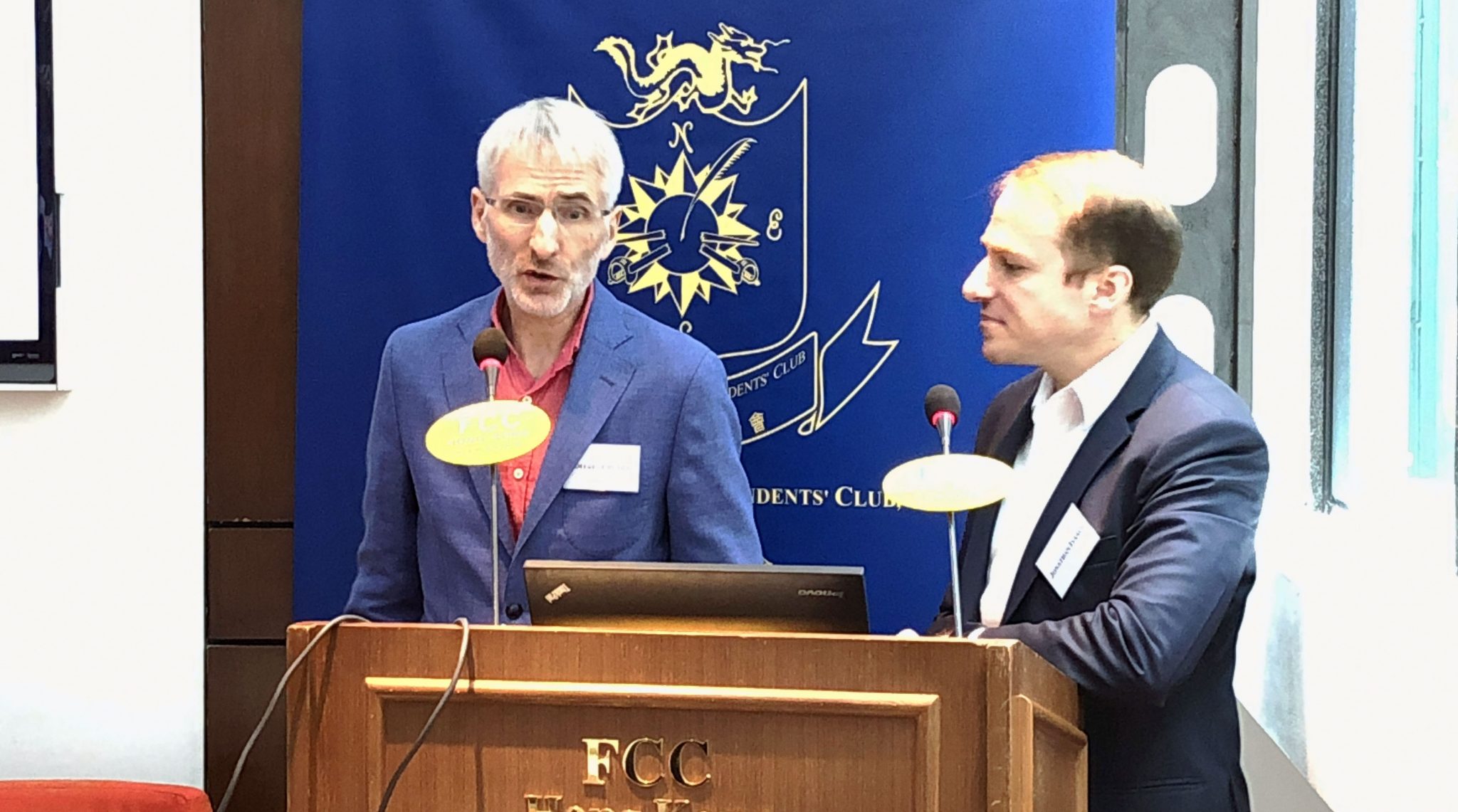
Left: Geoffrey Crothall of China Labour Bulletin and Jonathan Isaacs, right, of Baker McKenzie’s China Employment Practice. Photo: Sarah Graham/FCC Left: Geoffrey Crothall of China Labour Bulletin and Jonathan Isaacs, right, of Baker McKenzie’s China Employment Practice. Photo: Sarah Graham/FCC

A decade after the introduction of the law, more workers than ever are launching actions against their employers for non-compliance of the legislation – and the majority of them are winning, said Geoffrey Crothall of China Labour Bulletin and Jonathan Isaacs, of Baker McKenzie’s China Employment Practice.

Speaking at the January 30 club lunch, Crothall said mainland employers have flouted the law ever since it was approved in 2007. In fact, he said, between the date of approval and its implementation a year later, many companies started sacking all their long service staff to avoid having to pay large sums when they eventually left the organisation. They then started to employ workers as agency workers, which by their nature should be temporary. However, some were employed under this guise for five to 10 years, all the while subject to lower pay and poorer working conditions.

Workers were also hired as individual service providers, and even interns, to get around the new law.

“Abuse of the law was so widespread that the Chinese government had to amend the law in 2013 – people ignored that,” said Crothall.

In the case of migrant workers, only 43% are currently employed under contract – and that number is decreasing, he said.

However, there was one positive to come out of the law: it has inspired more workers to stand up to their employers. Labour disputes doubled from 300,000 per year in 2007 to 600,000 in 2008. They now stand at 800,000 per year.

Strikes by disgruntled employees were also becoming more commonplace in China, although police often surround protesting workers to prevent the strike from being seen publicly, said Isaacs. He added that an attempt by the Guangdong government to decriminalise workers strikes was slapped down by Central Government.

Of cases that have taken place in recent years in Beijing and Shanghai, around 70% of employees who individually took their employers to court won their cases, Crothall said. But, according to Isaacs, for blue collar workers who cannot afford lawyers’ fees, it’s almost impossible to bring a case to court, even with the zero fees policy in the labour law.

“What the Chinese government needs to do is address the fundamental balance of power in the workplace,” Crothall said, before adding. “What we really need is for the official trade union in China to step up and bargain on behalf of its members.”

The reputation of Chinese companies was worse than those of multinationals when it comes to upholding China’s labour laws, Isaacs said. This was because most foreign companies had already implemented a compliance culture, but also because they were afraid of damaging their image.

Working conditions for reporters in China deteriorate – FCCC annual survey results

The Chinese government has intensified its attempts to deny or restrict the access of foreign journalists to large parts of the country while increasing the use of the visa renewal process to pressure correspondents and news organisations whose coverage it does not like, according to a new report.

Canada’s Globe and Mail Asia correspondent Nathan VanderKlippe used Twitter to spread word of his detention. Canada’s Globe and Mail Asia correspondent Nathan VanderKlippe used Twitter to spread word of his detention in China in 2017.

In December, the Foreign Correspondents’ Club of China surveyed correspondent members about their experiences during calendar year 2017. The results of that survey, as well as interviews with more than a dozen major media organisations and a timeline of notable incidents in 2017, form the basis of a new report, Access Denied: Surveillance, harassment and intimidation as reporting conditions in China deteriorate.

The report shows a significant rise in the number of foreign correspondents who believe journalism in China has grown more difficult amid rising pressures from authorities seeking to block newsgathering in areas they deem sensitive, such as Xinjiang, the border with North Korea and industrial areas. There was also no let up in 2017 in violent attacks against foreign journalists and intimidation of news sources, which continued alongside growing concerns about surveillance and invasions of privacy.

Correspondents surveyed by the FCCC also reported greater difficulties in renewing their visas. The FCCC is aware of five international news organisations that experienced visa difficulties in 2017 that appeared to be reporting-related. Those difficulties included lengthy delays in approval, the issuance of credentials with unusually short validity and outright refusal by Chinese authorities to provide accreditation.

“China-based foreign correspondents have long faced obstruction, harassment and intimidation for doing their jobs but this report will make depressing reading for even the most seasoned of them,” the FCCC Board said.

“Our survey results provide strong evidence to suggest that, from an already very low baseline, reporting conditions are getting worse.”

“Anyone who values independent news from China – news about the nature of its government, the state of its economy and the lives of its people – should be deeply alarmed by the serious, mounting pressure applied to the journalists trying to supply it.”

2017 KEY FINDINGS

The following results are based on a survey of journalists who belong to the Foreign Correspondents’ of Club of China in Beijing. The survey was completed by 117 of 218 correspondent members. More detailed results are in the full report.

•       40% of respondents felt reporting conditions in 2017 deteriorated from the year before, compared with 29% in the FCCC’s 2016 survey

•       Reporting grew more difficult in many areas of China, but in particular Xinjiang, China’s westernmost region. 73% of respondents who traveled to Xinjiang in 2017 were told by officials and security agents that reporting was prohibited or restricted, compared with 42% in 2016 

•       15% of respondents said they encountered problems during the renewal process, up from 6% the previous year. Compared to 2016, twice the number of respondents said the problems were related to their reporting. 6% of respondents were threatened with cancellation or non-renewal of visas in 2017, up from 2% in the FCCC’s previous survey 

•       Correspondents reported higher levels of concern about surveillance and invasion of privacy, as well as greater pressure by overseas Chinese officials on media organisation headquarters 

•       Nearly half of surveyed correspondents said they experienced interference, harassment and physical violence, roughly in line with 2016 

•       News sources in China continued to face negative consequences for interacting with a foreign journalist. 26% of surveyed correspondents said sources had been harassed, detained or called in for questioning, roughly in line with 2016 

Ex-Hong Kong Home Secretary Patrick Ho bribery case ‘an attempt by the U.S. to embarrass China’

The reason United States prosecutors “went after” former Hong Kong Home Secretary Patrick Ho Chi-ping over alleged bribery is because they want to “squeeze” him for information on Chinese companies that routinely bribe foreign officials, according to veteran New York criminal defence lawyer Robert Precht.

Robert Precht discusses the Patrick Ho case at the FCC on January 29, 2018. Photo: Sarah Graham/FCC Robert Precht discusses the Patrick Ho case at the FCC on January 29, 2018. Photo: Sarah Graham/FCC

And it’s highly likely that President Donald Trump’s administration is using the case in an attempt to embarrass China, Precht said, via the far-reaching US Foreign Corrupt Practices Act (FCPA) which means companies and persons can be held criminally and civilly responsible for corruption offences committed abroad.

Ho is currently in a high-rise Manhattan jail awaiting trial on charges that he made millions of dollars in bribes to African officials to obtain lucrative oil rights for a Chinese conglomerate. If convicted he faces 20 years in prison.

Precht, President of Justice Labs, a legal think tank based in New York, said the case was likely to produce incriminating evidence about companies with close ties to the Chinese government.

Precht said the evidence against Ho, Hong Kong’s Secretary of Home Affairs between 2002 and 2007, was “absolutely overwhelming”. Much of it, he said, was based on intercepted emails. “My defence would be that he has to be innocent because no one would be so stupid to lay out their guilt [in emails],” Precht added.

Ho is accused alongside former Senegalese foreign minister Cheikh Gadio of offering a US$2 million bribe to the president of Chad for oil rights on behalf of CEFC China Energy (CEFC), a Shanghai-based energy company, while in New York at the U.N. Gadio is not named on the indictment, Precht said, indicating that he was involved in a plea bargain. CEFC has denied authorising Ho to engage in corrupt practices.

Although Ho pleaded not guilty to the charges at a hearing earlier this month, Precht said it was likely prosecutors would put him under enormous pressure to change his plea.

Precht explained that the FCPA gives America the power to prosecute people it believes to be involved in corrupt practices where it could claim jurisdiction. For example, an email sent from overseas that passes through an American server can give prosecutors jurisdiction. In Ho’s case, meetings took place in the U.S., and additionally Ho created an NGO in Virginia, funded by CEFC which made the case a “domestic concern” for America.

The problem of Chinese companies bribing foreign officials in return for lucrative contracts was extremely widespread, Precht said, adding that he hoped that this case would prompt the Chinese government to crack down on it.

We measure site performance with cookies to improve performance.