Members Area Logout

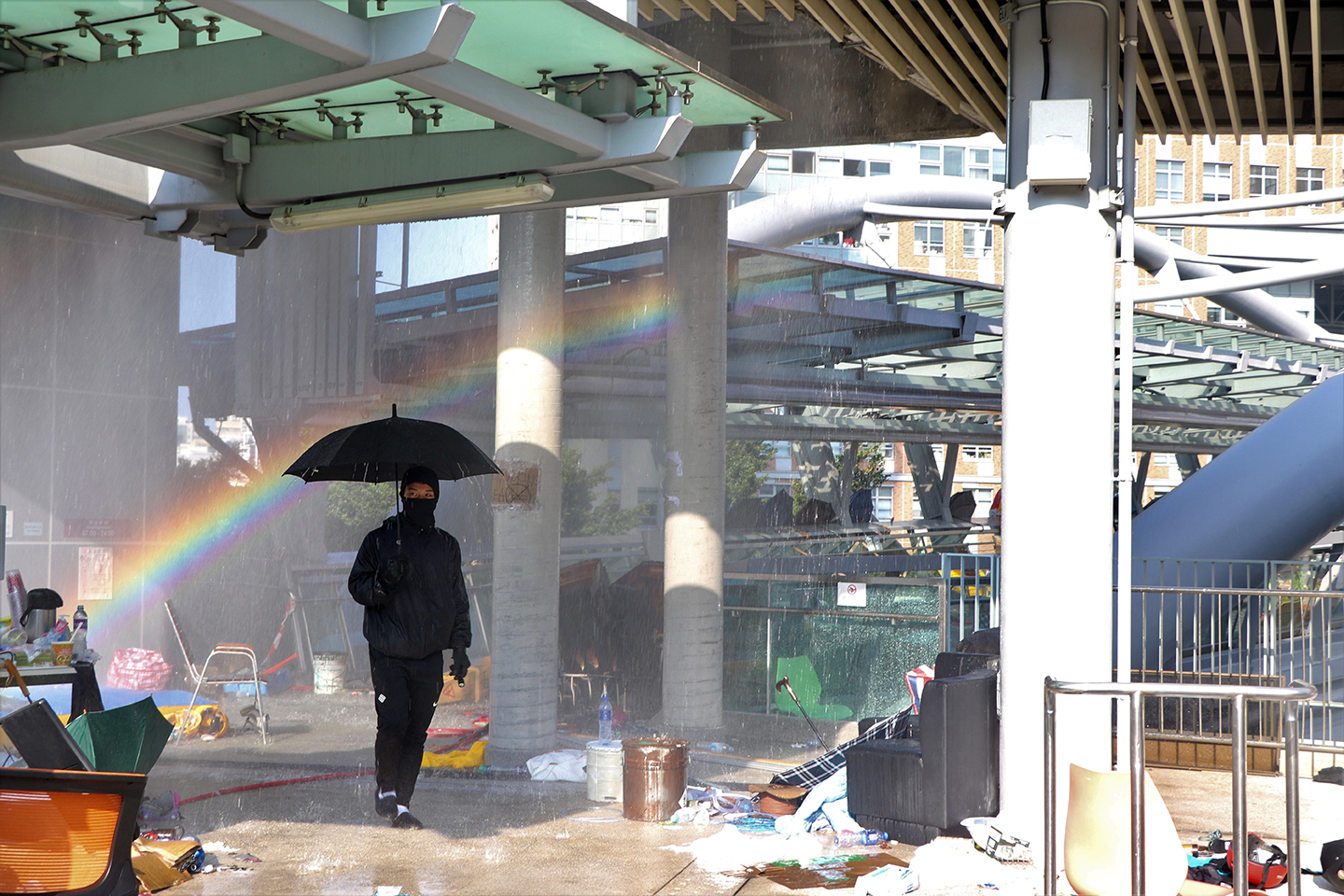
‘Just as I came across a rainbow on the third day of the PolyU siege, I still have hope’

By any standards this has been an extraordinary year for Jessie Pang and Mary Hui to be the FCC’s first Clare Hollingworth Fellows. Here they share some thoughts on protests, the pandemic and press freedom.

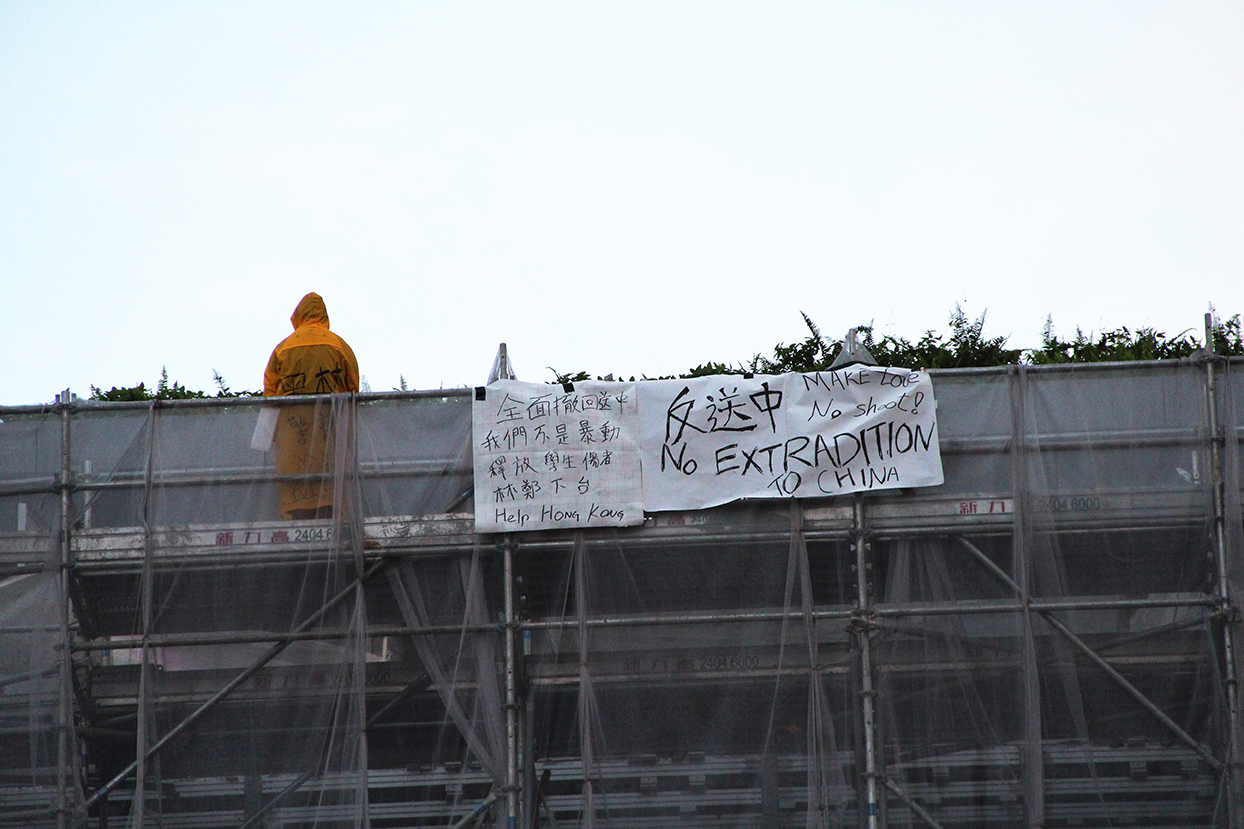
Marco Leung, 35, unfurling banners against the now withdrawn extradition bill on the rooftop of Pacific Place on June 15, 2019. He died after he fell from construction scaffolding Marco Leung, 35, unfurling banners against the now withdrawn extradition bill on the rooftop of Pacific Place on June 15, 2019. He died after he fell from construction scaffolding

At the time of writing this reflection, Hong Kong has entered another watershed moment. Some Western governments, business leaders and international rights groups say Beijing’s national security law for Hong Kong is the beginning of the end for China’s freest city.

I didn’t realise what it truly meant to become a Clare Hollingworth Fellow until I found myself following in her footsteps. Just as Clare Hollingworth didn’t expect to cover wars or break the news of World War Two after being a journalist for less than a week, I never thought I would be reporting in the eye of the storm and witnessing my hometown turn into a conflict zone.

A rainbow forms near the bridge where protesters escape past riot police at the Hong Kong Polytechnic University (PolyU) campus that had been on lockdown for a week in Hong Kong, November 19, 2019 A rainbow forms near the bridge where protesters escape past riot police at the Hong Kong Polytechnic University (PolyU) campus that had been on lockdown for a week in Hong Kong, November 19, 2019

I was less than one year out of college when protests escalated. When I woke every morning, all I wished for was to become more experienced. Yet, here I was, covering the ebbs and flows of nearly daily protests and sometimes violent clashes between police and protesters on the frontlines for almost a year.

Every day presented new challenges. Like many of my fellow journalists and Hongkongers, I witnessed key moments throughout the protests. Those images are still vivid in my mind and motivated me to continue to report to the world the events as they unfolded in Hong Kong.

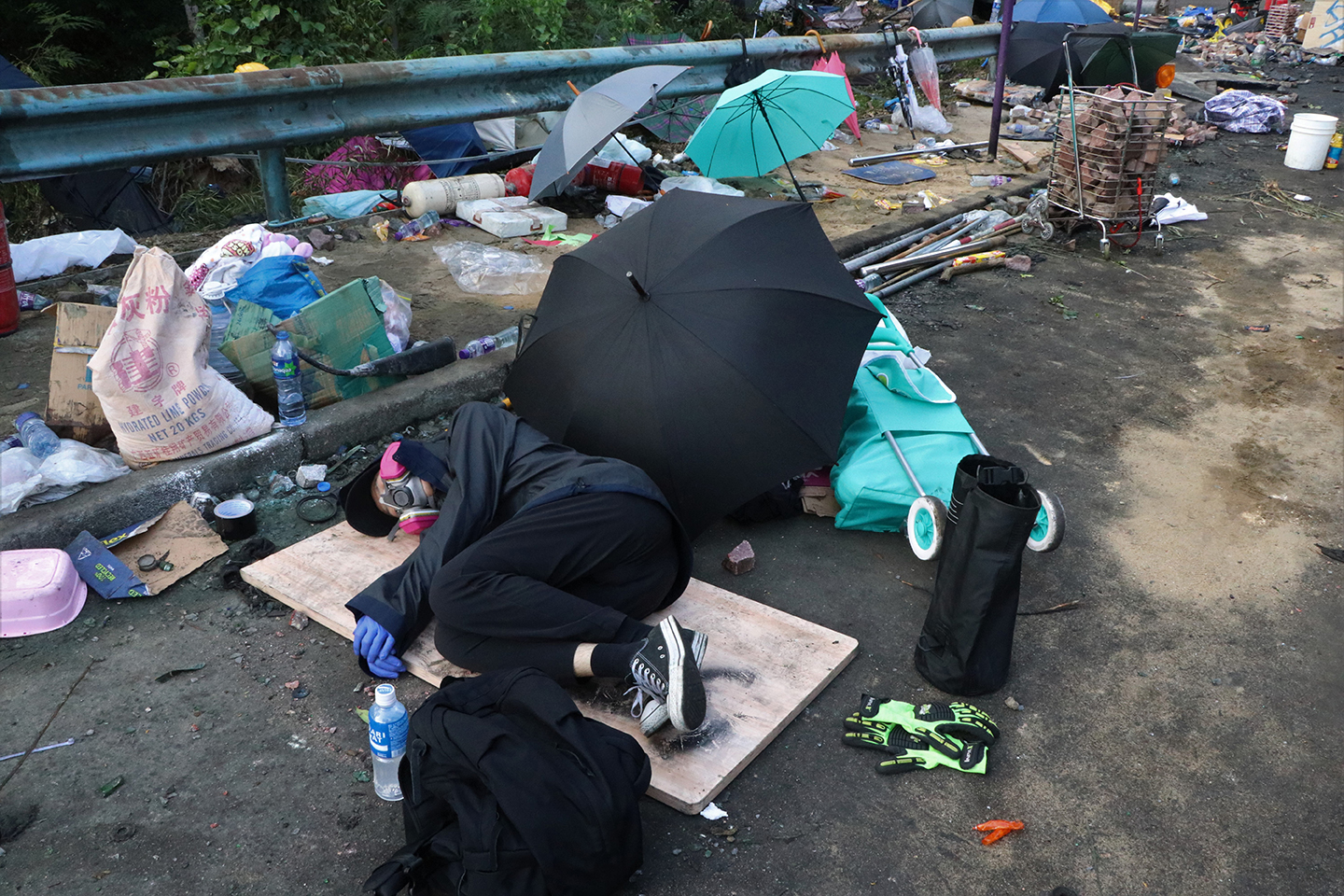
An exhausted protester sleeping on the No. 2 bridge of Chinese University of Hong Kong on November 13, 2019 An exhausted protester sleeping on the No. 2 bridge of Chinese University of Hong Kong on November 13, 2019

I often wonder what happened to the protester who gave me his gas mask and filters when he found out mine was broken on my way to the airport; what happened to the protester who took my number to ensure I left the No. 2 bridge at CUHK safely?

I wish I had the chance to revisit some of those moments and faces and ask them: “How are you now?” or “Can you tell me your story?”

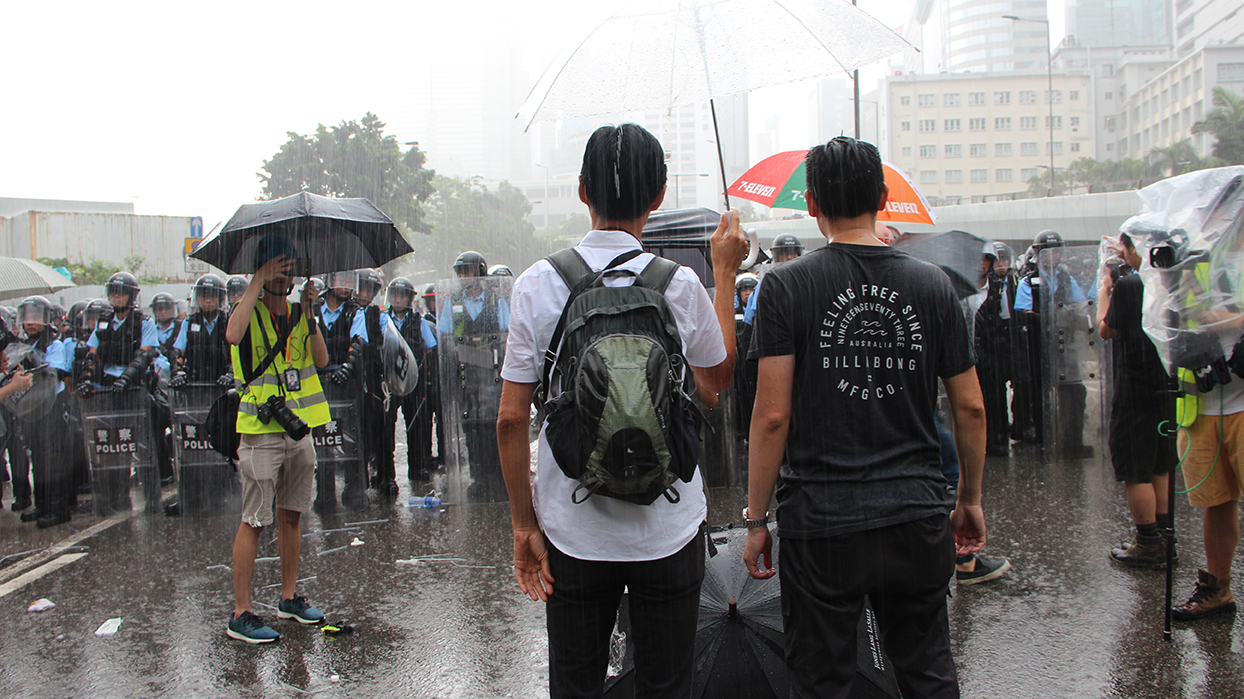
Lawmakers Eddie Chu and Jeremy Tam face riot police on July 1, 2019 Lawmakers Eddie Chu and Jeremy Tam face riot police on July 1, 2019

International rights groups say Beijing’s proposal to impose a national security law in Hong Kong has only exacerbated concerns over press freedom in the city and could have grave implications for civil and media liberties. Balanced and truthful reporting on Hong Kong has never been more important.

Just as I came across a rainbow on the third day of the PolyU siege, I still have hope.

I have met and become friends with so many talented journalists during the protests. I know that we, fellow journalists, will continue to pursue and present the truth impartially, to show the beauty and the complexities of our city, and to let people tell their story.

Jessie Pang, Reuters

SWEPT UP BY A WAVE OF DISRUPTION

Hong Kong-based lawyer and writer, Antony Dapiran; Mary Hui, a reporter for Quartz; and vice convenor of the Civil Human Rights Front, Bonnie Leung Wing-Man talking about the Hong kong protest- What happened and what's next. at The Foreign Correspondents’ Club, Hong Kong (FCC) on July 10th 2019 Hong Kong-based lawyer and writer, Antony Dapiran; and Mary Hui, a reporter for Quartz; at the FCC on July 10, 2019

Like everything else this year, the Club’s inaugural Claire Hollingworth Fellowship has been swept up in the world’s wave of disruption. We were just getting into the swing of organising panels for the annual Journalism Conference when the prudent decision was made to postpone the event. Soon, social distancing regulations were tightened, and I avoided going to restaurants and bars altogether. Close contacts were also kept to a small circle of people. The handful of Club events that I did attend were lunch panels over Zoom. Such is 2020.

Still, even as the fellowship draws to a close, I look forward to continuing as a member of the club and joining the Club’s Press Freedom committee.

Mary Hui, Quartz

Congratulations to Jennifer Creery of Hong Kong Free Press and freelance reporter Tiffany Liang who have been named as the Clare Hollingworth Fellows, 2020-21. Interviews with the award winners will appear in October’s The Correspondent.

On The Wall: As strong as the war, as soft as the peace

Photographs and words by Nicole Tung

The Hong Kong-born photojournalist and 2018 recipient of the James Foley Award for Conflict Reporting, Nicole Tung says: “I’d say the increased targeting of journalists around the world makes this profession much more difficult, and I have either had to stop working in one place or go about it in a different way – Syria was one example of that.”

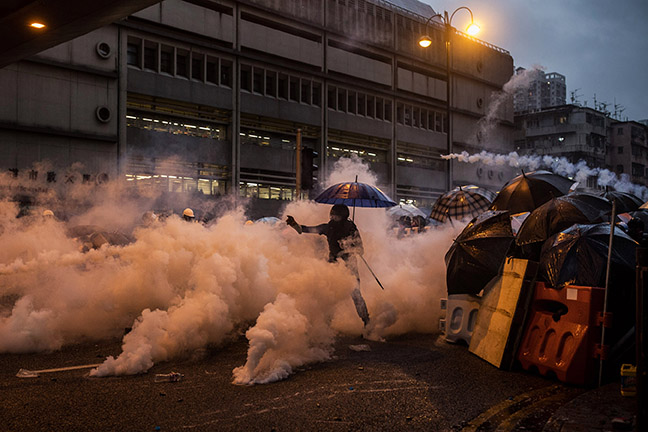
A protestor throws a tear gas canister back at the riot police in Tsuen Wan neighbourhood in Hong Kong, China on August 25, 2019 following the end of a rally in which thousands participated. 
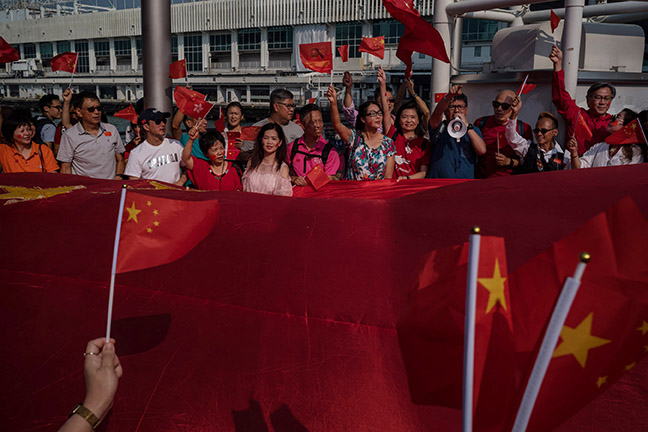
People celebrate the 70th anniversary of the Peoples’ Republic of China as several dozen people joined a gathering to show their support of the Chinese government despite concerns that anti-government protests would continue on the day, on Tuesday, October 1, 2019 in Hong Kong, China.
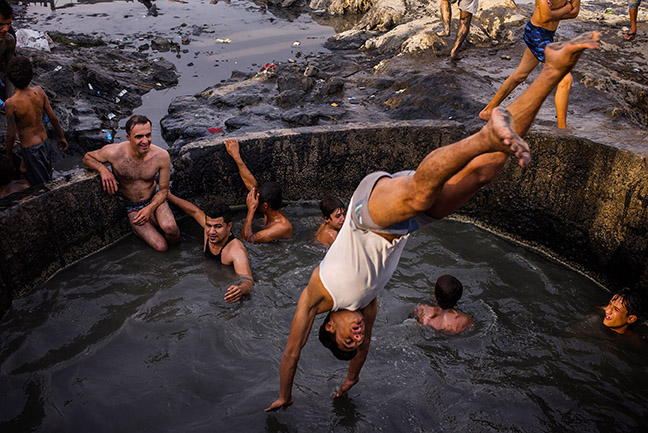
Life after ISIS: Men bathe in thermal baths in Hammam al Alil two days after Iraqi forces liberated the town from ISIS as they retreat further into Mosul.
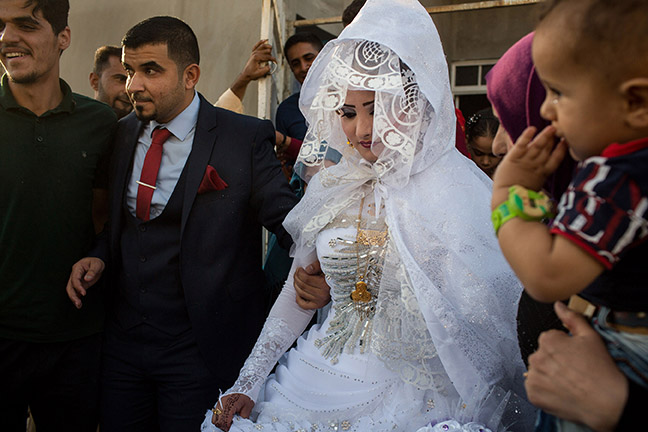
Khaled Mohamed and his bride-to-be step out of the bride’s house before their wedding ceremony in Mosul, Iraq. Both Khaled and his brother Hashem (not pictured) married their fiancees on the same day surrounded by family and neighbours. 
Members of the Raqqa Civil Defense pray before at least 15 bodies and remains of people they retrieved from a mass grave, before reburying them in a cemetery further away from the city center, as seen in Raqqa, Syria. June 2018.

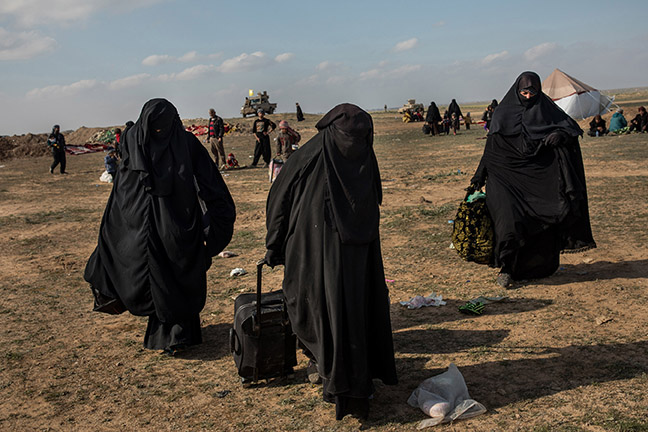
Women, some suspected of being ISIS family members, are seen at a screening point near Baghouz, Syria. February 2019.

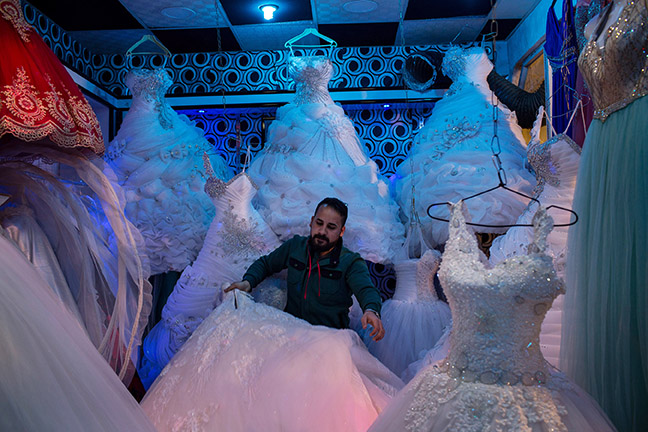
Osama Abdulmonem, 27, readies a wedding dress for display in his shop in Mosul, Iraq. Abdulmonem’s shop remained open under ISIS but he had to sell used dresses as there was no way of importing new material or ready-made ones from outside of the city, especially Turkey, where he usually acquires them. 
Men sit in a tea house smoking and playing dominoes in east Mosul, Iraq. The tea house remained open during ISIS’s rule over the city from 2014, but no board games, dominoes, or any other entertainment was allowed. 

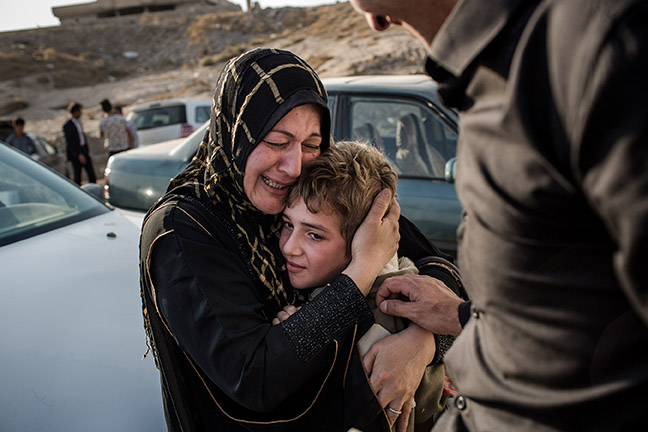
A mother cries while she cradles her son Laith, whom she had not seen for two years as they were finally reunited at the Hassan Sham camp for internally displaced persons near Mosul, Iraq. 

‘Press pause’ leaves Hong Kong’s freelancers time to think about the future

Freelancers are used to living precariously and they have been hit hard by the fall-out in the media industry during the coronavirus pandemic. Marianna Cerini reports

At the end of February, as the coronavirus outbreak quickened across Asia, one of the editors I regularly work for sent me an email asking to press pause on two travel stories I was working on. A few days later, another editor said a project we had discussed turning into a recurring gig had been put on hold.

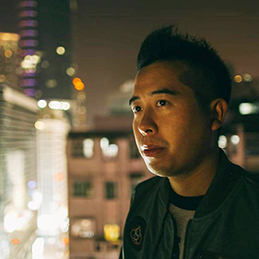
Edwin Lee Edwin Lee

Now six months into what’s become a global pandemic, I don’t know when, or if, both jobs will get picked up again.

I am not alone. Across the world, Covid-19 has forced millions of people out of work. Just like me, many freelancers – already a vulnerable segment of the workforce – have had assignments cancelled and their incomes cut drastically.

In the UK, a survey of 5,600 people by the Broadcasting, Entertainment, Communications and Theatre Union (BECTU) found that 71 per cent of freelancers in the creative industries are afraid they won’t be able to pay their bills. Three-quarters of more than 5,000 independent workers have lost contracts or gigs in the U.S., according to a poll by the Freelancers Union in April, with 90 per cent expecting further losses.

Within this landscape, journalists have been among those hit hard. A British National Union of Journalists (NUJ) poll revealed a third of self-employed media workers has lost all their work. A survey by the International Federation of Journalists (IFJ), showed that out of 1,308 staff and freelance journalists from 77 countries, 65.4 per cent of respondents had suffered pay cuts, job losses or worsening job conditions during the pandemic.

As a sharp drop in advertising revenue is causing media outlets to fold, furlough or layoff their staff, the picture isn’t likely to improve any time soon.

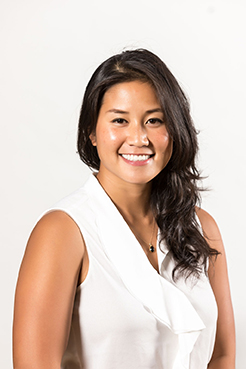
Laurel Chor Laurel Chor

In most western countries, freelancers are now tapping into monthly unemployment benefits, or relief initiatives like the American CARES Act, a US$2 trillion federal stimulus package that offers unemployment insurance, paid sick leave, and pay cheque protection loans to independent workers and contractors. Far from being perfect, these measures are at least providing temporary support.

Things look quite different in Asia, including right here in Hong Kong.

Some 700,000 people, including freelance journalists and reporters, make up the SAR’s gig economy, but studies to check how they are coping are scarce.

And while the government’s latest HK$137.5 billion (US$18 billion) relief package will grant workers at least 50 per cent of their salaries for six months (capped at HK$9,000 a month), independent labour is looking at a one-off subsidy of HK$7,500 – but only if you have a Mandatory Provident Fund (MPF) account and have made contributions in the past 15 months.

That leaves freelancers who haven’t set up their own business or opened an MPF account out of luck.

“Contract-based workers and self-employed people are being overlooked by the government,” says Matthew Keegan, a news and features freelance journalist. “It’s highlighted how precarious freelance work is in the city.”

Keegan, in Hong Kong since 2014, has also been frustrated at the fact that only permanent residents and new arrivals with low income will be eligible for the HK$10,000 cash payment scheme announced in the early days of the outbreak and expected to start rolling out this summer.

Matthew Keegan Matthew Keegan

“I’ve found that decision slightly unfair, considering I have been a taxpayer and resident here for six years. Many of us will miss out because we don’t have PR status yet.

“I’ve had my eyes on other grants and schemes, but I’m doing OK so far – not great, but OK – mostly reporting on the virus, so I think I’ll just wait and see.”

Edwin Lee, a freelance video-journalist and producer, shares similar views. “I am a permanent resident, and I’ve had my work cut by more than 50 per cent since January, but I don’t think I’ll apply for the handout,” he says. “Fellow freelancers have told me not to bother – there’s a fair share of paperwork and hoops to jump through to get it. I’m mostly relying on my savings.”

Photojournalist Laurel Chor says: “I wish the Hong Kong government did more to support its creative community. I just spent two months in France, where the government sees the value in their independent artists and actively gives them support — that’s what’s helped create a vibrant creative scene that makes waves globally.”

Instead of institution-backed financial aid, she has applied to a grant for Covid-19 coverage – “not an emergency support one,” she says, as she, too, has been relying on her own savings – to get back to work with the right kind of resources.

Many others have also done so. When the Pulitzer Center announced the Coronavirus News Collaboration Challenge programme in March – a grant for newsrooms and journalists in the U.S. and abroad to report on the underdiscussed issues of the pandemic – it received 300 applications in two weeks (the opportunity is now closed). “I think many saw it as a call to arms globally,” says the organisation’s executive editor Marina Walker. “Yes, the whole sector is suffering, but people are hungry to return to work and tell stories, and might be especially keen on getting reporting funds over personal ones. Freelancers above all. They are still too often an invisible segment of the media world, so any funding allowing them to do their job is a lifeline right now.”

It’s likely the crisis will make many rethink how sustainable freelancing is. It’s also likely governments worldwide might be forced to address the future of work.

Keegan says: “Most people who go into freelancing know how unpredictable it can be, the importance of savings, of keeping expenses low, of being prepared for times of need. That is why many of us have been getting by these past months. Freelancers are resilient.

“Is that a feasible way of approaching work long-term? Probably not. It would be nice to have some sort of lasting security.”

SOME HELP IS AT HAND

Organisations offering funding for journalists during Covid-19 include:

The International Press Institute: https://ipi.media

The Rory Peck Trust offers grants to professional journalists who have lost commissions as a result of the pandemic. To apply you must be able to receive a grant from a British registered charity: https://rorypecktrust.org

The International Women’s Media Foundation Journalism Relief Fund is open to female journalists, including freelancers. Processing times may be lengthy. Details on fund’s website.

The Pulitzer Center is accepting applications for its international, data journalism, and Bringing Stories Home grants: https://pulitzercenter.org

You can apply for the HK$7,500 government handout at the Hong Kong government’s website.

Marianna Cerini is a freelance journalist writing about culture, travel and lifestyle. In Asia since 2010, her work has been published by CNN Style, Al Jazeera, and The Daily Beast among others


Apology for FCC Japan magazine cover sparks resignations

At least six journalist members of the Foreign Correspondents’ Club of Japan have resigned in a row over its board’s “craven collapse” to the Tokyo Organising Committee for the 2020 Olympic Games after it complained about the cover design of the FCCJ’s monthly magazine.

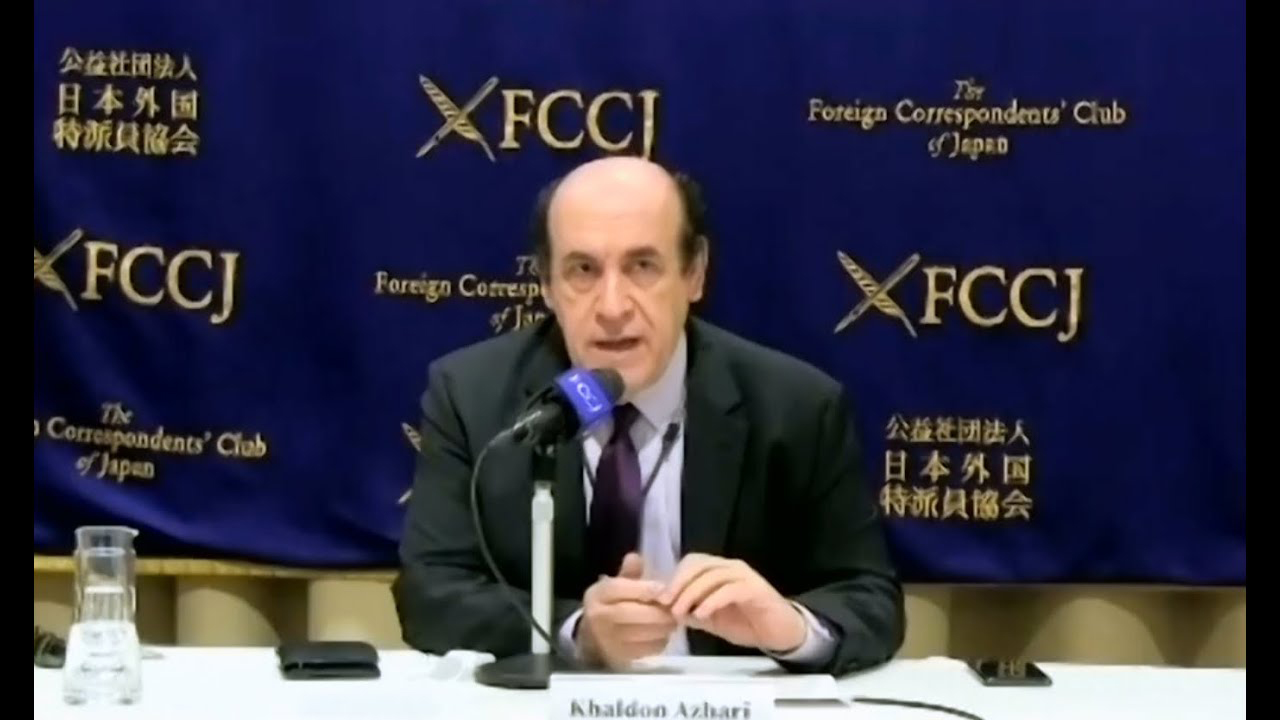
President Khaldon Azhari reads out the FCCJ’s apology President Khaldon Azhari reads out the FCCJ’s apology

The April edition of the magazine, Number 1 Shimbun, had an article with tips for journalists on reporting the coronavirus pandemic and coincided with the postponement of the 2020 Games until next summer.

The cover art by designer Andrew Pothecary showed the Games’ logo, altered to incorporate the distinctive “T” of the COVID-19 molecule.

Pothecary, who has since become the target of threats on social media, declined to be interviewed for this story but told the Asahi newspaper that the design was “satire” with no intention to demean Japan.

April’s Number 1 Shimbun with cover design removed April’s Number 1 Shimbun with cover design removed

The Tokyo 2020 design and the International Olympic Committee’s logo have been parodied in cartoons numerous times previously. Nevertheless, the Tokyo Organising Committee (TOC) wrote to the FCCJ on May 19 requesting the removal of the “extremely disappointing” design as it was a breach of copyright.

Khaldon Azhari, FCCJ president and president of PanOrient News, claims the board was “surprised” at the reaction of the Olympic organisers and said “sources also informed some board members, including myself, TOC will go after the club on legal grounds”.

Julian Ryall Julian Ryall

Azhari said the club’s lawyers concluded that it would not win a legal challenge, although the TOC made no mention of commencing a legal case, and the club should comply. He said the board was “unanimous” in its decision not to stand its ground on freedom of expression or freedom of the press.

Other copyright experts say that the FCCJ would have had a solid case if it had fought its corner. “Clearly, the cover offended some people in our host country, Japan,” Azhari said at a press conference at the FCCJ on May 21. “We would like to express our sincere regret to anyone who it may have offended on all sides of the issue.”

Other board members disagree that acceding was “unanimous”. One said that most “thought it was a toothless threat and not worthy of a response”. The majority also saw the matter as “a clear freedom of the press issue and that the club should take a clear stand”.

The issue became big news in Japan, triggering angry calls to the front desk of the FCCJ. A number of staff received threatening calls on their mobile phones.

Concerned that a legal case would cause the FCCJ financial distress, the board withdrew the image. Greg Starr, the editor of the magazine, says he and Pothecary were “thrown beneath the bus”. Both have resigned.

“The fact that the board collapsed so utterly meant, to me, that there was no reason to stay around,” Starr said. He does not believe the image was a violation of copyright and is angered at Azhari’s apology.

“He did not give us any chance to defend ourselves before the board,” Starr said. “People can be offended, but the FCCJ does not have to apologise every time that someone powerful complains.”

Michael Penn, founder of the Shingetsu News Agency, is among the members who have resigned. “For me, defence of the freedom of the press is the core reason we have the FCCJ and it is written into our articles of association,” he said. “Until the FCCJ stands for the principles that it should stand for, I don’t want any part of it.”

Julian Ryall has been based in Japan since 1992 and is a correspondent for the South China Morning Post, The Daily Telegraph in London, Deutsche Welle in Germany and other publications around the world.

Are you blue or are you yellow? The colours dividing Hong Kong

Politics took on a different hue this year and the colour of someone’s loyalty determined where they ate, met and shopped. Photographer May James and student journalist Lauren F. Lau report

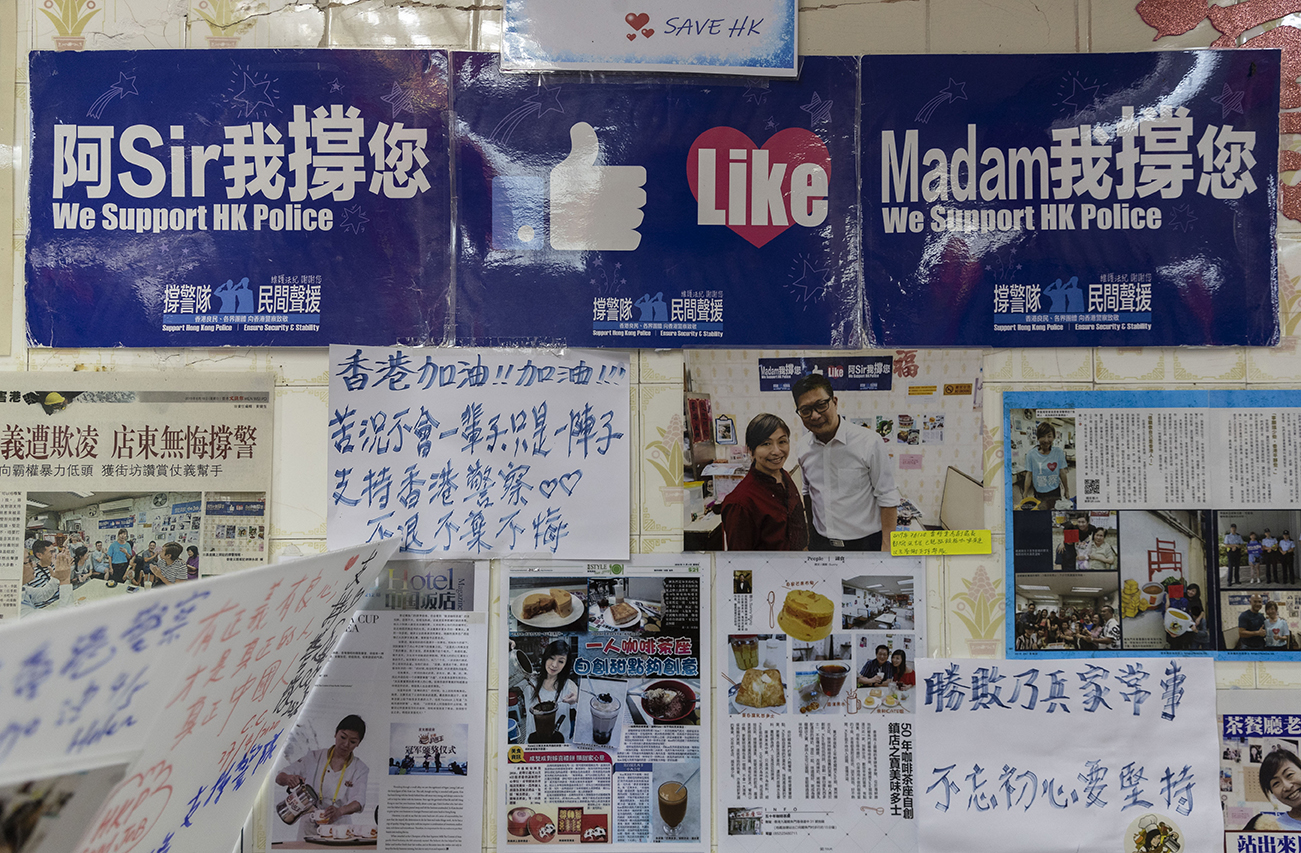
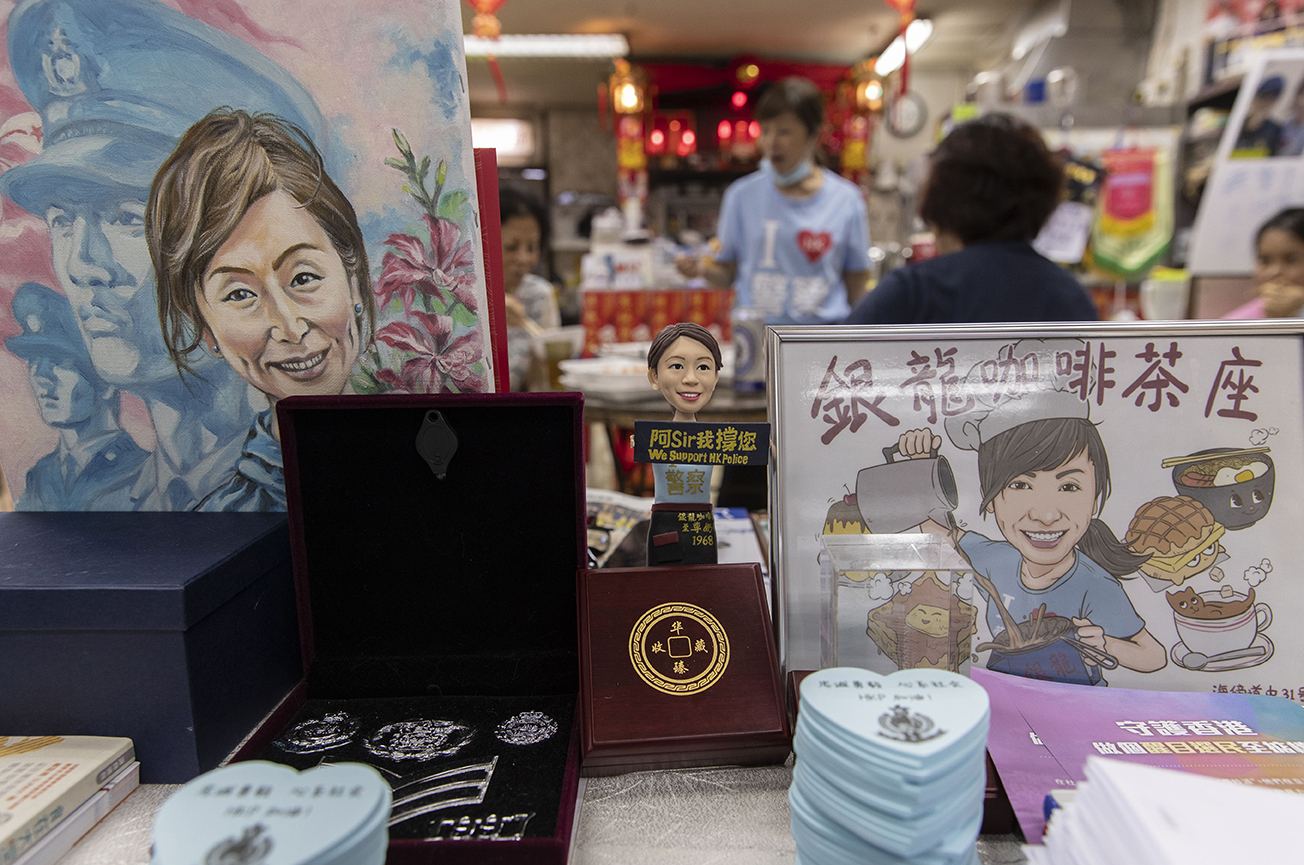
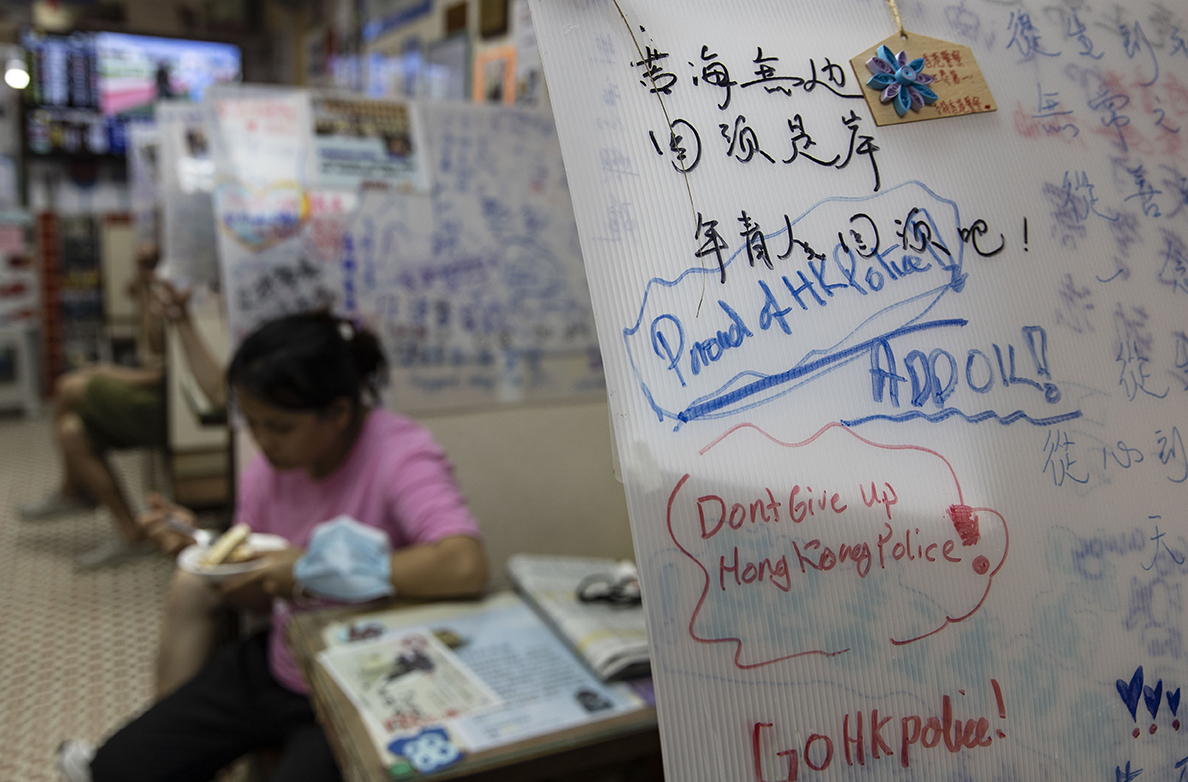
Restaurant’s clear ‘blue’ message to customers Restaurant’s clear ‘blue’ message to customers

Hong Kong has always been a vibrant city, the “Pearl of the East” which lures many. But two decades on from the 1997 handover and it seems like Hong Kong’s inner glow has dimmed.

The political engagement of Hongkongers has taken a turn since June 2019. Long gone are mild protests with general demands; a new era of strong-willed sentiment has shaken the people. The two sides are more clear-cut than ever, and colour-coded.

In the yellow camp are the pro-democracy supporters. They were strongly against a proposed extradition bill to China, now withdrawn but which caused social uproar last summer, and oppose being ruled from Beijing. The blue camp is pro-government, pro-police and pro-Beijing.

Café owner in blue T-shirt with ‘blue’ souvenirs for sale Café owner in blue T-shirt with ‘blue’ souvenirs for sale
‘Blue’ customers eat between COVID-19 dividers filled with messages of support for Hong Kong police ‘Blue’ customers eat between COVID-19 dividers filled with messages of support for Hong Kong police

Yellow and blue are essentially the new identity politics of Hong Kong. There is no longer a space for those that don’t pick a side, even though historically politics was never that important to Hongkongers.

Being the international financial centre it is, the money-driven people of Hong Kong used to seek convenience and efficiency in almost every aspect in life.

Now, it has all changed. Fundamentally, the people of Hong Kong have decided to hold onto what matters – their values and virtues. Justice must prevail, for both sides.

The crack has gone beyond the point of return. “Construction projects” were widely supported in the past year, when furious front-liners shattered glass panes and destroyed the premises of many businesses that expressed support for the government.

This behaviour created the concept of the “yellow economic circle” –  people support the pro-democracy camp by spending money only on businesses that share their politics. Mobile apps now help people locate where “yellow” restaurants and shops are. Supporters have researched all sorts of businesses, including coffee shops, beauty brands and supermarkets, naming those that should be patronised.

The blue camp has created similar platforms to promote businesses. The new pro-establishment Hong Kong Coalition is setting up a website to identify businesses that need an economic boost after the double blow from citywide protests last year and the pandemic.

The tensions created from the protest have torn society apart, and personal relationships have not been spared. Marriages, families and friendships have been traumatised. Threats to kick family members out of the household have become common insults at the dinner table. One year later, these shattered bonds are breaking the city’s heart.

FCC and Wall Committee member May James has been a freelance photographer since 2016. She documented the Hong Kong protests last year, working for Hong Kong Free Press, AFP, Bloomberg Asia and many other titles.

Lauren F. Lau was born and raised in Hong Kong and is a journalism student at HKU. She has written for SCMP and The Standard and is currently a reporter at iCable News, HKIBC.

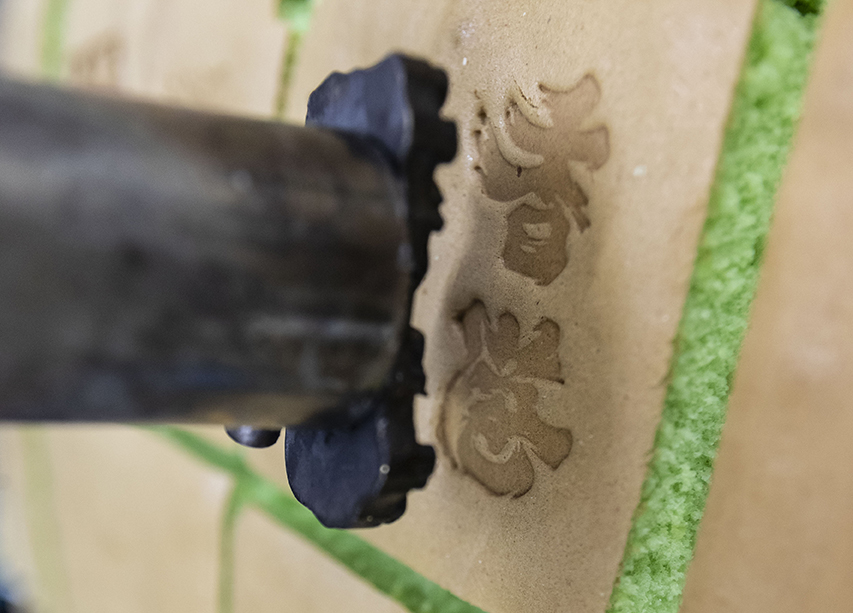
Cake decorated with the pro-democracy chant of ‘Hong Kong Add Oil’ Cake decorated with the pro-democracy chant of ‘Hong Kong Add Oil’
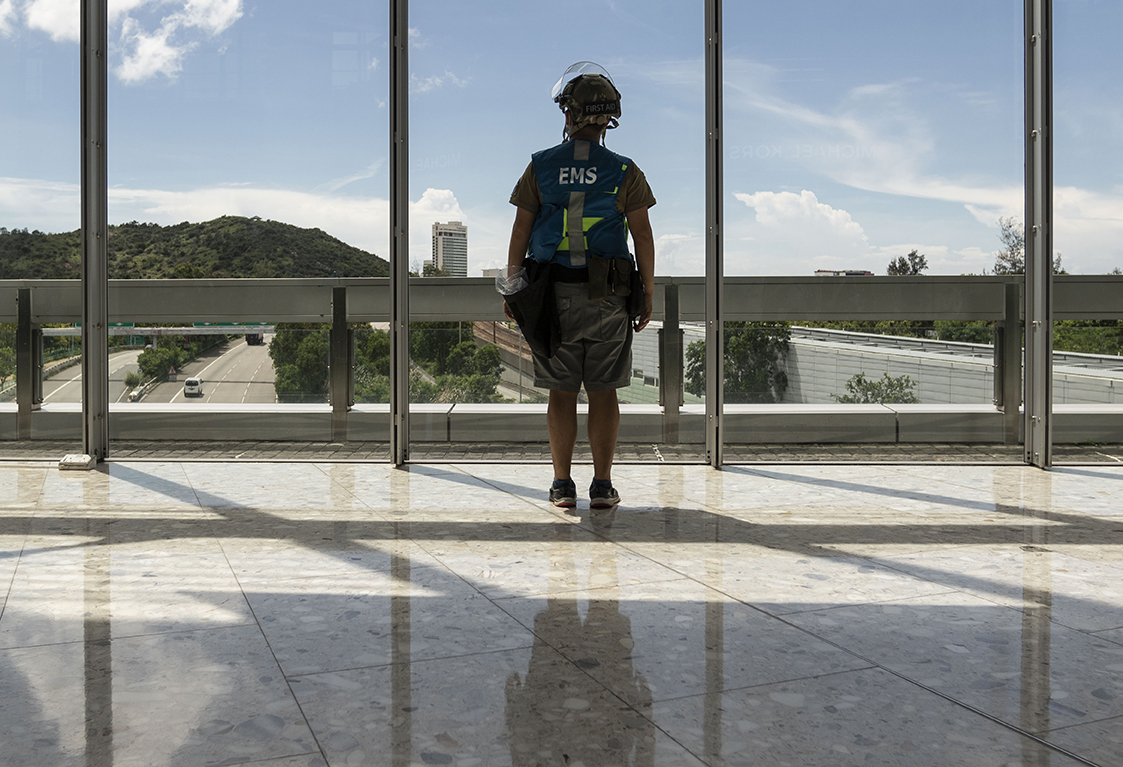
Torn apart: This young ‘yellow’ medic, aged 18, comes from a ‘blue’ family who are threatening to ‘kick him out’ of their home Torn apart: This young ‘yellow’ medic, aged 18, comes from a ‘blue’ family who are threatening to ‘kick him out’ of their home
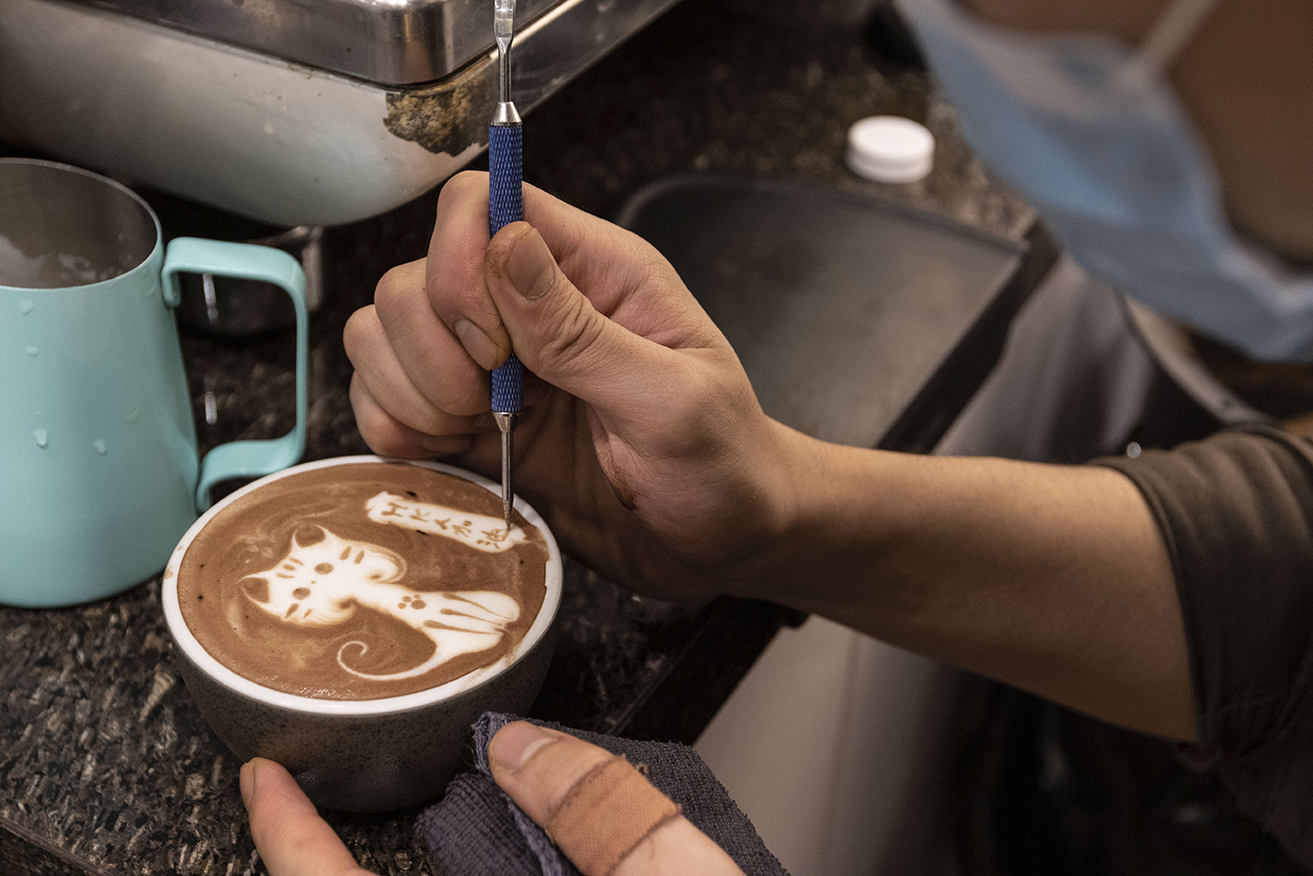
A cafe artist drawing “Hong Kong Add oil” on a chocolate drink at a pro-democracy “know as Yellow” cafe A cafe artist drawing “Hong Kong Add oil” on a chocolate drink at a pro-democracy “know as Yellow” cafe
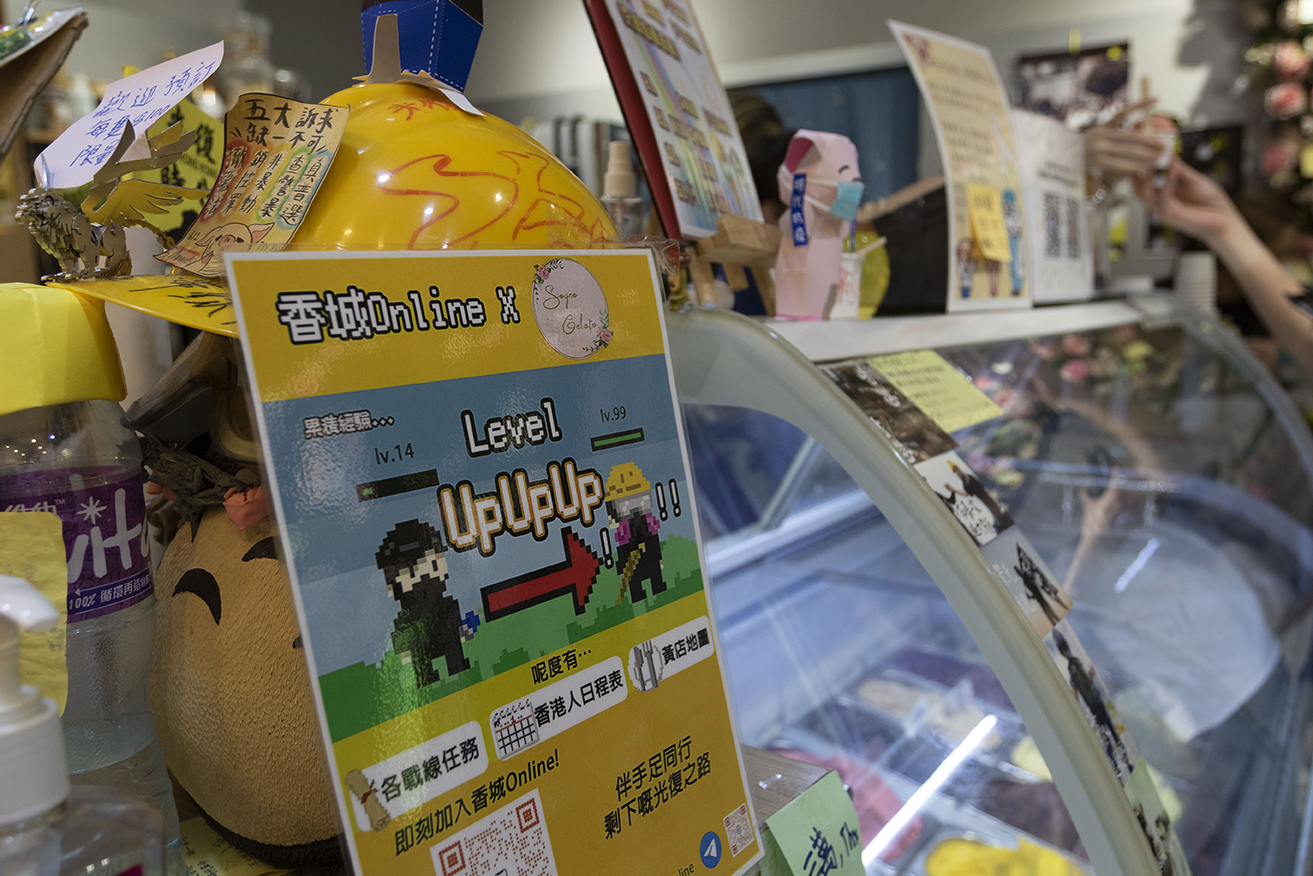
A ‘yellow’ online protest game A ‘yellow’ online protest game

The Correspondent, Jul-Sep 2020

Introducing… FCC new members April 2020

The latest group of members to join the FCC is, as always, an interesting bunch. The Membership Committee meets regularly to go through applications and is always impressed by the diversity of people who want to join the Club.

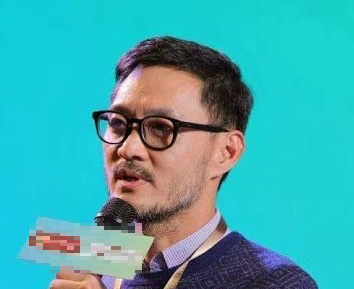
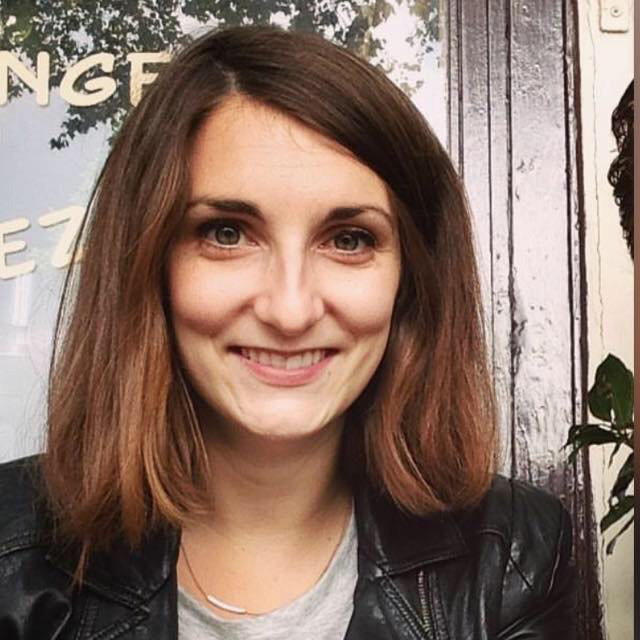
Sue-Lin Wong

I am the Financial Times’ South China Correspondent covering mainland southern China, Hong Kong and Macau. I opened the FT’s Shenzhen bureau last year, after opening the Reuters Shenzhen bureau in 2018. I was previously with Reuters where I covered beats including North Korea and the Chinese economy. I was born and raised in Australia where I am admitted as a lawyer.


Roy McKenzie

I’m from Cape Town, South Africa, where I worked as site editor for News24, the country’s biggest news site. I am now a production editor on the Asia desk at the SCMP, and am enjoying being back in Asia, 20 years after first travelling around the region. My other half Nick works in reinsurance. We certainly picked an exciting time to move here, arriving just as the protests started and now coronavirus. Friends have joked that Hong Kong was doing just fine before we arrived, so apologies about that. When not exploring the city or region, we can probably be found at the bar in a heated discussion, so please come and interrupt.


Huh Dong Hyuck

I was born in Tokyo, Japan, into a Korean journalist and statesman’s family. I studied history at Yonsei University, Seoul, and have an MA degree in public policy and management from Carnegie Mellon University. My career as a journalist is three-and-a-half years with the New Daily Korea; I used to work in the automotive industry, but switched to being a reporter to pursue a long-cherished dream of journalism. I speak Korean, Japanese, English, Mandarin and some Cantonese. My beat is Hong Kong and Asia Pacific. Since I am still at an early stage in journalism, I welcome any advice from FCC members!


Andrew Chan

I am the vice-president of Group Risk Management at PCCW Group. Apart from managing risks and opportunities in this complex and ever-changing world, I have a strong passion for Hong Kong and Asian cinema. As a longtime professional member of the Film Critics Circle of Australia, I have enjoyed the opportunity to participate in film festivals held at Venice, Jeonju, Busan, Beijing, Hong Kong and all over Australia. It is also the reason why I joined the FCC, to further continue my life-long hobby and mingle with like-minded fellow FCC members.


Kilian Chan

I am a Hongkonger working in the wealth management profession. I have a strong passion for the performing arts and enjoy going to concerts and the theatre, as well as playing and organising classical music concerts. I have been playing the cello for more than 20 years and still try to practise and improve a bit every day. One of my sources of inspiration comes from nature. I love hiking a lot. Going up and down the mountains seeing the amazing work of nature is rewarding. Walking up the Peak after a salad at the FCC Lounge is one of my favourite things to do.


Jatia Anurag

Originally from Mumbai, I moved to Hong Kong about nine years ago with my family. I spent a year in London before moving here. Since my move to Hong Kong, I have been involved in managing a family office. Besides work, I spend a lot of time boxing and learning Muay Thai. I am very passionate about music, especially classic rock from the 80s, and I enjoy collecting vinyl records. I am interested in technology, and have a 10-year-old daughter.


Dr Jack Lau

My name is Jack. I have a long affiliation with the Hong Kong University of Science and Technology, where I am currently serving as a Council member and also an Adjunct Professor in Engineering. I enjoy keeping track of the latest technologies in my blog (www.jacklau.info). I spent my adolescent years in San Francisco. I also help out on a number of HK Government technology funding committees as my public service. I am an avid golfer who has a rather serious handicap 🙁 I enjoy yoga and reading.


Bruce Morrison

I started out as an English teacher nearly 40 years ago in Egypt, living in Cairo and Ismailia (on the Suez Canal), before making my way to Hong Kong in 1994 via Madrid and Tarragona, Tsing Hua University in Beijing (1986-88), Kuala Lumpur, Seoul, Rome and Beijing again briefly. Mostly, I worked for the British Council as a teacher trainer and language centre director, with every destination providing its special challenges. I have worked at the HK Polytechnic University since I arrived here and am now director of the English Language Centre. I live in Sai Kung Country Park and walk in the hills, travel as much as I can and grapple with building model wooden boats.


Ernest Law

I’m a professional banker, spending most of my career in Hong Kong but have also lived and worked in Shanghai, Beijing and Singapore. Basketball has been my favourite sport since school and I played in the local league till a serious injury. After that it became a casual weekly exercise which I still enjoy playing every weekend. My daughter started riding some five years ago and since then has fallen in love with the sport, while I am only a spectator. I am in the process of establishing a new business venture in Hong Kong.


Symon Wong

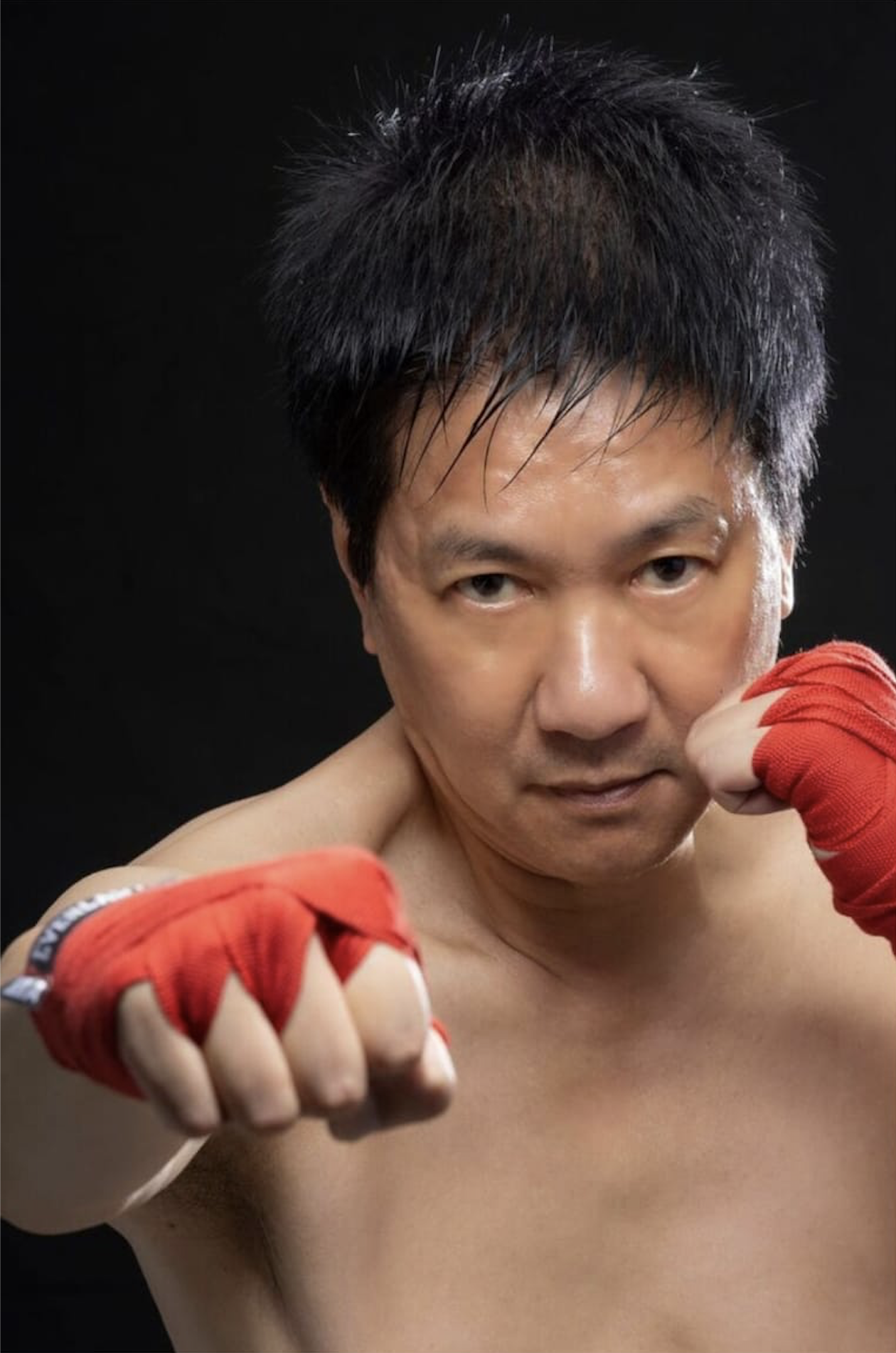
I am a retired magistrate of the HKSAR and teach at the School of Law of the City University of Hong Kong. Martial arts have played an important role in my life. I started practising Muay Thai and Taekwondo when I was seven. It equipped me with the skills of self-defence and, more importantly, strengthened endurance when faced with difficult times in life. I am honoured occasionally to referee or judge matches held by the Hong Kong Muay Thai Association. Given the social unrest since June 2019, I also write commentaries with the aim of neutralizing the atmosphere of hatred in Hong Kong.


Gary (Hang) Yu

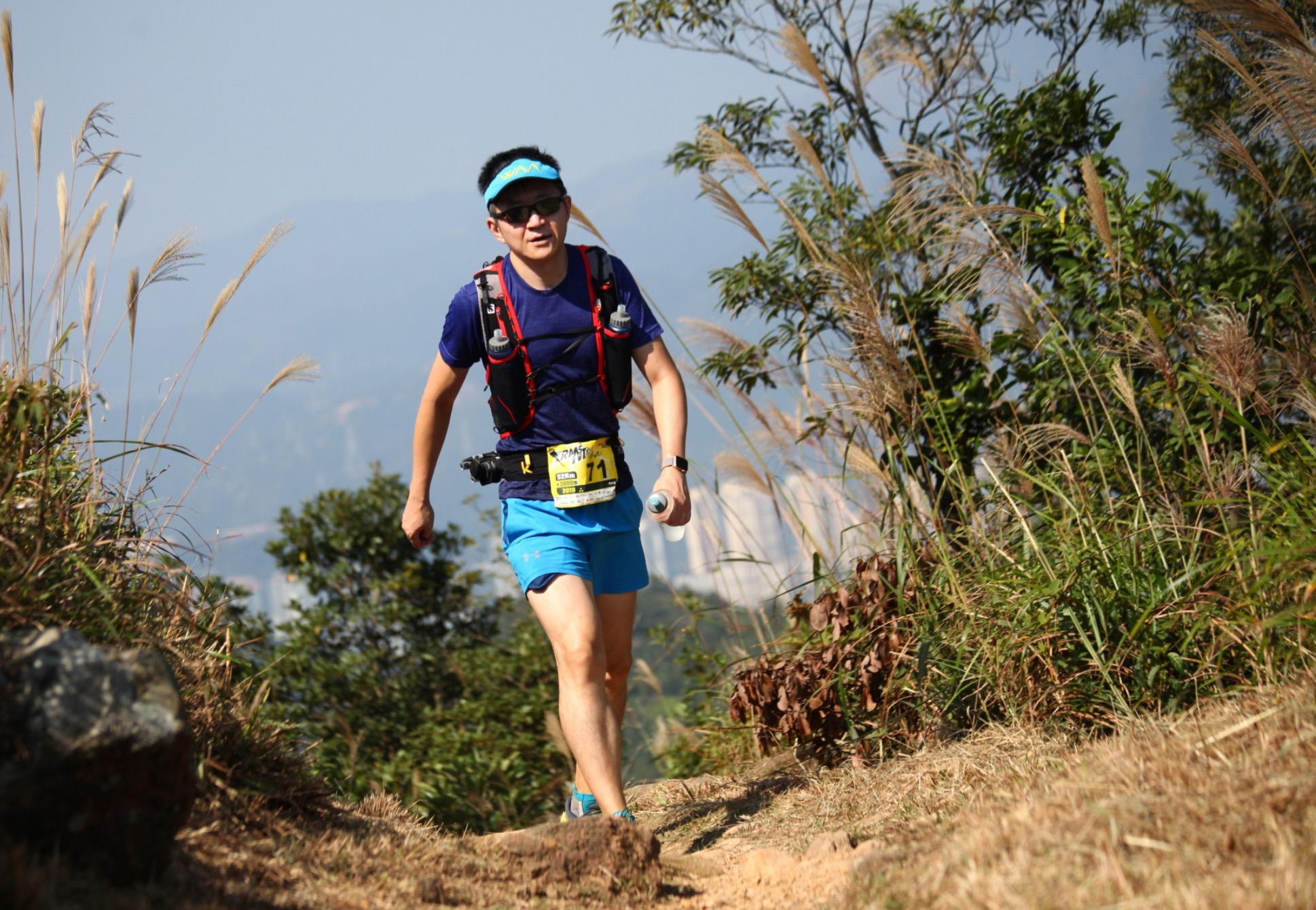
I grew up in Hangzhou, China, and moved to the U.S. to pursue a graduate degree after I finished college. I spent almost another decade in Illinois before deciding to move to HK in 2011. Growing up as a fan of TVB soap operas and Hong Kong movies, this decision couldn’t have been easier. I work for Goldman Sachs, writing computer programs to trade securities automatically. When I am not at work or tutoring my kid with maths homework, I’m cycling in Tung Chung or running on one of HK’s beautiful trails.


Ella Arwyn Jones

You may guess from my surname (and I’m told, lilting accent!) that I come from Wales. That, together with Irish blood and a year in Tokyo during my Edinburgh degree, may explain how at home I feel living on an island. A chance meeting on London’s Strand led me to become Head of Research, Apac, at Acuris’s Inframation news platform, covering infrastructure investment across the region. Despite the cockroach-and-Hoover-incident (a tale for a drink at the bar!) I love Hong Kong – its feng shui, sunny hikes and shopfront cats.


Rebecca Feng

I was born in Beijing, went to college in the U.S. and completed my master’s degree in postcolonial literature in Scotland. My dissertation focused on the literary identity of Hong Kong after 1997. And that’s why I came to Hong Kong in September 2018 – I wanted to live in the city I had read and written about. Here I cover the Chinese market opening-up process for GlobalCapital China, a publication under Euromoney. I have an identical twin but I like travelling alone and drawing what I see on the way.


Joanne Lam

A matrimonial lawyer by day and a yogi and exercise enthusiast by even earlier in the day, I am known for my high-energy and bubbly personality (or so I am told). I was formerly with the South China Morning Post as assistant editor for STYLE magazine. Nowadays, you’ll find me lifting heavy things and putting them back down at the gym across from the FCC, exploring coffee shops in Hong Kong or cooking up a storm at home.


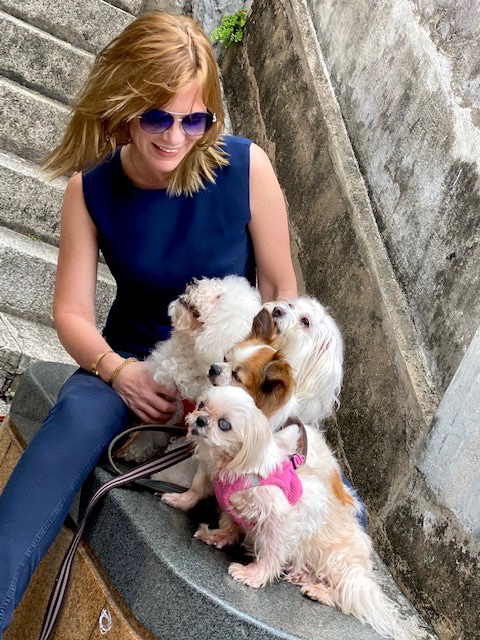
Hilga Warringa

Hailing from the Netherlands, I never imagined that my future would involve setting up home (and business) amongst the glittering skyscrapers of Hong Kong. But when I arrived here in 2006 to set up the Asian subsidiary of a Dutch options market making firm, I fell in love with the city. As a child, my passion was for animals and their welfare, and I have managed to combine business with that passion. In addition to my investment work, I set up a drinks brand, Animal Love, which benefits animal charities. Our Scotch whiskies support dog shelters and our Tahitian rum and gin aid sea turtle conservation.


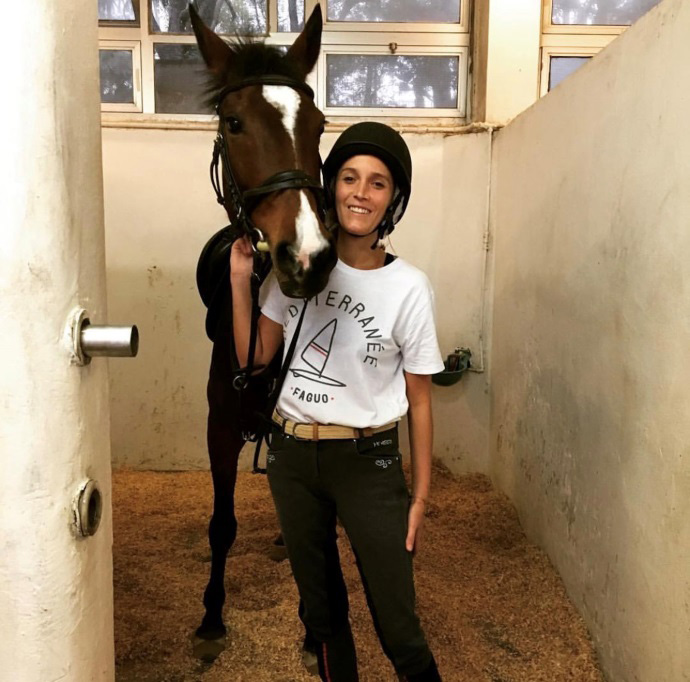
Delphine Lefay

I am co-founder & CEO of OnTheList, which I founded four years ago with my husband, and it has been one of the best adventures so far. It is a members-only flash sales platform for luxury brands. I am very passionate about building a sustainable future and hope to be involved in bringing more awareness of sustainability into the fashion industry. I also love exploring different cities with friends and learning about new cultures. One of the hobbies I took on as a kid was horseback riding and to this day it is still one of my favourite activities.


Kristie Lu Stout


I’m a proud member of the FCC and have been an anchor/correspondent for CNN based in this beautiful city for almost two decades. I report both breaking news and features in Hong Kong and across the region. I regularly go into the field to anchor and report on major stories and also host feature shows on innovation. Warning: I am a hard-core media addict. All recommendations are welcome including art house (and low-brow) movies, longform journalism, books, graphic novels, Instagram feeds, podcasts and Nintendo Switch games. If anyone in the Club wants to talk, please introduce yourself.


Iain Marlow

I’m a correspondent with Bloomberg News, mainly covering politics, security and foreign policy issues. My partner Nicole Baute is a writer who is teaching at Hong Kong University. We’re both Canadian and arrived here after three years in India, where I covered Indian politics and South Asia out of Bloomberg’s lively New Delhi bureau. Before that, I was the Asia-Pacific correspondent for The Globe and Mail, Canada’s national paper. Our July arrival in Hong Kong brought us here at the height of the protests, and now we look forward to fine conversations at the FCC bar on the other side of “social distancing”.


In the Room: Behind the Scenes of History

Photographs by David Kennerly

Former FCC member David Hume Kennerly has been a photographer on the front lines of history for 55 years. At age 25 he was awarded the Pulitzer Prize in Journalism for Feature Photography. His winning portfolio included images of the Vietnam and Cambodia wars, refugees escaping from East Pakistan, and the Ali v. Frazier “Fight of the Century”. Two years later Kennerly was appointed President Gerald R. Ford’s Personal White House Photographer, the third person to ever have that job.

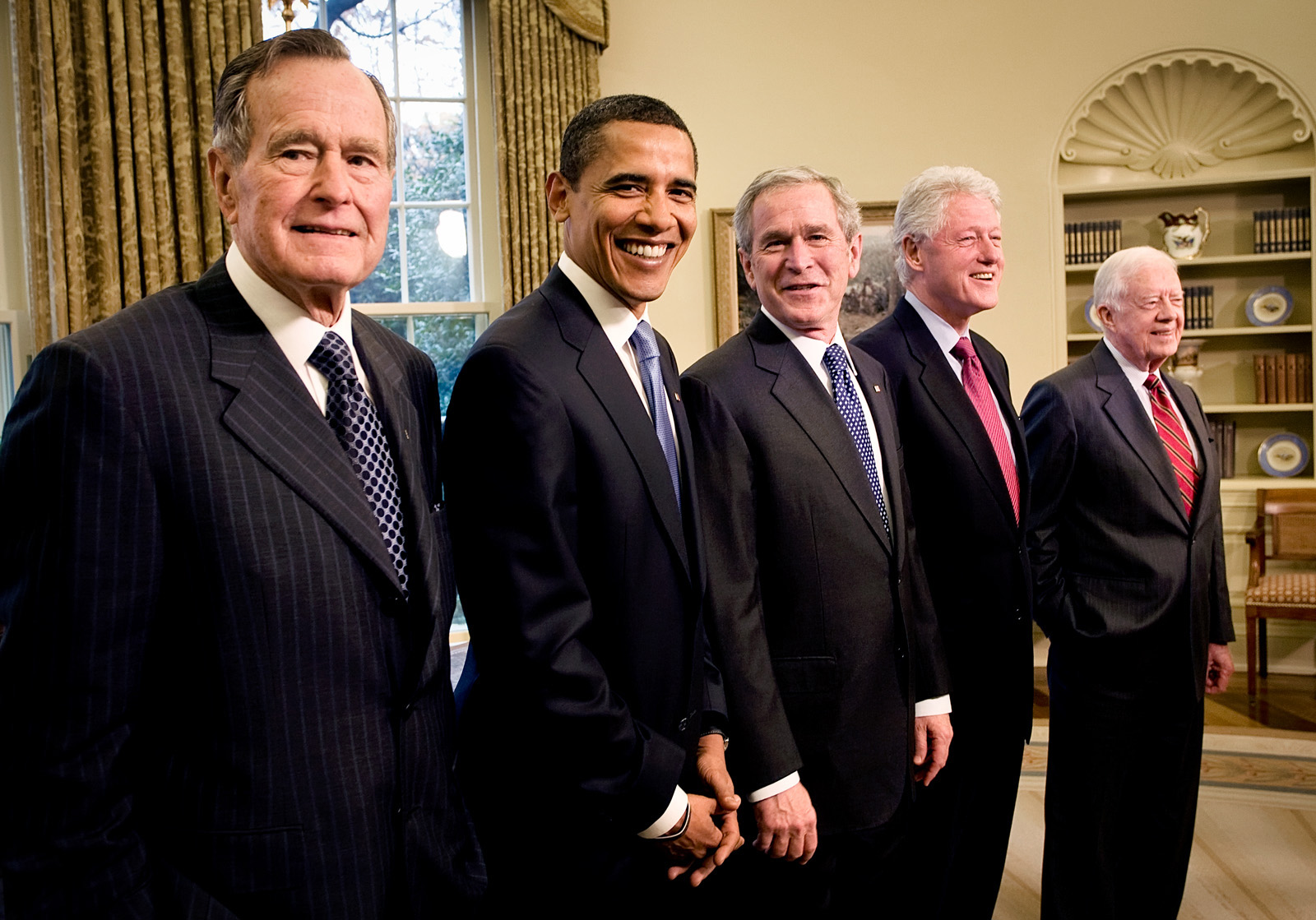
Former President George H.W. Bush, President-elect Barack Obama, President George W. Bush, former Presidents Bill Clinton and Jimmy Carter in the Oval Office at the White House, January 7, 2009. (Photo by David Hume Kennerly) Former President George H.W. Bush, President-elect Barack Obama, President George W. Bush, former Presidents Bill Clinton and Jimmy Carter in the Oval Office at the White House, January 7, 2009. (Photo by David Hume Kennerly)

Kennerly has photographed 10 American presidents, and covered 13 presidential campaigns. He was a contributing editor for Newsweek magazine for 10 years, and a contributing photographer for Time and Life magazines for more than 15. American Photo Magazine named Kennerly “One of the 100 Most Important People in Photography”.

In 2019, The University of Arizona Center for Creative Photography acquired the David Hume Kennerly Archive, which features almost one million images, prints, objects, memorabilia, correspondence and documents. University President Robert C. Robbins also appointed Kennerly the university’s first Presidential Scholar.

Muhammad Ali heads for the deck in the 15th round of his World Championship fight after taking a left hook from Joe Frazier at Madison Square Garden, March 8, 1971 in New York City. Frazier won the fight. This was one of Kennerly's Pulitzer Prize pictures. (Photo by David Hume Kennerly) Muhammad Ali heads for the deck in the 15th round of his World Championship fight after taking a left hook from Joe Frazier at Madison Square Garden, March 8, 1971 in New York City. Frazier won the fight. This was one of Kennerly’s Pulitzer Prize pictures. (Photo by David Hume Kennerly)

Kennerly has published several books of his work, Shooter, Photo Op, Seinoff: The Final Days of Seinfeld, Photo du Jour, Extraordinary Circumstances: The Presidency of Gerald R. Ford, and David Hume Kennerly On the iPhone. He was also a major contributor to the CNN 2016 book, Unprecedented: The Election that Changed Everything. His exclusive portrait of the new president is on the cover.

Kennerly was executive producer of The Spymasters, a 2015 CBS/Showtime documentary about the directors of the CIA. He also produced The Presidents’ Gatekeepers, a four-hour Discovery Channel film about White House chiefs of staff. Kennerly was nominated for a Primetime Emmy as executive producer of NBC’s, The Taking of Flight 847, and was the writer and executive producer of a two-hour NBC pilot filmed in Thailand, Shooter, starring Helen Hunt. Shooter was based on Kennerly’s Vietnam experiences, and won the Emmy Award for Outstanding Cinematography.

In 2015 Kennerly received the prestigious Lucie Award honouring the greatest achievement in photojournalism.

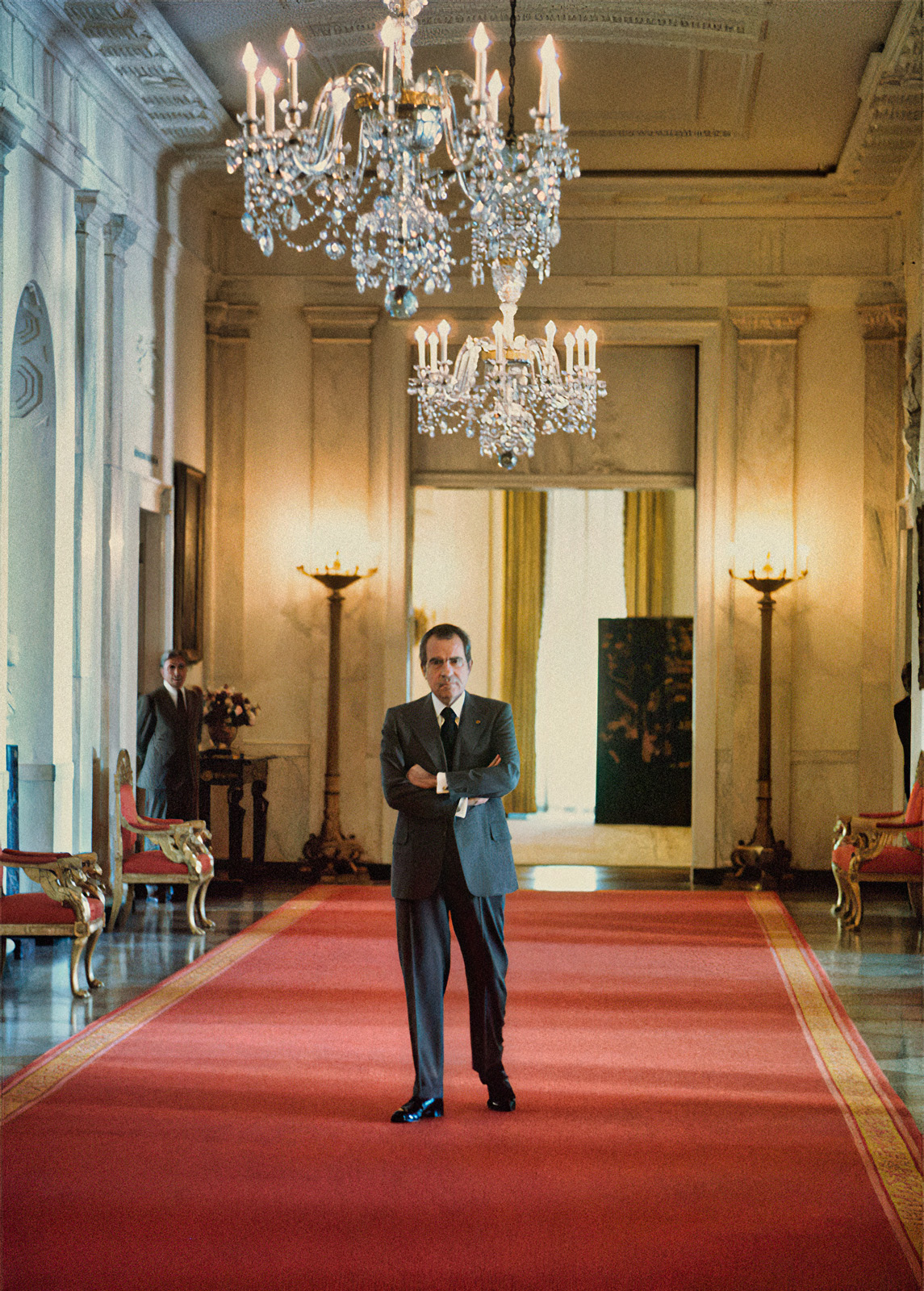
President Richard Nixon in the hallway of the White House in 1974. Nixon resigned the presidency August 9, 1974. (Photo by David Hume Kennerly) President Richard Nixon in the hallway of the White House in 1974. Nixon resigned the presidency August 9, 1974. (Photo by David Hume Kennerly)
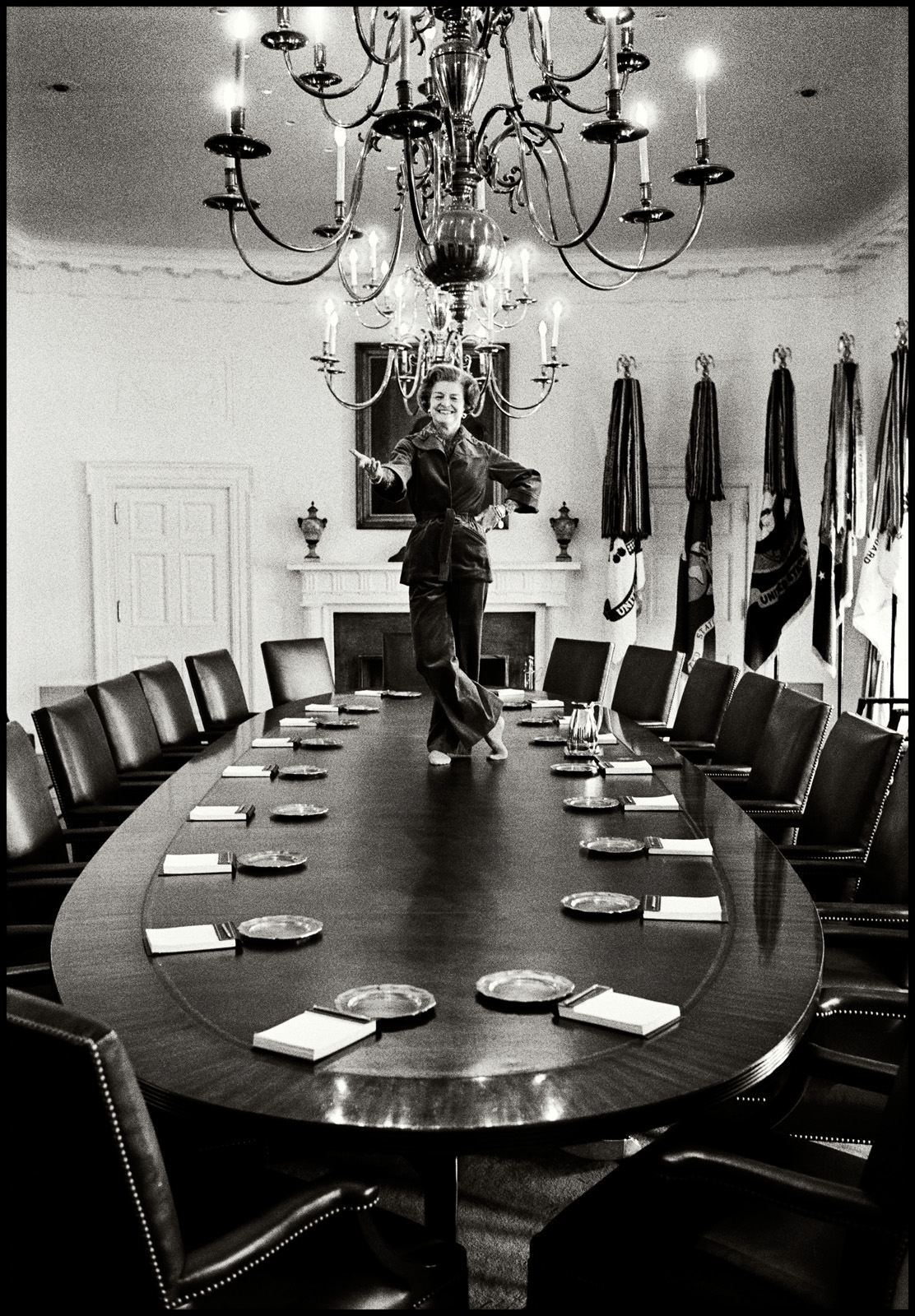
First Lady Betty Ford strikes a playful pose on the Cabinet Room table, January 19, 1977, the day before leaving the White House in Washington D.C. (Photo by David Hume Kennerly) First Lady Betty Ford strikes a playful pose on the Cabinet Room table, January 19, 1977, the day before leaving the White House in Washington D.C. (Photo by David Hume Kennerly)
China's Vice Premier Deng Xiaoping in The Great Hall of the People during a visit from US President Gerald R. Ford, December 1, 1975 in Peking, China. (Photo by David Hume Kennerly) China’s Vice Premier Deng Xiaoping in The Great Hall of the People during a visit from US President Gerald R. Ford, December 1, 1975 in Peking, China. (Photo by David Hume Kennerly)
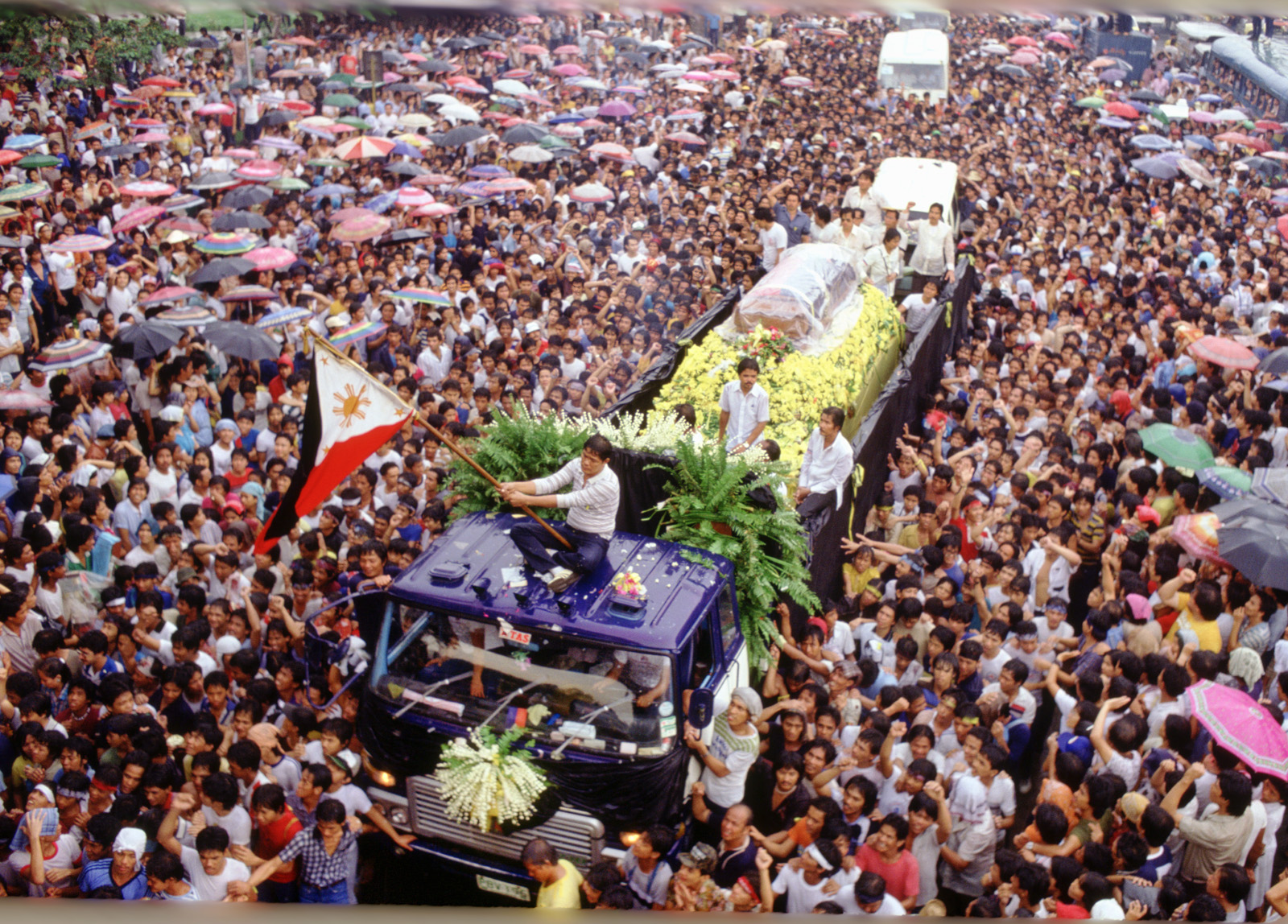
The funeral procession for slain political leader Benigno "Ninoy" Aquino Jr. makes its way through the streets of Manila in the Philippines, August 31, 1983. (Photo by David Hume Kennerly) The funeral procession for slain political leader Benigno “Ninoy” Aquino Jr. makes its way through the streets of Manila in the Philippines, August 31, 1983. (Photo by David Hume Kennerly)
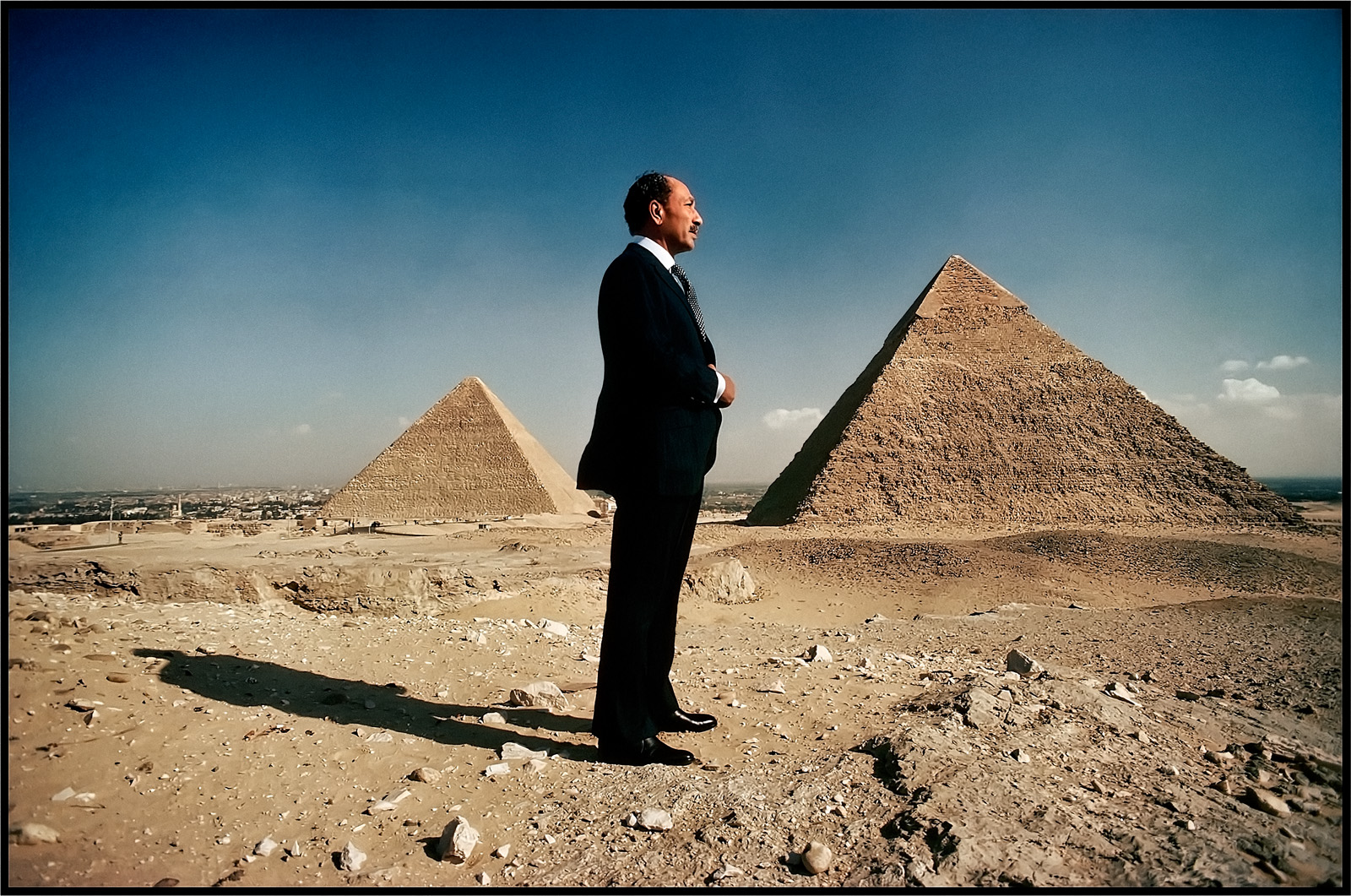
Egyptian President Anwar Sadat poses in front of the Pyramids of Giza in 1977 in Cairo for Time Magazine's Man of the Year issue. (Photo by David Hume Kennerly) Egyptian President Anwar Sadat poses in front of the Pyramids of Giza in 1977 in Cairo for Time Magazine’s Man of the Year issue. (Photo by David Hume Kennerly)
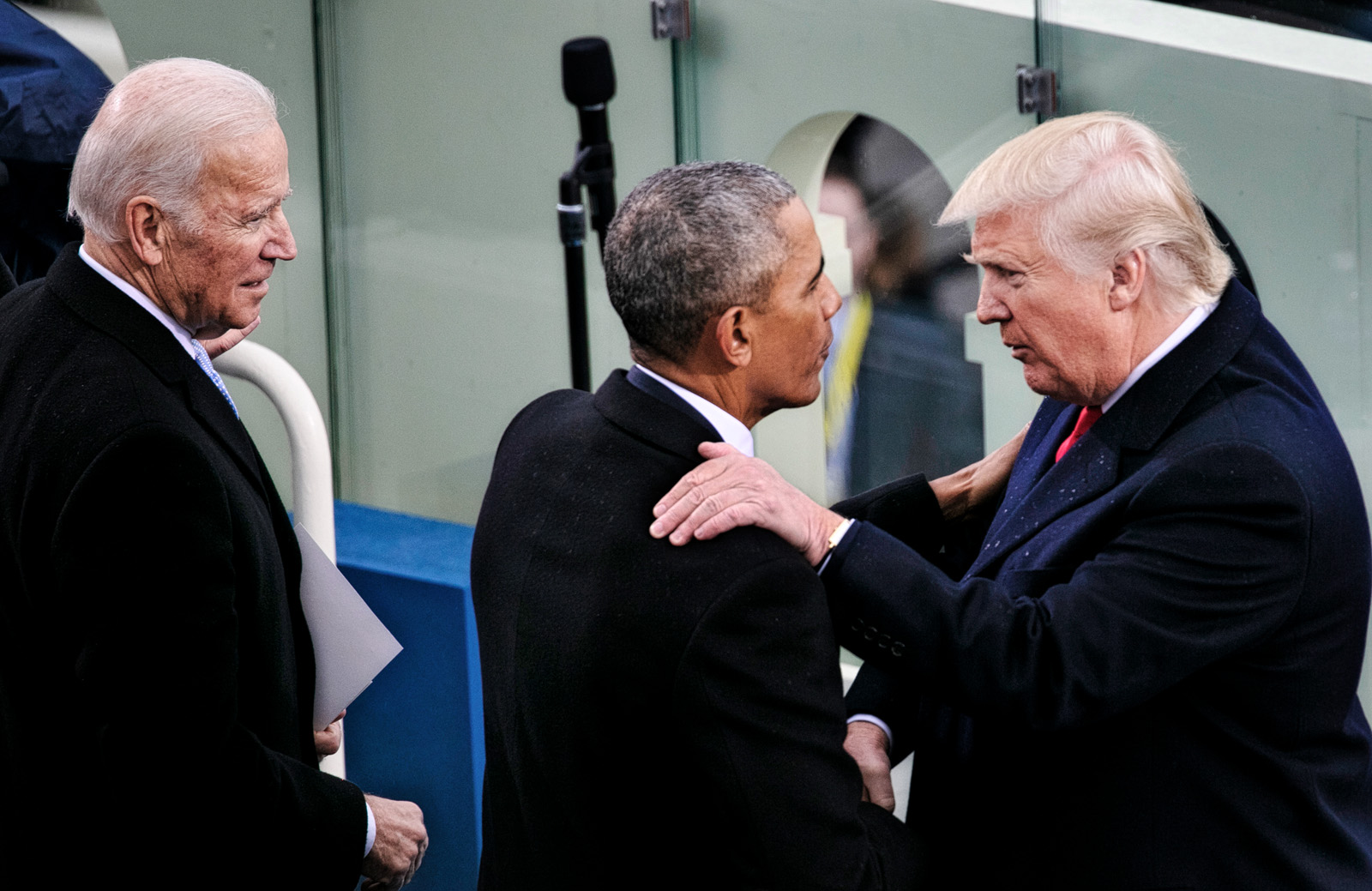
President Donald J. Trump greets former President Barack Obama immediately after being sworn in as the 45th President of the United States at the U.S. Capitol on January 20, 2017 in Washington DC. (Photo by David Hume Kennerly) President Donald J. Trump greets former President Barack Obama immediately after being sworn in as the 45th President of the United States at the U.S. Capitol on January 20, 2017 in Washington DC. (Photo by David Hume Kennerly)

Mind HK: The importance of giving unspeakable suffering an accurate voice

Mind HK held its Media Awards 2019 ceremony at the Club on January 14, an event postponed from November due to protest activity. The awards, in their second year, were launched to “celebrate the best portrayals of mental health in the media”. Sue Brattle reports.


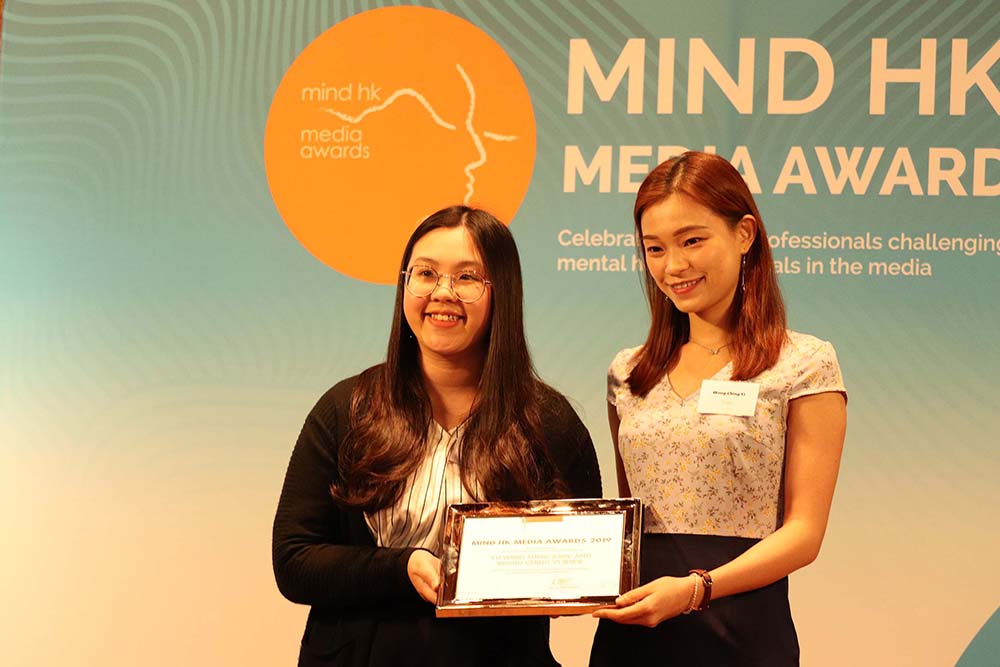
Student Journalist runners-up Yu Wing Tung (left) and Wong Ching Yi Student Journalist runners-up Yu Wing Tung (left) and Wong Ching Yi

You could hear a pin drop as speakers told their personal stories to a packed Main Dining Room at the Mind HK Media Awards 2019 ceremony. The authentic voices of people either suffering from mental health issues, or from watching a loved one suffer, were almost unbearable to hear. But such stories, and the accurate telling of them, were the reason so many people had gathered at the Club.

Dr Hannah Reidy, CEO of Mind HK, said: “The stigma here is huge; we found that 60 per cent of people we asked believe it is easy to tell mental health sufferers apart from the population.”

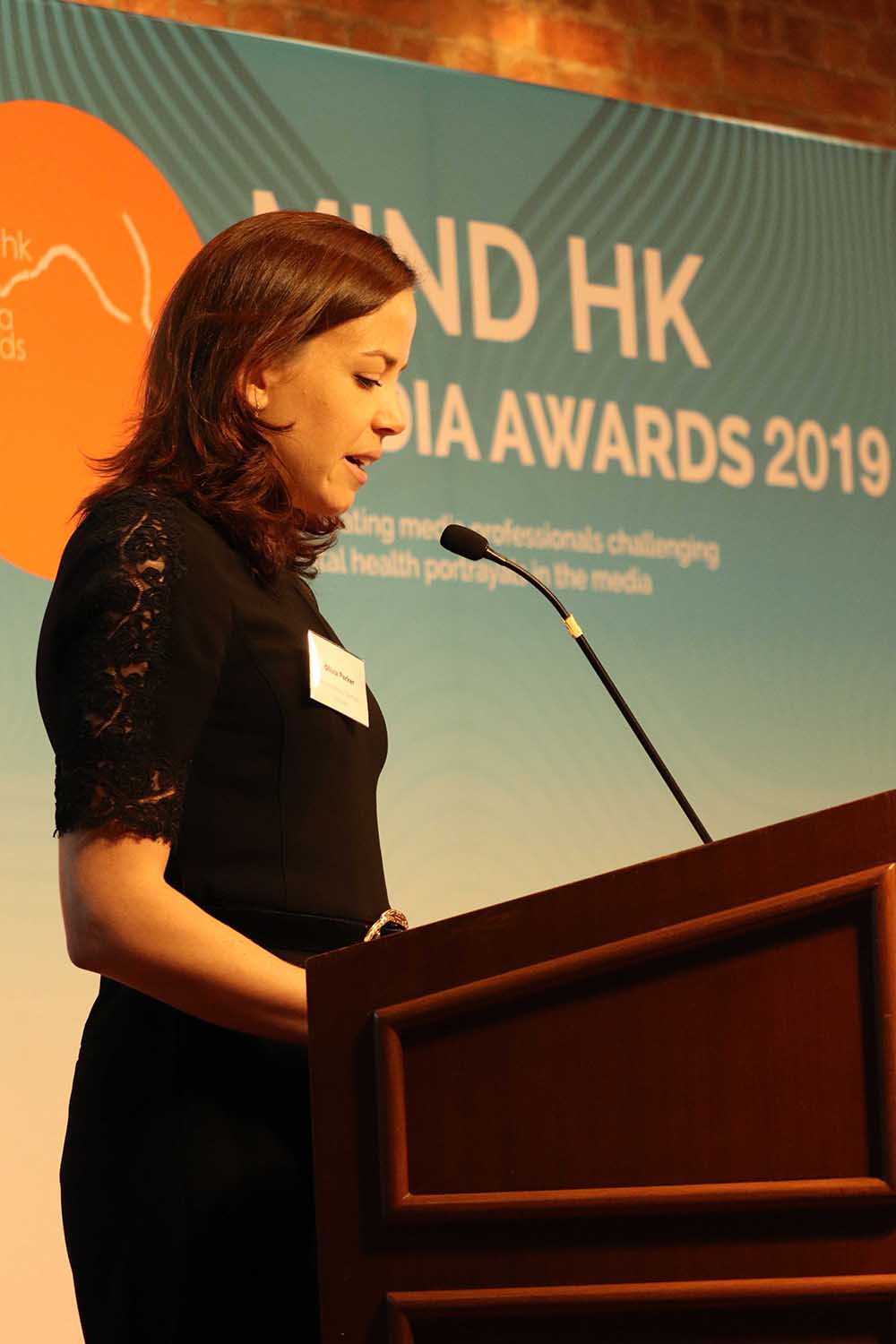
Olivia Parker Olivia Parker

Dr Reidy had good news and bad news. Mind HK has trained more than 2,000 people in Hong Kong in mental health awareness, but people diagnosed with a mental health illness are waiting up to three years for a follow-up appointment with a professional.

The 2019 awards attracted more than 100 submissions, and 13 judges weighed each entry against three key criteria: it challenged perceptions of mental health; it was well-crafted and responsibly produced; and its reach and impact.

The awards spanned print, digital and broadcast in both English-language and Chinese media and covered the 12-month period from July 2018 to June 2019. The judging panel included Chris Yeung, chair of the Hong Kong Journalists Association, Candice Ling, clinical psychologist at New Life Psychiatric Rehabilitation Association, and Paul Yip, director of the Centre for Suicide Research and Prevention.

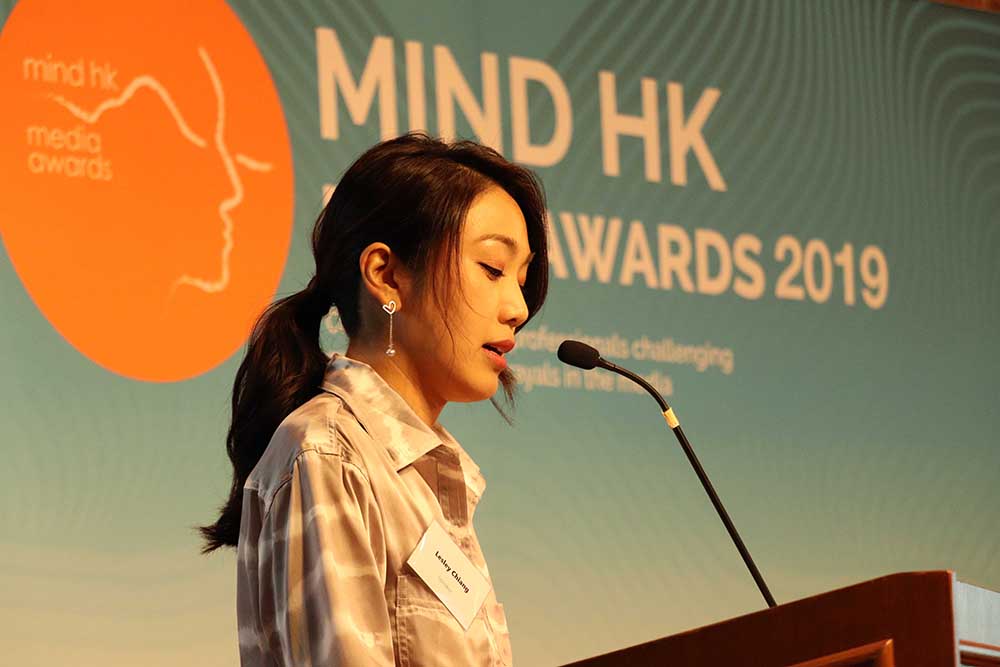
Lesley Chiang Lesley Chiang

The English-language Journalist Award went to FCC member Kate Whitehead, for Back from the Brink and Playing with Fire published in the South China Morning Post. Kate said later: “I was raised in Hong Kong. As a 17-year-old student at German Swiss International School, I lost my best friend to suicide. In those days, there was little understanding about mental health issues or support for young people. According to the World Health Organisation, one in four people will be affected by a mental health issue at some point in their lives. This club has about 2,500 members, which means that roughly 625 members will experience a mental health issue at some point in their lives. If that isn’t you, then it’s more than likely to be someone close to you.
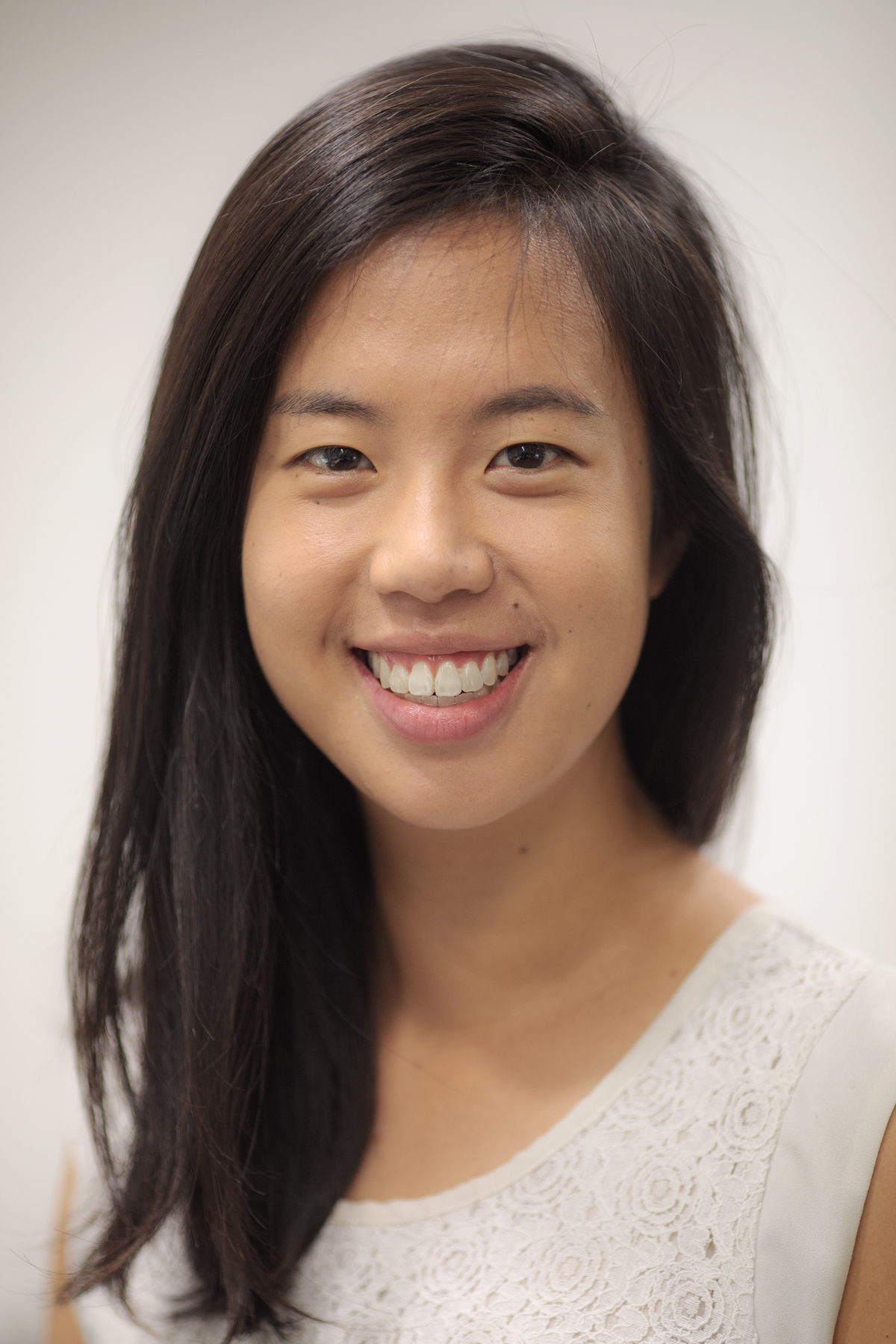
“I’d like to give a big shout out to the editors who commission the journalists. So, a special thanks to the SCMP’s health editor Cathy Hilborn Feng, who allows journalists such as myself and fellow Club member Nan-Hie In to write these stories.”

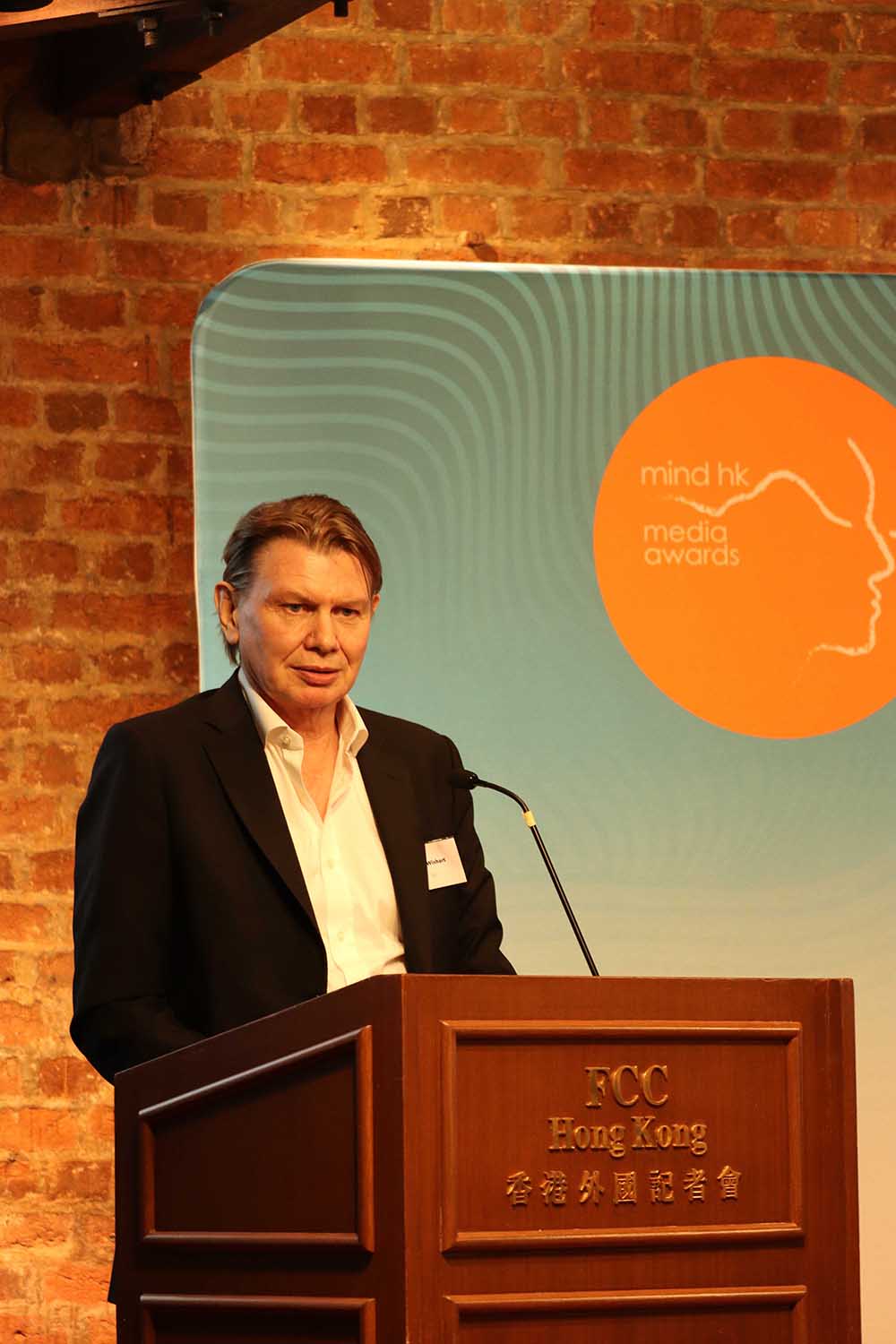
Host Eric Wishart Host Eric Wishart

During the evening, hosted by FCC Vice-President Eric Wishart, actress, singer-songwriter and mental health activist Lesley Chiang spoke movingly of her battle with severe depression, anxiety and panic attacks. Chiang, who two weeks later announced her marriage to engineer Pak-ho, said that after breaking up with her previous boyfriend “every single day my brain told me I was a burden”. She said: “When you are depressed you are not your own person. So I named my depression ‘Borat’.”

FCC member and Mind HK board member Olivia Parker related the deeply personal tragedy of her late boyfriend, underlining the importance of sensitive and informed reporting around mental health.

Search for final resting place for U.S. photojournalists killed in Vietnam
When a helicopter was shot down over Laos in 1971, four respected photojournalists and seven others on board were killed. Their remains were eventually interred in a U.S. museum. But now the museum has been shut down, and the search for a new resting place is underway. Rob Gerhardt reports
February 10, 1971 was a dark day for journalism. On that fateful day, photojournalists Larry Burrows of Life magazine, Henri Huet of AP, Kent Potter of UPI and Keisaburo Shimamoto of Newsweek were killed when the helicopter they were riding in was shot down in the skies over Laos. They were all covering the opening moves of Operation Lam Son 719 in the Vietnam War. Their deaths sent shockwaves through the Press Corps in Vietnam, and stunned those who knew them.

Larry Burrows of Life magazine Larry Burrows of Life magazine

While they were the most well-known occupants, the group on the helicopter that day numbered 11 people. Along with Burrows, Huet, Potter and Shimamoto, were South Vietnamese Combat Photographer Sgt. Tu Vu, two senior officers, and the four crew members of the helicopter.

The site of the crash was first discovered in 1996, and in 1998 the site was excavated by the U.S. Joint Task Force – Full Accounting, now part of the Defense POW/MIA Accounting Agency (DPAA). After attempts to bury them in other places failed, the few remains that were recovered were entombed in a small box under a plaque in the Newseum in Washington D.C. in 2008.

Their final resting place would be the museum’s memorial to fallen journalists and was one of the centerpieces of the museum as a whole.

Or, at least it was.

With the closing of the Newseum on December 31, Burrows, Huet, Potter, Shimamoto and the others are once again searching for a permanent resting place. On January 14 their remains were disinterred from the Newseum and returned to DPAA custody till a new resting place can be found.

Financial troubles forced the Newseum in Washington D.C. to shut on December 31 Financial troubles forced the Newseum in Washington D.C. to shut on December 31

For years the museum had not enjoyed a solid financial footing, having spent $450 million (approx. HK$3.5 trillion) to build its home in Washington D.C. Surrounded by the various Smithsonian museums that charge nothing to get in, the Newseum charged a $25 (HK$194) entrance fee. And even though it drew roughly 800,000 visitors a year, it was not enough to keep the museum afloat. The building has been sold to Johns Hopkins University to be used for D.C.-based graduate programmes.

While the rest of the museum’s holdings are being put into storage or returned to their owners, the remains are now homeless. Russell Burrows, Burrows’s son, said that he was not sure what would happen next, but he is working on it. “Because next February will be the 50th anniversary of the shooting down, I’m treating that as a deadline to come up with a plan to satisfy the families,” he told me.

“Bayeux (France), London, somewhere in Vietnam, Washington, Southern California and Texas have all been raised. Personally, I lean towards another Washington location, but even if the memorial site there, now being discussed, is approved, its completion is years away. When the artefacts were recovered from Laos, we had good information about the foreign journalists, and over the past 10 years we have come to know the Vietnamese families, too.”

At the Journalists’ Memorial in the Newseum on January 14 when the remains were disinterred. Russell Burrows is far right. Photograph: Thanks to Michael Putzel At the Journalists’ Memorial in the Newseum on January 14 when the remains were
disinterred. Russell Burrows is far right. Photograph: Thanks to Michael Putzel

Russell does not believe there will be any DNA testing to further identify the remains that were found. “I don’t believe there will be DNA tests, the necessary level of sophistication wasn’t available in the late ‘90s at the time of the recovery, but the military closed the case based on strong circumstantial evidence. It was a group identification, and there has been no effort to reopen the case to look at the small quantity of human remains.”

The four photojournalists were by no means the first to die covering the Vietnam War. They were all aware of the danger they faced in covering combat and had become familiar with witnessing death. One of Huet’s most famous photographs from the war was a photograph of photojournalist Dickey Chapelle being given last rites by a chaplain after she was mortally wounded by a booby trap. Burrows’s harrowing photo series for Life, One
Ride
with Yankee Papa
13
, showed how the death of a friend in combat can break down even the strongest soldier. Several of his photos are on display in the FCC’s Bunker.

For now, the small capsule containing the remains of the passengers on one ill-fated helicopter in 1971 will stay in the care of the DPAA and held at its laboratory at Offutt Air Force Base in Nebraska. They are a long way from the mountainside in Laos, but they are still far from finding a home.

A BIRTHDAY FORAY INTO COMBAT

Photographer and long-time FCC member Robin Moyer remembers Larry Burrows well. He said: “Larry showed me how to use my first real camera, a Japanese Beauty Super II. That was in 1963 at his home on Headland Road, Repulse Bay, Hong Kong. On May 11, 1970 on my 25th birthday and my first foray into combat, I was on a helicopter headed from Saigon to the Cambodian border with Larry and John Saar from Life (and Kioichi Sawada of AP who was later killed by the Khmer Rouge in Cambodia, October 28, 1970). Here’s a photo of that flight as we pass the Black Virgin Mountain near Tay Ninh. I had a couple of dinners later with Larry in Saigon but was never in the field with him again.”

Photo: Robin Moyer Photo: Robin Moyer

Rob Gerhardt is an absent Club member and a freelance photographer based in New York


We measure site performance with cookies to improve performance.