The Correspondent invited reporters and photographers to have their say about witnessing months of protests in Hong Kong. Only one person declined, with a good reason. He told me his continuous 18-hour days left him no time for reflection. Others replied in their own individual way, with stories of injury, exhaustion, conflicted emotions and obvious career opportunities. Some stories are moving, some are troubling, and they are all enlightening. I thank everyone for their contribution and hope you stay safe however this story unfolds. – Sue Brattle, Editor.
Lessons learned will never be forgotten
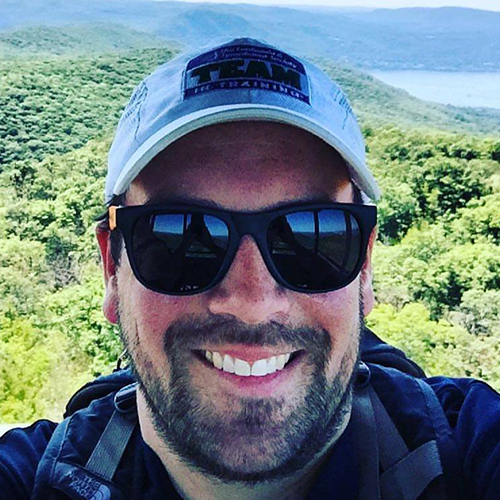
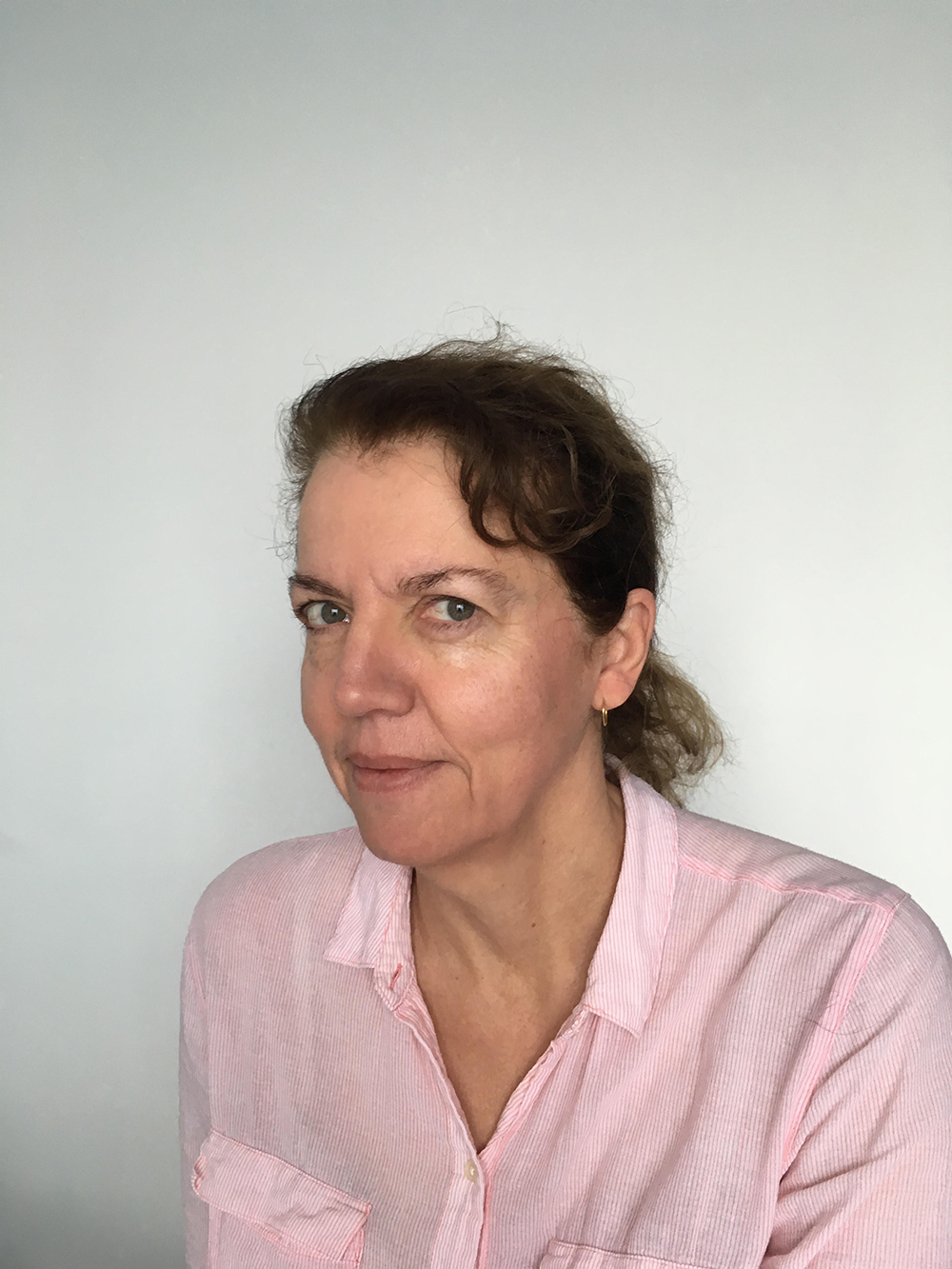
by Abhishyant Kidangoor is Associate Video Producer at TIME magazine, Hong Kong
When I look back on the past few months, two moments stand out to me. One was when I realised the gravity of the story that I had the chance to cover, and another that changed my perspective and helped me learn an important lesson in journalism.
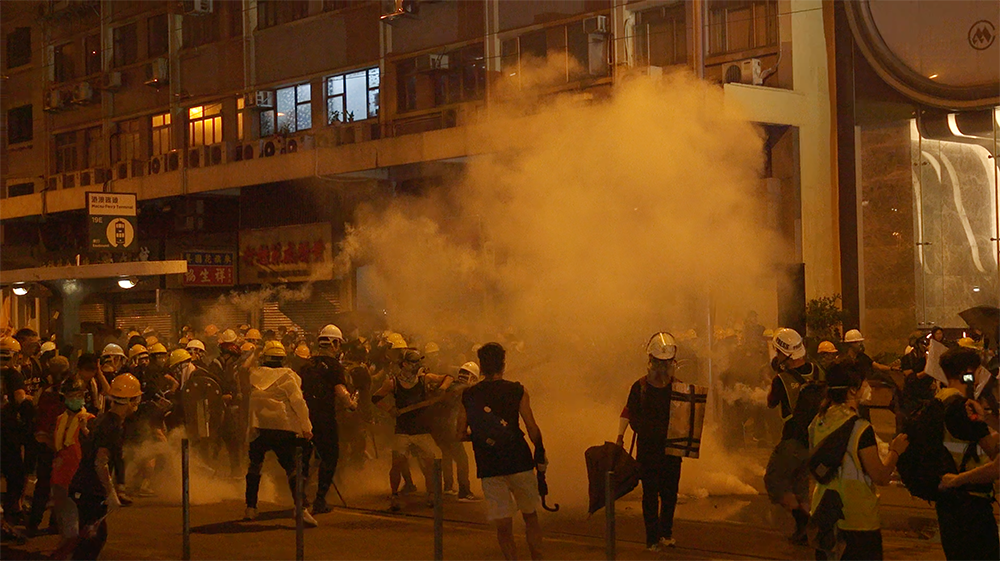
Protests in Sheung Wan on July 21.
The first three weeks of covering the story as a video journalist were thrilling, as it would have been for any journalist with just a few years of work experience. It was on June 21, when protesters laid siege to the police headquarters in Wan Chai, that I realised the enormity of the issue. Standing by the HQ and observing the sea of protesters singing, chanting slogans and waving their cellphone lights was as surreal as it could get. For me, it was the first of many instances where I realised that this wasn’t going to be a short-lived problem.
In the weeks that followed, incessant calls from friends and family were dismissed as paranoia. After all, what more could a journalist ask for than to be in the middle of one of the biggest international stories of the year?
But reality hit hard exactly a month after. It turned personal when protests came closer to where I live. Tear gas and petrol bombs were being fired right at my doorstep. Earlier, I could go back home after a day of covering the protests; now I could see the city descend into chaos right from my rooftop. Walking past graffiti sprayed by protesters and seeing police vans pulling up right outside my building was an eye-opening experience that pulled me out of my journalist bubble.
I moved here for work and can flee to the safety of my home country whenever I wish. But for thousands of others, fighting on both sides, this is the home that they love. It opened my eyes to the fact that I have never had to fight for my home. For me, the Hong Kong protests is a story and I get the chance to move on to the next assignment. But for many others, it’s the uncertain future of their home and life. The empathy that I developed out of this realisation has been the most invaluable experience in my short career as a journalist.
When your home becomes a conflict zone
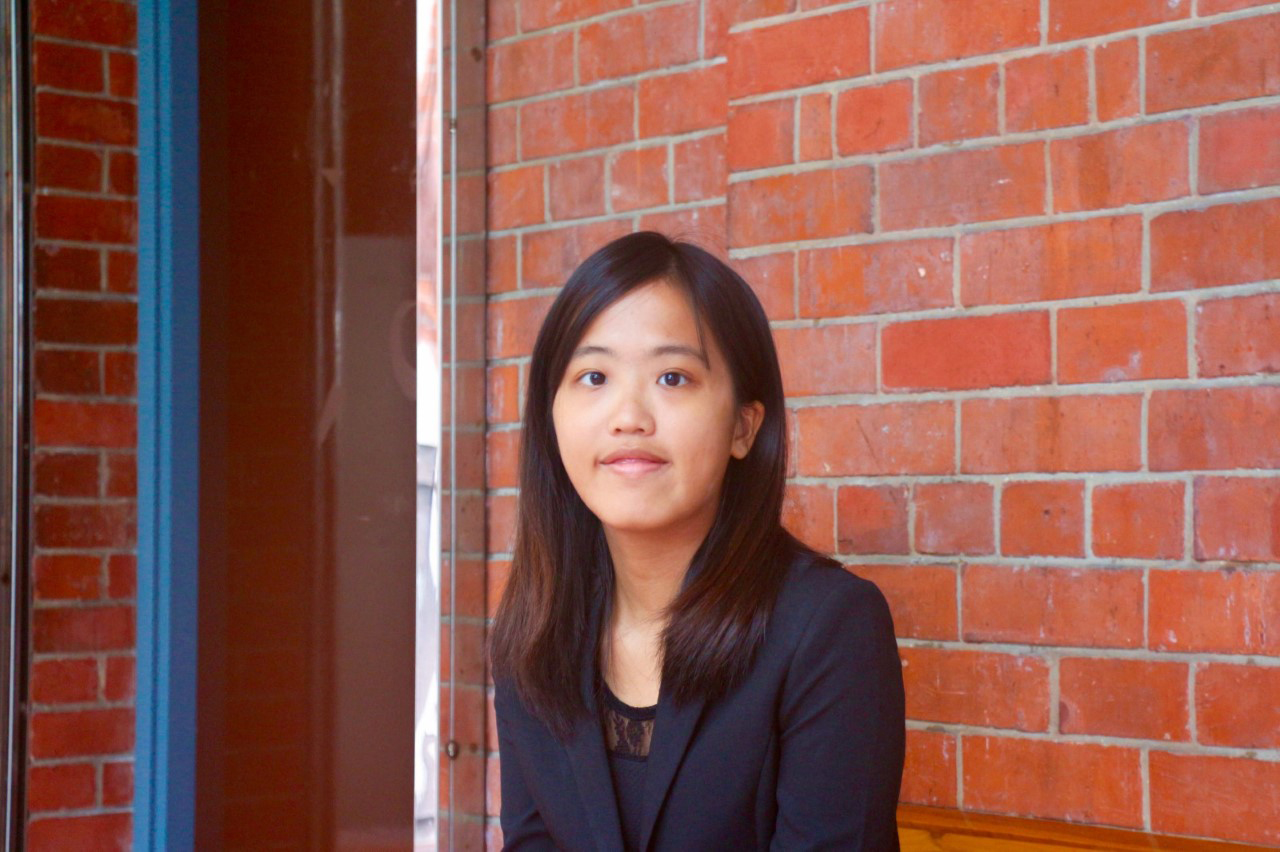
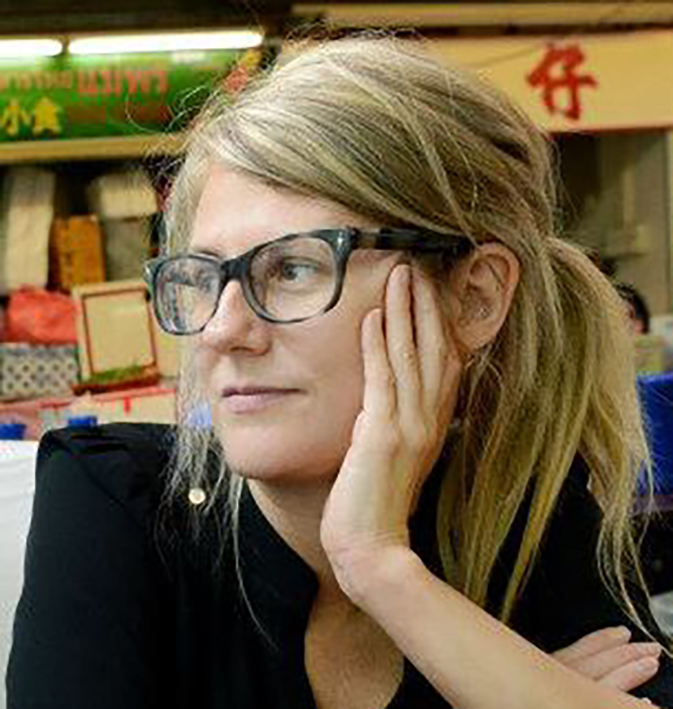
by Jessie Pang, Correspondent, Reuters, and FCC Clare Hollingworth Fellow
I aspired to be a foreign war correspondent, but then my home became a conflict zone. As I covered the upheaval this year, I struggled with what it means to be a reporter and a Hongkonger at the same time. With one eye, I see things as a journalist; dispassionate, concerned only with facts. Yet with the other eye, I see things as a Hongkonger, torn with raw emotion as I see my people suffer.
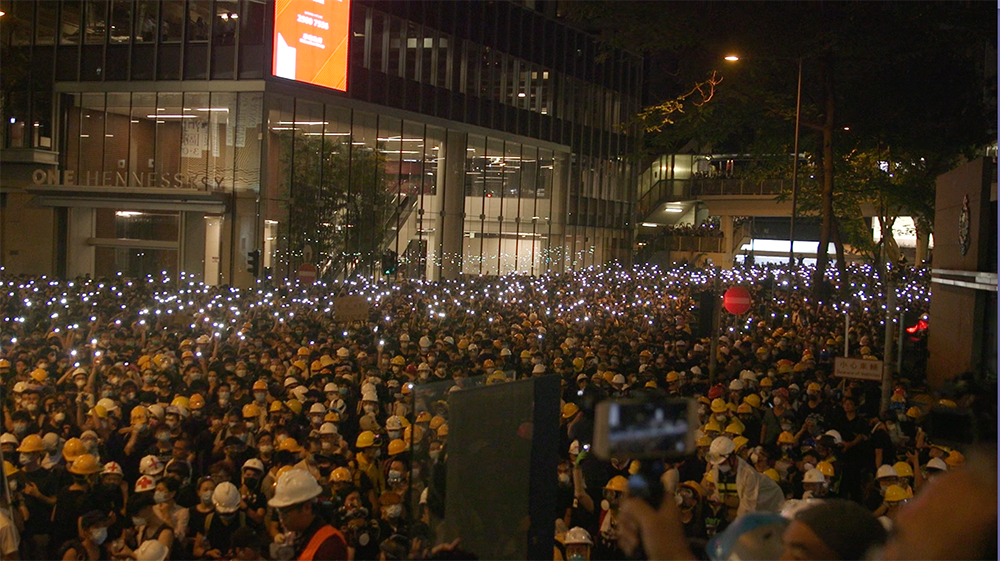
26 June Wan Chai PHQ Siege
Reconciling these two personas sometimes feels like denying myself an identity, but things move fast and I have to keep the film rolling. The news isn’t about me, and it’s not my place to decide Hong Kong’s political fate nor to make a judgment. My job isn’t to stir action in a certain direction or to slander those who I believe are wrong.
 No, my job is to expose and to pursue the truth impartially. To show the world the complexities and beauty of our city, from all sides. The streets aren’t filled with enemies, yellow or otherwise, nor objects to be beaten or treated as targets of hate, but humans deserving of protections, rights, prosperity and love.
Because behind every face there is a human being with a story. And it is my calling to pierce the veil and tell a story, their story, and let them say: “I am human and this is the world as I see it.”
‘I returned home safe to my wife’
by Phila Siu Chi-yui, Senior Reporter, South China Morning Post. Phila’s wife gave birth to a “beautiful daughter” a few days before he wrote this very moving reflection.
My heavily pregnant wife broke down in tears when she saw me packing my full-face mask, helmet and press vest into my backpack one day in July before I headed out the door. I was about to cover a protest.
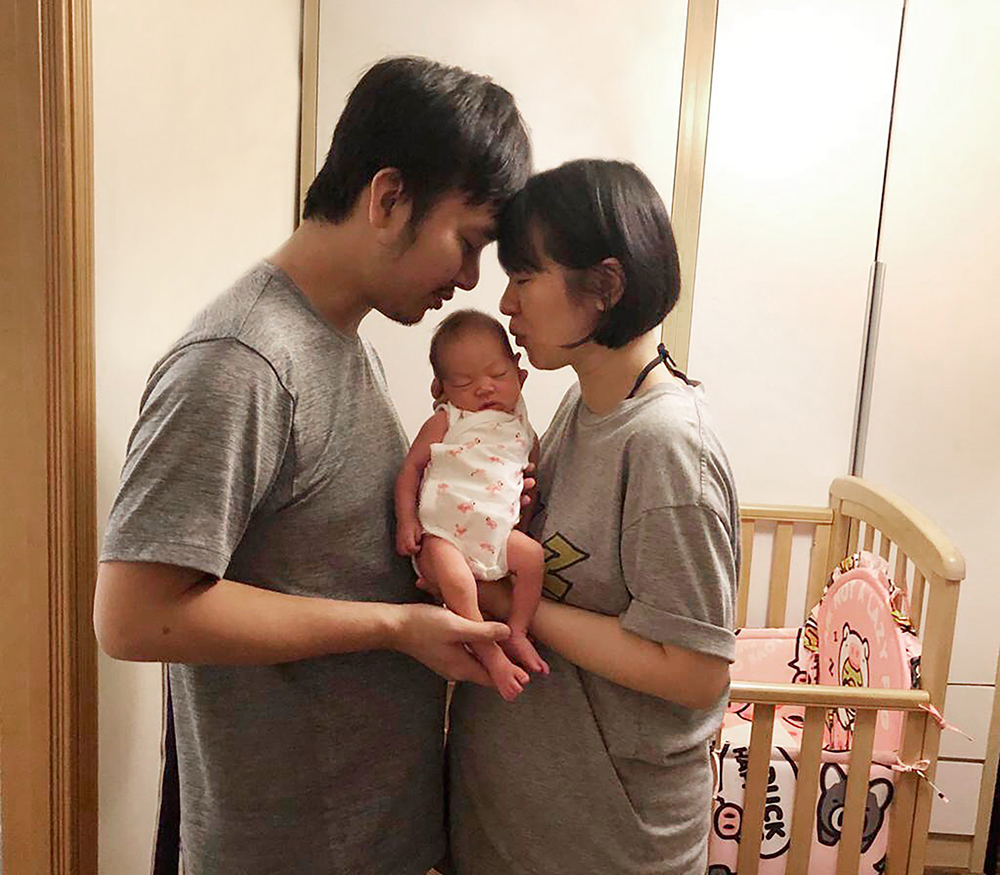
New father: Phila with his wife Kanas Chiu and daughter
“Why do you have to carry this gear with you every day?” she asked me, her right hand holding her belly. I tried to comfort her. I promised her I would return home safe and that she had to eat her meals so our daughter would be born healthy and strong. I do not remember if I cried with her at that time, but I had done so numerous times before that, for all the stunningly shocking events that have taken place since June.
As promised, I returned home safe to my wife that day, as I did every other time I was sent out onto the tear gas-filled streets to report on the biggest crisis I have ever witnessed in my home, Hong Kong.
I have been a journalist for about 10 years. I hardly consider myself a veteran, but I thought I had already seen much in my career and I had covered the Occupy protests of 2014. Back then, an editor told me that I must treasure every chance I had covering the movement, as that might be the biggest news we would ever report on in Hong Kong.
We were all wrong.
And so, there I was, out on the streets, with police firing tear gas, rubber bullets and beanbag rounds on one side, and protesters throwing petrol bombs and bricks on the other. My wife, meanwhile, was sitting on our sofa at home, wondering whether her husband would emerge from it all unscathed. Whenever I had a chance, I would text or call her to tell her I was fine. She stayed up to wait for me, no matter how late I got home.
During these past months, I must confess there were times I wondered about my job, being out there on the streets. I saw people getting beaten up and my first instinct was to take photos and videos, instead of separating them. Minutes later, I would send information back to the newsroom for the live blog we were running for our readers around the world, and move on to the next scene.
One day, when I was covering a protest in North Point, three anti-protest men were spotted on a slope holding knives. Some residents warned everyone not to get close but our first reaction as journalists was to rush up to take photos. We took a few steps forward and they kicked two cans of suspected petrol on the ground.
When the police finally took the thugs into their vehicle, the realisation of the purpose of my job hit me: I was there to make sure the “first draft of history” was accurate, and that the whole world understood what was happening in Hong Kong. While I might not be able to stop a disaster from happening at the scene, journalism does not stop me from doing something human, from communicating to others the facts on the ground.
That night, I moved on to Yuen Long and got home just past midnight. My wife was waiting. I took a shower and soaked my clothes and protective gear in disinfectant. I knocked on our bedroom door and told her she could finally come out to the living room to give me a hug. She came out with a ready smile on her face. It was at that moment that I knew, I just knew, there was nowhere else like home.
‘We’re watching, whether the whole world is watching or not’
by Selma Masood, Principal of SM & Co Solicitors and a convenor for HKNLOG
The city I have called home for the past 41 years, and the city I love, seems somewhat distorted at the moment – a little less focused, a bit lost in time.
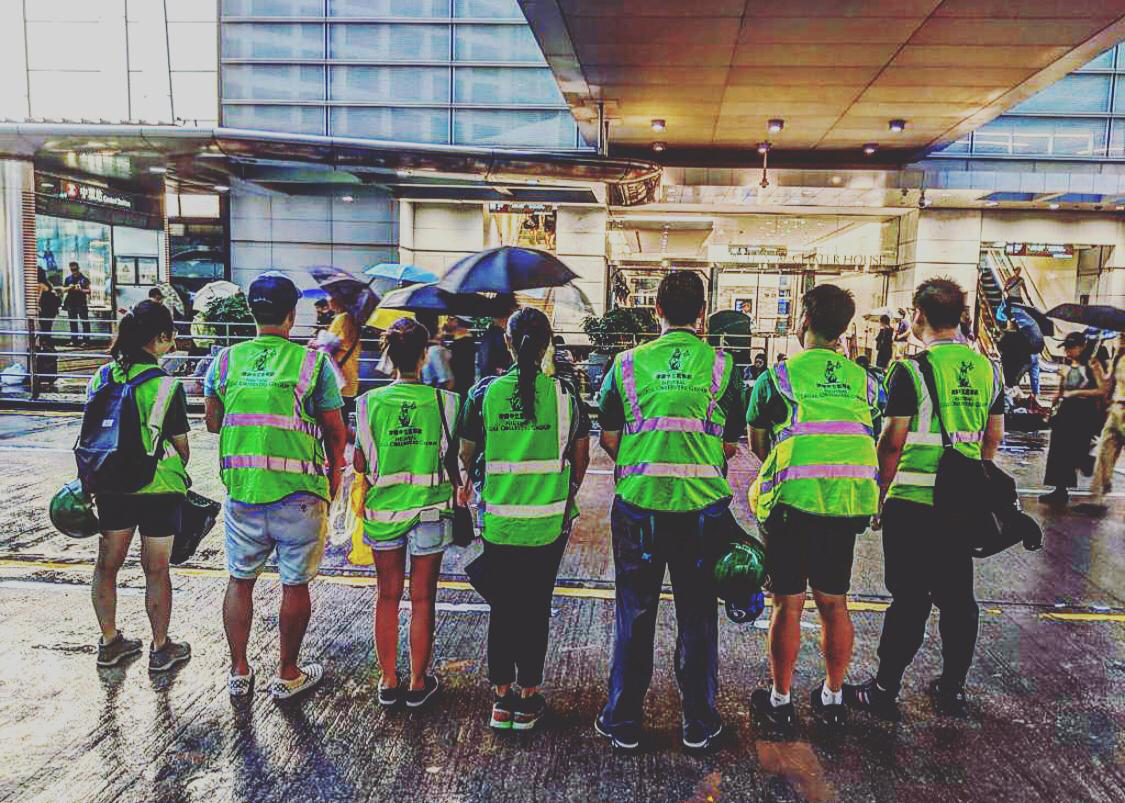
Lawyers in green high-visibility vests observe a march
Recent incidents during the demonstrations and other related public gatherings in Hong Kong have raised questions about the city’s rule of law, the enforcement of the law and the administration of justice. The most popular option for combating the political apocalypse appears to be griping about it on social media to other people who already feel the same way.
But it struck me that we, as lawyers, might have more to offer. So I, together with a group of senior Hong Kong Lawyers, formed the Hong Kong Neutral Legal Observers Group (HKNLOG) to try and observe what is really happening.
It might seem unnecessary in the days of smartphone cameras but that second set of eyes serving as a witness, acting as a neutral party, may be comforting to those on the ground.

Selma Masood
I have attended most, if not all the public gatherings over the summer. Being present in the front lines means some risk of being subjected to tear gas and pepper spray. I attend protests clad in my green high visibility vest, hard hat, goggles and gas mask, armed with a notepad, camera and smartphone to document what happens between protesters and the police.
I believe that legal observers provide a calming effect for both sides. Everyone knows there’s someone there watching as a neutral force and it is a good presence to have at a protest.
Protests have been largely peaceful, although they have escalated quite dramatically which is a cause for concern and leaves me anxious. Some of the issues I have observed relate to criminal damage and vandalism, potential interference with constitutional rights of public assembly, and the widespread use of stop and search.
I have also observed the throwing of objects, setting of fires and the deployment of water cannon vehicles. I have witnessed physical violence and the use of excessive force, coming from both sides of the political spectrum, as well as the use of force against the public.
What has moved me the most over the past months is the resilience of the Hong Kong people, from all walks of life, from all professions and of all ages. Hongkongers are truly creative – where else in the world would you see flashmob singalongs, laser pen shows, human chains, online crowd-funding campaigns, Lennon walls, 10pm chantings, mooncakes sporting popular protest slogans on their crusts, protest art, flags and the “be water” slogan?
I hope the picture of this magnificent city becomes re-focused. I miss the city of lights, the entrepreneurial energy that makes Hong Kong so special. I’m confident we’ll find our way. If any city has the capability to rebound, Hong Kong can.
Calming influence of neutral lawyers standing by
The Hong Kong Neutral Legal Observers Group (HKNLOG) was formed in early August. The founding members felt there was a need for neutral observers to attend public gatherings to observe what was happening and to help maintain the rule of law in Hong Kong.
HKNLOG is a politically neutral organization, whose membership is open to all members of the Hong Kong legal profession regardless of their political inclinations or affiliations, subject to agreement that when they represent HKNLOG they remain neutral and impartial. It takes no position on the “five demands” and instead aims to look at events through a legal, rather than political, lens. It currently has around 50 members, including partners of international and local law firms, junior and senior counsel, and in-house lawyers in companies and financial institutions.
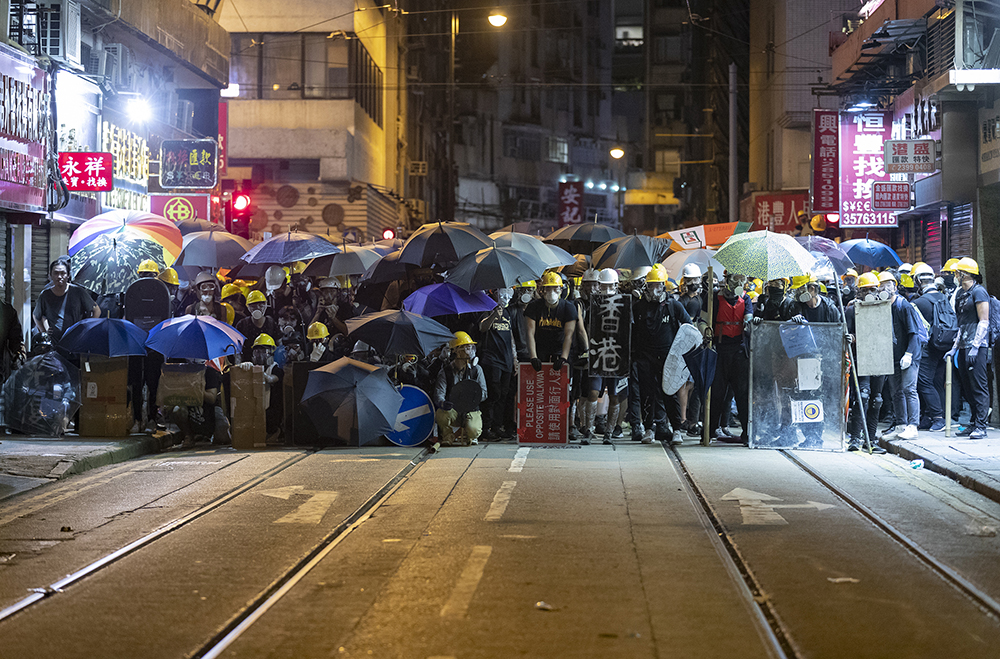
Anti-extradition demonstration on July 28, 2019, Hong Kong. Photo: May James
In relation to the rule of law, HKNLOG is not neutral, and considers it has an obligation to promote and uphold the rule of law. Its members observe and record what they see and in particular any potential infringements of law, in order to gain a balanced perspective of what is taking place in Hong Kong.
These observations then form the basis for free seminars to educate members of the public on their legal rights and obligations and for periodic public reports on what the group is observing and related legal issues. HKNLOG plans to issue the first of its public reports shortly. It also hopes that the presence of lawyers might serve as a reminder of how important it is for both sides to respect the law and the rule of law.
*Further information about HKNLOG is available at www.facebook.com/legalobservers/ or email: [email protected]
‘I want to be candid about how we’re all feeling’
Christy Choi is a freelance executive producer and presenter with Reuters. She has covered the protests for The Guardian and The Telegraph, and has also worked with Bloomberg, the SCMP, the LA Times and German wire service dpa
Twelve to 14-hour days. Fifteen weekends of work. Tear gas, rubber bullets, smashed glass, burning barricades, people beaten and people beating. Group chats, live streams, witnessing in person, Twitter, Facebook, Instagram, Telegram, LIHKG, email, conversations with friends, family, strangers. There’s a toll from this bombardment.
I’ve been watching the press corps fray at the edges for weeks now, everyone struggling to keep up with the news as the protesters “be water”, deluged under the sheer amount of information and misinformation being peddled out there, unable to switch off from the traumatic scenes, but also spurred on by some beautiful hopeful moments.
But how much can we do if we burn out? What do we do when our fight or flight responses are so constantly switched on in a form of PTSD that we see threats everywhere? Can we really make good judgment calls in the middle of all this?
And yet this is something that we confess rarely. Sometimes I get messages, calls, whispers asking: “How do you do it so effortlessly, how are you so tireless, and bold?”
I don’t, and I’m not.
It seems effortless when all you see is the result. I don’t seem tired, because when you see my bylines you’re not seeing the bags under my eyes, feeling the tension in my muscles, listening to the stream of information going through my head. I seem fearless, because calm is how I react in an emergency. Super-calm under pressure, my instinct is to snap into problem-solving mode, but I inevitably pay for it weeks later when I get run down and sick, and I don’t realise the pressure has reached an unsustainable level.
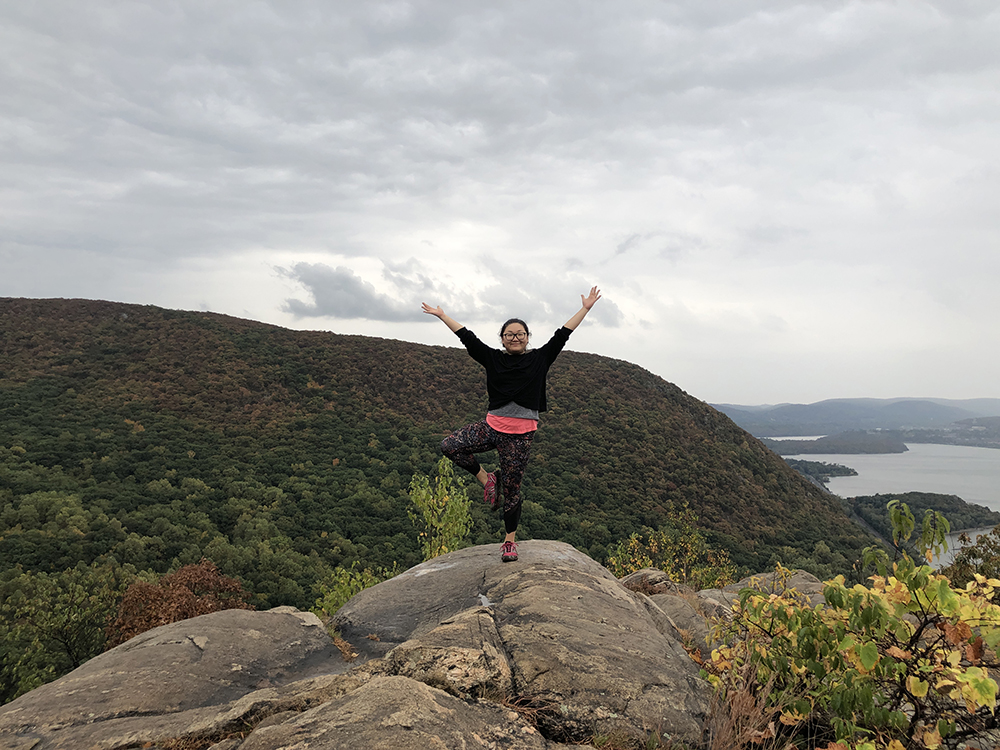
Christy Choi says ‘right now I’m glad to be on vacation’
I want to address this, to be candid about how we’re all feeling:
We are not tireless, what we do is not effortless, and we are scared. We’re human.
We need to have time with our loved ones, we need to have moments when we feel safe, when we’re allowed to switch off.
I haven’t been able to do that enough for four months and I feel the toll. I’m cranky, I feel like I’m being a bad friend, a bad daughter, and at times even a bad journalist, because I don’t feel as sharp as I should be and am normally.

Christy Choi
I feel like I’m often reacting, and that all I want is to be able to step back and take a long hard look at what’s going on.
And so right now I’m glad to be on vacation. It’s only now in New York that I finally feel able to switch off. Like my head and heart are being given the space, the distance for some measure of reflection to happen.
This morning I spent time getting my nephew ready for school, listening to him chatter about his taekwondo practice, and getting in some serious cuddle time. And it’s in this space I’m finding a renewed sense of direction.
I’m less tired, and am nourished by the beautiful, ordinary moments of life. Buoyed by the silliness of my nephew, his ingenuity and curious excitement about the world. Reminded of why I became a journalist in the first place. That curiosity, that wish to explore the world, to see things many ways.
And so I leave you all with this image of us both in the bathroom, playing around with the mirrored cabinets, the doors brought together at an angle where our faces are reflected in an infinite loop of faces, laughing, and playfully asking which of those are the true us.
I hope it nourishes you as much as it does me.
‘People have been opening up like never before’
Florence de Changy is the Hong Kong correspondent of Le Monde and Radio France International (RFI), and a former President of the FCC
“Keep safe and take care!” How many times have friends from abroad told me this over the course of the last three months?
TV footage, including impressive but very short-lived bonfires being played on a loop in living rooms around the world, coupled with dramatic pictures of a city blurred in the fog of tear gas, may make it look like a warzone from far away.
What we have in fact been covering would be better described as an acute political crisis coupled with on-going protests. The truth is, despite the emphasis of the protesters on police brutality, by international standards, both sides have actually shown an undeniable amount of restraint [at the time of writing].
“I don’t want to give any wrong idea to anyone about how to escalate this, but in most other places on earth, this would have long become a very nasty and bloody situation,” risk analyst Stevo Stephen told me, when we spotted each other strolling on Hennessy Road on one of these could-turn-messy Sunday nights.
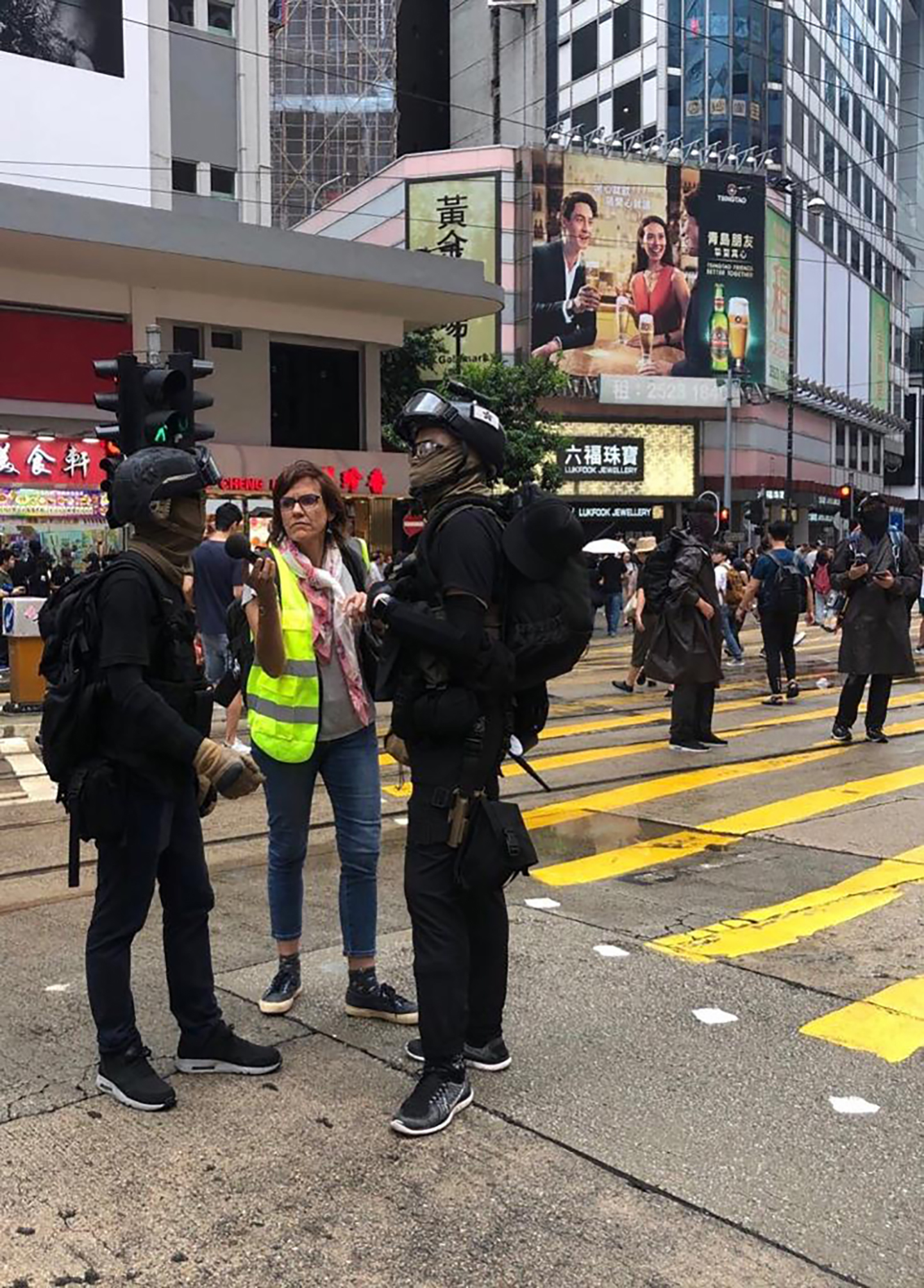
Florence de Changy interviewing frontline protesters in Causeway Bay
Pointing to the canyon-like streets and the population’s density, he said this urban jungle has many extreme variables on offer which could contribute to violence escalating in a flash. He went on to say what Chief Executive Carrie Lam expressed a few days ago, that it is, indeed, quite remarkable that the crisis has not had serious fatalities… yet.
The situation on that night in particular was pretty surreal. We were following a horde of riot police, escorted by water cannon trucks and armoured vehicles that were themselves following journalists. In other words, a protest with no protesters. Police and the press were feeling vaguely abandoned. It quickly turned out that all the action was taking place in Fortress Hill.
Of course, you also see the opposite picture, protesters without police, like the long hours that preceded the storming of LegCo on July 1 with the police clearly adopting a “be my guest” attitude while protesters slowly and steadily worked their way in.
As always, nothing is straightforward or simple in this story, but what makes covering it, day after day, simply fascinating are the encounters it enables you to make. It seems I have had more in-depth conversations with Hongkongers during this summer of 2019 than in my entire 13-year stay. People have been opening up like never before. Sometimes it’s just a few words. Sometimes they share their life stories with you. Partly thanks to the Hong Kong Journalists Association sponsored Press vests many of us have been wearing for most of our night outings recently, strangers sometimes would just come up to me, on my way in or out of a protest, offering advice, tips or views.
The crisis as a whole and the way it has been handled so far has deepened my respect for this society, its youth and its aspirations in particular. Demanding, daring, smart, sophisticated and peace-loving – yet undoubtedly angry.

Chris Yeung
Speaking up to protect press freedom
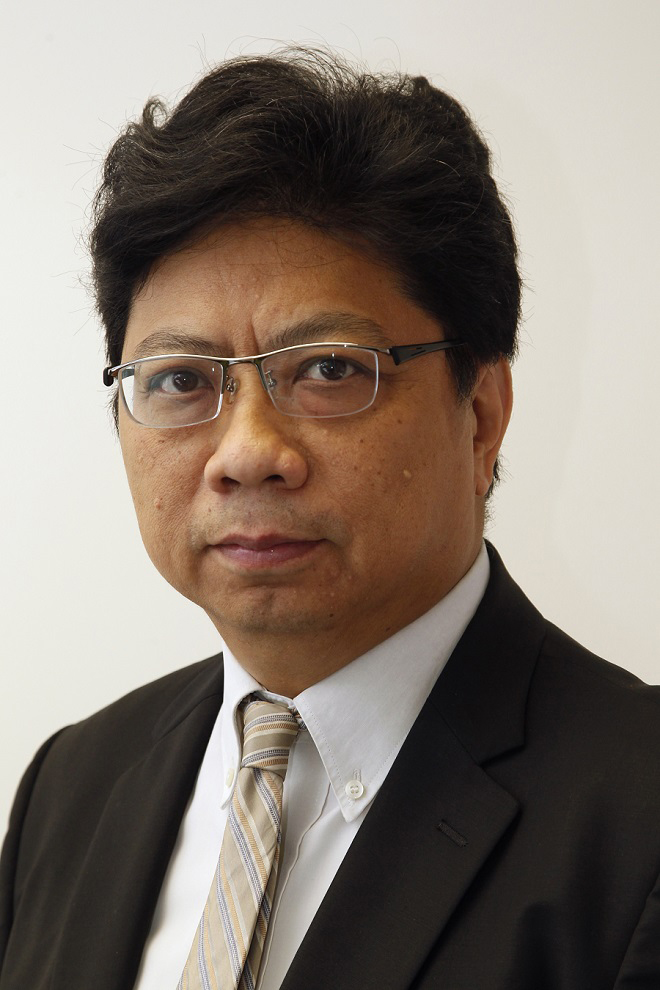
Chris Yeung, chair of the Hong Kong Journalists Association, talks to Morgan M. Davis, a finance reporter at Euromoney’s GlobalCapital
Journalism unions and associations have been garnering a great deal of attention lately, as they step up to represent their reporters, advocating with governments and police forces to fight for the safety and wellbeing of working journalists. Likewise, reporter unions have been drawing attention to unfair pay and work standards in newsrooms.
Over the summer, Buzzfeed agreed to recognise an employee union, after months of negotiations and a staff walkout. Likewise, in early 2018, Los Angeles Times’ journalists formed the first union in the news organisation’s lengthy history, and the guild has since been pushing for fair contracts for the paper’s staff.
In Hong Kong, journalist unions and associations are playing a particularly important role, as press safety and freedom has been thrown into the international spotlight. The Hong Kong Journalists Association has worked in the city since 1968 and its chair Chris Yeung spoke with The Correspondent about HKJA’s work and the importance of such organisations.
The Correspondent: What role do journalism unions and associations play in the everyday life of journalists?
Chris Yeung: Journalists can only play their role effectively with press freedom and safeguards against threats to press freedom. One of the major objectives of the journalists association is to fight for press freedom and curb restrictions and counter-threats to a free press. On a day-to-day level, we strive to make sure there are no unnecessary obstructions to journalists in doing their reporting. These include access to events and places to report news that are of public interest. We are monitoring the situation and will make views public if and when necessary.
The Correspondent: There’s been some attention given to journalism unions in the U.S. recently, as publications have been fighting to have recognised unions. Why are these unions important for journalists?
Chris Yeung: Unity is strength. It is always important that journalists within a media outlet or among the whole sector can join hands to campaign for their benefits and interests. By doing so, they have greater bargaining power with their employers. And at the societal level, a more powerful union will help fight for greater protection of their well-being through policies and legislations.
The Correspondent: Given the current political situation in Hong Kong, what role do you see organisations like yours playing?
Chris Yeung: Aside from the difficult business environment, the political environment and freedom climate have sharply declined in recent months due to the protests. It is even more important for the HKJA to fly the banner of press freedom to rally public support.
The Correspondent: What can your organisation do to protect press freedom?
Chris Yeung: Speak up when there are threats to press freedom. Public support is vitally important. We strive to tell the public why and how an independent and free press is important to safeguard freedoms in HK. We keep fighting for greater legal protection to press freedom. These include laws on archives and access to information.
‘Let’s stay true to the tale of two cities’
Annemarie Evans, presenter on RTHK, is a British broadcast and print journalist, based in Hong Kong since 1993
The developments over the past three months have taught me that, because of the cherry-picking that occurs when covering a story, the story itself becomes skewed.

Annemarie Evans
The view abroad is one of a city in uproar. You’d think Hong Kong was Brixton during the worst riots in 1980s London – on a permanent basis. Some of the coverage has felt so surreal, I wondered if I was living in the same city.
That’s not to say that there hasn’t been plenty of shocking violence, and with the increased use of petrol bombs and vandalism as a tool, it’s getting worse.
But the nature of an agency photo is that you get the most dramatic one. So it’s hard for me to convince people that it’s almost a tale of two cities, where ordinary life goes on.
I think there have also been certain journalists getting off on the drama. What’s that all about? Just do your job.
Early comparisons to Tiananmen – want to build up to those? The tale needs to be told fairly. I respect Joshua Wong, but a 22-year-old is not the only voice. Make sure you interview the “duller” middle-aged ones, too.
It’s also made me look back at some of the stories I parachuted into overseas, and made me wonder whether I really had all my facts.
There’s been some stunning and brave coverage. The pace has been relentless, particularly for smaller news outlets, but we do need to stay true.
‘I followed the voices and they helped me wash the pain away’
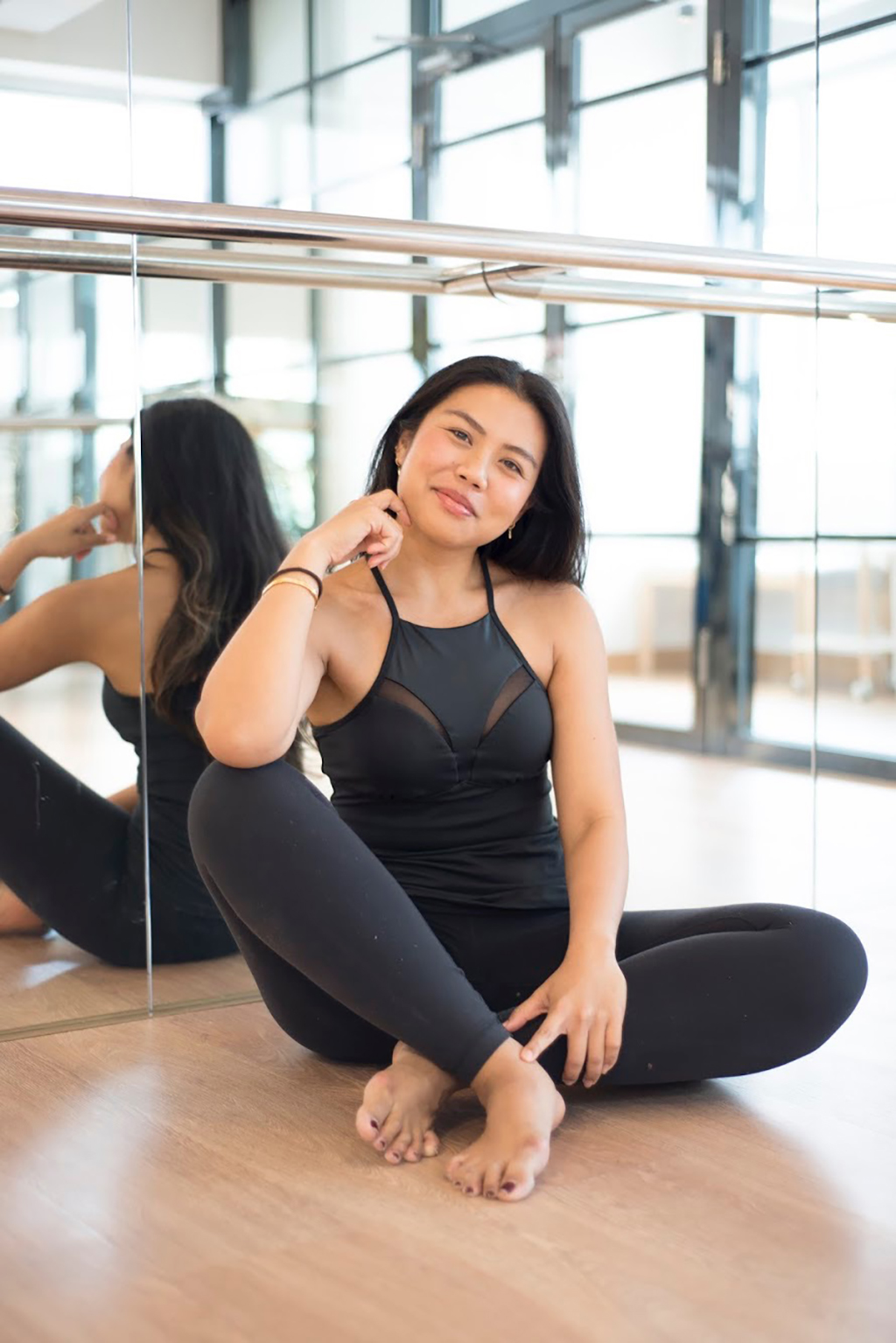
May James is a new FCC member and freelance photographer
I never imagined myself being in a “war” as a frontline photographer, nor to be witnessing any political movement. It all just started because I was practising different types of photography.
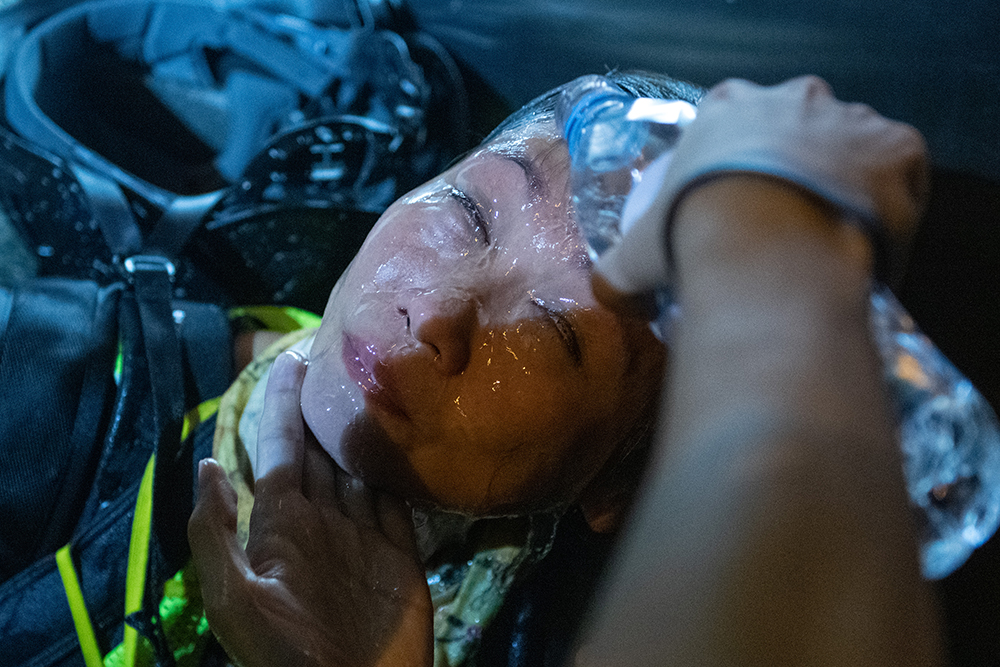
June 12: Photographer May James is treated after being pepper-sprayed. (Photo by Carl Court/Getty Images)
When I attended the first march on June 9, people were on the streets to protest a proposed extradition bill. When I returned to the march around 6pm from another shoot, I was stunned by the scene. Crowds and crowds, chants after chants. I thought capturing it would be hard, but a single “Excuse me”, and I had my spot.
I came out again on June 12. It was a long, silent wait standing between the demonstrators and police outside government headquarters. When I returned from a short break, people were running past me choking, with the skin on their arms red and their eyes watery. Others helped wash their faces.
I rushed to the front; a few photographers were taking pictures of a used tear gas canister on the ground. Police were shouting and holding pepper spray, aiming at the umbrellas of the demonstrators. Next, loud noises came from firing. People were fleeing, police were advancing and tear gas seemed to be coming from all sides. It was chaotic.

Police firing to the protesters during the crackdown in admiralty on September 15, 2019. Photo: May James
My eyes, legs, arms and face were burning. My 3M surgery mask was soaked. Breathing became difficult. I was overwhelmed and unable to think straight. I was glad to hear “Ladies first”, “This way”, “Give me your camera”. I followed the voices and they helped me wash the pain away. I left with a sense of relief but disappointment, stinging legs and smelly damp clothes.
Since then I’ve photographed more than 40 different demonstrations over three months. The tear gas, pepper spray and the blue water [from water cannons] have become bearable. The accidental spray from Molotov cocktails, bricks, tear gas canisters and other flying objects are now expected.
However, the marches have evolved into a radical series of events taking place simultaneously across the city, with rumours spreading over the internet. Making decisions and interpreting signs on the ground to where I should be next has become far harder.
In spite of all this, I have found a calm place inside me where I am working. I can see more clearly some of the beauty that can be found within this sad reality. The friendship born in the moment between journalists and our support for each other is priceless. The grateful and kind words from citizens are encouraging. Overall, I feel fortunate to be among those who are documenting and sharing these upheavals in my home city. It has been a life-changing experience for me.
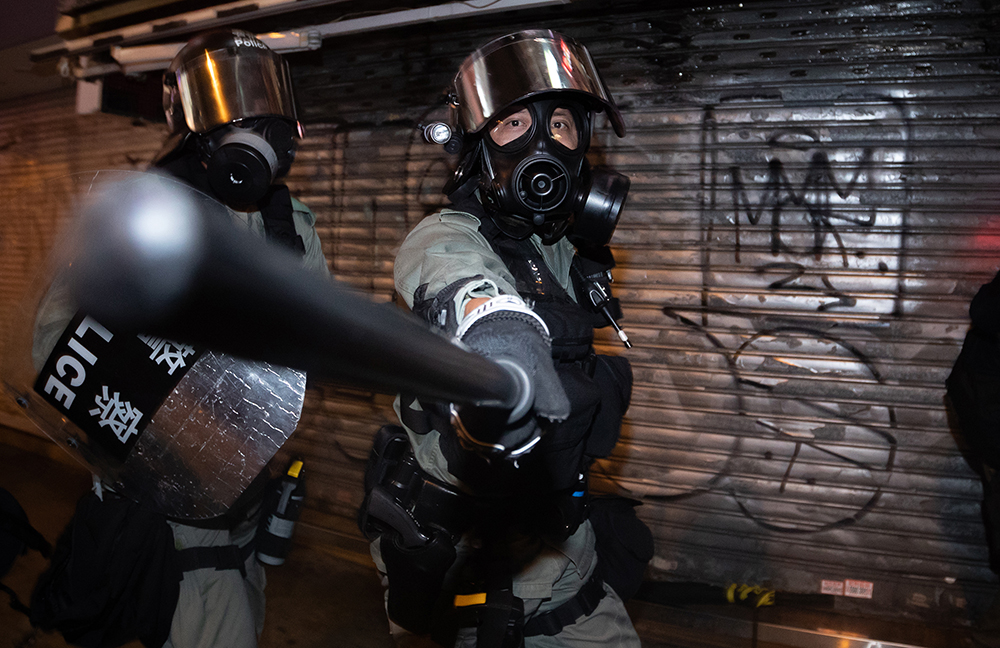
Mong Kok, August 3. Photo: May James
Keeping up with the Twittersphere
Mary Hui, a reporter for Quartz and an FCC Clare Hollingworth Fellow, takes a look at how the media are using social media
The nature of Hong Kong’s ongoing protests — quick-changing, fast-flowing, widespread, decentralised, and spontaneous — makes it fiendishly difficult to keep track of all the latest developments. For journalists covering the movement, this has meant relying on three key tools for receiving and disseminating information: the encrypted messaging app Telegram; the local online forum LIHKG; and, of course, Twitter.
Of the three, Twitter is the most outward-facing platform and the most widely used among English-language journalists reporting on the protests. For a movement that is so intensely visual – think the human chains, the crowd parting like the Red Sea, the graphic videos of assaults, the colourful Post-it notes, the AirDrops of protest materials – Twitter is the perfect platform to present audiovisual material, alongside bite-sized portions of context and analysis.
Unfortunately, it’s also ripe with misinformation and outright falsehoods. Twitter has so far shut down more than 5,200 accounts in China that were found to be attempting to sow discord and disinformation in Hong Kong. Those accounts were part of a larger “spammy network” of some 200,000 China-based accounts. In an attempt to push back against the Chinese state narrative, and also to internationalise their publicity efforts, Hong Kong’s protesters have flocked to Twitter, as my colleague Isabella Steger has reported.

Demonstrators overflow Victoria Park under the heavy rain. Photo: May James
For journalists, being on Twitter means having to sift through mountains of questionable material. The onus is on them to do due diligence and ensure, to the best of their ability, that they do not contribute to the dissemination of inaccurate information.

Mary Hui
Then there’s the harassment issue. Aside from targeting journalists with vile comments, some Twitter trolls have openly called for the doxxing of certain members of the press. Last month, there began to circulate a collage of Twitter profile images of mostly women journalists of Asian descent writing for English-language media, with calls to expose the reporters’ personal details.
I had the honour of making it onto the list, alongside illustrious company. The offending tweet (and perhaps also the account) appears to have since been taken down, but the battle against the trolls is never-ending. For my part, I try to report any account that is clearly fake, or that is harassing myself or others.
As Twitter continues to feel like an extension of our journalist bodies, there emerges the question of whether or how to separate reportage and opinion. Elaine Yu, a former AFP correspondent covering Hong Kong and now a freelance journalist, sees value in understanding another reporter’s opinion. “I like, or don’t mind, opinion as long as it’s original and thought-provoking,” she said. “Knowing a journalist’s politics and subjectivity helps us understand their coverage better, too.”
I find myself in the same camp as author Antony Dapiran, who said: “I don’t think anyone in this post-post-modern age still genuinely believes in the sham of objectivity.” As both a journalist and a Hongkonger, I’m reminded of what Eliza Griswold, a visiting professor at Princeton with whom I took a journalism class (and who won the Pulitzer Prize for non-fiction this year), drilled into us: “Own your subjectivities.”
It’s something I keep in mind as I live and breathe protest Twitter.
Media play a vital role and have met their challenge fearlessly
Antony Dapiran is a Hong Kong-based lawyer, writer and photographer and author of City of Protest: A Recent History of Dissent in Hong Kong
Another Sunday night in Causeway Bay, as the day’s protests dwindled, something was happening. Wedged between a large delivery truck and the windows of a cha caan teng, there was shouting and shoving, and a huge group of media and onlookers crammed in on either side.
The riot police had withdrawn moments earlier, and now it looked like some kind of confrontation had broken out.
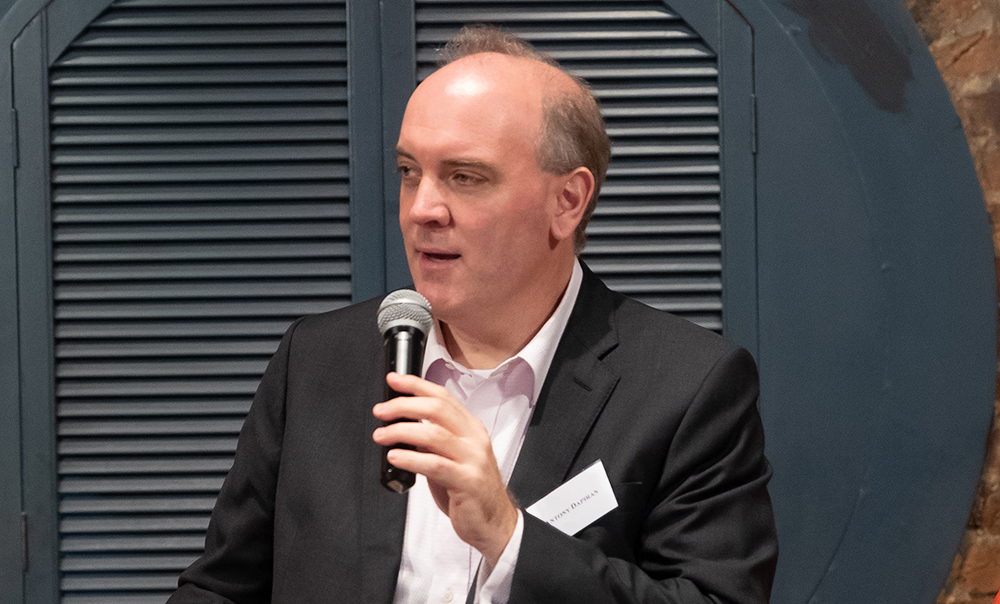
Hong Kong-based lawyer and writer, Antony Dapiran. Photo: May James
Was it a clash with a pro-government supporter? Another suspected undercover police officer discovered in the crowd? I joined the back of the pack, up against the window, trying to see what was in the midst of that mass of people, but to no avail. Then, I happened to glance through the window into the cha caan teng: a television was on the wall opposite me. The television was tuned to the usual live broadcast of the protests.
The broadcast was showing a huge group of media and onlookers wedged between a large delivery truck and the windows of a cha caan teng. I noticed the camera was filming from the other side of the crowd – if I stuck my arm up and waved I could probably wave at myself on the TV. But I still couldn’t see what was going on in the middle of the crowd.
Poet, musician and author Gil Scott-Heron told us: “The revolution will not be televised.” This one has been more than televised, it has been livestreamed: terrestrial TV, cable TV, Facebook Live, Twitter. You can pull up a livestream aggregator on your computer and watch a dozen different streams running simultaneously. But does that improve the quality of the information viewers are receiving?
A livestream can provide a lot of images, but still not necessarily the full picture. The imagery, reminiscent of an action movie or a video game, almost makes the events seem less real. These last few months, the media have been playing a vital role, ensuring the public is receiving the best understanding possible of the events roiling our city. Hong Kong’s protesters have a slogan: “Those born in troubled times bear a heavy responsibility.” It is a slogan which may apply equally to Hong Kong’s media, a challenge they have met fearlessly.
Finding balance at #HongKongProtests
Unlike Facebook, Twitter is a solid platform for real-time, breaking news coverage that’s faster than any news outlet – and following the right people is essential. The FCC’s Social Media Editor Sarah Graham, who has seen the Club’s social media engagement increase during the protests, takes a look at four protest Twitter personalities.
Hong Kong Hermit (@HongKongHermit) has become something of a Twitter celebrity since the protests began, having been ‘identified’ by Chinese social media users as a CIA operative directing the protests. This inadvertently boosted Hermit’s kudos and Twitter following (he’s currently at just shy of 39,000 followers – up from 4,000 before the protests began). In reality, Hermit live streams and tweets the protests as they take place across Hong Kong.

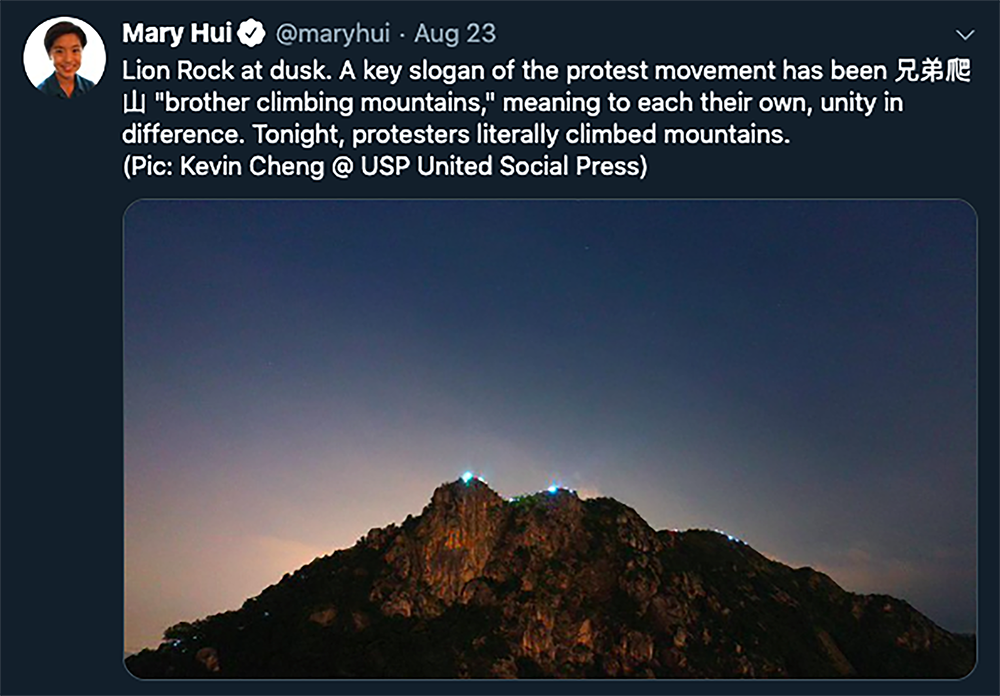
Mary Hui (@maryhui) brings valuable insight into the protest coverage with her explanations behind the Cantonese used by protesters. Born and raised in Hong Kong, Hui is able to highlight the nuances in the language. She also live tweets from protest sites across the city. Hui has more than 13,000 Twitter followers.
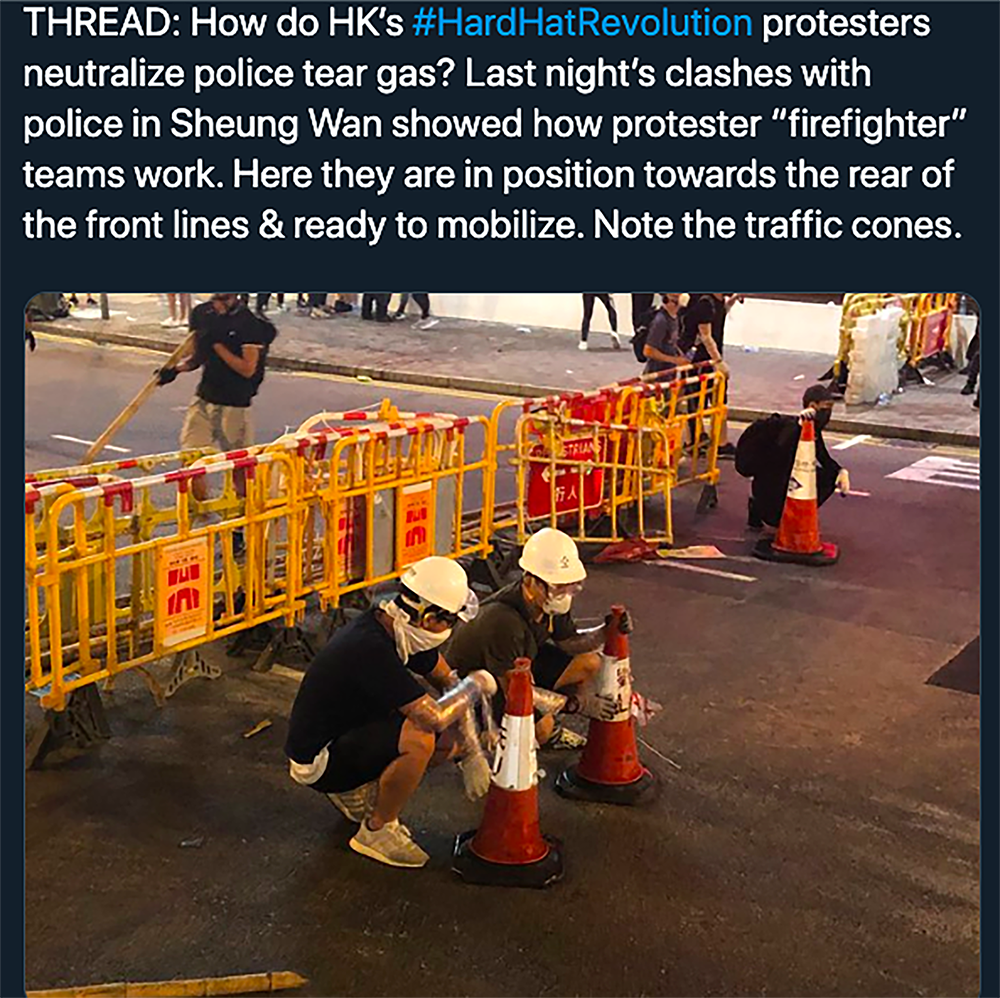
Antony Dapiran (@antd) is a Hong Kong-based lawyer and author of the book City of Protest: A Recent History of Dissent in Hong Kong. He offers a deeper-dive into the protests with threads including observations on how protesters neutralise tear gas, and the artwork emerging from online satirists.
Isabella Steger (@stegersaurus), deputy Asia bureau chief for Quartz, offers a mix of live reporting, commentary and observational humour. She has been particularly eloquent in her critiques of the op-eds of overseas writers commenting on the politics behind the Hong Kong protests.

Seeking the truth of the matter
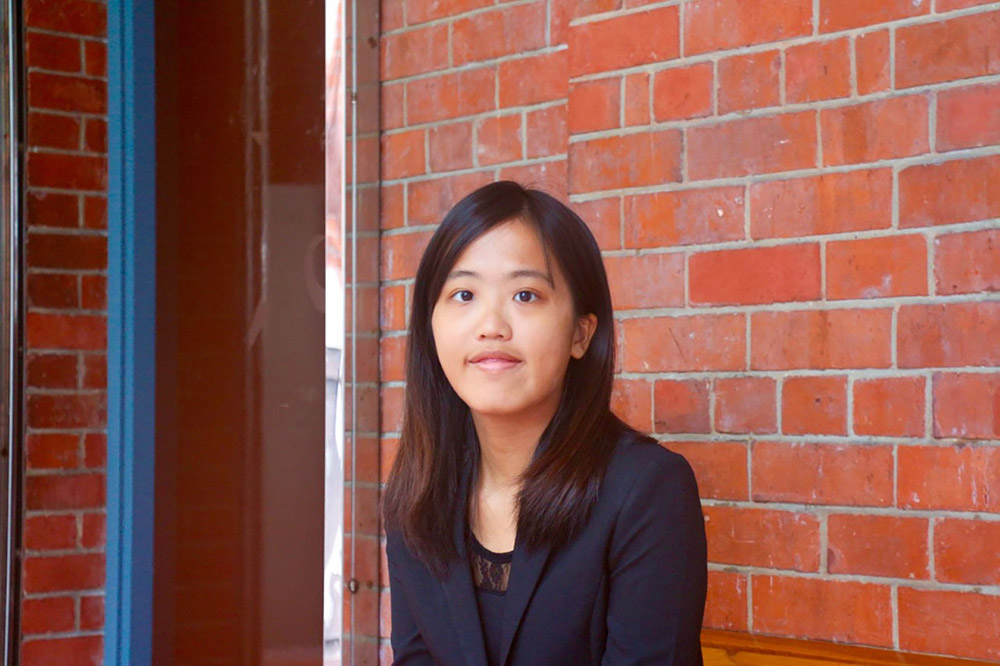
Rachel Blundy, Fact-check Editor for AFP in Hong Kong
We’ve seen a wave of disinformation about the Hong Kong protests since the beginning of June, when mass demonstrations were held against the now withdrawn extradition bill.
AFP’s Hong Kong fact check reporter and editors have examined hundreds of misleading and false posts on platforms including Facebook, Twitter, Instagram, Weibo and WeChat. Some of these posts have been shared tens of thousands of times and some videos receive millions of views. It’s concerning to see how quickly misinformation can spread, but it also helps us to understand what people are reading about the protests on social media platforms.
In general, we see more misinformation being promoted on platforms such as Facebook by pro-Beijing and pro-government and pro-police groups. Many of these groups have tens of thousands of members, mainly sharing information in traditional Chinese language posts. Misleading or false content is sometimes disseminated across multiple groups, sometimes deliberately.
But we also see a considerable amount of misinformation being shared by the pro-protester side. And sometimes I’ve noticed those on the pro-protester side are opting to share misinformation on encrypted apps such as Telegram, rather than on open social media platforms. As the protests have continued, the volume of misinformation on social media about the situation in Hong Kong has certainly increased.
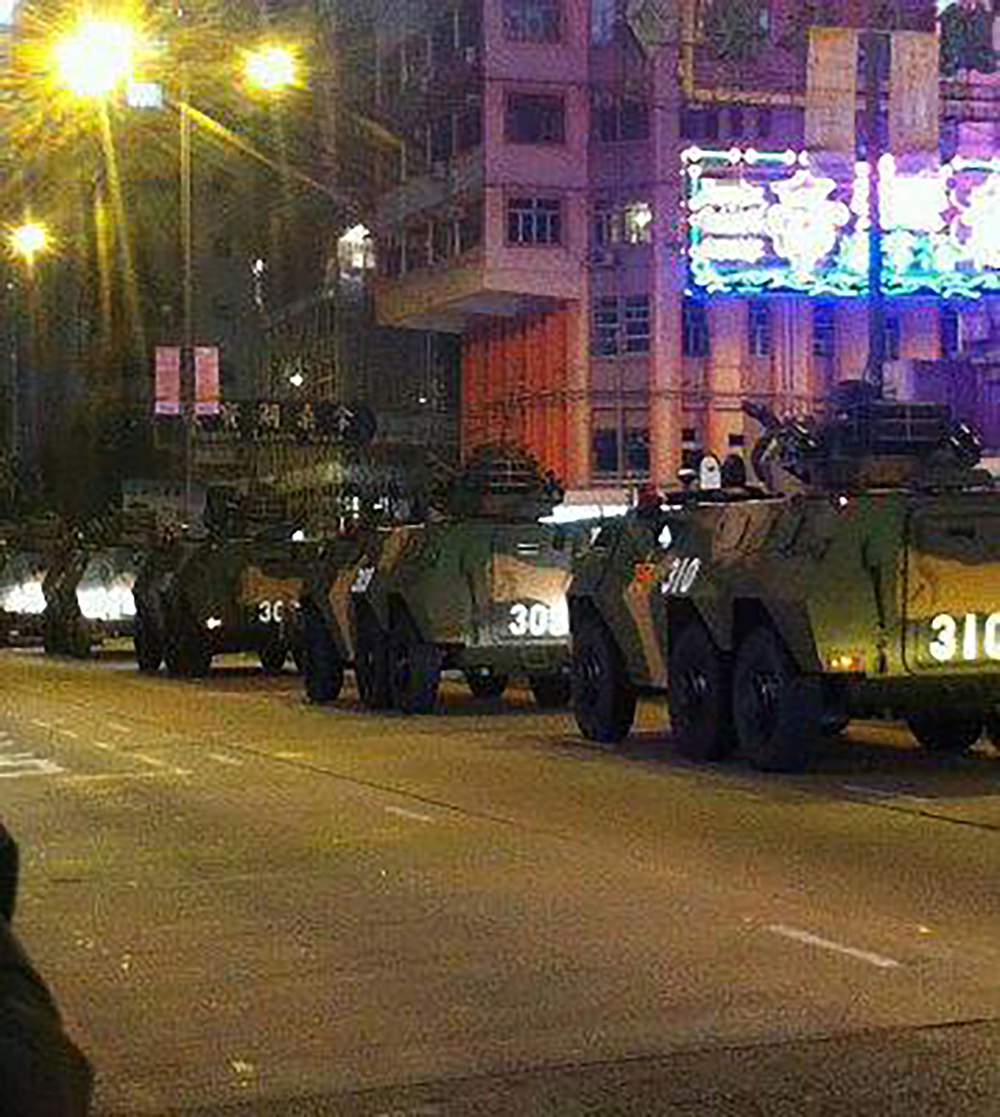 We focus on debunking false social media posts which include photos and videos which we can verify comprehensively, for example by geolocating them, finding previous examples of them online in the correct context, or speaking to witnesses and officials. We have sometimes seen footage and photos of incidents in Malaysia, Taiwan or mainland China being misrepresented to suggest they show Hong Kong. We can debunk these kinds of posts very comprehensively and visually on our fact check blog.
We often use reverse image searches to check whether a photo or video has appeared online previously. We used this method to analyse a video of PLA tanks travelling through Hong Kong shared on Twitter and Facebook in July 2019. A reverse image search shows the video has been online since at least 2012. This proves it is not a new video of a recent incident. We found corroborating local media reports from the time which stated the video shows a “normal and necessary” troop rotation in June 2012, and by consulting Google Street View we confirmed the video shows a junction next to Jordan MTR station.
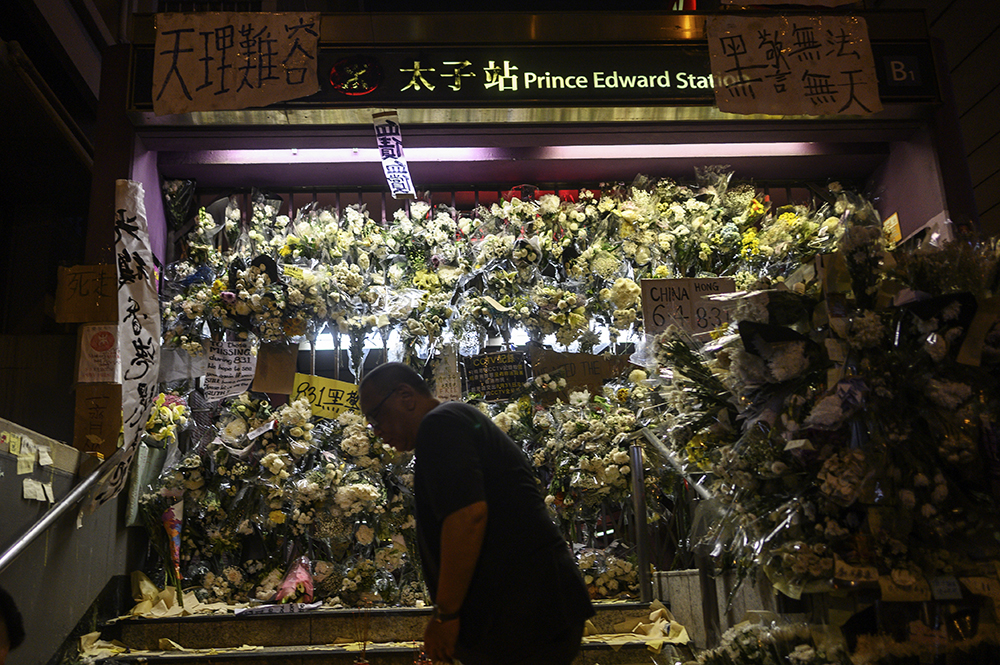
Flowers were left at the Prince Edward MTR station after August 31
We often use reverse image searches to check whether a photo or video has appeared online previously. We used this method to analyse a video of PLA tanks travelling through Hong Kong shared on Twitter and Facebook in July 2019. A reverse image search shows the video has been online since at least 2012. This proves it is not a new video of a recent incident. We found corroborating local media reports from the time which stated the video shows a “normal and necessary” troop rotation in June 2012, and by consulting Google Street View we confirmed the video shows a junction next to Jordan MTR station.

Rachel Blundy
We have also seen an increasing number of “conspiracy theories” being circulated about the protests, for example the accusation that protesters are being paid to participate in demonstrations, or that CIA officers have infiltrated protest groups. We have not seen any evidence to support these kinds of claims, but it is very difficult to comprehensively debunk such allegations in a fact-check report. We prefer not to amplify these kinds of unsubstantiated rumours.
Most recently, we have analysed rumours that protesters died at Prince Edward MTR station after violent arrests on August 31. We debunked claims that two letters about recent student deaths at local secondary schools were evidence of protester deaths; the schools concerned told AFP that the student deaths were unrelated to the protests – one of the students had died the day before the Prince Edward incident.
As fact-checkers, we also work with AFP’s news reporters and video teams to verify the accuracy of videos and photos shared online, for example footage of police brutality during the protests.
‘He said, she said isn’t good enough’
Eric Cheung is a freelance journalist based in Hong Kong with an interest in geopolitical and social stories. His work has appeared in CNN International, The Guardian, Reuters, South China Morning Post and others
Since June, journalists in Hong Kong have been faced with the challenge of covering the biggest story since the city’s handover.
And it has not been an easy job – we have responded to spontaneous protests across the city, putting ourselves in harm’s way on the front lines as protesters engage in running battles with the police.
It is precisely at times like this that the role of the media is highlighted in public debate. Our words and images have, on many occasions, proven to be critical in revealing the truth amidst the cloud of misinformation.

‘We should be more active in fact-checking rumours and claims’
Our reporting has not only updated the public on the latest events on the ground, but also provided the “first draft of history” as the world watches with anxiety. One challenge, especially for local reporters, has been the need to remain independent, but not detached, in reporting the story. I am a staunch defender of classic journalism principles – we should always be fair, impartial, and accurate – as this is what makes us trustworthy. But that does not mean we should turn a blind eye to falsehoods.

Eric Cheung
I believe it is not the job of the media to repeat what different stakeholders have to say. The “he said, she said” style of reporting is simply not enough, given that a large amount of rumours are being circulated every day.
Instead, we should be more active in fact-checking rumours and claims. If we find that someone is not telling the truth, we should call them out while providing context for our readers. Only that will allow us to serve as an independent monitor of power, and provide a useful platform for public discussion.
‘I’ve arrived where I started’
Violet Law has been reporting on the protests for Al Jazeera English and occasionally for The Times of London
I still remember there was a time – actually for the better part of the past decade – when Hong Kong was quiet, and even the hottest news of the day seemed like a tempest in a teapot. Not fit to print, or even to brief my editors at the mothership.

Violet Law. Photo by Kerri Cohen Photography
A small village few people had ever heard of was being bulldozed to make way for the high-speed rail. Funding for northwestern New Territories development plans were meeting vocal opposition. Little-known returning officers barred popular candidates from running.
Who would’ve thought all these teapot tempests would brew into the political storm we’ve been chasing for the past few months?
For me, covering Hong Kong wasn’t supposed to be foreign reporting. I grew up here after all, before coming of age in America and then willing myself into journalism there.
I returned for the China story. Hong Kong was supposed to be a sideshow, or so I thought.
Explaining the forces driving the anti-extradition bill protest movement to my readers, I’ve come to find, has been like solving “a riddle, wrapped in a mystery, inside an enigma”.
Only now do I realise I know so little about the historical and geopolitical factors that have shaped Hong Kong, especially when I’m seeing history in the making.
And as I’m writing the best “first draft” I can manage, my T.S. Eliot Little
Gidding epiphany rings so true:
I’ve arrived where I started.
And know Hong Kong for the first time.
Indeed.
The Masked Kiss
James Pomfret is Reuters Chief Correspondent South China / Deputy Bureau Chief, Hong Kong
It was a fleeting moment on the night of August 11 as we ran from the men in blue and green with their guns and truncheons. The black-masks streamed down into an MTR station amid the heat, tumult and acrid swirl of tear gas lingering on sweat-soaked clothes. An underground train pulled into the station with a burst of light and silver. It filled with protesters, then drew away, speeding into a dark tunnel like a freedom express.
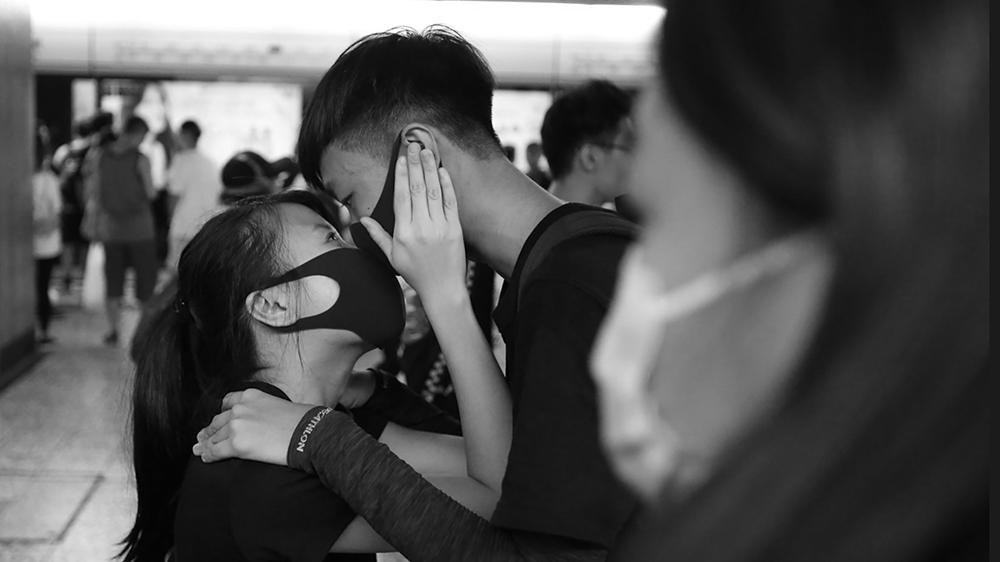
‘In that kiss we were all reminded of a shared humanity’. Photo: James Pomfret
For a while now, I’ve been trying to photograph birds in wild places, striving to capture those elusive flashes of beauty between earth and sky. As a journalist covering the protests, such escapades into nature offered a counterpoint of serenity and kept me sane. By focusing my lens on our city’s rich birdlife across mangroves, mudflats, forests, grasslands and mountains, I learnt hard lessons in photographic abstraction. Blurred leaf, bare branch, empty sky became my constant motifs.
Afterwards, when I tilted the lens towards our strife-torn urbanscapes, I discovered something strange. People seemed to move more slowly, as though underwater.
That evening, as the protesters disembarked and clamoured on the platform in Prince Edward station, there amid the chaos came a sliver of stillness between the massed bodies. I saw a young masked couple lean towards one another. Time froze. Reflexively, I lifted the viewfinder to my right eye, and squeezed down with my right index finger, knowing as I pressed that this was the moment I’d been waiting for without knowing how or why.
The masked young man leans down to the young woman, herself leaning upwards, as their slender arms hold one another’s faces, eyes locked, lips separated only by the dark membrane of their masks.
This kiss would take wing, out of the mouth of the underground, up over the skyscrapers and beyond the granite visage of Lion Rock, to soar into the night skies.
The violence has been unrelenting, the politics intractable, the divisions deep, but in that kiss we were all reminded of a shared humanity, and an enduring hope in our city of sadness.
Only love can defeat injustice. It is ultimately love for a place, for a cause, for another, that helps muster our courage to strive for a better tomorrow.
There is a place in our hearts, our hills, our harbour, our high-rises that can never be violated. A quiet refuge that lingers.
Hong Kong remains a reservoir of freedom, and this freedom, like love, cannot be vanquished.
‘Hongkongers help their neighbour first’
Casey Quackenbush is a Hong Kong-based freelance journalist, formerly with TIME now covering the protests primarily for Al Jazeera and The Washington Post
When I walked out of the Admiralty MTR exit B, my lips and eyes immediately stung. Hundreds of people were spilling onto Tamar Street from Harcourt Road. People tossed inhalers through the crowd and medics flushed people’s eyes with saline. After I had gone into the crowd, tear gas canisters popped and a sea of arms waved through the thoroughfare. People tried to run, but the highway was too packed.

Casey Quackenbush
This was June 12. I was terrified then. But given everything that has happened since, it doesn’t feel all that remarkable anymore. After 17 weeks, most protests have blurred together into one big plume of tear gas. But what I remember most at the end of another long weekend are the people.
There are the ones who made me laugh. The video of the couple bumbling to kiss wearing gas masks, or the old man who walked through the streets with a vacuum cleaner to try and suck out the tear gas. The protester who trailed riot police blasting Glory to Hong Kong from his bike.
There are the ones who made me sad. After a couple had been detained and searched by police on Ice House Street, a woman was released and ran into the arms of her boyfriend, kissing and crying. Just this weekend, a video of a man with a mental disability being searched and harassed by police deeply upset me.
And then there are the ones who helped me. The girl who turned around to toss me a bottle of saline when the cops came charging. The guy who, even as the tear gas started coming, held my backpack as I struggled to retrieve my gas mask. The countless times protesters have offered me water or protective gear.
Even in these moments of panic and fear, I never cease to be touched by Hongkongers. Their humanity, their quirkiness, their altruism. Even when the crowd reaches the roadside fences, as happened on June 12, Hongkongers help their neighbour to jump first.
Watching from 12 hours behind
Rob Gerhardt is a freelance photographer. His work has covered human and civil rights, religion and refugees in Asia and the United States. Publications including The Diplomat and The Guardian have featured his work, and his photos are in several museum and private collections.
I was sitting at my local bar in Brooklyn, reading the day’s news, when I saw it: a photograph of a single outstretched arm, hand clenched in a fist, taken from above while a mass of protesters marched below, photographed by Vincent Yu. It made me think of Josef Koudelka’s photograph from the Prague Spring in 1968 of his outstretched hand with his watch looking down on an empty square. All I could think in that moment was that I hoped things in Hong Kong would end differently than they had in Prague.

Rob Gerhardt
My first trip to Asia was in 2006, when I went to the Thailand-Myanmar border to photograph the Karen refugees and their lives in the wake of the war they have been fighting against the Myanmar military junta. My work in Hong Kong has focused on the distinction between the city’s business-focused daylight hours and the seedier side that comes out after dark.
And now the city is international news. The photographs are of a city at war with itself. Of a population that has had enough with the state of how things are, fighting against an adversary as equally compelled to stop them and maintain the status quo. It is all in the scenes captured by Lam Yik Fei, Adam Ferguson, May James and Tsuen Wan. Their photographs show Hong Kong’s Summer of Discontent up close and personal, with the viewer able to watch everything unfold before their eyes in graphic and poetic detail.
None of these stories are finished, and one can only guess what their outcomes will be. But the record is in the work of the photographers who are on the scene. And it is some of their work that will define these stories for the future.
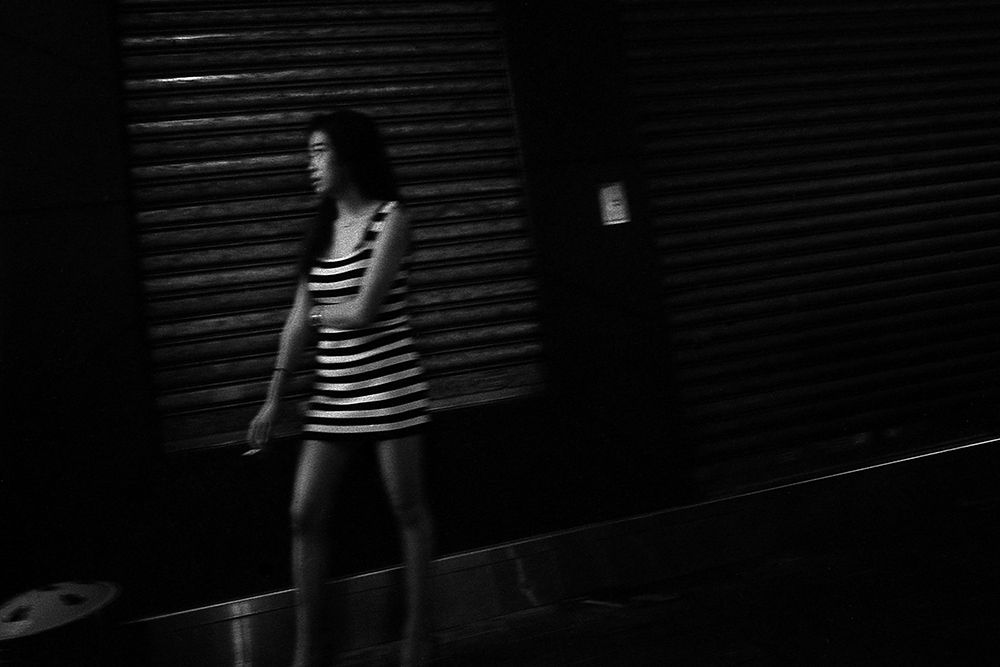
Woman Smoking on a Street Corner, Wan Chai, Hong Kong, 2016. Photo: Rob Gerhardt