Members Area Logout

Obituary: Marilyn Hood, a private woman with a network of friends

Marilyn Hood, the FCC’s Marketing Manager, organiser of the Quiz Night and long-time club member, died on April 17 at Queen Mary Hospital after a struggle with cancer.

Marilyn, the eldest of three children, was originally from Macclesfield in northwest England. She married in her early 20s and came to Hong Kong, via South Africa, with her husband in 1977. The marriage didn’t last, but her love affair with Hong Kong did. She worked in recruitment and went on to establish her own recruitment agency, Network.

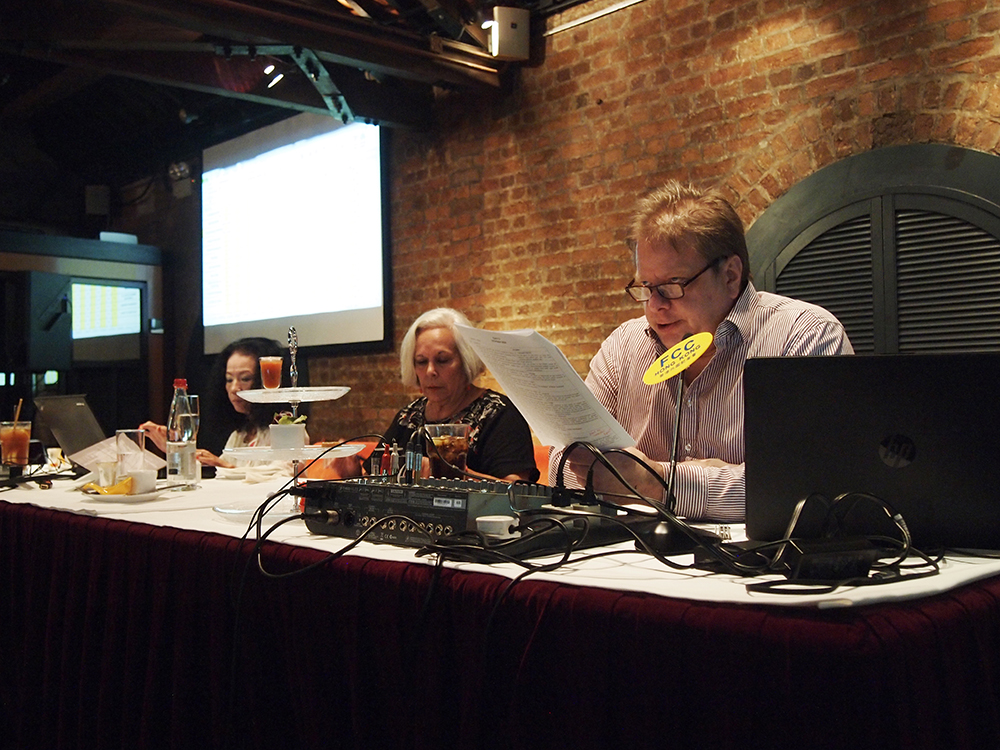
Marilyn (centre) with Annie Van Es and Andy Chorowsky at one of the legendary FCC Quiz Nights Marilyn (centre) with Annie Van Es and Andy Chorowsky at one of the legendary FCC Quiz Nights

She joined the club in 1986 and served on the Board as an Associate Governor from 2001 until late 2003, when she resigned from the Board in order to become the club’s Marketing Manager.

Marilyn was a central figure in the women-only lunch club, Red Lips, which was established in 1983 by her friend Dorothy Ryan. Marilyn was 33 at the time and Dorothy was pushing 40. It was a 20-something Australian Crown Counsel who inadvertently gave the group its name. He called them the “Red Lips”, referring to the Tsim Sha Tsui bar where the women who worked there were rumoured to be so old they remembered the Japanese Occupation. The women laughed at his attempted slight and took the name.

The Red Lips group had fun with names. At the Brigades Annual Gathering (a full BAG), any woman under 40 was referred to as a Baguette and anyone under 30 was a Miette du Pain (breadcrumb). Marilyn took over from Dorothy as the group’s leader, the Chief Bag, in 1997 and embraced the role, employing her excellent organisational skills and giving a rousing speech at the annual lunch at the FCC. The fun event always concluded with FCC staff presenting a Red Lips cake for dessert.

Former RTHK political reporter and now absent member Francis Moriarty recalls her fondly. The first time he met her she was in the club, flanked by Red Lips members, who were discussing something amongst themselves and glancing over at him. Eventually, one of them announced loudly, “All right, godammit, I’ll go find out.” She walked straight up to Francis and asked, sweetly, “Excuse me, I know we haven’t been introduced properly, but would you be kind enough to show me your teeth?” Francis obliged. After she’d inspected his teeth, she reported back to the group: “Yup, just what I thought. They’re all his.”

Francis also recalls a heated debate on the Board in 2003 over whether or not the club would join the march against Article 23, the government’s proposed national security legislation. The Board was split and Marilyn, an Associate Governor, had the deciding vote. She listened to the arguments on both sides and decided in favour of joining the July 1 march, aligning herself with the correspondents and journalists.

Marilyn loved to travel and enjoyed doing it in style, preferably business class if possible. But she was just as happy living a simple life on Lamma Island, which she moved to in the mid-1990s. If she wasn’t at the FCC, she was likely to be found on Lamma, walking her dog, Lanto, or drinking red wine with friends and putting the world to rights.

She had a sharp mind and was a big reader. In 2012, she resurrected the club’s monthly Quiz Night and talked Andy Chorowsky into being the quiz master. She was knowledgeable on a wide range of topics and had a penchant for literature and all things to do with space. If there was an opportunity to trumpet the achievements of women in the quiz, Marilyn didn’t miss it.

Closely associated with the club for two decades, she is as much missed by the staff as members. Carmen Cheung, the Membership Secretary, who worked closely alongside her, says she introduced Marilyn to her children, now 11 and six. The kids had Marilyn on their WhatsApp and if they got stuck with their English homework, they would message her and she would help out.

Marilyn’s dedication to her work and personal passions never wavered. She devised the questions for the Quiz Night from her hospital bed and continued to work on membership issues in her final weeks. Perhaps most impressively, only a few days before she passed away, she handed me a manila envelope and asked me to deliver it to the FCC. It was a completed membership form – she’d recruited one of the doctors at Queen Mary Hospital. 

She was a fun, feisty and sincere woman. Quietly private, but with a wide network of friends. Her absence will be felt by all her friends – at the club, on Lamma and beyond. 


From Hong Kong Radio to Classic FM: Nick Bailey on a career that took him across the waves

From his time on pirate Radio Caroline to being the voice that launched Britain’s Classic FM radio station, Nick Bailey’s 50-year career in broadcasting included a decade in Hong Kong. Here he recounts those days with fondness.

My first brush with Hong Kong was in 1972 while travelling back from Australia to the UK. I had booked myself into the YMCA in Tsim Sha Tsui and gave myself five days to find a job at what was then known as Radio Hong Kong.

[ngg src=”galleries” ids=”11″ display=”basic_thumbnail”]I’d been given a list of names from a journalist friend in Brisbane and although the first one on the list had died, and the second had just retired, I struck lucky with the third. Geoffrey Weeks had recently been appointed head of English radio and asked me to attend an audition the following Monday. I couldn’t believe my luck, although later I found out auditions were held every Monday because of the transient nature of the staff.

Through a fellow presenter, Bob Williams, an American who’d lost a leg in the Korean War, I found a place to live. It was called Palatine House which gave a discount to so-called “artistes”. It was only when I booked in and was shown a room with mirrors on the ceiling that I realised it was a brothel.

Hong Kong at that time was very colonial. Women and Chinese were not allowed into the Hong Kong Club, and no one thought China would want to reclaim the territory in 1997. This view was still popular when I returned in 1981 but this stint in the colony was in stark contrast to the “fleshpots” of Tsim Sha Tsui.

I was based in Sek Kong in the New Territories and tasked with setting up the English section of the British Forces Broadcasting Service (BFBS). There was already a Gurkha service broadcasting in Nepali, and I shared an office with a Gurkha Major. From humble beginnings we managed to pinch a lot of the audience from RTHK and by the time I left three years later there was an operational studio in Tamar. I was posted on promotion to the London headquarters of BFBS but hated the job, so applied in secret to go back to Hong Kong with a job at RTHK. The truth was that I had really missed the buzz of Hong Kong and was happy to become a permanent expatriate.

In 1985 I returned as a freelance, by which time my wife was expecting our second child, and we lived in a tiny flat in Causeway Bay. The Joint Declaration between Britain and China that set out the principles of “one country, two systems” had been signed the year before and there was definitely a shift in attitude. Soon we were told not to refer to Hong Kong as a colony on air.

A year later I was given an expatriate contract and we moved to a large government flat in Buxey Lodge on Conduit Road overlooking the harbour. I was the original presenter, along with Nick Beacroft, of Hong Kong Today and remained with the programme for five years.

I covered the events of Tiananmen Square with my new co-host, Kit Cummings, broadcasting non-stop for nine hours on June 4, 1989. We also reported on the subsequent massive protests, in support of the Chinese students, which culminated in a million Hong Kong residents taking to the streets.

The following year my son Edward was born, which coincided with me taking over as head of Radio 3, and in 1992 we left Hong Kong when I took up the job of presenter at Classic FM in London.

I still miss Hong Kong and felt very much at home when I returned for the first time in 2012. My eldest daughter Sally, who was 10 when she left, still feels homesick whenever the weather turns humid. And my youngest daughter Lucy, who is teaching in Shanghai, would return to Hong Kong in a heartbeat if the right job came up. And so would I if I was 30 years younger.

Nick Bailey’s autobiography Across the Waves – From Radio Caroline to Classic FM, is available from nickbaileyradio.com


Tantalise your tastebuds with new cocktails at Bert’s

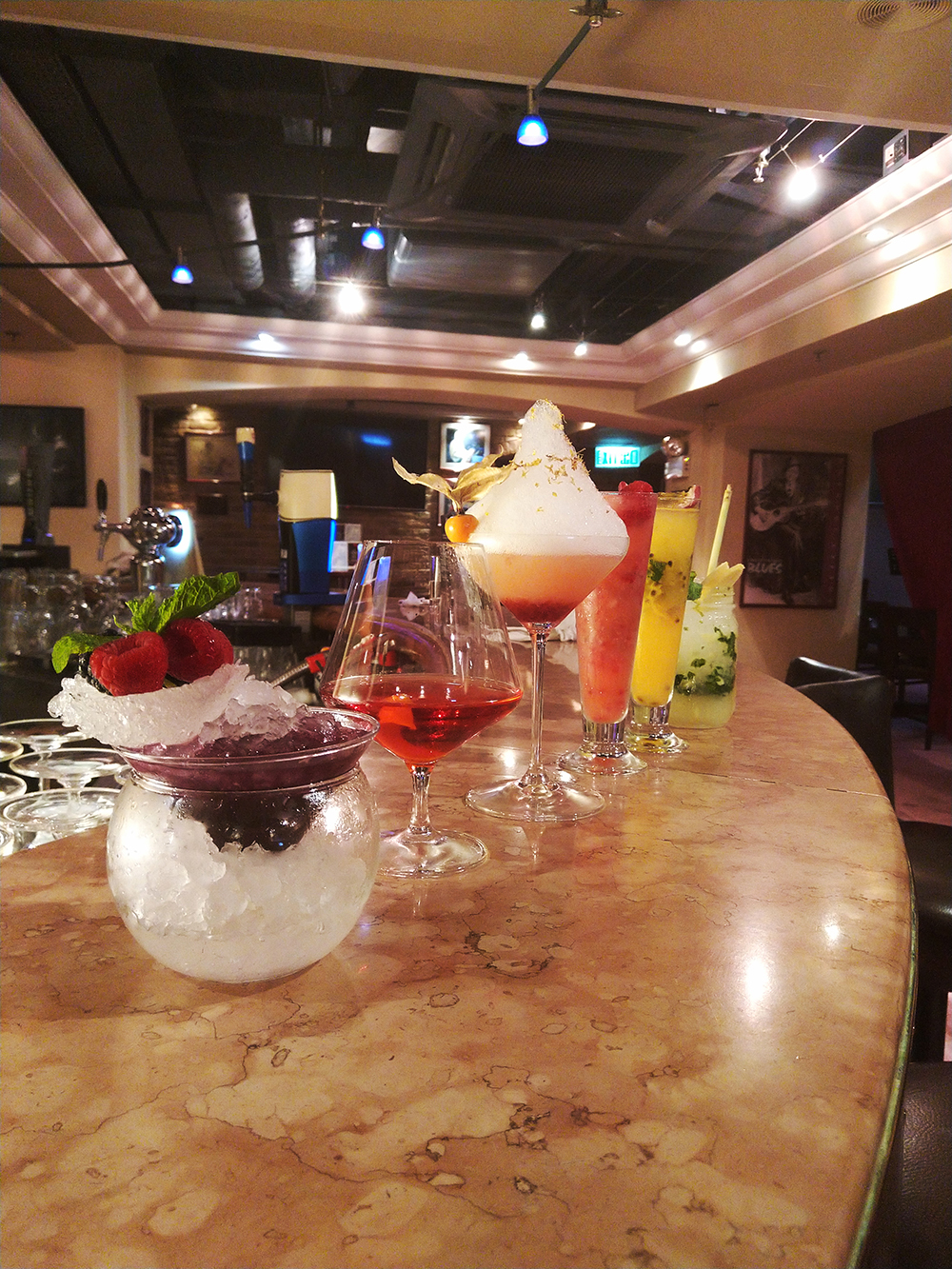
The new cocktail menu has arrived at Bert’s. Morgan M. Davis selflessly went along for a tasting.

Things are changing behind the bar at Bert’s. Beginning this month, Bert’s is offering a new summer cocktail menu, exclusive to the basement bar. The six new cocktails, designed by FCC beverage manager Michael Chan and bartender Ryan Chong, will be available for a limited time.

For Chan, the distinct drinks offer Bert’s an opportunity to cater to a younger demographic, and to offer more options beyond the wine and beer list that the FCC is known for. “We want to bring some new ideas to the FCC bar,” said Chan.

The new list consists of three alcoholic cocktails and three mocktails, as twists on classic drinks and summer punches. The mocktails, while designed to be non-alcoholic, can have alcohol added upon request, said Chan.

So here are the newcomers…

Kyoho Caviar Martini

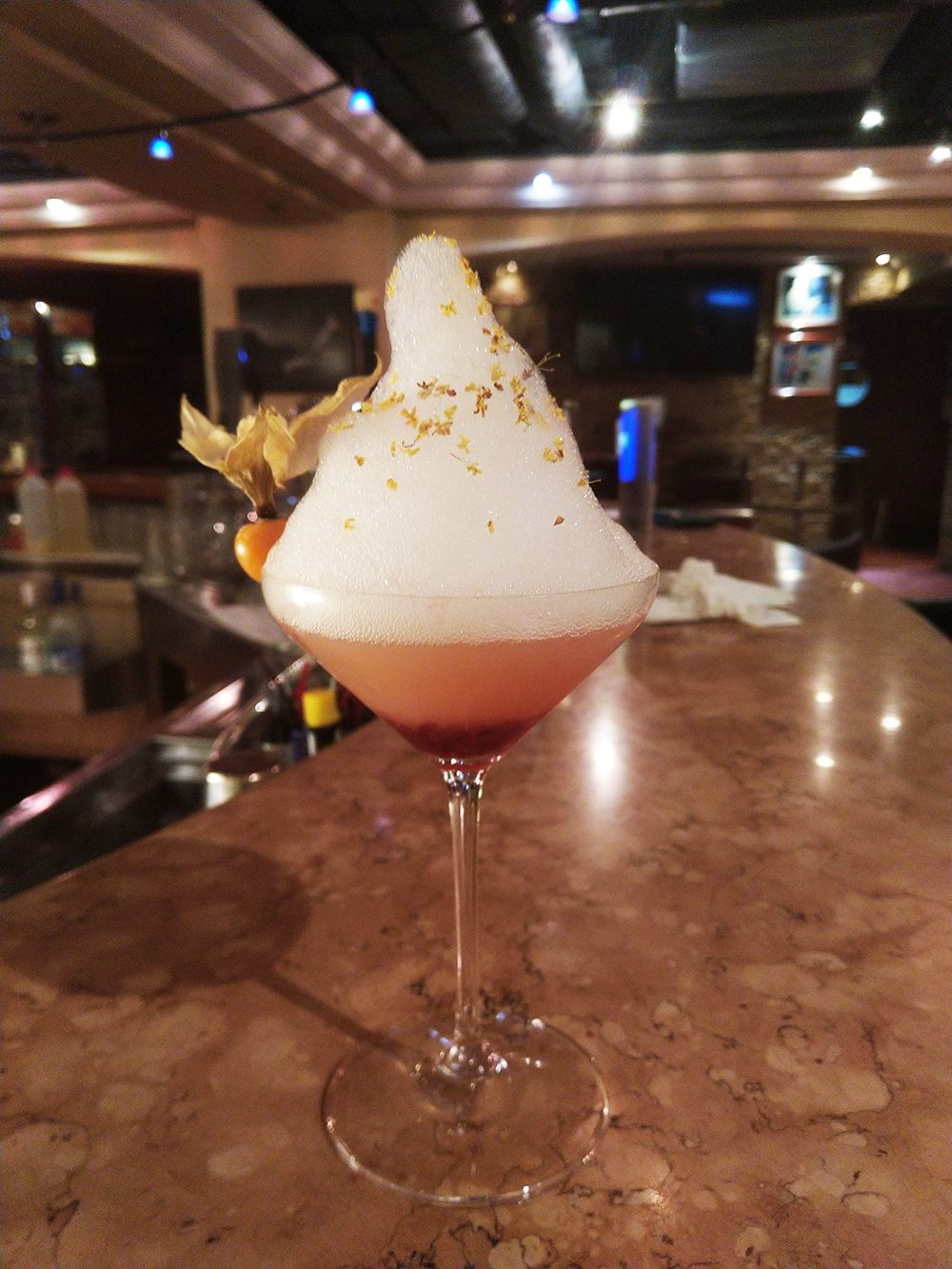
Kyoho Caviar Martini Kyoho Caviar Martini

Like all of Chan’s designs, this delicate take on the classic martini is intended to be Instagram-worthy.

Starting at the top, the drink is crowned with a mountain of chamomile tea air, with bubbles that will last for more than an hour- although that seems unnecessary once you start sipping. The drink itself is a “millennial pink” colour, consisting of fresh gooseberry, vodka, orgeat syrup, lime and apple juice. And the bottom holds a layer of Japanese Kyoho molecular “caviar,” or tiny jelly-like pearls reminiscent of the popular bubble tea drinks.

The result is certainly not your grandfather’s martini. The drink is a perfect pre-dinner beverage with its soft flavours. But don’t be deceived by the floral finishes. The drink still serves up a bite at the end of every sip, and it can pack a punch.

Black Pirates and Rum

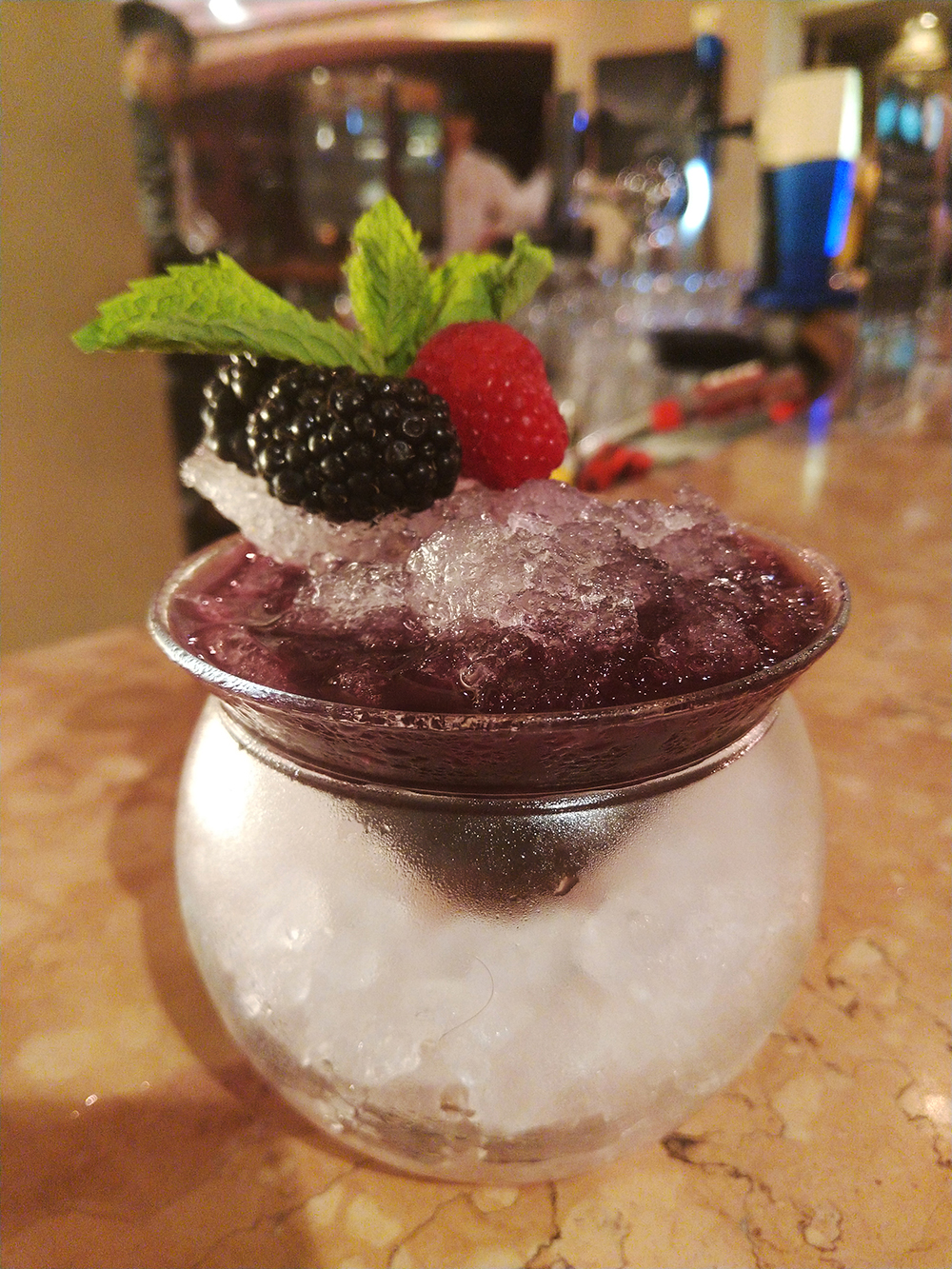
The Black Pirates and Rum The Black Pirates and Rum

This summer-worthy rum punch is all about the fruit. Nearly every cocktail on Chan’s new menu has a fruity base. Chan prides himself on using muddled fresh fruits to give the drinker more complexity in their cocktails, and something to chew on.

Once you snag the fresh blackberries and raspberries off the top of this one, you’ll taste a perfectly chilled purple punch. With a rum base, the refreshing mixture includes fresh blackberries, cassis liqueur, sweet and sour mix and pineapple juice.


Smoked Negroni

Smoked Negroni Smoked Negroni

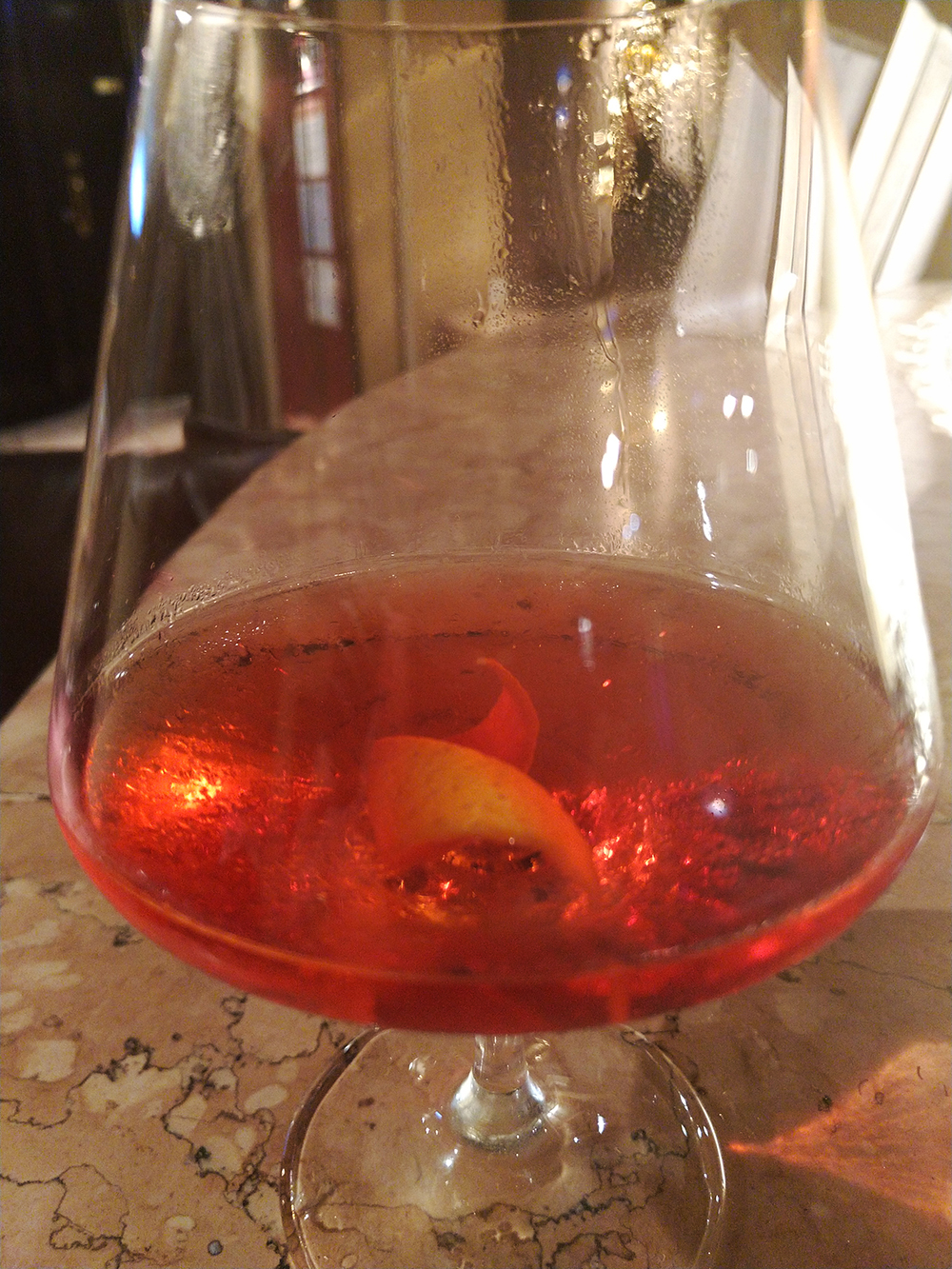
This cocktail is the most traditional of Chan’s inventions, but, of course, it comes with a photo-op.

The drink itself consists of Tanqueray gin, Campari and vermouth rosso, served straight with an orange twist. But when it’s served, Chan or one of his team will appear with a smoke-filled decanter. The smoke, which comes with aromatic vanilla sprays, is poured into the cocktail in a dramatic fashion.

The result is not only theatrical, it also adds an interesting flavour combination, taking the classic negroni taste and making it less bitter. It’s a drink that fans of the original will love, as well as those that want something a bit easier to sip.

Berry Rosa

Berry Rosa Berry Rosa

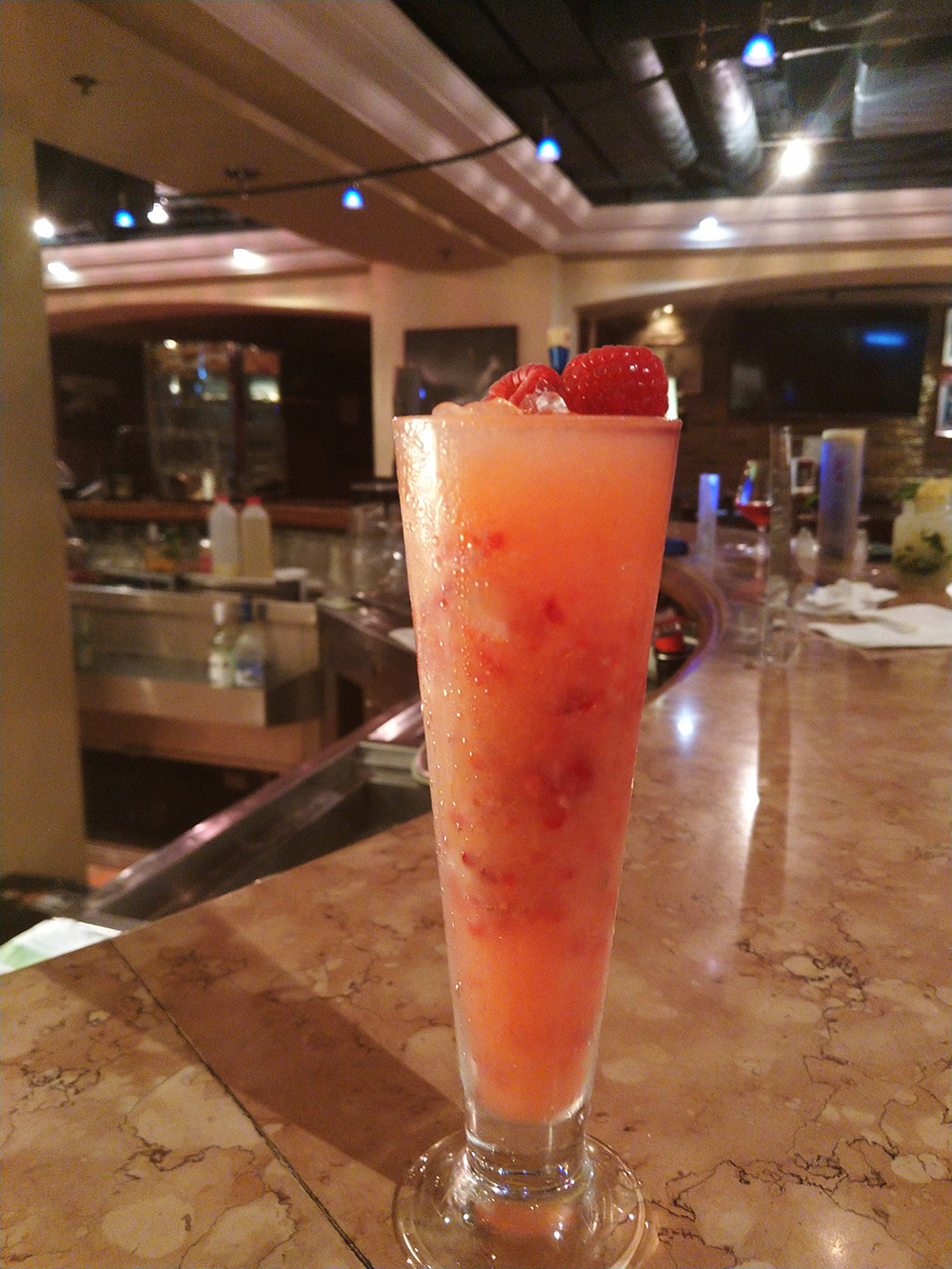
The first of the mocktail creations, the Berry Rosa has been dubbed a “lady’s drink” by Chan.

It is bright pink in colour and is topped off with raspberries. While the drink looks a bit like a smoothie, chock-full of fruit, it’s still delicate, and visually elegant in a tall glass. The beverage mixes fresh raspberries, fresh strawberries, peach juice, Calpis and ginger ale.

The flavour sticks to the tongue while also quenching your thirsty sweet tooth.


Ginger Sour Cooler

Ginger Sour Cooler Ginger Sour Cooler

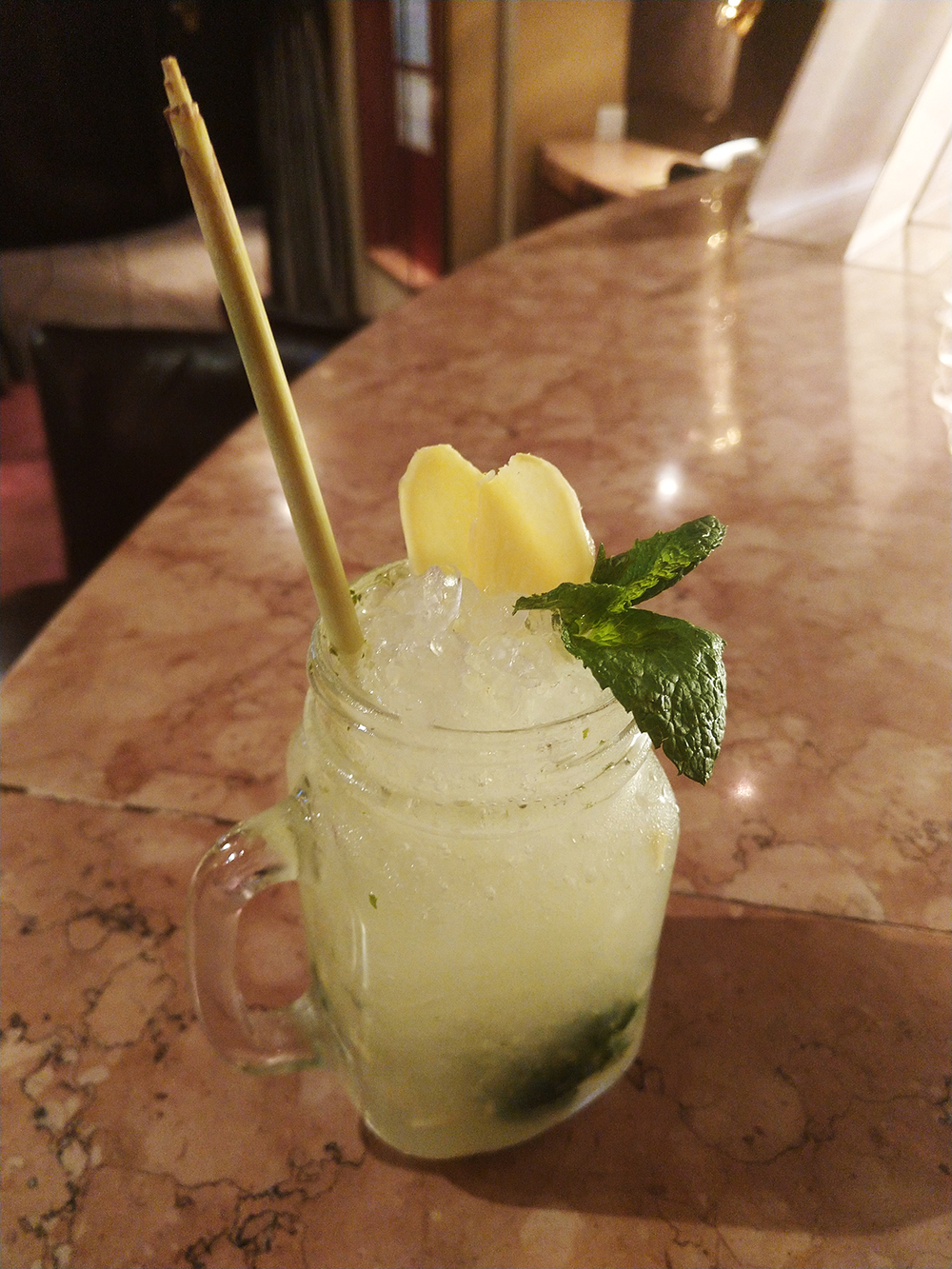
While the two other mocktails would pair perfectly with a splash of Prosecco, this drink truly needs no alcohol.

The mixture of fresh ginger, mint, sweet and sour mix and soda, topped with lemongrass as a stirrer, is exactly what everyone needs on a hot summer day. The ginger flavour is subtle, while the sour mix packs a bit of a punch, but without an acidic overtone. The flavours balance perfectly, making this mocktail easy to drink.


Bert’s Punch

Bert's Punch Bert’s Punch

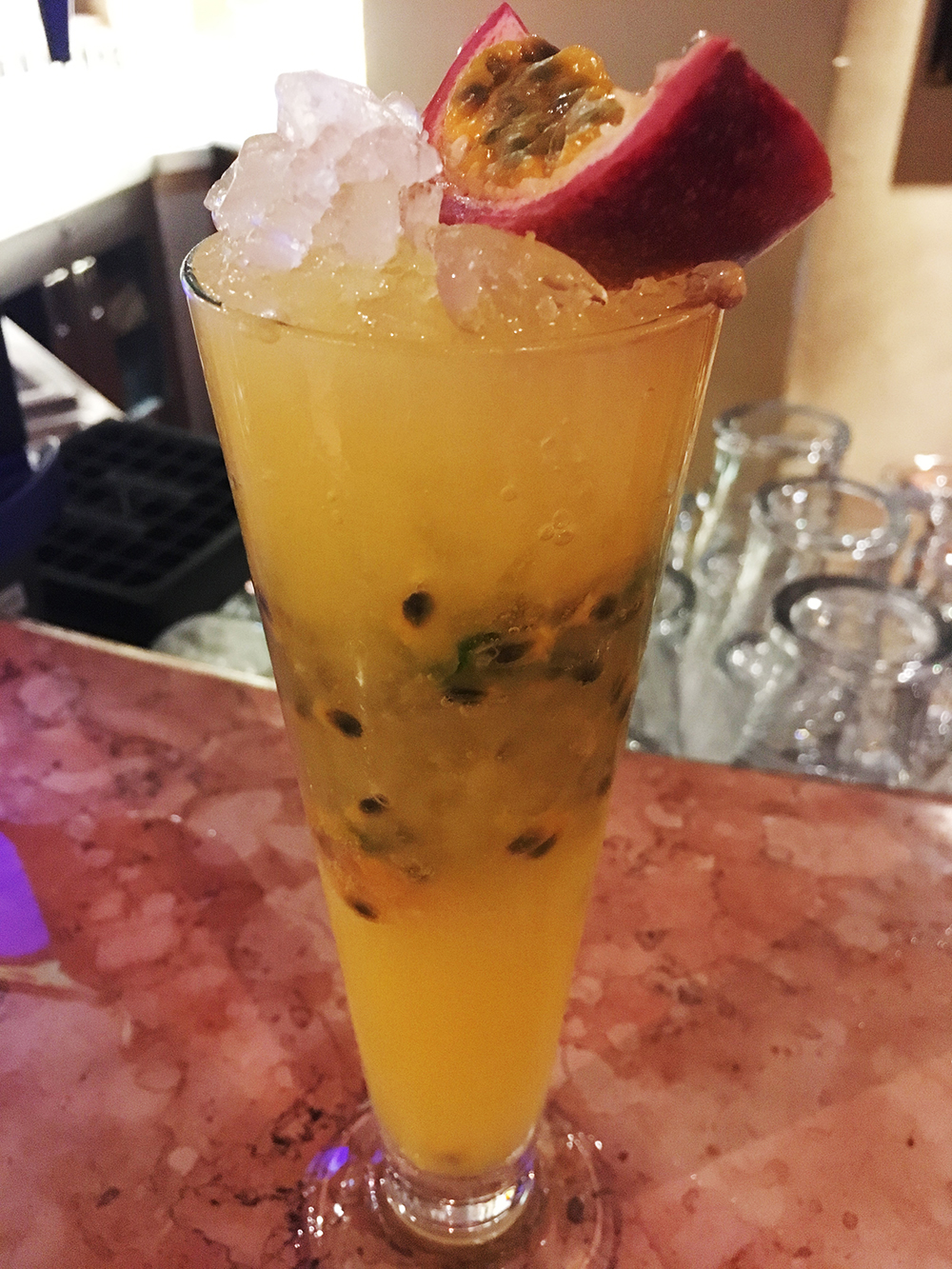
The final mocktail has been set up to be a signature for Bert’s bar, and consistent with Chan’s fruit theme, it doesn’t disappoint.

The yellow, layered drink, served in a tall glass, includes fresh passionfruit, with orange and pineapple juice. This fruity mix is perfect for brunch. With a fruity aroma, helped along by the chunk of passionfruit garnishing the top, the flavours of this beverage will leave you wanting more. 


Morgan M. Davis is a finance reporter at Euromoney’s GlobalCapital. The Illinois-transplant moved to Hong Kong two years ago by way of New York City, accompanied by her trusty sidekick Gizmo the Yorkie. Morgan has reported on multiple sectors of finance, and holds a Master’s degree from Columbia University.

Line e'm up - the new cocktails Line e’m up – the new FCC cocktails
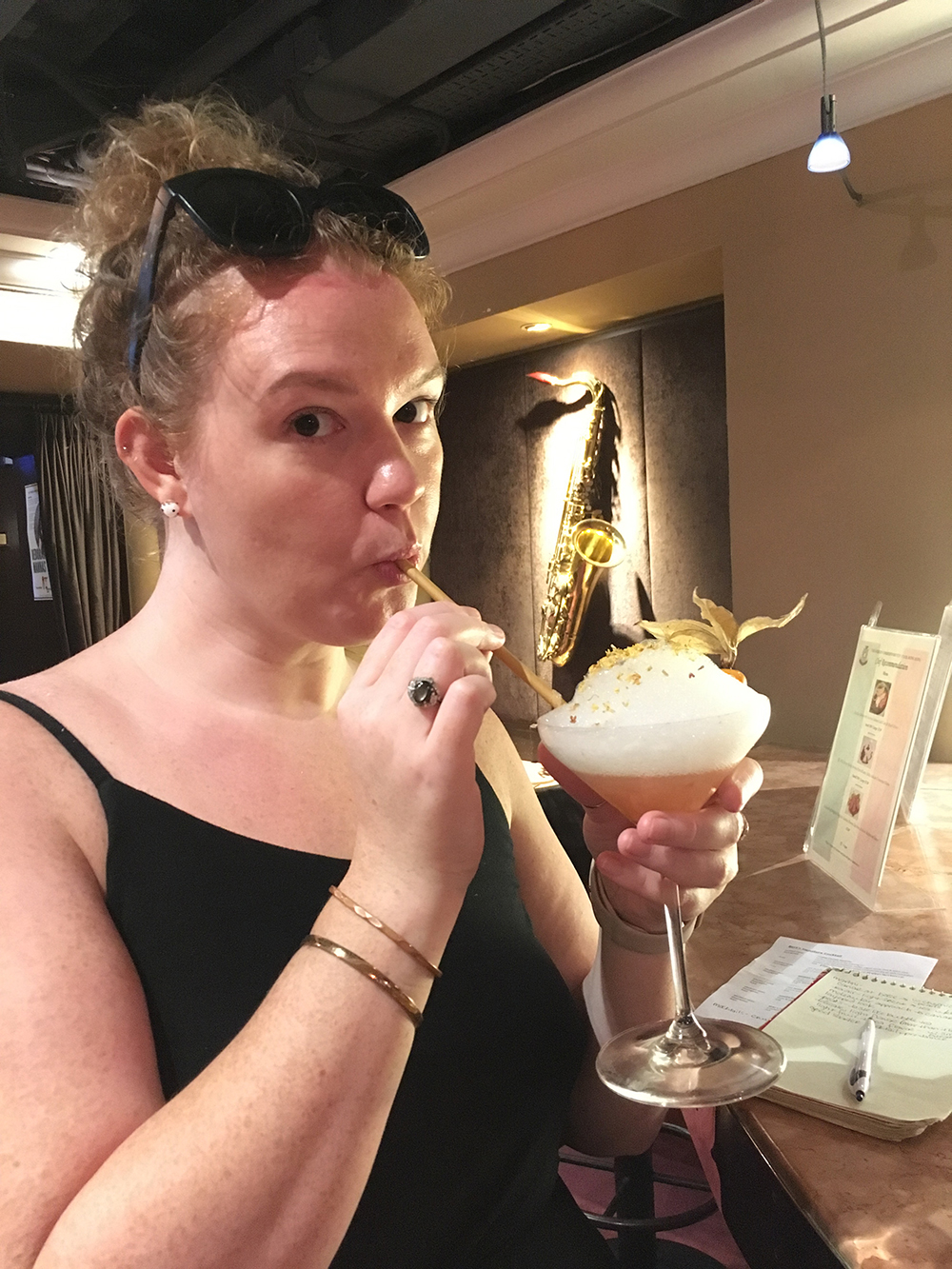
Morgan with a martini, Bert's style Morgan with a martini, Bert’s style
Michael Chan Michael Chan

Images of Tiananmen and Beyond: Photojournalists Tell the Story

Here, we show images from Tiananmen Square as featured in our On The Wall photo exhibition.

[ngg src=”galleries” ids=”10″ display=”basic_thumbnail”] 


What happens when government ministers decide what is true and what is false?

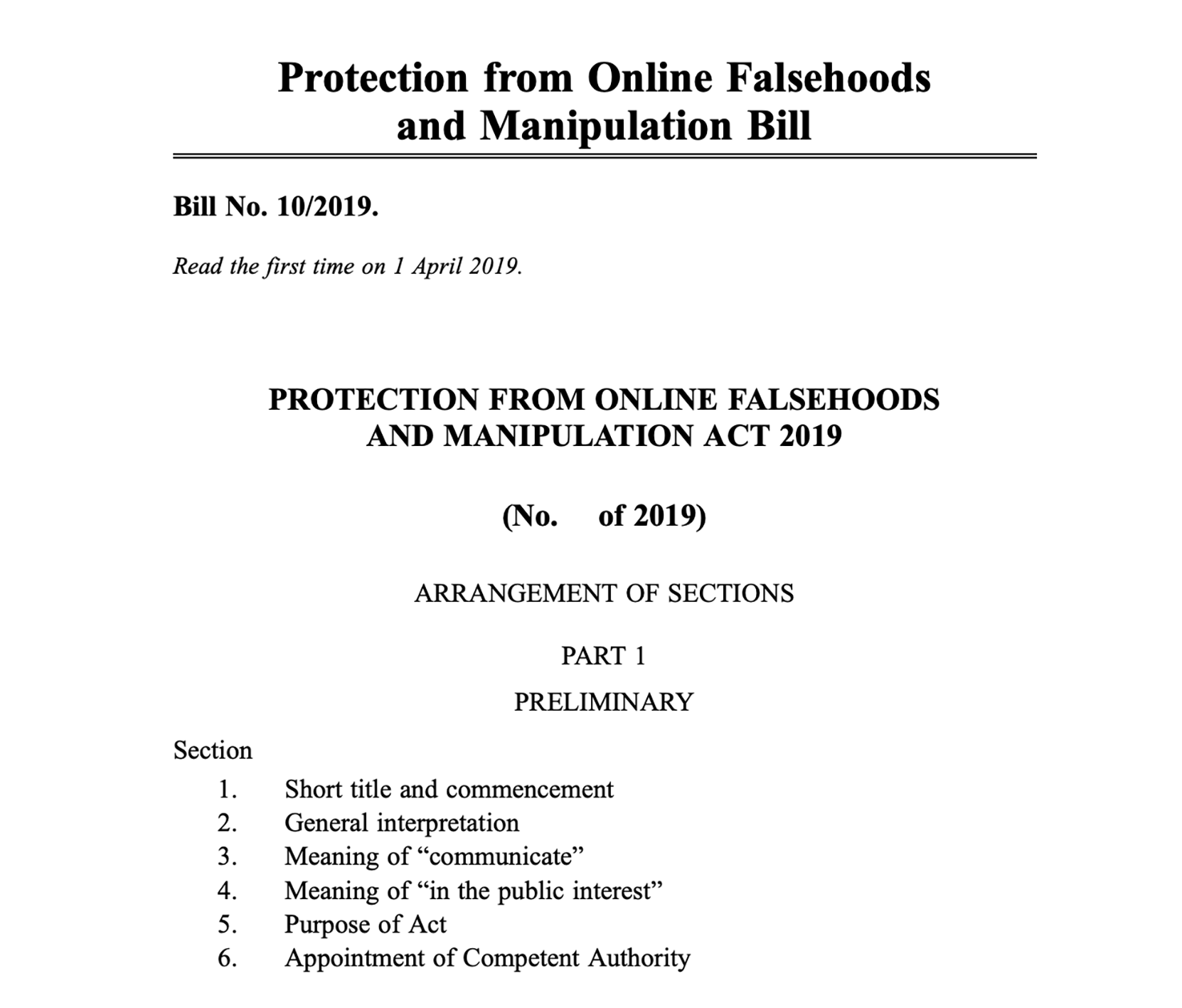
The Protection from Online Falsehoods and Manipulation Act was passed in Singapore in May. Once signed into law, it will give government ministers sweeping powers to decide which statements are true and which false. Kirsten Han, an outspoken opponent of the act, explains her concerns.

Fake news Fake news

In November 2016, a photo began to circulate on social media. Taken in a public housing estate in the north of Singapore’s island, it drew attention to one of the public housing blocks, claiming that the roof had collapsed.

But the roof hadn’t collapsed; it was merely an optical illusion caused by the building’s terraced design. When All Singapore Stuff, the Facebook page that had distributed the image, realised this, they swiftly removed the post, although not before it prompted a small flurry of worry and concern. Some people, it was reported, called the police.

As “fake news” goes, this was pretty small potatoes compared to the disinformation crisis spreading across other countries, such as Myanmar, India and Sri Lanka. But that didn’t stop the People’s Action Party (PAP) government in Singapore from pouncing on it as an example of why the city-state needs to take action to deal with the scourge of misinformation.

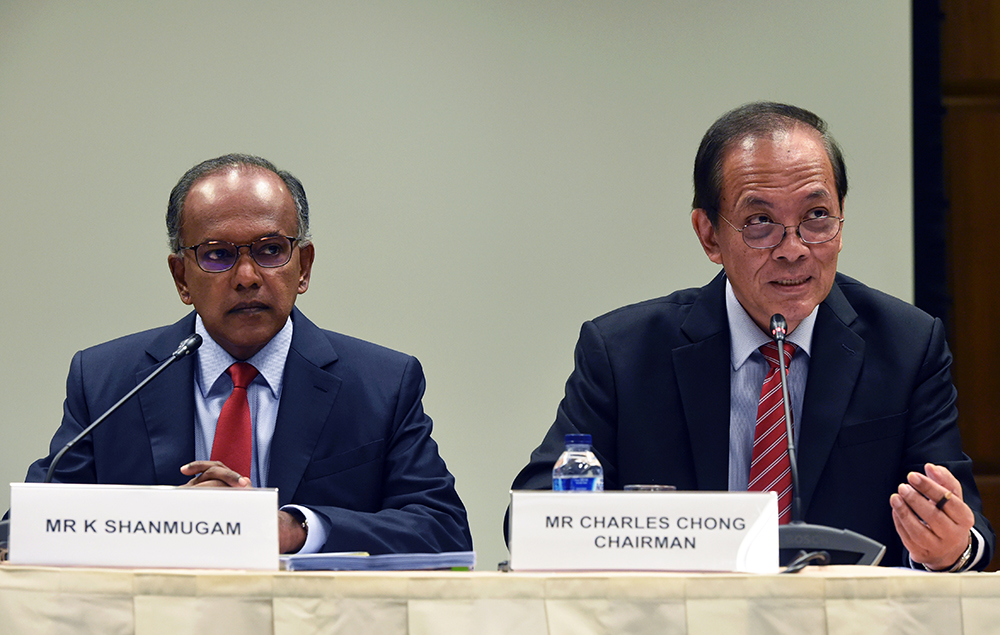
Singapore’s Minister of Law K Shanmugam (2nd L) and Charles Chong, deputy speaker of the parliament and chairman of the Select Committee on Deliberate Online Falsehoods, attend a press conference in Singapore on September 20, 2018 Singapore’s Minister of Law K Shanmugam (2nd L) and Charles Chong, deputy speaker of the parliament and chairman of the Select Committee on Deliberate Online Falsehoods, attend a press conference in Singapore on September 20, 2018

The Protection from Online Falsehoods and Manipulation Act, more commonly referred to as POFMA, is the PAP government’s newest weapon to, ostensibly, fight “fake news”. It’s the fruit of two years’ worth of chatter about introducing new legislation to combat “deliberate online falsehoods” — a move that K Shanmugam, Minister for both Law and Home Affairs, had said was a “no brainer” back in 2017.

The idea that something needs to be done about disinformation going rapidly viral on social media platforms like Facebook, Twitter and YouTube isn’t particularly controversial in itself. The problem comes in when trying to figure out the details: who gets to decide what is “fake”, and what should be done about it?

Under POFMA, any Singaporean government minister is given the power to issue correction notices, order takedowns, or direct internet service providers and intermediaries to block access to content. This exercise of executive power sidesteps the judiciary until the end — anyone inclined to challenge the minister’s order can only appeal to the High Court after the minister has rejected an application to review his or her own order. The law will apply to anyone in or out of the country, as long as the content is accessible by at least one end-user in Singapore. A clause at the end of the law also allows government ministers to exempt anyone they want from any provision of the act.

Essentially, POFMA has, in the first and second instance at least, made Singaporean ministers the arbiters of truth.

It’s problematic to give a government such sweeping powers over online speech, especially when it’s effectively a one-party state like Singapore. Predictably, civil society groups, journalists, academics and tech companies were concerned and unhappy about this state overreach.

The academics were among the first to marshal a strong, coordinated response: “Under these circumstances, POFMA is likely to make many academics hesitant to conduct or supervise research that might unknowingly fall foul of POFMA, or refer colleagues or students to faculty positions in Singapore’s respected universities,” they wrote in a letter to the Education Minister.

“This act discourages scholars from marshaling their expertise in precisely the areas where it is most needed — namely, pressing questions and challenges for which there are no clear answers or easy solutions.”

Journalists, including myself, followed with a statement: “By failing to distinguish between a malicious falsehood and a genuine mistake, the proposed legislation places an unnecessarily onerous burden on even journalists acting in good faith. Such a law will hinder rather than encourage the free flow of accurate information. News organisations might feel compelled to withhold important stories simply because certain facts cannot be fully ascertained. This is especially likely in Singapore where it is often not possible to get a response in time from the government.”

This resistance came in a context where it wasn’t even clear if Singapore was facing a disinformation crisis serious enough to warrant such a sweeping bill. Both the Green Paper and Select Committee on Deliberate Online Falsehoods had brought up examples of racist, hateful, violent speech found in other contexts, such as Myanmar, Indonesia and Germany, but were short on local examples.

Despite the resistance, the PAP government stood firm, as expected. “The Government is confident that most Singaporeans understand the bill’s main thrust. The concerted attempts by a small group of persons to mislead have not got any traction among most Singaporeans. The small group of persons I have referred to, speak in a shrinking echo chamber, with increasing shrillness,” wrote Senior Minister of State for Law and Health, Edwin Tong, in The Straits Times.

Parliament, dominated by the party, passed the law without amendments on 8 May 2019. But the Act has still yet to be signed into law — during the two-day debate, Shanmugam had promised that more details will be laid out in subsidiary legislation, which Singaporeans have not yet seen. It’s unclear when this “fake news” law will actually come into force.

Yet the law doesn’t actually need to come into force to become a worry — the passage of this bill in itself, in a country with a positive international reputation, legitimises such state regulation of online spheres of discourse. There’s also the issue of copycat legislation: would other authoritarian states look to Singapore’s POFMA and get ideas? And if the tech companies comply with Singapore’s demands under this law, would it legitimise similar demands from other jurisdictions, such as Turkey or China?

As Singaporeans wait and wonder who the first recipient of a POFMA directive will be, there are, unfortunately, no answers to these troubling questions. 

Kirsten Han is a freelance journalist in Singapore focused on social justice, human rights, politics and democracy. She is also editor-in-chief of New Naratif, a member-funded Southeast Asian platform. Last year she was a guest speaker at the FCC and she won this year’s Commentary Writing (English) Human Rights Press Award.


Introducing… FCC new members, July 2019

The latest group of members to join the FCC is, as always, an interesting bunch. The membership committee meets regularly to go through applications and is always impressed by the diversity of people who want to join the club.

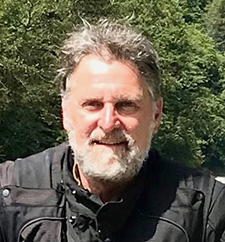
Jonathan SparksJonathan Sparks

I started my working life as a sailor before settling down to 20 years working in Japan prior to coming to HK. My job in IT outsourcing as managing director of Emerge 360 HK Ltd is about as far as you can get from my passion for outdoor sport – skiing, trekking, triathlons, road cycle racing, motorbike touring – other than synchronised swimming, if it is active and outdoors, I will do it. Coming full circle, I am preparing to head back to sea in an aluminium yacht capable of sailing into icy waters in high latitudes. So learning to sail well is now occupying much of my time.


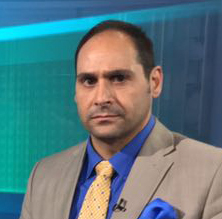
Pete KoveosPete Koveos

I moved to Hong Kong a year ago, and currently work at TVB News as a producer. I previously lived in Beijing and Vancouver, and have covered three Olympics in my journalism career. Like most journalists, I am curious by nature, yet pedantic with facts. I am in a constant battle to eat better, yet be social, and try new food hotspots. I once finished second at a high school spelling bee, but now I can’t function without spell check. When I am not working, I try to go to the gym and check out my new city. I will accept any good restaurant recommendations.


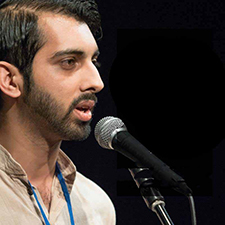
Suhas BhatSuhas Bhat

I am an Indian journalist covering corporate finance for a readership of corporate treasurers and CFOs with Haymarket Media. Previously, I wrote for a sports broadcaster (FOX Sports Asia) in Singapore. I am an alumnus of the journalism school at the University of Hong Kong (JMSC) and the National University of Singapore. I grew up in Southeast Asia and I’m looking to further my career here and find new perspectives. I am interested in South Asian affairs and I care a lot about minorities. I believe a lack of diversity over the years within most organisations in Hong Kong has contributed to a parochial understanding of South Asians. I also perform as a storyteller, write science fiction short stories and I love to watch TV shows that show the commonality of human experiences in different cultures.


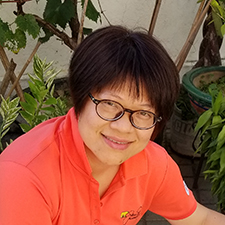
Lai Sheung Louise WongLouise Lai-Sheung Wong

Having been a journalist for over 20 years, I am the publisher of Next Magazine. I spent my childhood in the rural area of Hong Kong and loved cycling to explore villages. There was no boundary in my little world. I picked lychees in summer and dug yams in winter. I had various kinds of animals as pets such as pigeons, dogs, rabbits, and silkworms. At that time, I met many foreigners who came to visit the border area in Lok Ma Chau to see what Communist China was like. When I was a teenager, I day-dreamed of travelling after reading the book Around the World in Eighty Days. Joining the FCC allows me to meet different people from around the world now.


Neil CarabineNeil Carabine

I am a partner at King & Wood Mallesons and have practised law in Melbourne, Sydney and London. My wife Bernie and I arrived in Hong Kong four years ago (spending most of it on the FCC waiting list)! We are very pleased to be joining the FCC. This is a critical time for Hong Kong. The FCC is a shining light in protecting freedom of speech and of journalism, in ensuring that the Basic Law and Bill of Rights are more than words on a page. The recent police raid on ABC headquarters in Sydney shows that eternal vigilance is needed, even in liberal Western democracies. As a public policy nerd I will be very pleased to be in the midst of robust FCC debates on issues as varied as Brexit and One Country Two Systems.


Gayatri BhaumikGayatri Bhaumik

I took my first flight at 10 days old, which perhaps explains why I’m now a travel and lifestyle writer. This is my third stint in Hong Kong and I’ve just been appointed group editor at Artemis Communications, where I oversee several publications. Before this, I worked in digital marketing in Melbourne, pursued an MSc in Economic History at the London School of Economics, and spent 12 years in Bangkok. Off-duty, I can be found reading spy novels, listening to country music and trying Hong Kong’s newest restaurants.


Mary HoMary Ho

I started my “slash” career two years ago. I am an academic, research consultant, and impact analyst. Juggling my time around these jobs is the biggest challenge but gives me the biggest joy when projects are completed and students don’t complain. What do I teach? Business ethics and social responsibility, probably the toughest course to teach at any business school. Other than my several jobs, I picked up a new hobby – Muay Thai (Thai boxing). I have trained for one year now but am definitely still an amateur.


Deepa JivanDeepa Jivan

Born in London and having spent most of my adult life in London, it was a big change to move to Hong Kong seven years ago. I am, however, very happy to call Hong Kong my home now. Like most things in Hong Kong, my husband imported me in! I have re-established my business here, where we design, develop and deliver hobby/craft/stationery products to retailers all over the world. My team and I have the best jobs in the world creating fabulous products. I am also a partner in an F&B distribution business. I am part of the Women’s Foundation Mentoring 18-19 Cohort, I enjoy hula hooping, have started playing the piano again and have a love for earrings and collect Swatch watches.


Stanley NgStanley Ng

Toronto Raptors v Golden State Warriors 4 ORACLE 105-92 is not a court case I worked on as a civil law advocate called to the Hong Kong Bar. Rather, it stands for the scores for Game 4, which I am so proud of. My strong bonding with the Jurassic town started in my teens, which eventually got me my first degree in Philosophy, and tied me (not “down”☻) to my wife Carey. If at the FCC you run into a “kidult” of my height, or even taller as he insists is the case, stomping his iPhone with his fingers, and mostly on the Fortnite screen, that is our son Sean. Though it has been a bit of a wait to be part of the FCC community, we are finally here and look forward to meeting you all. By the time this is published, the Raptors would have already made history… fingers crossed.


Laurence TanLaurence Tan

I was born and raised in Singapore and have been living in Hong Kong for almost seven years, working as a photo editor while documenting daily life through my own lens in Hong Kong and during my travels on a backpack or biking on a two-wheeler. My first visit to Hong Kong was around 16 years ago, travelling from Hong Kong to Singapore overland. I have found it fascinating touring through border towns since then, spending the past few years exploring Central Asia.


Carol LaiCarol P. Lai, PhD

I started to join the profession in the mid-1980s, covering the 1989 Beijing student movement and June 4 massacre in Beijing. I also witnessed and covered the handover of Hong Kong sovereignty in 1997, while elected as the chairperson of the Hong Kong Journalists Association. In 2007, my book entitled Media in Hong Kong, Political Change and Press Freedom 1967-2005 was published by Routledge. Apart from hosting a weekly talk show, Good Morning HK on Radio Free Asia, teaching at the journalism centre, HKU, and writing profiles for Apple Daily, I enjoy interpreting for Buddhist masters. My interests include Tibetan Buddhism and yoga. I am currently writing on media and civil society, the case of Hong Kong and China.


Austin RamzyAustin Ramzy

I’m a reporter with The New York Times. I grew up in the midwestern United States, and first visited China as a student in 1996. I moved to Hong Kong in 2003, when I worked for TIME Asia, then spent eight years in Beijing and Taipei before returning in 2014. Cycling is my favourite pastime, but in recent years I’ve taken up running as an escape from Hong Kong traffic. I ran my first marathon this year. Lester, a Hong Kong village dog I adopted as a puppy four years ago, is my main training partner.


Siddarth ShrikanthSiddarth Shrikanth

I’m a reporter at The Financial Times, but I didn’t start out in journalism; I read biology at Oxford before making my first pivot to McKinsey & Company in London. I later went to Indonesia to set up McKinsey’s new environmental non-profit to tackle Southeast Asia’s shocking plastic pollution crisis. I moved to Hong Kong at the start of this year to try my hand at journalism, which I had been meaning to do for a long time and now realise I love. The FT has been a fantastic place to learn the ropes and work closely with colleagues far more experienced than me. I love travelling and that interest dovetails nicely with my other hobby, scuba diving, which I’ve been doing for several years now in far-flung (and warm) places across the world. n


Jodi Schneider: It’s a privilege to be FCC President

Jodi Schneider is the 2019-20 President of the FCC after taking over the post uncontested in the May elections. She has worked at Bloomberg News since 2010 and is currently Senior International Editor.

FCC President Jodi Schneider. FCC President Jodi Schneider.

How did the role of President remain uncontested?

Well, it became clear that Florence (de Changy, last year’s President) was not running again, and that Jenn (Jennifer Jett, last year’s First Vice-President) was leaving Hong Kong. I went to Bloomberg and spoke to some editors in Hong Kong and New York. Every one of them said I should do it. I am thrilled, it really is a privilege.

Eric Wishart is your uncontested First Vice-President. How was that choice made?

I got involved in the 2017 Journalism Conference soon after I moved to Hong Kong. During that time, Eric and I became friends. We talk a lot; we WhatsApp and email, and because we are friends we can say things, be honest with each other, and we don’t have to defend our positions when we have different ideas about things.

What do you think about the changes on the Board of Governors, with only four remaining from last year?

We have a great Board; it has some stability from last year, but with plenty of new faces as well.

How can the members support the Club better?

I would like it if every member based in Hong Kong was active. I’d like many more people on the committees; because people here travel so much they often aren’t here for the meetings. I’m introducing a call-in option for committees, so if people are travelling but they’re in the region they can take part. I hope people come here and have a good time, like I always have.

You were based in Washington, D.C., for many years. Why did you leave?

My children (sons Charlie, 24, and Ben, 27) were grown up and I had always wanted to work overseas. In 2015 I told various people at Bloomberg (Jodi was team leader in the Washington, D.C., bureau leading coverage of the U.S. Congress and tax policy) that I wanted to go overseas. Five weeks later I was on my way to Japan to fill in for an economics editor at the Tokyo office taking a year’s paternity leave. I had a wonderful year in Japan but I knew that learning the language would be a hurdle to staying there.

And Hong Kong was the next move?

I visited Bloomberg’s Hong Kong office for a few days in the spring of 2016 and was excited by the energy and talent here. I left Japan in September 2016 and went back to the U.S. for a few months. I sold my house in Maryland, worked on election coverage and then moved to Hong Kong on the Saturday after the presidential election.

And how did you get involved with the FCC?

I joined the Club as soon as I arrived in Hong Kong. I was active in the National Press Club in Washington, and was President of the Society of American Business Editors and Writers, so I’m not new to press clubs!

What do you like doing away from work?

I am a big reader; I always have a book in my purse. I read literary fiction as I have to read non-fiction all day as part of my job. I love to cycle but you can’t really do it outdoors in most of Hong Kong, so I cycle indoors at a studio. I live in Causeway Bay, and every Saturday I do a session with a personal trainer on the track at Happy Valley racecourse. I’ve been all over Asia from here; I enjoy long weekends away. I go back to the U.S., of course. My sons are there, and my mother.

What changes would you like to see at the Club?

When people visit Hong Kong, I want the FCC to be their first choice as a place to speak. More authors, filmmakers, more panels about the stories of the day. International figures, politicians, policy makers, world leaders… I’d like Carrie Lam to come back, of course. And I’d like workshops for members. It would be nice to see baseball on the screens sometimes, too. If the Washington Nationals are playing, that would be even better. 


Human Rights Press Awards: Speaking for the voiceless

The Human Rights Press Awards are run by the FCC, Amnesty International Hong Kong, and the Hong Kong Journalists Association. Now in its 23rd year, HRPA presents 52 awards recognising outstanding journalism in the area of human rights across Asia. This year saw a record 468 entries,13 per cent up on last year. A total of 182 entries were submitted in Chinese-language, and 286 in English. The awards ceremony was held at the club on the evening of May 16. Reporting by Sue Brattle & Vicky Kung. 

The Correspondent spoke to some of the winners about their work, and what winning a Human Rights Press Award means to them:

Breaking News Writing (English)

Emily Feng of the Financial Times won a Merit for Forced Labour in Xinjiang.

Feng now works at NPR:

Emily Feng. Photo by Allison Shelley

“I’m honoured and humbled to have received this kind of recognition for my work on Xinjiang, especially since reporting on this topic has been a hard, uphill slog in difficult reporting conditions. This investigation in particular came about as I began questioning the claims made by Chinese state bodies regarding ongoing detentions of Uighur Muslims. Since then, many other talented journalists have followed suit, producing an astonishing body of investigative journalism that collectively has contributed greatly to our understanding of the contours of this state campaign.”


Investigative Feature Writing (English)

Clare Hammond, Victoria Milko and Kyaw Lin Htoon of Frontier Myanmar won a Merit for Conflict, Conscription and a Cover-up: The Killing of Six TNLA Medics. Kyaw said:

This is a first-ever award, so much appreciation to all of you. We were the only journalists who reached the scene of this incident. It’s very important for journalists to have access to places where stories are born. For a country like ours, most journalists and media outlets have many more barriers than other countries. The first barrier is the financial status of media outlets. Another is aggressive authorities, like the Burmese military, and outdated laws, such as the Unlawful Associations Act. There are a lot of human rights violations to be uncovered and discussed in-depth in Myanmar. Journalists in Myanmar, whether citizen or foreigner, are struggling. Please keep supporting journalism in Myanmar so that it can continue to survive.”

Student Writing (English)

Supriya Chhetri, Gianna Aquino, Janina Rika and Karrie Lam of MSS Messenger, Marymount Secondary School, won a Merit for Periods: Addressing a Taboo and a Need of the Underprivileged. Teacher Kitty Leung said: “Students chose the topic of their article as part of their response to the theme of Female Empowerment which was the focus of the first issue of the school magazine last year. There are not a lot of awards around that acknowledge students’ work on reporting at secondary level so it is encouraging to receive the award and an honour to be listed with top professionals in the field. I hope students will be inspired to continue writing about issues that touch on human rights.” 

[ngg src=”galleries” ids=”8″ display=”basic_thumbnail”]Investigative Feature Writing (Chinese)

The Investigative Section of Apple Daily Hong Kong won a Merit for Series: Scandal of the Shatin to Central Link. In May 2018 reporter Anthony Leung began an investigation into construction scandals involving holes in concrete slabs at the Shatin-Central MTR link after receiving tip-offs from the public. He said: “When we first approached the MTR with evidence-supported questions regarding these problems, it denied there were holes, and accused us back. Later reportage revealed that the Hong Kong Convention and Exhibition Centre station has missing supporting structure and the Hung Hom station had its design altered without proper approval. Such safety problems point to loopholes in the monitoring and governance structure within giant companies in Hong Kong, like MTR. The way things are managed and checked is falling apart. We finished this investigation because citizens gave us evidence. We want them to continue doing so.”

Student Writing (Chinese)

Liu Dicksa Isabelle, Lam Sum Yi, Shen Qing and Cheung Tung of U-Beat Magazine, CUHK

won for Half a Century of Heavy Metal Pollution Gives Villagers Deformed Limbs. Four students from CUKH’s Journalism School went to Changtun, Guangxi, to report on heavy metal poisoning from a mine that has left people with blistered joints and severe disability, and their crops die. Kathy Shen Qing, who did a follow-up story, said: “The mining started in the 1950s and farmers started to notice deformities about 30 years ago. We found this case through an NGO. People often don’t have many channels to communicate their needs, especially when they don’t receive enough help from the government. Some get harassed because the authorities don’t want them to complain. But we in Hong Kong have freedom of speech and we have a responsibility to speak up for the voiceless there.”

Explanatory Feature Writing (Chinese)

Carson Qin Kuan of Initium Media won for Lawyers Dealing with Poisonous Milk Powder and Problematic Vaccines, What Are They Up To? He said: “It has been 10 years since the press covered poisonous milk powder and problematic vaccines on mainland China. Stories like this keep happening. The press covers it, people notice it for a while, then the victims get forgotten. Bringing up old incidents that are not solved forces people to think about the systemic problems that lie behind these cycles. It’s best to talk with human rights lawyers if you want to capture the root of problems. I am happy and surprised that my article was given an award because vaccine is an old topic. I am grateful that the award acknowledges the need to focus not just on the hot topics but also remember marginalised people who are forgotten.”

You can follow the Human Rights Press Awards at www.facebook.com/HumanRightsPA/

Keynote speaker Maria Ressa of Rappler: ‘We need to hold the line and show the best of human nature’

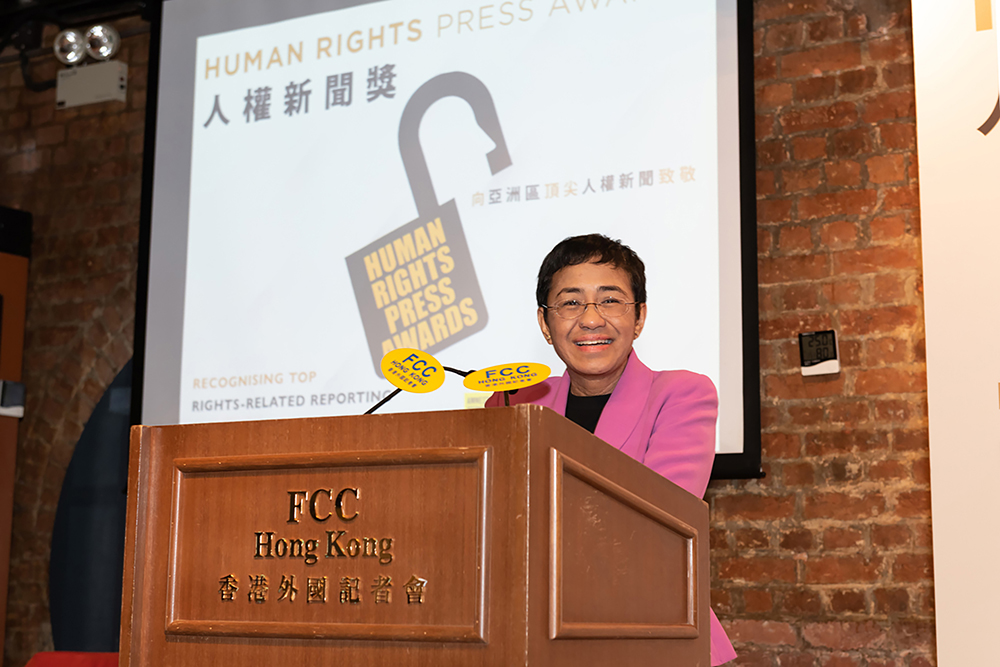
Maria Ressa, co-founder and CEO of the Philippines-based news website, Rappler, was free on bail after her second arrest this year when she spoke at the awards ceremony. “Your reporting matters. Now more than ever. We need to hold the line and show the best of human nature. That is our hope for the future,” she told an audience that knew only too well what she meant.

Maria Ressa speaks at the Human Rights Press Awards 2019. Photo: FCC Maria Ressa speaks at the Human Rights Press Awards 2019. Photo: FCC

Reuters reporters Wa Lone and Kyaw Soe Oo, freed from jail just a week before the ceremony, won the award for Best Investigative Feature Writing along with colleagues. They had spent 511 days behind bars for allegedly exposing “state secrets” in the course of reporting Myanmar Burning, a damning investigation into the massacre of 10 Rohingya men and boys by security forces and armed Buddhist civilians.

Even though they were not at the ceremony, the spirit of their work and sacrifice was. Ressa said: “Even though it is difficult to work as a journalist now, there is no better time to be a journalist, because it matters.”

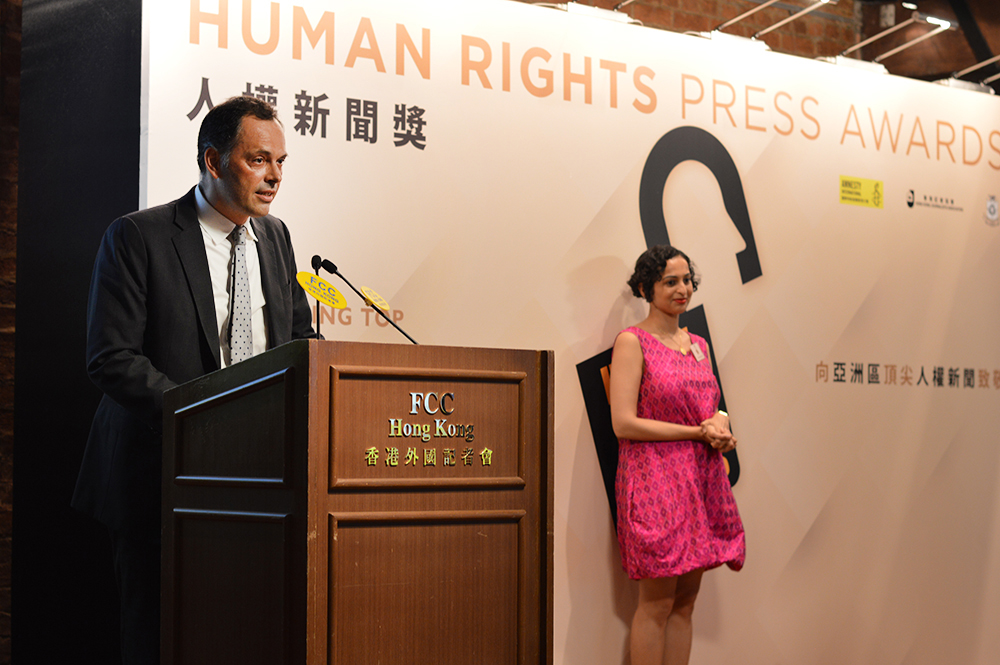
FCC President Florence de Changy, introducing Ressa, said: “As Asia is experiencing less freedoms all round, and several governments do not uphold human rights, the reporting of human rights abuses is all the more important.”

Simon Gardner of Reuters accepts the Investigative Feature Writing (English) Award on behalf of freed prisoners Wa Lone and Kyaw Soe Oo and their colleagues. Photo: FCC Simon Gardner of Reuters accepts the Investigative Feature Writing (English) Award on behalf of freed prisoners Wa Lone and Kyaw Soe Oo and their colleagues. Photo: FCC


The Correspondent, July – September, 2019

Obituary: Paul Baran, journalist and champion pool player

Paul Baran, 1949 – 2019

Paul Baran, retired journalist, former FCC member, and champion pool player, has died in Ladysmith, Vancouver Island, Canada, at the age of 69 of brain cancer.

Paul Baran reads the SCMP on the Cheung Chau ferry in the 1980s Paul Baran reads the SCMP on the Cheung Chau ferry in the 1980s.

Paul was initially a reporter and copy editor at the Vancouver Sun. Arriving in Hong Kong in 1980, he was a feature writer at South China Morning Post’s Sunday Magazine, and then freelanced for a variety of local and international publications, including the Asian edition of Business Traveller, Asia Travel Trade and Reader’s Digest. He returned to SCMP from 1983-1985 as the senior trade and finance reporter.

Paul also spent many hours hustling all comers in the FCC basement pool hall. In 1988, he was the Club’s 8 Ball Champion.

Paul also tried his hand at public relations with a brief foray into financial PR with start-up Media Dynamics Ltd before it was taken over by Edelman. Dealing with demanding PR clients, it seemed, wasn’t well suited to Paul’s freewheeling, independent approach to life. 

He returned to his native Canada in 1999, where he continued working as a freelance business writer and was active as a volunteer in community projects. For a number of years, he helped organise the Kaslo Jazz & Blues Festival in British Columbia. Moving to Ladysmith, he was an avid boater and nature lover.

Paul’s conversations were always interesting, weird, stimulating. Sometimes all of those within the same story. He loved music, from Franz Schubert to Frank Zappa, and among favourite authors were Thomas Pynchon, Don DeLillo, David Foster Wallace, John Updike, John Cheever, and Patrick O’Brian.

One of Paul’s all-time favorite movies was It’s A Mad, Mad, Mad, Mad World — and, knowing Paul, this made perfect sense. He could quote many lines from it. 

Paul Baran. Paul Baran.

He was deeply intelligent, a trait that often surfaced in his sense of humour. Quips that initially appeared to have come out of left field were later found to have been delivered with the precision of a surgeon. 

He cared deeply about people, inquiring about his friends’ fortunes every time he saw them. He asked often and, when they responded, he listened.

Paul Baran was an übermensch, huge-hearted, and a terrific journalist. He was passionate and playful, loyal and loving — to be Paul’s friend was a blessing, a gift. The world was brighter, lighter around him.

Paul is survived by his wife, Sue, a landscape architect who he loved with all his heart; he filled their life together with laughter and happiness. He was a very special person who touched the hearts of those around him and he will be truly missed by all his friends.


We measure site performance with cookies to improve performance.