Members Area Logout

How to Better Support Domestic Workers During COVID-19

Given new challenges posed by the pandemic, Enrich HK’s Esther Guevara shared advice for those who employ a foreign domestic worker. By Morgan M Davis

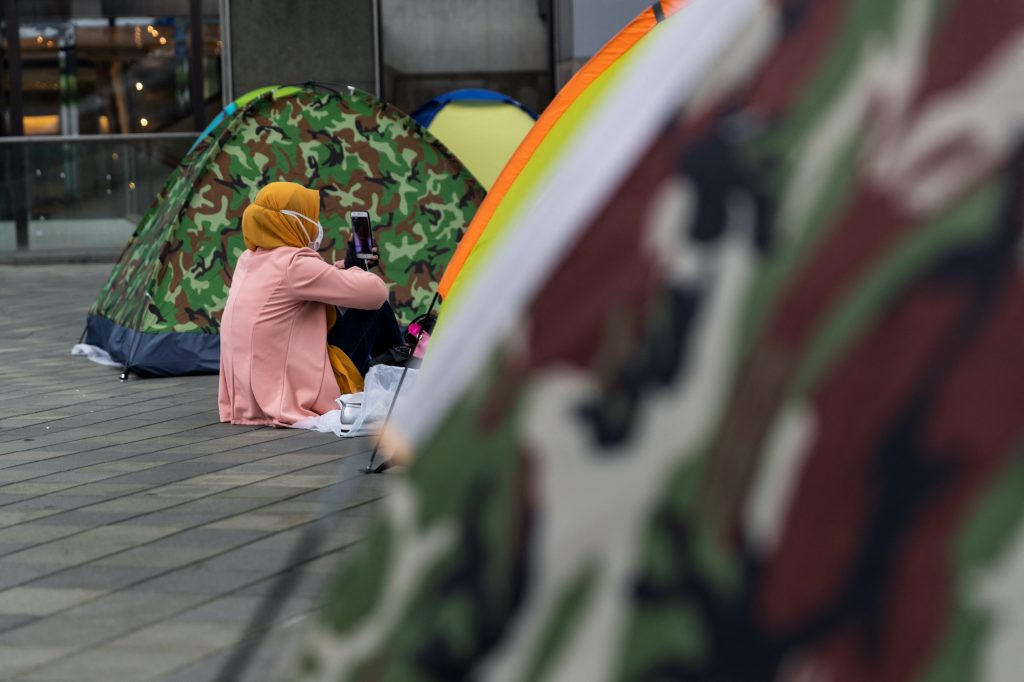
Domestic Helper in Hong Kong (Photo: May James / AFP)

Most people could use a financial refresher course in the best of times, let alone a pandemic. And financial planning is even more essential for those whose purse strings are stretched a bit tighter, such as Hong Kong’s foreign domestic workers (FDWs).

Esther Guevara, a financial planning trainer at Hong Kong charity Enrich HK, joined the FCC for a Zoom session on 17 January entitled “A Personal Finance Workshop for Domestic Helpers”, in which she outlined the major financial stressors impacting FDWs during the pandemic.

Many migrant workers have come under increased pressure to send more funds home than usual, due to family members who are ill, unemployed or underemployed, says Guevara. On top of this, workers are also concerned about layoffs, isolation, mental health challenges and potential exposure to the virus.

During her FCC workshop, Guevara focused on the how-to of financial management for FDWs, but also shared a number of tips for employers as well. In a conversation after the webinar, Guevara emphasised the importance of a trustful, supportive employer-employee relationship where both parties acknowledge the new challenges posed by the pandemic and check in with each other regularly.

“This is the time when there shouldn’t be a barrier. Yes, you’re going through a crisis, but your employee is [also] going through a crisis and sometimes [you] don’t know about it,” says Guevara, alluding to the fact that many FDWs may not share any details about what’s going on behind the scenes – their family or financial situation – if an employer does not inquire.

“The problem with employer-employee relationships is sometimes that [FDWs] are very shy or proud,” says Guevara, noting that many would not ask for help unsolicited. An FDW also may not be comfortable sharing, even if an employer asks about their personal struggles.

Even so, Guevara suggests that employers try to maintain an open, non-judgemental dialogue. Start by asking how the FDW is faring in light of the international health crisis. It’s likely they may be feeling isolated due to social restrictions, anxious about catching the virus, worried about family members back home, or facing greater financial pressures. By asking specific questions about family, friends or how the pandemic has impacted the worker, employers can get a better sense of their wellbeing.

Guevara says such conversations are less about additional financial support, although that is an option if it is well thought out and discussed, and more about connecting with an employee as a person – offering an opportunity to voice concerns about an unemployed spouse, sick parent, or child at home without a laptop for virtual classes.

Esther Guevarra Enrich HK’s financial planning trainer, Esther Guevara, shared her tips with FCC members on 17 January.

“As an employer, you can help them process it and break it down,” says Guevara. She also recommends mapping out short- and long-term financial goals together, which can help workers feel more in control.

Have they made a plan to meet their family’s immediate needs? How much do they need to set aside for long-term goals, like sending a child to school or starting a business in their home country later in life? What about retirement? Talking about budgeting – how much money can be saved, sent home or spent – and timelines can empower workers and alleviate some stress.

“Migrant domestic workers are vulnerable to financial scams and get trapped in a cycle of debt,” says Guevara. “We believe that financial and empowerment education is a life-changing solution to challenges faced widely by migrant domestic workers in Hong Kong.”

Additionally, Guevara recommends giving FDWs plenty of space and time to be alone. If a worker lives in your home, it is easy to fall into an unhealthy pattern where he or she starts working longer hours while Covid-19 social restrictions remain in place. However, workers need time off – perhaps even more than usual – due to the unprecedented emotional, mental and financial strains caused by the pandemic.

If as an employer you are concerned about an FDW seeing their friends in public and possibly exposing themselves to the virus, Guevara recommends clear communication around expectations while referring to Hong Kong’s latest guidelines.

“When you have an employer and employee living in the same household, trust and communication are key,” she says. “If difficult conversations need to be had, whether it’s about finances or social distancing, we always advise employers to adopt a calm, non-judgemental approach.”

For more information or guidance, Enrich HK runs workshops for both employers and FDWs. The charity’s advisers can also answer questions about social security schemes and retirement planning for workers in Hong Kong.

3 Off-the-Beaten-Path Hiking Trails to Try in Hong Kong

In honour of Earth Month in April, we head into the wild with FCC member Michael Tomordy. The intrepid mountaineer shares his top off-the-beaten-path trails for every fitness level with Gayatri Bhaumik.

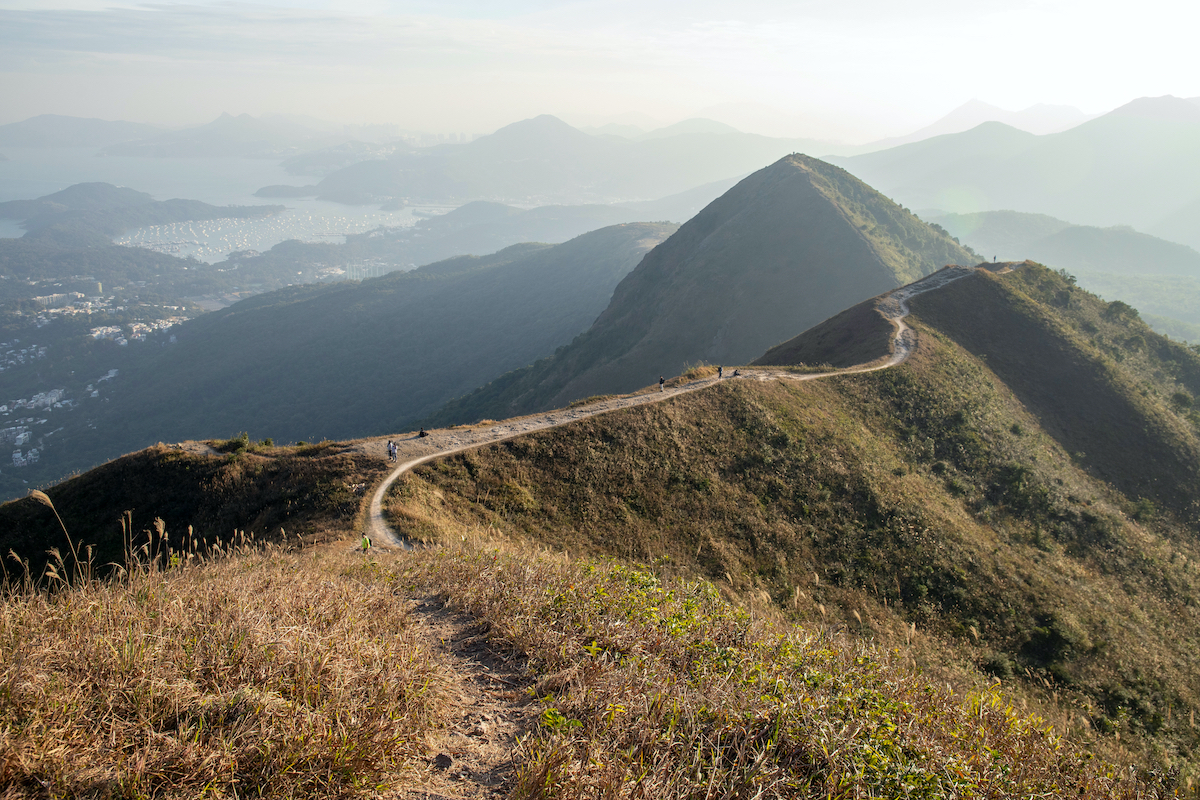
Ma On Shan At 702 metres, Ma On Shan (meaning ‘Saddle Peak’) is the tenth-highest mountain in Hong Kong. (Photo: Shutterstock)

Michael Tomordy does not shy away from a challenge. The English risk advisor, who has lived in Hong Kong since 1997, has spent the past two decades exploring the territory’s hiking trails – even completing the MacLehose, Wilson, Lantau and Hong Kong trails in one go.

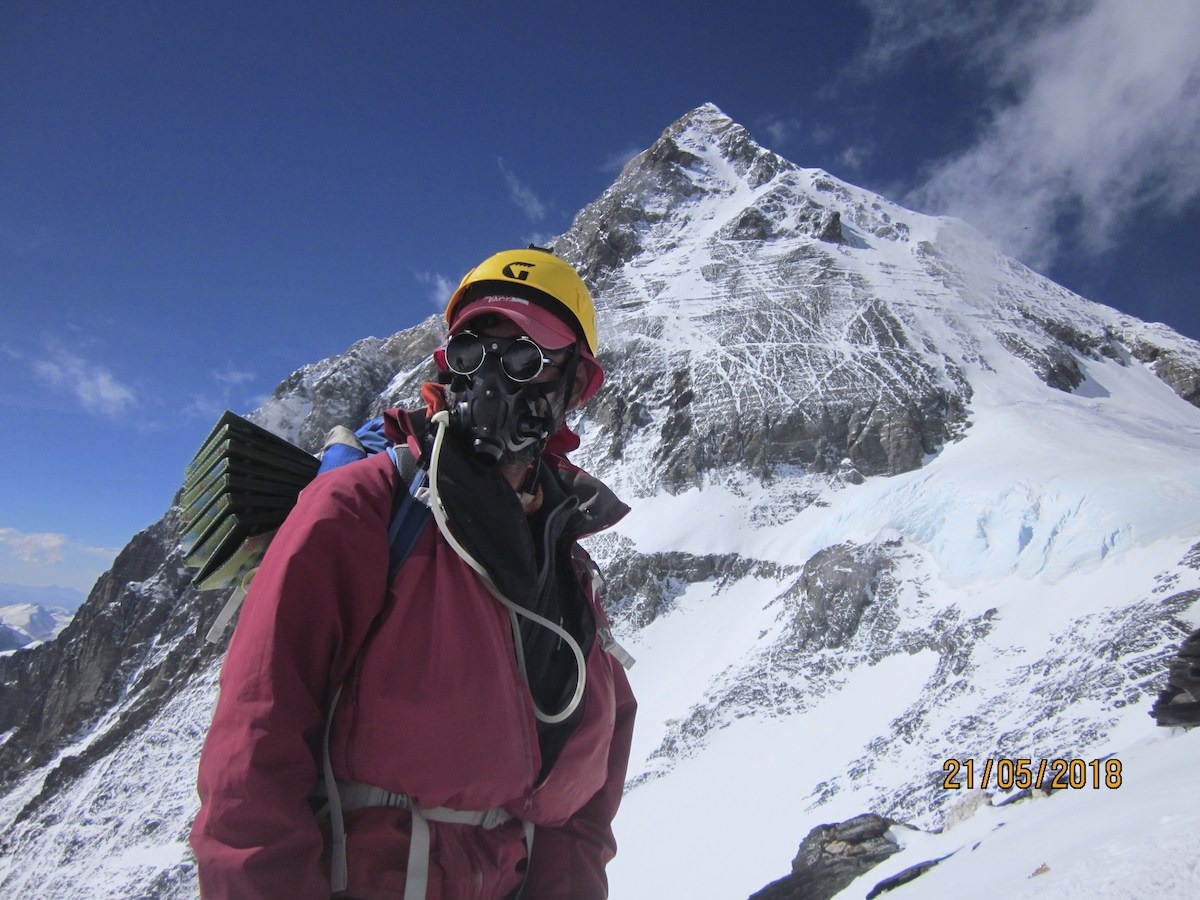
His passion for hiking eventually led him to the exciting world of mountaineering. In 2018, Tomordy summited Mount Everest and, this May, he plans to tackle Alaska’s Denali mountain, the highest peak in North America at 6,190 metres.

Before the pandemic, you could often find Tomordy leading small group treks in Nepal. But due to travel restrictions this past year, he’s concentrated his efforts on rediscovering Hong Kong’s diverse landscapes, dense woodlands and craggy peaks. Here, Tomordy shares three of his favourite trails for a break from the city.

Take it Easy: Lamma Island Family Trail

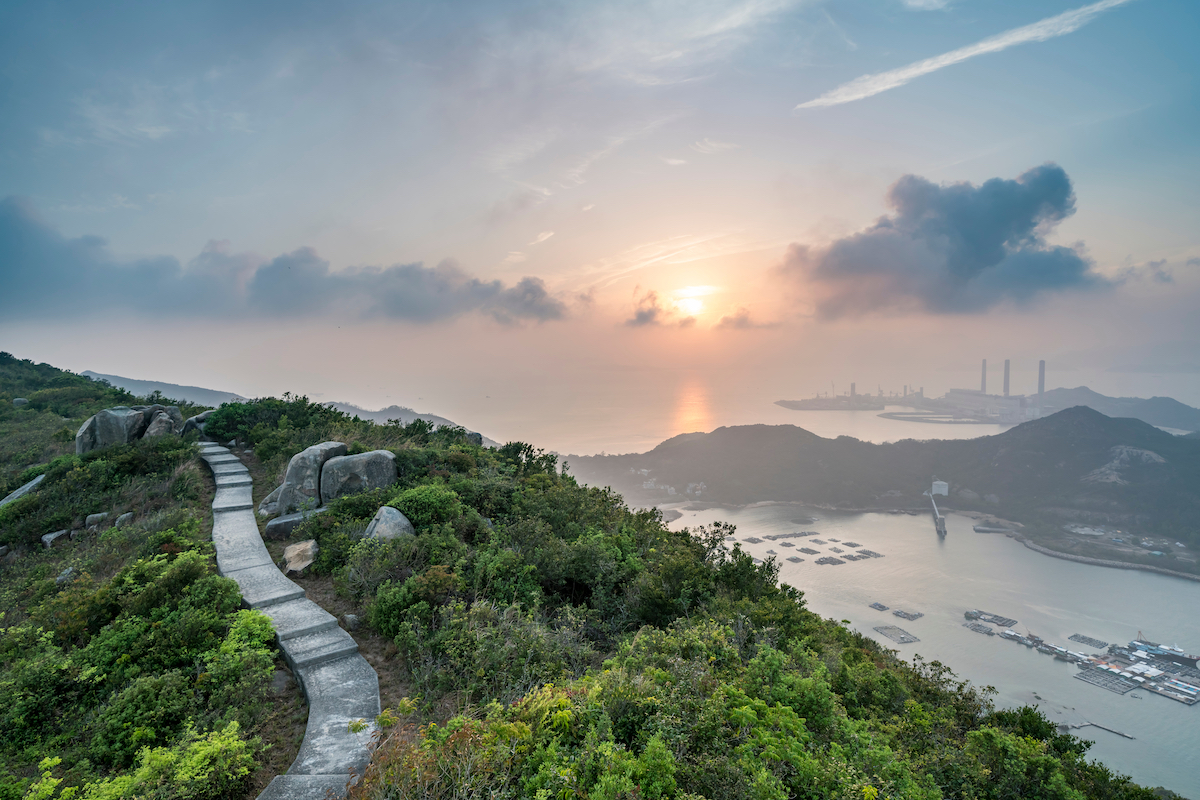
Lamma Island Try the Lamma Island Family Trail for an easy, family-friendly hike. (Photo: Shutterstock)

Lamma Island is home to one of Hong Kong’s most leisurely hikes, though those who want a challenge have plenty of add-ons – like tackling Mount Stenhouse – to ensure they break a sweat.

Start with a ferry ride from the Aberdeen typhoon shelter to Mo Tat Wan, a small village on Lamma’s eastern coast. From there, you’ll head west along the water, where plenty of scenic views, historic sites, and snapshots of island life await.

Stop for a seafood feast and learn about fisherfolk culture in Sok Kwu Wan village before heading up into the hills on the way to Yung Shue Wan. The island’s main town is the perfect place to grab a Yardley Brothers craft beer by the water and explore the shops before hopping on the ferry to head home. 

Difficulty level: Easy
Time commitment: 2-4 hours
Highlights: Ancient “feng shui” forests, peaceful coastal paths, South China Sea views, Tin Hau Temple and the Kamikaze Cave, from which the Japanese planned to launch suicide missions during WWII.
Best for: Beginners and families.
Where to eat: Stop for seafood in Sok Kwu Wan or enjoy vegetarian bites at Bookworm Cafe in Yung Shue Wan.

Step it Up a Notch: Tai No Ancient Trail

If you’re looking for equal parts culture, wilderness and coastal views, this trail checks all the boxes. It starts from Ma On Shan Country Park barbecue site, heads over
The Hunch Backs peak and then on to Ma On Shan.

From there, you’ll join the MacLehose Trail before making your way onto the historic Tai No Ancient Trail – meaning “Big Brain”. You’ll need a little bit of mental (and physical) agility to tackle this stony path, which winds through the deserted village of Tai No. There’s a Tsang Clan ancestral hall, a few remaining cottages and two century-old stone mills (once used to press sugar cane) overtaken by twisting vines and spongy moss.

After Tai No, the path reconnects with the MacLehose Trail via a steep downhill section. It’s tricky, but you’ll be rewarded with stunning views of Sai Kung’s coastline before wrapping up on Clearwater Bay Road. 

Difficulty level: Medium
Time: 4 hours or more
Highlights: Challenging peaks, moss-covered stone mills, feral cattle, Sai Kung views.
Best for: Hikers with a few miles under their belts.
Where to eat: There are no cafes along the way, so bring plenty of snacks and water. Then head to Sai Kung Village for seafood, burgers, Mediterranean cuisine or a healthy smoothie bowl.

Tough Stuff: Ngong Ping 360 Rescue Trail

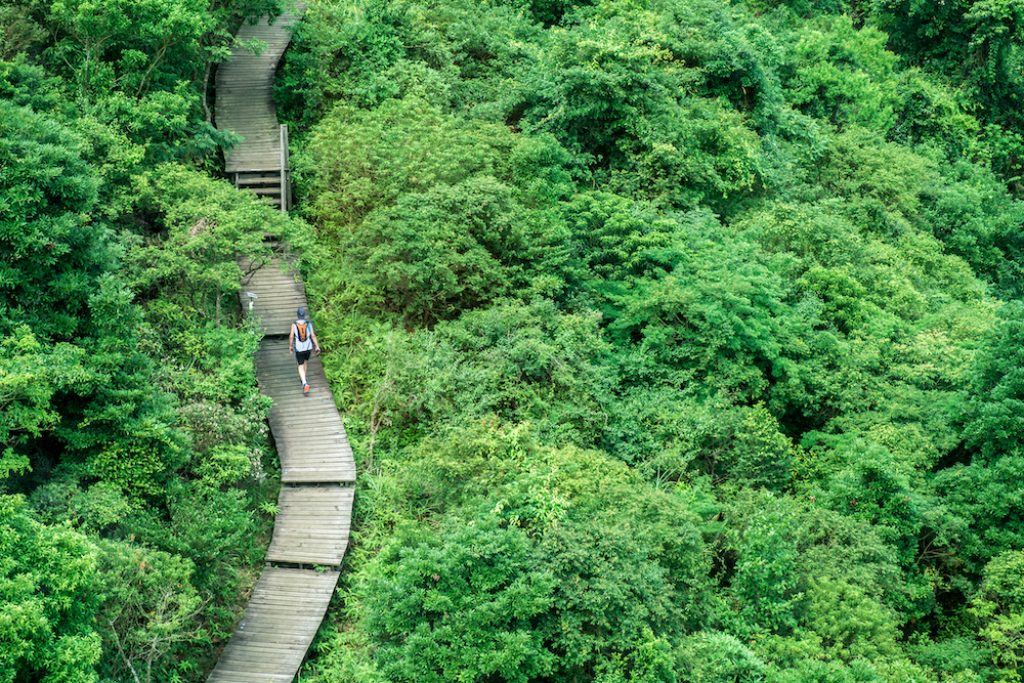
The Ngong Ping 360 Rescue Trai The Ngong Ping 360 Rescue Trail. (Photo: Shutterstock)

The Ngong Ping 360 Rescue Trail, which runs from Tung Chung to the Tian Tan Buddha, is among Hong Kong’s most demanding. From Citygate Mall, make your way to the Tung O Ancient Trail, which leads the rescue trail.

You’re on the right track if you see the Ngong Ping 360 cable cars overhead and a flight of endless steps stretching up the mountainside. The stairs are as unforgiving as they look, but you can’t beat the views over Lantau along the way.

What’s more, the trail – which was initially built to service the cable cars – passes by lush woods, ravines and streams. Call it a day when you reach Ngong Ping or add another challenge. For a gruelling workout, continue up and over Lantau Peak, head down to Tung Chung Road, then hike over Sunset Peak all the way to Mui Wo. Alternatively, follow Lantau Trail Sections 4-6 to Tai O.

Difficulty level: Hard
Time: Between 4 hours (ending at Tian Tan Buddha) and 6 hours (ending in Tai O).
Highlights: Quiet trails, trees and rivers, airport views, spectacular sunsets, Tian Tan Buddha, and many options to modify the hike.
Best for: Highly fit, experienced hikers.
Where to eat: If you finish in Tai O, head for one of the hole-in-the-wall eateries by the jetty. In Mui Wo, enjoy a beer and pizza by the water at The Kitchen.


Michael Tomordy shares his tips for a safe, rewarding day on the trails: 

  1. Download a Hong Kong hiking app – I use Hiking Trail HK, Maps.me, and AllTrails.
  2. Don’t push yourself too hard on a new trail. Be mindful of your hiking experience and the weather.
  3. Keep your phone fully charged. When not in use, turn it off or use “aeroplane mode” to save juice.
  4. Carry emergency hydration salts, snacks, chocolate bars and water.
  5. Pack a hot drink in a small thermos for warmth in case the weather turns bad.
  6. Always pack an extra T-shirt and a fleece.
Michael Tomordy Michael Tomordy submitted Mount Everest in 2018.

How to Manage Stress During the Pandemic and Beyond

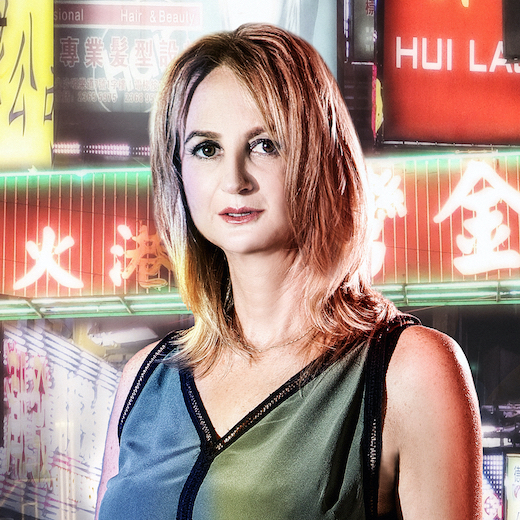
Kate Whitehead, a journalist and therapist, discusses how to manage stress during the pandemic and beyond. By Morgan M Davis

The pandemic has been traumatic for people all around the world. Like many places, Hongkongers have experienced varying degrees of isolation, uncertainty and job insecurity on top of existing political turbulence and high-pressure lifestyles. 

FCC member Kate Whitehead has seen firsthand how such stressors can impact one’s mental and physical wellbeing through her work, where she bridges two taxing worlds: journalism and psychotherapy. As a qualified psychotherapist and TRE (tension- and trauma-releasing exercises) provider, Whitehead helps clients manage stress and anxiety.

She also writes about mental health and wellness, winning the Mind HK Awards 2019 for the best English-language journalism coverage of mental health issues. We caught up with Whitehead to hear more about her advice for coping during times of uncertainty: 


Why did you decide to become a therapist?

Kate Whitehead: As a journalist, the work I most enjoy is writing profiles, sitting down with someone for a one-on-one interview and getting to know how they came to be the person they are and what makes them tick.

Often, people open up and share things they’ve told very few people. That led to an interest in psychology, so I did a master’s in counselling three years ago.

My focus is still journalism – it accounts for about three-quarters of my work – and the rest of the time I work as a psychotherapist at a [general practice] clinic in Central, Optimal Family Health. I’m especially interested in working with people with stress, anxiety and trauma, which is what led me to become a TRE provider. I practice TRE at the Clarke Clinic in Central.

Kate Whitehead (second from right) leads a TRE session.

What is TRE? What are the benefits? 

KW: It’s a series of seven exercises that help the body release deep muscular patterns of stress or tension. These simple exercises activate a muscular shaking process in the body, known as neurogenic tremors, which allow the body to shake off built-up stress.

TRE is great for reducing stress and anxiety, improving sleep, easing muscle and back pain and healing old injuries. Recently, I’ve been working with a lot of people with back and shoulder pain and sleep issues and seeing good results. My close friends are now regular ‘shakers’ and I’m on the TRE Board of Directors.


How has the pandemic impacted mental health?

KW: The pandemic, coming hard on the heels of months of anti-government protests, means everyone’s mental wellbeing has been impacted to some extent. A lot of people are experiencing anxiety or low moods, which has brought mental health issues much more out in the open and helped lift the stigma.

 There is so much uncertainty at the moment: when will we be able to travel? When will a vaccine we trust be available? When things feel out of our control, it’s helpful to focus on whatever we can control.

And we must try to find a way to process our emotions. Sure, have a Netflix binge if you need it, but every now and then give yourself space to process all the baggage that comes with this pandemic.


Kate Whitehead Journalist and psychotherapist Kate Whitehead.

What can Hongkongers do to manage stress?

KW: There is plenty of research to show that exercise improves not only your physical health but also your mental health. Regular exercise helps reduce anxiety and depression; it also releases chemicals such as endorphins and serotonin that improve your mood. The gyms may be closed [off and on], but the country parks are open and they are free.


You’ve written two books: one about Hong Kong crime, the other on sex work. How do you manage your own mental health when writing about difficult topics?

KW: The crime writing was a while ago and I’ve moved on to less grisly pastures since, but I do still enjoy a good murder story. My great de-stressor is exercise; I’m a big hiker and as soon as the gyms reopen, I’ll be a regular at Fivelements again.

I also meditate and do TRE at least twice a week. And I’m lucky enough to have some really good, close friends who not only keep me on an even keel but make life fun.


Kate’s Toolkit

Practice better mental wellness with these tools.


VIA Reports

Start your wellness journey with this free self-assessment, which identifies your strengths and how you can apply them to improve your life. viacharacter.org


Headspace

A go-to for those new to meditation, Headspace makes the practice more approachable with intro classes and goal-oriented sessions. headspace.com


Calm

One of the most popular mindfulness apps, Calm shares techniques to improve sleep, focus, self-improvement and more. calm.com


Seven

This fitness app offers a range of seven-minute workouts that you can squeeze into your schedule to boost your mood and mental health. seven.app


Covering the Coup: A Myanmar Journalist Reports

Chronicling events on the ground in Yangon, Arakanese freelance journalist Kyaw Hsan Hlaing documents an increasingly perilous situation for journalists in the wake of the military coup.

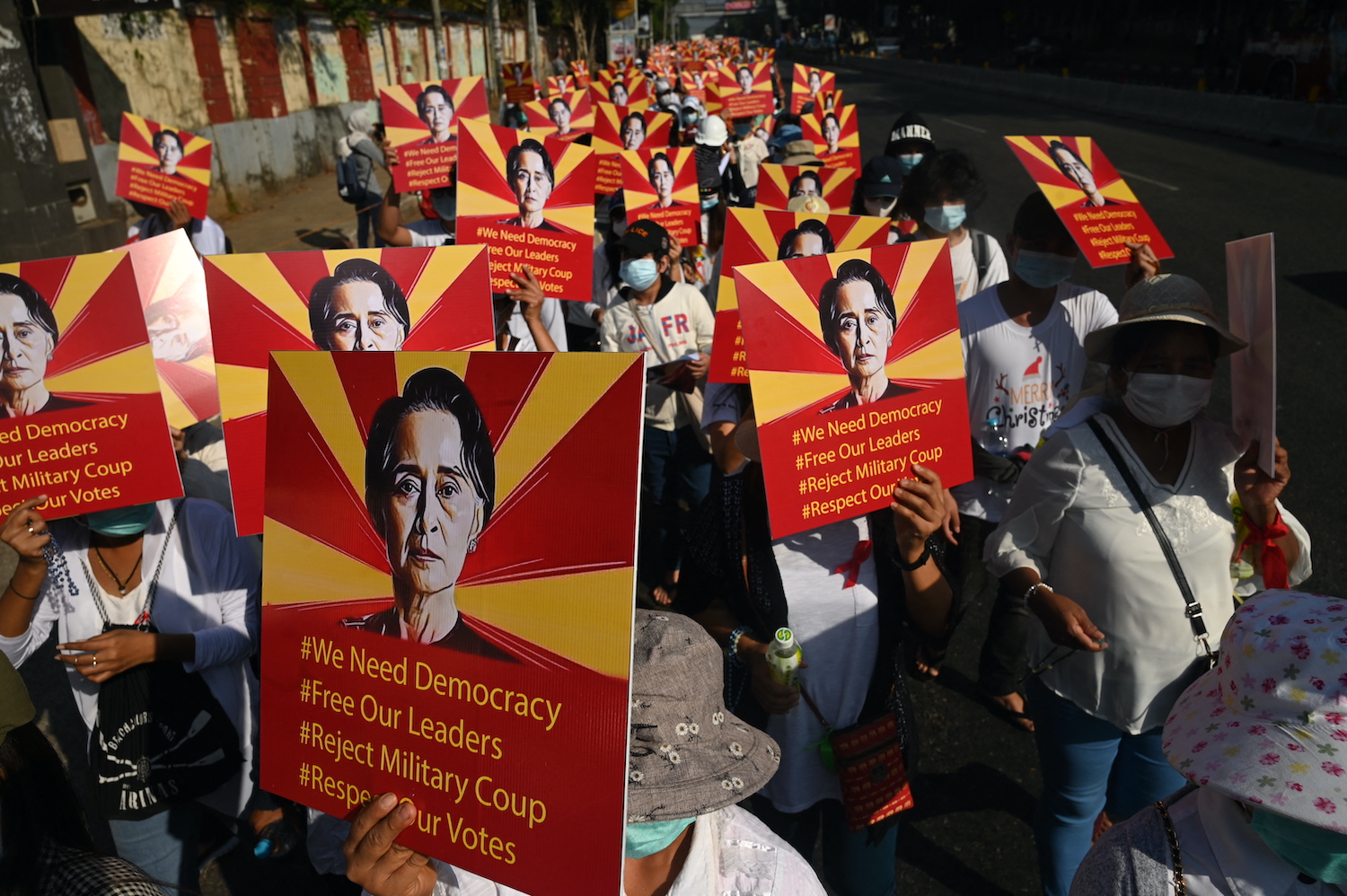
Protesters demonstrate against the military coup in Yangon on 14 February 2021. Protesters demonstrate against the military coup in Yangon on 14 February 2021. (Photo: Sai Aung Main / AFP)

When my roommate woke me early on 1 February with the news that the Myanmar military had staged a coup, I knew that as a freelance journalist focused on human rights I could become a target.

I deactivated my Facebook account and requested the editor at an international news agency delete my byline from some sensitive articles. I then walked around my neighbourhood in Yangon to assess the situation. Everywhere I looked, I saw faces lined with fear and uncertainty.

The military had cut my phone connection, but I heard a rumour that one network was still accessible. I queued for two hours to buy a SIM card, but when I activated it, there was still no connection.

After the military, known as the Tatmadaw, arrested former State Counsellor Aung San Suu Kyi along with more than 40 party officials and declared a year-long state of emergency, everything has taken on a new urgency, including my work as a journalist.
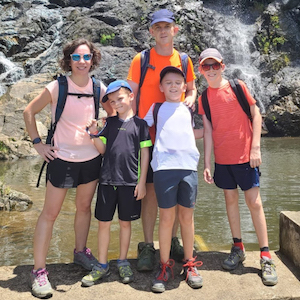
I have been reporting around the clock as a freelance journalist for publications such as TIME, Al Jazeera, The Nation, The Globe and Mail, VICE News and Columbia Journalism Review in partnership with US-based freelance journalist, Emily Fishbein, who worked in Myanmar from 2015 to 2020. During the pandemic, we teamed up to write about armed conflict between the Arakan Army and Burmese military in my native Rakhine state, and we have been working together since.

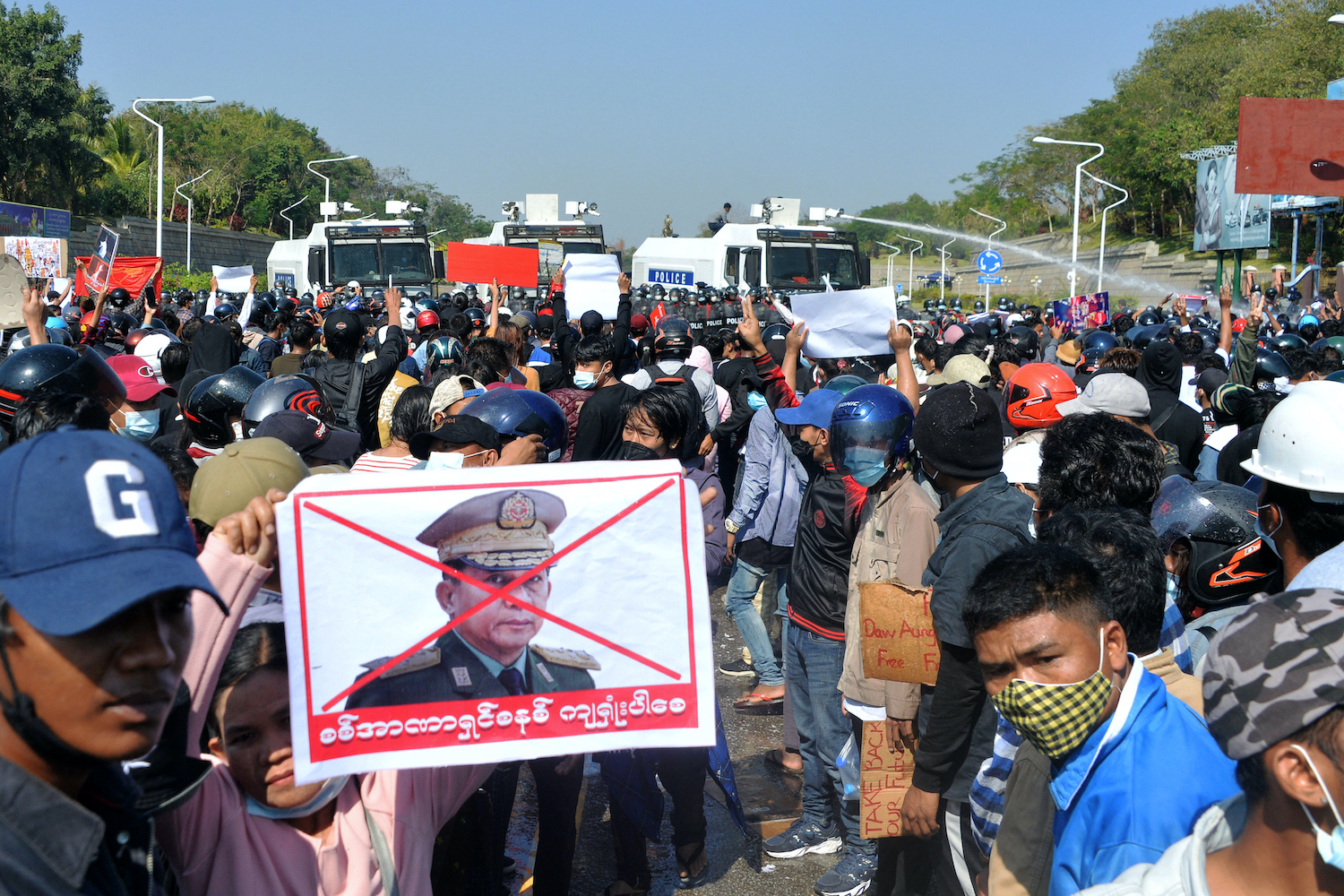
A protester holds a sign denouncing Myanmar General Min Aung Hlaing. A protester holds a sign denouncing Myanmar General Min Aung Hlaing. (Photo: STR / AFP)

As hundreds of thousands demonstrate and workers strike across every sector, the situation continues to intensify. On the weekend of 13-14 March, at least 51 people were fatally shot, bringing the total number of people killed by soldiers and police since the coup up to at least 126. According to The New York Times, more than a fifth of those killed have been teenagers.

More than 2,100 people have been arrested as of 13 March, according to the Assistance Association for Political Prisoners, and many of those arrested were seized from their homes at night without a warrant. At least 37 journalists have also been taken into custody, of whom 15 have not yet been released; some were beaten upon arrest while others have been forced to sign statements that they will cease reporting.

Five prominent Yangon-based media groups have had their licenses revoked and been banned from publishing on any platform, while the military has raided several media outlets, seizing computers, printers and data servers. The military is arbitrarily shutting down the internet and people, including me, are afraid to make phone calls in case the calls could be intercepted.

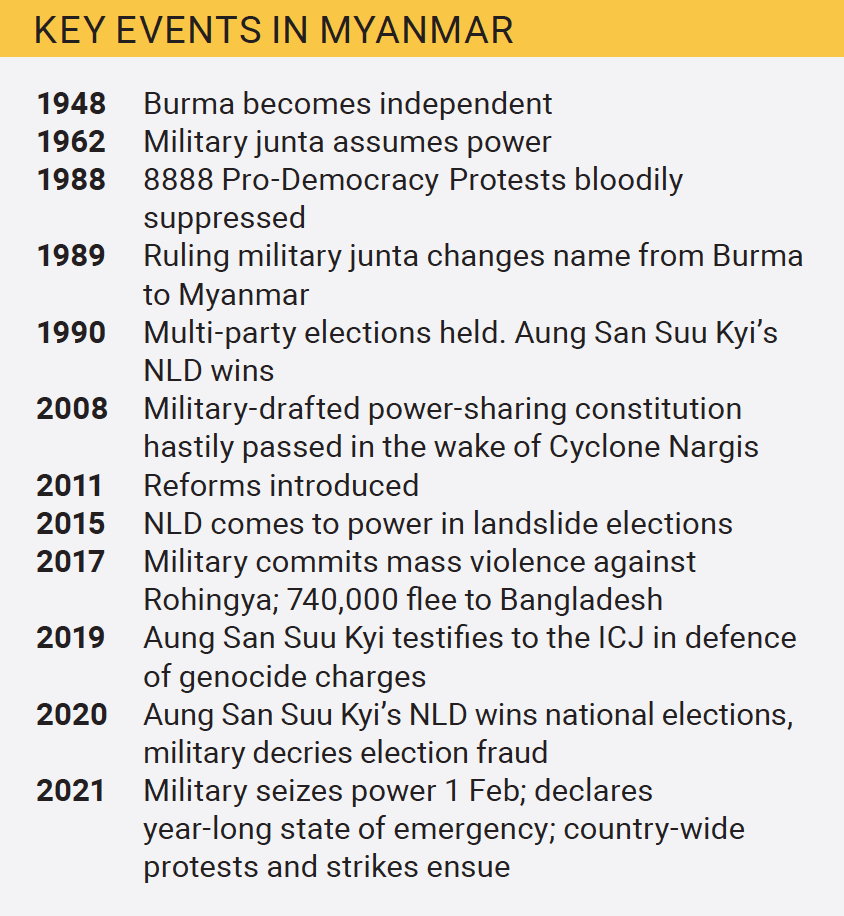
Living under an authoritarian state is all too familiar in Myanmar, which was run by a military junta from 1962 to 2011. During those years, we were surrounded by informers, the government heavily censored media, and SIM cards were kept prohibitively expensive (upwards of US$7,000 in 1998 and around US$625 in 2011), effectively cutting off our access to news and information.

(click to enlarge)

In 2011, the military began a series of reforms, and in 2013, the price of SIM cards dropped hundredfold. I accessed the internet for the first time from my village in Rakhine, on the western coast, in 2014.

Myanmar held openly democratic elections in November 2015, bringing the National League for Democracy (NLD) to power. Nobel Peace Prize laureate Aung San Suu Kyi became the country’s de facto leader, and although the country was still under a 2008 military-drafted constitution allowing the civilian government and generals to share power, many expected that the NLD would counter the military’s influence and champion democracy and human rights.

Aung San Suu Kyi dashed expectations when she defended the military against charges of genocide for its treatment of the Rohingya at the International Court of Justice in 2019. Other ethnic groups in Myanmar, including my own Arakanese community (also called ethnic Rakhine), have also been bitterly disappointed by Aung San Suu Kyi’s failure to condemn human rights abuses that the Tatmadaw allegedly committed, including war crimes and crimes against humanity.

Instead, her government backed the Tatmadaw’s violent campaigns, blocked humanitarian access and, in parts of my home state and the neighbouring Chin state, imposed the world’s longest internet shutdown. Since 21 June 2019, government restrictions on the internet left more than 1 million people without effective access for 19 months.

The NLD government also cracked down on press freedom, especially in Rakhine, where it blocked independent media access to conflict-affected areas beginning in 2016, with the exception of pre-arranged reporting tours in which journalists were accompanied by government minders.

During the first four years of NLD’s term (2015-2018), 67 lawsuits were filed against journalists and media personnel. Of these, 31 were filed by the government; 11 by the military; and the rest by religious institutions, tycoons, employers, political parties, armed groups and others, according to a report in May 2020 by Yangon-based freedom of expression organisation Athan.

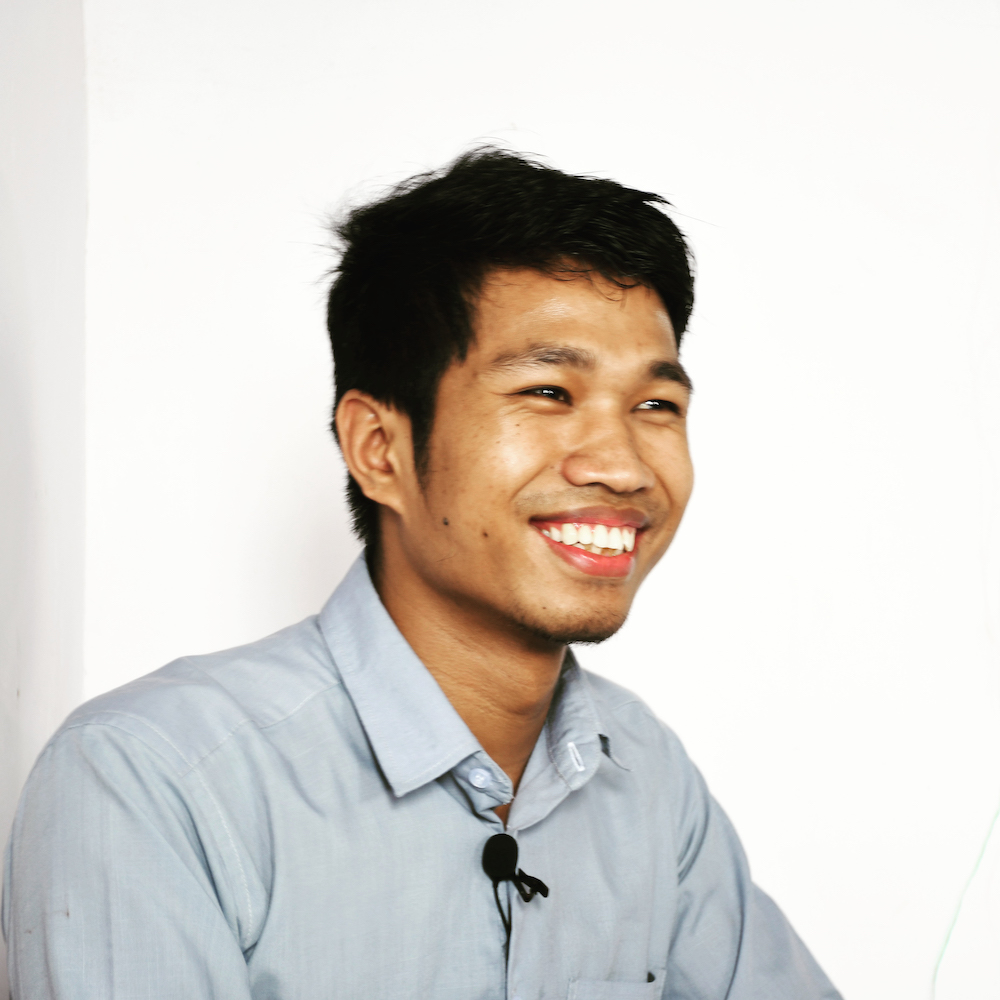
Kyaw Hsan Hlaing reports from Yangon. Kyaw Hsan Hlaing reports from Yangon. (Photo: Supplied)

More than three dozen journalists were charged with defamation, while others were charged with supporting an unlawful association or alleged terrorist group when they reported on conflict between the Tatmadaw and ethnic armed organisations or interviewed their spokespersons.

In 2018, the government imprisoned Reuters journalists Wa Lone and Kyaw Soe Oo for possessing classified information which police had planted on them, while they were reporting on the massacre of 10 Rohingya in Rakhine. They spent more than 500 days behind bars before being released in May 2019 under a presidential amnesty.

While the NLD severely curtailed media freedoms, sinking back under military rule is far worse. Almost immediately, journalism became significantly more challenging and dangerous, and the obstacles and risks are increasing by the day.

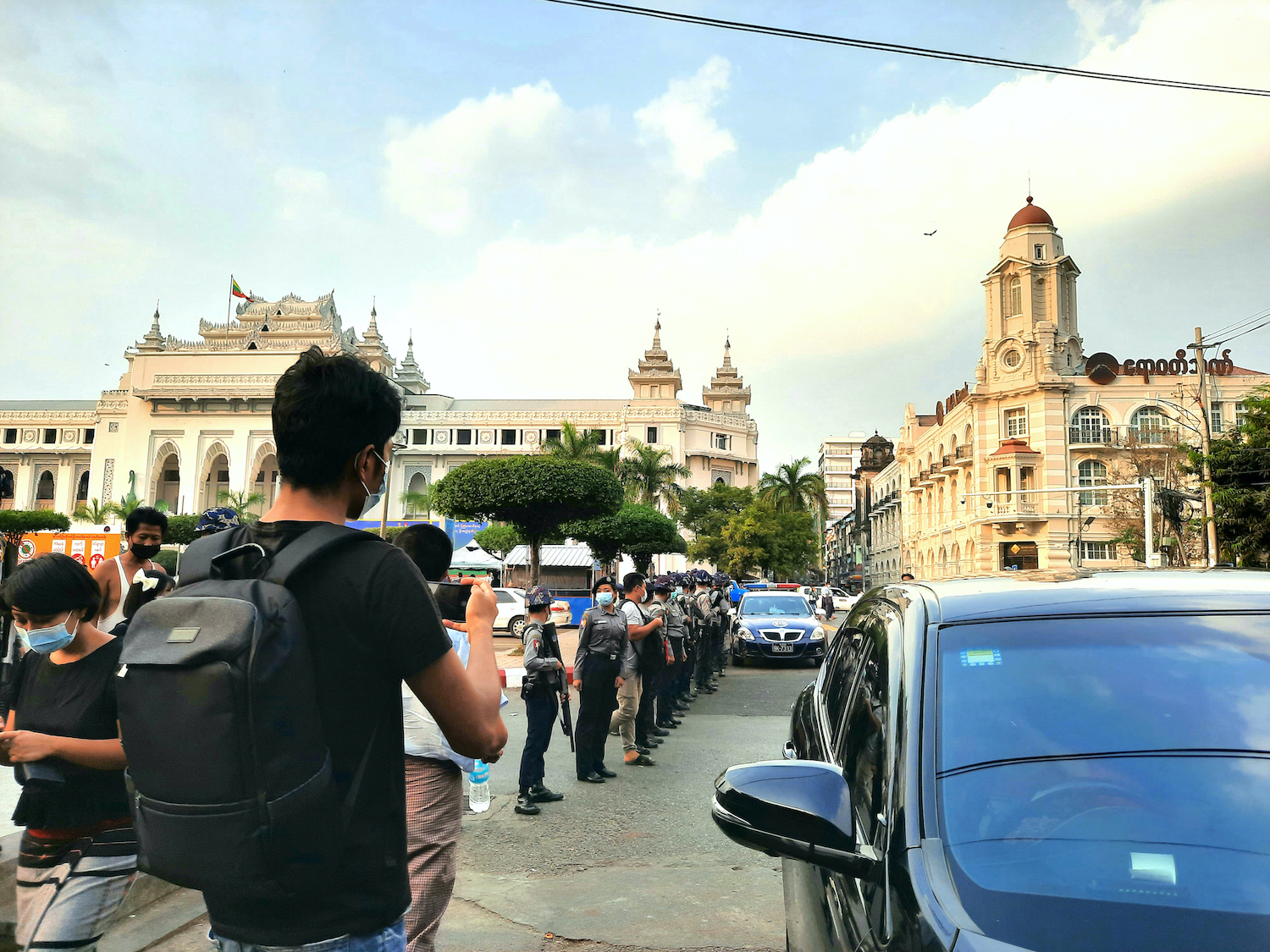
On 27 February, I went out to observe the protests. After being tear-gassed, I ran away from authorities only to come face to face with a soldier. He pointed a gun at my friend and me, and said: “Back up, I don’t want to shoot you.” I backed up and immediately left the area.

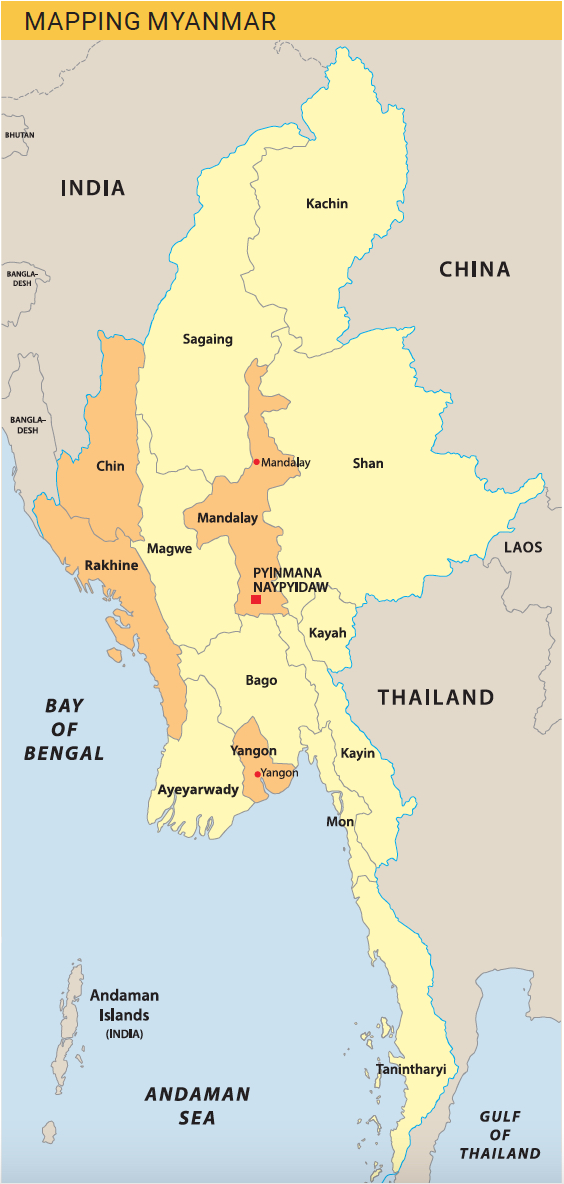
Mapping Myanmar (click to enlarge)

What’s more, the social media landscape has changed dramatically. Facebook, which serves as the main source of news, information and communications in Myanmar, has long been used as a vehicle for hate speech and disinformation targeting ethnic minorities. After the military banned the platform on 4 February, users migrated to Twitter en masse. Two days later, the military banned Twitter as well, but users have continued to access both platforms using VPNs.

Since the coup, my Twitter followers jumped from around 400 to nearly 10,000 as of 14 March. I have not received any serious threats online, but I worry that malicious activity will increase; I have already seen a spike in trolling and disinformation on the platform.

Intermittent internet shutdowns have posed another major problem. While the hazards of social media are many, the lack of online access is even more dangerous. Unable to check reliable news sites or trusted sources to verify information, I have been calling my contact at a fact-checking civil society organisation for assistance. But now she sometimes replies that the group is unable to confidently make an assessment.

With arrests increasing, I have taken extensive precautions to protect myself. On the day of the coup,I wrote down important phone numbers in my notebook, using nicknames in case police confiscated it. Next, I deleted all contacts, audio files and messages from my phone. I began using VPNs to access the internet, and when I use phone data, I switch between four SIM cards to separate my personal communications, browsing history, and reporting work – a strategy I had also used when reporting on armed conflict in Rakhine.

It is now much harder to collect information as I do not trust anyone. When I go outside, I am constantly alert and carefully assessing my surroundings. Informers could be anywhere, and I often feel as though people are watching me, especially when I carry my camera. I don’t talk openly with taxi drivers, and I am guarded even with my closest friends and family. I avoid talking deeply about my feelings and personal information as well, because people could take advantage of my vulnerabilities.

I see journalism as a tool to solve problems, and I am particularly motivated to promote human rights and social justice. I aim for in-depth coverage which prioritises the inclusion of diverse voices and especially those who are vulnerable and marginalised, such as displaced people, ethnic minorities and those living in remote areas.

Covering under-reported stories during an emergency, I feel an extra sense of responsibility to document what is happening accurately, informatively and effectively. Despite the risks and pressures, I feel strongly motivated to persevere.

The most important thing is to share what is happening in Myanmar with the world. My country has already gone to the dark side, and if we don’t do anything, we may become trapped under military control for a long time. We need to end this situation and find our way to the light. Each of us has our own role to play. For me, that role is journalism.

As told to Emily Fishbein, Kyaw Hsan Hlaing’s reporting partner, on 14 February 2021. Last updated on 14 March 2021, hours after the military issued a directive to telecoms operators to shut down the internet indefinitely in the country.


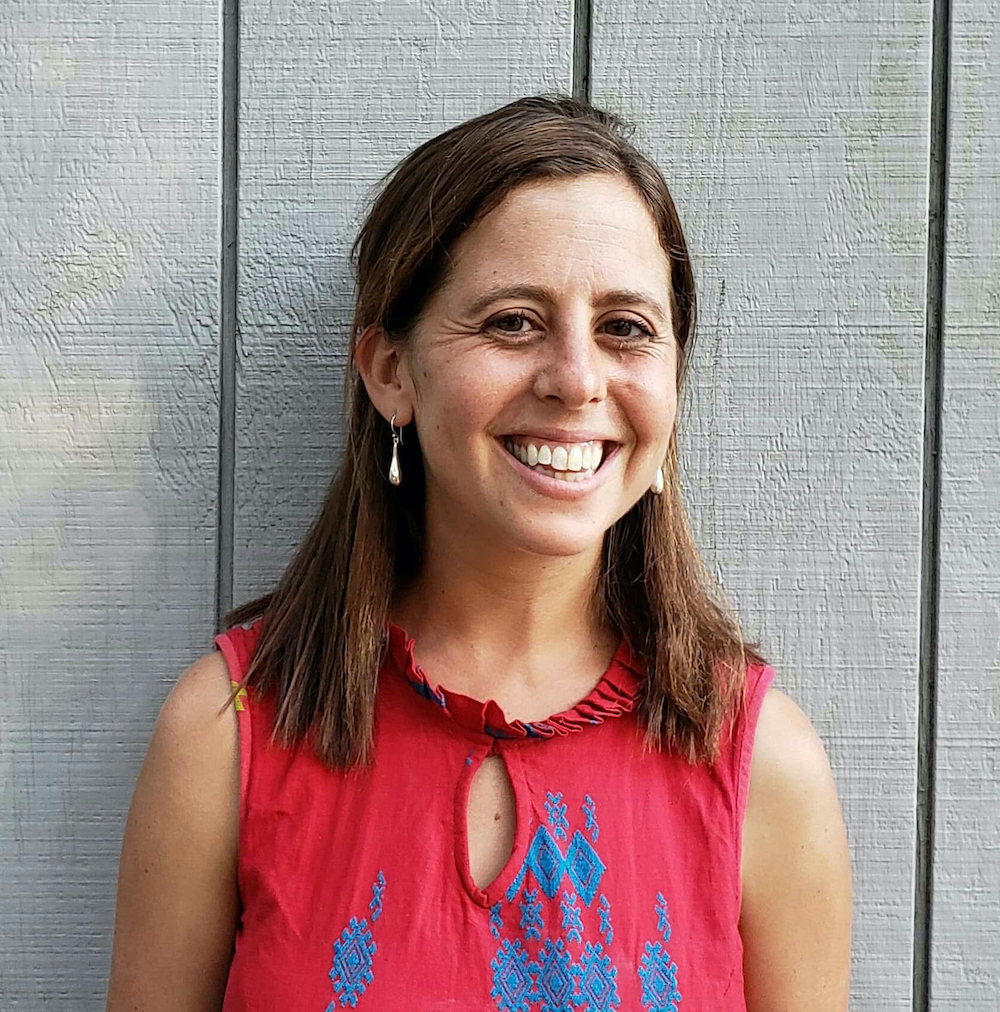
Kyaw Hsan Hlaing is an Arakanese student, researcher, and freelance journalist from Myanmar’s Rakhine state who focuses on peace, human rights; and social justice. He works to share on-the-ground situations of diverse people, especially marginalised and conflict-affected minorities, with the international community.

Emily Fishbein is an independent freelance journalist who worked in Myanmar from 2015 to 2020 and plans to return when she is able. She seeks to share diverse voices and perspectives, especially highlighting underreported stories. Prior to writing, she worked with refugees and displaced persons in Myanmar and the United States.


How ‘Fake News’ Legislation Stifles Critical Reporting

In February, Chief Executive Carrie Lam floated the possibility of ‘fake news’ legislation. But experts warn such laws have been used to silence government critics around the world. FCC First Vice President Eric Wishart examines the issue.

Fake News Trump Duterte (Illustration: Noel de Guzman)

One of the first steps taken by the military government in Myanmar after it seized power in the February coup was to announce legislation aimed at curbing online “misinformation” and “disinformation”.

If enacted, the cybersecurity law would punish anyone who spreads what is commonly known as “fake news” with three years in jail. It would also oblige internet service providers to remove content deemed to be offensive by the new government and disclose journalists’ personal data.

Like all “fake news” laws, it casts a wide net, covering any content “causing hate or disrupting unity, stabilisation and peace”.

Both disinformation and misinformation – two often conflated concepts – fall within the scope of the law. Disinformation is fabricated and designed to deceive, while misinformation can be the result of a genuine error that is shared without malicious intent.

Criminalising both in a single law would provide a powerful weapon for the Myanmar government in its battle to stifle dissent, serving as an example of why “fake news” laws have proved popular with authoritarian leaders around the world. Such laws send a blunt message: Contradict our version of the truth and we’ll throw you in jail.

In Hong Kong, Chief Executive Carrie Lam told the Legislative Council this February that her administration’s priorities include tackling “doxing activities, hate speech, discriminatory remarks and false information on the internet”.

First, however, the government will focus on dealing with the invasion of privacy and doxing – the publication of personal details online – as it would be difficult to push through anti-fake news legislation quickly.

“In recent years, governments worldwide have tried to tackle the problems with legislative or administrative means,” she said. “Since this encompasses a wide spectrum of issues involving some degree of sensitivity, we will study the experiences and practices of other countries and places.”

As Lam noted, she is not the first government leader to recognise the offline dangers of online disinformation and conspiracy theories. Bogus claims about COVID-19 have claimed countless lives, and Donald Trump’s “Big Lie” about election fraud drove the rioters who stormed the US Capitol in January.

The term “fake news” has come to become a popular way of describing all kinds of bogus information shared online. Trump transformed the phrase into a cudgel with which to attack critical media coverage, and it was gleefully seized upon by authoritarian leaders around the world.

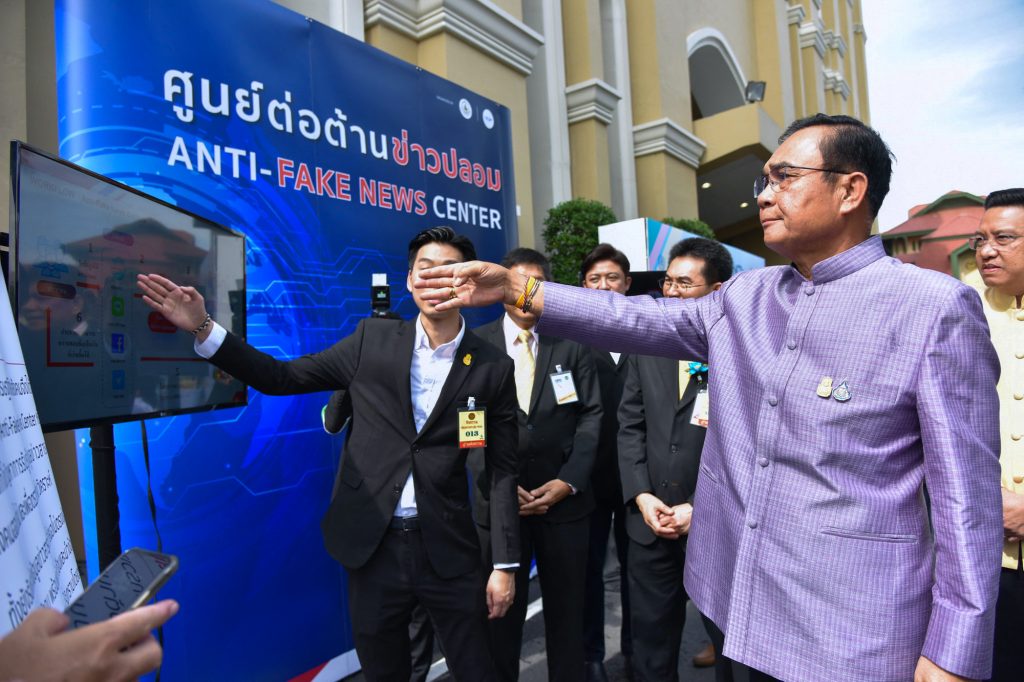
Thailand’s Prime Minister Prayuth Chan-o-cha Thailand’s Prime Minister Prayuth Chan-o-cha (right) attends the launch of the Anti-Fake News Center in Bangkok on 29 October 2019. (Photo: Handout / Royal Thai Government / AFP)

“When President Trump called CNN and The New York Times fake news, a week later President Duterte called Rappler fake news,” says Maria Ressa, founder of the Philippines-based online news outlet.

Governments from Nicaragua to Russia have introduced fake news legislation that usually shares three common features: it is ill-defined, hastily adopted, and used to attack media freedom and freedom of speech.

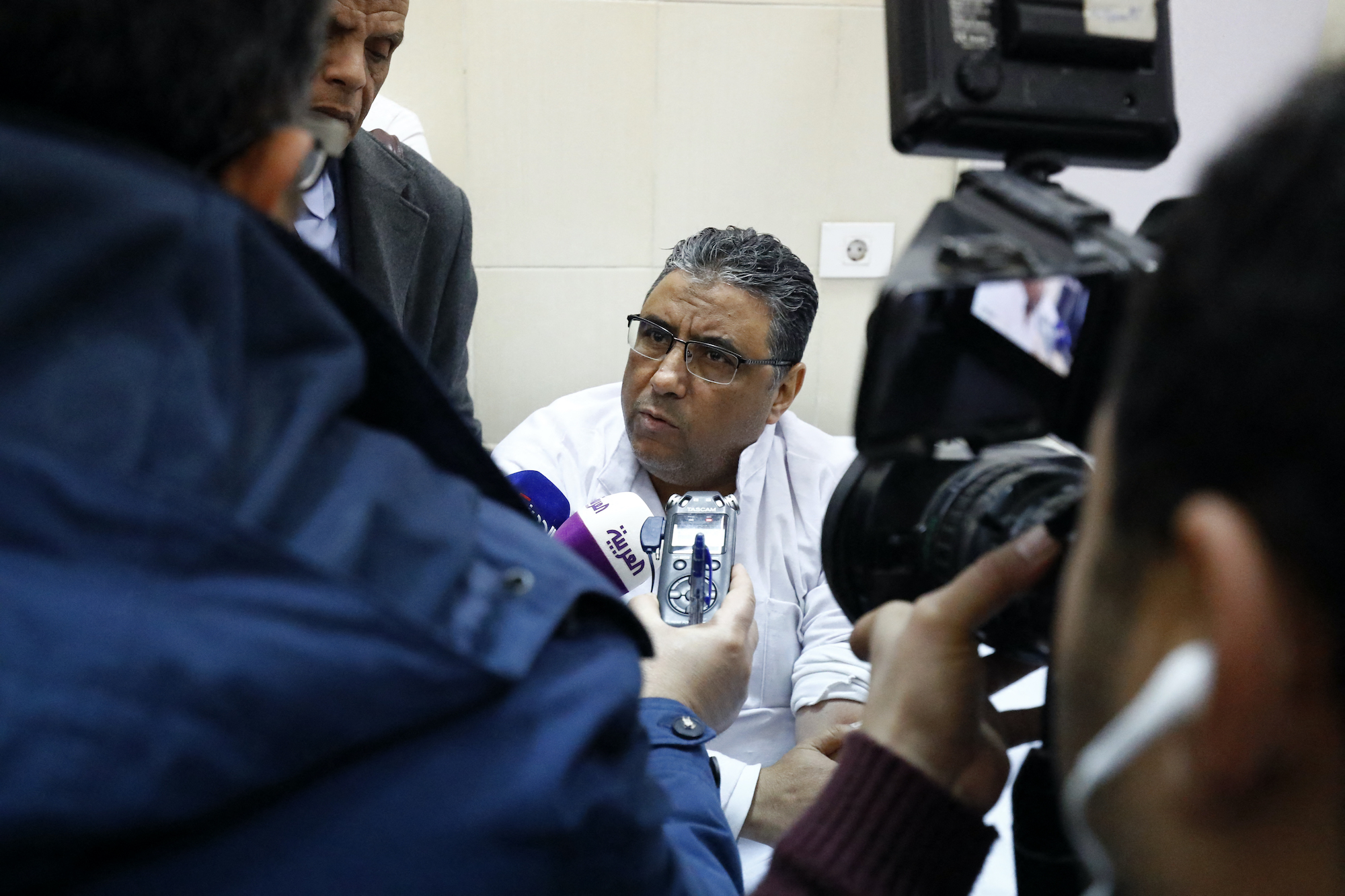
Some countries created entirely new laws while others amended existing legislation to target what they regarded as disinformation. In one high-profile example, Egyptian authorities arrested

Al Jazeera journalist Mahmoud Hussein in December 2016 for “disseminating false news” among other accusations. He was released, without charge, in February 2021 after spending four years in jail.

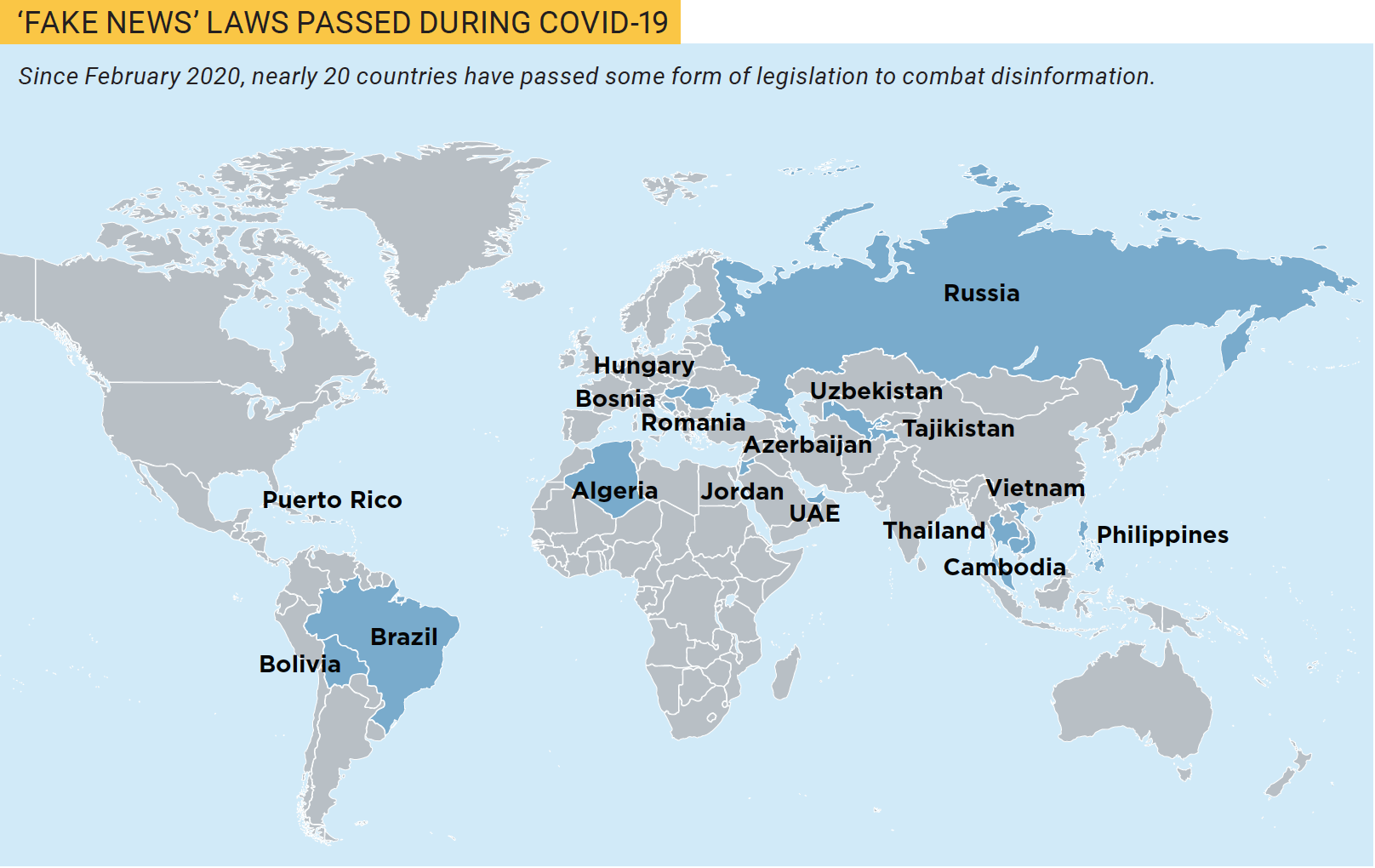
The COVID-19 pandemic gave governments a further pretext to stifle critical voices. Joel Simon, executive director of the Committee to Protect Journalists (CPJ) and one of the leading critics of “fake news” legislation, said a second wave of fake news laws has been part of what he called the “COVID crackdown”. “It’s a global phenomenon,” he said in an FCC Zoom discussion I hosted in June 2020.

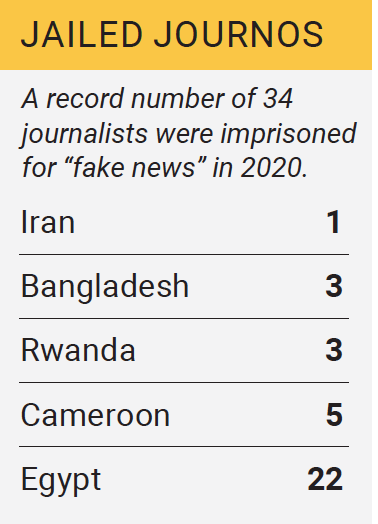
Jailed Journos (Source: CPJ)

Ostensibly designed to prevent the spread of dangerous rumours about the disease, the laws have instead been used by both autocratic and democratic governments “to impose sweeping restrictions on civil liberties and to enhance the power of the state,” Simon said. “This ranges from expansion of surveillance to restrictions on assembly to new laws restricting the dissemination of ‘fake news’ which the governments feel is up to them to determine.”

Simon has also expressed concern about what comes next. After the pandemic, we could be left with a world where “state power is strengthened, civil liberties are weakened, accountability is reduced. We have to be mindful that it is playing out before our eyes,” he said.

When it comes to how to legislate against the spread of fake news online, Malaysia and Singapore provide contrasting examples. Embroiled in the multi-billion-dollar 1Malaysia Development Berhad (1MDB) embezzlement scandal, the government of then Prime Minister Najib Razak – who was later imprisoned for 12 years – rushed through a fake news law in April 2018.

The legislation imposed a six-year jail term for the dissemination of news that was “wholly or partly false” and was widely seen as being aimed at suppressing coverage of 1MDB during an upcoming election campaign.

I spoke on a “fake news” panel in August 2018 with Malaysian Member of Parliament Nurul Izzah Anwar, who accused the Najib government of wanting to create a “Ministry of Truth” – that is, an Orwellian department of government devoted to suppressing unpalatable facts and promoting propaganda.

Fake News Laws Infographic (Credit: International Press Institute)

Nurul Izzah, daughter of prominent opposition politician Anwar Ibrahim, said that “fake news” laws in Southeast Asia would “only strengthen the hands of the authoritarian”. Najib lost the election to Mahathir Mohamad in May 2018, and the new government later repealed the law.

Meanwhile, in neighbouring Singapore, the government took a more systematic approach to adopt its own fake news law. A select committee interviewed 65 witnesses and organisations and received 170 written representations before producing a 279-page report and a set of recommendations for the Singaporean parliament.

I met the chairman of the committee, Charles Chong, when we spoke at an Asia-Europe Foundation forum, entitled “Exploring the Battlefronts of ‘Fake News’”, in Brussels in October 2018. He presented a convincing case for the need to take action against disinformation, and the committee findings that he shared at the meeting were far from a surprise:

“We have considered and recommended that the Singapore government consider new legislation, which will disincentivise deliberate online falsehoods and even impose criminal sanctions for malicious actors,” Chong said during his presentation.

Singapore passed the Protection from Online Falsehoods and Manipulation Act (POFMA) in May 2019 and it came into effect in October that year. The law gives any government minister the power to declare online content “false” and order a correction notice to be published on the offending web page. Contravening the act can result in a five-year prison sentence or a fine of up to S$1 million (around HK$5.87 million).

Freelance journalist Kirsten Han, at that time editor of the independent news site New Naratif, gave five hours of evidence to the select committee, related to her work in facilitating information sessions on the issue of “fake news” and “deliberate online falsehoods”. She also filed a written submission, which urged the committee to consider non-legislative solutions, such as media literacy and greater transparency since “disinformation campaigns thrive in an information vacuum”.

Al Jazeera Producer Mahmoud Hussein Egyptian authorities imprisoned Al Jazeera Producer Mahmoud Hussein from December 2016 to February 2021 for “disseminating false news”, among other accusations. (Photo: Khaled Desouki / AFP)

According to Han, the government had only been going through the motions with its public consultation. “They already had something in mind and were looking to direct people towards their conclusion,” she says.

What has been the result? According to Human Rights Watch, the Singapore law has been used “primarily against content critical of the government or its policies”.

An online FCC panel discussion on 9 February 2021 with Maria Ressa, BuzzFeed Media Editor Craig Silverman and the Asia Global Institute’s Alejandro Reyes showed just how difficult it is to find a workable solution to the fake news problem.

It is an immensely complex issue, and the stakes are high. But one thing seems clear: fake news laws, at least in the form that they have been adopted so far, are not the answer.

“I can’t think of one actual past piece of legislation in this area that has necessarily worked out well,” says Silverman, one of the leading experts on the fight against disinformation. “The big trend I’ve seen is you have authoritarian governments seeing this as an opportunity to criminalise dissent and to criminalise actual independent critical reporting.”


Eric Wishart is the First Vice President of the FCC, a member of the AFP news management, and has just finished writing a book about the global impact of fake news, conspiracy theories and propaganda.


What to Eat and Drink During White Asparagus Season

White asparagus Italy

As Italian white asparagus comes into season this April, the FCC is flying in a special consignment to celebrate these sought-after spears. Grown underground, white asparagus is prized for its delicate, slightly sweet flavour and tender texture.

Come see what all the fuss is about: The FCC is hosting a mix of a la carte, set and vegetarian Seasonal Italian White Asparagus menus from 12 to 23 April, with a special White Asparagus Theme Dinner on 20 April. Available from 12 to 23 April for dine-in and takeaway. Reservations recommended.

White asparagus


What Pairs With White Asparagus?

FCC wine guru Michael Chan shares three tempting suggestions.


Prinz von Hessen Riesling Trocken Hessenstein 2018

“Dry German riesling makes a great pairing because its freshness contrasts the mellower notes of white asparagus. This delicate and dazzling riesling, in particular, is a shining example of crispness and elegance.”

Canaletto Pinot Grigio Venezie IGT 2019

“Since big, oaky chardonnays and tannic reds will overpower white asparagus, try this light-bodied, delicate pinot grigio. Balanced and refreshing, it has a lovely floral aroma, fresh fruit on the palate and a rush of citrus acidity.”

Paua Bay Sauvignon Blanc 2020

“Light and floral, this sauvignon blanc complements the mild flavour of white asparagus while its acidity provides balance. Expect a bright nose, gooseberry and passion fruit flavours, and a hint of melon and citrus.”

The Correspondent, April – June 2021

Covering the Coup: A Myanmar Journalist Reports

Chronicling events on the ground in Yangon, Arakanese freelance journalist Kyaw Hsan Hlaing documents an increasingly perilous situation for journalists in the wake of the military coup.

Protesters demonstrate against the military coup in Yangon on 14 February 2021. Protesters demonstrate against the military coup in Yangon on 14 February 2021. (Photo: Sai Aung Main / AFP)

When my roommate woke me early on 1 February with the news that the Myanmar military had staged a coup, I knew that as a freelance journalist focused on human rights I could become a target.

I deactivated my Facebook account and requested the editor at an international news agency delete my byline from some sensitive articles. I then walked around my neighbourhood in Yangon to assess the situation. Everywhere I looked, I saw faces lined with fear and uncertainty. 

The military had cut my phone connection, but I heard a rumour that one network was still accessible. I queued for two hours to buy a SIM card, but when I activated it, there was still no connection.

After the military, known as the Tatmadaw, arrested former State Counsellor Aung San Suu Kyi along with more than 40 party officials and declared a year-long state of emergency, everything has taken on a new urgency, including my work as a journalist.
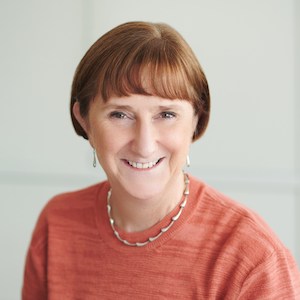
I have been reporting around the clock as a freelance journalist for publications such as TIME, Al Jazeera, The Nation, The Globe and Mail, VICE News and Columbia Journalism Review in partnership with US-based freelance journalist, Emily Fishbein, who worked in Myanmar from 2015 to 2020. During the pandemic, we teamed up to write about armed conflict between the Arakan Army and Burmese military in my native Rakhine state, and we have been working together since. 

A protester holds a sign denouncing Myanmar General Min Aung Hlaing. A protester holds a sign denouncing Myanmar General Min Aung Hlaing. (Photo: STR / AFP)

As hundreds of thousands demonstrate and workers strike across every sector, the situation continues to intensify. On the weekend of 13-14 March, at least 51 people were fatally shot, bringing the total number of people killed by soldiers and police since the coup up to at least 126. According to The New York Times, more than a fifth of those killed have been teenagers. 

More than 2,100 people have been arrested as of 13 March, according to the Assistance Association for Political Prisoners, and many of those arrested were seized from their homes at night without a warrant. At least 37 journalists have also been taken into custody, of whom 15 have not yet been released; some were beaten upon arrest while others have been forced to sign statements that they will cease reporting.
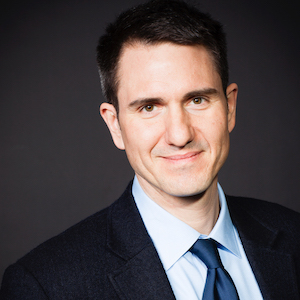
Five prominent Yangon-based media groups have had their licenses revoked and been banned from publishing on any platform, while the military has raided several media outlets, seizing computers, printers and data servers. The military is arbitrarily shutting down the internet and people, including me, are afraid to make phone calls in case the calls could be intercepted. 

Living under an authoritarian state is all too familiar in Myanmar, which was run by a military junta from 1962 to 2011. During those years, we were surrounded by informers, the government heavily censored media, and SIM cards were kept prohibitively expensive (upwards of US$7,000 in 1998 and around US$625 in 2011), effectively cutting off our access to news and information.

(click to enlarge)

In 2011, the military began a series of reforms, and in 2013, the price of SIM cards dropped hundredfold. I accessed the internet for the first time from my village in Rakhine, on the western coast, in 2014.

Myanmar held openly democratic elections in November 2015, bringing the National League for Democracy (NLD) to power. Nobel Peace Prize laureate Aung San Suu Kyi became the country’s de facto leader, and although the country was still under a 2008 military-drafted constitution allowing the civilian government and generals to share power, many expected that the NLD would counter the military’s influence and champion democracy and human rights.

Aung San Suu Kyi dashed expectations when she defended the military against charges of genocide for its treatment of the Rohingya at the International Court of Justice in 2019. Other ethnic groups in Myanmar, including my own Arakanese community (also called ethnic Rakhine), have also been bitterly disappointed by Aung San Suu Kyi’s failure to condemn human rights abuses that the Tatmadaw allegedly committed, including war crimes and crimes against humanity. 

Instead, her government backed the Tatmadaw’s violent campaigns, blocked humanitarian access and, in parts of my home state and the neighbouring Chin state, imposed the world’s longest internet shutdown. Since 21 June 2019, government restrictions on the internet left more than 1 million people without effective access for 19 months.

The NLD government also cracked down on press freedom, especially in Rakhine, where it blocked independent media access to conflict-affected areas beginning in 2016, with the exception of pre-arranged reporting tours in which journalists were accompanied by government minders.

During the first four years of NLD’s term (2015-2018), 67 lawsuits were filed against journalists and media personnel. Of these, 31 were filed by the government; 11 by the military; and the rest by religious institutions, tycoons, employers, political parties, armed groups and others, according to a report in May 2020 by Yangon-based freedom of expression organisation Athan. 

Kyaw Hsan Hlaing reports from Yangon. Kyaw Hsan Hlaing reports from Yangon. (Photo: Supplied)

More than three dozen journalists were charged with defamation, while others were charged with supporting an unlawful association or alleged terrorist group when they reported on conflict between the Tatmadaw and ethnic armed organisations or interviewed their spokespersons. 

In 2018, the government imprisoned Reuters journalists Wa Lone and Kyaw Soe Oo for possessing classified information which police had planted on them, while they were reporting on the massacre of 10 Rohingya in Rakhine. They spent more than 500 days behind bars before being released in May 2019 under a presidential amnesty.

While the NLD severely curtailed media freedoms, sinking back under military rule is far worse. Almost immediately, journalism became significantly more challenging and dangerous, and the obstacles and risks are increasing by the day. 

On 27 February, I went out to observe the protests. After being tear-gassed, I ran away from authorities only to come face to face with a soldier. He pointed a gun at my friend and me, and said: “Back up, I don’t want to shoot you.” I backed up and immediately left the area.

Mapping Myanmar (click to enlarge)

What’s more, the social media landscape has changed dramatically. Facebook, which serves as the main source of news, information and communications in Myanmar, has long been used as a vehicle for hate speech and disinformation targeting ethnic minorities. After the military banned the platform on 4 February, users migrated to Twitter en masse. Two days later, the military banned Twitter as well, but users have continued to access both platforms using VPNs.

Since the coup, my Twitter followers jumped from around 400 to nearly 10,000 as of 14 March. I have not received any serious threats online, but I worry that malicious activity will increase; I have already seen a spike in trolling and disinformation on the platform.

Intermittent internet shutdowns have posed another major problem. While the hazards of social media are many, the lack of online access is even more dangerous. Unable to check reliable news sites or trusted sources to verify information, I have been calling my contact at a fact-checking civil society organisation for assistance. But now she sometimes replies that the group is unable to confidently make an assessment.

With arrests increasing, I have taken extensive precautions to protect myself. On the day of the coup,I wrote down important phone numbers in my notebook, using nicknames in case police confiscated it. Next, I deleted all contacts, audio files and messages from my phone. I began using VPNs to access the internet, and when I use phone data, I switch between four SIM cards to separate my personal communications, browsing history, and reporting work – a strategy I had also used when reporting on armed conflict in Rakhine.

It is now much harder to collect information as I do not trust anyone. When I go outside, I am constantly alert and carefully assessing my surroundings. Informers could be anywhere, and I often feel as though people are watching me, especially when I carry my camera. I don’t talk openly with taxi drivers, and I am guarded even with my closest friends and family. I avoid talking deeply about my feelings and personal information as well, because people could take advantage of my vulnerabilities.

I see journalism as a tool to solve problems, and I am particularly motivated to promote human rights and social justice. I aim for in-depth coverage which prioritises the inclusion of diverse voices and especially those who are vulnerable and marginalised, such as displaced people, ethnic minorities and those living in remote areas. 

Covering under-reported stories during an emergency, I feel an extra sense of responsibility to document what is happening accurately, informatively and effectively. Despite the risks and pressures, I feel strongly motivated to persevere. 

The most important thing is to share what is happening in Myanmar with the world. My country has already gone to the dark side, and if we don’t do anything, we may become trapped under military control for a long time. We need to end this situation and find our way to the light. Each of us has our own role to play. For me, that role is journalism.

As told to Emily Fishbein, Kyaw Hsan Hlaing’s reporting partner, on 14 February 2021. Last updated on 14 March 2021, hours after the military issued a directive to telecoms operators to shut down the internet indefinitely in the country.


Kyaw Hsan Hlaing is an Arakanese student, researcher, and freelance journalist from Myanmar’s Rakhine state who focuses on peace, human rights; and social justice. He works to share on-the-ground situations of diverse people, especially marginalised and conflict-affected minorities, with the international community.


Emily Fishbein is an independent freelance journalist who worked in Myanmar from 2015 to 2020 and plans to return when she is able. She seeks to share diverse voices and perspectives, especially highlighting underreported stories. Prior to writing, she worked with refugees and displaced persons in Myanmar and the United States.


Introducing the FCC’s New Members: January 2021

The FCC Membership Committee meets regularly to vet applications and is always impressed by the diversity, experience and talents of FCC candidates. Join us in welcoming our latest batch of members!


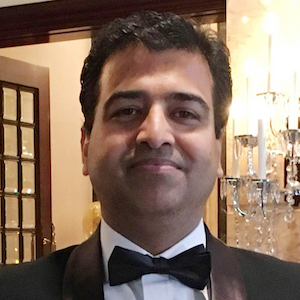
Jonathan Robert Breen

I went unwittingly into financial journalism but was rewarded with the chance to move to Hong Kong and cover one of the most exciting and important capital markets. I spend much of my free time hiking or researching which bars have the best beers and comfiest stools. Previously, I worked for a newspaper in South Korea, where I spent some of my earlier years and still have family. I’m trying to master a few languages and have just about managed English. Tips are welcome.


Sumeet Chatterjee

I have been with Reuters for more than 14 years, and in my current role as acting Asia finance editor, I oversee the coverage of banks, deals, and regulatory developments in the region. Before moving to Hong Kong in 2016, I worked in India, where I covered the country’s technology and financial sector, as well as the pharmaceutical industry. However, my first foray into journalism was in fashion. Given that I probably won’t get front-row seats at events at this stage of my career, I don’t imagine going back to that beat in this life.


David Matheson Cave

Originally from Northampton, England, I left school at 15 and got my first job as a casino trainee croupier at only 17. I must have been the world’s youngest five-card stud poker dealer! Through the years, I’ve DJ’ed and worked in radio, toured with music acts and made a name as a record buyer in Indonesia, China and South America. I eventually started my own toy company, Dragon-i Toys, in Hong Kong in 2009. I also wrote my autobiography, From Disco’s to Dino’s, and I look forward to telling you more about it at the FCC.


Christine Chan Chiu

I’m an independent art advisor and freelance writer, who is now brewing up a very interesting art startup. A proud Hongkonger, I studied art history and languages while developing a passion for music, history and culture. This is one of the reasons why my husband and I are very excited to join the FCC family; we love the historical significance of the Old Dairy Farm Depot as well as the cosy, intellectual atmosphere of the club – and we can’t wait till jazz nights resume at Bert’s!


David Fenn

I am a practising solicitor, who set up my own law firm this year focusing on litigation and corporate practice. I am also a non-executive director of three Hong Kong-listed companies, and have been serving on the HKICPA Disciplinary Panel and HKSAR Housing Appeal Panel advocating public interest. Born and bred in Hong Kong, I studied both here and in the UK. In my free time, I love hiking, swimming, cars, watches and having a good glass of wine – and I look forward to meeting fellow members at the Lounge!


Jason Colin Gotch

I’m the Regional Director of Security for Bloomberg, having relocated from Singapore in May 2019. My first visit to Hong Kong was actually in 1994, as an aspiring stuntman/actor. I spent three months living in Kowloon auditioning (badly) and eating with Jackie Chan’s stunt guys at Jack in the Box. Needless to say, my career did not exactly take off. However, my current role offers me plenty of ‘action’, given the city’s fair share of geopolitical intrigue. In my spare time, I’m a Master’s student of International Relations at SOAS, and I’m studying German for my grand plan of a Swiss retirement.


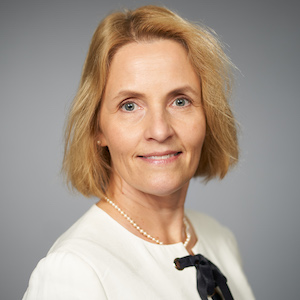
Jarna Johanna Karanko

I am the Consul-General of Finland in Hong Kong and Macao, and have been a Finnish career diplomat for a long time. I have worked on sustainable development and climate policy, UN development affairs, World Bank relations and relations with several European countries. Before moving here, I was part of the UN Representations in New York and Geneva and at the Finnish Embassy both in Paris and Caracas. I speak a number of languages – English, French, Spanish, Swedish and Finnish – and enjoy hiking, sailing, photography and design.


Clement Ka-chi Lai

I am the founder and CEO of Clement Shield Ltd, a company that specialises in security and event planning, rescue solutions for both public and private clients and anti-counter terrorism, among other things. Prior to establishing my company, I worked with the Specialist Units of the Hong Kong Police Force for 22 years.


Kevin Ho-por Lam

I am a Hongkonger, born and bred, and spent most of my childhood here until I was sent to the UK for my studies. I worked as an economist covering the UK and European economies until 2014, when the Umbrella Movement inspired me to return home, with the hope I could contribute to the democratisation process here. Walking out of my comfort zone, I worked in various sell-side institutions covering China and Hong Kong. In 2019, I stepped in to replace activist Joshua Wong and won my seat as a local councillor for South Horizons.


Dieter Lamlé

I am the German Consul General for Hong Kong and Macao, and moved to Hong Kong with my wife three years ago. I have been active in the German diplomatic service for over 30 years on postings in Rwanda, Indonesia, New York, Peru and Erbil in Iraq. During our last stay in Berlin, I was Chief of Protocol of the Senate of Berlin and just before coming to Hong Kong the Director for Latin America at the German Foreign Ministry. I am happy to join the FCC and am looking forward to interesting meetings and discussions.


Clara Ferreira Marques

I’m a columnist for the Opinion team at Bloomberg, where I am lucky enough to cover commodities, climate and a handful of emerging markets including Russia. It’s a wonderfully varied portfolio, and every day is different. I joined Bloomberg from Reuters, where I spent almost two decades as a reporter and editor in Moscow, Milan, London, Mumbai, Singapore and, finally, here in Hong Kong. My husband and I have three boys and enjoy tiring them out on Hong Kong’s hiking trails and beaches at the weekend.


Cathy Morris

I’m Cathy Morris, a Tasmanian who has lived and worked in Hong Kong since 2010. I originally arrived on a six-week work assignment and fell in love with the place. Hong Kong is an exciting city to live in, with access to a wonderful array of hiking trails. I enjoy playing mahjong and love travelling around the region (Covid-19 permitting) for both work and pleasure. I work for AXA as the Director for Technology & Operations for Asia. I am very happy to be joining a number of friends as a member of the FCC.


Newley Reid Purnell

I’m a reporter with The Wall Street Journal, which I joined in 2014. My wife Anasuya Sanyal and I moved here earlier this year from New Delhi with our rescue dog Ginger. I love my beat, which involves digging into what global technology firms are up to across Asia. I grew up in two very different parts of the US: rural Eastern Oregon and South Carolina Lowcountry. I am a lifetime soccer player, having played as a goalkeeper for my university team, and on many Sunday league teams since then. I’m excited to join the FCC and meet fellow members.


William Iain Ridgers

I am The Economist’s new(ish) Asia Digital Editor, overseeing our regional news desk here in Hong Kong. I’ve been working at the newspaper – in more guises than I can remember – for nearly 25 years, but this is my first role overseas. I moved the family from locked-down London in April and, despite the odd homesick pang, it has so far proved a wonderful place to live. Mind-bogglingly expensive, even for a Londoner, but wonderful. Best of all, what with it being so quiet on the news front in Hong Kong this year, it has been nice to be able to ease gently into the job. Oh, hold on.


Kaushik Roy

My family and I hail from London and moved to Hong Kong a few years back. I am a manager at LNG Shipping, and I am deeply connected with the maritime community in the city and beyond. I am also the first Chartered Master Mariner in Southeast Asia, including China/Hong Kong. Occasionally, I write articles about the industry in newspapers and trade magazines. My wife and I love travelling, eating, socialising, organising events and mingling with people, which is why we’re happy to become part of FCC and its name, culture, and heritage.


Sherlin Hsie-lien Tung

I’m a partner in the litigation and arbitration group at international law firm Withersworldwide. Born in Taiwan, I grew up in California, and have worked on three continents (North America, Europe, and Asia). I’m always open to new opportunities, whether professional or personal, and enjoy spending time with my husband, cat, and good friends. Prior to these unique times, I loved to travel and try the local delicacies of the countries I visited. To date, my most memorable trip was a one-week adventure in Cinque Terre, Italy, eating home-made seafood pasta next to the sea.


Tommy Walker

I’m originally from the UK but I’ve been in Hong Kong for three years. Prior to that, I’ve had stints in Bangkok, Melbourne, and Auckland. I’m a freelance journalist, photographer and travel writer, and I also operate a social media marketing business for travel companies worldwide. In my spare time, I enjoy socialising in bars (and now at the FCC), going on hikes and getting some island time in. Cheers to the FCC for having me here. I’m keen to be part of the conversation both now and in the future.


Lee Stephen Williamson

In 2009, on a bit of a whim, I packed a bag to travel to Asia for a year. I ended up in Beijing, where I sat in the editor’s chair at Time Out Beijing, met a girl and started a family. I landed in Hong Kong three years ago, and I’m now head of content at Generation T, Tatler Asia’s content and events platform for the leaders of tomorrow. This year, I was honoured to be selected for WAN-IFRA’s inaugural Young Media Leaders Fellowship.


Vicky Wong

I’m a web producer at RTHK English News. I was born in the UK to Hong Kong parents, so in 2014, I decided to trace my roots and moved here to pursue a Master of Journalism at the University of Hong Kong. I arrived just one month before the Umbrella Movement kicked off, and it has been an adventure, to say the least. My work has appeared on CNN International, MSNBC and Coconuts Hong Kong, for which I covered last year’s anti-government protests. When I’m off-duty I enjoy reading, music, films, photography and knitting.


Catherine Wong

I am really excited to be joining the big family of the FCC! I enjoy relaxing at the end of a long workday with a drink in the Lounge, and love the music performances, exhibitions and various activities held at the club – they’re all extremely engaging. I would love to share my boring legal experience with my fellow colleagues and look forward to getting to know more of you.


Kan Zheng

I was born in China and educated both there and in the UK. My career started in London, where I managed money for institutional clients such as central banks, sovereign wealth funds, insurance companies and pension funds. After 15 years there, I moved to Hong Kong three years ago. I discovered the FCC through a close friend, and have found it a great place to meet people from different backgrounds and cultures. My personal interests are politics, business, social issues, arts and fitness. Since joining the FCC, I have made a few friends and I look forward to making even more in the years to come.


Yinou Zhou

Born in China, I moved to the UK when I was 15. I completed an MA in International Journalism (Broadcast) at City, University of London, then came to Hong Kong to work as a news anchor. I also hosted and produced a talk show on Tencent Video that received over 1.5 billion hits. I am an adventurous person who’s always looking to tick things off my bucket list, like attempting the Polar Plunge in Antarctica and even persuading my mum to do it! I love being outdoors so I used to travel a lot before the pandemic. Now I quench my wanderlust with wake surfing and hiking.


How Podcasting Pushes the Boundaries of Traditional Storytelling

Jarrod Watt, SCMP’s specialist digital production editor, explains it all. By Marianna Cerini

There’s nothing ‘new’ about new media for Jarrod Watt. For the past two decades, the SCMP’s specialist digital production editor has been working across video, text, sound, and digital as a multi-platform reporter and editor in both his native Australia and Hong Kong. Today, he produces some of the publication’s most popular podcasts – including “Inside China”, “Eat Drink Asia”, “Behind the Story” and “Asia Briefing” – and continues to push the boundaries of traditional storytelling.


How did you get into multimedia journalism?

Jarrod Watt: I studied journalism at RMIT University in Melbourne, and got my first job in community radio at a station called 3RRR. My first time reading the news was to announce the end of communism – I still remember the speech by [then Soviet politician] Mikhail Gorbachev. That job fuelled my interest in 21st-century media – that’s where I learned how to multitask as a journalist and cover different roles.

After that first stint in the recording studio, I spent the 1990s working in newspapers and magazines in Melbourne. Then, in 2000, I joined the Australian Broadcasting Corporation (ABC) as a multimedia reporter. I shot videos, ran the website, and produced radio stories. I spent 11 years at ABC, working my way up from field reporter to state editor.

SCMP’s Podcasts page.

At what point did you join the SCMP?

JW: In 2015, I moved to Hong Kong and joined the SCMP as deputy online editor. Eventually, I was asked to head the Special Digital Production unit, working on 360-degree projects including podcasts, which we started 2.5 years ago.

Initially, we found people around the office and asked them to come and read their stories [for the podcast]. We wanted to see if there was an audience for long-form audio features. Turns out, there was. We then started training people and grew from there, developing new podcast concepts and trying different formats.


Podcasts have become immensely popular. Why do you think that is?

JW: Podcasts have opened up this idea that you can access information without having to physically hold a paper or scroll a website. You could be driving, working out, running errands, and still be able to listen to stories and deep-dives without any interruption. They offer a seamless approach to media consumption and modern-day storytelling.

Field recording in Macau with Bernice Chan and Alkira Reinfrank.

What do you think makes your podcasts different?

JW: The diversity we showcase. Instead of your typical radio voices, the SCMP’s podcasts really sound like Hong Kong – we have people and accents from all over and we reflect the city’s multiculturalism. I am also proud of the fact that we cover Asia so extensively, and across so many different perspectives. It’s not something many other podcasts do.

Our hosts are predominantly women, which I think gives us a real edge in the sector. We have Bernice Chan and Alkira Reinfrank at “Eat Drink Asia”, Mimi Lau and Kinling Lo at “Inside China” – it’s a real point of pride and difference.


Which audio stories have really challenged you?

JW: An interview we did with a construction worker in Shenzhen who was dying of silicosis [a type of lung disease] is one of the most confronting and emotional recordings I have ever listened to. Editing it in a way we could do justice to his story was an intense, compelling process.

We also did a series on the [US-China] trade war last year, which was tough but rewarding. Tariffs are boring, and we really wanted to create something more engaging. So we approached the issue through six items – bicycles, washing machines, solar cells, trucks, handbags and salad spinners – examining what they could tell us about the state of trade.

With Denise Tsang, Kinling Lo, and Mimi Lau.

What’s fueling multimedia in journalism?

JW: The advent of the iPhone has perhaps been the greatest game-changer in terms of multimedia journalism. Then of course social media and live streaming. Things like Facebook Live have revolutionised the way we do radio, broadcast and produce audio stories.

Podcasts have brought a new dimension to newsrooms, and I think that’s only going to keep expanding. I think audio will keep reaching new standards, as will the way we tell stories, blending VR, videos, and digital technologies. It’ll be interesting to see how AI could fit within the field – if, say, someone developed an AI system that could do live translations… that could be another game-changer.


JARROD’S TOOLKIT

Podtail Masterclass
This 14-episode series covers all the basics of starting a podcast.
podtail.com


ccMixter
A one-stop-shop for sourcing copyright-free tones, theme songs and instrumental music.
dig.ccmixter.org


Audacity
The best free, open-source programme for multi-track audio editing.
audacityteam.org


Libsyn
A popular podcast-publishing platform, used by amateurs and pros alike.
libsyn.com

We measure site performance with cookies to improve performance.