Members Area Logout

It all began with blue whales

DSC_0094_webDSC_0223_webThe film ‘A Plastic Ocean’, which will premiere in Hong Kong in October and globally from November, began with the hunt for the elusive blue whale, writes the film’s director and journalist Craig Leeson.

In March, 2011, 30 miles off the southern tip of Sri Lanka, a tiny breeze tickles the surface of the Indian Ocean; the heat radiates relentlessly. Three weeks on a 90 metre research vessel has taken its toll: most of the film crew have deep tans from working in the sun as well as a deep frustration for having been eluded by our quarry.

We have travelled hundreds of miles along the southern coast of Sri Lanka gazing out to sea in the hope of spotting the world’s largest animal. So far, all we have for our efforts, for the hundreds of thousands of dollars of investment, is just one ghostly shot, filmed from just below the surface, of a spaceship-like object swimming 15 metres below. It isn’t enough. Our aim is to be the first documentary team to film the mighty blue whale.

We also planned to conduct scientific research to see if blue whales have been exposed to plastic through their diet and location. But finding these animals is like looking for a giant toothpick in a universe-sized haystack. At a distance, we had seen them blow almost every day. But these animals can spend 30 minutes under water and reach speeds of 20 knots. We simply couldn’t keep up. And a tsunami nearby hadn’t helped. The whales had headed for deeper water. After a massive effort, we were forced to finally turn around and make our way back to Galle. We had to be in port in four hours to make our customs check.

It felt like a terrible defeat. We had moved a film crew of 12 and a ton of equipment half way around the world to a difficult location at great expense. And we had battled bureaucratic and corrupt government officials who almost scuppered the trip before it began. But on this last day something at the back of my mind refused to give up. We were still on the water, we still had a few hours of motoring and that meant we still had a chance of an encounter, no matter how slim that now appeared.

Within half an hour of turning around, I hear magical words: “BLOW”. I rush to port side and see in the distance not one blow, but two. What was different about this encounter was the lack of the tell-tail sign of fluking, which is when the whales point their snouts vertically and begin a deep dive to feed or to just disappear.

I marshal the on-board camera team to set up and our dive crew and cinematographers are already putting the Red cinematic 4k cameras in the heavy Gates underwater housings. We jump in the pursuit boat and we cautiously head towards the lingering behemoths. About 50 metres from our target all three camera teams lift in to the water and begin cautiously finning towards the whales. There are not two, but an entire group, and what appears to be a juvenile. These whales are pygmy blue whales, a slightly smaller cousin of true blues, but blues none the less.

Normally, I direct filming from the boat, but this moment was one I had waited all of my life for. I don my fins and mask and head for the action. Beneath the waves, the family of pygmy blue whales reveals itself. The individuals appear to be resting. This is our moment of truth. Will they hang around and let us film or show their normally shy sides and slip away?

DSC_1209_webDSC04777_webFortunately, the juvenile is as curious about us as we are of his family. Almost 15 metres in length (just over half the size of his parents), the juvenile turns towards John, one of our cinematographers, dives beneath him and gently moves towards him to take a better look at what he is doing. I can’t believe our luck. After all this time and effort, with just hours to spare, we have a whale performing for us. It is a significant moment.

We are the first to film pygmy blue whales underwater, and the first to film a juvenile. As these thoughts race through my head I can see through the indigo-blue water a large, blue/grey object ascending through the god rays beneath me. It was the juvenile. Clearly, he wants to engage. I take a deep breath and began to fin towards the whale. The calf rolls to its back and shows me its stomach. Without warning, a massive cloud of bright, chunky orange poo flushes out of its bowels. As I fight to see my way through the cloud and reach the surface I run in to our stills photographer who is laughing uncontrollably. “Mate, you’ve just been pooed on by the rarest animal on the planet.” He’d also been caught in the poonami.

I grab a bucket from the tender and begin scooping up the large, extremely smelly chunks of digested krill waste. Back on the mothership, I take it to our cetacean expert, Lindsay Porter, who is ecstatic. It’s the first time she, or any scientist, has had the chance to examine blue whale poo and she declares that as far as she knows I am the first person to be pooed on by a blue whale. She is extremely excited. The specimen I collected for her was to become very important in the scientific research we conducted on the whales, providing information on DNA, toxicology, diet and other information not normally available to the scientists.

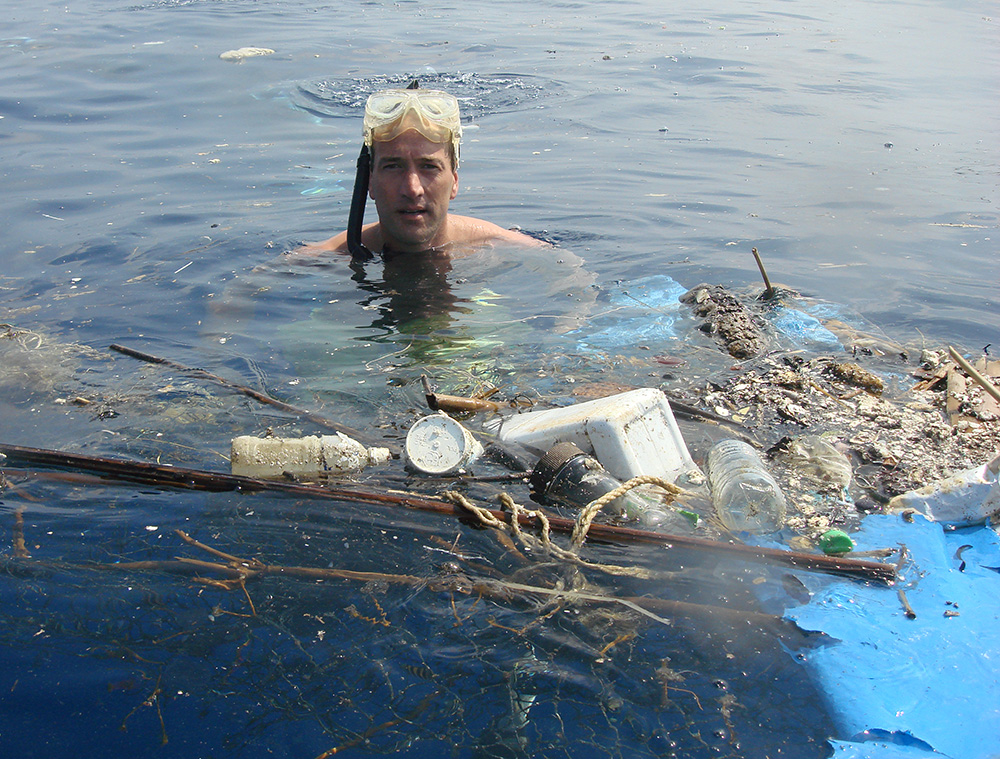
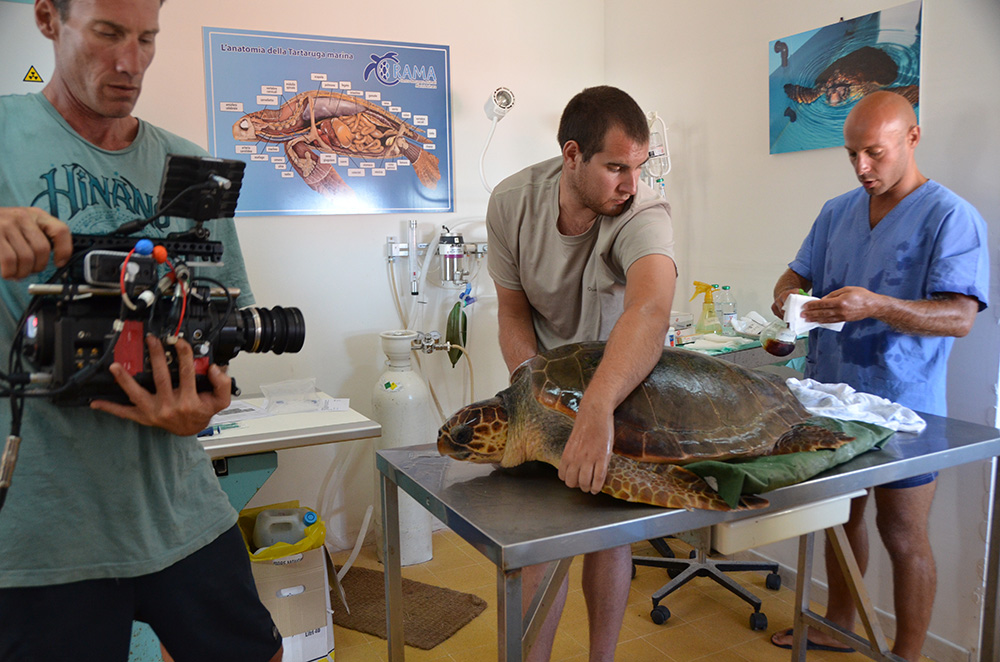
That shoot was the first of multiple shoots we did over the next five years in 20 locations around the world for the documentary feature film, “A Plastic Ocean”. The feature film investigates the global problem of plastic pollution in the world’s oceans, the damage it’s causing to marine life and how it’s coming back up the food chain to poison the species that put it there in the first place – humans. The audience follows an investigative trail, led by myself and world record-holding free diver Tanya Streeter, as we travel the world’s oceans to see if the plastic pollution problem in the north Pacific gyre exists elsewhere on the planet. The results of our investigation are mind blowing, unexpected, depressing, and revealing. But ultimately, as we look at solutions, it is also hopeful.

Our encounter with the whales leads the first eight minutes of the film, but my personal encounter with the juvenile was relegated to the cutting room floor. However, it remains one of the most vivid memories I have of that very first, inspiring shoot and the realisation of my lifelong ambition to meet a blue whale.

And as I sit in the audio engineer’s studio in Los Angeles, putting the final sound mix to the film, I cannot help but reflect on how “A Plastic Ocean” has been an incredible journey for everyone involved. One of our wonderful supporters, Sir David Attenborough, who was kind enough to take part in filming, has described “A Plastic Ocean” as “one of the most important films of our time”. Given the scale of this unfolding environmental catastrophe, his assessment is powerful.

We have learned much on this journey and we want as many people as possible to understand this issue and to be motivated to force society to change its attitude to single use plastic. As Dr Sylvia Earle says: “With knowing comes caring. But if you don’t know, you can’t care.”

See the trailer to the film at www.plasticoceans.org

Oceans-wide plastic waste destroys marine life

IMG_0900_webDSC_0336_webSituated 600 kilometres directly east off Australia’s Port Macquarie lays an irregularly crescent-shaped volcanic remnant in the Tasman Sea. Lord Howe Island is a stunning world heritage site and about as far south as coral will grow.

Its sandy beaches and sheltered lagoon appear pristine. Wildlife abounds. Hundreds of petrels catch thermals which race up Mount Gower. And the most heroic of all seabirds, the shearwater, call this island home, returning from epic around-the-world adventures to the nesting sites where they were born.

But this island isn’t all it seems. It holds a deadly secret. In the forests of the endemic Kentia Palms small piles of plastic have begun to appear. Man-made, these plastic items – golf tees, pre-production plastic resin pellets, disposable lighters, balloon ties – haven’t come from the island, but thousands of miles away. So how did they end up in the forests, far from the sea?

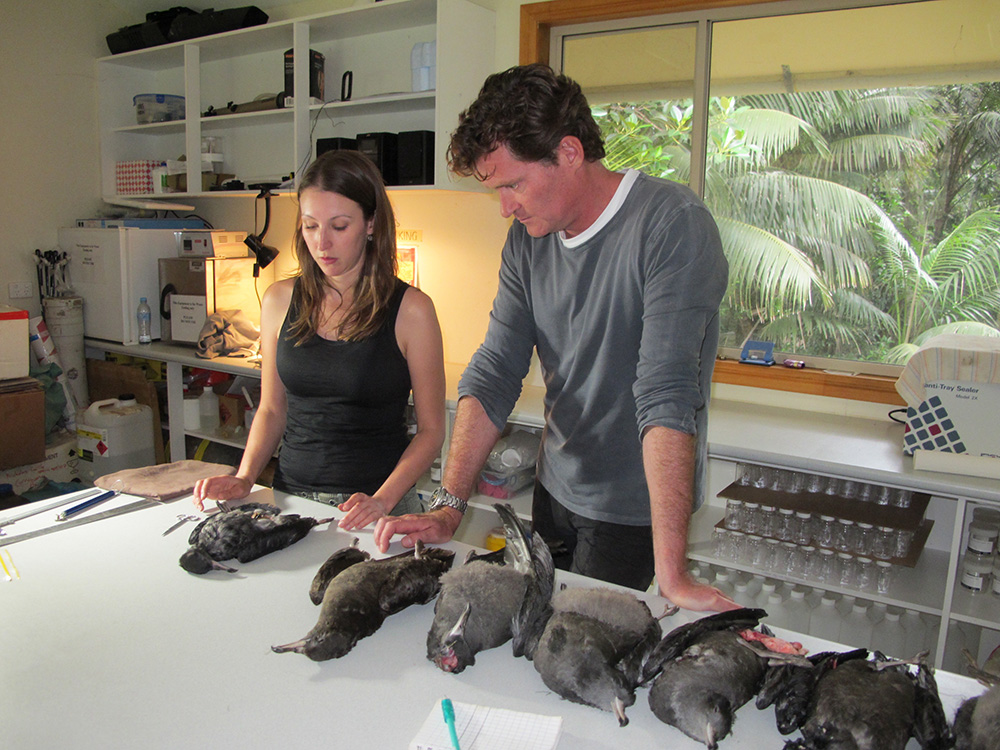
As we walk along the beaches in the early morning, another mystery reveals itself. Dozens of young fledgling shearwater lay dead, with no apparent signs of physical distress. We pick them up and take them back to a small laboratory in the island’s only town. It’s not until scientist, Jennifer Lavers, performs a necropsy that both mysteries are solved.

Inside the stomachs of every bird we cut open is a gut full of plastic. These babies have been unwittingly fed plastic by their parents foraging for food thousands of kilometres away. Those birds lucky enough to regurgitate the toxic meals do so outside their burrows in the Kentia palm forests, allowing them room for real food. But not all are able to get rid of the human rubbish. And they die in great numbers on the beaches and in the waters off the island.

What’s tragic about this scene is that it is repeated on islands around the world among many different species of sea birds. In fact, Lavers has found that between 96% and 100% of all flesh-footed shearwaters contain plastic and globally it’s around 65% for all seabird species.

This year, more than 300 million tonnes of plastic will be produced. Half of that we consumers will use just once and then throw “away”. But have you ever stopped to wonder where “away” is? What happens to that plastic when we remove it from our personal space?

It was something I hadn’t thought about until a friend, marine biologist and television researcher and producer, Jo Ruxton (producer for the BBC’s “Blue Planet”), called me and asked: “Have you noticed much plastic in the water when you surf and dive?” Over the course of the past few years, no matter where I went I seemed to be finding more and more plastic in the water and on the beaches. Jo told me about the north Pacific gyre and a floating island of plastic as big as Texas. She and executive producer, Sonjia Norman, wanted to investigate the problem and, if it was as bad as it seemed, make a film about it to raise awareness.

The first expedition found that there was no floating island. What they found was far more insidious: 46,000 pieces of micro plastics for every one square mile of ocean.

That trip begged the question: if there’s that much plastic in the north Pacific gyre, what exists in the other four gyres which power the world’s oceans, bringing us weather systems, oxygen, food and water?

After five years of filming and post-production in 20 locations, “A Plastic Ocean”, is now complete and ready for distribution. The 96-minute feature film investigates how plastic is filling up our oceans, choking marine life and coming back through the food chain to make us humans sick.

The results of the expeditions will astound and horrify you. Those dead and dying seabirds we found on Lord Howe Island were just the canaries in the coalmine. We found plastic everywhere, in every ocean; on every beach and in almost every animal we tested. We followed those plastics and the toxins they carry up the food chain… and guess where it ends? Scientists are now proving that plastic and the toxins they carry are causing endocrine disruption to humans around the world. One study by the US Centre for Disease Control found plastic chemicals in 92.6% of every American tested.

Some scientists now say this issue is as urgent as climate change.

The film reveals solutions to the problem, including new technology such as pyrogenesis and pyrolysis. But the very first action we all need to take is to stop putting plastic in the environment in the first place. It wasn’t made by nature and nature cannot deal with it. Our grandparents didn’t see this coming, my generation perpetuated it. It’s now up to our children to recognise this disaster and clean it up so that their children will have a future.

Award-winning journalist Ying Chan moves on but not out

By Annemarie Evans

IMG_4100_webIn between seeing journalism students, Professor Yuen-Ying Chan is clearing out her office. So it’s not a bad time to visit her, as she’s coming across items in piles of papers as she packs. There’s a newspaper report with her looking rather glum in her late 30s. She’d just been sacked as a reporter after annoying one Chinatown gangster too many. It happens. Another with a grin. Won a libel case. And a 16-page supplement she wrote with a colleague looking at migrants, the snakeheads, and the families left back home in the risky business of people smuggling.

A multi-award winning journalist, Chan set up the Journalism and Media Studies Centre at the University of Hong Kong in September 1999 after her return to the city after nearly three decades in the US. Washington Post veteran journalist Keith Richburg is taking over as the centre’s director. That’s not to say Chan is about to take it easy. The question will be how to use her time fruitfully, without overstretching herself.

There are a couple of books on the go, she’s an adviser to various organisations and she’ll continue living on campus. She’s master of a dorm where she thrives on the multinational and subject mix of the students. “My job is to foster a community that’s inclusive and smart. A community of budding scholars.”

Born in 1947, Chan “is, I think, the same age as Hillary Clinton, I think I might be a few months older”. She’s remains an investigative reporter at heart. I complain that so many stories come up in Hong Kong that seem to have no follow up, as everyone moves on to the next thing. What’s happened to the allegedly illegal structures on Chief Executive C Y Leung’s flat, for example? But then, there’s no money for those big investigative teams. Chan agrees on the lack of money, but she disputes that journalists aren’t investigating in the same way.

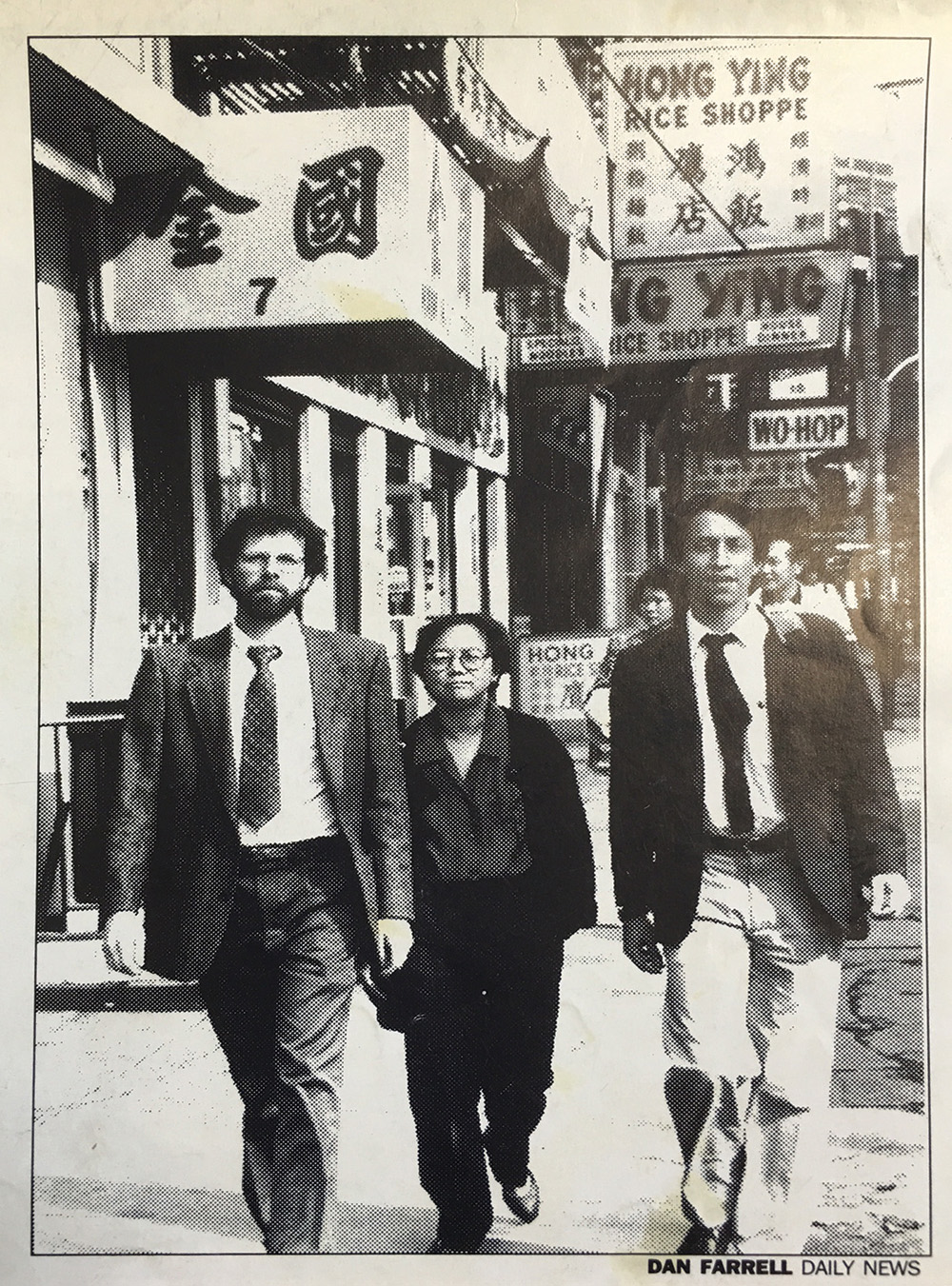
“Yes, when I look back, we had three months!” she says, of the time she had to investigate an international network of people smuggling for The Daily News in the early 1990s.

With collaboration and teamwork, says Chan, investigative stories are still being written and technology is a central driver in that. While permanent elements such as discovering stories, good reporting and writing, critical thinking, integrity, challenging power and holding it to account still are the core tenets of journalism, technology is providing new platforms to tell Hong Kong stories.

“We also encourage our students to be entrepreneurial, how to manage their own portfolio. With young people learning technology is second nature but they still need to learn how to tell the story.”

When the centre began, it was behind the curve, she says. There were journalism courses already at other universities in Hong Kong. These days, she’s excited about the various disciplines brought together – training regional lawyers, publishing books by mainland dissidents, the Documentary Film Project with Oscar winner Ruby Yang, to name a few.

Chan, the second of four children, writes how she returned home from school one day in a panic, having been asked to come up with an English name for herself. She finally chose Winnie, the name of a friend’s sister, but the colonial tradition never sat well with her and when she headed to the US to start a PhD in the early 1970s, she was happy to revert to her Chinese name.

Chan studied for a double major in economics and sociology at the University of Hong Kong. She would start a doctorate in sociology at the University of Michigan, but her heart wasn’t in it. She abandoned it after two years and began working for Chinese-language papers about gangs and slum landlords. She recalls “hanging out with burly detectives in bars” which she enjoyed. But she also would have security guarding her house.

IMG_4094_WEBIn 1990, “I was hired by The Daily News to go to China to do an investigation,” she says. Her journalist friend Jim Dao, now an opinion page editor for The New York Times, was looking into people smuggling and together they headed off to Asia to report. In Hong Kong, says Chan, “they were actually displaying advertising for visas. It was so open – a cover for people smuggling. I went to one of these services undercover. Thinking back, I was pretty bold.”

On June 6, 1993, a cargo ship, the Golden Venture, ran aground at Fort Tilden in Rockaway Beach in Queens, New York. On board were 286 undocumented migrants. “They were rescued from the water. It was shocking,” says Chan. She covered the story and the following day headed to the port of Fuzhou in Fujian province. “I was the first reporter to reach the families and reported from the hometown of the people on the freighter.”

For her 1993 body of work on the Golden Venture and its aftermath, Chan won the Polk Award, among others. Chan would continue covering the immigration beat for the next six years at The Daily News. The whole of New York, she says, is very much an immigration story.

She took a year’s leave and was given a Nieman fellowship at Harvard. “You could do anything you like, go to any classes without paying tuition and you didn’t have to do the exams.”

A friend was the editor of the Chinese-language Asia Weekly in Hong Kong and he told me: “I have a great story for you’. It was about campaign donations to the Democratic nominee Bill Clinton in October 1996 during the US presidential election.

The story “mentioned that a certain senior official in the Kuomintang had offered US$10 million to the Clinton campaign”, explains Chan. “The KMT at that time was very powerful in Taiwan. They held a Central Committee emergency meeting and then sued me for criminal libel. I won the case.”

As she hands the baton to Richburg, she says JMSC has an extensive internship programme, and she shows pride in the employment rate of her former students in journalism outlets and non-governmental organisations.

While the course is about the students, “we are also providing a service to the community”. During the Occupy movement two years ago, she says, there was so much news coming out and interest globally that it was difficult for people to work out the facts. So a group of undergraduates created a verification service, in a Facebook page called “Under the Umbrella”. “It had 100,000 followers,” says Chan. “They were using the skills and tools of journalism. That is how we advocate.”

Eyewitness video transforms and challenges the news business

Alison Parker (left) the moment shots ring out during an interview on tourism with Vicki Gardner, the local chamber of commerce director, before she was shot and killed. (AFP screen capture) Alison Parker (left) the moment shots ring out during an interview on tourism with Vicki Gardner, the local chamber of commerce director, before she was shot and killed. (AFP screen capture)
Following the Nice truck terror attack the French media watchdog, the CSA, issued an appeal for 'caution' and 'restraint' and the French police called on people to stop uploading images of victims as a sign of respect for them and their families. (CNN screen capture) Following the Nice truck terror attack the French media watchdog, the CSA, issued an appeal for ‘caution’ and ‘restraint’ and the French police called on people to stop uploading images of victims as a sign of respect for them and their families. (CNN screen capture)

Amateur eyewitness video, uploaded instantly to social media, has revolutionised news gathering in the 21st century – and confronted journalists with a whole new set of challenges, writes Eric Wishart.

From hostage beheadings in Syria to police shootings in the US, graphic social media uploads have become an essential part of telling the story.

The seemingly endless series of horrors so far in 2016 – Istanbul, Baghdad, Brussels, Nice, Dallas, Orlando – has been captured by an equally endless army of amateur eyewitnesses using their smartphones. Their work has given unprecedented access to events as they happen – and has also provided a daily diet of horrific, graphic imagery that journalists have to process, verify and publish.

Guidelines on dealing with these challenges formed a major part of a new of set of editorial standards and best practices that I drew up for AFP news agency earlier this year. (https://www.afp.com/sites/default/files/paragraphrich/201606/22_june_2016_afp_ethic.pdf).

The challenge was to find the balance between the public’s right to know and exposing people to disturbing content that studies have shown can cause PTSD, or visceral trauma, among news consumers.

The AFP guidelines recommend that editors decide if graphic imagery adds to the understanding of the story in an essential way, or only appeals to morbid interest. Is it within the acceptable limits for a major media outlet? Does it cross the line into gore (dismembered limbs, mutilated bodies, executions, moment of death)? Will it cause distress to viewers or to the victim’s family? Does it damage the dignity of the people involved?

From experience, these are not the easiest questions to answer in the heat of the moment when a major news story is breaking.

Television networks are in the front line when it comes to deciding what material to publish, and an unprecedented amount of graphic amateur imagery is finding its way into our living rooms via the TV news.

To find out how two of the biggest networks handle these challenges I spoke to CNN’s Hong Kong bureau chief Roger Clark and to Jon Williams, managing editor of international news at ABC News.

Clark, speaking at CNN’s offices in Hong Kong, said the network has strict procedures in place and that there has to be “strong editorial justification” for using social media content.

“We ensure that if we are using graphic content we discuss it first, we vet it, we make sure we put up warnings on screen, we use verbal warnings. We do not use the pictures gratuitously,” he said. “We have strong taste and decency policies at CNN”.

And what are the criteria for using graphic content?

“On one hand you don’t want to sanitise the news to such an extent that the audience doesn’t know what is going on, but at the same time you have to draw the line somewhere in terms of taste and decency and your position can evolve on certain stories.”

A video circulated on social media depicts rebel fighters beheading a boy after capturing him north of Syria’s second city Aleppo. (screen capture: YouTube) A video circulated on social media depicts rebel fighters beheading a boy after capturing him north of Syria’s second city Aleppo. (screen capture: YouTube)

One example was CNN’s decision to broadcast edited footage from one of the first beheading videos uploaded by ISIS: “That video shocked the world but you don’t have to do that all the time – the point has been made; you don’t have to keep on making it.”

Clark has enthusiastically embraced the arrival of amateur eyewitness media.

“We are getting eyewitness accounts of events in video form that we would never have had before social media, so it is a wonderful development as far as news gathering is concerned,” he said.

“But with that comes added responsibility to make sure that we use the content responsibly and that we make sure that when we have sensitive material there is a robust discussion involving our standards and practices people as well as other senior editorial figures”.

Jon Williams said that the New York-based ABC News has a standards department that has to clear all content for use.

“ABC would never show the moment of death for instance,” he said in a phone interview during a visit to Beijing in August.

The increase in the use of graphic imagery is a “particular phenomenon of 24-hour news channels”, but more by accident than design, he said.

“If graphic images are appearing on air, 99 out of 100 times it will be because the people who are in the control rooms are inexperienced, or overwhelmed, or both. And that is why some content will air once and then never again – when wiser heads prevail it is back to business as usual”.

Are the networks rushing to broadcast amateur video because they feel pressure from social networks?

“We are in a different business – you have to capture the drama of events that are unfolding but you also have to provide the context and the analysis”.

“The audience does not want the networks to play social media at their own game.”

Iain Martin, the Asia editor at Storyful, believes that social media have had an impact on the kind of imagery that is being broadcast.

“There has been a shift in what news organisations are willing to show to the public and it is very much being driven by what is being captured by users and what users are showing on social media,” he said.

Storyful, whose Asia headquarters are in Hong Kong, gathers, verifies and obtains rights for uploaded amateur content and then delivers it through its newswire to media clients.

It leaves the decision on whether to publish graphic content to its clients and does not pre-edit material.

“We publish the full content to our private newswire; we do not make assumptions about our clients’ editorial judgement. It is up to our clients – TV stations or online news organisations – how they want to publish it, it is their call”.

Like all news organisations that have to process graphic content, Storyful must deal with the health risk posed to their staff by vicarious trauma. It has guidelines for the handling of graphic content and a counselling service available to journalists – procedures that are being adopted throughout the news industry to meet the challenges of processing disturbing material.

Claire Wardle, research director at the Tow Center for Digital Journalism at Columbia School of Journalism in New York, told me that while the established media have systems in place to deal with the flood of social media content, newer media outlets are still finding their way.

“These policies and standards have to be worked out now, particularly in newer publications that have not had time to think through ethical guidelines in the same way.”

Wardle, a frequent visitor to newsrooms in the US, holds regular workshops on handling social media and sees a change in the use of disturbing content.

“Media historians will look and say that there is a shift. In the conversations I have had in newsrooms over the last year journalists are saying they are publishing more graphic imagery than before because audiences have already seen it.”

“News organisations are feeling pressure that audiences are going to social networks. There is a sense of ‘they are seeing it anyway so how do we remain relevant if we do not have the go-to video or image that everybody is circulating’?”

CNN coverage broadcasting the graphic video feed recorded and posted live to her Facebook account by Diamond Reynolds. (CNN screen capture) CNN coverage broadcasting the graphic video feed recorded and posted live to her Facebook account by Diamond Reynolds. (CNN screen capture)
CNN coverage broadcasting social media footage uploaded by a bystander of the shooting of suspected drug dealer Alton Sterling after two Baton Rouge police officers pinned him to the ground. CNN coverage broadcasting social media footage uploaded by a bystander of the shooting of suspected drug dealer Alton Sterling after two Baton Rouge police officers pinned him to the ground. (CNN screen capture)

The arrival of live streaming video on social networks like Facebook and Periscope has added a new dimension to the social media dilemma for news outlets.

The issue came to the fore in the most shocking way when Diamond Reynolds live streamed on Facebook her boyfriend Philando Castile bleeding to death as a policeman pointed a gun at them through their car window.

Wardle has just produced a report on the media coverage of the video:

https://firstdraftnews.com/real-time-decisions-how-news-organisations-handled-the-philando-castile-facebook-live-video/

Handling of the video varied widely, with some news outlets using screen grabs while others ran the entire footage. But one thing is clear in Wardle’s conclusions: “Reynolds’ calm and dignified use of Facebook Live, and the resulting mainstream news coverage, will undoubtedly encourage more people to use the new feature when they find themselves in similar situations.”

As journalists grapple with the daily challenges of social media uploads, CNN’s Roger Clark offered a succinct and timely piece of advice: “Just because you can show something doesn’t necessarily mean you should.”

A former editor-in-chief of AFP, Eric Wishart is responsible for special projects with the Agency’s global news management. He recently wrote an ethics charter  for the Agency that includes detailed guidelines for the use of social media in news gathering.

Wong and Law urge self-determination

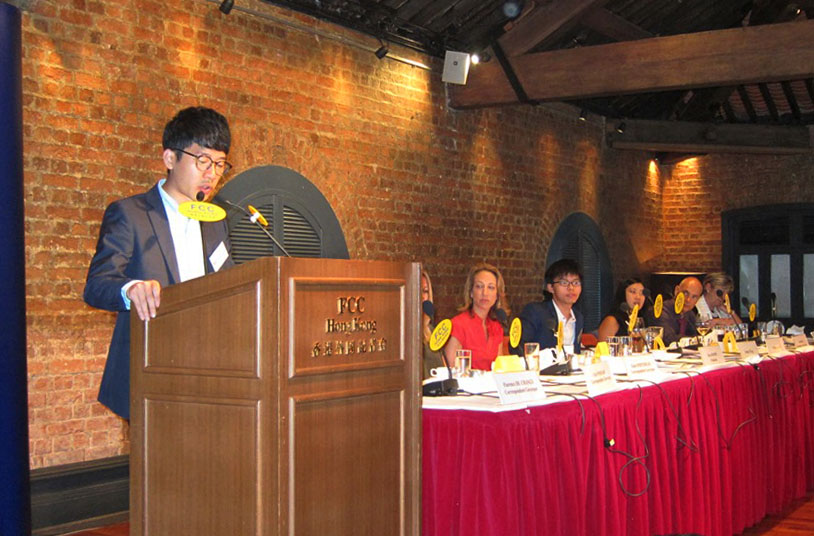
FCC_JW_4382JW_FCC_4385CFCC_JW_4368Student activist and founder of the new party Demosistō Joshua Wong says he believes the use of violence will not help Hong Kong achieve a higher level of democracy.

Wong, who is Secretary General of Demosistō, was speaking at an FCC lunch on June 27, along with fellow student activist Nathan Law, formerly the secretary general of the Hong Kong Federation of Students and now chairman of Demosistō.

Wong said he believes the society should engage in more discussion over the city’s future, and decide through a referendum how it should be governed after 2047. He said only through “self-determination” can Hong Kong people have a real say.

“Compare the results of ‘Fish Ball Revolution’ and ‘Umbrella Movement’, it already explained that it’s not the problem that whether you’re radical or not. Don’t think that using violence can ensure you can reach the goal, because no matter you’re from the side of the localists or you’re from the side of the pan-dems, actually the most serious limitation that we face is we don’t have enough bargaining power”, he said.

The number of Tiananmen candlelight vigil participants dropped this year as many “localists” boycotted the event to show their disappointment at the pan-democrats’ pan-Chinese idealism. Wong wasn’t one of them. He emphasised Demosistō’s support of human rights movements in China, contrary to many localist groups. “We fight for self-determination [of Hong Kong], but we won’t forget about human rights in China,” Wong said.

“People employed violence but they achieved nothing: the chief executive is still going to be elected by the 1,200-member election committee,” he said. “So we at Demosistō decided to advocate for self-determination in order to bring people together in a consensus.”

Demosistō has proposed to start a deliberation process for Hong Kong’s future by 2030 at the latest. “In light of the difficulties currently faced by the opposition, we put forward the self-determination movement in hope of provoking Hong Kong people to examine the Hong Kong political system and decide on their future post-2047,” Law said. He also believes that another non-violent civil disobedience movement would come soon.

While earlier, Demosistō said on its official website that it had raised HK$395,200, 20% of their target, Law said that the 20% referred only to the online donations, the party actually received around HK$900,000 to HK$1 million in total. “But there is still a long way to go. We will seek for more funding during the 1 July demonstration,” Law stated. “So far, we have been avoiding huge donations from a single source.”

Wong’s judicial review application to lower the age threshold for candidacy for Legco from 21 to 18 has been rejected by the High Court. This means that Law and Oscar Lai Man-lok might be the only Demosistō members to stand in September’s election.

Numbers game

Tens of thousands took to the streets of Hong Kong for the annual July 1 protest march as the city marked the 19th anniversary of its return to Chinese rule, but fears of orchestrated violence by breakaway radicals proved unfounded.

The Civil Human Rights Front, the organiser of the annual mass rally, put the turnout at 110,000, compared with last year’s 48,000. Police said the number of marchers peaked at 19,300, compared with 19,650 last year. While Professor Paul Yip Siu-fai, a statistician from HKU, estimated 26,600 people joined the march. The university’s public opinion poll, conducted separately, put the figure at 26,000.

How a news story freed Ambon slaves

By Joyce Lau

HKHRPA31-Bridgette-HallThe Human Rights Press Awards celebrated its 20th birthday at the Maritime Museum on May 6, with a standing-room-only crowd of 170 participants, supporters and guests.
For the first time, grand-prize winners were given the chance to speak to the audience directly about their experiences. Several flew in from overseas to do so.

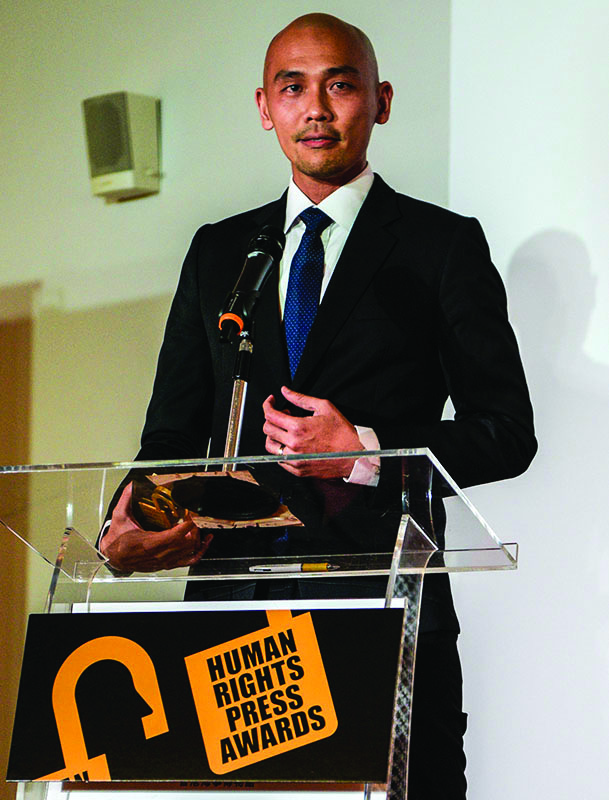
Esther Htusan, who recently became the first Burmese to win a Pulitzer Prize, caught a 1:30 a.m. flight from Yangon early that day to make the event on Friday night – after securing a last-minute visa from the Chinese Embassy. After a much-needed cappuccino at the FCC, she went on to the Maritime Museum to make a heartfelt speech about how the Associated Press’s coverage of abuses in the seafood industry resulted in the freeing of 2,000 modern-day slaves. Her work – created with three other women from AP – won the HRPA’s grand prize in English-language news coverage.

“For many, many years, it was an open secret to many people – but nobody ever interviewed the slaves on Ambon in East Indonesia,” Htusan said. “We finished up interviewing hundreds of slaves; and followed the cargo ships that sent the seafood to supermarkets and dinner tables.
“Right after we reported our stories, more than 2,000 slaves were freed – many from my own country, Myanmar, and some from Cambodia and Laos.

“I’m really honoured by this recognition, but the real heroes were the people who talked to us, who risked their lives to tell us their private stories. I’m honoured to receive this award. I’m mostly honoured and happy that these people are back home.”

HKFPA5CAl Jazeera’s Chan Tau Chou, who won the grand prize in English-language broadcasting with “The Invisible Children of Sabah, Malaysia”, dedicated his prize to the world’s stateless people.

“It’s a big encouragement to the team who worked very hard on a day-to-day basis to tell these stories,” Chan said. “In this day of relentless news feeds, where attention spans are diverted by the latest cat video, we are very thankful for this very important stage to once again raise attention and highlight the issues in our film”.

“The sad fact is that many of these issues have been around for decades. The problems faced by stateless people – the lack of equal rights, basic rights, like health care and education – have become more aggravated over the past five to 10 years.

“Now a generation of their children are growing up facing even more aggravated problems; they are even more vulnerable.

“This prize needs to be dedicated to the people and communities we had come across among stateless people, in the hope that, one day, there will be no more reason for any journalists to go do a film about Sabah’s invisible grandchildren.”

Acclaimed photographer Sim Chi Yin could not make it from Beijing to attend the HRPA ceremony in Hong Kong. However, speaking by video, she explained how she spent four years investigating the deadly lung diseases caused by China’s gold mining industry. “Dying to Breathe” won the grand prize in photography. She wanted to honor Mr He, the main character in her photojournalism series, who has since died of his work-related illness.

The event also allowed the HRPA’s founders to have their first official reunion in two decades. Robyn Kilpatrick, who was Amnesty International Hong Kong’s chairperson in the mid-90s, flew in from Australia to speak about the importance of keeping projects like the HRPA alive. She was joined by co-founder Francis Moriarty and Angela Lee, a HRPA photo judge who was been with the organisation from the very beginning.

“Hong Kong press, despite working under sometimes quite difficult situations… should be proud of the work,” Kilpatrick said.

The HRPA could not survive without financial support, and so flowers and a special trophy designed by Henry Steiner – who also designed HRPA’s logo – were given to Anne Marden, who has donated to the Awards since their very first year in 1996.

For full winners list and more information, go to HumanRightsPressAwards.org.

Future of young democratic politicians

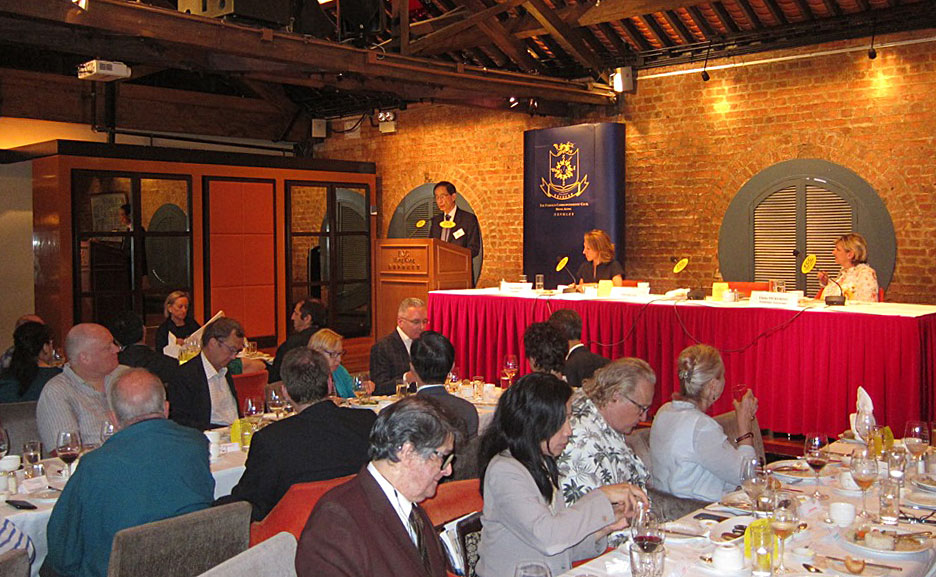
MartinLee_3896MartinLee_3893Martin Lee, QC, founding chairman of The Democratic Party and former Legco member, has been a regular FCC guest speaker since the early 1990s. Always an articulate straight-shooter and clear thinker, Lee focused on the rise of young democrats at a lunch on June 16. He also wondered why the FCC would you ask one of Hong Kong’s oldest politicians about the future of young democratic politicians

Many have doubts about Hong Kong’s young democratic politicians, but Lee isn’t one of them. Lee, one of Hong Kong’s first ever elected legislators, said there is nothing to worry about, Indeed, he believes we should be proud of them. As for their mistakes, Lee asked: “Did we not make mistakes?”

Joshua Wong and his colleagues from Scholarism have set up there own party – although he is too young to stand for Legco, according to the courts. So is Wong a worthy democratic leader?

“I was so impressed, when Joshua Wong said at the beginning stages of Occupy Central: ‘I am fighting for democracy for my generation and the next generation’. He was 17. And who here has come across such a young leader in your country, who has already made the cover of TIME magazine.

“So I thought, why do I need to worry about the future of Hong Kong?”

Lee said he had been in close contact with Wong when they both, along with Professor Benny Tai, were invited to make speeches by Freedom House in Washington about six months ago. “So, if you like, there were three generations: me the grandfather, Benny the father and Joshua,” he said.

“I think Joshua is good, but the one criticism I have is his choice of party name: Demosisto (roughly the ‘people stand’]

“All the rest I am in agreement with him, including what his party wants for Hong Kong in 2047 – self-determination. And Beijing was not happy with that because self-determination normally means independence. Of course, in Hong Kong, constitutionally, there cannot be independence.

“Our young citizens were born into a Hong Kong that was supposed to have a high degree of autonomy. However, seeing the daily interference by the Central Government’s Liaison Office, as well as seeing that Beijing has kept delaying democracy, although it promised us… how can we blame them for not wanting to accept one country, two systems.

“If the young people had stayed with the status quo and accepted the interference, then Hong Kong would have no future.

“However, are they right to ask for self-determination. How can we say they are wrong? When you think of young Joshua Wong and his colleagues whose future is determined by what happens during the next 30 years you can’t blame them asking: ‘why can’t we decide for ourselves; why can’t we have a say?’”

MartinLee_3880Lee said that on one extreme you have the demands for independence on the other you have “one country, one system” in 2047, where Hong Kong becomes just another Chinese city.

“What about somewhere in the middle? What about a continuation of the one country, two systems?

“My son asked me when he was about 10 why was it 50 years of one country, two systems… ‘its long enough for you, but not for me’. At the time I didn’t have an answer.

“Not long after during the drafting of the Basic Law I was in Beijing in 1987 negotiating when suddenly the proceedings were stopped because we had been summonsed by Paramount Leader Deng Xiaoping. He said, among other things, ‘if 50 years should prove not to be enough, you can have another 50’.

“Later I looked back at the early 80s when China had just opened up for foreign investment and I imagine Deng would have looked at Hong Kong – a Chinese city, stable, prosperous, rule of law, level playing field operating under a capitalist system – and was already thinking of leading China down the same road. A capitalist road, not a socialist road (with Chinese characteristics) and let the rest of China follow.

“He still wanted Hong Kong and Taiwan back, but was prepared to be patient until China was ready.

“If you remember China had started its four modernisations and he needed Hong Kong to keep what it had as an example as he thought it would take China 50 years to catch up. If it didn’t catch up in 50 years then rather than take Hong Kong down, China would give another 50 years.”

Martin Chu Ming Lee is the founding chairman (1994-2002) of the Democratic Party and believes that Hong Kong must develop democratic institutions and preserve freedom, human rights and the rule of law if the territory is to continue to prosper as part of China. Lee was appointed a Queen’s Counsel in 1979 and was chairman of the Hong Kong Bar Association from 1980-1983. He was first elected to the Legco in 1985. He served from 1985-89 as a member of the Basic Law Drafting Committee, the body appointed by Beijing to draft Hong Kong’s post-1997 constitution, until his expulsion following the 1989 Tiananmen crackdown.

The committees, the conveners and you

FCC_newBoard_RCWith every new FCC Board the conveners of committees often change and renews members’ opportunities for getting involved. If you have some ideas for speakers or other professional events, or are interested in the FCC’s charity events, or F&B, or finance, or the Wall, or press freedom issues; or The Correspondent… then maybe its time for you to join one of the committees or get in touch with the conveners and present your ideas.


Professional Committee co-ordinates speakers for Club lunches and dinners, journalist-focused activities are organised, including press conferences.

Co-conveners:
Keith Bradsher, Nan-hie In and Eric Wishart

Finance Committee supervises Club accounts and investments as well as members’ accounts. It sets overall financial policy and provides fundraising advice.

Co-conveners: Timothy S. Huxley (Treasurer) and Nigel Sharman

Constitutional Committee deals with issues relating to the Club’s M&As and rules.

Co-conveners: 
Kevin Egan, Nicholas Gentle and Clifford Buddle

Membership Committee oversees membership applications, change of membership status, recommends honorary memberships and also puts together membership drives, particularly for local journalists.

Co-conveners: Nan-Hie In, Florence De Changy and Simon Pritchard

House/F&B Committee basically looks after the fabric of the Club and looks after all food and beverage issues (prices, menus, special food and wine nights, etc.)

House Co-conveners: Nicholas Gentle, Simon Pritchard and Carsten Schael

F&B Co-conveners: James Gould, Juliana Liu and Eric Wishart

Press Freedom Committee monitors press freedom issues and issues statements (via the Board). It is also the co-organiser of the annual Human Rights Press Awards.

Co-conveners: Cliff Buddle, Florence De Changy and Juliana Liu

Communications Committee supervises the bi-monthly production of The Correspondent, the FCC website, other publications and oversees the archives.

Co-conveners:
Paul Mozur, Nigel Sharman, Kate Whitehead and Carsten Schael (Archives)

Wall Committee selects and coordinates photo exhibitions that go On the Wall.

Co-conveners: Carsten Schael and Kate Whitehead

Charity Committee coordinates the FCC’s charitable activities and its community involvement programme.

Co-conveners: Tim Huxley, Tara Joseph and Elaine Pickering

Social media can have powerful influence on elections

Facebook has been under attack in recent months by US conservatives – worried that Facebook could influence the outcome of the presidential election – for “suppressing conservative news”. While these claims are somewhat overblown, there is no getting away from the fact that Facebook undoubtedly has tremendous power, with some 200 million Americans spending around 30% of their Internet time on Facebook and its properties (WhatsApp, Instagram).

A 2014 study determined that some 340,000 people probably turned up to vote in the 2010 US Congressional elections because of a message they saw on Facebook. However, Facebook has never directed these efforts at any party or candidate… although they could. Of course users can say what they like about policies, parties and candidates. In fact, President Obama’s two election campaigns were very heavily invested in using social media – often at targeted individuals – to gain votes.

In Hong Kong Facebook’s dominance of the social media is particularly intense: 4.4 million or more than 50% of the population are Facebook users. Of these, 3.1 million log on to Facebook every day and spend an average of 30 minutes each time. Clearly, if politically active users were to engage in supporting election candidates it would be a powerful tool.

However, this will not be happening in Hong Kong except within defined boundaries, according to the Electoral Affairs Comission (EAC).

When the EAC chairman Justice Barnabas Fung Wah, said in May that “messages posted by Internet users intended to promote or prejudice the election of a candidate may be regarded as election advertisements… and an offence may have been committed”.

This statement was made at the end of the public consultation period about the Legislative Council’s election guidelines at the end of April. Subsequently, Fung’s comments have been fully endorsed by EAC, although wide areas of confusion remain.

Fung was asked by reporters whether changing profile pictures on Facebook or adding hashtags to support a candidate would be counted as election advertising.

“Urging people to vote for someone – like a candidate – saying ‘I am very good, please vote for me’, and not giving reasons or commenting on if things are right or wrong – these would highly likely be counted as election advertisements,” Fung said, according to Ming Pao.

Commentary exempt

Fung said that election campaign commentaries would not be counted as election advertisements. “If members of the public merely share or forward candidates’ election campaigns through Internet platforms for expression of views, and do not intend to promote or prejudice the elections of any candidates, such sharing or forwarding will not normally be construed as publishing election advertisements,” Fung said.

Fung said that the existing definition of an election advertisement under the law was “very wide”, but “the legal definition has been there all along and has not been amended”.

He added that Internet users may cause an offence if messages intended to promote or prejudice the election were not first approved by the relevant candidates.

Under the Elections (Corrupt and Illegal Conduct) Ordinance, a person – other than a candidate or a candidate’s election expense agent – is considered to be engaging in illegal conduct during an election if they incur election expenses at, or in connection with the election. Offenders may be sentenced to a maximum of seven years in prison with fines of up to HK$500,000.

Commenting on the law, IT sector lawmaker Charles Mok joked that people have to include “#personalcomment” in posts in order not to break the law, Hong Kong Free Press reported.

“Who decides whether changing profile pictures, amending and making photos are intentional [to promote or prejudice the election]?” he asked on Facebook. “It is another example of the law lagging behind the development of the Internet.”

The question in China: what Panama Papers?

panama01

While the release of the Panama Papers rocked governments around the world, it hardly caused a ripple in China, one of the biggest sources of funds for these offshore accounts. China’s clampdown on any news of the leaks has been particularly effective.

While the release of the Panama Papers rocked governments around the world, it hardly caused a ripple in China, one of the biggest sources of funds for these offshore accounts. China’s clampdown on any news of the leaks has been particularly effective.

Search engines, for example, reply to queries with: “Sorry, searches for ‘Panama’ came up with no relevant results.” A censorship notice sent by a Chinese provincial Internet office told editors to delete reports on the leaks, according to China Digital Times. “If material from foreign media attacking China is found on any website, it will be dealt with severely,” the notice said.

Social media in China was also effectively curbed. However, a well-known Chinese civil rights lawyer, Ge Yongxi, known for defending underground church leaders and political and social activists, was recently taken into police custody after sharing information about the Panama Papers on social media.

The leaks come at a bad time for China which is in the midst of a massive crackdown on corruption that has already been criticised as being an internal power play rather than actually tackling graft.

The Panama Papers leak is one of the biggest ever – larger than WikiLeaks in 2010 and Edward Snowden in 2013. There are 11.5m documents and 2.6 terabytes of information drawn from Panamanian law firm Mossack Fonseca’s internal database. The records were obtained from an anonymous source by the German newspaper Süddeutsche Zeitung, which shared them with the International Consortium of Investigative Journalists.

The documents show the myriad ways in which the rich can exploit secretive offshore tax regimes. Twelve national leaders are among 143 politicians, their families and close associates from around the world known to have been using offshore tax havens.

In China the leaks show that relatives or business partners of several current and former members of China’s ruling Politburo were tied to offshore companies that had the effect of obscuring their ownership interests.

Probably the most politically sensitive leak was the revelation that Deng Jiagui, the brother-in-law of President Xi Jinping, had set up two British Virgin Islands-registered companies through Mossack Fonseca in 2009, when Xi was vice-president. What the two companies – Best Effect Enterprises and Wealth Ming International – were used for is unclear. By the time Xi came to power the companies were dormant, it was reported.

Deng, of course, has been in the news before. In 2012, Bloomberg News reported on the vast business empire built by Deng and his wife both inside China and through offshore companies that amounted to hundreds of millions of dollars.

Another politically powerful Chinese couple – also in the news previously – Li Xiaolin, the daughter of the former premier Li Peng, and her husband, Liu Zhiyuan. The Panama Papers leaks showed that Li and Liu were the owners of a foundation based in Liechtenstein that in turn owned a company in the British Virgin Islands, Cofic Investments. A lawyer for Cofic told Mossack Fonseca that the company’s profits came from helping the law firm’s other clients export heavy machinery from Europe to China.

Another relative of a top leader is Jasmine Li Zidan, the granddaughter of Jia Qinglin, a former member of the Politburo Standing Committee. Li’s father, Li Botan, was a central figure in a report last year by The New York Times on the political ties of the Dalian Wanda Group chairman, Wang Jianlin. Companies linked to Li made hundreds of millions of dollars in capital gains from their holdings in Wanda property and entertainment enterprises.

Ideological leaks
One of the few mainland news outlets to mention the Panama Papers was Global Times, a newspaper run by the Chinese Communist Party. The newspaper questioned the lack of a named source for the documents, and the Chinese version of the article suggested that Western intelligence agencies could easily slip fake information into such a large trove of records.
The article accused the Western news media of using the leaks for ideological purposes by attacking, for example President Vladimir V. Putin of Russia.

“The Western media has taken control of the interpretation each time there has been such a document dump, and Washington has demonstrated particular influence in it,” Global Times wrote. “Information that is negative to the US can always be minimised, while exposure of non-Western leaders, such as Putin, can get extra spin.”

The Mossack Fonseca data relates to more than 200,000 companies for which the firm acted as registered agent. Often used lawfully to anonymously hold property and bank accounts, these companies were registered in a range of tax havens. Rather than dealing directly with company owners, Mossack Fonseca – the world’s fourth biggest provider of offshore services – mostly acted on instructions from intermediaries, usually accountants, lawyers, banks and trust companies. The biggest centres for this activity are Hong Kong and Switzerland. And China, Hong Kong and Russia top the list of hidden owners.

It should be noted that going offshore is legal. There are many legitimate reasons for doing so. Business people in countries such as Russia and Ukraine typically put their assets offshore to defend them from “raids” by criminals, and to get around hard currency restrictions.

However, there are also many not-so-legitimate reasons. In a speech last year in Singapore, UK Prime Minister David Cameron said “the corrupt, criminals and money launderers” take advantage of anonymous company structures. Others use them too: an offshore investment fund run by Cameron’s father avoided paying tax in Britain. The fund has been registered since its inception and has filed detailed tax returns every year.

Mossack Fonseca itself defends its conduct saying it complies with anti-money-laundering laws and carries out thorough due diligence on all its clients. The firm says it cannot be blamed for failings by intermediaries, who include banks, law firms and accountants.

Hong Kong connection
The South China Morning Post tracked down the firm’s man in Hong Kong, Zhang Xiaodong, who is better known by his adopted Cantonese name, Austin Cheung. Zhang has run the operation for more than 20 years.

The firm is accused of helping relatives of past and present Chinese leaders set up offshore companies in an alleged bid to avoid paying taxes. About a third of the Panama firm’s business was conducted on the mainland, with the bulk passing through the Hong Kong office.

Zhang joined the firm initially in its Panama City head office, staying there for a few years. His name first appeared on the Hong Kong branch’s list of directors in 1995, two years after it was set up. He moved to Hong Kong in 1997 and, in 2002, the office was rebranded as the Asia headquarters, of which he was president.

Among the banks, accountants and lawyers in Hong Kong which act as intermediaries is HSBC which has helped rich clients register more than 2,300 shell companies, the leaked reports say. Hong Kong’s richest man, Li Ka-shing, is a client of Mossack Fonseca. The leaked data showed that Cheung Kong Infrastructure, the Cheung Kong group’s infrastructure arm, used the firm to “organise” a string of related subsidiaries in Panama and the British Virgin Islands.

In reply to an inquiry by the Post, a spokesman for Cheung Kong Infrastructure said the group fully complied with the law of the countries it operated in.

Town Hall meeting debates increased revenue options

042316graph13There was a big and active turnout for the FCC’s Town Hall meeting in early April which focused on budget forecasts and the operating revenue shortfall through the Club’s renovation period and what should be done about it.

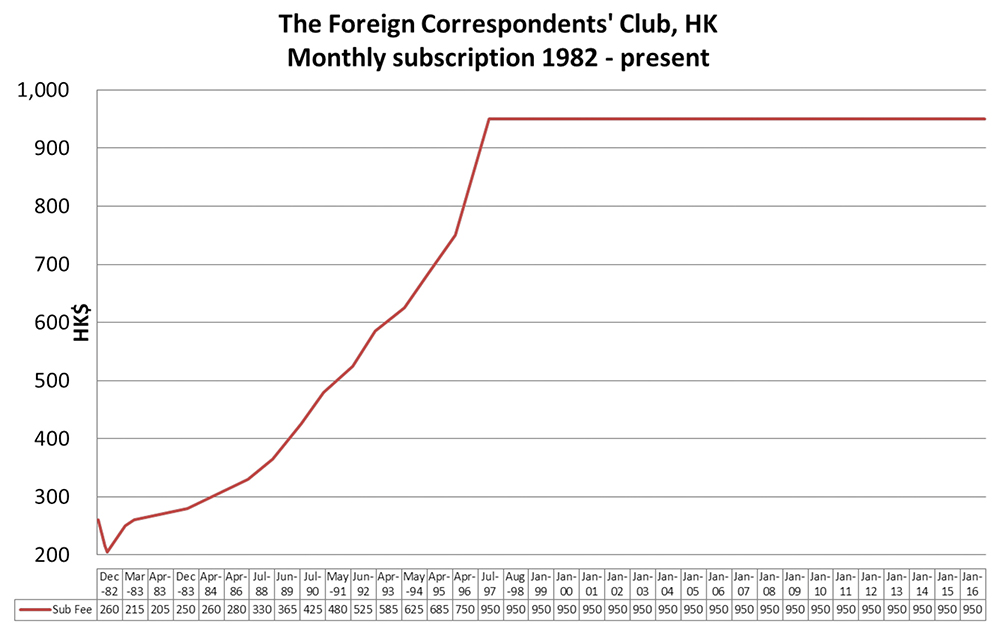
President Neil Western explained that the Board of Governors was elected to run the Club and its finances, “but given that subscription fees had been frozen for 19 years it was considered prudent to talk to the membership about it and get feedback”.

Many emails had been received already from members, Western said. There had been many suggestions to alter some operating procedures and while the Board welcomed them, they would be considered within committees rather than being discussed in detail at the Town Hall meeting.

Treasurer Tim Huxley, in his presentation “Towards a sustainable financial future” for the Club, gave an overview of the financial state play: Club membership is 2,457, of which 1,993 pay full monthly subscriptions. The total revenue for 2015/2016 was HK$53,605,241. The forecast for financial year 2015/2016 is a deficit of HK$502,694, while the forecast for financial year 2016/2017 will be a deficit of HK$5,127,398. The deficit for 2016/17 equated to HK$184 per member per month.

Huxley explained the factors that contributed to the growing deficit: the 2016/17 food cover budget was down by 3.75 % because of lost revenue during planned renovations. The payroll for catering staff was budgeted to increase by HK$1 million or 5%, in line with hospitality sector inflation and allowing some additional staff to accommodate increased membership numbers. The total administration expenses would increase by 8.9% covering admin wage increases and increased staff numbers. Rent and rates increased by 10% from January 2016 to HK$577,500 per month. The sale of RMB deposits would reduce interest income by HK$101,000. The depreciation charge would increase due to the  renovations.

The options
Through emails, phone calls, suggestions at committee and Board meetings and talk around the Bar, eight options have come forward to address the projected deficit:

Option 1: Why not use Club’s reserves to cover the deficit?
042316graph15Current freely available reserves as at February 2016 are HK$42.3 million, comprising HK$30.5 million in cash and HK$11.8 million in investments, equivalent to the 2015/16 catering expenses or nine months of the 2016/17 operating budget. Some HK$10 million from reserves have been set aside for the renovations.

Reserves historically have been built up to the cover cost of relocation in event of the lease on current premises not being renewed. While we have a new lease, we need to start building reserves again taking a seven-year view. No prudent company uses reserves to subsidise daily operations unless absolutely necessary

Option 2: Let’s soak the Associates!
Not all Associates are high earners and hence a higher monthly fee for Associates compared to C & J members should be avoided. The FCC should continue to try and maintain a diverse Associate membership.

The idea of doubling the joining fee for Associates would seriously compromise the diversity we are trying to promote from people with media connections, NGOs, and other non-senior banking/legal etc. applicants.

We have budgeted for only 24 new Associate members in 2016/17, which would yield HK$600,000 in joining fees. If we double the Associate joining fee to HK$50,000 that would bring in HK$1.2 million still well short of the deficit. The 24 new Associates is a conservative figure and this will increase if we continue to replace members going absent with new Associates, but this should not be done on a one-for-one basis, as some absentees will rejoin. Admissions will also depend on number of new C&J applications received/approved.

Option 3: Increase revenue from current outlets

  • The gross profit from all catering outlets from April 2015-March 2016 is HK$25,814,301 on a turnover of HK$39,874,394.56. Gross profit is the selling price less the raw material cost only. It does not include cost of service, utilities, staff, rent, etc.
  • To cover the deficit from existing catering operations would require an increase in turnover of around HK$8 million to HK$48 million. With breakfast having proved to be the only significant area of under-utilisation, this will be impossible to achieve.
  • An F&B price increase would not be advisable now as we have recently undertaken one and there was a noticeable drop in revenue in the months immediately following implementation. To cover the budgeted deficit from current F&B sales alone, an overall price rise of around 13.5% would be required.

Option 4: Awaken the dormant members – minimum monthly spend

  • As of January 2016, there were 669 members with zero monthly spending other than subscriptions.
  • A minimum monthly spend of HK$200 would raise HK$1.6 million per year from these members, not sufficient to cover the deficit.
  • Minimum monthly spend would also put undue pressure on F&B outlets, particularly at the end of the month end when people would seek to use the amount.

Option 5: Club merchandise – leverage the FCC Brand

  • Revenue from FCC merchandise sold between April 2015 and March 2016 was HK$426,714, with a gross profit of HK$107,326, or under HK$10,000 per month.
  • Members have proposed numerous additional items such as cuff links, cloth bags etc, but sales volume and storage space precludes this.
  • If every member guarantees to buy a minimum 38 FCC wine glasses every year, we would raise sufficient profit from souvenir items to cover the budgeted deficit.

Option 6: Spouse membership – double the money or double the trouble?

  • The FCC currently has 1,629 spouse members. A limited number of other clubs such as Yacht Club and HK Club charge spouse membership fees of between HK$335 and HK$390 per month.
  • If FCC were to charge a spouse fee of HK$300 per month, it would raise HK$488,700 per month or HK$5,864,400 per year, sufficient to cover the budgeted deficit. A HK$200 per month spouse fee would generate HK$3,909,600, still a significant contribution to covering the deficit.
  • Clause 7 of the Articles of Association states that spouse members shall be accorded the use of the Club’s premises and facilities on the Member’s subscription. Any change to this Article will need an EGM and it is felt this is quite likely to be hard fought

Option 7: Reward the regulars?
Proposal from an existing Silver Member: reduce F&B prices by 30%; abolish Silver/Honorary membership; and monthly subscriptions for all members (including existing Silver members) should rise to HK$1,400 per month.

In reply,  Huxley said it was not good practice to run F&B at a loss, and it would likely lose membership and face some opposition from some existing Silver members. Limited Club facilities mean that increased usage by members wishing to benefit from reduced prices could not be accommodated.

Option 8: Monthly subscriptions: a 21st century solution?
Monthly subscriptions for full members have remained the same since the last century. No other Club has managed to do this while also keeping price increases manageable. We have achieved this by increasing membership numbers, but we are now at capacity.

  • HK$184 extra revenue per member per month is required to cover the budgeted deficit.
  • A proposed HK$150 per month rise in monthly subscriptions for members paying HK$950 per month and HK$50 per month for those on the discounted scheme would raise HK$309,650 per month or HK$3,715,800 per year or HK$4,025,450 per year on the basis of 13 months.

While not sufficient to cover the projected deficit, if this was blended with a projected increase in joining fees from replacing members going absent with new Associates (taking into account the trend of increased absent members), the deficit could well be covered.

With the exception of the spouse membership proposal, none of the options considered here come close to covering the projected deficit.

Blending a subscription increase with a realistic target on joining fees makes managing the deficit a strong possibility. By not using more of the possible options available, we continue to have bullets available to use later.

Will we lose members? Possibly, but if HK$150 per month is a deal breaker, then these members were probably not big spenders or contributors to the FCC in any case.

We are suffering from keeping subs so low for so long. We need to educate the membership that regular increases should be the norm, not the exception.

The FCC will remain among the best value venues in Hong Kong and will not be looking to make large profits. If we find ourselves with a significant surplus, we can decide to forgive the “thirteenth month” on occasion.

In acknowledging this is a Correspondents’ Club, the value of our Associate membership should not be overlooked.

Budget forecast and revenue shortfall
042316graph16Erik Floyd
asked about the operating deficit which would be more than HK$5 million in 2017 because of the renovations. He said that since the renovations were a one-off cost, does that mean raising the subscription fees was to solve a one-off problem?

Huxley explained that the deficit included the depreciation on the renovation costs and the rent. And there would a 3.75% drop in revenue during renovations. Even if you increased subscriptions by HK$150 it would not solve the problem and you will still have a two-month revenue gap during the renovations.

Floyd had seen the operating deficit was a small amount in 2015, but questioned what the other income numbers listed that would generate a rather large surplus for 2015 and 2016.

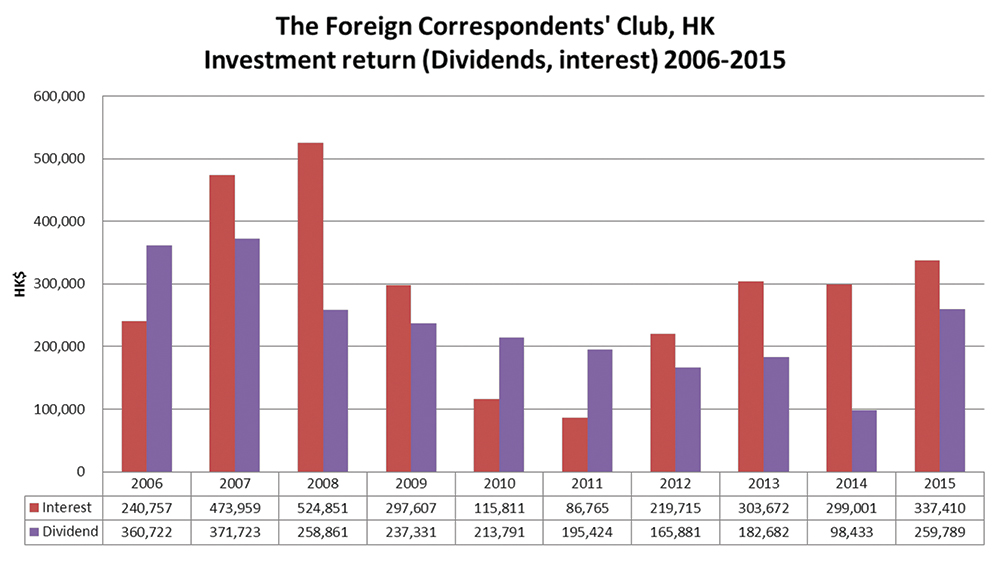
Huxley said the other income was joining fees and income from Club investments (large cash reserve and a small investment portfolio). The reason the Club had an investment portfolio was because previous treasurers had quite rightly decided that cash shouldn’t be eroded by inflation in the current low interest rate environment. There had been quite a considerable unrealised gain on the investment portfolio and the Finance Committee was incredibly cautious with investments (Hong Kong blue chips investments, very well-managed funds). It is also quite a small portion of the Club’s overall assets.

Peter Caldwell had noticed a substantial increase in the depreciation because of spending money to improve the facilities, but as the depreciation would only occur over a very limited period, what would long-term position be?

Huxley said the renovation costs would come out of reserves rather than the immediate current account. It was reasonable to have depreciation over 10 years on equipment such as fridges and as the building was old it needed constant maintenance. As the Board were custodians of a Grade 1 listed building, they were obligated to maintain the building.

John Batten said the deficit numbers should be further broken down. He gave examples such as wage costs rising 10% in 2015; Bert’s was closed until 6 pm; and as members were not using the Main Dining Room (MDR) much he believed there should be a standard rate for meals throughout the Club rather than fine dining in the MDR. He said given the high cost of the renovations, could some the renovations be rolled over or could put on hold?. He suggested the removal of the health club so space could be used as another facility, such as for committee meetings instead of using the Hughes Room.

On behalf of the House Committee, Nick Gentle said the committee was examining the alterations needed in the kitchen. There had been a fear that removal of the whole floor to deal with the piping was necessary, but the committee had found a way of avoiding that resulting in lower costs. Appraising the layout had occurred and some equipment was very old and needed replacing.  As the kitchen needed renovating, the committee were collating quotes from designers and devising a timeframe.

The committee were also looking at the utilisation of the MDR and Verandah as well as its soundproofing and air-conditioning. As well as how to optimise the MDR to increase revenue, for instance by broadcasting sports events.

Donald Mayer asked whether the expenditure contemplated for the MDR was in the budget and what the amount was.

Huxley said that quotes were being obtained and consultants would be evaluating them, but the allocated budget had not been prepared yet.

Mayer asked why the kitchen had to be done at the same time rather than staggering renovations over a few years.

Neil Western explained that seeking government approval would take time, while Gentle added there were problems with the audio-visual downstairs as well as in the MDR, so it made sense to try to minimise costs by doing both together.

John Hung agreed that the kitchen renovation was necessary, but pointed out that the membership had submitted answers on the survey regarding the MDR’s use as a dining area and he thought the Board should decide on its use first before doing the rest. Currently it was used for functions and members could not use it. He thought the choice element was not always there for members.

Western responded that the Board had been analysing the survey and the Club’s policy states the room should be available to members rather than unavailable. He said the Board was considering the balance and thought members should have the right to use it as much as possible.

Tony Dick had observed restaurants and bars were always full, but questioned why the Club was losing money considering the rent was also quite low. And he also asked whether an outside consultant had been tasked to evaluate the F&B service and see whether the Club was getting real value for money.

Western responded that the Club was not always full and added that the survey had been overwhelmingly positive in terms of food and service. It was hoped that members who enjoyed the food and service could use the Club more, so a consultant could could help to drive more custom

Callan Anderson did not agree with the figure of 5% as the increase in staff costs as he had analysed his own staffing costs and industry inflation. He had also seen a high turnover of staff in the Club and thought there were high costs associated with taking staff on. He referred to the industry norms where staff at the Club found it difficult to obtain matching salaried jobs when they left the Club. He said that the band costs of HK$92,000 a month was too high and queried whether it was generating money and whether Bert’s Bar was being under-utilised.

Western said that the House Committee would be considering the music spend at Bert’s when the contract came up as it was probably the biggest spend outside of staffing costs. The revenue from Bert’s Bar in the evening was probably HK$200,000-$300,000 a month so an evaluation of whether or not a band actually generated profit would take place. The survey had shown a lot of support for Bert’s, but not many were seen actually using it. However, the Club had a long reputation for jazz so it would be an emotive debate.

Regarding the staff costs, Huxley explained that quite a few of the staff were temporary which resulted in more turnover. The increase in staff costs came from an occasional staff shortfall in some areas increase. Western added that in addition to service staff, the office staff were doing more work dealing with the increase in the number of committees and more paperwork and bureaucracy from the government. The office was short-staffed and that issue needed to be addressed.

Steve Vines believed that the staff estimate of 5% was very modest considering the staff costs inflation in the F&B industry in Hong Kong.

Edith Terry asked if any marketing expenditure had been budgeted and asked whether there could be better marketing of the jazz and professional events.

Western explained said that the Club’s website was being relaunched which would help in the marketing.

Having served on three committees at the Club, Susan Liang recommended bringing in a consultant to maximise the revenue from the MDR and Bert’s Bar before embarking on increasing the subscription fees. Regarding investments, she suggested that there should be some transparency with members advised quarterly of the investment portfolio performance.

She queried whether active members should be penalised through an across-the-board rise in subscription fees or targeting dormant members instead. To deal with the under-utilisation of the Club, policy needed to be formulated before choosing the easy option of increasing subscriptions.

Western said the noticeboard and website displayed a copy of the investment performance each month.

Keith Bradsher advised that raising the monthly subscriptions would mainly affect dormant members. For instance, raising F&B costs would mainly affect those using the Club, so a far higher proportion of the money raised would come from dormant members.

Western reported that hundreds of views had been received from the survey and the House Committee were looking closely at the food and ambience. A recent dining survey had been completed and further consultation would be undertaken before any large decision was made.

However, Philip Bowring thought no more money should be spent on hiring consultants; money should be fed back to the members instead.

Wayne Ma asked whether a F&B price sensitivity analysis on had been conducted including how much it would affect member spending. And whether lowering F&B prices would increase the revenue. He also proposed rewarding members who used the Club a great deal by reducing the F&B prices, but raising the subscription fees.

Huxley confirmed price analysis had been carried out and said that when F&B prices had been increased by 5% recently, F&B revenue had dropped by 11% before recovering.

Nigel Sharman referred to Huxley’s opinion regarding not running down the reserves for operating expenditure, asking whether he had considered the right amount of reserves needed by the Club. He suggested mixing and matching some options rather than choosing only one.

Spouse membership fees

Francis Moriarty said the Club’s prices were too low compared with other places such as hotels when renting to outside groups. He recommended raising spouse membership fees instead of journalists’ fees as journalists’ salaries were going down rather than up.

Floyd recommended broadening the revenue sources to increase revenue. He suggested  instigating a fee for signing rights. Although it would not completely solve the problem, he thought it would bring in some calculable revenue and then perhaps limit the size of the subscription increases as a result.

Vines agreed and believed there were a number of options within the options proposed that did not have to be acted upon in their entirety. He suggested a minimum spend as it worked well in other clubs where members could buy a bottle of wine to fulfil the minimum spend instead of using one of the F&B outlets. It would also discriminate heavily in favour of those people who use the Club regularly and was an option that needed investigating.

Bradsher was concerned that if minimum spend was introduced then there would be a greater influx of people coming into the Club in the last three-four days of the month to fulfil the minimum spend requirement and the Club wouldn’t be able to handle such a surge. The Club was already packed at lunchtimes.

Western explained the reasoning behind the decision to expand the membership in the past three years was because there were so many dormant members and it was felt membership could increase by 10% as there was room in the Club.

Kevin Egan agreed with Vines that the Club should consider the issue of minimum expenditure. There were many dormant members and he thought it was ridiculous that the monthly subscriptions had stayed the same for 19 years. He recommended its increase to HK$1,100-$1,200 a month. If the monthly subscription fees were increased and a minimum spend introduced, then some dormant members may resign and replacement members could be added who would actively use the Club. Regarding spouse membership, he didn’t think it could be changed due to the wording in the Articles of Association.

Bowring said a minimum spend would partially address silver membership and honorary membership issues and there was no need to worry about overcrowding at lunchtime as Bert’s Bar could be used.

Mathew Gallagher did not agree with the minimum spend proposal as it could penalise members who were travelling.

Huxley agreed it was a valid point and had already been raised by a few members. He suggested the minimum spend could be cumulative, so that it occurred after three months or so to take into account those away from Hong Kong.

Terry suggested some kind of payment-in-kind scheme as some other clubs did, such as Thanksgiving turkey, wine delivery, etc. Regarding subscription fees, she thought members may have become complacent and would find any increase to be a shock. She believed journalist members should not be affected, especially local journalists as opposed to Correspondent members.

Paul Christensen pointed out that not all Associate members were rich, some were retired and many Associate members had no salary.

Eric Wishart thought Huxley’s presentation had been a build-up to increasing the monthly subscriptions and thought a minimum spend was feasible and a serious proposal. He could see the argument behind the monthly subscription fees due to the upcoming budget problem with the renovation.  However, HK$950 was still a lot of money and the Club should not underestimate some members’ financial situations.

Sharman said that as a former journalist he had no issue with subscription fees increasing or decreasing and thought the continuance of the Club as a place where Journalists and Correspondents could meet and mix with other Corporate members was very important and should be preserved. In terms of the minimum spend, he asked what were the experiences of other comparable clubs in Hong Kong, did they experience an end of month influx and whether they were able to manage it?

Huxley replied that the other clubs usually had a lot more space and reported there was usually a surge of members on the last Wednesday of the month. He also said that not all Correspondents were badly paid and not all Associates were well paid.

Patrick Boehler asked whether there could be space for compromise regarding spouse membership and whether spouses should have a discount membership instead.

Western explained that procedurally, such a decision would need to go before the Companies Registrar, but if accepted an EGM would then be held which requires 75% of the membership to approve it.

Francis Cassidy said as the Club was overly crowded and introducing a minimum spend would result in an influx of members. He recommended reducing the number of guests coming into the Club and levying a charge onto spouses to encourage them to buy drinks.

Western asked for a show of hands in favour of a minimum monthly spend and over 75% of the room were in favour. He also asked for a show of hands in favour of introducing spouse membership fees and the vote was split 50:50.

Jim Suttie thought that introducing a minimum spend would not generate any more revenue for the Club as it would only affect dormant members. They currently paid HK$950 a month without the Club doing anything for them. However, if a minimum spend was introduced then they may resign and could be replaced by more active members.

Andrew Work said that money was not necessarily generated through a packed bar. He suggested members could acquire double credits if booking breakfasts and devising other incentives. He had received a fantastic response from the events booking department when he had asked for a quote, but he recommended quotes should be followed-up more actively.

Nangyal Tsering thought it was important to preserve the FCC as a Club dedicated to writers, journalists and the artistic community as well as preserving freedom and exchange of ideas which separated it from other clubs in Hong Kong.

Christine Houston asked how many members were on the waiting list (200). She said that members had been lulled into a false sense of security through having no subscription fees raised for 19 years. As there was a very long waiting list, even doubling the joining fee would result in members still joining and not affect the Club badly.


We measure site performance with cookies to improve performance.