
Should the world fear China? No says Zhou Bo, author and retired PLA officer, at the FCC
By Hugo Novales
China’s rise has been documented in Western media as a threat to global stability, especially through the lens of observers in Washington DC. Regardless of their political differences, both Democrats and Republicans agree that China’s growing influence is a problem and that the US needs to safeguard its position as a global leader.
But should the world actually fear China? Zhou Bo says otherwise.
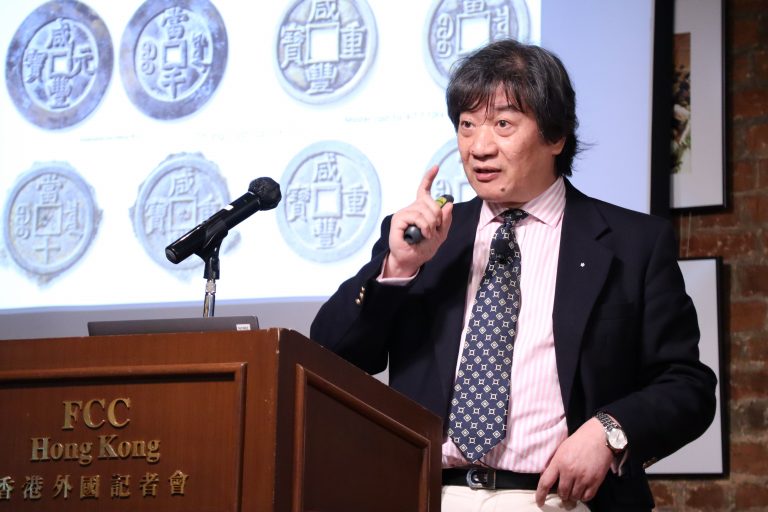
Zhou Bo, who retired from the People’s Liberation Army (PLA) at the rank of retired Senior Colonel, is now a senior fellow at the Centre for International Security and Strategy at Tsinghua University. Beginning his career at Guangzhou’s Air Force Regional Command and holding many military and academic titles since then, Zhou’s career has culminated in him becoming one of the most prominent writers covering China’s foreign and military policies.
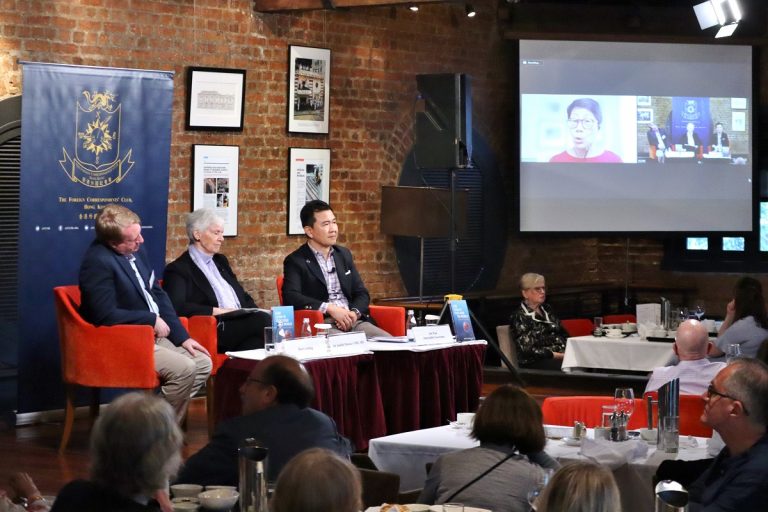
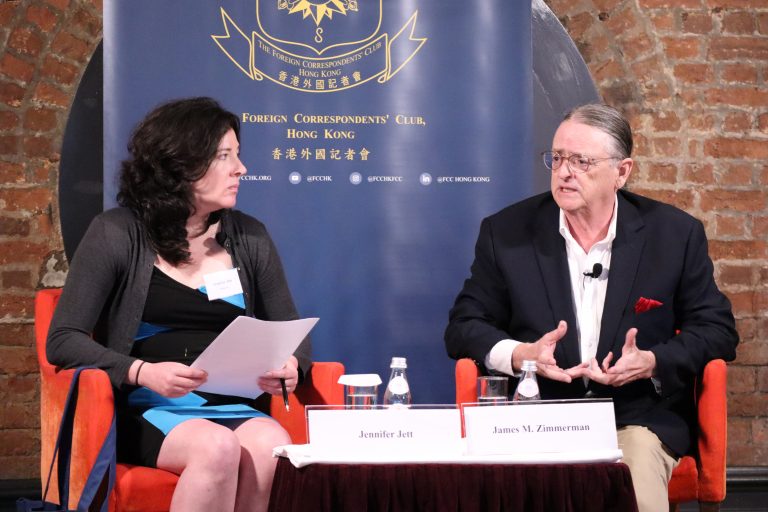
He recently published Should the World Fear China? (2025) and spoke at an FCC Club Lunch alongside William Zheng, a Senior China Correspondent at SCMP and FCC Correspondent Board Governor. The two China experts began the discussion by giving a brief overview of Zhou’s new book.
“The book actually is not a new book. It’s a collection of what I’ve written in the last 12 to 13 years, but what makes me somewhat different is that I’m a Chinese [person] who only writes in English,” Zhou said while highlighting the fact that most of his columns and essays appear in Western media.
He then challenged the notion of a “ liberal international order ” being led by the US and other liberal democracies, explaining that such a world doesn’t actually exist and that claiming so would be contrary to world history.

“Why is there such a thing like a ‘liberal international order’ at all in the world? I don’t think there was such an order at all,” he said.
Zhou pointed out that as of 2025, only 24 out of 195 countries are labeled as full-on democracies. The remaining countries are governed by alternative political systems that all have their own history of formation that falls outside the lines of the international order established by Allied nations after WWII.
He specifically listed the independence of 51 African nations, the dissolution of the Soviet Union, and China’s rise as three major examples of political reform that doesn’t follow the “rule-based order” established by the West. He further noted that when political scholars refer to this rule-based order, they are hyperfixating on the 15 years between the fall of the Soviet Union and China’s rise.
In China’s case, Zhou noted that the PRC has signed over 600 treaties with partners across the world and that while the West coined the “rule-based order” phrase, China has a different interpretation of it.
“All countries are driven by self interests,” he said to summarise the first section of the talk.

Zhou then dived into the current dangers that China is facing, one of which is a potential conflict with Taiwan that military and political figures across the world have been anticipating for decades.
Beijing considers Taiwan a part of China to be reunited by force if necessary. While most countries, including the United States, do not recognise Taiwan as an independent state, Washington opposes any attempt to seize the island by force and remains committed to supplying Taiwan with defensive weapons.
Zhou listed three factors that would result in Beijing taking military action against Taiwan: if the Taiwanese government declares independence, if foreign forces attempt to separate Taiwan from mainland China, or if Beijing no longer believes that peaceful reunification is possible.
Zhou reminded that despite ongoing speculation, there is still no deadline for Taiwan’s reunification with the mainland, so he advises that Beijing should still believe that peaceful reunification is possible.
“Let the Chinese government believe [that] peaceful reunification is still possible. If [the] Chinese government believes it is still possible, China will not lose patience,” he explained.
The military veteran said preparations for any type of potential conflict can include several different plans, or any combination of these various plans. When asked about how exactly China might pursue reunification, Zhou admitted that even at his seniority, he doesn’t know, and that these plans can and will change as time goes on.
“For us to speculate, that would be meaningless,” he said.
Zhou also addressed audience questions about news reports from the UK claiming that female Chinese spies are attempting to infiltrate Silicon Valley by marrying big tech leaders and stealing valuable secrets. He finds these claims unbelievable, yet humorous.
“If our people are really as good as described, then yeah, I’m proud of them!” he said.
To watch the full discussion, please visit the FCC’s YouTube channel: