
FCC ‘Year Ahead’ panelists help make sense of the turbulent start to 2026
By Hugo Novales
It was an eventful start to the year 2026.
Three days into the new year, U.S. President Donald Trump orchestrated the capture of Venezuela’s sitting president, Nicolás Maduro, who is now facing narcoterrorism charges in New York. Ukraine is still defending itself against a Russian invasion while internal corruption scandals diminish the country’s domestic and international support. And more PLA generals have been purged in Xi Jinping’s anti-corruption drive – calling into question China’s military readiness should it move against Taiwan.
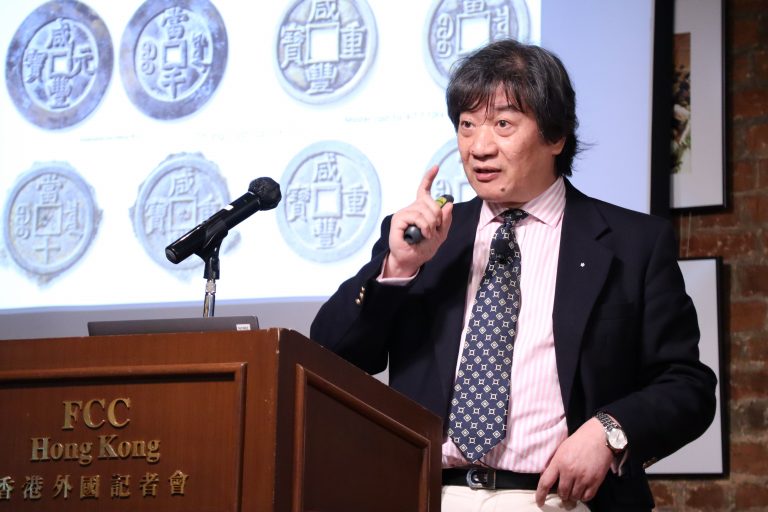
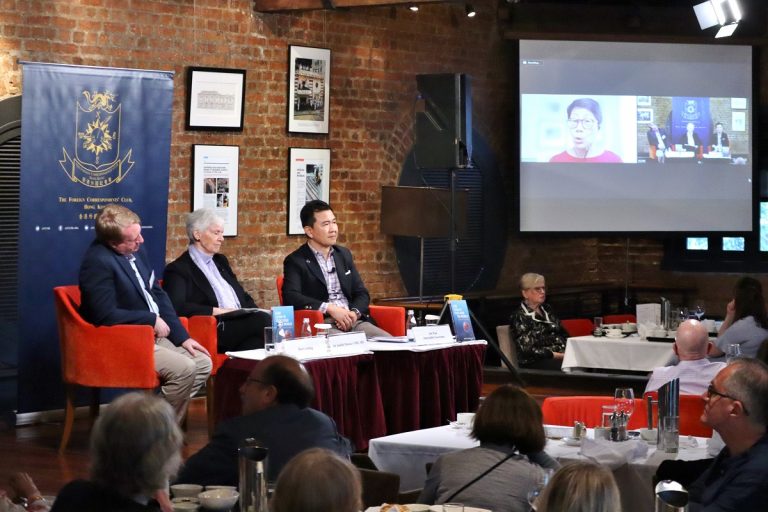
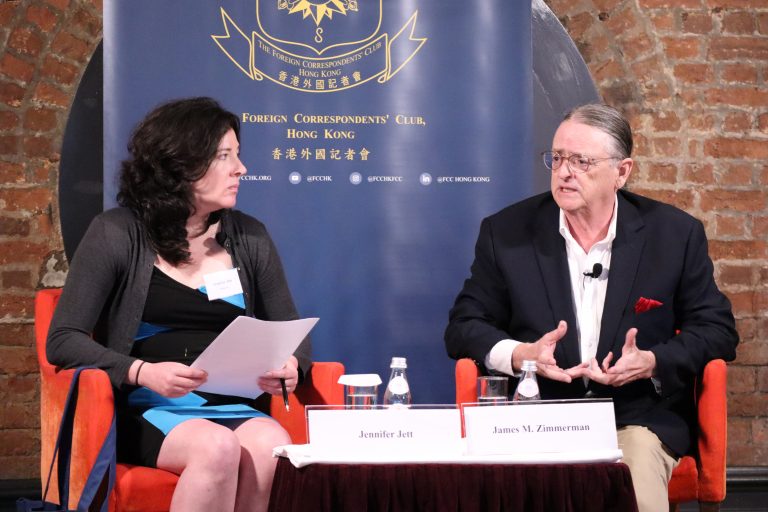
To predict what’s in store for the world in 2026, the FCC held its annual “Year Ahead” panel — a recurring staple in the Club’s Speaker Events series.
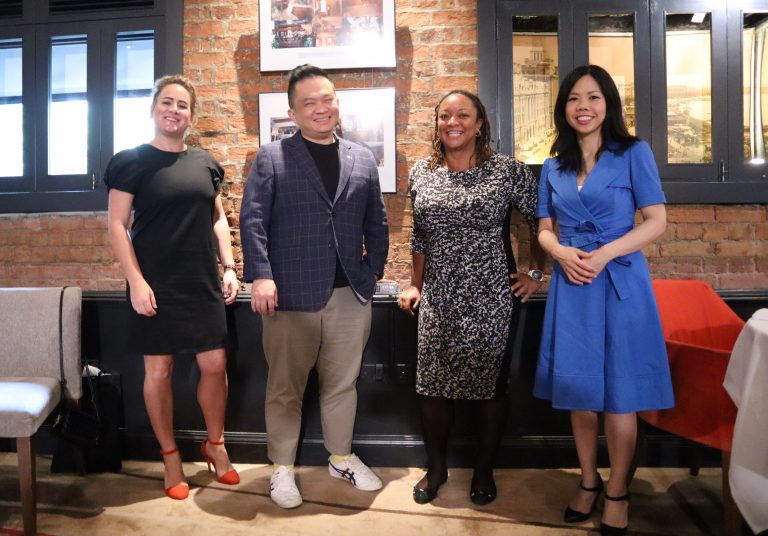
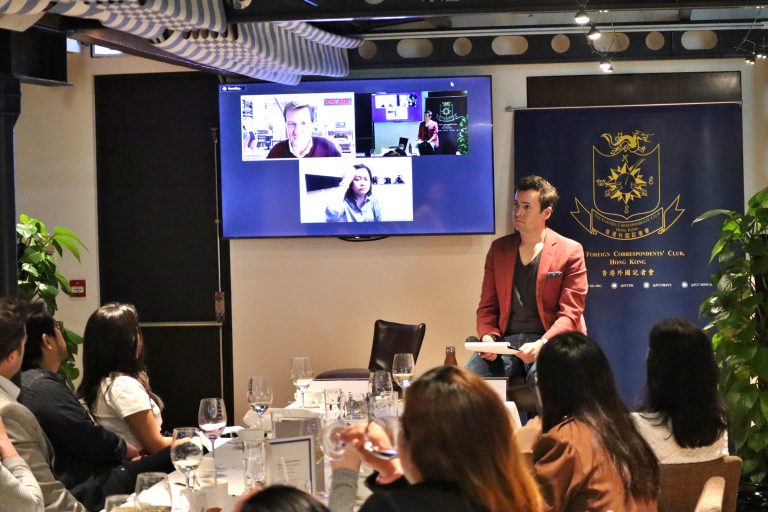
Returning to the panel were Michael Bociurkiw and Wang Xiangwei, experts in the Ukraine-Russia conflict and Chinese politics respectively, who both spoke at the 2025 Year Ahead event. This time, HKU’s Bárbara Fernández-Melleda also joined to give a Latin American perspective on 2026 so far.
The panel, moderated by Correspondent Board Governor Jennifer Jett, first discussed how Trump’s actions — or inaction — have resulted in declining faith in the U.S.’ ability to maintain global peace.
“No inch of Ukraine is safe anymore,” said Bociurkiw, a Canadian-Ukrainian policy analyst based in Odessa.

Since Russia’s 2022 invasion of Ukraine, Bociurkiw has covered all aspects of the war and how it has hurt everyday Ukrainians. Daily drone attacks, missile warnings, and growing graveyards across Ukraine are consistent proof to Bociurkiw that Trump hasn’t been effective in his efforts to restrain Russia’s ongoing attacks.
“When [Trump] says ‘I’ve never started a war,’ we have to question that,” he added, citing the Javelin missiles that were delivered to Ukraine during Trump’s first term as U.S. president.
With the world’s leading superpower falling short of its allies’ expectations, some see an opportunity for China to advance its position in the global hierarchy. Wang, a lifelong China watcher who is now a journalism professor at HKBU, disagrees.
“In China, there were lots of narrow-minded nationalists believing [that] now is the time for China to step up and become the leader of the Global South. I don’t think China is willing, nor is capable, to step up and play that leadership role,” he said.
Instead, Wang believes that China should let the U.S. continue to “self-destruct” while focusing on its own domestic issues and re-prioritising its foreign investment strategies. To Wang, it’s more important for China to invest in regions that are easily accessible to its own military.

“So shouldn’t China consider reducing or refraining from investing in the places that their military reach cannot cover? Shouldn’t China invest more in neighboring countries?” Wang asked rhetorically.
While Trump has polarised his own population, plus Western allies and Eastern competitors, Latin America has mixed opinions about the U.S. president.
“We cannot think of Latin America as a monolithic region,” said Fernández-Melleda, who teaches Chilean literature and culture at HKU’s School of Modern Languages.

Trump’s capture of Maduro was welcomed by many Venezuelans, she said, as well as citizens of other Latin American countries. The region’s varying political histories feature many different affiliations and ideologies, some of which may align with the Trump administration’s policies.
Despite some support for Trump in the region, Fernández-Melleda still finds his actions troubling for Latin America. Trump’s use of the U.S. military against foreign leaders, as well as the domestic actions of ICE and other U.S. government agencies he has empowered, bear resemblance to past state violence across Latin America, said Fernández-Melleda, who noted that state violence in her home country of Chile led to protests and eventually positive political change.
On the topic of Trump’s internal and external “bullying” tactics, Bociurkiw had special criticism for his treatment of Canada, which Trump often refers to derisively as the “51st state”. Repeated economic and even military threats have unified Bociurkiw and his fellow Canadians against their longtime ally to the south.
“[Canada] will never allow a bully to bully us, and we will not allow that bully to take things away from us that are ours… We will never become submissive to a bully like [Trump],” he said.
To watch the full discussion, please visit the FCC’s YouTube channel: