
New Members’ Testimonials
Become a Member of the FCC – The World’s Best Press Club
The FCC is a private members’ club and a vibrant community of people interested in a broad range of topics from the news gathering that forms our core, to politics, business, the arts, sports and more. We encourage you to apply before Jan. 21, when our joining fees will increase.
FCC Clare Hollingworth Fellowship – Applications Open
The Hong Kong Foreign Correspondents’ Club is accepting applications for the Clare Hollingworth Fellowship, named after the preeminent and path-breaking journalist.
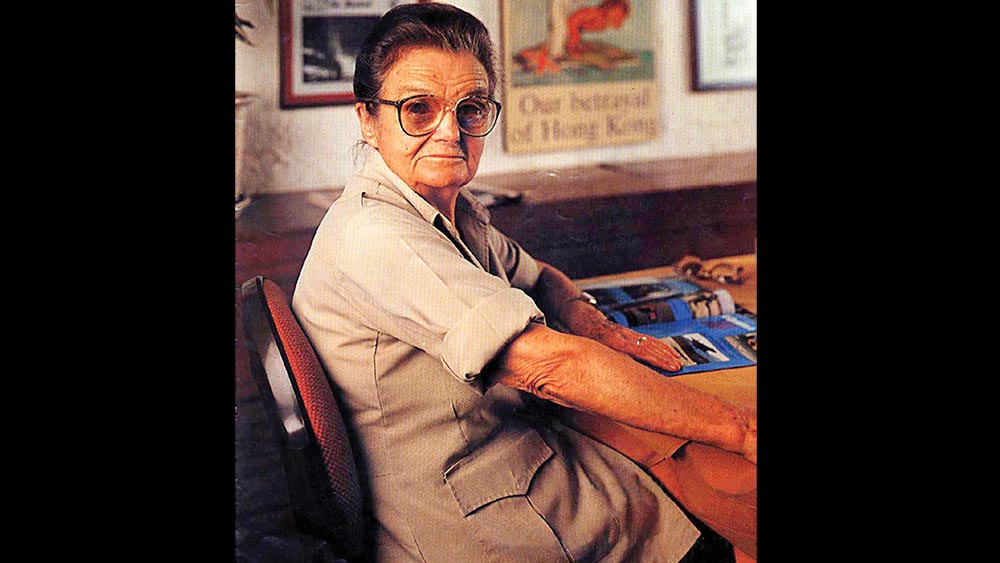 Ms. Hollingworth had a remarkable career as a foreign correspondent with the scoop of the century as a 27-year-old when she reported on Germany’s invasion of Poland in 1939. Ms. Hollingworth was also a treasured member of the FCC for more than 40 years who made significant contributions to the intellectual and professional life of the FCC.
The Hollingworth Fellowship will honour early career journalists and current journalism school students in Hong Kong. Journalists and journalism students from all fields of professional study are eligible. Applications close on 14 July. The fellowship will run for one calendar year, 1 September 2021 – 31 August 2022.
Overview of key features of the fellowship:
- Complimentary access to all FCC professional talks, official gatherings and conferences (subject to pandemic restrictions);
- Unlimited access to the FCC facilities including the gym and workroom;
- FCC monthly dues and the membership fee are waived for the fellowship period; and
- Networking opportunities with senior newsroom leaders
For details on past fellows, please see below:
Fellows Requirements and Expectations
- Fellow to produce and contribute a piece in their field for the FCC (e.g. long-form article for the FCC magazine, The Correspondent (see examples here and here); photographic exhibition for the Bar, video piece for the website) and
- Fellow will help to present FCC virtual speaker events and assist in the organization of virtual and in person events for journalists. Past FCC Journalism Conference keynote speakers include Maria Ressa, Co-founder and CEO of Rappler; Jean H. Lee, Director, Hyundai Motor-Korea Foundation Center for Korean History and Public Policy at the Woodrow Wilson International Centre for Scholars and Pulitzer-nominated veteran foreign correspondent and expert on North Korea; Nicole Tung, a Turkey-based photographer and winner of the James Foley Award for conflict reporting.
- Fellow will actively contribute to the intellectual and professional life of the FCC.
Eligibility Criteria
Candidates must meet all of the following criteria to apply:
- At least two years’ journalism experience with a proven track record of developing stories in any sector or medium. Applications are welcome from candidates from foreign news organisations as well as local news organisations in Hong Kong.
- Be 30 years of age or under at the date that the fellowship begins.
- Be a resident of Hong Kong at the time of application and a resident of Hong Kong for the duration of the Fellowship.
Application Process and Material
Applicants are required to submit the following for their application in English language by 14 July, 2021. Only chosen candidates will be notified by writing. Late or incomplete applications will not be permitted. All files must be submitted in either PDF or MS Word format to [email protected] with the subject line as follows Attn: first name/last name of applicant, Clare Hollingworth Fellowship application:
- Two pieces of published work, or in the case of a journalism student, two essays at no more than 2000 words each.
- A 500-word statement of intent for the piece that the Fellow will contribute to the FCC.
- Please send via post two sealed written references from suitable referees, e.g. senior editor or journalism school dean again with the same subject line: Attn: first name / last name of applicant, Clare Hollingworth Fellowship application. The reference letters should be sent to The Foreign Correspondents’ Club, Hong Kong, North Block, 2 Lower Albert Road, Central, Hong Kong. When submitting your application, please note in the covering email that the references have been sent via post. Reference letters should specify how long the referee has known the applicant and in what capacity, comments on the applicant’s potential to make an impact in the field of journalism, and any relevant prior experience.
- Recent resume of no more than 2 pages.
- Provide a valid HKID card number.
Happy Month’s Day 2021

A test post
This is a post for a test notification
BBC Disinformation Reporter Marianna Spring on the Real-World Consequences of Online Conspiracy Theories
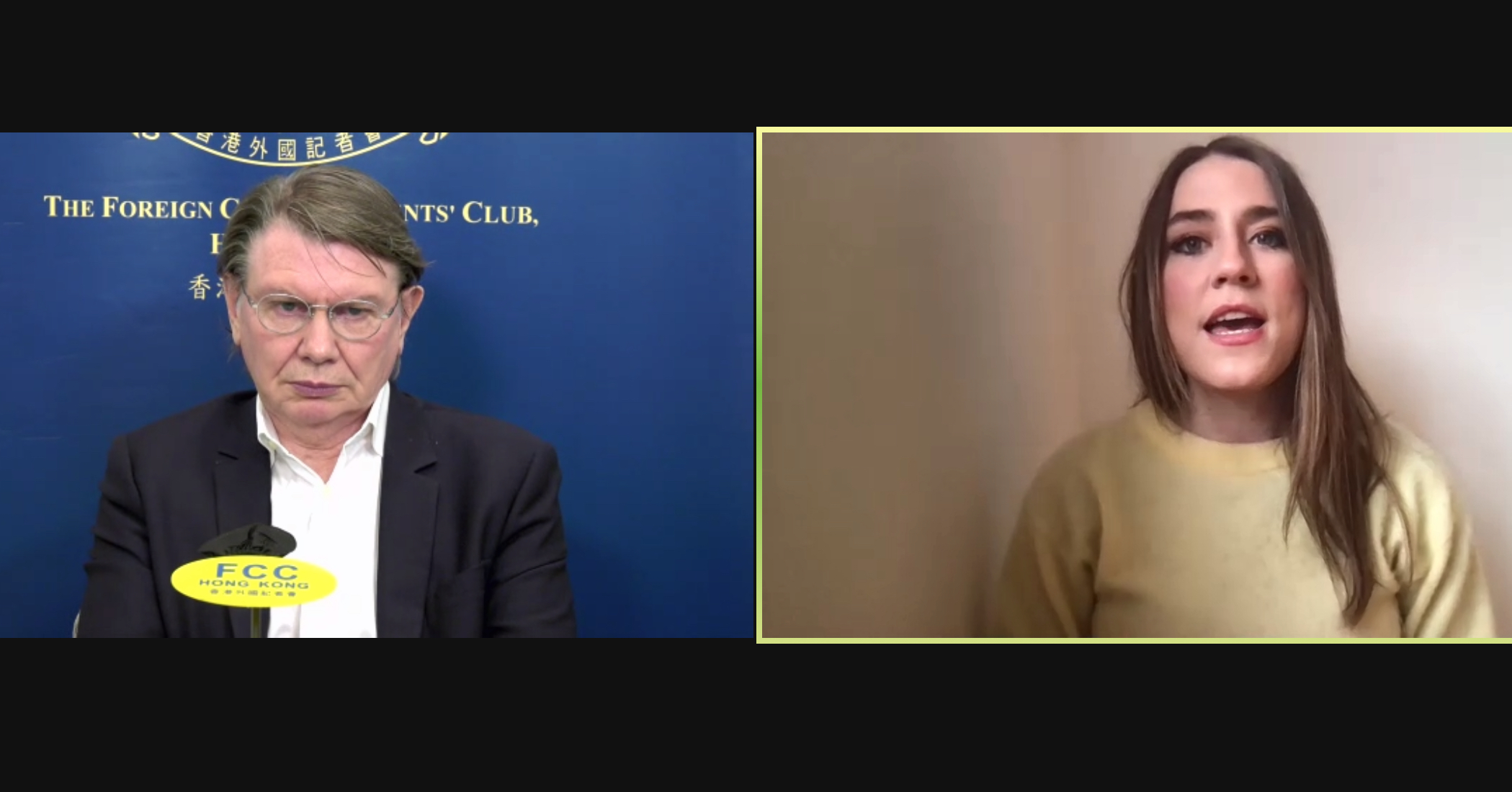 Eric Wishart (left) and Marianna Spring (right)
Misinformation and conspiracy theories may be considered problems that primarily affect social media and online discourse, but as BBC specialist disinformation reporter Marianna Spring explained in a Zoom talk hosted by the FCC, the negative consequences of viral falsehoods spill over into real life all too often.
“I’m sure from watching what happened on the 6th of January, now the world has a better understanding of how online conspiracies and extremist movements can inspire real-world violence and cause serious harm,” Spring said, referring to the U.S. Capitol insurrection.
Describing the pandemic as a perfect opportunity for spreading misinformation about health and vaccines, Spring spoke about interviewing people who have lost loved ones due to dissemination about falsehoods related to the coronavirus. She added that online conspiracy theories have had other nefarious effects on people’s lives.
“There are people I’ve spoken to who’ve had relationships destroyed, friendships ruined, marriages ended because of the impact that these conspiracy theories can have and the extent to which they can radicalise people,” Spring told FCC First Vice President Eric Wishart, who moderated the discussion.
Spring, who is featured in Forbes’ just-released 30 Under 30 list, is the BBC’s first specialist reporter focusing on disinformation. Her work humanises the cost of misinformation and the impact of conspiracy theories such as QAnon, an American conspiracy network which Spring said has gone global by tapping into different communities’ concerns and fears.
As Spring explained during the talk, one of the consequences of her work has been online violence, including a torrent of messages and posts filled with misogynistic language. She also described the surreal experience of her first QAnon “pile-on”: she was eating pizza and having a pint with a friend and started receiving messages in which strangers called her a Satanic paedophile who kills children and eats babies, among other things.
“The more reporting I do, the more abuse that I receive,” Spring said, noting that she had recently received threats which she had to escalate to the police. “There have been some quite scary incidents involving my personal safety.”
In spite of these personal safety issues, Spring said she was grateful for her job and for what she’s learned so far, including the importance of reporting with empathy.
“I think it’s really important to try and understand why people fall victim to online conspiracy theories to better realise the structural problems,” she said, “whether that’s to do with social media sites, governments, or with other things that have led us to this point.”
In doing so, Spring said she was offering something that pure debunking of falsehoods cannot provide.
“Fact-checking alone is not enough and what I do complements that,” Spring said. “I try and put a human face to the impact that online conspiracies have and the harm they can cause, and I hope in that way, I engage perhaps people who wouldn’t traditionally turn to fact-checking.”
Watch the full event:
U.S. Needs to ‘Find Patterns of Cooperation With China’: Ambassador Christopher Robert Hill
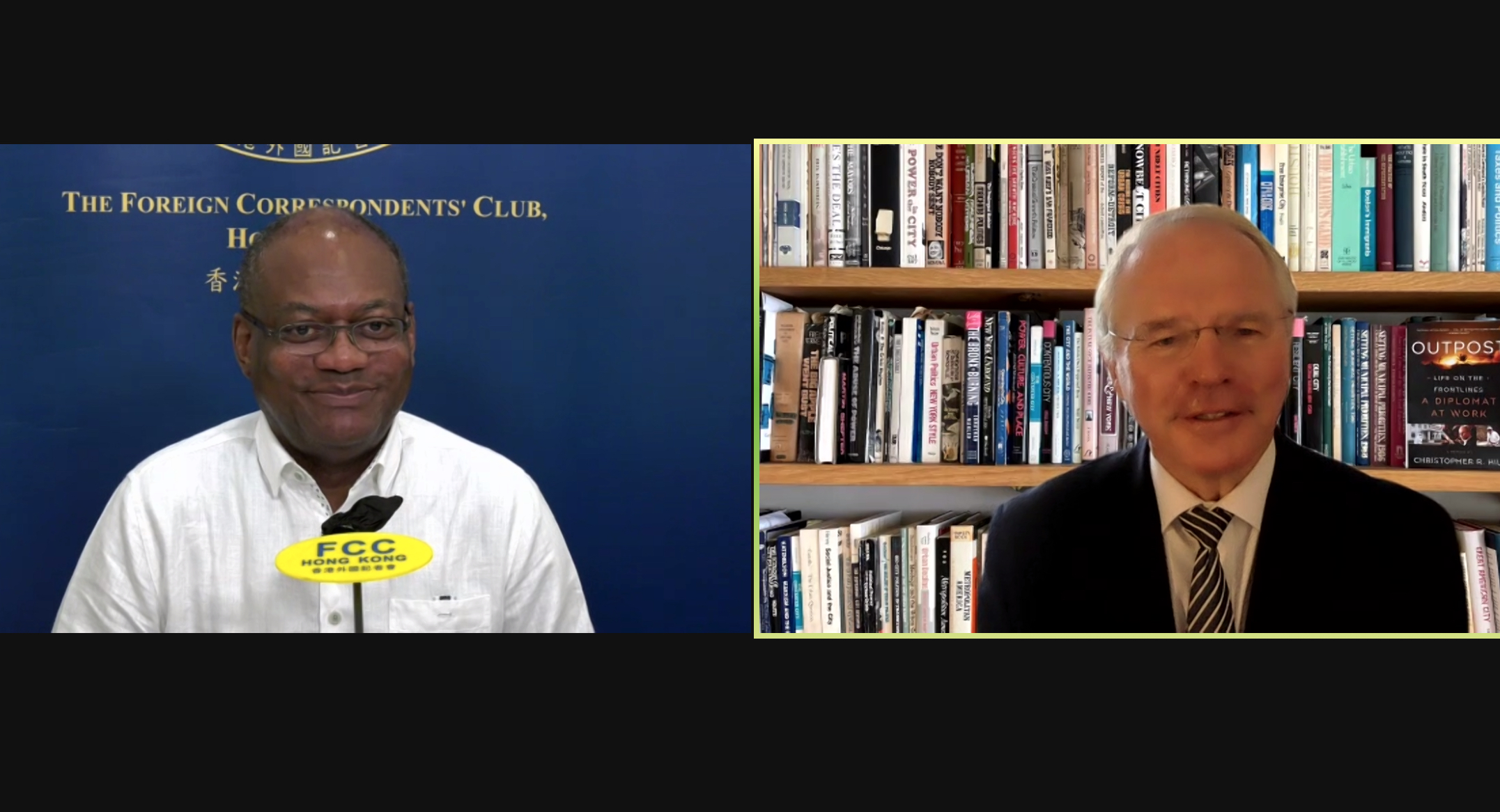 FCC President Keith Richburg (left) and Ambassador Christopher Robert Hill (right)
The United States needs to be proactive in finding ways to communicate and collaborate more closely with China rather than pursuing a policy of decoupling, said Ambassador Christopher Robert Hill, a former career diplomat, in a talk hosted by the FCC.
“I do believe that we need to find patterns of cooperation with China,” Hill said. “I think China is the number one foreign policy issue that this administration has to deal with, and with the understanding that we can no more change China than China can change us.”
The former Assistant Secretary of State for East Asian and Pacific Affairs, who is currently an adjunct professor at Columbia University’s School of International Public Policy, spoke on a range of topics relating to the U.S.-China relationship including Taiwan, the Quadrilateral Security Dialogue, trade agreements and the South China Sea.
Ambassador Hill said that he didn’t think the possibility of a military conflict in the region was imminent or even likely, though he acknowledged the possibility for surprises. “If you look through history at various wars and conflicts, accidents are often among the causes,” he told FCC President Keith Richburg during the talk.
One crucial area of cooperation for the two countries to focus on is North Korea’s nuclear weapons programme, said Hill, who was the head of the U.S. delegation to the Six Party Talks.
“I think we need to see if we can come to an understanding with the Chinese that we need to get North Korea to abandon these weapons,” Hill said, adding that the key task at hand was to make the case that the country would have a better future without nuclear weapons.
He also said that Pyongyang’s ultimate goal is to remove the American presence in South Korea.
“I think the North Koreans have the kind of vague notion that if they can just get the U.S. troops off the Korean Peninsula, somehow things will go more their way,” Hill said. “They need to be disabused of that in a big hurry.”
Commenting on the situation in Myanmar, Ambassador Hill described it as “an extremely frustrating issue” and called for multilateral cooperation to address the country’s crisis following the recent military coup.
“We need a lot of discussions in the region including with India and China and, of course, our ASEAN partners,” Hill said.
“We need Myanmar to understand that this is leading nowhere and no one supports them in the direction they’re going.”
Watch the full event:
FCC Nomination for the Board of Governors 2021-2022


Panel: Long History of Anti-Asian Violence in the U.S. Must Be Fought With Education and Awareness
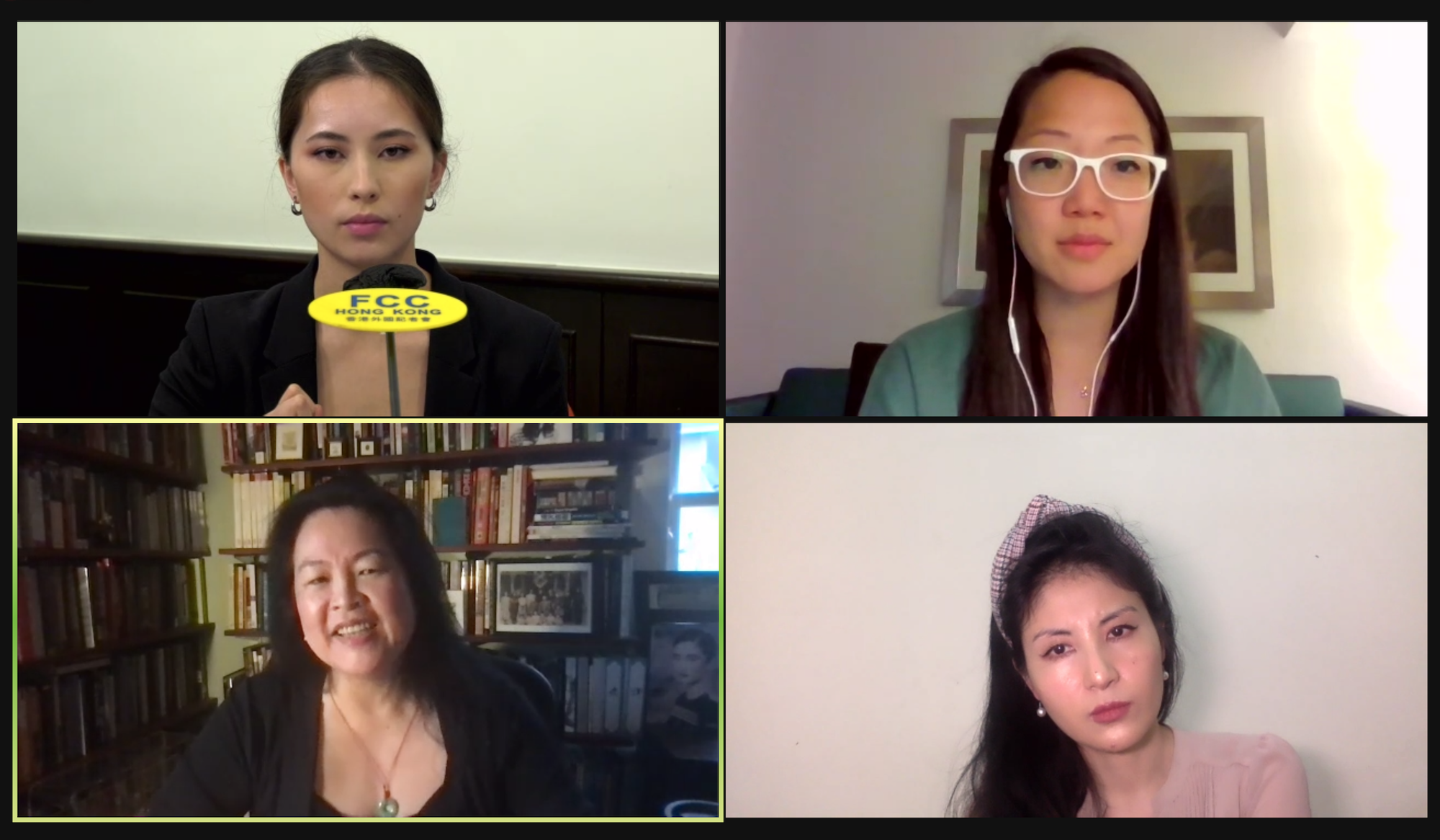 Clockwise from top left: FCC Claire Hollingworth Fellow Jennifer Creery, Michelle He Yee Lee, Jiayang Fan, Eileen Cheng-yin Chow
The mass shooting in Atlanta that took the lives of six women of Asian descent is another tragic event in the United States’ long history of anti-Asian violence and discrimination, three Asian American women writers and journalists — Eileen Cheng-yin Chow, Jiayang Fan and Michelle He Yee Lee – said in a panel hosted by the FCC.
“Anti-Asian rhetoric may feel more scornful right now, but I think it is important to talk about the fact that this is not new,” said Lee, a reporter for The Washington Post and president of the American Asian Journalists Association. “This is part of our lived experience in this country.”
Chow, a visiting associate professor at Duke University, summarised a long history of anti-Asian legislation in the U.S. but noted that the country isn’t unique in this regard.
“You can never talk about the U.S. or Europe and their anti-Asian sentiments without talking about a larger and longer history of colonialism and empire, and the ways in which, say, hypersexualisation of [Asian] women, are baked into the stories of these nations,” she said.
Fan, a staff writer at The New Yorker who published a piece titled “The Atlanta Shooting and the Dehumanization of Asian Women” in the wake of the killings, said the reactions to her story had been eye-opening. On March 16, a gunman killed eight people, including six women of Asian descent, at three Atlanta area spas.
“What struck me most deeply as I read through some of the responses to that piece is almost every Asian American woman I know has experienced some kind of sexualized racism, and how mundane and pervasive that sort of experience has been for us, to the extent that we almost brush it off as part of the American experience,” Fan said in the panel moderated by FCC First Vice President Eric Wishart.
“I think that should really make us question what the American experience is for Asian American women.”
Moving forward, the panelists agreed that more education and awareness are needed for both journalists and the general public in order to combat anti-AAPI (Asian American Pacific Islander) hate.
Chow said that government funding should be given to small grassroots organisations doing work in local communities like Red Canary Song, CCED (Chinatown Community for Equitable Development), The Butterfly Group and others.
Fan said that money should be spent on the most vulnerable members of the community to assist with issues like mental health, financial literacy and finding employment.
Lee added that the Atlanta shooting had revealed the “cultural incompetency of newsrooms” and said that media outlets needed to do more to educate their journalists about AAPI communities year-round and not only in times of crisis. She also argued that it was time for Asian American journalists to be empowered to become more vocal.
“As Asians and as journalists, we’re not really wired to talk about ourselves or our experiences, but we’ve seen how far that has taken us and this is where we are now,” Lee said. “It needs to become the norm for journalists to share what it’s like to be an AAPI journalist during this moment so the rest of the country is aware.”
Watch the full discussion: