Members Area Logout

Annual photo contest launched in honour of AFP photographer Shah Marai, killed in Kabul bomb attack

Agence France-Presse is launching an annual photography competition to honour Kabul bureau chief photographer, Shah Marai, who was killed in a suicide attack on April 30, 2018.

Throughout his career, Shah Marai showed the reality of life in Afghanistan with passion and tenderness. During 17 years of conflict, his photos captured moments of raw violence but also moments of beauty.

To the outside world, Afghanistan is defined by the images of violence and tragedy that appear regularly on international news. But behind the violence of the conflict lies another country, full of human warmth and daily toil. It was also this country that Shah Marai was constantly striving to show to the rest of the world.

That’s what inspired “My Afghanistan,” the theme of the competition. Afghan photographers living in Afghanistan or overseas are invited to submit from February 5 a series of photographs. These will reflect the reality of their people in Afghanistan or abroad, in their daily life, culture, environment, or social issues. Other angles could be used to tell the story of “their Afghanistan.”

Three prizes will be awarded in May at a ceremony in Paris. The contest also aims to support Afghan photographers.

Enter the competition at www.maraiphotoaward.com

The pitfalls of reporting in 42 languages, by the BBC World Service chief

The challenges of reporting the news in more than 40 languages and managing not to offend anyone in the process were outlined by Jamie Angus, Editor-in-Chief of the BBC World Service.

Jamie Angus gave amusing anecdotes illustrating the challenges in reporting in dozens of different languages. Photo: Sarah Graham/FCC Jamie Angus gave amusing anecdotes illustrating the challenges in reporting in dozens of different languages. Photo: Sarah Graham/FCC

The World Service is now in its 87th year and has evolved from simply translating what the BBC core news team produced to building its own teams of multilingual reporters, reaching 372 million people per week. It broadcasts in 42 languages, from Hindi to Pashto, and more recently in Nigerian Pidgin which is only a spoken language.

Yet, said Angus, translating from one language into English, or another language, can sometimes be problematic. Angus, a former Editor of the BBC’s flagship Today Programme, gave often amusing examples of languages where one word can be pronounced several different ways, and if mispronounced, some could cause offence.

He also discussed the issues of reporting respectfully in places like Thailand, where insulting the monarchy is a criminal offence. When covering the death of the Thai King Bhumibol Adulyadej in 2016, the BBC World Service was faced with a dilemma in its reporting to Thai listeners. It is disrespectful to simply state the king is ‘dead’. Other translations guaranteed not to offend included ‘the King reached the unconscious end’, and he ‘passed to heaven’. After a lengthy discussion, the BBC decided to play it safe by announcing ‘the King is no longer alive’.

When asked about the state of today’s media in the context of fake news, and why people should trust BBC news, Angus said the BBC’s license fee and its Royal Charter made it more open and accountable to the public.

He told the January 24 club lunch: “We believe we’re the most trusted international broadcaster, but we must earn that trust every day and it’s very precious and we can’t lose it.”

Watch the video here.

New book documents how South Asians helped shape Hong Kong

The contributions of South Asians to Hong Kong’s rich cultural tapestry, from soldiers and traders to judges, has earned them a place in the city’s history – yet some feel they are looked down upon by locals, according to the authors of a new book on the subject.

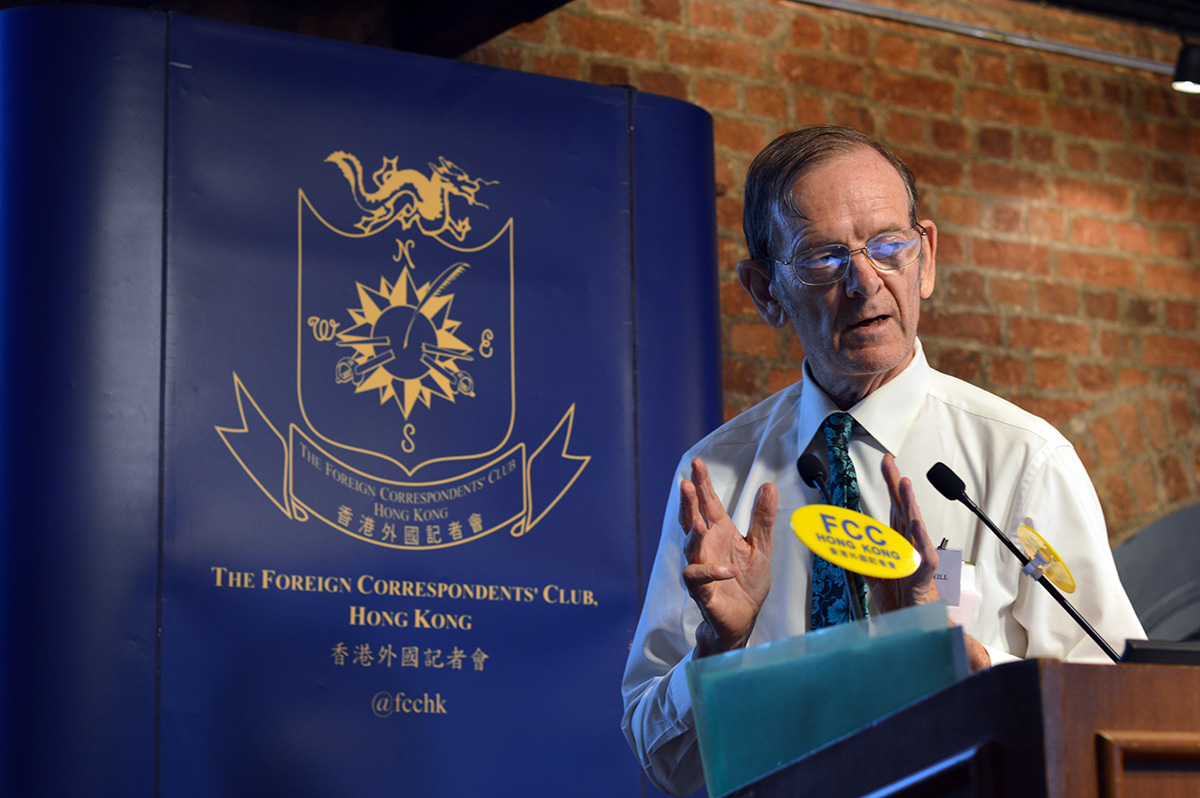
Mark O'Neill discusses his latest book, ‘How South Asians Helped to Make Hong Kong – History, Culture, Profiles, Food, Shopping’. Photo: Sarah Graham/FCC Mark O’Neill discusses his latest book, ‘How South Asians Helped to Make Hong Kong – History, Culture, Profiles, Food, Shopping’. Photo: Sarah Graham/FCC

There are around 80,000 South Asians – among them Indians, Pakistanis, Bangladeshis, Sri Lankans, and Nepalese – living in Hong Kong. Their ancestors came to live in the city as far back as 1841 when the British first colonised Hong Kong.

Despite their huge impact on the development of the city, they feel like second-class citizens, said Kevin Lee, whose photographs of South Asians around the city appear in the new book, ‘How South Asians Helped to Make Hong Kong – History, Culture, Profiles, Food, Shopping’.

During his interaction with one South Asian as he photographed them, he was told: “You are unlike other Hong Kong people. Hong Kong people have the stern face in front of us. But you have a smile.”

Lee told the January 23 club lunch: “I asked them about their life in Hong Kong. I think Hong Kong people don’t really like them.”

The new book, written by Mark O’Neill and former FCC governor Annemarie Evans, delves into the contributions made by South Asians.

Indians who were here from the very first days worked as international traders, diamond merchants, police and soldiers. In later times they became professional in many fields including law, medicine, and finance. There are now 45,000 Indians in Hong Kong – double that of pre-1997. Notable Indians – many of whom were Parsees (Iranians who migrated when their homeland embraced Islam) – include Sir Hormusjee Naorojee Mody, the “founder spirit behind the idea” of building Hong Kong University. He was also a major donor. Jehangir Hormusjee Ruttonjee was another distinguished Parsee who made an indelible mark on Hong Kong when he founded the Ruttonjee Sanitorium following the death of his daughter from tuberculosis.

The contribution of Gurkhas, who were principally soldiers who patrolled Hong Kong’s border and were intercepting 16,000 illegals a month at the height of the Cultural Revolution, is also highlighted in the book.

Watch the talk here.

Veteran National Geographic photographer gives a glimpse of life behind the lens

Taking an unblinking look at life, and capturing the moments of our shared humanity are the obligations of every photojournalist, according to a veteran National Geographic photographer.

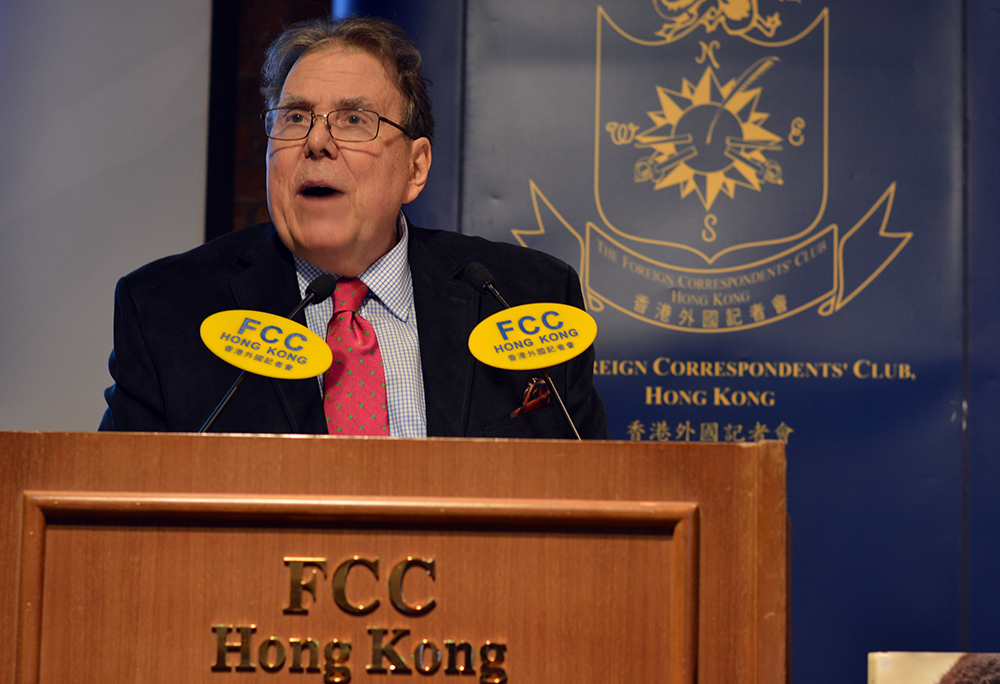
Steve Raymer talked about life as a photojournalist during a talk at the FCC. Photo: Sarah Graham/FCC Steve Raymer talked about life as a photojournalist during a talk at the FCC. Photo: Sarah Graham/FCC

American-born Steve Raymer shared his decades of experience as an award-winning photographer in capturing images of conflict, human migration and trafficking, endangered wildlife, and climate change across Asia. These photos and his recollections are documented in his new book, Somewhere West of Lonely, My Life in Pictures.

Now an emeritus professor of journalism at Indiana University and authority in media ethics, Raymer joined National Geographic in 1972 after completing military service which saw him serve as an artillery officer in Vietnam.

During his career, he covered issues including the famine in Bangladesh, the Chernobyl disaster, and the Soviet occupation of Kabul in Afghanistan. At the January 22 club lunch, Raymer talked about how photojournalism has changed history, in some cases prompting governments to create new policy around issues illustrated by hard-hitting images.

Recently, he said, photojournalism had come under fire for the increasingly explicit nature of images of suffering.

“The whole idea of the photographic truth of a picture is very much under attack in this era of fake news. Pictures can lie when a photographer sets up a picture or situation to make it appear to be an honest photograph.

“We photojournalists are constantly using people as a means to an end… We have to constantly ask ourselves can the ends ever justify the intrusive means of photojournalism? It’s a worthy question,” he said.

Raymer’s photographs are on exhibition at the FCC until February 17, open daily from 10am-12 noon & 3pm-5:30pm.

Watch the talk here.

Judge Henry Litton highlights ‘total farce’ of Hong Kong’s legal system in new book

Former Court of Final Appeal judge, Henry Litton, dismissed as “total farce” the recent application for judicial review regarding the new high-speed rail terminus, highlighting it as an example of how Hong Kong’s judiciary is increasingly out of touch with its constitutional role.

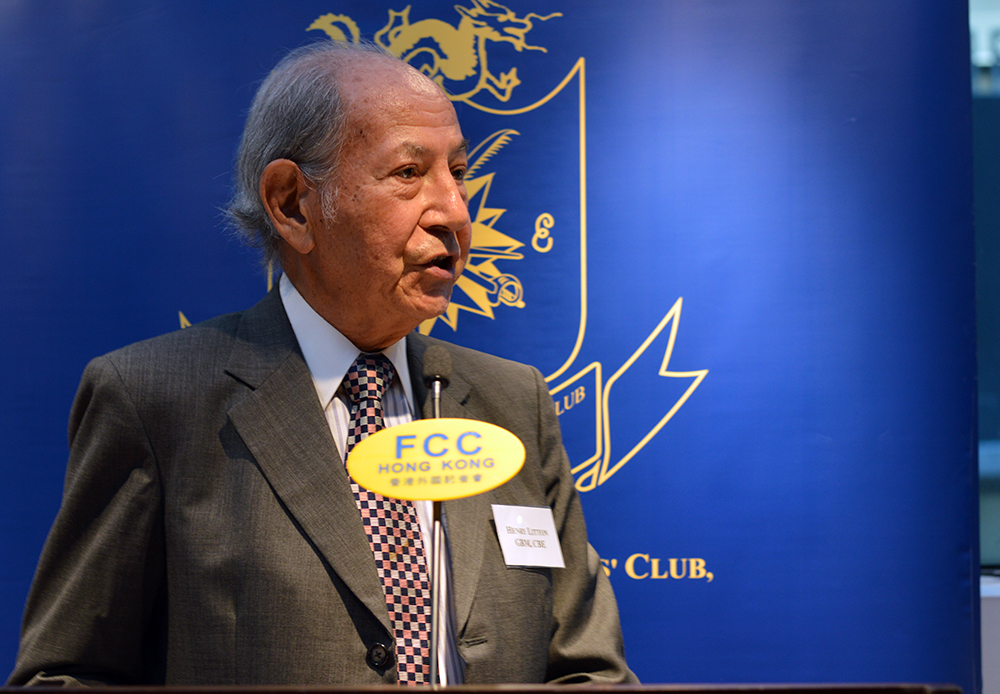
Former Court of Appeal judge Henry Litton launches his new book at the FCC. Photo: Sarah Graham/FCC Former Court of Appeal judge Henry Litton launches his new book at the FCC. Photo: Sarah Graham/FCC

Speaking as he launched his book, ‘Is the Hong Kong Judiciary Sleepwalking to 2047?’ at the FCC, Litton said the case before the judge last year was merely four applications for leave to start judicial review proceedings, but had turned into “an elaborate charade signifying nothing except the vacuousness of court proceedings”. At its conclusion, the judgment was “massive – 56 pages”, said Litton, adding that such “such an approach to the case defies common sense”.

Litton, now an honorary professor at the University of Hong Kong Faculty of Law, said had the discipline of law been observed in this case, a judge would have heard it in chambers, and his first consideration should have been what practical remedy was possible.

“The common law is an effective legal system because it has always been a pragmatic one,” Litton said. “Its focus is on remedies and on practical results… But slowly, insidiously, over the past 20-odd years, that system has lost its effectiveness. Court proceedings tend to be dominated by lawyers’ arguments. The real issues get swept away in the flood of words. Common sense is submerged.”

Litton’s book, illustrated by cartoonist Harry Harrison, is a series of essays highlighting similar examples of what he feels are misinterpretations of the role of the judiciary.

Watch the talk here.

Pakistan reporter Asad Hashim wins 2018 AFP Kate Webb Prize

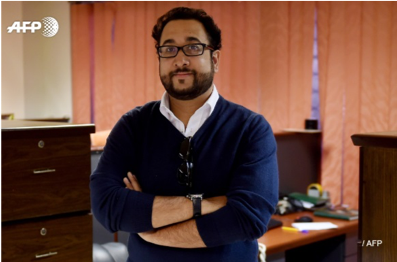
Freelance reporter Asad Hashim has won the 2018 Agence France-Presse Kate Webb Prize for his coverage of the plight of ethnic Pashtuns and blasphemy issues in his native Pakistan.

Freelance reporter Asad Hashim. Photo: AFP Freelance reporter Asad Hashim. Photo: AFP

The prize, with a 3,000 euro purse, honours journalists working in perilous or difficult conditions in Asia, and is named after a crusading AFP reporter who died in 2007 at the age of 64, after a career covering the world’s troublespots – including Afghanistan.

Asad Hashim, 33, was recognised for a series of articles on ethnic Pashtuns and other groups caught up in the Pakistan military’s fight against the Pakistan Taliban.

These included an investigative report into enforced disappearances allegedly conducted by the military and a reporting mission to the South Waziristan tribal region – birthplace of Pakistan’s Taliban – to look into the deadly civilian toll from landmine explosions.

The award also recognised his work on other highly sensitive issues, such as Pakistan’s blasphemy laws and the country’s judicial system.

“These are challenging times for journalists in Pakistan and Asad Hashim’s work stands out for the kind of courageous, independent reporting the Kate Webb Prize was created to recognise,” said AFP’s Asia-Pacific regional director, Philippe Massonnet.

“His deeply-researched articles tackle sensitive subjects with an admirable balance of passion, commitment and journalistic detachment,” Massonnet said.

“I am honoured by the jury’s decision to select my work this year,” Asad Hashim said after learning he was the winner of the 2018 prize.

“I consider the award not just a recognition of my work, but of all Pakistani journalists, who have been working in an increasingly restrictive reporting environment over the last year,” he added.

The prize will be formally presented at a ceremony in March.

About the Prize

Born in New Zealand, Kate Webb earned a reputation as a fearless reporter while covering wars and other historic events in Asia during a career spanning four decades. She made her name in Vietnam and also worked in Cambodia, Indonesia, Thailand, the Philippines, India, South Korea and the Middle East. She was known for her kindness and compassion and became a mentor to younger Asian journalists. The prize is administered by AFP and by the Webb family. It was first awarded in 2008.

Remembering Louis Cha: Media magnate and writer’s legacy discussed by last interviewer

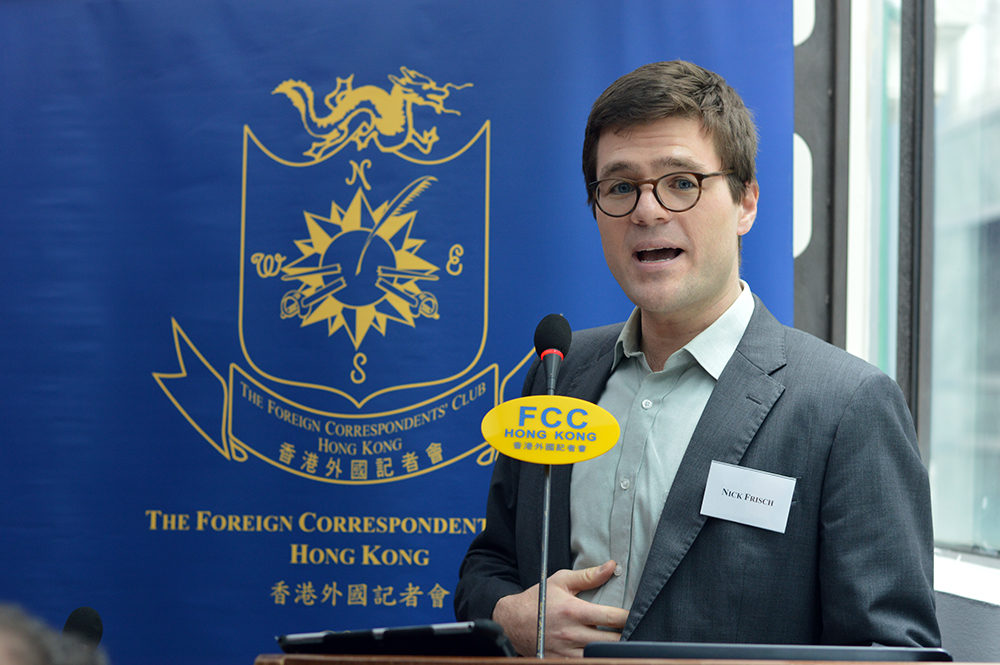
The legacy of Louis Cha, Hong Kong media magnate and acclaimed kung-fu fiction writer, was discussed by the last person to interview him.

Nick Frisch discussed Louis Cha's interlaced legacies in media, politics, and literature. Photo: Sarah Graham/FCC Nick Frisch discussed Louis Cha’s interlaced legacies in media, politics, and literature. Photo: Sarah Graham/FCC

Cha, the founding editor of Ming Pao Daily and chairman of Ming Pao Group, died in 2018. Nick Frisch, media fellow at Yale Law School and Asian studies doctoral candidate at Yale’s graduate school, interviewed the man known as the ‘Master of Kung-Fu Novels’ in 2014 for the New Yorker.

Cha was born in 1924 in a town along the Yangtze River to a family who for generations had worked for the imperial rulers. Frisch revealed that the family was held in high regard until the 18th Century, when an ancestor who had inadvertently offended the Emperor with a poorly constructed poem, had his severed head paraded on a pike. The family lived in an upscale compound but were forced to flee when the Japanese invaded during the Second World War. Cha was already living in Hong Kong in 1949 when his father was identified as an enemy of the Communist Party during the Communist Revolution and executed.

Working as a journalist and scriptwriter, Cha began producing kung-fu fantasy stories which appeared in newspapers. They were an instant hit. In 1959 he founded Ming Pao Daily and continued to write his successful fiction under the name Jin Yong while at the same time often writing news stories and editorials for the newspaper. Cha’s fiction, which was banned in China, often mirrored the political events of the time, and his editorials frequently criticised Mao Zedong’s Communist Party, earning him widespread respect as a commentator.

However, a softening in his political attitudes when Deng Xiaoping took power made some question his motives, particularly after the leader lifted the ban on the books of Cha and his contemporaries. As a supporter of the Communist Party, Cha became more politically active and participated in drafting the terms for Hong Kong’s 1997 handover.

Watch the full talk here. 

Save the date: 23 March 2019 for the FCC Journalism Conference

Save the date for Saturday, March 23 for the fourth edition of the FCC’s Journalism Conference, titled Enemy of the People? The Dangers of Being a Journalist in 2019.

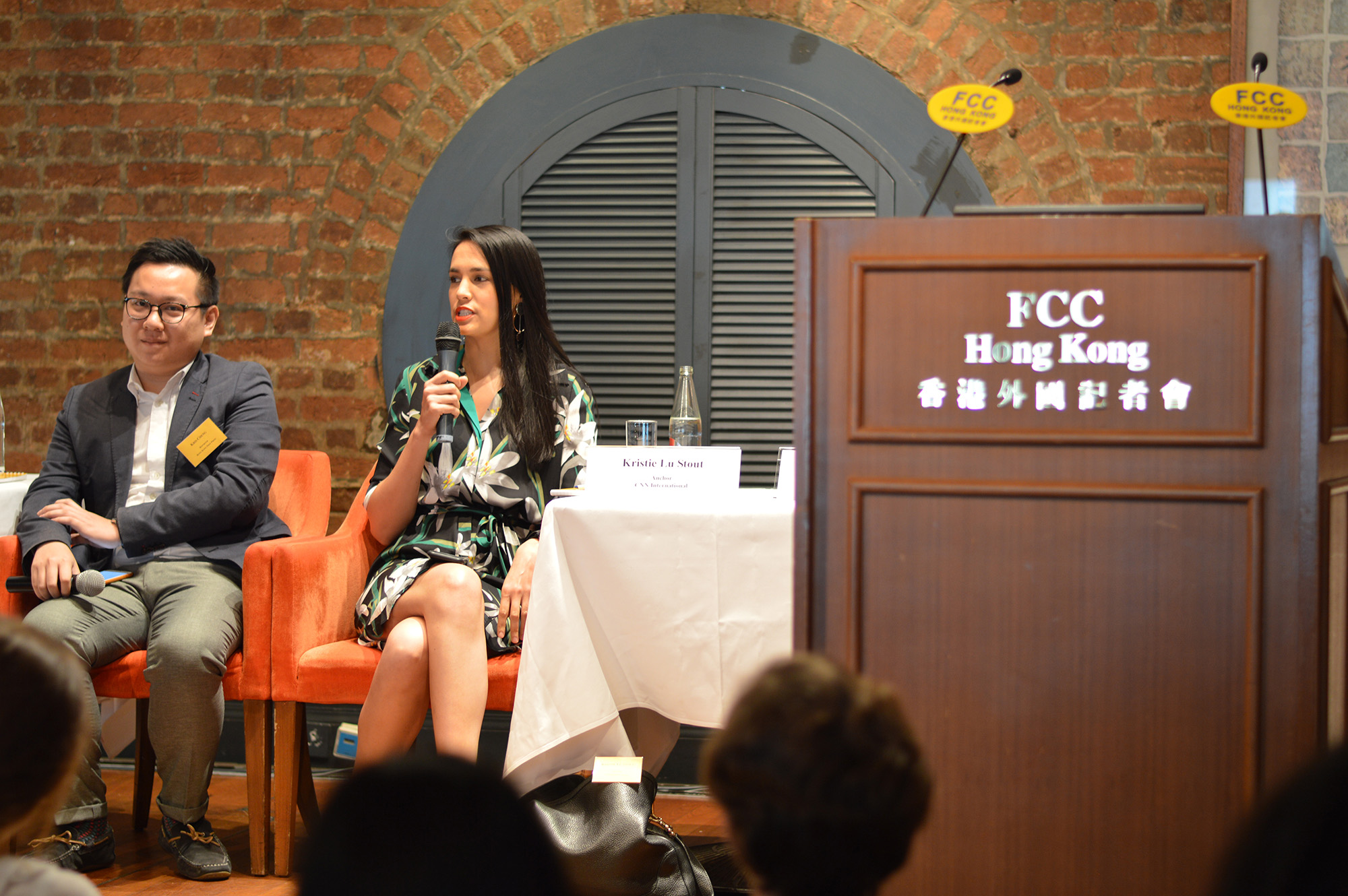
Hong Kong Free Press’ Kris Cheng, left, and CNN’s Kirstie Lu Stout talk about confronting stereotypes at the 3rd FCC Journalism Conference. Photo: Sarah Graham/FCC Hong Kong Free Press’ Kris Cheng, left, and CNN’s Kirstie Lu Stout talk about confronting stereotypes at the 3rd FCC Journalism Conference. Photo: Sarah Graham/FCC

The increasing perils facing the press, including new threats emerging in the digital space, is the theme of the conference. Topics for workshops and panel discussions include the online and on-the-ground threats journalists face today, challenges to press freedom and online security tips. The conference will look at other issues impacting journalists too, such as pay negotiation strategies, mobile video storytelling, covering niche beats and more.

Speakers include reporters, editors, and publishers from leading news organisations. Additional specialists such as data security, legal, and negotiation experts will share their expertise in relevant areas.

Tickets cost HK$495 for members and HK$595 for guests. To sign up, please complete this booking form.

Students can purchase tickets at a discounted rate of HK$250. To sign up, please complete this student booking form.

Alternatively, please contact the FCC concierge desk at 2521 1511 or email [email protected]. Once confirmed, you will be contacted to indicate which workshops you wish to attend.

Club Early Closing for Charity Event

Annual Staff Party Club Early Closing

We measure site performance with cookies to improve performance.