Members Area Logout

News agencies more important than ever in fight against fake news

News agencies are needed more than ever to fight back against the ‘impoverishment’ of newsrooms around the world as a result of the growth of social media and fake news, according to the chairman of the world’s oldest agency.
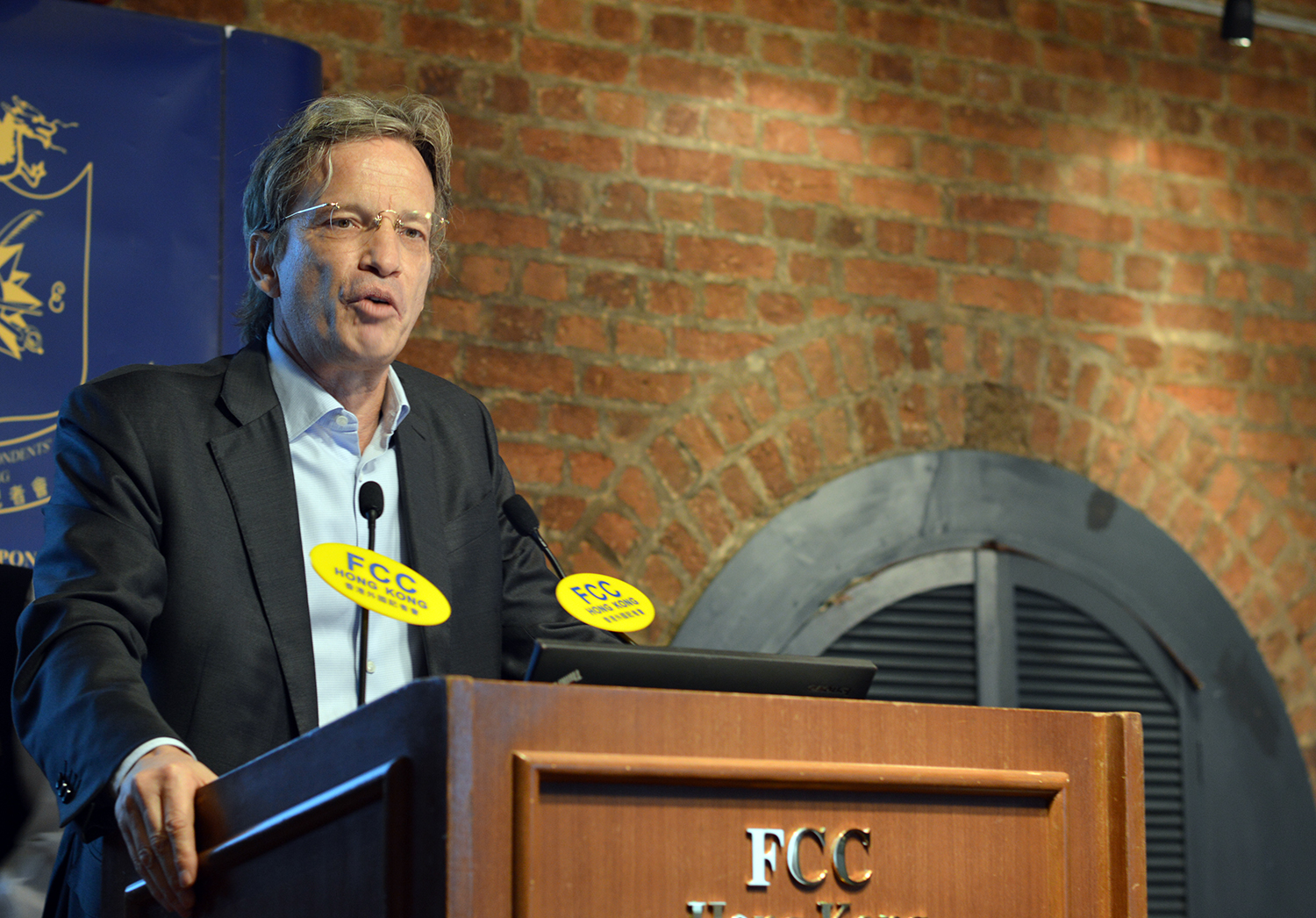
AFP chairman, Fabrice Fries talked about the global role of news agencies in an era of fake news. Photo: Sarah Graham/FCC AFP chairman, Fabrice Fries talked about the global role of news agencies in an era of fake news. Photo: Sarah Graham/FCC

While news organisations are struggling to find a profitable business model as the lion share of news consumption comes via the likes of Google and the big social networks, Agence France-Presse has found a surprising revenue stream–from Facebook. AFP was one of several agencies to sign a contract in 2017 with the social network giant to fact check any content on the platform that the news agency decides warrants verification.

During his appearance at the December 10 club lunch, AFP’s chairman, Fabrice Fries, said the fight against fake news had become a core component of the 183-year-old agency’s mission. He said the proliferation of news blogs that take chunks of content without permission had led to bona fide news organisations having to cut costs as they saw advertising revenue fall. For large players and news agencies, this increasingly meant scaling down operations abroad.

Fries further highlighted the impact of Big Tech on news organisations, criticising aggregators like Google and Facebook for hosting content published without the permission of the copyright holder then taking 90% of advertising revenue without offering any of it to the news outlets who produced the copy in the first place. “This means we’re being robbed twice…for our content and our revenues,” he said.

The collaboration with Facebook allows AFP to select whatever fake news it wants, and fact check it before publishing its results. Links to its fact checks appear alongside original posts on Facebook.

Watch the full talk.
President Donald Trump’s attacks on media ‘first step in silencing dissent’, says journalist

President Donald Trump’s war on the media is spurring violent supporters into action against his enemies, warns an American journalist.

Amy Wilentz on Trump: 'He's really a media whore at heart.' Photo: Sarah Graham/FCC Amy Wilentz on Trump: ‘He’s really a media whore at heart.’ Photo: Sarah Graham/FCC

On the day a report found that journalism is more dangerous than at any point in the last decade, journalist and professor of English, Amy Wilentz, said Trump’s jokes about killing journalists, and his penchant for labeling the media Enemies Of The People, were already casting a shadow over the industry. She fears that, should Trump lose the presidential election in 2020, violence would break out that could result in deaths.

“If he wins it’ll be fine – fine in the sense there will be no mass shootings or takeovers of polling places or murders of journalists covering the vote. But we all fear what could happen if he loses and begins whining and claiming fraud and suggesting all the kind of things he likes to suggest. Then there could be a wave of real violence, even an armed takeover of the executive branch of government. I’m not kidding, I’m not being a crazy person here,” she told the December 5 club lunch.

The professor in the literary journalism program at the University of California likened Trump to a dictator, adding that his Enemy Of The People label was “the first step in silencing dissent”.

She described Trump as “really a media whore at heart”, who thrived on attention and would tip off newspapers about himself before he became president. But journalists didn’t always take the bait, much to his annoyance, she said. “That’s why Twitter is like a godsend for this man. He doesn’t have to convince a gatekeeper to interview him, he just goes on and the public responds. It’s like an aphrodisiac to this kind of character. it provides him with the immediate ear of the public.”

But some areas of the media are playing a dangerous game in taking an editorial line and allowing a “certain tone” in their reporting of Trump.

“What this does, I fear, is to play into Trump’s narrative,” Wilentz added.

She said Trump was possibly the only person in the United States that believes Prince Mohammed (bin Salman) wasn’t involved in the murder of journalist Jamal Khashoggi, adding: “He calls the media the Enemy Of The People. That’s the most disastrous thing. Maybe that’s why he doesn’t care much that a journalist was killed and dismembered. Or maybe in private he applauds MBS’ assassination of Khashoggi.”

Watch the full talk here.

A Memorial Service for Barry Kalb

The U.S. Midterms: Panel of experts discusses implications for Trump and the Democrats

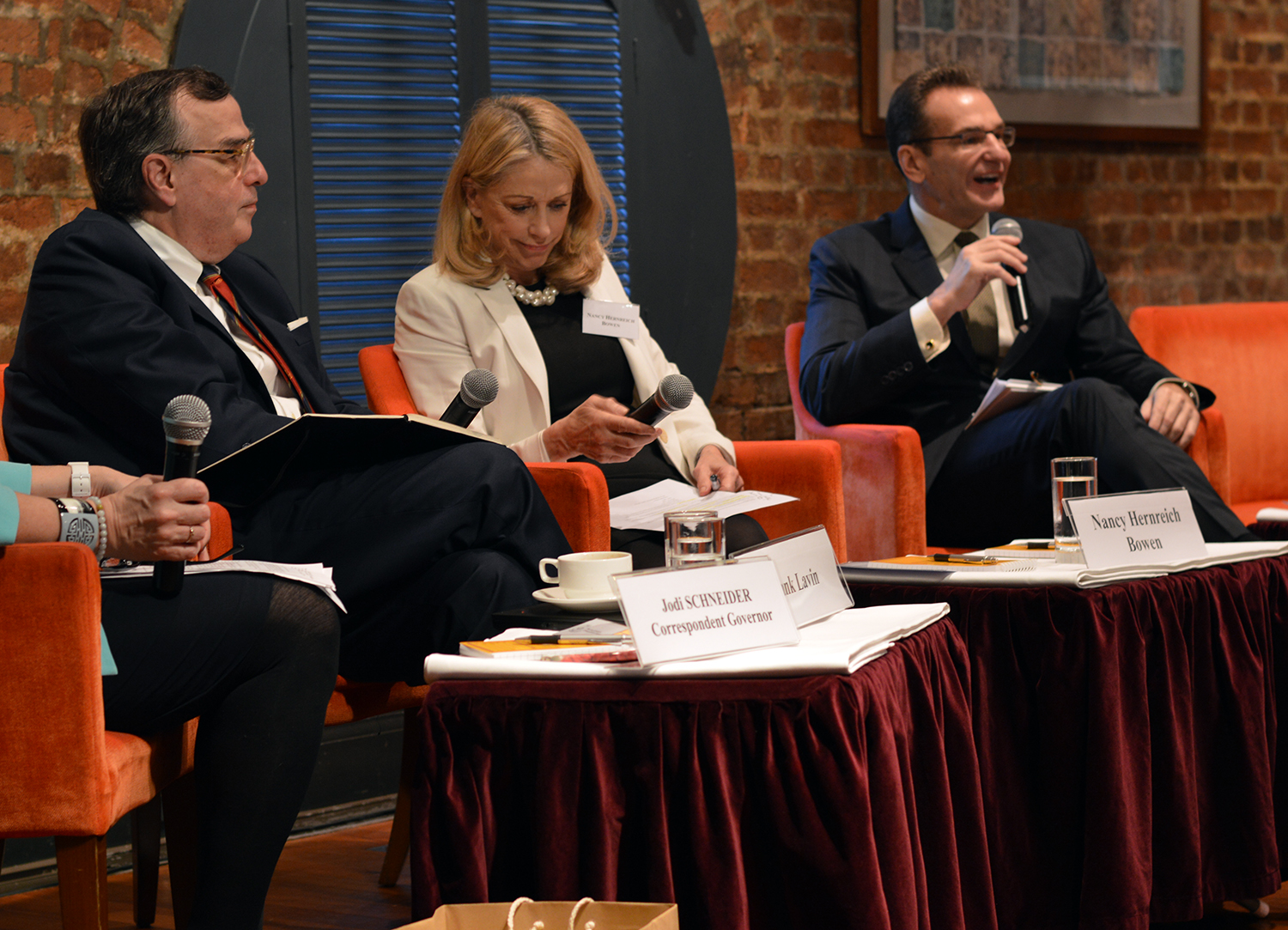
The Democratic Party will need to put forward a candidate who is extremely charismatic, a little outrageous but who can reach America’s white working class community if it is to get President Donald Trump out of the White House, according to a panel of political experts.

L-R: Frank Lavin, CEO and founder of Export Now; Nancy Hernreich Bowen, Senior Advisor at Teneo; and Stephen Olson, Research Fellow at the Hinrich Foundation. Photo: Sarah Graham/FCC L-R: Frank Lavin, CEO and founder of Export Now; Nancy Hernreich Bowen, Senior Advisor at Teneo; and Stephen Olson, Research Fellow at the Hinrich Foundation. Photo: Sarah Graham/FCC

Since the Democrats won around 40 House seats in November’s midterm elections–gaining control of the House but not the Senate–the beleaguered party has found itself in a position to use its new power to investigate Trump for his alleged involvement with Russian interference in the 2016 presidential elections. The new powers give the Democrats the ability to subpoena and call witnesses if they choose to do so.

It’s unclear whether this will happen, and if it does, Trump would have to be found to have been involved in a crime to be impeached, said Frank Lavin, CEO, and founder of Export Now, during a panel discussion on the implications of the midterms.

Joining Lavin were Nancy Hernreich Bowen, Senior Advisor at Teneo; and Stephen Olson, Research Fellow at the Hinrich Foundation. All panelists have previous U.S. government experience.

Watch the full panel discussion.

FCC appalled at efforts to silence Philippines news website Rappler

The Foreign Correspondents’ Club, Hong Kong, is appalled at the ongoing efforts to intimidate and silence Rappler, a news organisation that has pushed to hold the government accountable despite repeated attacks from Philippine President Rodrigo Duterte.

On Monday, Rappler’s CEO Maria Ressa turned herself into authorities after a warrant was issued for her arrest on five charges of tax fraud. She paid bail and was ordered to return Friday for arraignment on charges that Rappler provided false information to tax authorities.

Outside the court, Ressa called the charges “manufactured” and “politically motivated.”

Earlier this year, the Securities and Exchange Commission revoked Rappler’s operating license because it violated the country’s restrictions on foreign ownership of domestic media. The organisation has continued operating after an appellate court ordered the SEC to review its findings.

Rappler, which denies all wrongdoing, has defied Duterte’s threats and intimidation to expose corruption within the police force, which has led the deadly crackdown against drugs, as well as in government ranks.

Duterte has a long track record of going after his critics. Shortly after he was elected in 2016, he told reporters that some could be legitimately killed. “Just because you’re a journalist you are not exempted from assassination, if you’re a son of a bitch,” he said at the time.

Ressa has been a journalist in Asia for more than 30 years and has won multiple awards for her work–including the 2018 Gwen Ifill Press Freedom Award from the Committee to Protect Journalists. She is a brave and powerful voice against injustice in a region where the powerful regularly seek to silence those who shine a light on misdeeds.

The FCC calls on authorities to respect due process in the case against Ressa, and support the right of Rappler and other media outlets to operate freely and safely. We also stand with Philippine media groups, including the National Union of Journalists and the Foreign Correspondents Association of the Philippines, in denouncing the efforts to intimidate Rappler.

FCC Hong Kong deeply concerned over disappearance of photojournalist Lu Guang

The Foreign Correspondents’ Club is deeply concerned over the disappearance of award-winning photojournalist Lu Guang in Xinjiang, amid concerns he has been detained by authorities.

Mr Lu, who is best known for documenting serious social and environmental issues in China such as the AIDS villages of Henan, had reportedly been invited to a number of photography events in the Xinjiang capital Urumqi in late October but has not been heard from since he talked to his wife, Xu Xiaoli, last on November 3.

Ms Xu said she was told that her husband had been taken away by national security officers but she has been unable to get any confirmation from the authorities in Xinjiang, despite repeated attempts.

“It is our 20th wedding anniversary (next week). We should be celebrating it together. I can only hope for his safe return,” Ms Xu told the BBC.

Xinjiang, in the far northwest of China, has been under increasingly repressive government control over the last five years as the authorities seek to crackdown on unrest among the region’s ethnic Uighur population. The United Nations Committee on the Elimination of Racial Discrimination has reported that more than one million Uighurs are now being held in internment camps in the region.

China has sought to stifle international criticism and reporting of its policies in the region through a range of measures, including the harassment and detention of dozens of family members of Uighur journalists at Radio Free Asia.

The FCC calls on the Chinese authorities to, at the very least, confirm Mr Lu’s whereabouts, and ensure that he is safe, and, if he has not broken any laws, be allowed to leave China and return to his family in the United States as soon as possible.

Lu Guang has been recognised for his work with a number of top awards in the industry, including multiple World Press Photo awards (First Prize in Contemporary Issues in 2004), the W. Eugene Smith Memorial Fund in 2009, and a National Geographic Photography Grant in 2010. In 2005, he became the first photographer from China invited as a visiting scholar to the United States by the State Department.

NYT publisher A.G. Sulzberger on how technology disrupted the truth

New York Times publisher A.G. Sulzberger spoke of the dangers facing journalists around the world since President Donald Trump’s attacks on the press.

Watch the video:

Statement from the Foreign Correspondents’ Club Hong Kong on Victor Mallet

The FCC is shocked and baffled that the government of Hong Kong has denied entry to Victor Mallet, Asia news editor for The Financial Times and 1st Vice-President of the Foreign Correspondents’ Club.

Since the Hong Kong government refused to renew Mallet’s work visa in early October, the FCC has been asking for a reasonable explanation, to no avail.

The FCC is now reiterating its demand for an immediate explanation for this aggravated and disproportionate sanction that seems completely unfounded.

This action places journalists working in Hong Kong in an opaque environment in which fear and self-censorship may replace the freedom and confidence essential to a free society, and guaranteed by the Basic Law.

Hong Kong, 9 November 2018

Petition demanding authorities explain Victor Mallet’s visa refusal: English version, Chinese version

Why feminism poses a threat to the Chinese government

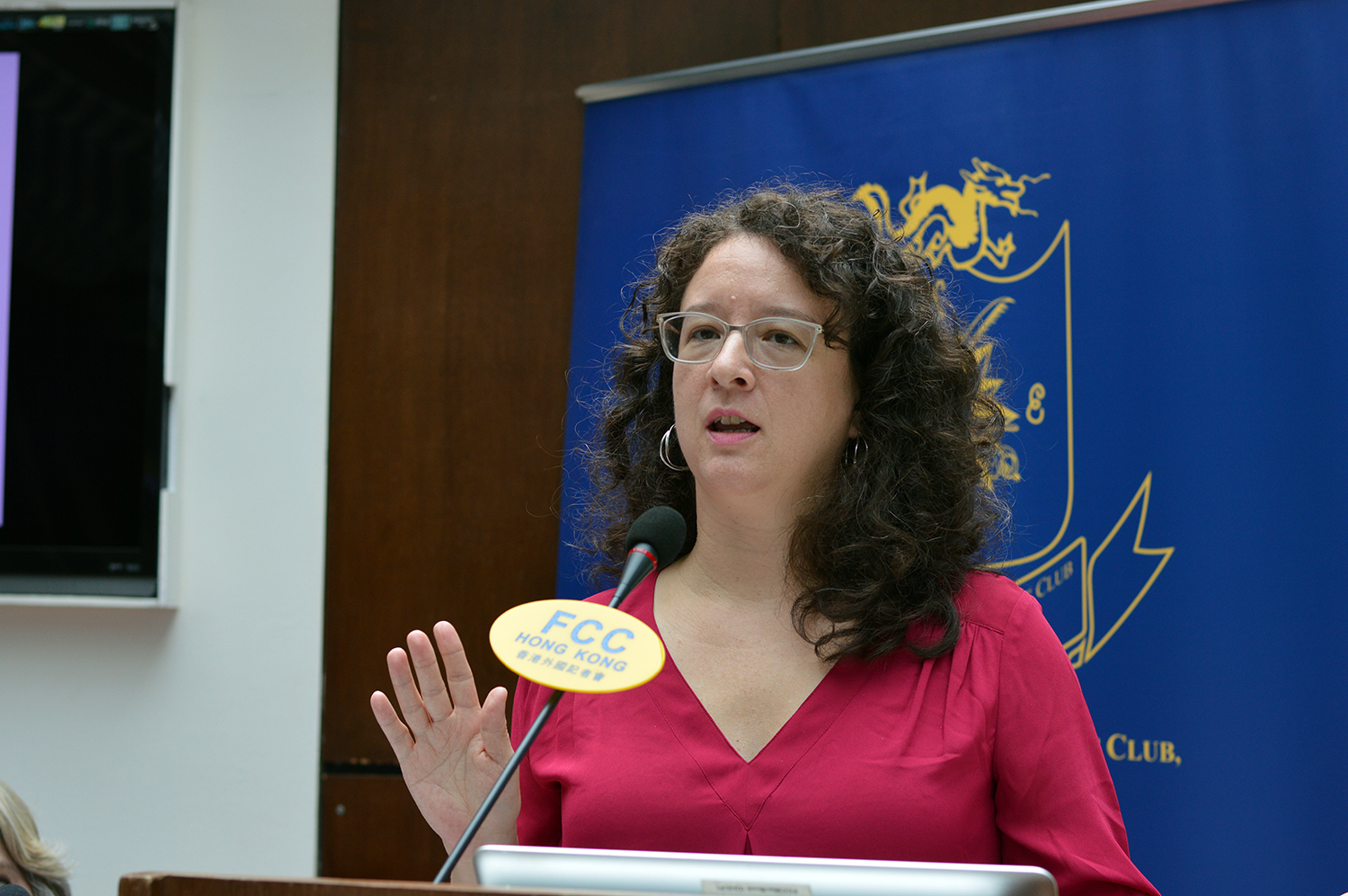
China’s efforts to quash feminism have in fact galvanised the movement as women across the country choose not to have children in the face of a government propaganda campaign to try to boost failing birth rates, according to a new book.

Author Leta Hong Fincher lifted the lid on China's feminist movement when she appeared at the FCC. Photo: Sarah Graham/FCC Author Leta Hong Fincher lifted the lid on China’s feminist movement when she appeared at the FCC. Photo: Sarah Graham/FCC

The male-dominated Communist Party sees the control of women and their bodies as key in preventing social unrest and maintaining stability across the country, said Leta Hong Fincher, author of Betraying Big Brother: The Feminist Awakening in China.

Since 2015, the Chinese government has been cracking down on feminism, beginning with the jailing of five feminist activists for 37 days. The Feminist Five became a global cause célèbre, not least because President Xi Jinping was about to co-host a UN conference in New York on women’s rights. Activists inundated social media with #FreetheFive messages and Hillary Clinton even spoke out on their behalf, tweeting: “Xi hosting a meeting on women’s rights at the UN while persecuting feminists? Shameless.”

However, despite apparently bowing to international pressure the clampdown goes on, most recently with the case of Yue Xin, the #MeToo activist and recent graduate of Peking University who has been missing – presumed detained – since trying to unionise workers two months ago.

“I would argue that the subjugation of women is absolutely key to Communist rule, exerting control over the entire population particularly in the last few decades with the advent of market reforms,” Hong Fincher said. “The government sees women primarily as reproductive tools and so they need to be confined to the home, to be baby breeders, raise children, take care of the elderly and tame the violent urges of men.”

Women in China are tired of the sexism they face in their daily lives, she said, and many wanted to pursue careers and further education rather than marry and have families. And more alarmingly for the government, they are willing to stand up for themselves.

Hong Fincher said the #MeToo movement was also spreading across China despite growing internet censorship and a lack of press freedom. Hong Fincher predicted that the crackdown on feminism would intensify as China’s economy slows and the workforce shrinks due to failing birth rates.

Watch the full talk here.

1MDB: The story behind the biggest corruption scandal in decades

The dogged investigation into the biggest and most far-reaching corruption scandal in recent history was revealed by the lone journalist who relentlessly pursued the story in the face of intimidation.

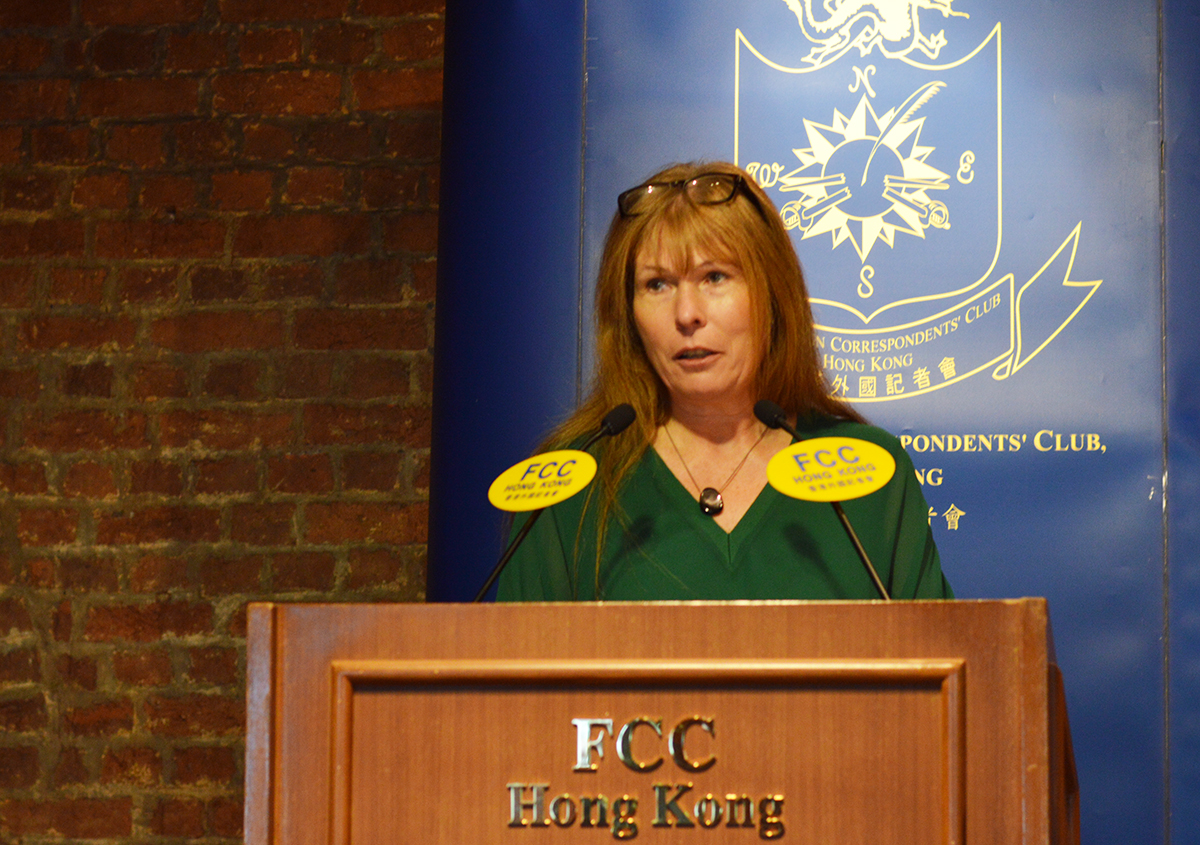
Clare Rewcastle Brown, the journalist whose probing of 1MDB corruption became a world scoop. Photo: Sarah Graham Clare Rewcastle Brown, the journalist whose probing of 1MDB corruption became a world scoop. Photo: Sarah Graham/FCC

Clare Rewcastle Brown worked for years on the scoop that exposed the 1Malaysia Development Berhad, a government-run strategic development fund designed to help improve the country’s infrastructure, as nothing more than a slush fund directly channelling millions of dollars into the accounts of President Najib Razak, tycoon Jho Low and other officials.

The exposé had repercussions around the world as it emerged that top banks and lawyers had facilitated the movement of money through their institutions, creaming massive profits for themselves.

Yet, despite figures like Low “operating in plain sight”, no news organisations were picking up the story, said Rewcastle Brown, author of the book The Sarawak Report: The Inside Story of the 1MDB Exposé.

“Why was that? Not just the cost factor of dedicating investigative journalists to long and expensive stories… the diplomatic and commercial issues – big outfits didn’t want to get kicked out of KL, as I was told on one occasion.

“With global news to cover and budgets depleted, newsrooms are simply forced to avoid taking on the sorts of targets who can afford lawyers who cost them money to defend their journalism. And for criminals in the business of ripping off the public, it simply is a business expense necessary to shut up comment and scrutiny.

“During the 1MDB exposes I watched it happen time and again as news organisations were silenced by big gun lawyers brought in to argue the toss by people who are now thankfully facing prosecution,” she said.

As she began to follow more leads in her investigation, Rewcastle Brown found herself at the centre of a fake news campaign on social media funded by the corrupt people she was examining, trying to smother the story she was working on.

Thanks to her determined coverage on her website, The Sarawak Report, the story was eventually picked up by international news organisations and became a global scandal that led to the fall of Malaysia’s political regime as well as officials and corrupt businessmen associated with abusing the fund.

And the repercussions of the story continue, with new arrests and charges making headlines every week.

Watch the full talk below.

We measure site performance with cookies to improve performance.