Members Area Logout

Jonathan Miller on why murderous President Rodrigo Duterte is still so popular in the Philippines

He killed more of his citizens in 18 months than died in the Northern Ireland conflict over 30 years – yet Filipinos continue to support rough-talking President Rodrigo Duterte, largely because they believe he is building a better Philippines.
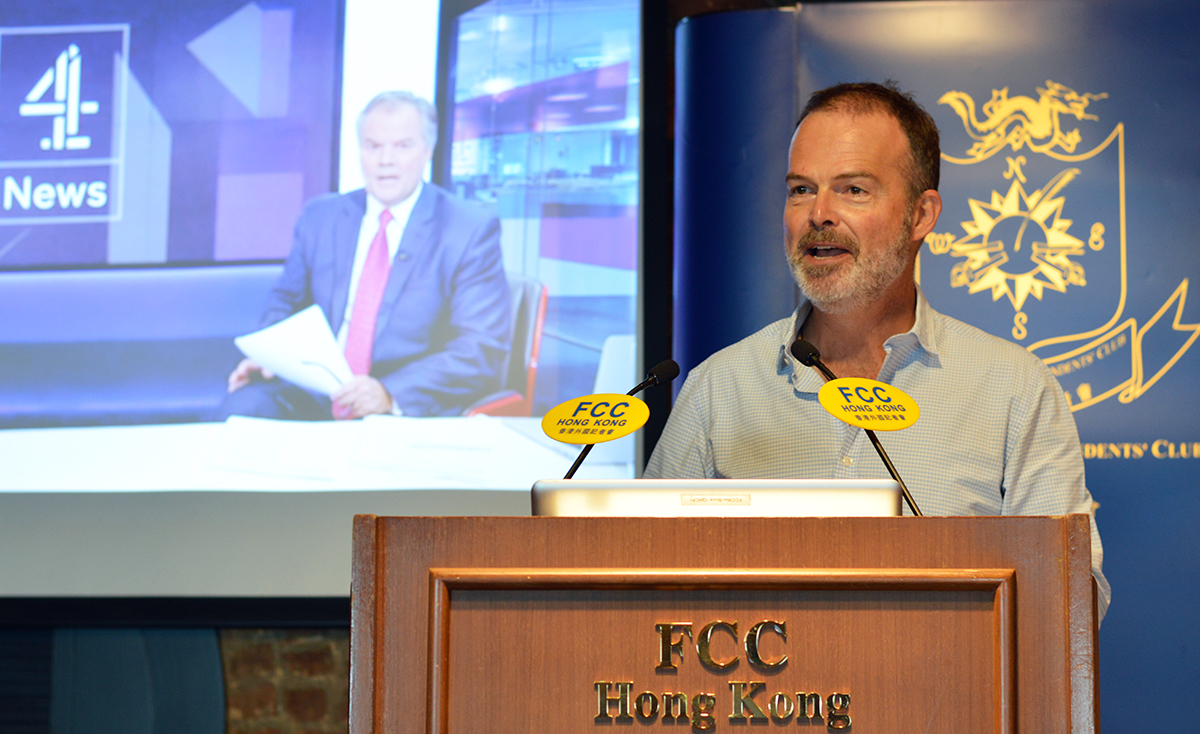
Jonathan Miller of Channel 4 News gave insights into President Rodrigo Duterte at the FCC. Photo: Sarah Graham/FCC Jonathan Miller of Channel 4 News gave insights into President Rodrigo Duterte at the FCC. Photo: Sarah Graham/FCC

Elected in a landslide victory in 2016, no-nonsense Duterte came from nowhere to sweep to victory, ousting the more liberal President Benigno Aquino III having led a presidential campaign based on stoking the fears of his people. Sound familiar?

“He (Duterte) is what Trump would be if there were no constraints on him at all,” said Channel 4 News Asia Correspondent, Jonathan Miller, at a November 5 club lunch where he talked about his latest book, a deeply researched biography of Rodrigo Duterte.

A man who uses disgusting language and has made numerous inappropriate comments about rape, Miller said Duterte’s worst crime is to normalise killing. Yet he remains popular among his people: “He does make Filipinos proud of their nation after years of this feckless, liberal leadership,” he added.

Miller, who holds the dubious honour of Duterte calling him a “son of a whore” – the same insult he threw at former US President Barack Obama, said Duterte encapsulates the very worst that an authoritarian populist leader can deliver.

Known as Duterte Harry during his reign as Mayor of Davao City after the Clint Eastwood character, he created death squads targeting drug dealers and other criminals that he said had “cleaned up the city “- a claim he continued to peddle as he made his bid for the presidency. However, the truth is that Davao City has the highest murder and rape rates in the country, according to the Philippine National Police (PNP).

This was the type of lie, said Miller, that convinced the majority of Filipinos to elect Duterte. Despite promising to protect the country’s poorest, it is those very people that are dying in his murderous war on drugs, Miller said. Although numbers are difficult to confirm, independent estimates put the number killed by the police at 20,000.

Another campaign promise to “reach the hands of my opponents” to bring an end to animosity resulted in his political opponent and fiercest critic, Leila de Lima, being arrested and jailed on trumped up drug charges. She has been designated a ‘prisoner of conscience’ by international human rights groups.

Duterte has also aligned himself with despots at home and abroad, declaring Russian president Vladimir Putin as his hero, and rehabilitating the Marcos family by allowing the reburial of ousted former dictator Ferdinand, and apparently paving the way for his only son, Ferdinand Jr., to become vice-president.

A 1998 psychiatric report on Duterte, compiled by a former president of the International Council of Psychologists at the request of his estranged wife while she petitioned for an annulment, concluded that Duterte was suffering from Antisocial Narcissistic Personality Disorder characterised by “gross indifference, insensitivity and self-centredness… a grandiose sense of self-entitlement… and a pervasive tendency to demean, humiliate others and violate their rights and feelings”, Miller said.

He went on to quote the report findings as detailed in his book, Duterte Harry: Fire and Fury in the Philippines: “For all his wrongdoings, he tends to rationalise and feel justified. Hence, he seldom feels a sense of guilt or remorse.”

Watch the full event here.

The challenges of being a writer called Geoff Dyer

When you’re a writer trying to find interesting topics to cover, it helps if there’s not another writer with exactly the same name.

Writer Geoff Dyer - no, not that one - talked about his work at the FCC. Photo: Sarah Graham/FCC Writer Geoff Dyer – no, not that one – talked about his work when he appeared at the FCC. Photo: Sarah Graham/FCC

This has proved both detrimental and beneficial over the years, says author Geoff Dyer – although whether the same can be said for the Financial Times reporter Geoff Dyer is a mystery.

“I feel I should articulate the disappointment that some of you may have felt when it turned out that it was this Geoff Dyer and not the other one,” he said, adding: “Our lives have really overlapped to an embarrassing degree.”

The Geoff Dyer who spoke at the November 1 club lunch (entitled Not a Reporter’: A Lunch with Writer Geoff Dyer) is the author of four novels and numerous non-fiction books – some of which have won literary awards – including travel books Jeff in Venice, Death in Varanasi, and Yoga for People Who Can’t be Bothered to Do It.

One of his other books, Another Great Day at Sea, detailed his short time spent on American aircraft carrier, the USS George H.W. Bush on active service in the Iranian Gulf – a job that was originally commissioned with the other Geoff Dyer in mind, and Dyer’s only attempt at ever being a reporter.

“For me it was, in some ways, the most boring book I’ve ever written, for a very simple reason. It was a bit like doing that most basic kind of journalism whereby you go and stay at a lovely please, you have the experience and then you write up your feelings about it. I had this amazing experience, it was absolutely incredible, so fascinating, then all I had to do really was transcribe the experience which is almost exactly what I’m not interested in doing as a writer. I’m not a reporter.

“It was only really quite late in the day that I started to enjoy it as I could put more and more of a stylistic spin on it,” Dyer said.

A man with a self-deprecating sense of humour, Dyer recalled amusing anecdotes from his career, including the time when he was commissioned by publishers to write a book on tennis but ended up turning in a book on the Russian filmmaker Andrei Tarkovsky.

Watch the full event here.

Trump-Kim summit achieved nothing when it comes to peace in the Korean peninsula, says journalist

When US President Donald Trump became the first American president to meet a leader of the Democratic People’s Republic of Korea (DPRK) in June 2018, it was hailed as a step forward in the peace process.

South Korean-born, American investigative journalist Suki Kim talked about her experiences in North Korea. Photo: Sarah Graham/FCC South Korean-born, American investigative journalist Suki Kim talked about her experiences in North Korea. Photo: Sarah Graham/FCC

Shortly before that meeting, North Korean leader Kim Jong-un met his southern counterpart, Moon Jae-in, in an historic summit that saw both sides briefly enter the other’s territory – the first time since the end of the Korean War in 1953. The two also agreed to work towards denuclearisation of the Korean peninsula in order to achieve lasting peace between the two nations.

Both summits, says South Korean-born, American investigative journalist Suki Kim, were a sideshow. At the October 31 club lunch Kim said that nothing had changed since the meetings, and that no steps toward denuclearisation had been made. She said rather than lay the blueprint for peace by disarmament, it was business as usual minus  the missile firing so often favoured by Kim Jong-un.

And she said for the North Korean dictator, the meetings had proven to be a great PR exercise that had in fact legitimised his regime.

“When you look at it over the past year, what has really changed?” Kim, author of The New York Times best-seller Without You, There Is No Us: Undercover Among the Sons of North Korean Elitesaid, adding that even the global conversation on human rights abuses in North Korea had quietened since Kim Jong-un increased his presence on the world stage.

Watch the full talk here.

Emmanuel Macron: Inside the French president’s first year

French President Emmanuel Macron has imposed a new style and rhythm in French politics, but now, in his second year as leader, he is facing tensions that could affect his standing on the global political stage.

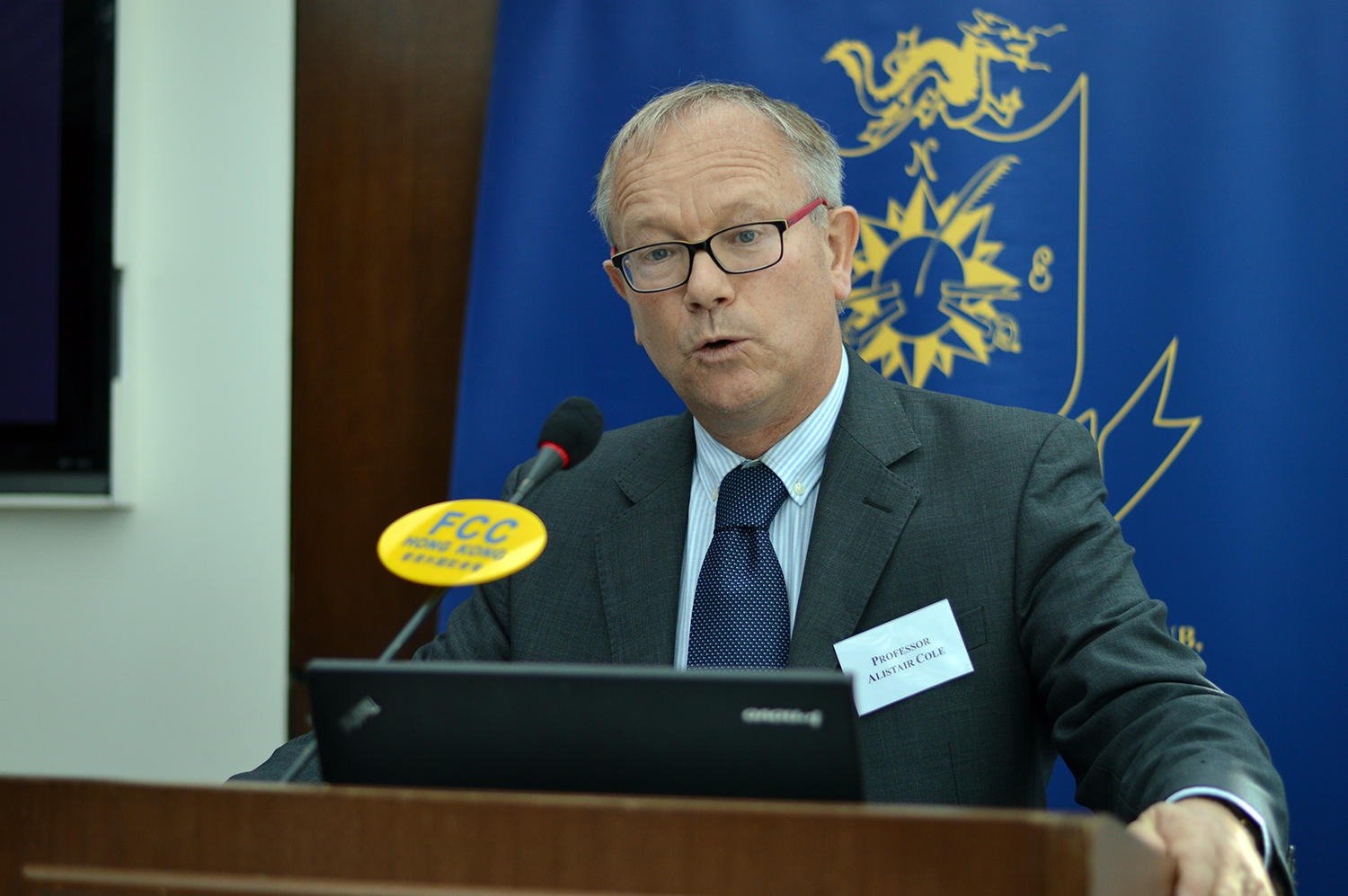
Professor Alistair Cole gave his take on French President Emmanuel Macron's first year. Photo: Sarah Graham/FCC Professor Alistair Cole gave his take on French President Emmanuel Macron’s first year. Photo: Sarah Graham/FCC

Young, dynamic, energetic, brilliant, ruthless – “and perhaps a little bit arrogant” – Macron has symbolised the end of the “old world” of French politics and turned the presidency into a powerful institution that had been losing its way under Jacques Chirac, Nicolas Sarkozy, and to some extent, François Hollande, said Professor Alistair Cole, whose book, Emmanuel Macron and the re-making of France – will be published in March 2019.

He is someone who likes to be in control, but that control has been slipping recently, particularly in light of the widely-reported Alexandre Benalla incident. Benalla, a security official for Macron, was filmed hitting and stamping on a man at a Paris demonstration while dressed as a police officer. He has since been charged with violence, interfering in the exercise of public office and the unauthorised public display of official insignia. Cole, Professor of Politics and Dean of Internationalisation at Sciences Po Lyon, noted that Macron had hesitated in his response to the scandal, adding that the negative effects of the Benalla affair highlighted the dangers of this secretive leadership style and practice.

In the early part of his presidency, Macron came across as a straight talker, said Cole at the October 30 club lunch, due to his numerous “petit phrases and one-liners”. The most recent to make headlines was his telling unemployed French people to cross the street and find a job in a restaurant. This rhetoric has contributed to his growing image as “a rather arrogant, distant and elitist individual”.

Macron also ushered in a raft of reforms in his first year as president which cast him as a new ‘fast President’, including abolishing wealth tax and introducing a flat tax – moves that bolstered his image as the ‘President of the Rich’.

Macron has introduced a robust form of political expression based on an explicit rejection of the left and right, Cole said, and has raised France’s standing in the world.

“From the very beginning Macron has tried to measure himself up to the great and the good in politics,” said Cole, adding that he met with Tump and Putin shortly after being elected, demonstrating a very active role in foreign policy.

However, Cole said Macron is in danger of falling into the trap of Hubris – having a sense of exaggerated pride, overwhelming self-confidence and a contempt for others.

“The positive qualities of leadership – charisma, charm, persuasiveness, decisiveness and self-confidence – can in their turn produce more negative qualities of impetuosity, a refusal to listen or take advice, impulsiveness, recklessness and inattention to derail,” Cole said.

Watch the full event here.

FCC Statement on Victor Mallet’s case

The refusal by Hong Kong authorities to renew the work visa of the Financial Times Asia News Editor Victor Mallet has generated grave concerns both in Hong Kong and around the world.

The FCC has asked the Hong Kong authorities to explain this decision, which sets a disturbing precedent and undermines Hong Kong’s reputation as a jurisdiction where the rule of law applies and where freedom of speech and freedom of association are guaranteed by law.

On October 9, the Chief Executive dismissed as “speculation” the link between the visa refusal for Mr Mallet and the lunch held at the FCC in August where he hosted Andy Chan Ho-tin, co-founder of the now banned pro-independence party HKNP. However, no alternative explanation has been offered. Throughout its long history the FCC has hosted politicians, businesspeople, professionals and artists of varied political persuasions, including senior members of the Hong Kong and Chinese governments and their critics.

The importance of this visa sanction goes far beyond the Foreign Correspondents’ Club and its short or long-term future in Hong Kong; it goes far beyond the FT Hong Kong bureau losing its Asia News editor, and beyond Victor Mallet himself.

This visa decision suggests that free speech may not be permitted in certain unspecified areas. The absence of an official reason or a clear explanation makes the decision appear arbitrary and lacking any basis in Hong Kong law and creates an impossible working environment for the media.

The rule of law is an essential feature of Hong Kong’s identity and its success as an international financial and commercial centre. The FCC therefore reiterates its call for the Hong Kong government to explain its action, or, in the absence of a reasonable explanation, to reverse its decision.

The FCC remains committed to playing an important civic role in facilitating debate and exchange of ideas on a wide range of topics that concern Hong Kong, Asia and the world. We will continue to welcome speakers with a range of views, including pro-establishment figures as well as Hong Kong government and Chinese officials.

12 October 2018

Sign the petition demanding an explanation: English and Chinese

香港當局拒絕續簽金融時報亞洲新聞編輯Victor Mallet的工作簽證,引起香港以及國際的極度關切。
香港外國記者會要求香港當局解釋這一決定,因這絕對是個令人不安的先例。香港法律保障言論自由和結社自由。這一決定破壞了香港作爲一個行使法治的司法管轄區的聲譽。
今年8月,Mallet先生在香港外國記者會主持香港民族黨創始人陳浩天的午餐會。10月9日,行政長官聲稱Mallet先生的工作簽證被拒續與此有關純屬「猜測」,但沒有交代其他原因。香港民族黨是在今年九月被禁止運作的。
香港外國記者會成立多年,經常接待不同政見的政治家、 商人、 專業人士和藝術家,包括香港及內地官員以及批評他們的人士。
這次簽證制裁的嚴重性並非只關乎本會以及其在香港短期或長期的未來,亦不止關乎英國金融時報香港分社失去其亞洲新聞編輯,以及Mallet先生本人。
該簽證決定表明言論自由並不適用於某些未指明的議題。由於沒有提供官方解釋或明確理由,這一決定令人覺得是武斷的,在香港法律缺乏任何依據,並令傳媒工作面對嚴峻考驗。
法治是香港身份及其作為一個成功國際金融和商業中心的基本要素。因此,本會再次呼籲香港政府解釋它的做法並推翻該決定。
香港外國記者會會繼續履行對社會的責任,致力推廣有關香港,亞洲和世界的廣泛議題的辯論以及意見交流。我們將繼續歡迎持不同意見的講者,包括親建制人士以及香港政府和中國官員。

Petition demanding explanation for Victor Mallet visa rejection handed to Hong Kong government

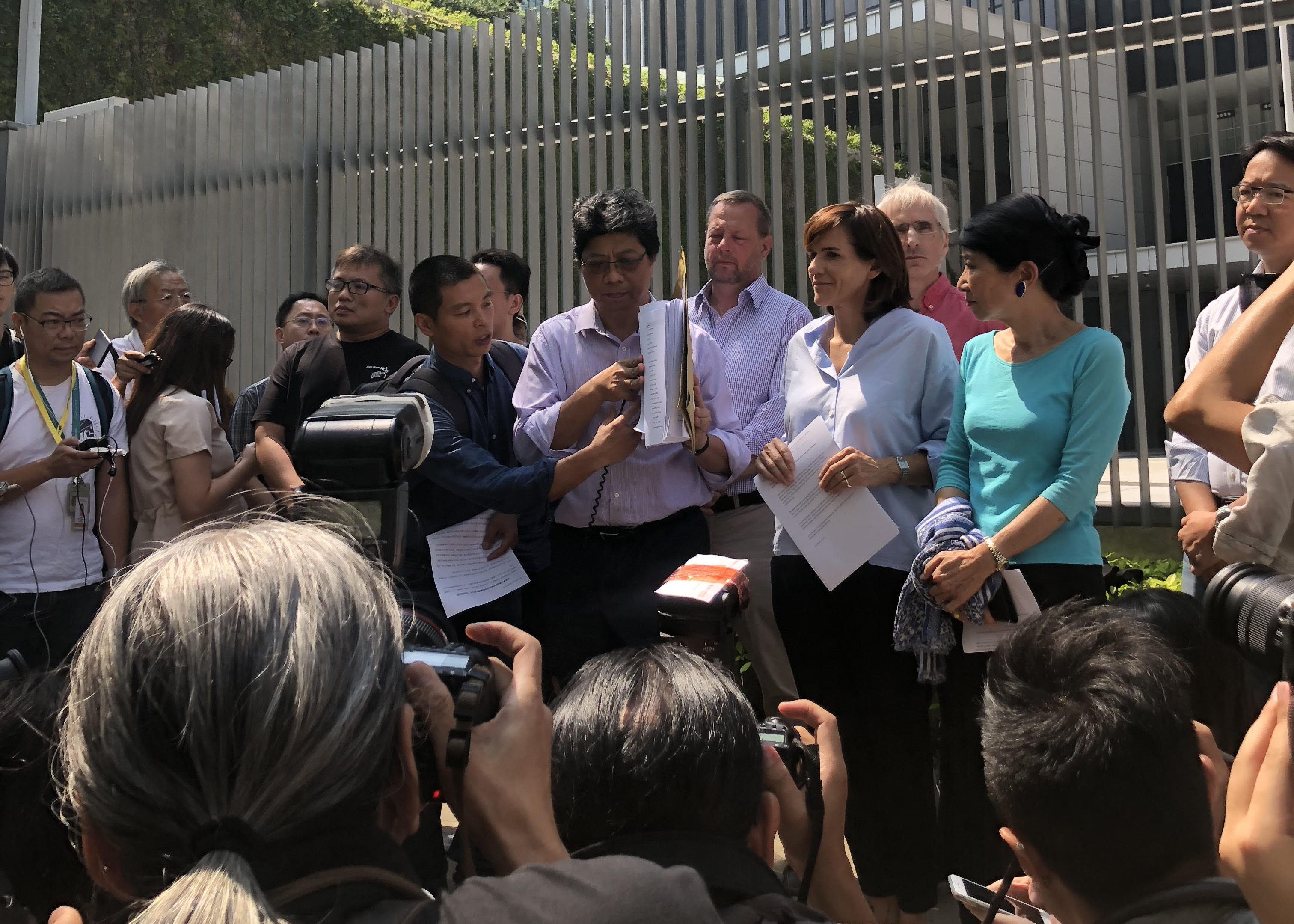
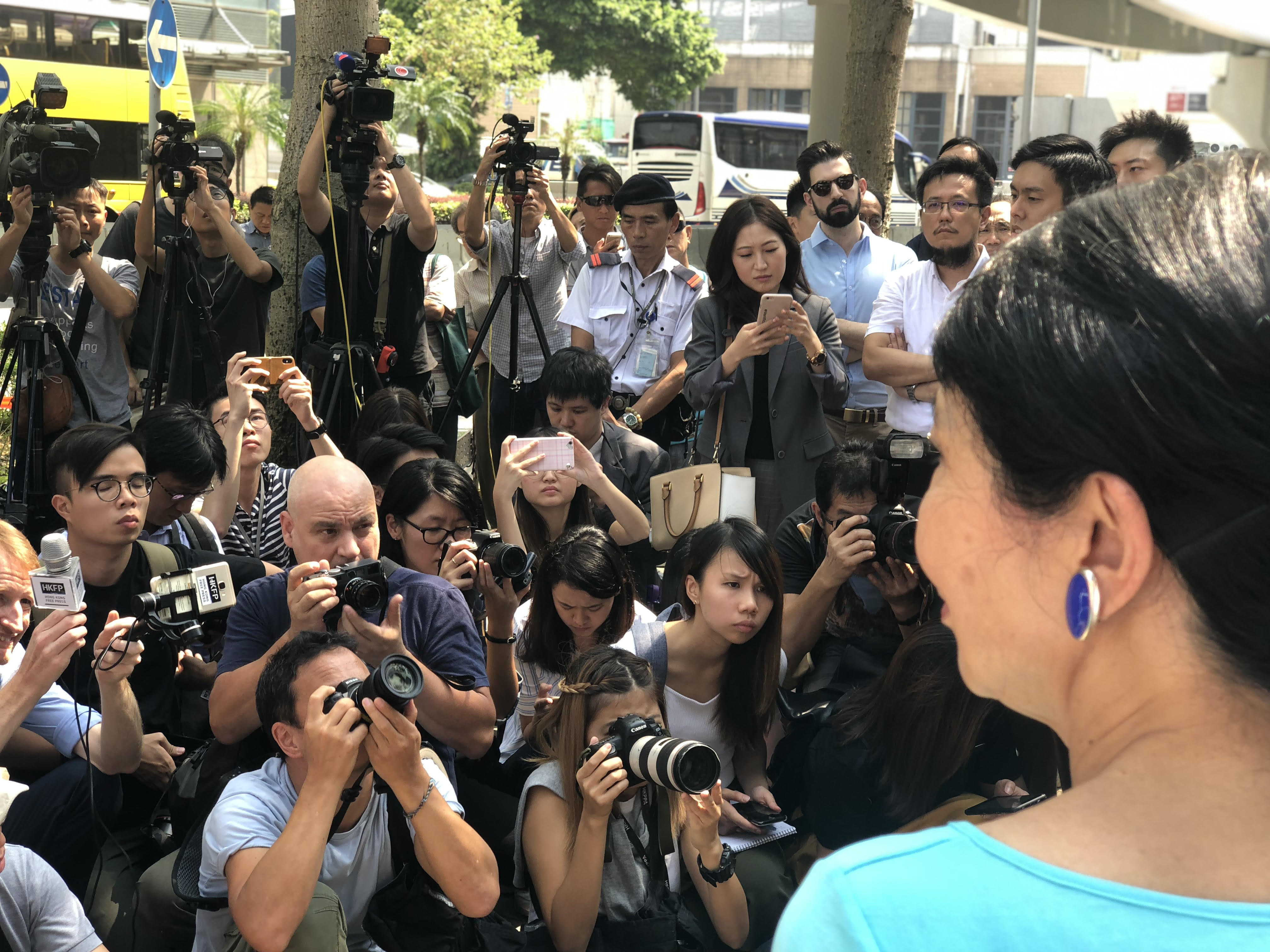
A petition of more than 15,000 signatures was handed to the Hong Kong government on Monday (October 8) by a coalition of media organisations demanding an explanation as to why foreign correspondent Victor Mallet’s visa renewal application was rejected.

L-R: Chris Yeung, HKJA chairman; Chris Slaughter, FCC board of governors; Florence De Changy, FCC President;, Geoff Crowthall, FCC Press Freedom Committee; and Legislative Council member Claudia Mo. Photo: Genavieve Alexander L-R: Chris Yeung, HKJA chairman; Chris Slaughter, FCC board of governors; Florence De Changy, FCC President;, Geoff Crothall, FCC Press Freedom Committee; and Legislative Council member Claudia Mo. Photo: Genavieve Alexander

The petition, launched on Saturday by the FCC, the Hong Kong Journalists Association (HKJA), Reporters Without Borders (RSF), the International Federation of Journalism (IFJ), Journalism Educators for Press Freedom, and the Independent Commentators Association, calls on Chief Executive Carrie Lam to give a full explanation of the unprecedented move.

Among those to go to the government’s Admiralty headquarters were HKJA chairman Chris Yeung and FCC President Florence De Changy.

Photo: Genavieve Alexander Photo: Genavieve Alexander

Mallet, the Financial Times’ Asia News Editor, has been a journalist for more than 30 years and has served as the FCC Vice President since 2017.

“As such, he hosted many FCC events on a wide range of topics, including one in August with Andy Chan Ho-tin, co-founder of the Hong Kong National Party which has since been banned. This event was strongly condemned by the Chinese authorities and the Hong Kong government though it was lawful and took place in the same professional manner as all other events hosted by the FCC. The same speaker had previously spoken to other forums,” the petition says.

See the Chinese version of the petition.

Petition created demanding authorities explain visa refusal for FCC VP Victor Mallet

A petition demanding an explanation from Hong Kong authorities as to why the work visa of FCC Vice President Victor Mallet was not renewed has been created by the Alliance of Hong Kong Media.

Mallet, Asia editor for the Financial Times, was refused the visa without explanation from Hong Kong immigration.

The Alliance of Hong Kong Media said: “Refusing a visa in this case, to a bona fide journalist working for one of the world’s leading newspapers, sets a terrible precedent for Hong Kong’s reputation as a place where the rule of law applies and where freedom of speech is protected by law.”

It added: “In the absence of any reasonable explanation, we call on the authorities to rescind their decision and allow Mr Mallet to continue to work for the Financial Times in Hong Kong and serve as FCC First Vice President.”

Sign the petition here.

FCC calls on authorities to explain visa decision on club Vice President Victor Mallet

The Foreign Correspondents’ Club of Hong Kong is deeply concerned over the decision to refuse a work visa renewal for Victor Mallet, the Financial Times’ Asia News Editor. The FCC is expecting a full explanation from the Hong Kong authorities for this extraordinary move, which is extremely rare, if not unprecedented.

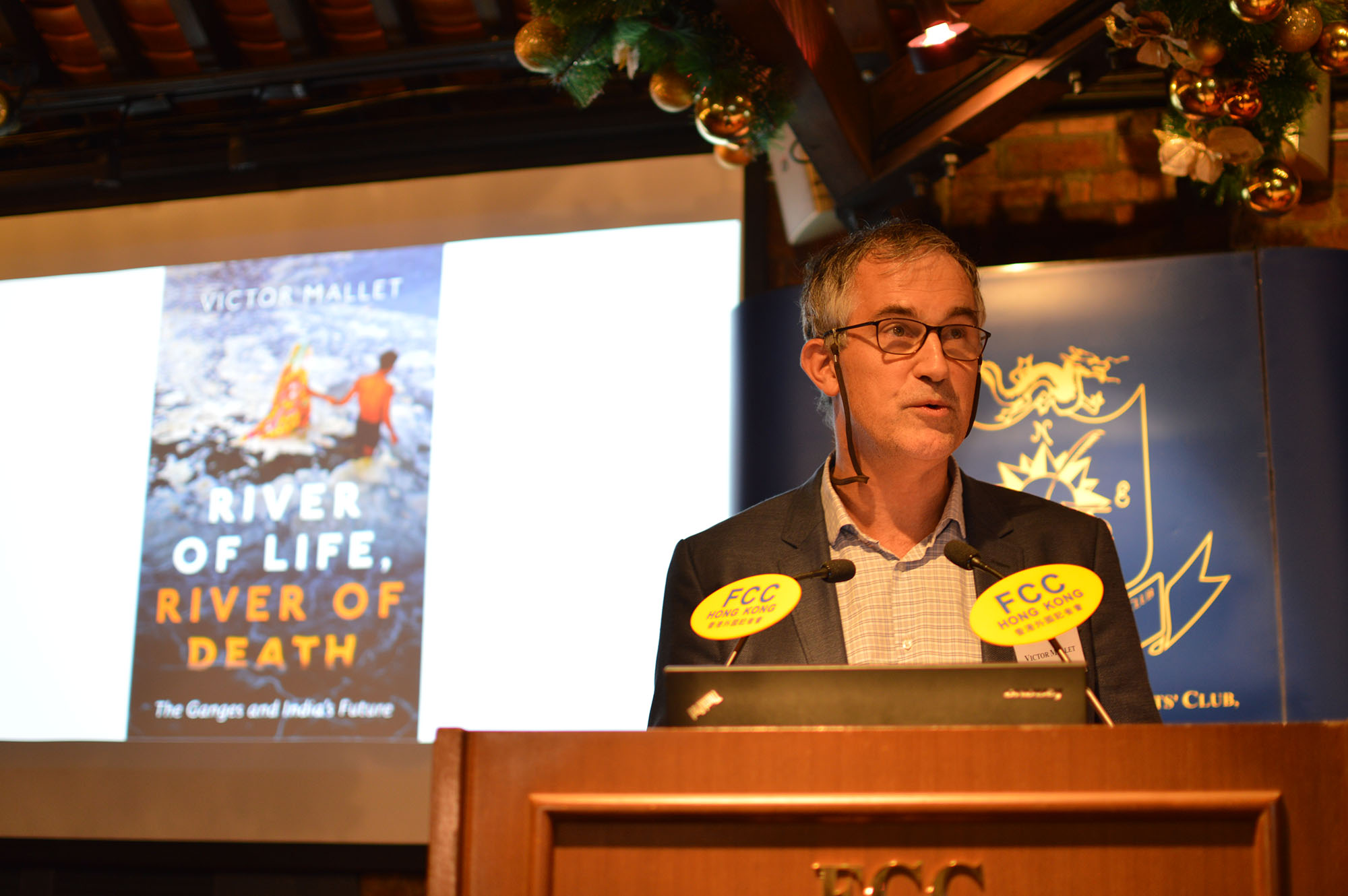
Journalist, author and FCC board member Victor Mallet discussed the threats facing India's Ganges river. Photo: Sarah Graham/FCC Journalist, author and FCC Vice President Victor Mallet. Photo: Sarah Graham/FCC

Mr Mallet has been a journalist for the Financial Times and Reuters for more than 30 years, and this is his second stint in Hong Kong. He first joined the FCC in 2003. He has served as the Club’s First Vice-President since 2017.

Hong Kong rightly prides itself on its reputation as a place where the rule of law applies and where freedom of speech is protected by law. The FCC has been proud to represent and champion that reputation since it moved here in 1949.

In the absence of any reasonable explanation, the FCC calls on the Hong Kong authorities to rescind their decision.

5 October, 2018

Malaysia’s new government will succeed in building a stable democracy, says minister

A shared experience of opposing a prime ministerial dictatorship will be the binding factor that will propel the new ruling coalition to make Malaysia a new democracy, says its deputy defence minister.

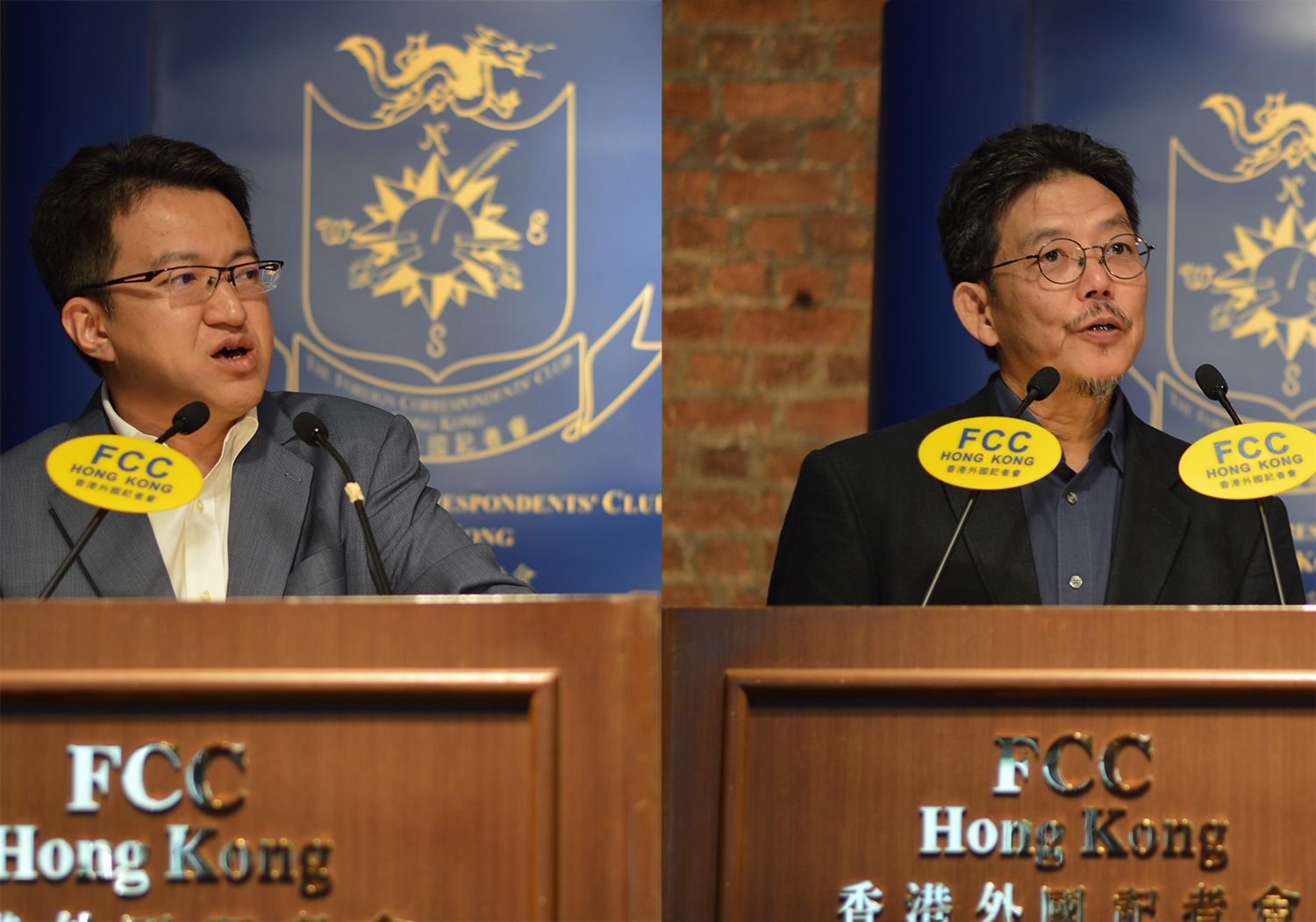
Left: Malaysia’s Deputy Defence Minister Liew Chin Tong, and right, Penang Institute’s Executive Director, Ooi Kee Beng, discussed the country's politics at the FCC. Photo: Sarah Graham/FCC Left: Malaysia’s Deputy Defence Minister Liew Chin Tong, and right, Penang Institute’s Executive Director, Ooi Kee Beng, discussed the country’s politics at the FCC. Photo: Sarah Graham/FCC

Speaking at the September 26 club lunch, Liew Chin Tong admitted that the new Pakatan Harapan government, which took power earlier this year, was elected largely because voters wanted to oust Prime Minister Najib Razak, whose Barisan Nasional party had been in power since the end of British colonial rule in 1957. Senior members of Razak’s government – himself included – had become embroiled in a huge corruption scandal, and the party had recently unveiled new taxes on goods and services to add to the country’s already high cost living. On September 19, Najib was arrested and charged over almost US$700 million alleged to have been transferred to his personal account.

Now Malaysia is led by a reformist alliance – a move 60 years in the making – and at its helm is 93-year-old Prime Minister Mahathir Mohamad, himself a former leader of Barisan Nasional who defected to the opposition in disgust at the emerging 1Malaysia Development Berhad (1MDB) corruption scandal. The party’s leader and probable next prime minister is Anwar Ibrahim, who until this year’s election was in prison on charges of abuse of power, but it set to take over from his former enemy Mahathir after the pair made a succession agreement.

Liew said that at all levels, the ruling coalition was trying to reform Malaysia’s institutions and build a strong economy, higher employment, a more cohesive country, and a stronger sense of national identity.

“In terms of national identity I see an opportunity in the context of 2020 (Vision 2020, the ideal introduced by Mahathir in 1991). 2020 talks about economy growth, advanced economy, but at the same time it also talks about ethnic relations. Instead of seeing Malaysians as Chinese or Indians, whether there’s an opportunity to see ourselves as a Malaysian Asian,” he said.

Liew conceded that, despite Mahathir’s past reputation as a racist with authoritarian attitudes, he would probably be remembered as the “democrat” when his successor takes over in two years.

Penang Institute’s Executive Director, Ooi Kee Beng, appearing alongside Liew at the event, added: “The greatest advantage I see with Mahathir is that he’s 93-years-old. How much damage can he do?”

Watch the video for more on the history of Malaysian politics

Why authoritarianism is not the only threat to academic freedom

Universities must remain autonomous if they are to enjoy unfettered freedom to teach and research, says a leading academic.

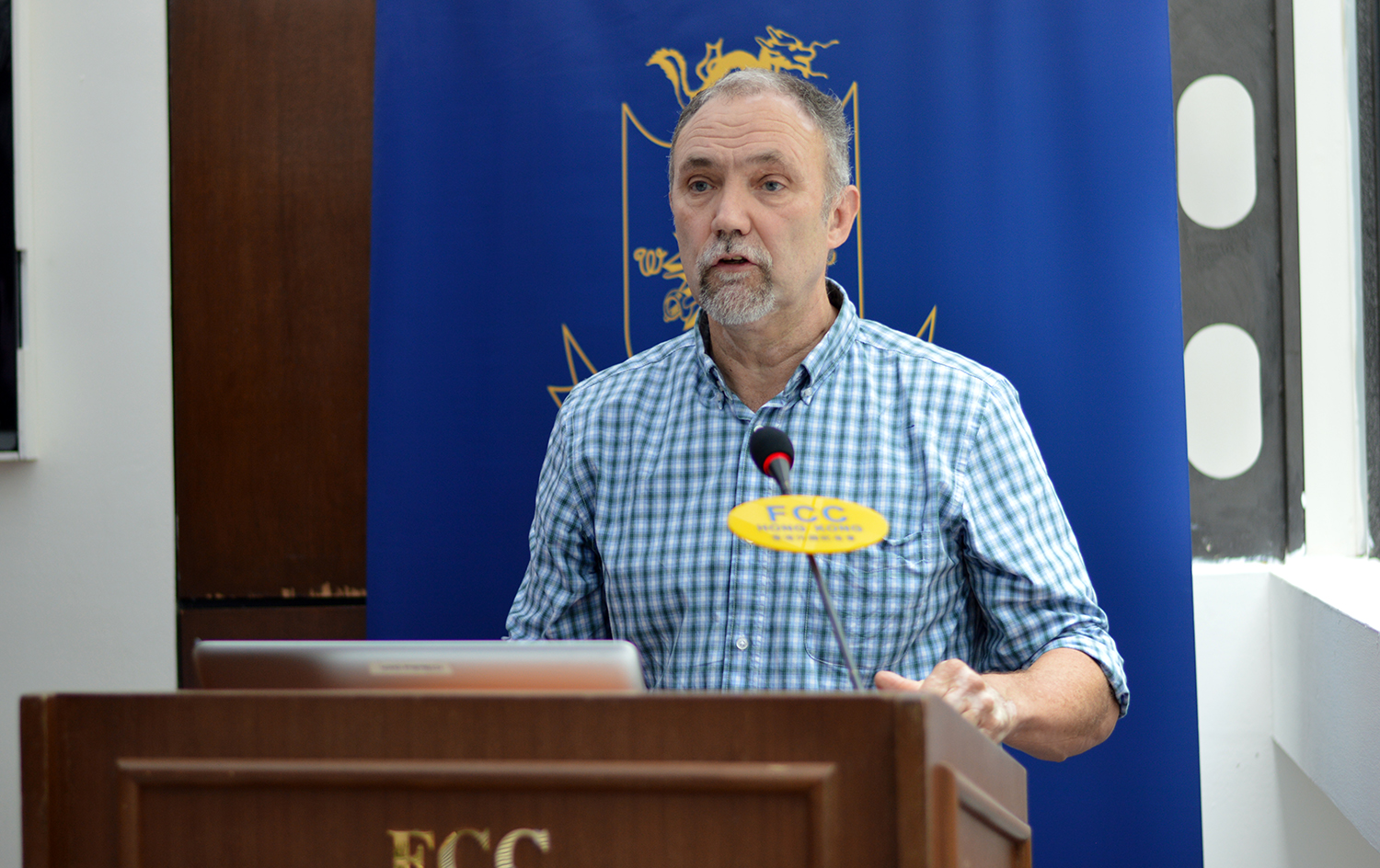
Dr Tim Pringle revealed the challenges facing academics around the world. Photo: Sarah Graham/FCC Dr Tim Pringle revealed the challenges facing academics around the world. Photo: Sarah Graham/FCC

Dr Tim Pringle was talking about threats to academic freedom, not just from authoritarian states as has recently made news headlines, but in seemingly liberal countries where democracy reigns.

“Authoritarianism isn’t limited in my view to authoritarian states,” he said, adding that there has been a return of authoritarian practices in notionally liberal and democratic states that he linked to the rise of populism.

Pringle gave examples of the United Kingdom, where 55% of academics believed their university autonomy had declined in recent years.

One of the problems was the definition of academic freedom, Pringle, said, which many had struggled to pin down: “In my sector, despite all the huffing and puffing, we’ve done a pretty poor job of defining this concept,” he said.

Indeed, a survey found that one third of UK academics felt they did not have a good working knowledge of what academic freedom meant.

Pringle explained that academic freedom is firstly the freedom to teach: course content, how you teach, who teaches, who shall be taught, methods of assessment. Secondly, it is the freedom to research: what you research, what methods do you use, what is the purpose of your research, what means did you use to disseminate it.

Pringle, a senior lecturer in Labour, Social Movements and Development at SOAS, University of London, identified several reasons why autonomy at learning institutions was being eroded.

“I would argue in my sector some of it comes through the application of market fundamentalism, short-term profits and accumulation, and commodification of public services including higher education. This had led to a rise in managerial dominance in institutions… which is required to impose these notions.“

He warned this was “creating a supermarket product to be picked by students.”

Obsession with university rankings – of academic freedom and autonomy as measurement criteria. so actually it’s in the interests of uni institutions protect their own autonomy.

Pringle, editor of The China Quarterly, which at the end of last year found itself at the centre of a censorship battle after 300 of its articles were withdrawn – but later reinstated – by Cambridge University Press, said carrying out research in China was “getting a lot harder”.

The presence of The Party at every level, from monitoring and rendering of university research to teaching activities, have been much more effective, he said. Appointments are vetted very carefully, he said, not just for a job interview but politically. Universities go through what they’ve said and researched in the past, Pringle said. He added this was not just limited to China – sometimes the limits to classroom discussion travelled further than China.

When asked about the impact to The China Quarterly following last year’s censorship row, Pringle said: “I imagine there will be some pushback – I would imagine there will be a drop in institutional subscriptions. There are indications that there might be already.” He added that in terms of mainland submissions, they’ve increased.

“I’m not saying I’m not worried,” he said, “It’s something I think about all the time.”

Watch the video.

We measure site performance with cookies to improve performance.