Members Area Logout

Trump’s foreign policy achievements ‘largely negative’, says political expert

President Donald Trump’s “radical degree of ignorance” in foreign affairs has left his administration with a “far less coherent” foreign policy, according to a political expert.
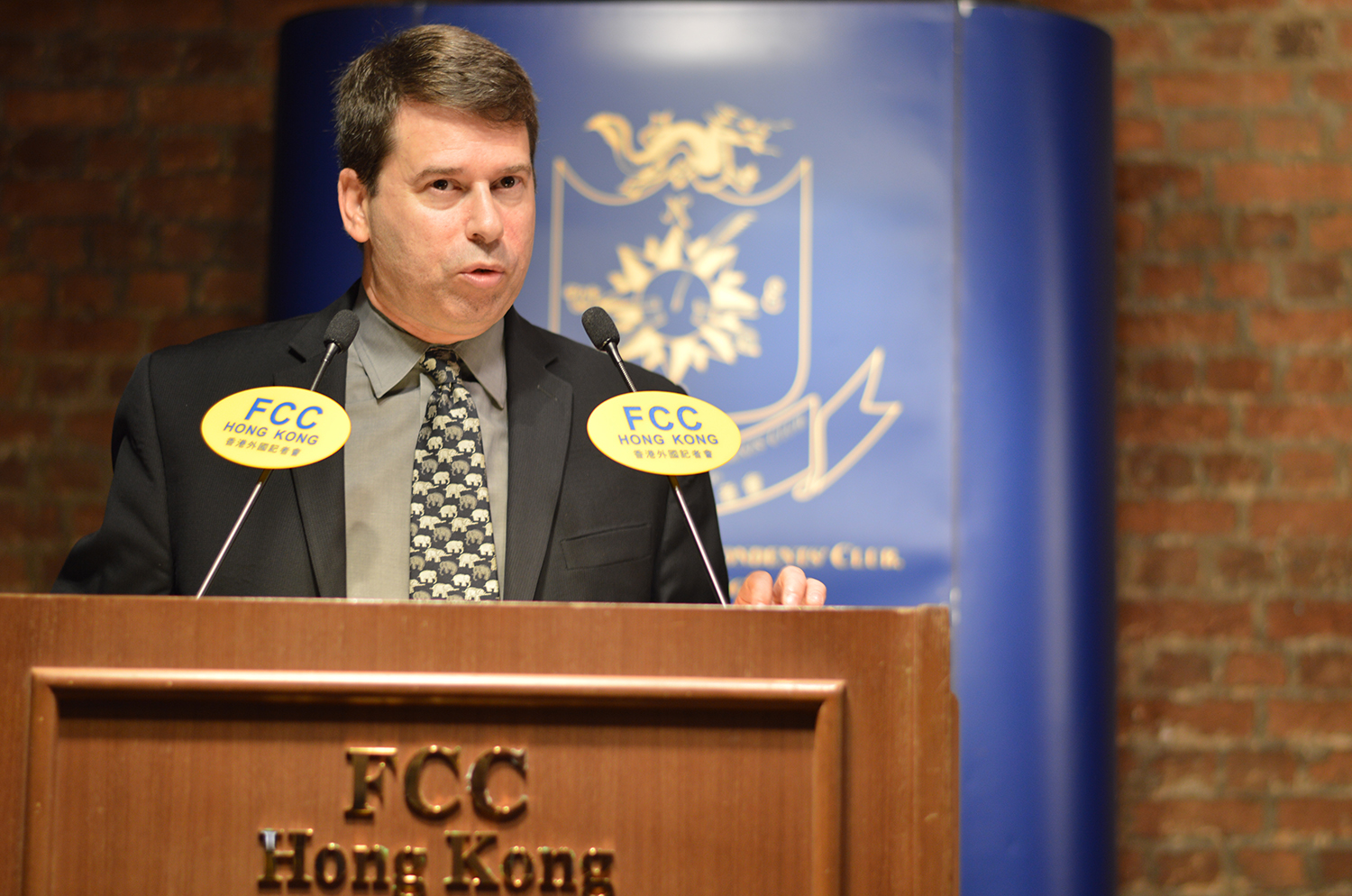
Daniel W. Drezner gave a frank view on Donald Trump's foreign policy achievements. Photo: Sarah Graham/FCC Daniel W. Drezner gave a frank view on Donald Trump’s foreign policy achievements. Photo: Sarah Graham/FCC

Pulling out of multilateral agreements, diplomacy via Twitter, and mistaken assumptions about how negotiation works indicate that Trump’s accomplishments in foreign policy are “mostly negative”, said Daniel W. Drezner, Professor of International Politics, a non-resident senior fellow at the Brookings Institution, and a contributing editor at the Washington Post.

“He’s been at best mixed in terms of what he’s been able to do. Donald Trump has been far better at destroying things than creating things,” he told the September 14 club breakfast.

“Trump has pulled out of the Transpacific Partnership, he’s pulled out of the Paris Climate Change accords, he’s pulled out of the Iran Nuclear Deal, he’s pulled out of, I believe, UNESCO and a few other U.N. agreements,” Drezner said. “I think Trump was legitimately surprised that the TTP deal went forward without the United States, I think he thought it was going to collapse after that.”

He added that there were very few people currently serving in Trump’s administration that actually knew about Asia.

Drezner conceded that, in some areas, Trump had enjoyed success, citing the historic summit with North Korean leader Kim Jong-un; and his “relatively warm relationship” with Chinese President Xi Jinping, and Russian leader Vladimir Putin.

But, Drezner said, Trump had failed to deliver on significant promises made during his 2016 presidential campaign, namely pulling out of NAFTA (the North American Free Trade Agreement) and NATO.

Referring to the president as the Toddler-in-Chief, Drezner pointed to Trump’s approach as part of his failure to achieve a better foreign policy track record.

“Trump came in with a fair number of mistaken assumptions about how negotiation works in world politics and he’s only now just beginning to realise this fact. I think he really believed that the U.S. had serious coercive bargaining leverage vis-à-vis our allies without realising that if you are as blunt as Trump is on these issues you are almost generating antibodies that guarantee that allies are not going to make concessions,” he said.

Trump was a “zero-sum thinker when it comes to issues like trade”, he said, and operated based on the acronym WWOND – what would Obama not do.

Drezner said Trump was so unpopular globally among its allies – largely democracies – that leaders are reluctant to make concessions when it came to trade “because if they do so it’ll badly undercut their standing domestically”.

He pointed out that Trump’s unpopularity was making liberal internationalism great again, and that Americans were moving in the opposite direction to what Trump wants.

Drezner predicted that many countries would be tempted to wait out the Trump presidency until the next elected U.S. leader, who would likely reverse much of Trump’s achievements.

“Even if you’re a rival like China and you’re looking at what the United States is doing, your best strategy right now is to do absolutely nothing. Why should you take active or hostile measures against the United States when the United States appears to be engaging in self-immolation? You just want to stand back and let the U.S. continue to self-destruct,” Drezner concluded.

Watch the video.
Independent journalism under threat in Myanmar, says U.N. report

REUTERS – Military and government officials in Myanmar have waged a “political campaign” to quash independent journalism, arresting and prosecuting many through the use of vague and overly broad laws, the U.N. human rights office said this week.

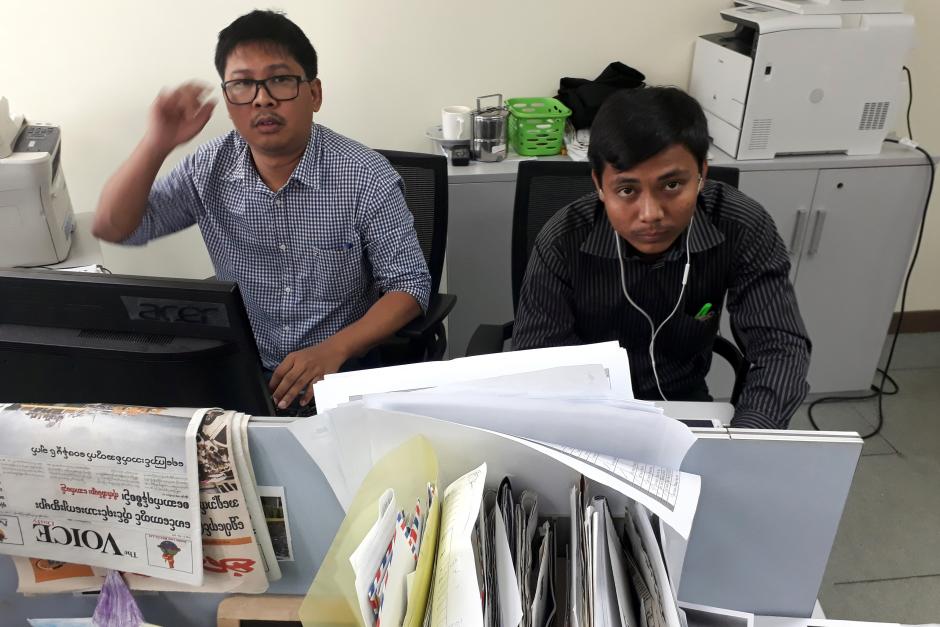
Reuters journalists Wa Lone (L) and Kyaw Soe Oo, who are based in Myanmar, pose for a picture at the Reuters office in Yangon, Myanmar December 11, 2017. Picture taken December 11, 2017. REUTERS/Antoni Slodkowski Reuters journalists Wa Lone (L) and Kyaw Soe Oo, who are based in Myanmar, pose for a picture at the Reuters office in Yangon, Myanmar December 11, 2017. Picture taken December 11, 2017. REUTERS/Antoni Slodkowski

Its report examined five cases, including that of Reuters journalists Wa Lone and Kyaw Soe Oo, found guilty last week of breaching the law on state secrets and sentenced to seven years in prison after investigating a massacre of 10 Rohingya men.

The U.N. report called it a “particularly outrageous and high-profile example of judicial harassment against the media in Myanmar” and illustrative of how arrests and prosecutions are conducted “in violation of the right to freedom of expression”.

Myanmar has said the court that convicted the two Reuters journalists under the colonial-era Official Secrets Act was independent and followed due process, after international calls for the pair to be released.

FULL REPORT: Myanmar: The Invisible Boundary

Ministry of Information spokesman Myint Kyaw declined to comment on the report when reached by Reuters on Tuesday. Yangon officials have rejected claims that press freedom was shrinking under the administration of Nobel laureate Aung San Suu Kui.

“The report refers to the ‘instrumentalisation of the law and of the courts by the Government and the military in what constitutes a political campaign against independent journalism’,” U.N. human rights spokeswoman Ravina Shamdasani told a Geneva briefing.

Laws on telecommunications, official secrets and import-export acts have been invoked against journalists, she said.

The group Reporters Without Borders estimates that around 20 journalists were prosecuted last year in Myanmar, Shamdasani said.

The U.N. report entitled “The Invisible Boundary – Criminal prosecutions of journalism in Myanmar”, which examined freedom of the press since Suu Kyi’s National League for Democracy (NLD) came to power in 2015, said it had become “impossible for journalists do to their job without fear or favour”.

SIGN THE PETITION CALLING FOR THE IMMEDIATE RELEASE OF WA LONE AND KYAW SOE OO

Revealed: How China’s millennials see themselves and the world

China’s millennials are immensely proud of what their country has achieved economically despite feeling ambivalent towards the ruling Communist Party, which they see as “deeply flawed” but “effective”, according to a new book on the country’s young.

Zak Dychtwald, founder of Young China Group, gave insights into China's millennials. Photo: Sarah Graham/FCC Zak Dychtwald, founder of Young China Group, gave insights into China’s millennials. Photo: Sarah Graham/FCC

With more than 400 million people born between the early 1980s and mid-1990s, China is home to the largest group of millennials in the world. And they’re experiencing “the greatest rags to riches story” in the modern world, said Zak Dychtwald, author of the new book Young China: How the Restless Generation Will Change Their Country and the World.

Furthermore, witnessing China’s rise in the shadow of old China and its defining characteristic of poverty provides the cornerstone of several distinct differences between them and their western counterparts. Firstly, the sheer scale of the demographic compared with the U.S. sets them apart – there are five times more millennials in China than the U.S. In fact, there are more than in North America, Europe and the Middle East collectively, Dychtwald said, founder of the Young China Group, a think-tank and consultancy aimed at producing data on the millennial mindset.

Secondly, they are “extraordinarily competitive and hard working”, the 28-year-old said, adding that when he was growing up in California “going to swim practice” or playing video games, his Chinese counterparts were studying.

Thirdly, Dychwald said in his September 12 talk, China’s millennials felt proud of their country’s growth. He said that, unlike the U.S., which “elected someone… on the idea of making America great again”, young Chinese believe that “they’re becoming great now”, he said.

“This young generation has grown up interacting with the outside world far more than their parents,” said Dychwald, adding that many felt “less than enamoured” with foreign democratic governments.

Added to this is the anxiety they feel at trying to balance the expectations of their families with their yearning to grab opportunities and build good careers, he said.

Watch the video here.

FCC Hong Kong statement on cancellation of FCCT talk on Myanmar war crimes report

The Foreign Correspondents’ Club, Hong Kong, supports the Foreign Correspondents’ Club of Thailand as it expresses disappointment over the move by Thai officials to cancel a discussion about a UN-backed report on alleged war crimes in neighbouring Myanmar.

The report last month by UN investigators detailed atrocities committed against the country’s Rohingya minority, among others, and called for military leaders to face international justice.

Stifling reporting in Thailand on the United Nations Independent International Fact-Finding Mission on Myanmar has a negative effect on press freedom across the region.

The following is a statement from the FCCT:

The professional membership of the Foreign Correspondents’ Club of Thailand is deeply disappointed by the decision of the Thai authorities to shut down a planned discussion about a hard-hitting report by the United Nations Independent International Fact-Finding Mission on Myanmar released last month. The report recommended prosecution of Myanmar’s military leaders for alleged genocide, crimes against humanity, and war crimes in ethnic minority areas.

In a letter ordering the FCCT to cancel the event, the Thai police stated that the discussion might be used by ‘third parties’ to cause unrest and endanger national security. There are no grounds whatever for such suspicions. The club has regularly held orderly and informative panel discussions on current affairs for over 62 years, and these have never led to any unrest or subversion. The FCCT has also hosted dozens of events on Myanmar over the decades, and these have generally contributed to a better understanding of the country and its relations with others in the region.

The professional membership of the FCCT believe the Thai authorities have overreacted. This incident has caused unnecessary further harm to the country’s already dented reputation for media freedom — Thailand was once one of the freest countries in Southeast Asia with a vibrant press.

For the record, this is the sixth programme cancelled at the FCCT since a coup was staged in 2014 and the country became subject to military rule.

10 September 2018

Pakistan and China BRI partnership is a win-win situation despite heavy debt burden, says consul general

The US$62 billion economic partnership struck between Pakistan and China through the Belt and Road Initiative (BRI) is a win-win situation that benefits all involved, according to the Consul General of Pakistan in Hong Kong.

Abdul Qadir Memon, Consul General of Pakistan in Hong Kong, discussed BRI's impact on the country. Photo: Sarah Graham/FCC Abdul Qadir Memon, Consul General of Pakistan in Hong Kong, discussed BRI’s impact on the country. Photo: Sarah Graham/FCC

And should Pakistan default on the debt burden placed on the country via Chinese grants, loans and private equity handed out to improve infrastructure, it would, in a worst case scenario, consider liquidating some of its assets to pay off the debt, said Abdul Qadir Memon at the September 3 club lunch discussing how the BRI will impact the country.

The partnership has seen the creation of the China-Pakistan Economic Corridor (CPEC), an economic zone connecting the western region of China with the sea port of Gwadar in the Baluchistan province of Pakistan. The ambitious project is considered one of the flagships of the BRI, a return on which is estimated to top US$100 billion in the next few years.

In outlining the types of projects taking place within the CPEC – energy, transportation, road and rail building – Memon responded to some of the criticisms levelled at China since it announced the BRI in 2013. There are concerns in some countries that such an ambitious infrastructure plan is in fact a move towards global dominance and influence.

Memon said it was his belief that since Donald Trump became president of the United States in 2016, China has moved to fill the vacuum left by the U.S. and its “America First” policy, adding that “China’s pursuit of a larger role in the world coincided with America’s pursuit of a smaller world”.

But he said that he saw “no harm” in the economic relationship with China, adding: “As long as we do not see any desire of the Chinese leadership to meddle in our domestic affairs.”

When asked further about Pakistan’s sometimes tumultuous diplomatic relationship with America, Memon acknowledged that, as it was Pakistan’s biggest export market, it was important keep up diplomacy.

However, he said recent reports of a US$300 million cut to Pakistan’s aid by the U.S. were inaccurate: “It’s not aid to Pakistan. It’s the money the U.S. owes to Pakistan.” Memon added the money was owed for providing coalition logistics for air and ground support during America’s war on terror.

“We believe the United States wants to blame Pakistan for its defeat in Afghanistan… And we believe the United States is behaving like a bully who goes out, gets beaten in the street, comes home and beats his children,” he said.

Watch the full club lunch below.

FCC Hong Kong deplores shocking verdict against Reuters journalists in Myanmar

The Foreign Correspondents’ Club of Hong Kong deplores the guilty verdict against two Myanmar journalists with the Reuters news agency for conducting normal reporting activities, a decision that will have a chilling effect on the country’s embattled media.

Reuters journalists Wa Lone (L) and Kyaw Soe Oo, who are based in Myanmar, pose for a picture at the Reuters office in Yangon, Myanmar December 11, 2017. Picture taken December 11, 2017. REUTERS/Antoni Slodkowski Reuters journalists Wa Lone (L) and Kyaw Soe Oo, who are based in Myanmar, pose for a picture at the Reuters office in Yangon, Myanmar December 11, 2017. Picture taken December 11, 2017. REUTERS/Antoni Slodkowski

A Myanmar court sentenced Wa Lone and Kyaw Soe Oo to seven years in jail on Monday for breaching the colonial-era Official Secrets Act, a shockingly excessive punishment even by Myanmar’s long history of press prosecutions.

The verdict has wide-ranging ramifications for journalists in Myanmar at a time when press freedom is under attack across Asia. Reporters in Myanmar continue to face prosecution for public-interest reporting as well as pressure to self-censor, even under the elected civilian-led government of Aung San Suu Kyi, a Nobel laureate who had been the country’s most famous political prisoner for many years.

Instead, her government has allowed this case to move forward, effectively sending a message that it doesn’t support free speech in Myanmar. We call on Aung San Suu Kyi and her administration to do everything it can to immediately release Wa Lone and Kyaw Soe Oo, express its support for press freedom and ensure that journalists are able to work without threat of retaliation.

Wa Lone and Kyaw Soe Oo had been investigating the killing of 10 Rohingya Muslim men who were buried in a mass grave at Inn Din village — an atrocity Myanmar’s own military has since admitted took place.

The two reporters, both fathers of young children, were called to a meeting with police who handed them documents. They were arrested almost immediately after leaving the meeting and prosecuted for receiving those documents in what even one of the police officers present testified in court was an operation to entrap the pair.

Both pleaded not guilty to the charges, which carry a maximum penalty of 14 years in prison. Over the past six months, the FCC Hong Kong and other press organisations have repeatedly called for the charges to be dropped and for the two men to return home to their families. They were only doing their jobs, and had not committed any crime.

Everyone who believes in press freedom will be appalled by the verdict. Now is the time for citizens across the world to speak up for free speech, in Myanmar and elsewhere around the globe.

Make a difference today: FCC Hong Kong needs your help, please sign this petition – The Myanmar Government: Release Myanmar Journalists Wa Lone and Kyaw Soe Oo

#FreeWaLoneKyawSoeOo

Why autocracy with democratic characteristics is key to China’s success

Autocracy alone is not the reason for China’s economic success, according to a political scientist who warned that President Xi Jinping is moving away from the “real” model that helped the country’s massive growth.

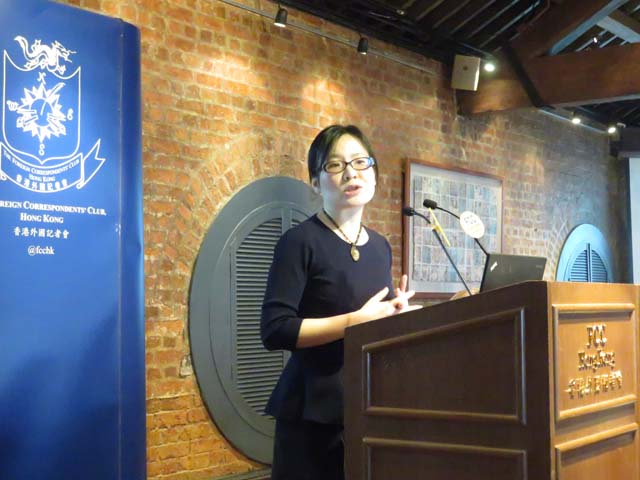
Professor Yuen Yuen Ang talked about the “real” China model. Photo: FCC Professor Yuen Yuen Ang talked about the “real” China model. Photo: FCC

The “real” China model, according to Professor Yuen Yuen Ang, is autocracy with democratic characteristics, introduced by former leader Deng Xiaoping when he implemented bureaucratic limits on power, competition and accountability. This enabled China to lift millions of people out of poverty as it became more adaptive and flexible, she said.

There are many different opinions when it comes to defining the China model, Prof Ang, Associate Professor of Political Science at the University of Michigan, said. Western mainstream media tends to label it a combination of autocracy –  or single party rule – with state ownership and control over the economy. Chinese commentator Zhang Weiwei described the China model as a “super-large population, super-size territory, super-long history, super-rich culture”. Daniel Bell, theorist, believed it to be a meritocracy.

And despite announcing at the 19th Party Congress in 2017 that the world could learn from “the Chinese solution for tackling the problems facing mankind”, the President Xi himself failed to elaborate on what that solution was.

Prof Ang, who has presented her work at academic, global development, and corporate venues around the world, including the World Bank, United Nations, U.K Department of International Development, and the OECD Development Center, believes the political foundation of China’s economic success lies in what she calls “directed improvisation”, the merging of top-down direction and bottom-up improvisations within China’s one-party regime. This creates the right conditions for local officials and governments to implement innovative development, she said.

To that end, Beijing becomes the director, rather than the dictator, she said. While some direction from Central Government was vague and broad – what Prof Ang referred to as “grey” command that is deliberately unclear, therefore permitting experimentation – other commands were clear in either permitting or forbidding an action.

An example, she said, could be seen in data that examines more than 4,000 policies issued by the State Council over the years. Of the “grey” policies, e-commerce and Artificial Intelligence showed the highest amount of ambiguity because, she said, these are new areas in which the government is happy to allow more experimentation. The sector showing the lowest ambiguity when it came to commands from Central Government was Special Economic Zones, “because they’re for foreigners, so when dealing with foreigners it’s important to make the rules clear”, Prof Ang said.

And while she acknowledged that some Western democracies were growing concerned that emerging countries were finding the autocratic element of the China model more appealing than liberal democracy, she added that there were three basic lessons for developing countries to learn from China: Learning does not equal copying; learn from both China’s success and failures; adapt China’s “directed improvisation” to democratic contexts.

She added that she was hopeful that the Chinese version of her book, How China Escaped the Poverty Trap, would help the Chinese public to understand that it was not autocracy that lifted them out of poverty.

“I remain optimistic that there’s still room for debating what are the factors that made China great,” she added.

Watch Yuen Yuen Ang’s talk here.

FCC Hong Kong supports FCCC statement on Buzzfeed China bureau chief’s visa denial

The Foreign Correspondents’ Club, Hong Kong, supports the Foreign Correspondents’ Club of China as it expresses concern over the denial of a new long-term visa for Buzzfeed News China bureau chief Megha Rajagopalan.

The following is a statement from the FCCC:

The FCCC has learned that Buzzfeed News China bureau chief Megha Rajagopalan was denied a new long-term visa by the Chinese authorities and, as a result, is being forced to take up a new assignment.

Ms. Rajagopalan, a former FCCC board member who has conducted herself according to the highest journalistic standards while in China, says China’s Ministry of Foreign Affairs declined to give a clear and transparent reason for denying her a visa. We find this extremely regrettable and unacceptable for a government that repeatedly insists it welcomes foreign media to cover the country.

We are attempting to get clarity from the Foreign Ministry on its reasoning for effectively ejecting a credentialed foreign journalist from China and will relay any information they provide. In the meantime, we wish Megha the best of luck in her new role.

FCCC Media Freedoms Committee

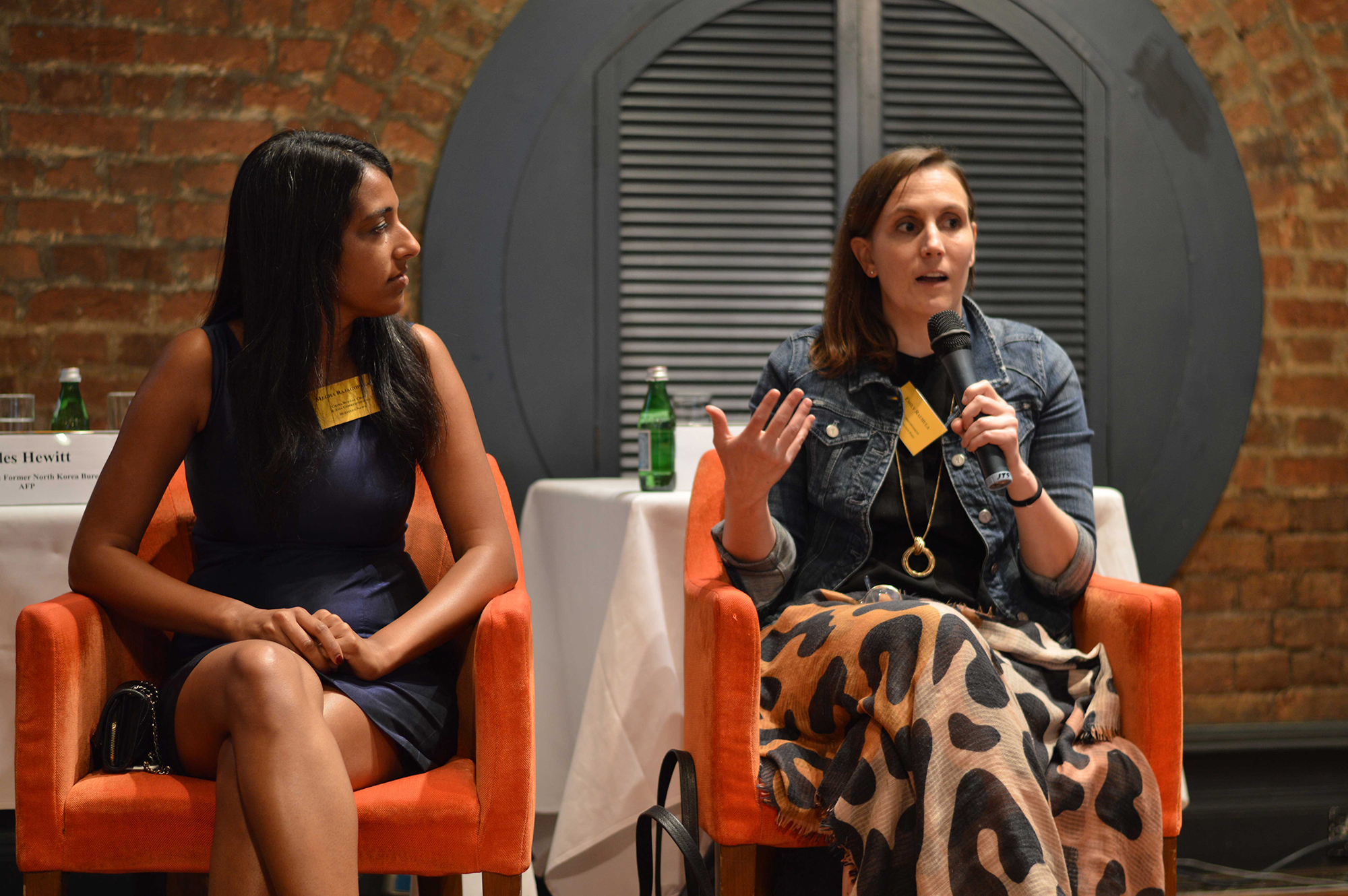
Megha Rajagopalan, China Bureau Chief & Asia Correspondent, Buzzfeed News; and Emily Rauhala, China Correspondent, The Washington Post Left: Megha Rajagopalan, China Bureau Chief & Asia Correspondent, Buzzfeed News; appearing at the 3rd FCC Journalism Conference with (right) Emily Rauhala, China Correspondent, The Washington Post. Photo: Sarah Graham/FCC

Visionary Bangladeshi photographer marks one week in custody

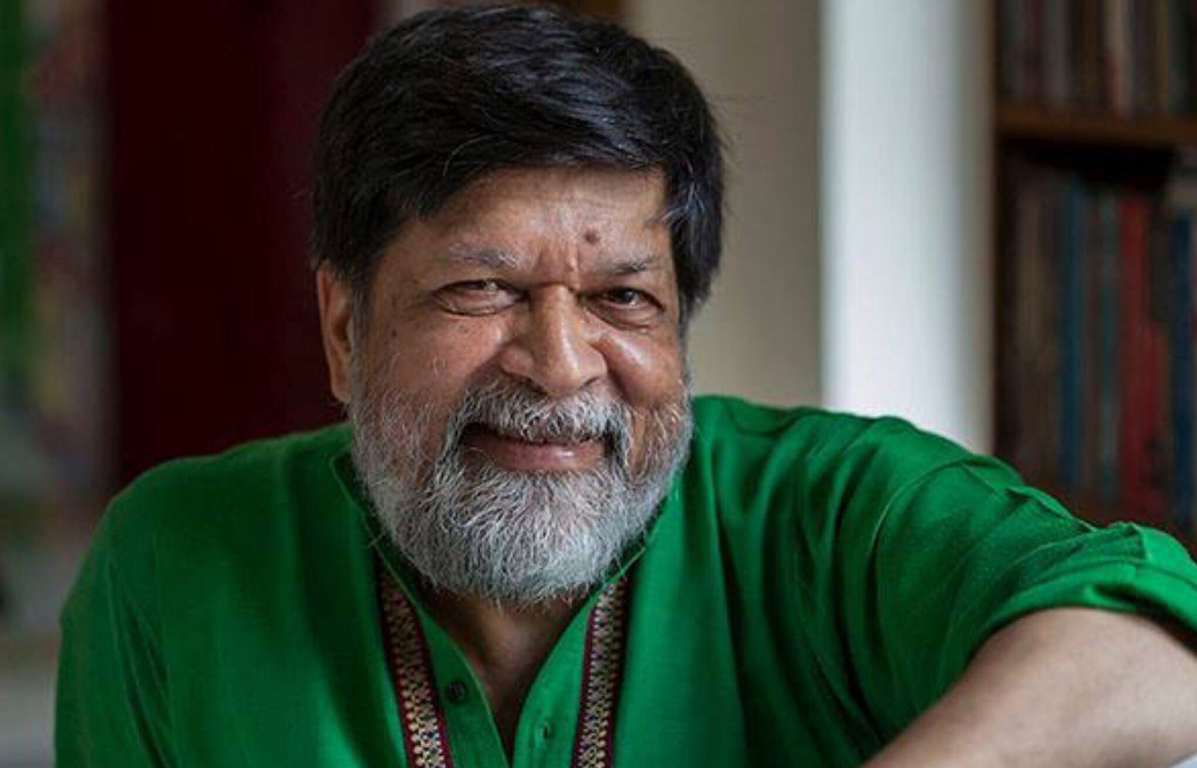
Renowned Bangladeshi photographer and commentator Shahidul Alam has now spent a week in detention, after speaking out on the political situation in Bangladesh and mass protests by students demanding improvements to road safety and an end to corruption.

Shahidul Alam Shahidul Alam

The award-winning photographer, 63, told reporters he had been beaten so badly in police custody that his tunic needed washing to get the blood out. He was taken to court barefoot, limping and in need of assistance to walk.

A judge ordered him taken to hospital but he was soon returned to custody.

The Foreign Correspondents’ Club of Hong Kong deplores the actions of Bangladesh authorities and appeals for his immediate release. Shahidul’s detention is a severe blow for freedom of expression and press freedom in Bangladesh, where several other journalists have also been beaten while covering the student protests, including a photographer for The Associated Press who was briefly hospitalised.

With assaults on journalists in Bangladesh worsening in recent times, the FCC Hong Kong expresses its deep concern and calls on the authorities to ensure that all media are able to do their jobs without fear for their safety.

Shahidul is known not only for his own fine photographic work but also for his bold vision for photojournalism in South Asia which earned him international standing and immense respect. He launched the Pathshala South Asian Media Institute, a photography school in Dhaka that spawned hundreds of photographers. And he is the founder of Chobi Mela, the ambitious biannual international photography festival in Dhaka, and has judged many photography competitions around the world.

His arrest has led to an outpouring of support from his friends and colleagues across the world which have highlighted his important work, his social activism and his empathy for others.

Here are some of those tributes and appeals which have lit up social media with the hashtag #freeshahidulalam.

FCC bids farewell to Gilbert Cheng – pictures and video

Hundreds gathered at the FCC on Saturday night to wish good luck to General Manager Gilbert Cheng as he retires after 46 years at the club.

Host Chris Slaughter read messages from absent members past and present in between inviting attendees to take to the stage on the first floor to share their own memories of Gilbert.

At the end of the evening Gilbert himself gave a speech in which he insisted this wasn’t goodbye, adding that he’d now be able to drink at the club without being on duty. Following his speech, Gilbert was presented with a sparkling cake to celebrate his birthday the following day.

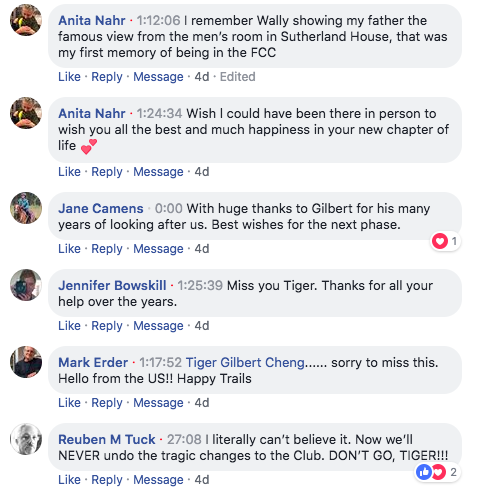
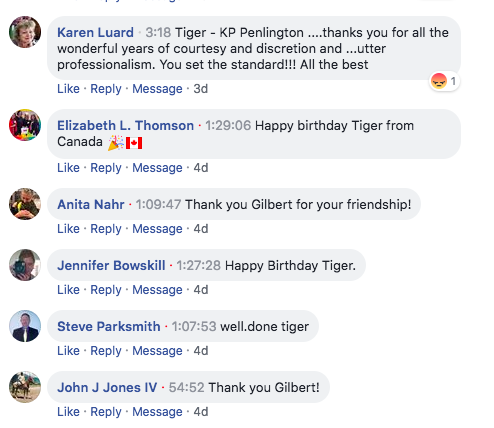
The event was broadcast live on Facebook, giving overseas former members an opportunity to wish Gilbert well in his retirement. You can read those comments below the Facebook video.

See our gallery of photos here, and watch the video of the night’s speeches below.

[sliderpro id=”5″]

We measure site performance with cookies to improve performance.