Members Area Logout

Fake news, authoritarian regimes, and women in journalism: the FCC’s 3rd Journalism Conference leaves no stone unturned

The challenges of reporting Asia in the shadow of creeping authoritarianism and under a tidal wave of fake news was the recurring topic of discussion at the FCC’s 3rd Journalism Conference.
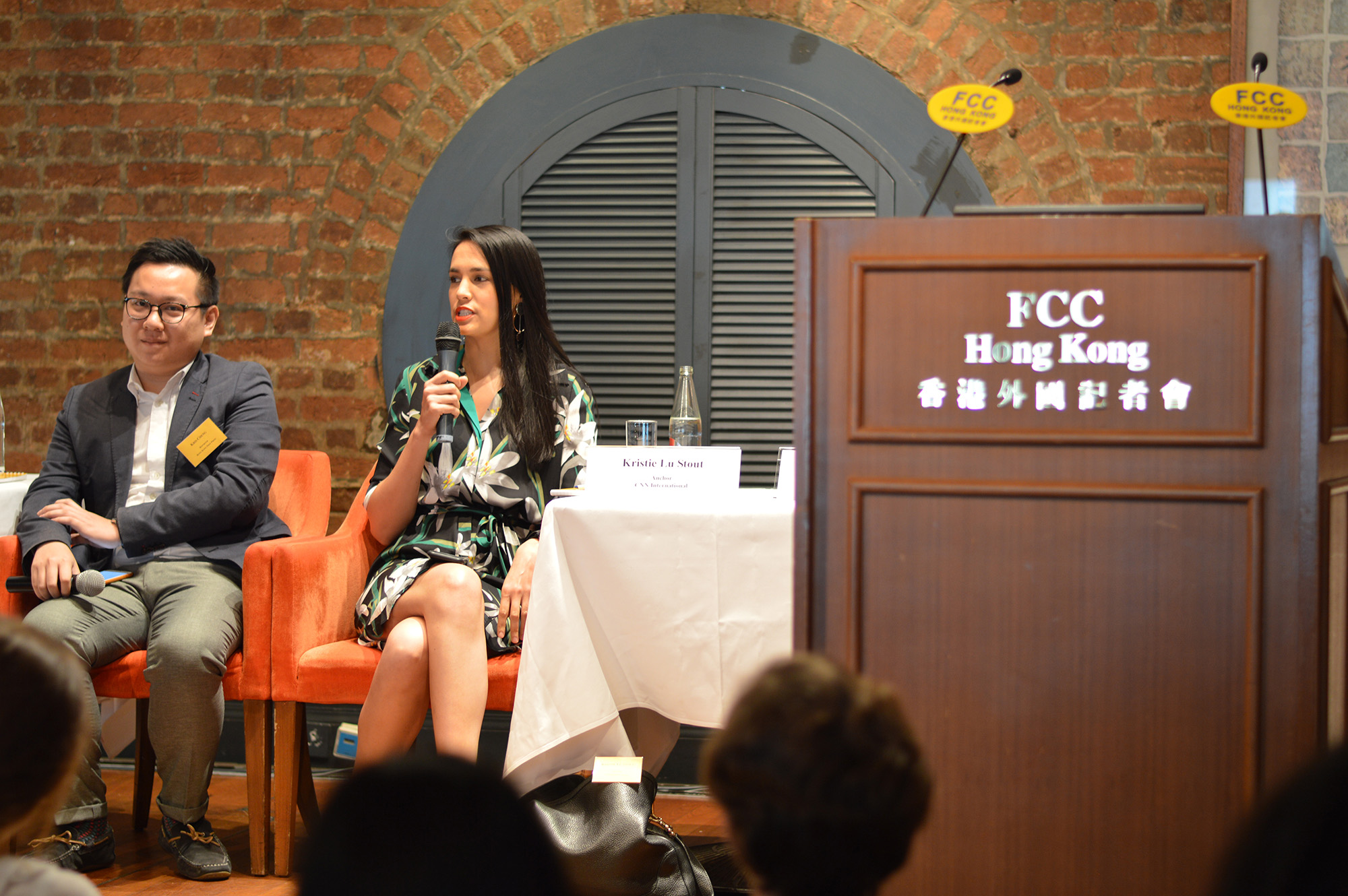
Hong Kong Free Press’ Kris Cheng, left, and CNN’s Kirstie Lu Stout talk about confronting stereotypes at the 3rd FCC Journalism Conference. Photo: Sarah Graham/FCC Hong Kong Free Press’ Kris Cheng, left, and CNN’s Kirstie Lu Stout talk about confronting stereotypes at the 3rd FCC Journalism Conference. Photo: Sarah Graham/FCC

The cream of Asia’s media, from reporters to editors, gathered to share their journalistic experiences amid an ever-increasing squeeze on press freedom in the region.

Throughout the day lively panels and workshops took place covering a range of topics including confronting stereotypes, women in journalism, investigative reporting, the fight against fake news in Asia, and reporting under authoritarian regimes.

Keynote speaker Maria Ressa, CEO of rappler.com, the news website battling Philippines President Rodrigo Duterte’s assault on press freedom in the country, emphasised the invaluable role journalism plays in holding authoritarian governments to account. “If we’re not the five-year-old kid telling the emperor he has no clothes on we’re not doing our job,” she said.

In the week that Facebook CEO Mark Zuckerberg appeared before a US congressional committee to explain how the data of millions of its users ended up in the hands of a third party, the world’s biggest social media platform came under the spotlight during the panel discussion on fake news in Asia. George Chen, Facebook’s Head of Public Policy for Hong Kong and Taiwan, found himself the target of several questions about the role the social media giant plays in the spread of missinformation.

“There’s no silver bullet,” Chen said of the fight against fake news. However, a multi-stakeholder approach – between a network of academics, journalists, news room managers and tech companies – is what is needed to stem the flow.

FCC Correspondent Governor Enda Curran, who organised this year’s conference, said it was a huge success. “The conference drew a bumper crowd and generated insightful discussion with speakers from around the region. We look forward to next year’s conference,” he said.

Watch some of the day’s panel discussions here:

Confronting stereotypes

Women In Journalism

Meet The Editors

Keynote speaker Maria Ressa

Investigative reporting

The Fight Against Fake News in Asia

Reporting Under Authoritarian Regimes
Why China watchers are getting it wrong: Controversial author on how everyone is skirting around the real issues

A tendency towards skirting around the real issues in China rather than talking about the problems the country suffers is the reason China watchers get it so wrong, says the author of a new book pointing out what he sees as the deep flaws in Chinese culture.

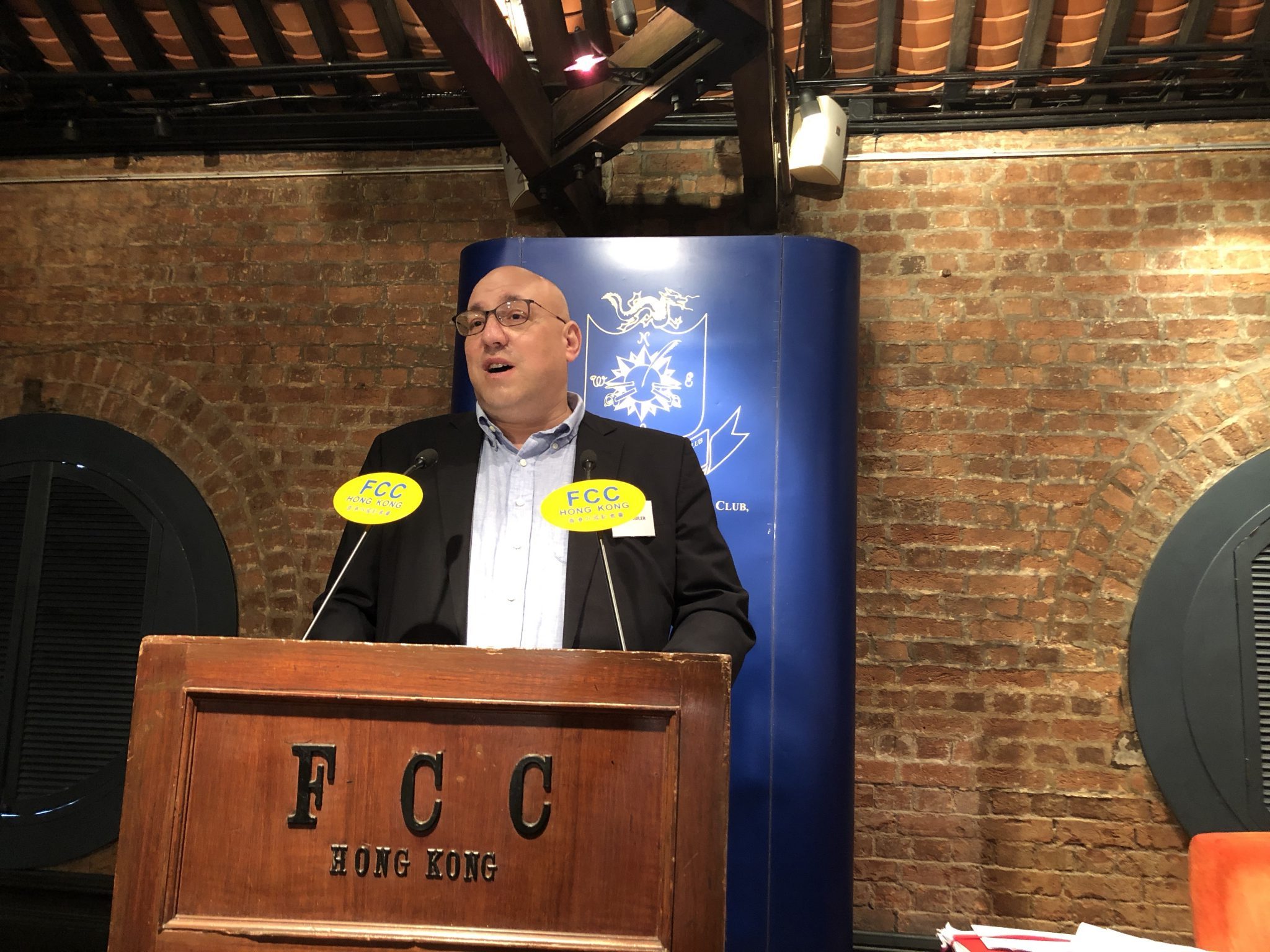
Author Paul Midler aired some grievances about the way the Chinese do business when he appeared at the FCC. Photo: Sarah Graham/FCC Author Paul Midler aired some grievances about the way the Chinese do business when he appeared at the FCC. Photo: Sarah Graham/FCC

The frustration of doing business in China was a particular area of focus for controversial author Paul Midler, who took aim at the nation’s penchant for long and drawn out negotiations, combined with a frustrating lack of openness, when it came to striking deals. In fact, this procrastination was probably the reason why the Chinese were to blame for the Opium Wars, he said, to the dismay of at least one guest who made it clear she was offended by the comment.

“Part of the trouble is we don’t have a vocabulary to discuss the sort of shenanigans that pass for business-as-usual in China,” said the American.

According to Midler, the over-politeness now employed when talking about social and business issues in China stems from post-World War Two liberalisation. Prior to that, he said, the conversation was inspired by social Darwinism, allowing debates on what made certain populations around the world more successful than others. Midler called the 1920s and 1930s a ‘golden era’ for China watching due to its ‘very frank’ discussions about what was and wasn’t working in China.

But things are improving, he conceded, in that China’s big fails – pollution being one example – are being openly discussed globally and positively responded to by Beijing. But he said the general conversation around China remained largely focused on economics because it relieved us of the burden of having to discuss the real issues that are more painful.

Midler went on to explain that the media-projected image of Chinese people being ‘wholly innocent’ hostages to the Communist Party was ‘fiction’, and in fact 95% of the Chinese population freely supports the government.

“The reality is China watchers walk on egg shells,” Midler, who was promoting his latest book, What’s Wrong With China, said.

However, the era of Donald Trump and his incendiary approach to diplomacy is changing the conversation. “I think we’re getting closer and closer to people expressing what they actually mean,” Midler said.

Watch the video of the talk below.

Job listing: AFP correspondent in Beijing

The international news wire Agence France-Presse is looking for an enterprising Anglophone correspondent to join its team in Beijing, covering a wide range of issues in China for a huge global audience.

The role includes covering daily breaking news and writing longer, more in-depth analyses and features, involving some travel around China. The bureau also covers Mongolia.

This is an opportunity for a journalist who wants to develop his or her own story ideas and play a significant part in reporting developments in Chinese politics, sports, society, economics and culture for a major news agency.

AFP is looking for a native English speaker with the ability to speak and read Chinese.

The ideal candidate must have strong knowledge of China and have shown an ability to develop sources, break news and produce original stories. Compensation package commensurate with abilities and experience.

Please apply with CV and cuttings to Asia Regional Director Philippe Massonnet at [email protected], Chief Asia Editor Giles Hewitt at [email protected], Beijing Bureau Chief Patrick Baert at [email protected] and Deputy Bureau Chief Laurent Thomet at [email protected]

FCC joins more than 40 groups in highlighting Hong Kong human rights concerns to United Nations

Hong Kong’s deteriorating rule of law and human rights environment will come under the spotlight as the SAR is profiled in a landmark submission to the United Nations Human Rights Council (UNHRC) for the third Universal Periodic Review (UPR) on China.

Hong Kong's Chief Executive Carrie Lam vision of making Hong Kong a more inclusive city will be put to the test. File Photo: GovHK. Hong Kong’s Chief Executive Carrie Lam’s vision of making Hong Kong a more inclusive city will be put to the test. File Photo: GovHK.

A review of the submission will take place in November.

The Hong Kong UPR Coalition (the Coalition) submission; endorsed by 45 civil society organisations including the Foreign Correspondents’ Club, Hong Kong; represents the collaborative efforts of civil society to hold the Hong Kong SAR government accountable to its human rights commitments.

“The increasing erosion of fundamental freedoms in Hong Kong will be under the international spotlight in the coming months. The UPR is an opportunity for the government to show it is serious in upholding its human rights obligations,” said Simon Henderson, the spokesperson for the Coalition and Senior Policy Advisor at Justice Centre Hong Kong.

Much has changed in Hong Kong since 2013 when the last UPR was held. Election candidates have been disqualified based on their political beliefs, booksellers have been abducted and detained, freedom of the press has deteriorated and civil society is increasingly marginalised.

Mr. Henderson added: “The submission provides a roadmap of specific, measurable and achievable recommendations for Hong Kong to abide by its human rights commitments and restore its international standing. Many reflect long outstanding recommendations by the United Nations which the Hong Kong government has ignored.”

The UPR is a unique process which involves a review of the human rights records of all UN Member States. The UPR is a State-driven process, under the auspices of the Human Rights Council, which provides the opportunity for each State to declare what actions they have taken to improve the human rights situations in their countries and to fulfil their human rights obligations.

The submission details 109 recommendations. For example, it calls for the government to:

  • adopt a comprehensive human rights ordinance to incorporate all international human rights treaties that apply to Hong Kong in domestic legislation;
  • only propose national security legislation on the basis of Article 23 after universal suffrage has been fully implemented, ensuring that any proposed legislation fully complies with the International Covenant on Civil and Political Rights (ICCPR) and the rule of law;
  • not set an inappropriate high threshold for granting international protection and grant asylum seekers and refugees the right to work;
  • amend the Public Order Ordinance, in particular section 17B on “disorder in public places” and section 18 on “unlawful assembly”, ensuring it is consistent with the ICCPR;
  • take measures to ensure persons with disabilities are not arbitrarily deprived of their liberty through institutionalisation and provide adequate resources for 24-hour community support and/or small group homes;
  • adopt a comprehensive law to combat human trafficking and forced labour; and
  • adopt legislation to prohibit discrimination on grounds of sexual orientation, gender identity, gender expression and sex characteristics.

“Our submission reflects the aspirations of the Hong Kong people who want to build a fairer and more equal society for all,” continued Mr. Henderson. “Importantly, it also echoes Chief Executive Carrie Lam’s vision of making Hong Kong a more inclusive city.”

Engagement with civil society is crucial to the UPR process. Unfortunately, quite often, civil society is on the sidelines when it comes to major legal and policy developments, in contrast to the Chief Executive’s pledge to “connect”.

“Having meaningful consultations, meeting regularly and promptly responding to correspondence will go a long way in engaging civil society.

“Hong Kong’s competitive edge is supported by respect for human rights and adherence to the rule of law. Civil society is a critical part of that process. Human rights are not a matter of ‘internal affairs’, but of interest to the international community.

“The UPR is a test for the government to show that it is truly committed to protecting Hong Kong’s core values. We look forward to working with the government to implement these recommendations,” he concluded.

The upcoming UPR on China, including Hong Kong and Macau, will take place in Geneva in early November 2018. The UPR Working Group, which consists of the 47 member states of the UNHRC, will conduct the review.

Important Announcement

Dear Fellow Members,

As we start the Year of the Dog, 2018 will be for the FCC a year when we reluctantly bid farewell to our esteemed General Manager, Gilbert ‘Tiger’ Cheng. His retirement in August will mark the end of an era for our club, which he has steered since his appointment as General Manager in 2000.

Gilbert actually started work at the FCC in our previous home, Sutherland House (now CCB Tower) in 1972. His connection to the club’s history is heightened by the fact that he was mentored by legendary bar manager, Papa Liao, who had served in our even older homes in Hong Kong and Shanghai.

Fully committed to all of us in that time, including 45 presidents, Gilbert has become the epitome of many things that we love about the club. In his own words: ‘Enjoy, forgive and forget, learn from yourself.’ He also has qualities we all wish we had: an encyclopaedic recall of names, an ability to deal smoothly with the most awkward of situations and the drive that comes from the fourth prong of his personal philosophy: ‘Don’t expect others to help you’, although many members of the club know how they can always expect Gilbert to help them.

Gilbert took over as acting general manager at a difficult time for the FCC, as we were losing members after the 1997 handover. Our membership has almost doubled since. The board is confident that with his assistance, our next general manager will help us meet our future challenges and build on Gilbert’s excellent legacy.

As he prepares to step down this coming summer, coinciding with his next birthday, Gilbert will continue to ensure that our staff are as dedicated as he has always been, and he will work closely with governors and his successor for as seamless a transition as possible.

Gilbert’s long service and importance to the club were previously recognized in 1997, when he was made an honorary life member. That should reassure all of us who can’t imagine the FCC without him.

In the months before his retirement, there will be more opportunities to celebrate and thank Gilbert for his extraordinary contribution to the FCC. In the meantime, we express our deepest gratitude to him for his distinguished service and congratulate him on all he has achieved in his career.

Yours sincerely,

Florence de Changy
FCC President

Election Result for The Board of Governors 2018-19

Music performance schedule change in Bert’s


Dear members,

Bert’s regular live performances have been changed to every Wednesday and Friday from April 1 onwards.

Thank you for your kind attention.


Admin Office


Income Statement – February 2018

Income Statement – February 2018

February 10, 2018 Board minutes

February 10, 2018 Board minutes

Modern slavery is bigger than ever – and here’s how we can eradicate it

By the time you finish reading this sentence, a fellow human being somewhere in the world would have been forced into modern slavery.

Matt Friedman, CEO of The Mekong Club, recounted shocking stories from the victims of modern slavery when he spoke at the FCC. Photo: Sarah Graham/FCC Matt Friedman, CEO of The Mekong Club, recounted shocking stories from the victims of modern slavery when he spoke at the FCC. Photo: Sarah Graham/FCC

One every four seconds, 9.2 million new slaves every year, 45.8 million in the world today. In fact, there are more slaves today than at any time in history, said Matt Friedman, CEO of The Mekong Club, an NGO working to alleviate the problem through education.

One minute it might be a 13-year old girl who is forced to provide sex to up to 10 men a day, seven days a week; or a teenage boy who is placed on a slave boat in Thailand – working 18 hours a day for four years without proper food or rest, and without any pay at all; or a child who is separated from her family and forced to work in a sweatshop to make the clothes we wear or the electronics we use. Modern slavery comes in many forms, Friedman said, and it is a US$150 billion industry.

The definition of modern slavery is withholding wages; debt and other forms of bondage; retention of identity documents; restricted movement; physical and sexual violence. It often begins with an offer that is too good to be true: sometimes a work offer, or a marriage proposal, Friedman said. In Nepal, teenage girls are sold into a marriage and the young bride then trafficked into prostitution.

Currently there are 29,000 slaves in Hong Kong – half of those are women forced into prostitution; the other half are domestic helpers, he said. In a timely move, the Hong Kong government, which has remained silent over the issue, announced on March 21 it would launch an action plan to stamp out slavery in the city.

But what is being done globally to eradicate the problem? While legislation is being put in place, such as the UK’s Modern Slavery Act, it didn’t go far enough. Friedman, who interviewed hundreds of freed slaves throughout Southeast Asia for his new book, Where Were You? A Profile of Modern Slavery, gave statistics showing that 66,000 of the more than 40 million currently in slavery had been been helped – a mere 0.2%. And of the half million criminals operating within slavery, 7,000 we jailed – 0.8%.

The Mekong Club was established to unite and mobilise the private sector – namely finance, apparel, hospitality and retail – with the purpose of disrupting and ending modern slavery. Friedman, an international trafficking expert, said 75% of the 45.8 million slaves were in forced labour, and 60% of them associated with manufacturing supply chains. This is why it is important to engage the private sector. “The private sector has extensive human and financial resources that could help eliminate modern slavery conditions,” he said.

“I personally believe the private sector has great potential to be the silver bullet to address these types of issues,” Friedman said.

And The Mekong Club offers some interesting tools to companies in the private sector, designed to help them work more efficiently in addressing modern slavery. A Risk Assessment Matrix (RAM) is an online dashboard that helps brands to assess the risk of forced labour associated with specific products, in a given country or province, in order to prioritise their audits and investigations where modern slavery is more likely to exist within their supply chains.

A Knowledge Hub offers a comprehensive online resource centre on modern slavery. It archives news articles, reports, website addresses, blogs and more, with a focus on modern slavery’s links to the private sector. An End Slavery smartphone app encourages the public to earn care points through learning about slavery, spreading the word, and volunteering.

Its impressive Victim Identity App allows police and NGO workers to approach those they suspect of being slaves and communicate with them using country flags to identify the language they speak, and voice recordings in hundreds of different languages that can ask the victim questions, such as ‘are you being held against your will?’.

Acting on the startling results of a survey The Mekong Club carried out in Bangladesh that found 40% of those helped out of trafficking got retrafficked, Friedman said the NGO was working on vocational training with a work placement element to help victims start a new life.

But on a more personal scale, Friedman encouraged anyone who was touched by the sickening stories of those forced into slavery to take action, whether it be attending lectures, bringing the topic to the attention of their employers, or simply talking about it with others.

We measure site performance with cookies to improve performance.