Members Area Logout

Why GDP is misleading – and how we can make it matter to real people

The way in which we measure the health of our economies needs to change in order to maximise what actually matters: our welfare, according to a new book by a leading financial writer.
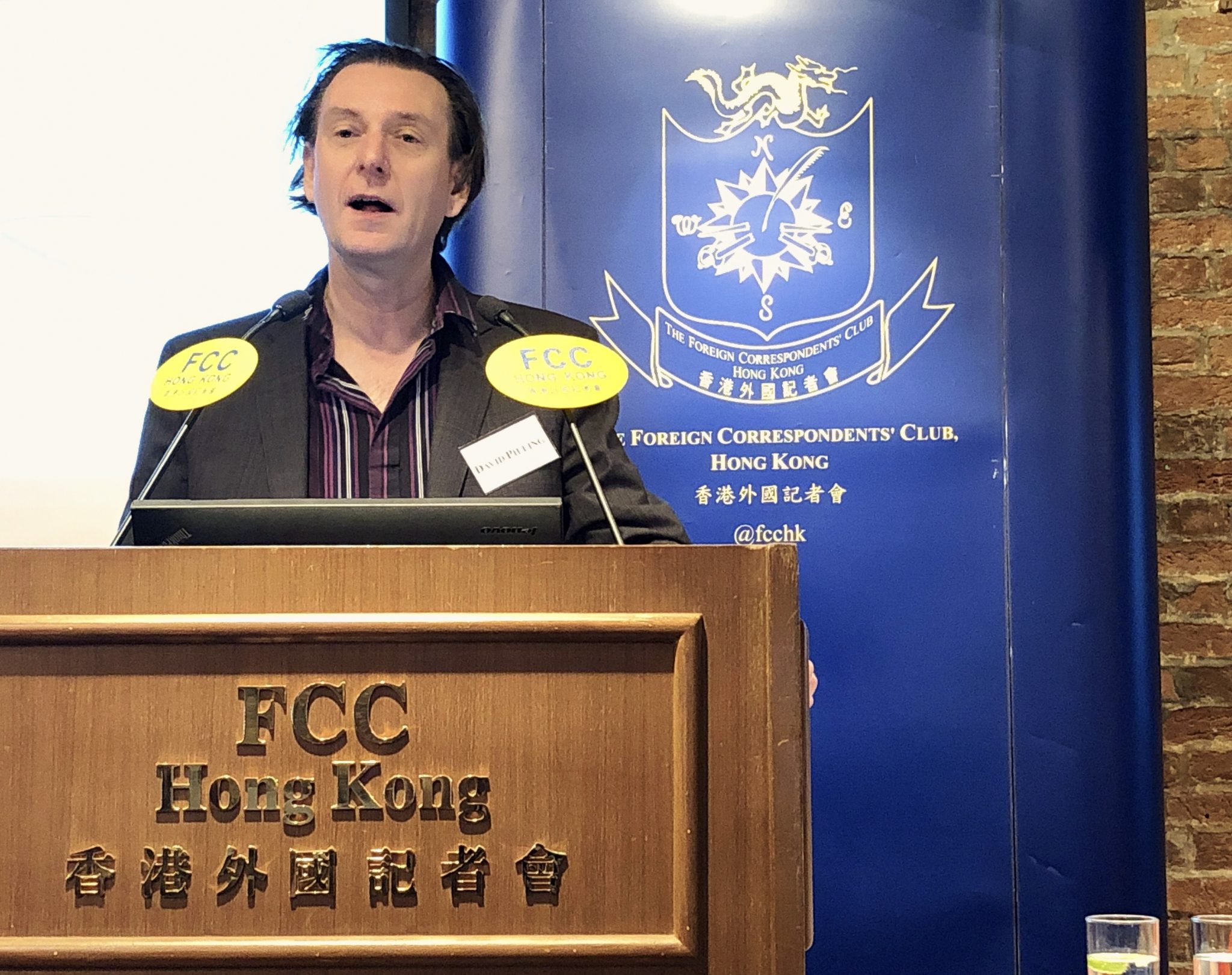
David Pilling, talked about his new book, The Growth Delusion: Wealth, Poverty, and the Well-Being of Nations, at the FCC. Photo: Sarah Graham/FCC David Pilling, talked about his new book, The Growth Delusion: Wealth, Poverty, and the Well-Being of Nations, at the FCC. Photo: Sarah Graham/FCC

David Pilling, associate editor and former Asia editor of the Financial Times, argues that current gross domestic product (GDP) – the statistic used globally to measure economies – is misleading because it fails to take into account distribution, sustainability or the nature of production.

GDP is the monetary value of a country’s goods and services within a given time period, and it is used as an indicator of national economic well-being. However, in his new book, The Growth Delusion: Wealth, Poverty, and the Well-Being of Nations, Pilling says this economic measurement was created for and shaped around policy objectives.

From its first inception under U.S. President Franklin D. Roosevelt, who wanted a measurement in order to justify spending more to boost the flagging economy of the 1930s; to its interpretation by Britain in World War Two to increase spending on armaments; GDP has been manipulated over the years to fit fiscal policy, Pilling said.

Growth as measured by GDP is often a positive thing for developing countries like China and India where it can improve the lives and well-being of many, Pilling said. But once a country boasts prosperity, economic growth and personal well-being can often separate. It is here where the measure can fail as we see a disconnect between the numbers and how happy people are, he said.

During his March 21 club lunch appearance, Pilling used simplified – and often colourful – analogies to explain why the current formula to calculate GDP falls short of the real picture of an economy’s health. For example, America does not measure the cocaine economy in its GDP despite widespread use of the drug; but Colombia does, which of course, gives its economy a significant boost. Similarly, in the United Kingdom a person caring full time for a relative does not factor in the GDP, but putting that relative in a care home where someone else is paid to look after them is. A mother who breast feeds her baby does not contribute to GDP, yet the manufacture of infant formula does.

Pilling, now Africa editor for the FT, said: “GDP only measures things for which money changes hands. we shouldn’t worship it as a number, it doesn’t tell us everything we think it tells us. There should be some measure of wealth.”

He added that GDP needs to better measure the value of public services; it needs to improve median household income; and take into account an economy’s effect on carbon omissions.
Foreign press clubs call for immediate release of Reuters journalists in Myanmar

Three months ago, Myanmar police invited two Reuters reporters to a restaurant in northern Yangon. Wa Lone and Kyaw Soe Oo had been investigating the killing of 10 Rohingya Muslim men who were buried in a mass grave after being hacked to death or shot by ethnic Rakhine Buddhist villagers and soldiers.

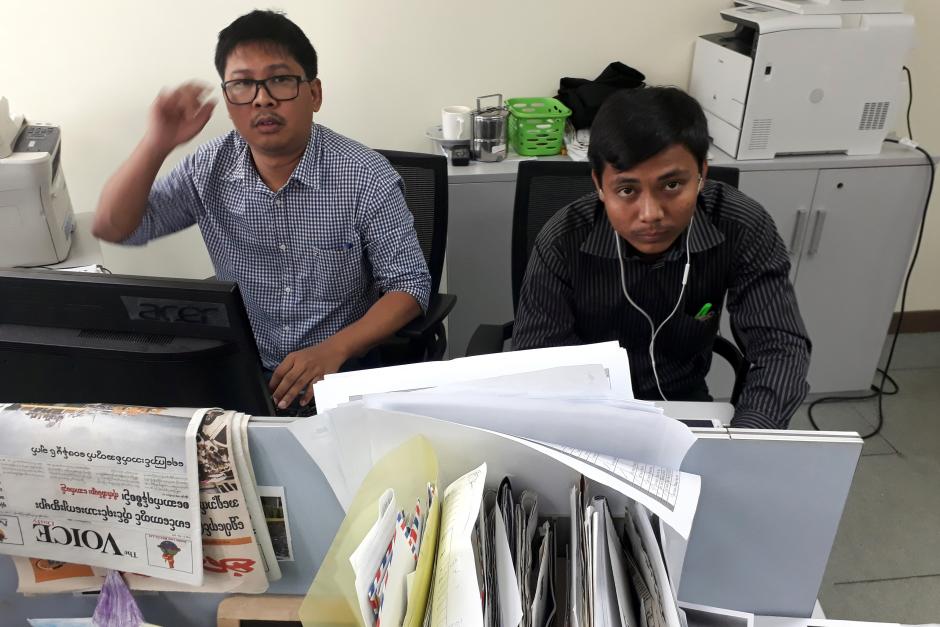
Reuters journalists Wa Lone (L) and Kyaw Soe Oo, who are based in Myanmar, pose for a picture at the Reuters office in Yangon, Myanmar December 11, 2017. Picture taken December 11, 2017. REUTERS/Antoni Slodkowski Reuters journalists Wa Lone (L) and Kyaw Soe Oo, who are based in Myanmar, pose for a picture at the Reuters office in Yangon, Myanmar December 11, 2017. REUTERS/Antoni Slodkowski

At the dinner, police handed the pair some documents. They were arrested almost immediately afterward and later charged under the colonial-era Official Secrets Act, which carries a maximum penalty of 14 years in prison.

On the 100th day since the arrest of Wa Lone and Kyaw Soe Oo, 10 foreign correspondents’ clubs throughout Asia are again calling for their immediate release. The two journalists were engaged in normal reporting activities, and had not committed any wrongdoing. All charges against them should be dropped.

“We are not doing anything wrong,” Kyaw Soe Oo told reporters after the pair were formally charged. “Please help us by uncovering the truth.”

Their trial is now underway, with a verdict possible in the coming weeks. The outcome will have repercussions for Myanmar and the entire region, where press freedom is increasingly under attack.

We call on Aung San Suu Kyi and her civilian government to act to defend press freedom as the country undertakes its transition to democracy. It is vital that Myanmar respects the beneficial role of a free and independent media and ensures that journalists are able to work without threat of retaliation.

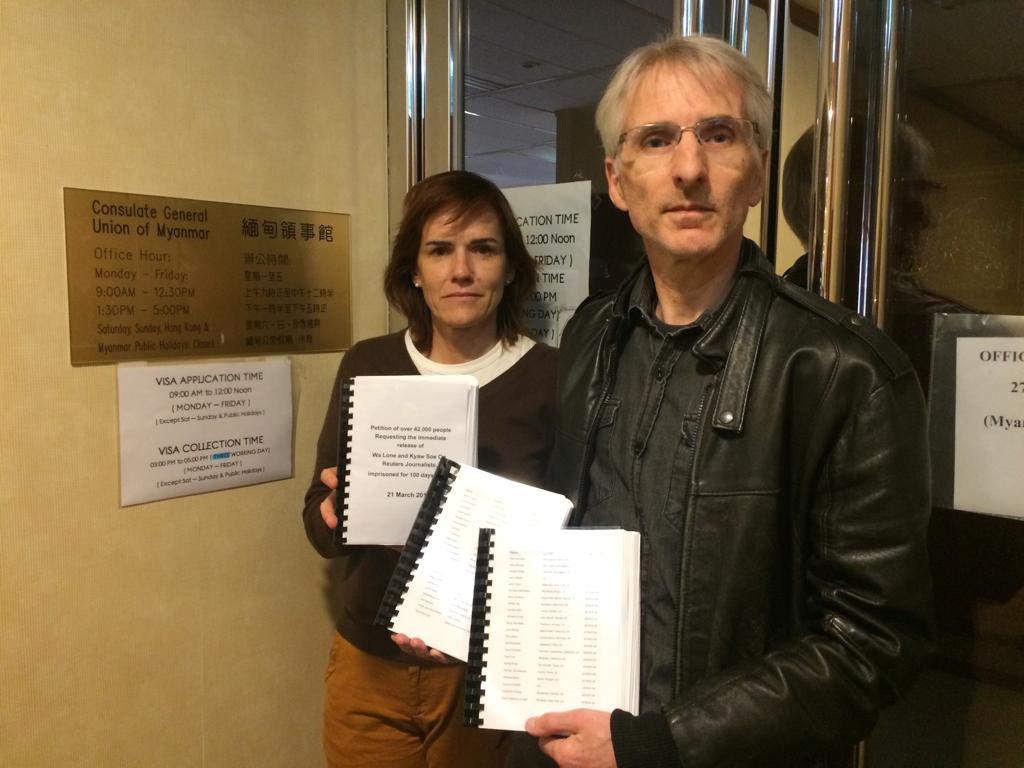
FCC Hong kong's president Florence de Changy (left) with Geoff Crothall from the Press Freedom Committee at the Myanmar consulate on March 21. The consulate had closed early but building management promised they would hand in the 3 volumes of signatures to the consulate when it opens again. FCC Hong Kong’s president Florence de Changy (left) with Geoff Crothall from the Press Freedom Committee at the Myanmar consulate on March 21. The consulate had closed early but building management promised they would hand in the 3 volumes of signatures to the consulate when it opens again.

We also call on all those who believe in press freedom to keep up the pressure on authorities who want to silence journalists, in Myanmar and elsewhere around the globe. One easy place to start is by signing a petition for their release: goo.gl/1kPTwX

A delegation of the Foreign Correspondents’ Club of Hong Kong walked to the Myanmar consulate on Wednesday, March 21 to hand over a petition with more than 42,000 signatures demanding the immediate release of Wa Lone and Kyaw Soe Oo.

“We are not doing anything wrong,” Kyaw Soe Oo told reporters after the pair were formally charged. “Please help us by uncovering the truth.”

#FreeWaLoneKyawSoeOo

Foreign Correspondents Association of Singapore
Foreign Correspondents’ Club of China
Foreign Correspondents Club of Malaysia
Foreign Correspondents’ Club of Thailand
Jakarta Foreign Correspondents Club
National Press Club of Australia
Editorial Committee, The Society of Publishers in Asia
The Foreign Correspondents’ Club, Hong Kong
The Foreign Correspondents’ Club of Japan
The Foreign Correspondents’ Club of South Asia, New Delhi
The Overseas Press Club of Cambodia

Democracy Now reports on the story – watch from 5 minutes 20 seconds.

Environmental campaigner calls on Chief Executive Carrie Lam to give green light to Central pedestrianisation plan

Des Voeux Road Central is so congested with traffic it’s often quicker to walk – so let’s pedestrianise it, says an environmental campaigner.

Markus Shaw, chairman of the Walk DVRC Initiative, put forward the case for pedestrianising part of Central's business district. Photo: Sarah Graham/FCC Markus Shaw, chairman of the Walk DVRC Initiative, put forward the case for pedestrianising part of Central’s business district. Photo: Sarah Graham/FCC

Markus Shaw, chairman of the Walk DVRC Initiative, called on Hong Kong Chief Executive Carrie Lam to honour her 2016 pledge to make the city more walker-friendly by implementing the plan that would reduce pollution; congestion; reduce obesity; improve mental health; and meet the aspirations of the young.

Currently, a staggering 77 bus routes make their way through DVRC in Hong Kong’s Central Business District (CBD), making it the most polluted stretch of road on the northern side of Hong Kong island. With insufficient space for both pedestrians and vehicles, travelling along DVRC makes for an unpleasant experience for all. The Walk DVRC Initiative wants to pedestrianise a 1.4km stretch – from Pedder Street to Western Market – into a dynamic public realm while at the same time reviving “a decaying, historic CBD”.

Shaw, a lifelong citizen of Hong Kong, said the city was on the back foot when it came to the environment and urged leaders to be more forward thinking in terms of planning. He cited other major world cities that have introduced pedestrianised zones including London’s Oxford Street and New York’s Broadway. Shaw said former NYC Mayor Michael Bloomberg had managed in only three years to trial a pedestrianised section of the famous street – which has now been permanently implemented – yet Hong Kong planners were slow to consider a similar scheme.

“Community planners should reflect the aspirations of the community,” Shaw said, adding that brand research showed millennials in particular wanted healthier lifestyles and walkable communities. “The government has to recognise these aspirations and build bridges to those who hold them.”

Hong Kong’s population is predicted to reach 8.2 million people by 2043 – and that’s without the predicted tourists. “Planning a city for tourists is putting the cart before the horse. Was Venice planned for tourists? A city should be planned for citizens,” he said.

While most agree that a greener CBD is the way forward, and many business and political leaders in the city had shown support for the plan, Shaw said that district councillors seemed intent on finding fault with the scheme by focusing on the potential public objections to the plan.

“Everybody thinks this is a great idea,” Shaw said. “Ultimately we have only one objective, and that is to get Carrie Lam to do it.”

History tells us that protectionists will not win, says Australia’s trade minister

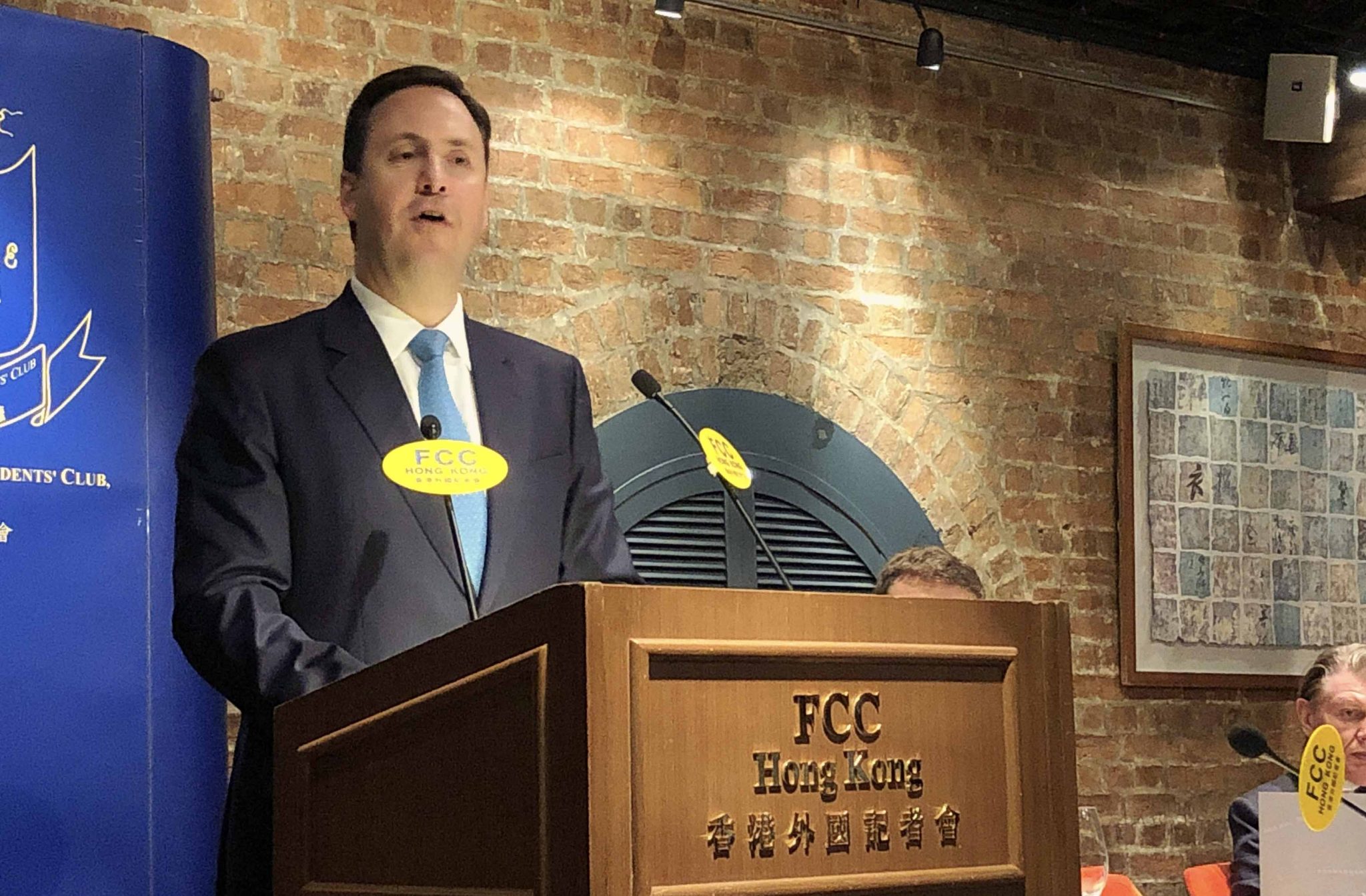
The fight to save global free trade in the face of rising protectionism is in the hands of the young, who have known only globalisation, says Australia’s trade minister.

Steven Ciobo MP, Australian Minister for Trade, Tourism and Investment, spoke of the virtues of globalisation at the FCC. Photo: Sarah Graham/FCC Steven Ciobo MP, Australian Minister for Trade, Tourism and Investment, spoke of the virtues of globalisation at the FCC. Photo: Sarah Graham/FCC

The recent move away in some countries from the concept of globalisation is a result of governments mismanaging their economic destinies while failing to improve the lives of all. Australia should know, said Steven Ciobo, because it suffered the same fate until the 1980s.

What was needed now, he said, was global openness – and the people best placed to make the case for this were the young.

“They are instinctive globalists, and if armed with the facts of the economic and humanitarian case for free trade, will be our most powerful allies in the battle of ideas now playing out,” he said.

Ciobo, speaking at the March 19 club lunch, said the one thing governments should avoid when distributing gains among their populations is protectionism.

“Governments at large have a responsibility to do what they can to assist those negatively affected by reform to make transitions within an evolving economy – but protectionism is a fatal mistake to make,” he said.

Australia is currently the world’s 10th richest country in terms of GDP per capita and is in its 27th year of consecutive growth. But success wasn’t always the story for Australia.

Falling from one of the world’s strongest economies at the turn of the 20th Century, Ciobo explained, Australia hit a long period of slow decline – the roots of which lay in protectionism.

“Over the decades successive governments sought to shield big employment industries like manufacturing and textiles from overseas competition, to protect jobs and living standards,” he said. “That era of failed policy, though, led only to higher and higher social and economic costs, so by the late 1970s the evolution of a highly-protected economy was a major burden on the public purse.”

Additionally, a rigid economic system meant that the country was poorly placed to deal with unexpected shocks like the oil price hikes of the 1970s, Ciobo, whose official title is Minister for Trade, Tourism and Investment, added.

Change only began to take hold once the government opened the economy up to through major policy reform and exposed it to international competition. Since then, Australia has thrived: “Far from killing our national economy, the removal of protectionism made it stronger, changed its shape, and gave it new momentum,” he said.

Ciobo cited Australia’s decision to pursue the TPP-11 after the withdrawal of the United States as an indication of how it was forging ahead with global free trade agreements.

He talked in depth about China’s rise from “an isolated, very inward-looking place” to a country that is “a great example of what happens when reform and trade liberalisation are allowed to take place”.

The China-Australia Free Trade Agreement – “the highest quality trade agreement China has ever concluded” – has given Australia better access and has further cemented the economic relationship between the two countries.

“The result is an all-time high of $175 billion in two-way trade in 2016-17,” Ciobo said.

And the relationship looks set to become closer, with Australia being the first country to be invited to China’s international Import Expo to be held in Shanghai in November this year.

“Australia is also working proactively with China to strengthen intellectual property rights for Australian businesses,” he said, adding that the government had appointed its first ever IP Counsellor at the Australian Embassy in Beijing “to enhance cooperation at a government-to-government level”.

Some foreign businesses complain that Chinese firms have stolen their ideas and software after forcing them to turn over intellectual property as part of the price of doing business in the country. For its part, China has in recent years taken steps to protect both local and foreign intellectual property. Ciobo said Australia enjoyed a very good working relationship with China when it came to IPR and added he firmly believed China would make more progress on the issue.

Trump’s tax law: new rules discriminate against expats, says expert

How will President Donald Trump’s new tax law affect Americans living overseas? It’s a question that remains a mystery, says tax expert Larry Lipsher, because the recently passed legislation is largely indecipherable.

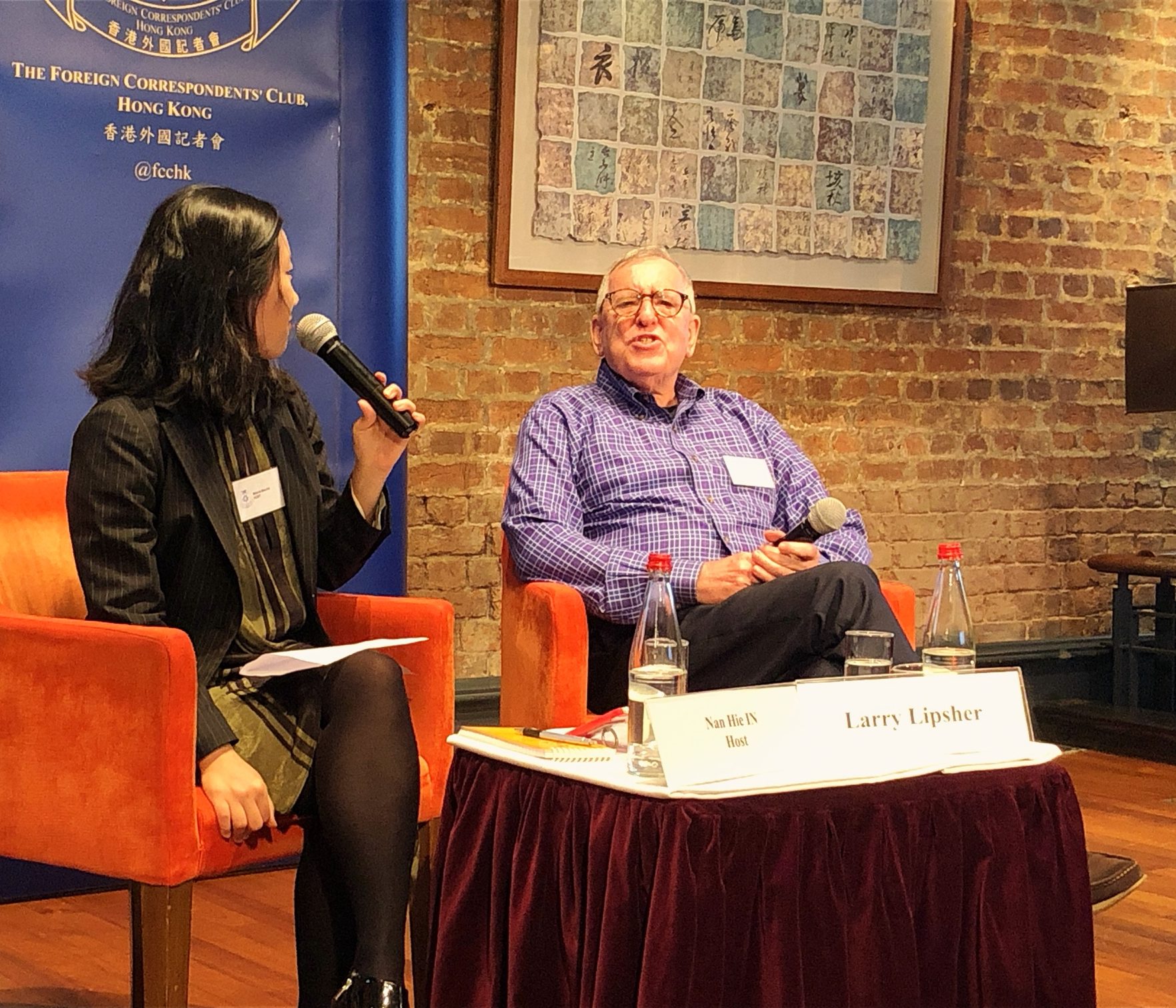
Host Nan-Hie In (left) introduces Larry Lipsher ahead of his talk on Trump's tax reform at the FCC. Photo: Sarah Graham/FCC Host Nan-Hie In (left) introduces Larry Lipsher ahead of his talk on Trump’s tax reform at the FCC. Photo: Sarah Graham/FCC

The first act of its kind since 1986, the new Inland Revenue Service (IRS) act introduces “a whole array of new phrases you’ve never heard of before”, Lipsher said as he sought to focus on the law changes that apply to those living outside the United States. What was clear was that Americans filing tax as 10% or more owners of a foreign corporation would lose out under the new legislation, which introduces a quasi-territorial system that allows tax deductions only for domestic corporation owners of foreign corporations.

Confused? Lipsher said the legislation was so cloaked in complicated new terminology that “I defy you to look at it and tell me what the hell it means”.

Lipsher, an American and Hong Kong CPA, has been preparing U.S. tax returns since 1967, said that since its introduction in December 2017, U.S. banks in Hong Kong were reluctant to even open new accounts with customers because “in order to handle this the banks have to have people who understand the IRS terminology”.

“The system has broken down,” Lipsher said, adding: “You, as Americans living overseas, are discriminated against.”

When asked during the March 14 club lunch whether anyone in the senate was defending expats, Lipsher’s answer was simply “no”.

“The problem is democracy in America is under siege. I’m very pessimistic about the future of the taxation system,” he added.

What do you need to become a novelist? Tenacity, passion – and a lot of small notebooks

Award-winning Spanish writer and journalist Rosa Montero doesn’t go looking for ideas for novels – they find her and possess her until she reaches the end of the story.

Rosa Montero, award-winning author and journalist, explained her literary process at the FCC. Photo: Sarah Graham/FCC Rosa Montero, award-winning author and journalist, explained her literary process at the FCC. Photo: Sarah Graham/FCC

FCC members and guests got the chance to get inside a novelist’s head on March 12 for a glimpse of how Montero, who began her career as a journalist, develops her fictional characters and storylines before putting pen to paper – or keyboard to Word document – and producing an entire book.

Montero spoke of the difference between writing as a journalist and a novelist, describing the fictional side as “dreaming with your eyes open”.

“We have imaginations like children,” she said, speaking generally of novelists.

Last year, Montero won the “Premio Nacional de las Letras Españolas”, one of the top Spanish literature prizes. She published her first novel (La crónica del desamor) in 1979. Since then, she has published 15 novels, two biographies, three collections of interviews, a book of short stories and several children’s tales. Her books are translated into more than twenty languages. Her latest novel is La Carne (“Flesh”, 2016), already published in French as La Chair.

As a journalist she has worked since 1970 in TV, newspapers and magazines. Since 1977, she has worked exclusively for El País, one of the leading Spanish newspapers, and has worked as correspondent for the paper in India, Australia, the US and Latin America. She was also editor-in-chief of the Sunday magazine of El País from 1981-1982.

During the hour-long talk at the FCC, Montero explained how every idea begins with “what if..?” and that an idea for a plot usually grabs her to the point that she has an urge to share the story. She carries small notebooks everywhere to note down her ideas, she said.

“To be a novelist you need tenacity and passion,” she said.

Watch the video.

Britain leaving the EU is a tragedy, says Ireland’s deputy prime minister

Ireland will not be following Britain’s lead and leaving the European Union next year, said its deputy prime minister, who described the United Kingdom’s decision to leave as a ‘tragedy’.

Tánaiste Simon Coveney spoke passionately about Ireland's position on Brexit. Photo: Sarah Graham/FCC Tánaiste Simon Coveney spoke passionately about Ireland’s position on Brexit. Photo: Sarah Graham/FCC

The threat to the Good Friday Peace Agreement, coupled with the economic chaos that leaving the EU would bring, were the two biggest reasons for Ireland to stand firm on the difficult Brexit negotiations currently being undertaken by the British government, Tánaiste Simon Coveney, who also has special responsibility for the Brexit negotiations, told FCC members at the March 12 club lunch.

A month ahead of the 20th anniversary of the historic peace agreement, which brought about an end to decades of violence between Catholic and Protestant groups by introducing a devolved government of eight political parties and cross-border co-operation between the governments of Ireland and Northern Ireland, Coveney said the most clear manifestation of that peace process in terms of success “has been the fact that the border on the island of Ireland has become invisible: there is no physical infrastructure any more on that border”.

Leaving the European Union could mean the return of a hard border. Although the British government is trying to strike a divorce deal that would avoid a hard border, a solution agreed by all parties is yet to materialise.

“The British government has agreed to facilitate that but they just don’t know how yet. And I don’t mean that in any kind of a facetious or patronising way. It’s very difficult to come up with an agreed political solution to prevent border infrastructure re-emerging in the island of Ireland if the British government strategy remains as it is today which is that Britain is not only going to leave the European Union and its institutions but is also determined to leave the single market and the customs union as well,” he said.

Coveney said that having lived in Britain for four years, he understood why people voted for Brexit in 2016. “There are many people in England in particular who feel that the European Union was compromising British sovereignty, and their view was and is that Britain can be stronger and more effective and more successful without being part of the European Union institution. And let’s wait and see how that works out,” he said.

But he added that the decision has huge implications for the island of Ireland. “We have a €65billion trade relationship east/west between Britain and Ireland; 38,000 companies in Ireland trade with Britain every month – that’s 200,000 jobs, it’s 10% of the Irish workforce. And the numbers are the same on the other side of the Irish sea in Britain.”

Set against the backdrop of growing political instability within Ireland due to rising frictions between Unionists and Nationalists, an exit from Europe would also threaten the communities and businesses that have built trust since the peace agreement which has allowed the economy to flourish.

He said: “And this is the core problem of Brexit: it fundamentally raises identity issues in Northern Ireland between Nationalists and Unionists and we have spent the last 20 years trying to break down those identity barriers successfully – part of which was the removal of any type of border infrastructure.

“But let me be very clear on this: Ireland is not following the lead of Britain here. We will not be leaving the European Union. We do not think it’s a good idea to go it alone.

“We believe that in the modern world, the way to get things done is in a multi-lateral setting…. For me that is why the British decision is such a tragedy because Britain is one of the great countries of the world and it is deciding to go it alone when actually most of the great problems that we face globally right now can only be solved together through alliances rather than countries in a nationalist way looking to go it alone,” Coveney added.

Coveney was in Hong Kong on his way to China. He talked about Ireland’s long-standing relationship with Hong Kong, noting that nine of its 28 governors had Irish connections. Coveney also praised the introduction of the first direct flight between Dublin and Hong Kong – a first for Asia – which Cathay Pacific launches in June this year. Coveney said he hoped it would mean an additional 60,000 visitors per year to Ireland which would have a strong impact on the economy.

On China, Coveney said that, 40 years since the opening of diplomatic relations, the two countries’ economic ties had never been better. In 2016 total trade between China and Ireland was €13 billion, and is expected to be well above €14 billion in 2017.

“I believe that our people share many characteristics,” Coveney said of the Irish and Chinese, “not least strong attachment to family, unique cultural heritage, and some difficult historical experiences. Our economies have undergone rapid transition.”

Coveney also pledge support for China’s Belt and Road Initiative (BRI), saying he admired its ambition and openness.

New book on police inspector’s controversial death exposes abuse of young boys by Hong Kong establishment

The sexual exploitation of underage boys by prominent figures in Hong Kong during the late 1970s and into the Eighties was covered up, according to a new book which examines the death of a city police inspector.

Author Nigel Collett's book exposes the sexual exploitation of underage boys by prominent figures in Hong Kong during the late 1970s and into the Eighties. Photo: Sarah Graham/FCC Author Nigel Collett’s book exposes the sexual exploitation of underage boys by prominent figures in Hong Kong during the late 1970s and into the Eighties. Photo: Sarah Graham/FCC
Painstakingly researched by former British Army Lieutenant-Colonel Nigel Collett, the book A Death in Hong Kong: The Suppression of a Scandal, centres around the suicide in 1980 of 29-year-old Inspector John MacLennan, a gay Scottish police officer who was about to be arrested on charges of gross indecency with male prostitutes. His body was discovered in his locked flat – he had been shot five times in the chest. A suicide note, and the fact that the two doors into his flat were locked from the inside, led police to assume suicide, although others suspected foul play.

MacLennan had been targeted, the book claims, as part of a crackdown on homosexuality – then illegal in Hong Kong – among the judiciary and government following the jailing of a top lawyer for having sex with underage boys. John Richard Duffy, in a bid to reduce his sentence, had provided several lists of names to the police of members of the establishment to whom he was supplying teenage boys. So long was the list that the Royal Hong Kong Police set up the Special Investigations Unit (SIU).

Additionally, MacLennan had said he had seen the name of the future Commissioner of Police, Roy Henry, on a Special Branch list of suspected homosexuals.

“MacLennan was bisexual and not a paedophile, but he was a casualty in a phoney war being conducted by the SIU on the part of the Hong Kong government, a war supposedly being waged against named paedophiles and homosexuals in the Hong Kong establishment, but which was actually a smoke screen for hiding the scandal of their activities,” Collett told the March 8 club lunch.

The book pieces together the information Duffy gave to the police and, although it stops short of naming all on the lists – none of which included MacLennan – it provides a startling picture of the abuse of young boys by the very people society holds up as examples of those we should trust.

Among those named were the then Chief Justice Sir Geoffrey Briggs; his successor, Sir Denys Roberts; the then Commissioner of Police, Brian Slevin; his successor, Roy Henry; Chief Superintendent Ron Redpath; and the then Director of Public Prosecutions, Neil MacDougall. Others, who remain unnamed, include lawyers, businessmen, publishers and doctors.

The outcry and suspicion surrounding MacLennan’s death led to a public inquiry – the most expensive in Hong Kong history – which called 110 witnesses from pimps and prostitutes to the city’s most celebrated. After seven months, the commission, headed by Justice TL Yang, found that MacLennan had committed suicide. No police officer or official was prosecuted for any part in the case.

Collett said the case “casts light on the old British habit of appointing a commission of inquiry with the aim, not so much to uncover the truth of an issue, but rather to provide the public an explanation of an issue in order to bury it”.

“The MacLennan inquiry was set up to deflect public anger and to ensure that detail of the Duffy allegations never saw the light of day,” Collett said.

The Q&A session following Collett’s talk was equally compelling, with further insights offered by retired police officers attending the club lunch, prompting the author to say he would like to include additional accounts in a second edition of the book.

More than three quarters of female Chinese journalists sexually harassed, report finds

China’s media industry must do more to combat sexual harassment, according to a report that found that more than three-quarters of female journalists surveyed had been subjected to unwanted advances in the course of their work.

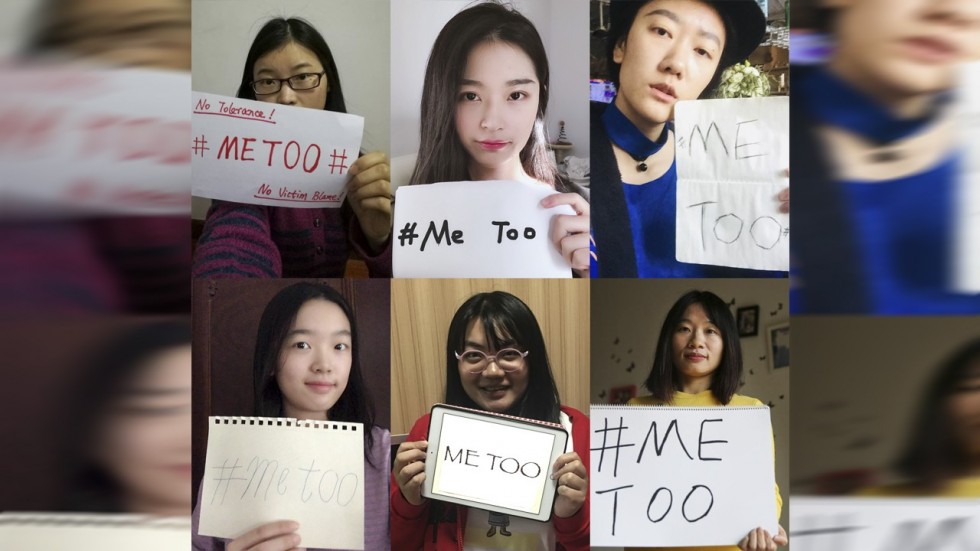
The #MeToo campaign in China. Photo: Handout The #MeToo campaign in China. Photo: Handout

The online survey, A Report on Workplace Sexual Harassment of Chinese Female Journalists, comes in the wake of the Harvey Weinstein scandal, which saw the Hollywood producer accused of multiple sexual assaults, and spawned the global #MeToo movement.

Of the 83.7% of respondents who said they had been sexually harassed, more than half remained silent after the harassment, and only 3.2% reported their experience to their company’s HR department. Even fewer – just 0.6% – reported the harassment to police. Some reported suffering from mental distress and depression as a result of harassment, with a small number admitting suicidal tendencies.

The survey, by the Guangzhou Gender and Sexual Education Center, also found:

  • Almost half of the 83.7% subjected to sexual harassment had encountered it 2-4 times
  • 18.2% suffered harassment more than 5 times
  • Nine out of 10 of the perpetrators were male; among them 40.9% of offenders were the victims’ authoritative leaders; 30% were colleagues; and 37% were strangers
  • 43.8% of harassment occurred in public spaces including offices, conference rooms, and toilets
  • 37.7% occurred in private places such as personal offices, family rooms and hotels
  • 31.6% of respondents had received emails, calls, sexual jokes and obscene pictures and videos

Launching the report at the FCC on March 7, Wei Tingting, Executive Director of the centre; and reporter Sophina Huang Xueqin; urged Chinese media companies to introduce measures to stamp out harassment in the workplace.

Wei Tingting, Executive Director of Guangzhou Gender and Sexual Education Center, speaks at the FCC. Photo: FCC Wei Tingting, Executive Director of Guangzhou Gender and Sexual Education Center, speaks at the FCC. Photo: FCC
“Newsrooms and media companies should take the lead in establishing workplace anti-sexual harassment mechanisms which include prevention and education, investigation after the complaint, confidential counselling, punishment of the sexual offender, set up related departments, and introduce workplace anti-sexual harassment regulations that should be issued to all staff members,” said Wei Tingting.

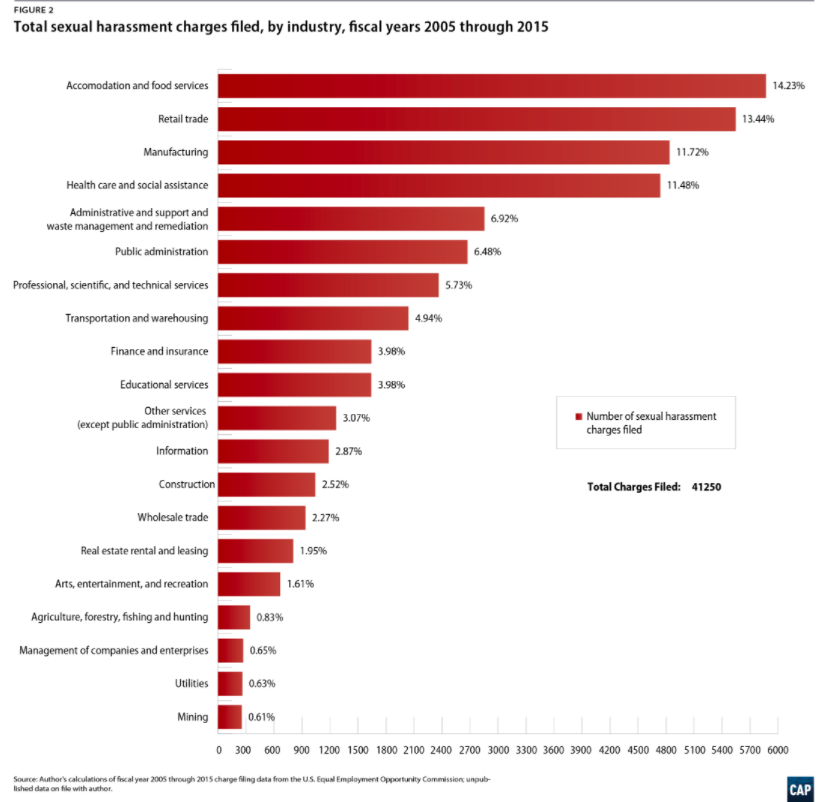
Since the Weinstein scandal broke, allegations of sexual harassment have spread to almost every profession. In the media, The Washington Post, CBS News, NPR and NBC are just a handful of companies now dealing with sexual harassment claims. According to research published last November from the Center for American Progress, sexual harassment occurs across all industries.

“Sexual harassment is a persistent problem in the workplace and one that affects people across industries and at every level,” the report said.

Chart by Center for American Progress Chart by Center for American Progress

Female Chinese journalists were surveyed over a period of a month with 416 valid samples being taken from 1,762 responses from 15 provinces in China, including Guangdong, Beijing, Shanghai, Hubei, Zhejiang, Shandong and Sichuan.

For 61.4% of the victims surveyed, sexual harassment caused a decline in their self-esteem and confidence. Among the 176 victims who encountered sexual harassment 2-4 times, 44 of them said the encounters brought severe impact on their personal relationships and social lives, 22 of them resigned or changed their jobs, 29 of the victims suffer from mental distress and depression, and 10 of them admitted self-harm and suicidal tendencies.

Beijing’s curbs on political rights in Hong Kong while ensuring rule of law for business is ‘unsustainable’, says top barrister

Beijing’s move to curb Hong Kong’s democratic freedoms while still trying to maintain confidence among businesses is unsustainable, according to Hong Kong’s top barrister.

Philip Dykes, chairman of the Hong Kong Bar Association, gave a talk on the rule of law. Photo: Sarah Graham/FCC Philip Dykes, chairman of the Hong Kong Bar Association, gave a talk on the rule of law. Photo: Sarah Graham/FCC

Philip Dykes, chairman of the Hong Kong Bar Association, also said he could not rule out a further interpretation of the Basic Law by the Standing Committee of the National People’s Congress (NPCSC), which he described as “the greatest threat to the rule of law in Hong Kong”.

Speaking at the March 5 club lunch, the newly-elected head of the Bar Association told members that he believed Hong Kong’s judges to be independent and could be relied upon to uphold the rule of law for years to come. But he called on “other decision makers in government – the administrators and the lawmakers” to be “ guided by the rule of law and realise that there are no preferred outcomes of judges and they should not be pressured into making decisions one way or the other”. Dykes was referring to the furore surrounding the long and drawn out legal process involving pro-democracy activists Joshua Wong Chi-fung, Nathan Law Kwun-chung and Alex Chow Yong-kang.

In a Q&A session, Financial Times reporter Ben Bland asked Dykes whether Beijing’s move to heavily circumscribe Hong Kong’s political rights while maintaining confidence among businesses was sustainable, the barrister said: “Ultimately you can’t have one without the other. You can’t hold yourself out as being a system that subscribes to the rule of law and are particularly good at dealing with commercial and arbitration matters but not also accept the burdens that go with that which are dealing with the nitty gritty of political problems, protests, freedom of expression. You will be found out. It’s unsustainable.”

Dykes was also asked about Chinese president Xi Jinping’s move to consolidate his power by indefinitely extending his term as leader, days before the NPCSC is due to vote on it. Dykes said extended terms of power brought about by a change to the constitution “don’t usually end well” but would not be drawn on whether the move would affect Hong Kong’s rule of law.

On the matter of Beijing’s 2016 interpretation of the Basic Law in the case of the oath takers disqualified for not pledging allegiance to China, Dykes said he could not rule out future interventions by the Chinese government, particularly regarding the election eligibility of pro-democracy candidates. “One can easily foresee this bubbling up to become a legal issue,” he said.

We measure site performance with cookies to improve performance.