
 |
| The Foreign Correspondents’ Club Awards Clare Hollingworth Fellowships |
 |
| FELLOWS |
| Teele Rebane |
| Teele Rebane is an award-winning podcast producer and host who currently works as a news desk researcher and producer at CNN. She is a graduate of the University of Hong Kong’s journalism program. |
| Simran Vaswani |
| Simran Vaswani is a reporter at DealStreetAsia who previously interned at Bloomberg, Forbes and CNN. She recently graduated from Hong Kong Baptist University’s international journalism program. |
| Hayley Wong |
| Hayley Wong is a recent graduate from the journalism school at the Chinese University of Hong Kong. She was previously an intern at Bloomberg News, where she covered politics across the region, and a reporter at Stand News. |
| The Foreign Correspondents’ Club, Hong Kong is pleased to announce that it has chosen Teele Rebane, Simran Vaswani and Hayley Wong as recipients of the fourth annual Clare Hollingworth Fellowship, named in honor of the preeminent and path-breaking journalist. |
| The panel of judges noted the winners offer clear potential as future leaders both within the FCC and the wider Hong Kong journalism community. |
| The Fellowship is focused on early-career journalists and current journalism school students in Hong Kong. |
| The open competition drew significant interest from a cross spectrum of applicants. The adjudicators noted the high standard of applicants and encouraged all to apply again next year. |
| For further information on the Clare Hollingworth Fellowship, please visit https://www.fcchk.org/fcc-clare-hollingworth-fellowship-applications-open/ |
 |
A Message from the President
|
| A Message from the President |
| Dear Members, |
| I wanted to give you an update about the topic I know is on everyone’s mind — the status of the lease of our Clubhouse. |
| Our current lease, which is administered by Hong Kong’s Government Property Agency, expires on 1 January 2023, which means we are less than 70 days from the end of the lease. We first engaged the Hong Kong government in December 2021, to express our interest in a renewal, giving one year’s notice of our desire to stay. Our request was formally acknowledged then. |
| Much has happened over the last year, including the awful Covid fifth wave, and the change of administration on July 1. But at every opportunity, in my position as President, and on behalf of the Board, I have reiterated our request for a lease renewal to various relevant departments of the Government. In all of my communications, I have mentioned the urgency of the matter, so as to end the uncertainty, provide some security to our members and our staff, and to allow us to conduct needed maintenance work on our Clubhouse, a Grade 1 historic building, of which we are the proud custodians. |
| I have received recent assurances from the Government that they are aware of our concerns, and that the Government is actively working on our request for a renewal. I remain in constant contact, but at this point, we just have to wait for the official response. |
| I know the lack of a firm response so far has left many of you anxious and with many questions, but I remain very optimistic. While it may be frustrating to not have clarity immediately, given the tight timeframe, this process actually does not seem unusual; the current lease was signed on 29 December 2015, after the process started in August. Previous leases were also signed in December. |
| Please rest assured that I and all members of the Board have made this our top priority. We will keep you updated the moment anything changes. |
| In the meantime, as you can see from our events listing, we are going full steam ahead with planning, including a return to live music after a long wait. And I want to thank you for your continued support of the Club. |
| Keith Richburg |
| President |
| 24 October 2022 |
|
Further Relaxation of Social Distancing Measures
|
||||||||||||||||
| Further Relaxation of Social Distancing Measures | ||||||||||||||||
| Dear Members, | ||||||||||||||||
| I would like to update you that the Government has further relaxed some social distancing measures effective from October 6. The latest club policies will be updated as follows; | ||||||||||||||||
|
||||||||||||||||
| Children aged 5 to 11 are required to comply with the specified vaccination requirements under the Vaccine Pass when entering any applicable premises of the Vaccine Pass. Children ages 5 to 11 must have received two doses of COVID-19 vaccine, or within three months after receiving the first dose of vaccine. As for persons aged 12 or above, the grace period for receiving the third dose after the second dose of COVID-19 vaccine has been shortened from six months to five months under the Vaccine Pass. Since the Club is subject to active checking of the Vaccine Pass, those who do not follow these measures will not be admitted. Click here to see more details on dosage schedule of Vaccines Pass. | ||||||||||||||||
| Thanks for your continued understanding and support. I look forward to seeing you all at the Club! | ||||||||||||||||
| Keith Richburg | ||||||||||||||||
| President | ||||||||||||||||
| 6 October 2022 | ||||||||||||||||
|
||||||||||||||||
| To unsubscribe from this newsletter click this link: ##OptOutAll## |
FCC Influenza Vaccination 2022
|
| FCC Influenza Vaccination 2022 |
|
|
| Dear Members, All FCC staff will participate in an influenza immunization programme in October 2022. The vaccination will be administered by a registered doctor from a reputable clinic in Central. There will be 50 doses available for FCC members on specific dates at a discount price HK$220. Anyone who is interested please complete the reply slip and reserve with the FCC concierge at (tel) 2521 1511, (fax) 2868 4092 or (email) [email protected] on or before Friday, October 7, 2022. Remarks:
|
| Click here to download the form |
|
Updated Vaccine Pass arrangement for children aged 5 to 11
|
||||||
| Updated Vaccine Pass arrangement for children aged 5 to 11 | ||||||
|
|
||||||
| Dear Members, | ||||||
| I would like to update you that the Government has announced new regulations to (i) lower the applicable age of the Vaccine Pass arrangements to cover children aged 5 to 11; (ii) adjust the vaccination requirements applicable to persons aged 12 and above. The updated arrangement is as follows: | ||||||
| Children aged 5 to 11 | ||||||
|
||||||
| Implementation of Vaccine Pass | ||||||
|
||||||
| Persons aged 12 or above | ||||||
|
||||||
|
|
||||||
| Since the Club is subject to active checking of the Vaccine Pass, those who do not follow these measures will not be admitted. Click here to see more details on dosage schedule of Vaccines Pass. | ||||||
| Thank you for your continued support of the Club. Please take care, stay safe and healthy. | ||||||
| Keith Richburg President |
||||||
| 23 September 2022
|
||||||
FCC Clare Hollingworth Fellowship – Applications Open
|
| FCC Clare Hollingworth Fellowship – Applications Open |
 |
| The Foreign Correspondents’ Club, Hong Kong is accepting applications for the Clare Hollingworth Fellowship, named after the preeminent and path-breaking journalist. |
|
|
|
|
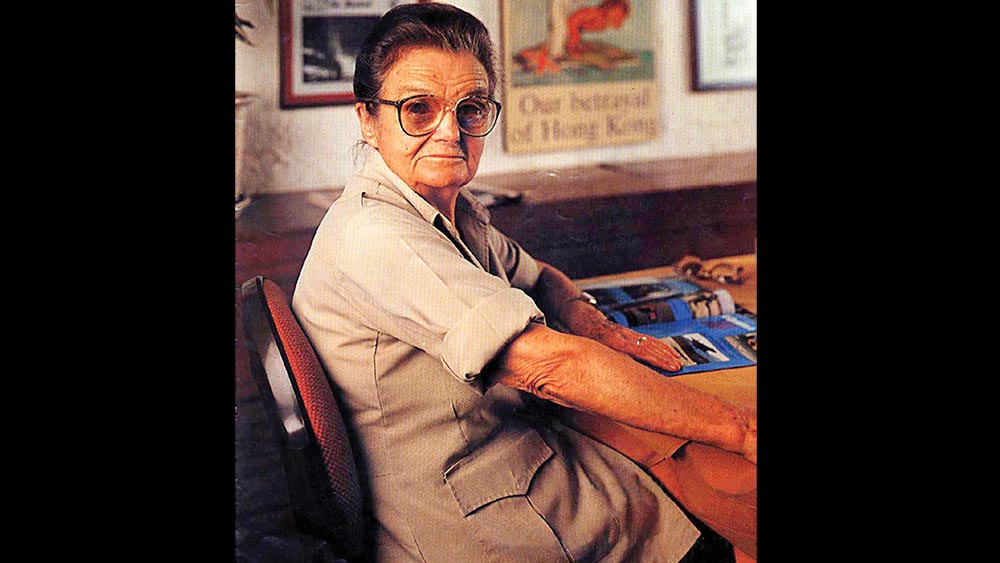
| Ms. Hollingworth had a remarkable career as a foreign correspondent with the scoop of the century as a 27-year-old when she reported on Germany’s invasion of Poland in 1939. Ms. Hollingworth was also a treasured member of the FCC for more than 40 years who made significant contributions to the intellectual and professional life of the FCC.
|
|
| The Hollingworth Fellowship honours early career journalists and current journalism school students in Hong Kong. Journalists and journalism students from all fields of professional study are eligible. Applications close on 14 October. The fellowship will run for one calendar year, 1 November 2022 – 31 October 2023. |
|
| Overview of key features of the fellowship:
|
|
| For details on past fellows, please see below:
|
|
| Fellows Requirements and Expectations
|
|
| Eligibility Criteria
Candidates must meet all of the following criteria to apply:
|
|
| Application Process and Material
Applications must be submitted in English by 14 October, 2022; late or incomplete applications will not be accepted. Only chosen candidates will be notified by writing. All files must be submitted in either PDF or MS Word format to [email protected] with the subject line Attn: first name/last name of applicant, Clare Hollingworth Fellowship application. Applications should include:
|
Update on entry to Private Functions: Negative RAT test/ PCR test required
|
| Update on entry to Private Functions: Negative RAT test/ PCR test required |
| With the number of COVID-19 Omicron cases in Hong Kong continuing to rise, the Government has announced a new measure starting from Sunday, 28 August 2022. |
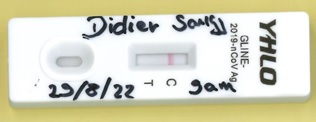
| All Members holding a private function or joining a Club event, and any Members’ guests joining these activities, must before entering show our staff photographic proof of a negative RAT test. The RAT test must be taken within 24 hours of joining the function and must show the person’s name, date, and time the test was taken, as per photo sample. Alternately an SMS notification can be shown containing the result of a negative PCR test received within the 48 hours preceding his/her entry to the Club. |
| (Sample of RAT test result) |
 |
| For reasons of hygiene and the safety of all Members and staff, RAT tests must be conducted prior to your arrival at the Club. Tests cannot be taken here at the Club. |
| If Members are in any doubt as to whether their event or booking is affected by these new conditions, please contact the office at 2521 1511 or email [email protected]. Those who do not follow these measures will not be admitted to the event. |
| Thank you for your continued support of the Club. Please take care, stay safe and healthy. |
| Keith Richburg President 30 August 2022 |
|
Obituary: Tad Stoner – ‘Hot as a pistol, but cool inside’: journalist, publican, guitarist and very much more
By Paul Ehrlich
Tad – Bartine Albert Stoner III – was a character of the highest order. He was loud, witty, smart and kind-hearted, though he would have denied this with a deep, full-throated laugh. What he wouldn’t deny is an affinity for whimsical braces (aka suspenders), a sartorial flourish for which he became renowned.
Born in Philadelphia in 1951, Tad attended Swarthmore High School and Pennsylvania State University. He later studied journalism as a postgraduate at the University of Missouri, where he met his future wife, Iris. “Tad was a cutie,” she recalls. “When I met him, he had long hair and the most amazing blue eyes. Hard to resist!”
Tad travelled to Beijing in 1981; Iris arrived six months later, and they were married the day after she landed. Following two years sub-editing at Xinhua News Agency, they spent a holiday in Hong Kong and fell in love with the place. “It had everything Beijing didn’t,” says Iris, “including a vibrant press, an abundance of energy and a thriving entertainment scene. Plus, back then, it was free of the oppression that was prevalent all over China from both a journalistic and social perspective.”
The couple moved to Peng Chau, living in the same hilltop home for 20 years, raising their three children – Erin, Ben and Adam – and, at one point, co-owning and operating The Forest bar and restaurant. “It was the first place in Hong Kong to serve the Belgian wheat beer, Hoegaarden, which required effort to ensure its continued freshness,” recalls Iris. “Tad would happily regale each patron with the story of the beer, regardless of whether they were ordering it, asked about it or were there for a completely different drink.
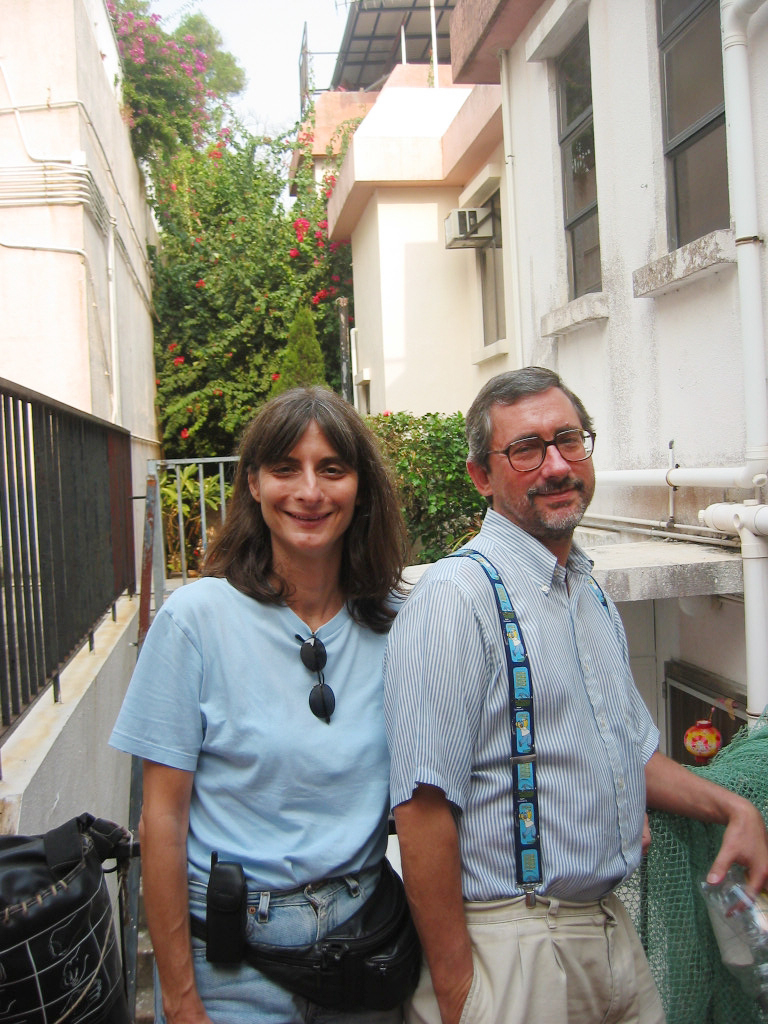
“He also was in charge of the music and kept a tight rein on his CD collection. As time went on, he loosened up a bit and would take requests. But when Jerry Garcia died in 1995, he played his very extensive collection of Grateful Dead CDs nonstop for several days, which did not go down well with all of the regulars.”
A talented guitarist himself – playing his much-loved Martin acoustic – he’d join fellow journo friends dubbed “The Stiff Picks”: Nigel Armstrong on bass, Robin Lynam on guitar, Karin Malmstrom on fiddle, and Steve Shellum on steel guitar and banjo. “Tad always led the way with a seemingly bottomless well of songs and was also a strong vocalist,” says Shellum.
Tad’s first job in Hong Kong found him reporting for Commercial Radio. He also wrote for the South China Morning Post, TIME and The Hollywood Reporter. He put in a stint as executive speechwriter and corporate communications officer for STAR TV, and later became chief reporter for the Eastern Express. After selling The Forest in 1998, he joined PCCW as corporate communications officer.
After more than two decades in Asia, in 2005 the couple decided they wanted to be closer to their ageing parents and their daughter, who was at university in the US, but they didn’t want to live there. Iris had a connection to the Cayman Islands through a friend, and after a successful interview with the then-daily newspaper, Caymanian Compass, they moved there and worked as reporters. Other jobs followed.
Over the last few years, Tad renewed his focus on playing the guitar, despite having lost a few fingers to a rare, chronic autoimmune skin disorder. “He and our son Adam practised enough to develop quite a repertoire of mostly classic rock,” says Iris. “For the last year or so, they performed together at open-mic nights every week around Grand Cayman.”
Tad bravely fought several medical battles over the years. That he lived with courage and grace and humour throughout is an inspiration.
Tad died on 17 June, aged 70. He leaves behind his wife Iris, daughter Erin and son-in-law Chris, sons Ben and Adam, grandchildren Max and Lyla – who called him GrandTad – mother Elizabeth Welsh and brother Jonathan.
Obituary: Ewen Campbell – ‘A newspaperman, and a brilliant one at that’
By Jon Marsh
Warm, funny, generous… A great colleague, an even better friend… The bloke you wanted beside you in the office as deadlines loomed, and sitting next to you in the pub afterwards. The tributes to Ewen Campbell have flowed thick and fast since Hong Kong lost one of its most talented and best-loved journalists.
An FCC stalwart, he lunched at the same table in Bert’s with the same close friends almost every Friday for more than 15 years; popular rants included Trump, Brexit and Boris. On Sunday afternoons, he was a regular at the China Bear in Mui Wo.
Hong Kong took to Ewen the moment he stepped off the plane in 1986 to join the South China Morning Post. And, despite a typically brutal introduction to Murdoch journalism – he was shafted before he even started – he returned the favour to the city with all that lust for life everyone loved in him.
Hired as sports editor, he arrived to find that seat taken and was shuffled off to the back bench before eventually taking over the sports editor’s role. At the time, Murdoch executives ruled the Post via a mix of fear and stupidity. Ewen (among others) took particular relish in winding up an especially thick deputy editor nicknamed BIFFO – Big, Ignorant Fucker from Oz.
Ewen next found himself at the centre of the launch of Eastern Express by the Oriental Press Group in 1994 where editor Steve Vines was quick to recruit him as production editor.
They were exciting, stressful times. “The launch deadline was very tight and the new technology shaky,” says former managing editor Jon Marsh. “His relentless energy and extraordinary ability to get people to work together pulled us through. He was the glue. Without Ewen, Eastern Express would never have met that deadline. He was a force of nature, and a wonderful friend and colleague.”
Despite the teething problems, the new daily was an editorial success. Relations with the management were at first cordial, with chairman CK Ma playing the role of generous patron. Over drinks one evening Ma asked: “Would you like a cigar?” Ewen replied: “A car?” Amazed, Ma countered: “You want a car?” He then gave him a second-hand runabout, a very slight upgrade on his old banger.
However, bolting an English-language newspaper onto a large, family-run Chinese newspaper group proved to be fraught with difficulties. Relations with management soon soured, leading to an exodus of senior staff, and it closed within two years.
By then Ewen was in Bangkok, working on another newspaper, Asia Times. Launched in 1995, the project was the brainchild of Sondhi Limthongkul, a flamboyant Thai media mogul. Again, Ewen helped muscle the publication into life despite working with an eccentric, almost comically inexperienced production team. But the newspaper suffered commercial challenges and fell victim to the 1997 Asian financial crisis.
Next stop was Auckland, where Ewen became sports editor of The New Zealand Herald before returning to Hong Kong in the early 2000s. He went on to work for the iMail and the satirical magazine Spike before re-joining the SCMP, leaving as night editor in 2012. Ewen later moved into corporate communications before helping to resuscitate the online version of Asia Times as an editorial consultant.
At the start of his career in England, he initially worked for the Whitley Bay Guardian and The Northern Echo and in 1979 joined the Daily Star. Close friend Gordon Watts said: “Ewen was always a newspaper man, and a brilliant one at that. He was also one of life’s good guys.” Another former colleague, Steve Wolstencroft, nailed it when he said: “There aren’t many people in the sometimes-backstabbing world of newspapers who never have a bad word said about them. Ewen was one of them. He was the bloke you’d want to have beside you in the office and next to you at the bar in the pub.”
Ewen died from cancer last July, aged 69. He leaves his beloved partner Teri, daughters Sarah and Molly, son Hamish and grandchildren Malcolm and Edie.
Obituary: Suzanne Pepper – The China Watcher who China Watchers Watched
By Frank Ching
Suzanne Pepper, a noted China scholar who called Hong Kong home for more than half a century, died in late June, days after a week-long hospital stay for a battery of tests. She was 83 years old.
Suzanne arrived in Hong Kong in the 1960s to study Chinese, and promptly met fellow student Virupax Ganesh Kulkarni – known as VG – an Indian army officer attached to his country’s consulate. The pair decided to marry. VG left government service to become a journalist. He and Suzanne tied the knot in New York in June 1970.
VG studied journalism at Columbia University and interned at United Press International. Suzanne got a PhD in politics from the University of California at Berkeley.
The couple returned to Hong Kong in the 1970s. VG began his journalistic career while Suzanne renewed her affiliation with the Universities Service Centre (USC) on Argyle Street, where she had previously done research. It had been set up in 1963 by American scholars to study Mao Zedong’s revolutionary China and was funded by various foundations.
In a history of the centre that Suzanne wrote in 1988, she said: “In its prime… the USC served as the main research base in the field for several generations of China scholars… as interest quickened during the late 1960s and 1970s, a period of affiliation with the USC became de rigueur for American social scientists in particular.”
She was to be associated with the centre for the rest of her life.
As John Dolfin, the USC’s longest serving director, said of Suzanne, she and the USC “have become synonymous in the minds of virtually everyone in the international China studies field.”
Hong Kong was long the China-watching capital of the world, and western scholarly efforts centred on the USC.
However Beijing was highly suspicious. On 27 December 1979, the People’s Daily, in an article on a different subject, mentioned in passing that the USC was a “national front organisation of spies.”
This remarkable charge was followed by a rare retraction the following month and a letter of apology to the centre’s director.
The opening-up of China led scholars – and foundations – to shift their interest northward. The USC’s loss of financial support led to its closure in 1988, when its holdings were taken over by the Chinese University of Hong Kong (CUHK). Suzanne, too, moved to the university.
CUHK kept the centre going for three more decades. Last year, its holdings were placed within the university’s library, but Suzanne, a fiery writer and speaker who lived up to her patronymic, managed to cling onto her perch.
She authored major books on the Chinese civil war and education reform in the 1980s. In 2008, she brought out Keeping Democracy at Bay: Hong Kong and the Challenge of Chinese Political Reform.
VG died in 2014, after which the FCC made Suzanne an honorary lifetime member.
About that time, Suzanne started her blog, Hong Kong Focus, and began publishing articles in the media. When Hong Kong Free Press launched in 2015, she became a contributing writer, providing analyses on political affairs; she later became a columnist, bringing her knowledge of China to bear while analysing Hong Kong politics.
In a recent piece after John Lee emerged as Beijing’s choice for Chief Executive, Suzanne examined the implications of the move.
“Beijing is making the rules and Beijing is deciding up front who will be Hong Kong’s next Chief Executive,” she wrote. “No more niceties about public opinion, consultations and the like. There must be no doubt as to the source of authority for this decision.”
Suzanne was at the university six days a week. She did not have a computer at home. She also did not have a mobile phone.
This made it difficult for people to contact her during her final days. Several, including her sister, Patricia in California – another sister, Katie, lives in New York – and close friends Jean Hung and John Dolfin, were able to speak to her. Their later inability to reach her resulted in the police being called, who subsequently found her body at home.
Suzanne’s death brought forth a torrent of accolades from the academic community.
“Suzanne Pepper deserves honour in our field, and I believe that scholarly attention to her works will increase further in later years,” said Lynn White, a Princeton University scholar. “We will miss this spicy person too.”
He won’t be the only one.