
 |
| The Foreign Correspondents’ Club Awards Clare Hollingworth Fellowships |
 |
| FELLOWS |
| Trista Xinyi Luo |
| Trista Xinyi Luo is a reporter at Bloomberg News, where she covers the debt capital markets and the evolving financial landscape in Greater China. She relocated to Hong Kong from New York in 2023 with Bloomberg. She holds a bachelor’s degree in Journalism from the University of Missouri. |
| Samra Zulfaqar |
| Samra Zulfaqar joined CNN as a freelance News Editorial Researcher and Planning Producer following her internship covering political and social issues across East and Southeast Asia. Before that Samra has interned at NBC News, primarily contributing to the Israel-Gaza War live blogs. She recently graduated from The University of Hong Kong with a degree in Journalism and International Relations. Outside of work, Samra enjoys doing yoga and hiking. |
| The Foreign Correspondents’ Club, Hong Kong is pleased to announce that it has chosen Trista Xinyi Luo and Samra Zulfaqar as recipients of the seventh annual Clare Hollingworth Fellowship, named in honor of the preeminent and path-breaking journalist. |
| The panel of judges noted the winners offer clear potential as future leaders both within the FCC and in the wider Hong Kong journalism community. |
| The Fellowship is focused on early-career journalists and current journalism school students in Hong Kong. |
| The open competition drew significant interest from a cross spectrum of applicants. The adjudicators noted the high standard of applicants and encouraged all to apply again next year. |
| For further information on the Clare Hollingworth Fellowship, please visit: https://www.fcchk.org/fcc-clare-hollingworth-fellowship-2025-2026-applications-open/ |
 |
Letter from the President
|
|
|
|
|
 |
| Dear Members, |
 |
| This may sound like a curious question coming from the President of a press club, but recently I’ve found myself wondering, what is a journalist? For the sake of our Club’s membership, the answer is fairly simple. We look for the majority of a Member’s income to come from journalistic activity, and then where that work is published. Looking up “journalist” in a dictionary will find something along the lines of “a person who writes for newspapers, magazines, news websites or prepares news to be broadcast”. |
|
| It feels like it should be simple enough to define the role of a journalist but, as we have found throughout history, people, particularly those in positions of authority, will produce rather nebulous definitions of journalism. If we look to the United States, the current administration has embraced what they call “new media”, which includes a pool of clearly partisan publications and people many of us would opt to call “influencers”. |
|
| But the presence or lack of objectivity cannot help us define a journalist. As much as the media tries to produce news that is “unbiased” and “objective”, the reality is that objectivity is a relatively new phenomenon in journalism. Historically, publications have taken sides. What most of us as journalists now try to achieve is something that is as critical and objective as possible. This generally relies on what we hope is a media literate consumer who will read and watch news produced by multiple platforms. It also relies on the ability of multiple publications, staffed by diverse journalists, to produce news. |
| This diversity is often stifled, both intentionally and unintentionally. The latter is something that we, as an industry, need to more consciously address. The former is a bit more clear cut. While I can’t argue with the need to redefine journalism in the 21st century, the “new media” pool in The White House seems to clearly lack diverse thought. Likewise, when we look at the media situation in Gaza, we see foreign media shut out. That creates a reliance on local journalists who can both more readily be accused of bias by outsiders, and a stifling of information that international journalists may be able to report and share with their home consumers. |
|
| What concerns me, as a member of the press and the President of the FCC, is how we identify and react to bias. Media-literate consumers should be able to look to multiple news sources to recognise bias in a way that makes them more critical and knowledgeable. But too often perceived, or real, bias is weaponised. It becomes an excuse, by all sides, to crush voices of opposition. What we are seeing in places like Nepal and Gaza is violent, intentional repression of the media. |
|
| We may differ slightly in our definitions of a journalist, but in my position, I will continue to stand for the right of all journalists to work without fear of repercussions. Journalists are civilians, and journalism is not a crime. |
|
| Best Regards, |
|
|
|
| Morgan M. Davis President |
| [email protected] |
|
|

Asia needs another Formula One destination says racing expert Matthew Marsh
By Hugo Novales
As Formula One inches closer toward the end of its longest-ever season, former racecar driver and motorsport expert Matthew Marsh returned to the FCC to share his latest insights with a crowd of the Club’s most dedicated F1 fans.
With Second Vice President Tim Huxley moderating the discussion, Marsh first talked about McLaren’s management issues and how they impact the team’s top drivers, Lando Norris and Oscar Piastri.
“The road to hell is paved with good intentions,” Marsh said when reflecting on the McLaren drama in a follow-up interview after his FCC talk.
Drama — nothing new for F1 — dates back to the 2024 Hungarian Grand Prix where Norris initially declined orders to allow Piastri to overtake him for first place. Piastri was in danger of being passed by Ferrari’s Lewis Hamilton, and with just two laps remaining, Norris changed his mind, allowing Piastri to secure his first-ever F1 victory while Norris and Hamilton placed in second and third, respectively.
Since then, McLaren has experienced a variety of position swap decision disputes that threaten both the team’s stability and ranking against other F1 teams.
Marsh compared McLaren’s internal trouble with that of Red Bull, who in July sacked team principal Christian Horner 17 months after being accused of inappropriate conduct, accusations that he was later cleared of after an internal investigation. The team made several other staff changes, and unlike McLaren, continued upgrading and improving their cars.
Red Bull’s Max Verstappen still stands in third place in F1’s overall rankings with 306 points while Piastri holds first with 346 and Norris holds second with 332, yet Marsh believes Red Bull’s continuous push for solid performance and improved engineering could lead to Verstappen becoming this year’s champion.

“[At] F1, we like to support the underdog,” he said. “I think most of us want to see the underdog come through, and Max [Verstappen] is now the underdog, and it’s a great story.”
Marsh went on to praise Verstappen’s performance this season, noting that he “never has a bad weekend” and secures wins consistently and without error.
“If you can win, win it now,” Marsh added, highlighting the competitive and ever-changing nature of F1.
The 2025 season has seen only three F1 races in East Asia: Round 2 in China, Round 3 in Japan, and Round 18 in Singapore. Plans for an F1 track in Vietnam have been scrapped, which could impact Thailand’s ambitions for a 2028 race. If Thailand eventually pulls out, Marsh finds that this move would be Thailand “shooting itself in the foot” out of cost and logistics concerns.
“We do need an extra race in Asia,” Marsh said.
If not Thailand, then who? Seoul in South Korea, as well as the FCC’s very home of Hong Kong are the only two potential candidates that make sense to Marsh, yet getting to this particular finish line will be just as much work (if not more) than competing in an actual F1 race. Both a visionary project leader and buy-in from government officials are key to bringing any city’s ambitions to host F1 to life.
Despite the common pushbacks to hosting an F1 race, Marsh’s stance is that the hard work in building a new F1 destination in Asia will benefit tenfold for both the local economy and national pride. He cited his experience living in Singapore where a single F1 event encapsulates the city.
“To have your city on the stage to show that you can host a Grand Prix… How proud do you feel about the fact that your nation puts on one of these — only 24 in the world — and executes it?” Marsh asked rhetorically.
Marsh also shared his views on the accuracy of F1: The Movie (2025), Ferrari’s performance in comparison to other leading F1 teams, Apple’s impact on F1, and more.
To watch the full discussion, please visit the FCC’s YouTube channel:
Remembering the Vietnam War Through FCC Eyes
By Hugo Novales
The Vietnam War ended on April 30, 1975, just over 50 years ago. Spanning nearly two decades and resulting in a total loss of over a million lives, it was one of the longest and deadliest conflicts that shaped history and still echoes today.
The Vietnam War also made an impact on the FCC and the journalism industry as a whole.
During the war, the FCC became a hotspot for journalists covering the conflict, as did Saigon, the former capital of South Vietnam where correspondents were free to live and work — much unlike the arrangements for journalists in World Wars I and II. Many of the war’s iconic photographs, including the last helicopter out of Saigon, were even taken by FCC members.
The FCC’s Bunker, a quiet room located next to the Main Bar and Lounge, is dedicated to the Vietnam War and all the correspondents who risked their lives to cover it. Photographs, memorial plaques, and even some of the original cameras that these journalists used are all on display.
Earlier this year, the FCC hosted a Club Lunch to commemorate the 50th anniversary of the end of the war with a panel of correspondents and other notable FCC members who witnessed the conflict firsthand.
Moderating the discussion was Correspondent Governor Jennifer Jett, who asked Edie Lederer, the first panelist, about this year’s Reunification Day celebrations which she attended at the invitation of the Vietnamese government.
“[It was] very, very joyous,” she said.

Lederer was the first woman to cover the Vietnam War full time for the Associated Press and later became the AP’s first female bureau chief overseas, in Lima, Peru. She also lived and worked in Hong Kong. She has been the AP’s chief correspondent at the United Nations for the past 25 years, and her reporting career has taken her to every continent except Antarctica.
Previous celebrations (which Lederer also attended) didn’t have as many young people show up when compared to this year’s event. The Covid-19 pandemic canceled the 45th Reunification Day parade that would have taken place in 2020, which ultimately led to a massive and highly anticipated parade this year — the first in 10 years.
Lederer, along with other correspondents from the Vietnam era, was able to reminisce about her days as a war correspondent during the occasion. She shared what it was like for her and others to relive some of the most dangerous days of their lives.
“[It’s a] terrific, emotional, cathartic experience for a lot of them as it was for me,” she said.
Annie van Es, the second panelist, was not a journalist herself but was able to witness her late husband Hubert “Hugh” van Es and his fellow correspondents relive their “shared danger” back when they lived in Saigon from 1969 to 1972.

She described Saigon as a “very livable and fun place” that was actually far away from the battlefield. When Hugh would come back from his reporting trips, the couple would often gather with his fellow war correspondents at bars across Saigon so they could decompress over a few drinks. This is where Annie was able to hear their stories and see how Vietnam correspondents bonded over their “close brushes with death.”
The panel then explored Hugh van Es’s self-assessment of his own work covering the Vietnam War.
Kees Metselaar, a fellow Dutchman and close friend of Hugh van Es, was willed Hugh’s collection of photographs and other journalistic materials after he passed away in 2009. As the third panelist, he shared what Hugh thought of his own work, revealing that while his photo of evacuees lined up on a Saigon rooftop trying to escape via helicopter was one of the most iconic photos from the war’s end, it was merely “accidental.”

Hugh, accompanied by a group of soldiers and other correspondents, noticed that the roof of the building across the street from their office was being reinforced with steel just a couple of days before the evacuation. They kept a close eye on the building and Hugh was able to capture the iconic shot as if it were just another day on the job — nothing more, nothing less.
Metselaar said Hugh was more proud of his work covering the Battle of Hamburger Hill, a controversial battle that resulted in the loss of many American lives despite holding little strategic value in the conflict.
Hugh’s photos, along with the coverage from various other news organizations, spurred widespread U.S. criticism of the battle as well as the overall U.S. involvement in the Vietnam War, which continued to be mired in controversy until its chaotic end in 1975.
To watch the full discussion, please visit the FCC’s YouTube channel:
Obituary: Vale “The Maestro” Kerry McGlynn – Guru, Mentor, Friend and King of Cool
By Brett Free
If ever a man was in his element – in his “zone” – it was Kerry McGlynn at the Main Bar of the FCC during the Friday Night Swill.
This is not what defined “Maestro McGlynn” as a person – far from it. But this is where Kerry brought to bear, on a regular basis, all the elements that made him such a “Master of the Dark Arts” where government PR, off-record chats, and background briefings “between us girls” met the hard-nosed, cynical coalface of Hong Kong’s local and international press corps.
Kerry often quipped that he worked for the Ministry of Truth. This always elicited loud guffaws, as well as a nod and a wink from those who got the joke. This was Kerry’s clever way of disarming those he met – a self-deprecating nod to the fine line that ex-hacks like himself had to walk to fulfil the role of a “government spokesman” while engaging the media in a meaningful way.
And it worked. After all, someone who took the mickey out of himself wasn’t your bog-standard government spinmeister – he was more like “one of us”, an ex-journo who understood the media and knew he had to earn their trust and respect. And that he did in large measure.
Kerry’s Friday night forays epitomised his reputation as a bloke that everyone seemed to know or wanted to meet and was genuinely happy to see.
Within seconds of entering the Club, Kerry was talking to someone. Sometimes in the foyer, or on the steps leading to the bar. The Snug was a fertile ground for engagement – though for just a “quiet” word or two. In the Main Bar – left, right and centre – Kerry had spotted someone, or someone had spotted Kerry, and there ensued a quick chat, a bit of banter, a “call me” or “talk to you later” and plenty of laughs. Everyone loved Kerry’s laugh, it was contagious.
For those waiting for him at the bar, Kerry’s arrival was always noticed but the big question was: When would he finally arrive? It was often 15 or 20 minutes before “K”, “K-ster” or “Kerrance” as he was known to different friends, had run the gauntlet of correspondents, contacts, confidantes and acquaintances before plonking down his card, opening a tab, and starting a session with a cleansing Prosecco before settling down to his regular Pinot Grigio (Members pour). And then, holding court for the rest of the night.
Front desk staff always greeted “Mr McGlynn” with a smile and a warm welcome, as did staff all over the Club and his regular haunts such as the Hong Kong Cricket Club. Kerry didn’t just say hello – he knew most staff by name, asked how they were, what they were doing, and how their families were going.
This genuine warmth and interest in people was a trait that endeared Kerry to all he met – from the small potatoes to the “grown ups” he advised in government and, later, business circles.
His silky-smooth voice would put people at ease, whether a young colleague needing calm reassurance, or a loh baan or taipan seeking advice on a thorny communications conundrum.
To those who worked with him, Kerry was indeed the “guru”, the Prince of PR, the King of Cool and the Sultan of Suave to boot. He was approachable, inquisitive, widely read, and possessed a razor-sharp news sense. He was humble, kind, empathetic, accommodating and fair – he looked out for the little guys and gals – but also a tough task master when it came to the standards required to perform at a high level in the PR world. Rarely critical or negative, Kerry led by example, set the bar high and then did what he could to lift his team.
He always provided honest, unvarnished advice, even if those he was briefing didn’t want to hear it. When Kerry spoke, people listened – not because they had to, but because they wanted to hear what he had to say.
Kerry’s work ethic, sense of a“fair go” and strong desire to chart his own course were shaped by his upbringing in a large, working-class Irish Catholic family in Sydney’s tough inner west. He dropped out of school aged 15 and eventually scored a job as a copy boy on the Daily Mirror. He landed a prized cadetship on his 17th birthday in 1958.
Kerry cut his teeth in the highly competitive Sydney media scene at a time when journos worked hard and played even harder. In his heart, he was always a newspaper man.
In 1963, aged just 22, he upped stumps and headed to the U.K. to work on Fleet Street for Australian Consolidated Press. It was in the U.K. that he met the love of his life, Jenny. Realising that she was “the one”, they married in Bournemouth in 1965. They returned to Sydney in 1968, where Kerry worked for Sydney’s The Daily Telegraph and Sunday Telegraph.

He joined the Government Information Services (GIS) as a direct recruit Senior Information Officer in 1974. After just six years, he was posted to the London Office in 1980 for a two-and-a-half-year stint to help raise Hong Kong’s profile ahead of the Handover negotiations. This was the prime overseas posting in those days because of the link it played between Whitehall and the Hong Kong Government.
At the end of 1982 Kerry returned to Hong Kong to work in the-then Public Relations Division responsible for monitoring local and international news coverage on Hong Kong and providing a pithy summary of key issues and coverage to government leaders at “morning prayers” every day at 8:00 am.
Within a decade of starting at GIS, Kerry was promoted to Assistant Director in February 1984 – a stellar rise considering the norm in those days was at least five years in each rank of Senior, Principal and Chief Information Officer before being considered for testing as a Directorate Officer. As ever, Kerry was ahead of the game.
Kerry defied the norms again in 1987 when appointed head of the Hong Kong Economic and Trade Office in New York (NYETO). These overseas postings were and still are jealously guarded by the Administrative Officer (AO) grade, so Kerry’s highly unusual posting did not go unnoticed. He seized the opportunity and challenge to represent the “New York of the East” in the Big Apple itself. His proactive approach and engagement of media, political and business contacts in New York and beyond – coupled with his natural charm and love of Hong Kong – was a benchmark for such postings.
The last Governor’s arrival in July 1992 heralded a seismic shift in the way the UK chose to handle the transition to 1997 – and opened the door for Kerry to assume a role that would coalesce all he had learned in 37 years of journalism and government PR.
Kerry’s appointment as Chris Patten’s Press Secretary in 1993 gave full play to his potential and knowledge as a trusted and vital member of the Governor’s “inner circle” of political aides and advisers, the likes of which Hong Kong had never seen. Kerry was in his element and thrived – not without its stresses and strains. But this is where he was always meant to be and wanted to be, in the thick of the action.

Patten’s modus operandi as a seasoned politician ensured that Kerry, his main connection to the media, was in the loop on all matters big and small. This trust and access enabled Kerry to speak with authority to local and foreign press – and contribute strategically in meetings with the government’s top echelon. Kerry remained close friends with Patten and wife Lavender after 1997, and rumour has it that Patten even adopted Kerry’s signature fashion quirk of wearing non-matching socks.
After Patten’s departure, Kerry returned to the Information Services Department as DDO – Deputy Director (Overseas) – responsible for Hong Kong’s international media, promotion, marketing and engagement with international stakeholders such as chambers of commerce, the HKTDC and the HKTB.
It is a mark of his foresight that while still at Government House – with all that was going on in the run up to 1 July, 1997 – Kerry turned his mind to how Hong Kong might be positioned and promoted after the reversion of sovereignty. This was the genesis of BrandHK, but the Asian financial crisis in 1998 put it on the back burner for a few years. “Asia’s World City” was eventually launched with considerable fanfare in May 2001.
Kerry also commissioned workshops at the HKCEC for hundreds of senior officials to help them understand the thinking behind BrandHK, and reinforce the notion that everyone had a role to play in Hong Kong’s positioning as Asia’s World City. Again, another first.
Post-97 Kerry’s talent and skills as a storyteller and speech writer were put to good use by Anson Chan and Donald Tsang, the two most senior officials embodying the continuity and stability that Hong Kong needed on the international stage at the time. As the key transition leaders for the HKSAR, both Anson and Donald knew well how Kerry operated, and sought his input and counsel.
“Kerry has done sterling service to Hong Kong during his time with ISD and afterwards,” former Chief Executive Donald Tsang told The Correspondent, the FCC magazine. “I always treasured his wise counsel and will never forget his unwavering support when we travelled overseas together to promote and fend for Hong Kong.”
Kerry retired from ISD in January 2002, returning to Sydney with wife Jenny to reunite with his daughters Kate and Lucy and their families. Sadly, Jenny was bravely battling cancer at the time and passed away in October 2004 – leaving a massive hole in the lives and hearts of Kerry and his daughters.
Kerry wholeheartedly supported Jenny’s work to establish the Life Education Activity Programme (LEAP) in Hong Kong, which since its launch in 1994 has provided healthy living education to more than two million school children. In honour of his wife, and to continue contributing to Hong Kong, Kerry continued serving on the LEAP board and was even sending out fundraising appeals the day before he died.
After Jenny’s passing, Kerry returned to Hong Kong to provide strategic communications advice to the government in the run up to and staging of the World Trade Organization’s Ministerial Conference in December 2005.
He was then snapped up by Cathay Pacific as a special adviser to the CEO, after which he became a special adviser to the CEO of Swire Properties. CLP also made good use of his PR talent and writing skills. It was during this time that he courted the second love of his life, “LV”, whose infectious laugh and caring nature endeared her to all of K’s friends.
Kerry drew a line under his time in Hong Kong in October 2016 – 42 years after first setting foot in the city. Back in Sydney, he spent plenty of time with his family, grandchildren and friends, and set up home in the inner-west suburb of Balmain. He remained remarkably well informed on Hong Kong affairs.
Kerry was not without some health challenges, but he did not share this news widely. He just preferred to “get on with it”. He battled and beat lung cancer, losing a third of a lung in the process. This impaired his lung function, which was a contributing factor in his diagnosis a few years ago with incurable pulmonary hypertension.
Kerry bravely fought this scourge for as long as he could but succumbed on 11 September, 2025 with his daughters and LV by his side. True to form as an ex-hack with a penchant for explaining the who, what, where, when and why, Kerry prepared his own death notice to be posted on Facebook. He chose a photo which is quintessential Kerry – quietly confident, impeccably dressed and with just a twinkle of mischief in his eyes. This announcement came as a huge shock to most of his friends who had no idea that he had been so ill.
“Not the way I intended to go but, as they say, life’s a bitch and then you die. I love you all.”

We love you too, mate.
Brett Free retired as ISD Deputy Director in early 2022. Kerry McGlynn chaired the selection panel that hired him in 1993.

How to be an ethical journalist in 2025 — an FCC panel discussion
By Hugo Novales
Newsrooms across the globe are facing increasing ethical challenges in their daily work.
AI-generated content, political pressure and bias, the dangers of reporting in conflict zones, internet and visa restrictions — all of these (and more) are just a few examples of the hurdles the average journalist must overcome in pursuit of fair and accurate reporting.
With all these challenges, how can a journalist maintain their professional integrity?
To answer this question, FCC Correspondent Governor Jennifer Jett hosted a fully-booked Club Lunch with two ethics experts: Selina Cheng, Chairperson of the Hong Kong Journalists Association (HKJA), and Eric Wishart, the Standards and Ethics Editor at AFP and author of the new book Journalism Ethics: 21 Essentials from Wars to Artificial Intelligence (2024).
The first topic the panel discussed was the idea of “good Hong Kong stories.”
John Lee, Chief Executive of the Hong Kong Special Administrative Region, has been promoting this idea of “good Hong Kong stories” as far back as July 2022. He included this concept in his Policy Address in October of the same year.
“Good Hong Kong stories” has been met with confusion and skepticism among Hong Kong newsrooms — most notably Hong Kong Free Press, which summarized its failed efforts to engage with the local government in a January 2024 feature story.

“One thing I hear is that journalists are supposed to tell good stories about Hong Kong. That’s not our job. We’re not propagandists. We should neither tell good nor bad. We should just tell what’s happening,” said Wishart, a former FCC President.
Cheng also said concepts like “good Hong Kong stories” and other top-down initiatives may conflict with the objective of journalism, especially the work of investigative journalists and other reporters working with sensitive information.
“Are you supposed to be a watchdog and speak for those who are voiceless, bring to the surface things that society didn’t know, or are you supposed to channel and agenda, promote values that are allowed?” she said.
Cheng was also asked about censorship and self-censorship in Hong Kong, and in particular how journalists should proceed with their daily work when the lines between what can and cannot be reported aren’t so clear.
First, Cheng explained the differences between censorship and self-censorship. She defined censorship as a situation where a news story doesn’t get published or is deleted after it’s published, while self-censorship is a choice by the individual journalist as to whether they should write about a specific topic out of concern for their job security or personal safety.

“If you want to live longer, you’ve got to play it safe,” she said, highlighting how self-censorship has become more common not just in Hong Kong, but in other regions across the world including the United States.
Cheng also gave broader advice to journalists and newsrooms who wish to maintain their audience amidst an ever-evolving social media landscape that sees not only newsrooms, but social media influencers, independent news companies, government-run media organizations, and other online entities all competing for attention from daily internet users.
The solution: maintain consistency with the quality of your work — and most importantly, your ethics code — in order to continuously deliver a product that your followers need.
“We already know that people are not just consuming information from news, they’re consuming from a whole host of other channels. If you’re not being relevant to your news readers, your consumers, they’re not going to like you anymore,” she advised.
The panel also discussed the proper methods for reporting on mental health and suicide, how to maintain objectivity despite having personal opinions, false balance, and other journalism-related topics.
To watch the full discussion, please visit the FCC’s YouTube channel:
FCC Clare Hollingworth Fellowship 2025 – 2026 – Applications Open
|
| FCC Clare Hollingworth Fellowship – Applications Open |
 |
| The Foreign Correspondents’ Club, Hong Kong is accepting applications for the Clare Hollingworth Fellowship, named after the preeminent and path-breaking journalist. |
|
|
|
|
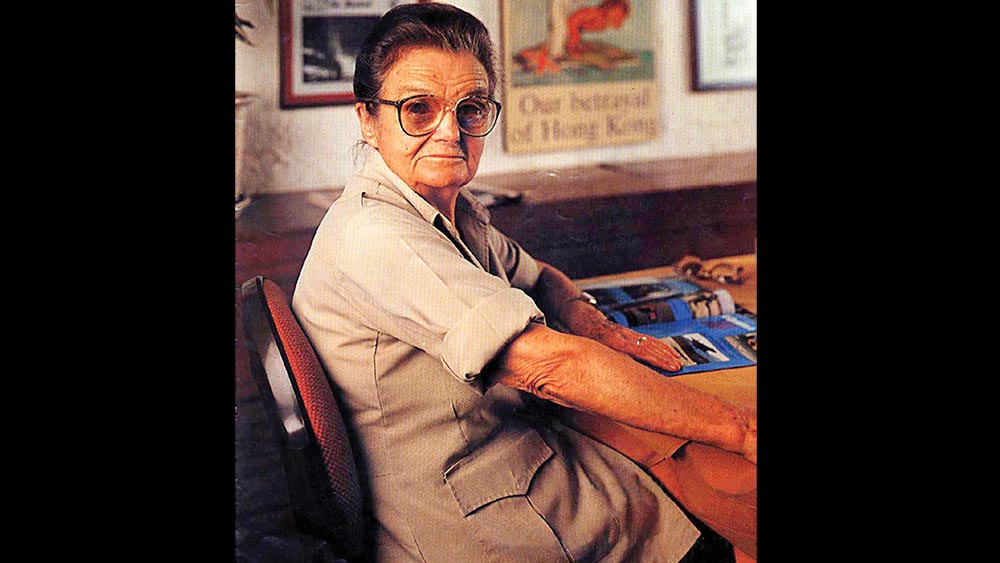
| Ms. Hollingworth had a remarkable career as a foreign correspondent with the scoop of the century as a 27-year-old when she reported on Germany’s invasion of Poland in 1939. Ms. Hollingworth was also a treasured member of the FCC for more than 40 years who made significant contributions to the intellectual and professional life of the FCC. |
|
| The Hollingworth Fellowship honours early career journalists and current journalism school students in Hong Kong. Journalists and journalism students from all fields of professional study are eligible. Applications close on October 13, 2025. The fellowship will run for one calendar November 1, 2025 – October 31, 2026. |
|
Overview of key features of the fellowship:
|
|
| For details on past fellows, please see below: |
|
Fellows Requirements and Expectations
|
|
| Eligibility Criteria
Candidates must meet all of the following criteria to apply:
|
|
| Application Process and Material
Applications must be submitted in English by October 13, 2025. Late or incomplete applications will not be accepted. Only chosen candidates will be notified by writing. All files must be submitted in either PDF or MS Word format to [email protected] with the subject line
|
Improving literacy in Hong Kong — an FCC panel discussion
By Hugo Novales
According to the Progress in International Reading Literacy Study of 2021, only 16% of parents in Hong Kong read with their children — far below the international average of 42%. Only 32% of Hong Kong’s youth say they are confident with their reading skills (still below the 43% international average) and just 14% of the city’s parents actually enjoy reading.
To discuss how Hong Kong can improve its literacy rates and foster a love for reading in both children and adults, the FCC held a Club Lunch panel featuring representatives from three literacy-focused charities in Hong Kong.
Sitting on the panel was Christine Choi, Director of Elephant Community Press; Matthew Coulson, Executive Director of Kids4Kids; and Manoj Dhar, the Co-Founder and CEO of Integrated Brilliant Education. The three charity leaders sat with Morgan Davis, then the First Vice President of the Club (now President) and Convenor of the Club’s Charity Committee.
Davis first began the discussion by asking the panel about how they define literacy and how children can become more interested in reading every day. The panel agreed that modern technology — particularly TV, smartphones, and videogames — posed a bit of a challenge to developing children’s interest in reading. However, they also advised that parents should provide opportunities for their children to improve their literacy by reading books featuring topics that interest them — without restriction.

“There shouldn’t be boundaries based upon your age of what you should and shouldn’t read. You just have to have partners who are there to support you in what you’re reading and helping you to understand them,” said Matt Coulson, who admitted to being an avid reader when growing up.
Coulson finds that by allowing children to pick any age-appropriate books that interest them will help them develop a positive relationship with reading that they will then carry with them for the rest of their lives.
Christine Choi has a different approach to engaging children with reading. At Elephant Community Press, she leads creative writing workshops for kids. By having children not just read storybooks but also having them attempt to write their own stories, Choi has seen children develop higher interest and proficiency with reading.
“If kids can see why writing and reading [are] useful to them, how adults around them use it in real life, then there’s meaning for them [about] why they should learn to read,” Choi said.

Manoj Dhar, the final panelist, also encouraged parents to become more involved with their children’s education. From his experience at IBEL, he has noticed the tendency that many parents have to simply leave the most critical components of child-raising to their domestic helpers, including reading. He also noted the local education system’s preference to assign homework and promote memorisation versus learning through an enjoyable process.
While it may be difficult to overhaul Hong Kong’s entire educational system, Dhar remained firm that parents must remain responsible for the outcome of their child’s educational success.

“The parents have to remember that the moment they’ve given birth to a child, it’s a lifelong responsibility,” Dhar said.
The panel also discussed AI’s impact on reading and writing, finding bookstores in Hong Kong, and other cultural barriers that impact literacy in Hong Kong.
To watch the full discussion, please visit the FCC’s YouTube channel:
Understanding Southeast Asia’s scam farms with two on-the-ground experts
By Hugo Novales
On January 3rd of this year, Chinese actor Wang Xing went missing after taking a trip to Bangkok, Thailand, for what he thought would be a casting call for a new film.
He was first picked up at the airport and driven approximately 500 kilometers away to Mae Sot, a city located on Thailand’s border with Myanmar. That’s where he lost contact with his girlfriend back in China, who on January 5th notified both the authorities and the public about Wang’s disappearance.
In a joint operation between Chinese and Thai law enforcement, Wang was rescued just two days later. He was found in Mywaddy, a small border town in Myanmar that’s become synonymous with the notorious “scam farms” that have spread across Southeast Asia.
These scam farms aren’t new, but they are growing, and regular citizens from all walks of life are their targets.
“It’s open season on us, not just here in this room or in Hong Kong, but really globally and around the world. We are literally living in an epidemic of scams,” said Cezary Podkul.

Podkul, an experienced investigative reporter and author of the upcoming book The Big Trace, organized and moderated an FCC Club Lunch to discuss why Southeast Asia has become a hotbed for the scam industry with two on-the-ground experts: Ling Li and Ivan Franceschini.
Li and Franceschini, along with researcher Mark Bo, have recently published SCAM: Inside Southeast Asia’s Cybercrime Compounds, a summary of their decades researching the networks, history, and criminology fueling the online scam underworld.
The expert pair began the discussion by sharing their first encounters with scam farms.
While on a research trip in Phnom Penh with the University of Liverpool, a 21-year-old Li first learned about Cambodia’s massive scam compounds from the Chinese scholars and business professionals living there. She was initially examining the country’s efforts to combat the slavery of women, but became more intrigued by this new cybercrime industry that she never knew existed. From there, she began not only researching, but getting directly involved with rescuing victims from the prison-like scam compounds.
“I’m a researcher, but I’m also a practitioner. Can I do something?” she said when explaining her motivation behind being more than just an expert on this type of crime.
When asked about why she continues to be an activist, Li answered that it was the victims’ stories that kept her going. She mentioned her experience with a 16-year-old girl who was tricked into traveling to Cambodia for work and became trapped in a scam compound. The girl ended up becoming pregnant while in the compound, and when Li rescued her, Cambodian authorities detained the young mother and her newborn baby for months due to lack of identification. Experiences like this are what remind Li that her work is life-saving.

“It’s just inhuman for me to see this. I just feel like we have to do something, even if it’s very heartbreaking every time to hear their stories,” she said, adding that, “There’s many times that I want to give up, that’s for sure, but then we do have a team to support me.”
For Franceschini, he remembered his 2019 visit to the Cambodian coastal town Sinoukville. He had been there years before and noted how the small town that was once ideal for backpackers searching for a quieter side of Cambodia had transformed drastically.
The Cambodian government’s 2017 plan to turn Sinoukville into a “new Macau” was overturned in August 2019 due to a rise in crime and illicit foreign investment, mostly from Mainland China. Franceschini called this move “completely unexpected” and explained that since the city’s gambling industry was now gone, it left behind the necessary infrastructure for online scams centers to take over.
When Franceschini first saw one of Sinouville’s scam compounds — a massive building repurposed from the city’s casino days — that was enough to make him interested in learning more about what was inside.
So how do these scam farms operate, and how do they differ from other types of scams?
Franceschini and Li first explained the details of two more common types of scams: investment scams — when a fraudster claims to have a good investment deal; and romance scams — when a fake dating profile gains the trust of a victim before asking for money to deal with an unexpected emergency.
The cybercrime compounds across Southeast Asia utilize a unique hybrid of both types of these scams in that they gain the victim’s trust from a variety of angles before claiming to have a good job, investment, or other financial deal in a new location where the victim is eventually kidnapped and moved to a scam farm. The victims then become a part of the system, forced to scam new victims online using technology, and even AI.
“The scammers are really creative. They’re really good at getting your trust… it’s nothing to be ashamed of, I mean, it’s terrifying how good they are,” said Franceschini.

Li emphasized that scammers target literally everyone and have specific procedures to fool people regardless of job, gender, age, or social status.
“Everyone sitting here, you can be a target,” she said.
The panel then touched upon the misconceptions of how the Chinese government combats scam farms and why such misconceptions exist.
The Chinese government has faced criticism for its softer approach to fighting the “scamdemic” (as described by the United Nations Office on Drugs and Crime) given that most of this crime happens in neighboring countries and not within its own borders. This has led some American NGOs to infer that China only wants to get involved for its own benefit, whether it be politically or financially.
“This idea of China being the mastermind behind the compounds to gain influence or undermine the West or whatever, we find it — I find it — quite unconvincing,” said Franceschini, who added that the central reason why these scams have migrated to Southeast Asia is because of China’s heavy crackdown on organized crime.
“China is an important factor. It’s controversial. It’s complicated, but if we point the fingers only at China, we miss the real point here,” he concluded.
To watch the full discussion, please visit the FCC’s YouTube channel:
The life and legend of Melville Jacoby
By Hugo Novales
“This belonged to your cousin, the war correspondent.”
That’s what Bill Lascher’s grandmother told him as she handed him an old typewriter that belonged to Melville Jacoby — the famed WWII foreign correspondent who worked as a radio broadcaster, United Press stringer and photographer for Time Magazine and LIFE.
Jacoby was also the first cousin of Lascher’s grandmother, who spent the next few years telling Lascher about his distant, famous relative. Lascher then set out to research as much as possible about Jacoby’s life before, during, and after his time living in wartime China, which led him to publish A Danger Shared: A Journalist’s Glimpse of a Continent at War (2024).
Featuring never-before-seen images depicting war-torn Chongqing (then Chungking), as well as the origins of the FCC at the aptly named Press Hostel, extracts from A Danger Shared also made it onto the FCC’s Van Es Wall in April.
To learn more about Jacoby’s life and how he and his fellow journalists collaborated to form what would later become the FCC, Lascher had an in-depth conversation with then-President Lee Williamson at a Club Lunch in early April. He began by first describing what early-1940s Chungking was like.
“It was a place that was hectic, and lively, and hopeful, and painful, and tragic, and energetic, and broken. It was a place of contrasts, a place of extremes. Most importantly though, it was the new capital of wartime China — at least ‘free China’,” he said, referencing the Kuomintang (KMT) and the Chinese Communist Party (CCP), who were fighting for control over the mainland while simultaneously battling the invading Japanese Empire.

Jacoby, along with many other journalists covering the war from Chungking, found himself at odds with the KMT’s influence over his reporting, particularly how the police and military changed facts and screened reports before they were broadcast. Jacoby worried how these conditions might affect his journalistic reputation.
“How can I be seen as an independent journalist while I’m putting across a certain message?” was how Lascher interpreted Jacoby’s mindset during that time.
After finally having enough, Jacoby joined forces with other journalists at the Press Hostel and, on 18 May 1943, the group issued a memorandum that voiced their concerns to the authorities in Chungking.
“…as correspondents who are personally sympathetic for China in a struggle against aggression, we strongly object to the constant surveillance to which we are subjected in the course of our activities in Chungking,” said a key part of the memorandum, which can be read in full on pages 12-15 of the July issue of The Correspondent.
This memorandum became the foundation upon which the FCC was later built, with many of the sentiments expressed in it still echoing in modern initiatives by the Club, especially the camaraderie between members with shared goals and a vision.

“That community was everything to him and to many of these reporters,” Lascher said, adding that, “It’d be great to find the original bylaws.”
Jacoby only lived for 25 years. After his birthday on 11 September 1941, he reached two significant milestones in his professional and personal life.
First, he met Annalee Whitmore Faidman, who he quickly proposed to and married. The couple then made plans to relocate from Chungking to The Philippines, where Jacoby would be taking on a new role as Time’s Far East Bureau Chief in Manila. Jacoby left first, with Annalee leaving for Manila on the same day that Japan set off to attack Pearl Harbor, thus beginning the United States’ involvement in the Second World War.
The newlywed Jacobys couldn’t stay long in Manila. Japan soon began their invasion of the island nation, with the couple escaping via blockade runners until they made it to Australia, where they were finally safe.
Continuing his job as a reporter, Jacoby found himself in northern Australia alongside General Harold H. George, an American military officer he became acquainted with during his time in Chungking. Jacoby and General George were standing on Batchetor Airfield when a collision between two aircraft caused a runaway propeller to strike them. Jacoby was killed instantly while General George died in a nearby hospital the following day.

Jacoby’s death was a shock to his wife, his family, and to his network of journalists across the world, who often described him as a “soldier of the press.”
“He dies having accomplished something by 25 years old that many of us can’t claim to accomplish in our entire lives,” said Lascher when summarising the short, impactful life of Melville Jacoby.
To watch the full discussion, please visit the FCC’s YouTube channel: