Members Area Logout

Maria Ressa and Caoilfhionn Gallagher express ‘shock’ at Hong Kong national security law

Rappler CEO Maria Ressa and international human rights lawyer, Caoilfhionn Gallagher, have expressed shock at new national security legislation imposed on Hong Kong.

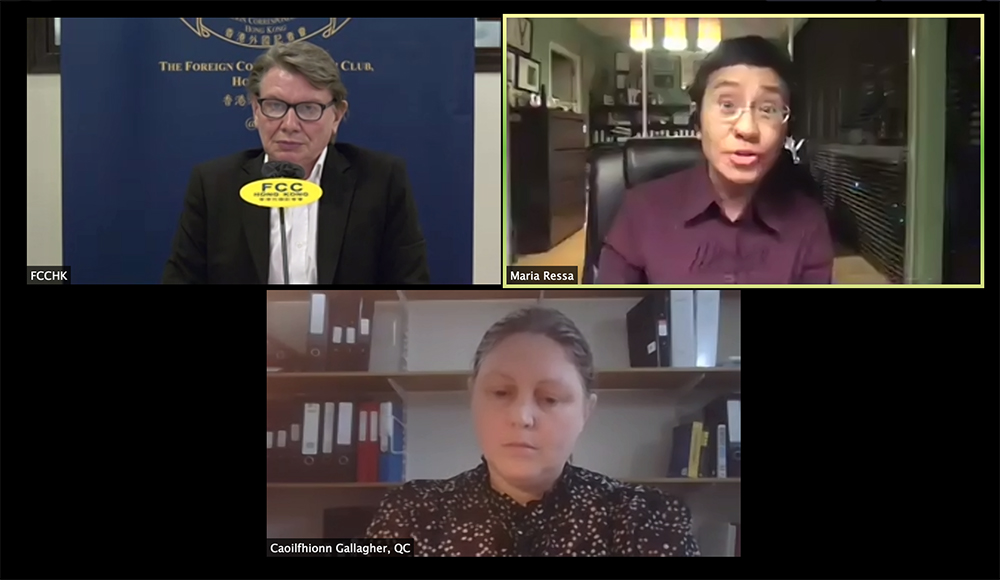
FCC First Vice President, Eric Wishart, interviews Maria Ressa and Caoilfhionn Gallagher on July 9. FCC First Vice President, Eric Wishart, interviews Maria Ressa and Caoilfhionn Gallagher on July 9.

Joining an FCC webinar on her fight against her recent conviction in the Philippines on cyber libel charges, Ressa was unequivocal when asked what was her reaction to the introduction of the law: “Shock”.

“When we were looking at the protests and this surge for press freedom… I understood why and we all were trying to understand, why is that not happening here? What’s the difference?

“What we’re seeing is really a geopolitical power shift and COVID-19 is helping that. But this is also where I feel Hong Kong is punching above its weight, what you guys do will impact the rest of us. And the Philippines is also punching above its weight in terms of a geopolitical power balance because President Duterte’s shift from the US to China and Russia. That is shifting the power balance in the South China Sea.”

Gallagher, a renowned lawyer who leads Ressa’s international defence team alongside Amal Clooney, expressed “shock and concern”. She was also deeply concerned by Carrie Lam’s July 7 comments in which the Hong Kong Chief Executive said she would give guarantees about press freedom to the Foreign Correspondents’ Club and journalists if they also give “a 100% guarantee that they will not commit any offences under this piece of national legislation”.

“That is a promise that’s not worth the paper it’s not written on, if I can put it that way, when you then look at the law, which is breathtakingly broad. I read with some horror the description of the crime of subversion, undermining the power and authority of central government. So the crimes themselves are exceptionally broad.”

She added: “I’m very concerned by the provisions relating to regulation and surveillance. The part that someone suspected of breaking this breathtakingly broad law can be wiretapped and put under surveillance is of serious concern to journalists.”

On her legal fight against her June conviction and sentence of six years in prison, Ressa said she was “geared up for battle”.

The executive editor of news website Rappler.com was arrested last year over an allegedly defamatory article published in 2012 which linked a businessman to trafficking and drug smuggling. She denied charges of cyber libel, calling them “baseless”. The move came several months after a warrant was issued for her arrest on seven charges of tax fraud — a case she called “politically motivated”. Rappler has been a frequent critic of President Rodrigo Duterte and his administration.

On June 29, Ressa and co-defendant Reynaldo Santos Jr filed a motion for partial reconsideration, appealing to Manila Judge Rainelda Estacio-Montesa to reconsider her decision.

The FCC issued a statement deploring the conviction, saying it set a precedent and could have a “chilling effect on the press in the Philippines and across the region”.

Club president Jodi Schneider said: “Press freedom, already endangered in the Philippines, is now further undermined with this high-profile verdict.”

The national security law: Hong Kong journalists should be more serious about protecting sources and information

Journalists in Hong Kong must be a lot more serious about protecting their sources and data if they are to navigate the new national security law.

That was the opinion of three panelists discussing the impact of the new legislation on press freedom in the city. The event on July 7 came a week after China’s top legislature enacted the law which criminalises any act of secession, subversion, terrorism, and collusion with foreign or external forces.

Keith Richburg, director of the Journalism and Media Studies Centre at the University of Hong Kong and a former Washington Post Beijing bureau chief, said he potentially foresees visa restrictions for journalists in Hong Kong who cross the so-called ‘red line’ in their reporting. However, he added that the details of the ‘red line’ have been deliberately vague to allow authorities to be flexible in how the legislation is interpreted.

The key for journalists, Richburg said, was “to figure out how to operate within the law and where the red lines are – coming as close as you can without crossing them”.

Joining Richburg on the panel was Sharron Fast, a legal expert from the Journalism and Media Studies Centre, and author Antony Dapiran. Fast observed that the law is difficult to interpret as two streams had been created – authority, and the Hong Kong judiciary. She highlighted some of the articles that could threaten press freedom in the city, such as Article 41, “one of the  many provisions that waters down the right of a fair trial”, she said. No media is permitted in the courts where the offence is deemed to be state secret, yet there is no definition of state secret.

Dapiran, also a corporate lawyer, raised the issue of protection of information and data in relation to the city’s police being given new powers to search without a warrant obtained through the courts. He advised journalists to be very vigilant about the way they store information and data.

You can watch the entire event here

So much at stake if Rappler’s Maria Ressa is jailed, says leading press freedom advocate

The conviction of journalist and Rappler founder, Maria Ressa, is a “Waterloo moment” for press freedom, says a leading advocate for the protection of journalists.

FCC First Vice President, Eric Wishart, interviews Joel Simon and Amelia Brace. FCC First Vice President, Eric Wishart, interviews Joel Simon and Amelia Brace.

Joel Simon, executive director of the Committee to Protect Journalists (CPJ), told an FCC webinar that the full force of the press freedom movement was being deployed to protect Ressa, who was sentenced to six years in prison by a Philippines court on June 15 for cyber libel. Ressa and Rappler’s reporting has been critical of President Rodrigo Duterte’s government.

Simon, a friend of Ressa, said her conviction would have far-reaching consequences and that it was crucial to prevent her being jailed.

“We have to win because if we do not win, if we cannot keep Maria Ressa out of prison, then every tyrant and every repressive government will feel that they can act against journalists without consequence. So much is at stake. It’s an absolute Waterloo moment for the press freedom movement,” he said.

Joining Simon on the June 18 webinar on the growing threats to journalists during the recent Black Lives Matter protests in the United States was Australian journalist Amelia Brace. The US correspondent for Australia’s Seven Network was attacked along with her TV crew by police just yards from the White House as the area was cleared to make way for a presidential photo opportunity. Footage shows how cameraman Tim Myers was injured when a police officer in riot gear hit him with a shield before punching the camera. Brace was struck several times across the back with a baton and hit by pepper balls ahead of President Donald Trump’s walk from the White House to nearby St. John’s Church.

The video of the attack has been watched on the network’s video channel more than 8 million times. Australian Prime Minister Scott Morrison described the incident as ‘troubling’ and called for an investigation.

“It was a terrifying moment and quite a violent moment as a journalist,” Brace admitted. “The heavy-handed approach by police was completely disproportionate.”

Simon added that the CPJ’s U.S. Press Freedom Tracker had documented more than 400 attacks on journalists by police in the United States since the protests began. He said he believed that the militarisation of the police force was the dynamic that accounted for the significant rise in attacks on credentialized reporters covering the nationwide demonstrations.

“This is how the police in the United States are trained,” he said.

Watch the webinar

Freelance journalist Laurel Chor recognised for Hong Kong protests coverage

Laurel Chor, a freelancer and FCC member, has been given an honourable mention in the International Women’s Media Foundation’s (IWMF) annual Anja Niedringhaus Courage in Photojournalism Award for her coverage of the Hong Kong protests and showing the region’s struggle for democracy, freedom and human rights.

Laurel Chor. Laurel Chor.

Named after German AP photojournalist Anja Niedringhaus, who was killed in 2014, the award recognises gripping, nuanced photojournalism that inspires action. This year’s awardee was Masrat Zahra (Kashmir), and an additional honourable mention was awarded to Nahira Montcourt (Puerto Rico).

Chor is an award-winning freelance photojournalist from Hong Kong. In 2019, she worked with the New York Times, National Geographic, Getty, AFP, Reuters, EPA, the Los Angeles Times, the Wall Street Journal, NBC News, the Telegraph, the South China Morning Post, Hong Kong Free Press, the New Humanitarian, the Spectator, the Nikkei Asian Review, the Guardian, the Washington Post and Quartz.

Currently, Chor is covering the Hong Kong protests. Previously, she was the Asia reporter and producer for VICE News Tonight on HBO, covering news, culture and politics across the region: from the Rohingya refugee crisis to the Chinese social credit system, from the assassination of Kim Jong Un’s half-brother to Chinese “boy” bands and from the earthquake in Palu, Indonesia to the war on drugs in Bangladesh.

Prior to that, Chor was the managing editor for Coconuts Hong Kong. In 2013, Jane Goodall appointed her to be the ambassador for the Jane Goodall Institute in Hong Kong.

Commenting on Chor’s portfolio, the jury noted that her portfolio demonstrated, “unique framing, complex commentary on community and great skill with the sequencing of the narrative.”

British policing expert who resigned from IPCC probe into Hong Kong protests wouldn’t ‘feel safe’ returning to city

A British expert in protest policing who withdrew from an international panel appointed by Hong Kong’s police complaints body to investigate the policing of last year’s protests has said he would not feel safe returning to the city.

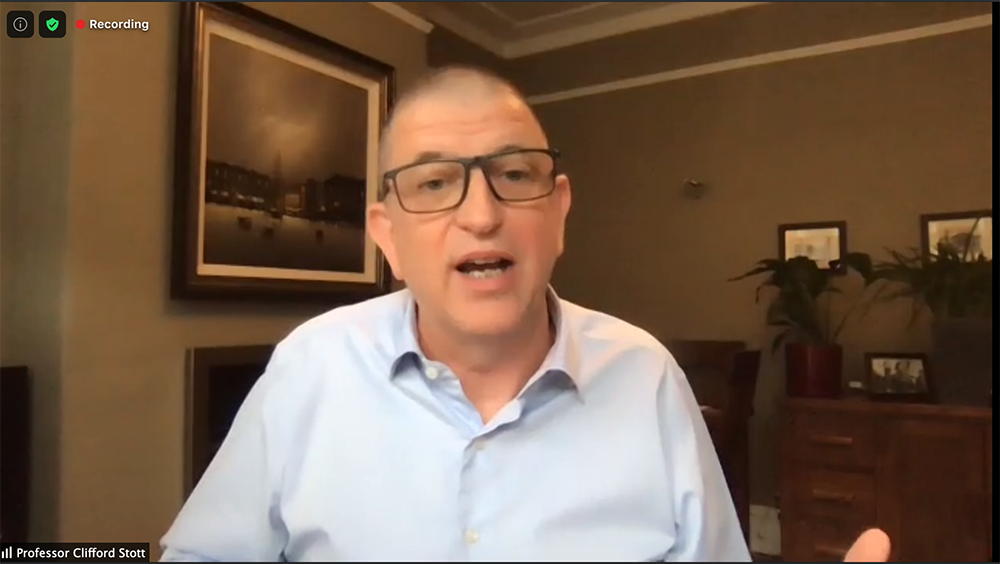
Professor Clifford Stott during the June 11 FCC webinar on protest policing. Photo: FCC Professor Clifford Stott during the June 11 FCC webinar on protest policing. Photo: FCC

Professor Clifford Stott of Keele University told an FCC webinar that he and other panel members resigned because they were “manipulated and put in an awkward position” as they worked to advise the Independent Police Complaints Council (IPCC) on its report into the 2019 anti-government unrest. When the IPCC finally published its report in May 2020, which cleared the force of misconduct, Prof Stott said it was missing key pieces of data. This, he said, called into question the IPCC’s powers, capacity and independent investigative capability. He is soon to release his own paper on his findings.

“We were put in a difficult position. We were in the end manipulated and put in an awkward position,” Prof Stott said, adding: “There is no way I could have stood by that report.”

When asked if he thought he would be allowed to visit Hong Kong in the future, Prof Stott said: “I would love to come back, of course I would, but I don’t think I’d feel safe.”

While Prof Stott was reluctant to expand on his claim of manipulation, he revealed that information collected by the panel from protesters and legal professionals had not been included in the final report. They included accounts of what had happened to protesters after they were arrested and their lack of access to legal representation.

“We heard shocking information about what had happened… on August 11 at the detention centre in particular. That data is not in the IPCC report,” he said.

Prof Stott is an expert in protest policing whose research has informed policy and practice for a range of government and police organisations in the U.K., including the Home Office and the Association of Chief Police Officers, among others. He spoke about the protests currently sweeping the United States and Britain in the wake of the death of American George Floyd at the hands of a police officer, commenting that the movement is part of a pattern developing globally in response to poor social conditions.

Prof Stott said COVID-19 was “the great amplifier of inequality” as it highlighted social shortfalls. He added that calls for the defunding of the police were in fact calls for funds to be diverted into social care such as youth and mental health services to solve the problems at source.

“The state often ends up funding the police to mop up problems that could have been solved by investing in other areas,” he said.

Watch the video

The Foreign Correspondents’ Club Awards Clare Hollingworth Fellowships

The Foreign Correspondents’ Club Awards Clare Hollingworth Fellowships
FELLOWS
Jennifer Creery
Jennifer Creery is a Managing Editor and reporter with the Hong Kong Free Press. She has previously interned at Al Jazeera,
the Press Association and the Independent.
Tiffany Liang
Tiffany Liang is a freelance reporter with the Washington Post.
She was previously a junior reporter at HK01 and a trainee at RTHK Putonghua channel, Guangdong Broadcast
Television and the Southern Metropolis Daily.
The Foreign Correspondents’ Club is pleased to announce that it has chosen Jennifer Creery and Tiffany Liang as recipients of the second annual Clare Hollingworth Fellowship, named in honor of the preeminent and path-breaking journalist.


The panel of judges noted the winners offer clear potential as future leaders both within the FCC and the wider Hong Kong journalism community.


“We had a competitive pool of applicants and the two winners were especially impressive in their journalistic talent and their potential,” said Jodi Schneider, president of the FCC. “We are heartened by the interest in journalism in Hong Kong and in the FCC as a center for the press here. It gives us great hope for the future of our profession.”


The Fellowship is focused on early-career journalists and current journalism school students in Hong Kong.


The open competition drew significant interest from a cross spectrum of applicants. The adjudicators noted the high standard of applicants and encouraged all to apply again next year.


For further information on the Fellowship, please see
here: https://www.fcchk.org/clarehollingworth/


Chris Patten: Hong Kong protesters shouldn’t lose heart

Lord Chris Patten, Hong Kong’s last governor, urged the city’s protesters not to lose heart but to continue their fight with dignity.

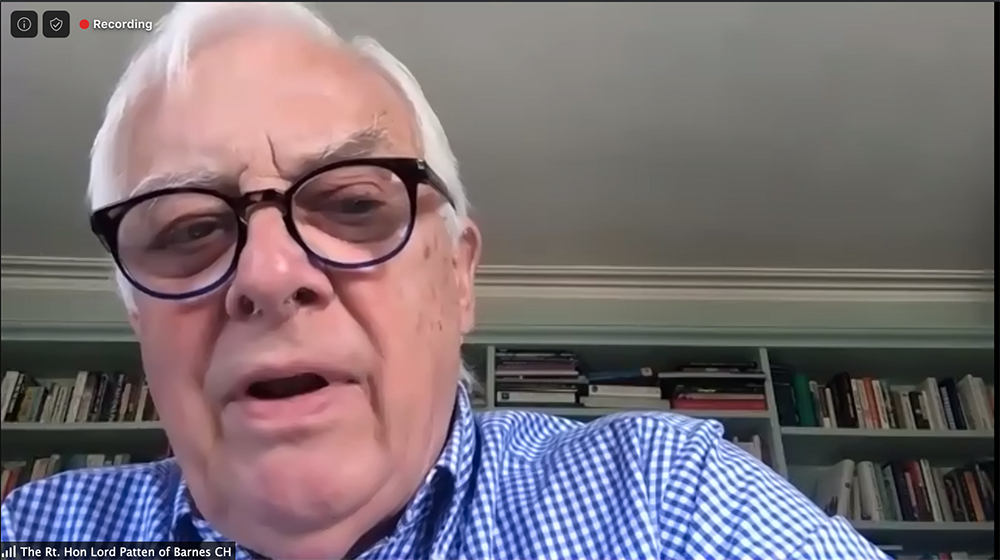
Chris Patten, the last governor of Hong Kong, talks during an FCC webinar on May 20, 2020. Chris Patten, the last governor of Hong Kong, talks during an FCC webinar on May 20, 2020.

The former chairman of Britain’s Conservative Party was speaking during an FCC webinar on the future of Hong Kong where he answered a wide variety of questions from members. On the question of the future of Hong Kong’s protest movement, Patten said:  “They shouldn’t lose heart. They shouldn’t lose their sense of dignity and decency and moderation.”

Patten took the guest seat in the webinar the week after a report from the Independent Police Complaints Council (IPCC) cleared its force of misconduct during last year’s anti-government protests.

Patten said the report “divides the community even more” and described it as “a blow to the hopes we all had to return to normality”.

“And normality is a situation in which people can express their views if they choose to do so and not be run off the streets,” he added

On the recent arrests of leading pro-democracy figures on charges of involvement in unlawful assemblies, Patten described the move as “an attempt to intimidate the rest of Hong Kong”.

On the COVID-19 outbreak, Patten praised Hong Kong and Taiwan for their response to the epidemic, saying that Hong Kong “dealt with it brilliantly”. He added that freedom of the press in the city had given residents the information they needed to act quickly. Patten was critical of the Chinese government for quashing the voices of whistleblower doctors in the early stages of the epidemic, but added that the Chinese people “behaved heroically” in their response to the crisis.

Following the event, Ministry of Foreign Affairs in Hong Kong issued a statement in which it accused Patten of “distorting the one country, two systems principle” and tarnishing China’s international image.

LIAISON OFFICE IN HONG KONG

One Country, two systems means what it says. It does mean that Hong Kong has a high degree of autonomy and that’s one reason why people have continued to invest in Hong Kong. It’s one reason why it’s responsible for, I guess, two thirds, maybe more, of mediated direct investment in and out of mainland China. So I don’t think one should spend too much time questioning whether what was done by the joint liaison office and the Hong Kong Macau affairs office was in breach of the joint declaration – of course it was. It’s a breach of the promises to Hong Kong people about local autonomy.

PRO-DEMOCRACY ARRESTS

The arrest of 15 well-known democratic leaders for doing what I think in one case 1.7 million people or more had done. Nobody accuses them of violence but they took part in demonstrations which as I say were attended by 1.7 million people. Now I read what the UN Human Rights observer has said about that and I totally agree with it. It’s pretty outrageous  and we all know what it’s an attempt to do. It’s an attempt to intimidate the rest of Hong Kong. The idea that President Xi Jinping should be terrified of Margaret Ng is really pretty incredible.

LEGCO

Even in the last few years when people have disagreed strongly about things, there’s been a general recognition, as I understand it, that the chairmanships and deputy chairmanships of the committee would be shared out across the chamber, and I think it’s a thoroughly bad thing that that has gone.

IPCC REPORT

Back in June last year, I said that one way of ending the demonstrations and bringing calm back to the city would be to establish an independent inquiry transparent under judicial powers to look at what had happened. And I think with much more legal argument behind it, Andrew Lee, the former chief justice, argued for the same without making any political points about it. Now it just happens to be a subject about which I know a bit because after the Good Friday agreement in Northern I Ireland I was tasked to chair the committee which reorganised policing. It was a Labour government that appointed me, I came from the Conservative Party. I had a group of international experts, I had a group from both sides of the Catholic and Protestant communities and we did it transparently and openly and we produced a report which the whole community could accept. We had I think 20…30…40 public meetings with huge crowds at them and it turned into a sort of reconciliation commission. That’s the point of these things. To finish up with an IPCC report which just divides the community even more really is a blow to the hopes we all had of a return to normality in Hong Kong. And normality is a situation in which people can express their views if they choose to do so and not be run off the streets.

ONE COUNTRY TWO SYSTEMS

I think there’s been a significant change in China – in Beijing – since Xi Jinping became president or dictator for life complete with a personality cult which is extraordinary. Ten to 12 years after 1997 things went pretty well, not perfectly. The promises of giving Hong Kong greater accountability, more opportunities for developing democratic institutions – a promise which was explicitly made before 1997 and afterwards both by Liu Ping, the director then of the Hong Kong Macau affairs office, and by the Foreign Ministry in Beijing – those promises were rowed back on. But by and large Hong Kong was allowed to get on with its own life and people’s determination to have the Rule of Law, to have all the freedoms you associate with Hong Kong’s success. By and large that wasn’t interfered with but just as Xi Jinping came in and dissidents were rounded up, they were tougher on human rights. I think it’s also true that Xi Jinping saw that liberal democracy, as he would define it, as an existential threat to what he wanted to do. There was an instruction to government and party officials sent out in 2013 which said that all these things like teaching history openly, like the Rule of Law, like giving people greater accountability, like developing civil society… all these things are a threat to the Communist Party so we must attack them. And it became public because a very brave woman in her 70s called Gao Yu leaked this, and it’s all there, including the stuff about patriotic education. so I think that the sad point is that in the last few years, Xi Jinping and his court have regarded Hong Kong and Hong Kong’s freedoms as an existential problem for them because Hong Kong represents so much of what they dislike.

Don’t let COVID-19 infect democracy, warns top journalist

We must not allow coronavirus to infect democracy, warned the founder of a Philippines news website the day after the country’s biggest broadcaster was forced off air by President Duterte.

Maria Ressa, founder and CEO of Rappler.com, was speaking as part of an FCC panel exploring the stifling of press freedom in some regions under the guise of the fight against COVID-19. ABS-CBN, which has been critical of Duterte in the past, was shut down on May 5 by the country’s media regulator. Ressa headed the broadcaster’s news division between 2004 and 2010.

“We have to make sure that we don’t let the virus infect democracy, and journalism is the first line of defence to shine the light,” said Ressa during the Zoom broadcast.

Pakistani journalist and author Mohammed Hanif, and Turkey-based video journalist Helene Franchineau, both gave examples of journalists who had been jailed since the COVID-19 outbreak began in their respective countries. And with many courts closed, the likelihood of justice was small. In Pakistan, President Arif Alvi has appointed a media adviser which Hanif said he feared would lead to a renewed war on the media in the country.

Franchineau said Turkish journalists who had been critical of the government’s handling of the COVID-19 crisis were being targeted by President Recep Tayyip Erdoğan. Among them, Fox TV Turkey news anchor Fatih Portakal, who faces imprisonment for a social media post critical of the government’s COVID-19 response.

You can watch the full panel discussion here.

My battle to bring my newly widowed mother to Hong Kong – and away from coronavirus-hit London

My father would have laughed at the irony of it all. A Fleet Street veteran dying during the biggest story, perhaps, since World War Two.
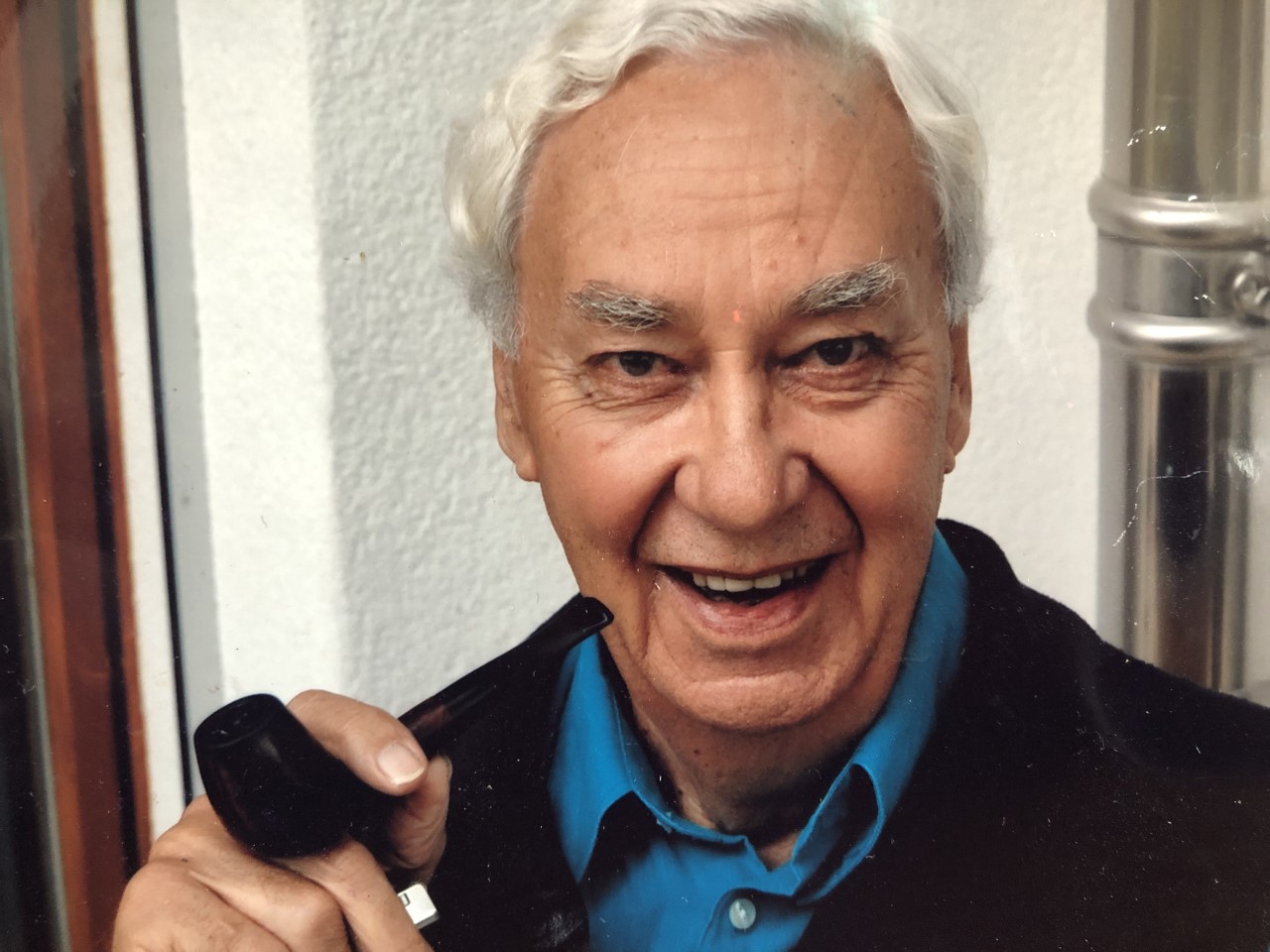
Michael Brown, former Fleet Street editor. Michael Brown, former Fleet Street editor.

Michael Brown was the reason I went into journalism. And it was his death that led directly to the most important, and painful, assignment I have ever undertaken.

It began on Friday, March 13 when his body suddenly began to shut down bit by bit. He was 91 and had been battling dementia for almost a decade.

I was on my way to the airport when I got the call from my sister. He had passed away just minutes earlier. If I had left a day earlier I would have been there for the ending. Instead, I missed the deadline his body had set for him.

He passed away in the early hours of Sunday morning, March 15… the Ides of March, a portent of doom in William Shakespeare’s Julius Caesar.

The 13-hour flight from Hong Kong to London would offer plenty of time for silent reflection. I sat numb, unable to cry or think.

The backdrop for his death could hardly be worse. I had spent the past few weeks reporting on the coronavirus outbreak. Now it had spread to England. The family home is in London, by now the worst affected part of the country.

But rather than mourn my father I began to realise there was a higher imperative. I had to get my mother out of England. At 86, recovering from cancer, she is extremely vulnerable to this disease. Yet if she remained in London she faced the prospect of up to three months self-isolation in an apartment where she had watched my father’s gradual mental disintegration. I did not want her to endure yet more torment.

Yet I had arrived in London expecting to stay longer. I knew from my mother that there was an acute shortage of face masks and sanitiser, just as there had been in Hong Kong a few weeks earlier.

In the new era of social distancing, how do you comfort a grieving mother? We are told that to win this war we must keep apart from those we love.

As my sister and I attended to the insensitive administration of death, we were simultaneously booking flights to Hong Kong. But confirmations evaporated as ever more flights were cancelled.

Our third booking, though, held. London-Doha-Hong Kong.

I knew we had the narrowest of windows to get out. But nothing could happen until we had a death certificate for my father. That finally happened on the Wednesday, less than 36 hours before our flight departed.

All my mother wanted to do was mourn the man she had loved for 66 years.

In the new era of social distancing, how do you comfort a grieving mother? We are told that to win this war we must keep apart from those we love.

Wrongly or rightly I was taking her to the other side of the world on a journey inherent with risk. Covid-19, after all, has infected airline passengers.

My mother’s neighbour, who is a doctor, came to offer condolences. In passing, she mentioned she was being drafted to a hospital ward that is specifically treating Covid-19 patients. She also confided that she was preparing to fight the virus without an N95 face mask, which offers more protection than regular, disposable face masks. We handed her as many of my masks as we could spare, including 5 N95s. That incident seemed to neatly sum up the National Health Service’s state of preparedness.

It was a grey, damp morning when my mother and I took a cab to Heathrow airport. Like so many other people the driver wasn’t wearing a mask. My sister was joining us. As British passport holders they can enter and stay in Hong Kong for six months without a visa. But our window was narrowing.  A day earlier the Hong Kong government announced that all arrivals would have to undergo 14 days self-isolation at home, in hotels or government quarantine centres.

But the check-in staff were confused. A death in the family is both distressing and stressful and the young woman behind the counter was about two make our day even worse.

She told my mother and sister that they wouldn’t be boarding the flight because they weren’t Hong Kong residents. I sat my mother down, bags piled beside her. She looked broken and forlorn. My escape plan was falling apart. She was born in the run-up to World War Two, now in the final years of her life she was facing dislocation again.

Resignation was now spreading through my body. My sister wasn’t giving up though. A supervisor was called. Eventually, he accepted the regulation had been wrongly interpreted by his junior colleague. With an hour before our flight left, we were finally handed our boarding passes.

During this public health emergency your ears are attuned for certain sounds, like a persistent hacking cough. Like the cough coming from the seat one across from my mother. A kind Chinese student near the back of the cabin agreed to swap seats. After a few blunt words from me, the coughing passenger reluctantly put on his face mask

The risk of bringing my mother to Hong Kong was borne out by a phone call I got from my travel agent a few days later. There had been at least two infected passengers on our flight.

We are now under 14 days self-isolation in my small but comfortable apartment in a remote secluded corner of Hong Kong. We do twice-daily temperature checks and so far so good. But as I was writing this the police paid a visit. I have been spotted on the roof of my flat which I am told is a breach of my quarantine regulations. A vigilant, but understandably concerned neighbour , has raised the alarm. I point out that the roof is part of my property. They seem unsure and warn me not to go up again.

A few hours later two health workers wearing visor shields and white protective clothing are at the front door with instructions to move the three of us to a government quarantine centre in Sha Tin. I explain that we have already been self-isolating in my apartment for four days. It’s unclear why they want us to leave. In fact they seem as bemused and confused as I am. I explain that we are managing fine at home and that it would be best for my mother to remain where she is. I also add that in a few hours’ time my father is being cremated on the other side of the world and that we were planning to mark the moment with a small ceremony.

By now my mother and sister are in tears. The nightmare that began 10 days earlier seems never-ending.

A public health emergency can bring out the very best and worst in people. In this crisis I have seen both. The two health workers make a phone call and then without a word return to the street where the van to take us to the centre is parked.  The vehicle and its occupants remain there for two more hours. During this time we are left in limbo, unsure what the next minute will bring. I call the Health Department hotline to seek clarification. It’s busy…as it has been on the seven other occasions I have tried to call.

We press on with the ceremony, knowing that another knock on the door maybe imminent. On the dining room table, a small makeshift shrine has taken shape. A photo of dad from his 80th birthday, a lit candle and two small bunches of roses and carnations left at the front door by my wife earlier.

At the exact moment my father’s body was being placed into the cremation chamber, my mother, sister and I held hands listening to the song that we had also requested be played during the service: ‘ Bring me sunshine,’ by the former British comedy duo Morecambe and Wise. The lyrics include the line “in this world where we live, there should be more happiness.” Words that seem to mock these dark times.

Poignantly my sister has just shown me a letter my father wrote to all three of his children on March 25, 2004..exactly 16 years to the day that he was cremated.  It begins: “This is a letter to all three of you— something I have never done before…and I probably won’t do another of these for a long time.” It’s a letter of love and thanks from a proud parent.

I hope he thought I did the right thing.

Adrian Brown is a journalist with Al Jazeera, and a member of the FCC, Hong Kong.

Matthew Marsh on the outlook for Formula One

A month ago, Formula 1 analyst and presenter of Fox Sports Asia Matthew Marsh was all set to report on the 2020 motor racing season. By mid-March, however, the opening race in Melbourne was cancelled due to the coronavirus outbreak, and the season looks unlikely to begin before May.

This was one of the topics Marsh discussed at his March 18 appearance at a sold-out club. The former professional racing driver gave insights into the personalities of some of the world’s top Formula One drivers and shared anecdotes from the press pit.

You can watch the video here.

We measure site performance with cookies to improve performance.