Sonny Swe talks of press freedom struggle at 22nd Human Rights Press Awards
Myanmar media pioneer Sonny Swe spoke of his struggle to maintain press freedom in Myanmar, where he was jailed for eight years in a media crackdown.
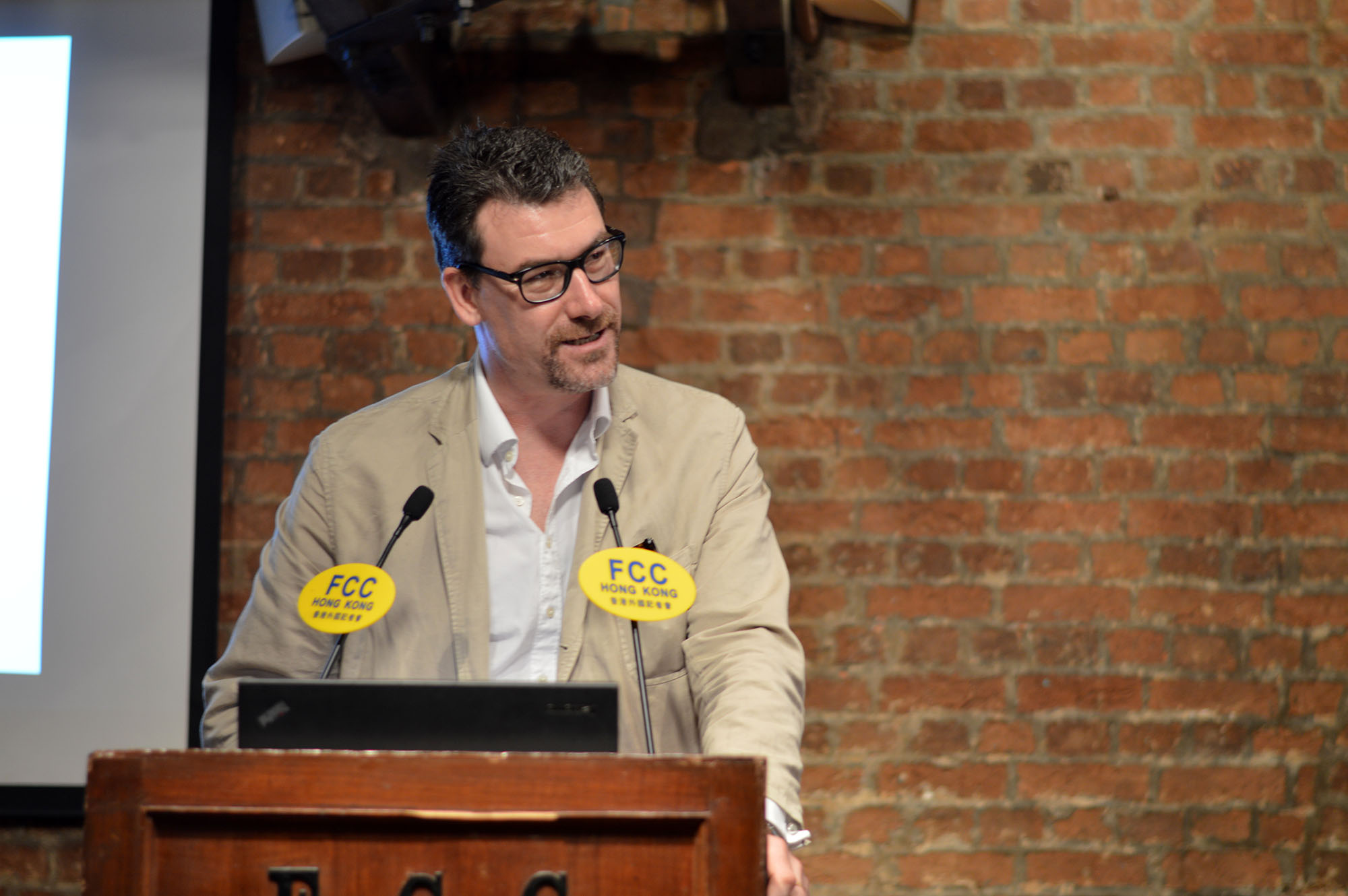
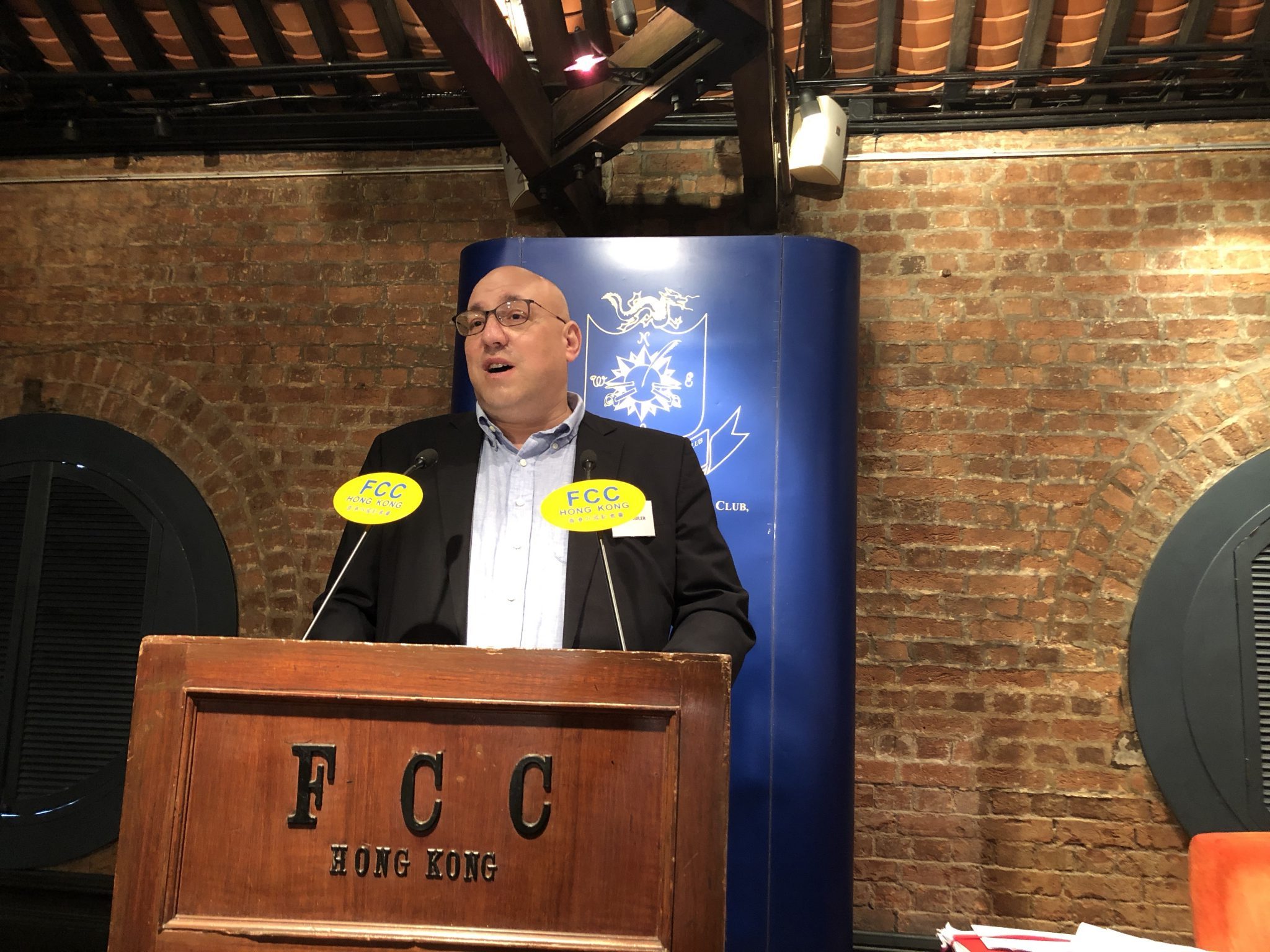
Keynote speaker Sonny Swe. Photo: Jayne Russell
Speaking at the 22nd Human Rights Press Awards, Sonny said that the state of press freedom in Myanmar currently resembled the dark days of military rule, adding that it was a “critical moment” for the media there.
When Aung San Suu Kyi, a former prisoner herself, won the 2015 Myanmar election, Sonny said, there was hope for press freedom under the new government. in the same year, Sonny launched the Frontier Myanmar magazine. However, he said under the new government more journalists than ever had been arrested, many of them covering the Rohingya crisis in Myanmar’s Rakhine state.
Sonny said access to information was also becoming a bigger challenge, and self-censorship was on the rise.
He said the issue of press freedom had always been an “uphill travel” in Myanmar, and vowed to continue fighting for it.
“I am standing behind the truth, and I am standing for the truth, freedom, freedom of the press, freedom of speech, freedom of expression. I will always fight for this because I know firsthand how it feels to have this taken away from you,” he said.
The Human Rights Press Awards recognise top rights-related reporting from around Asia, with the goal of increasing respect for people’s basic rights and focusing attention on threats to those freedoms.
Why ASEAN isn’t ready to replicate the European Union
A highly ambitious ASEAN wants to create a genuine integrated market much like the European Union (EU) – but it has some way to go, according to Southeast Asia expert Hans Vriens.
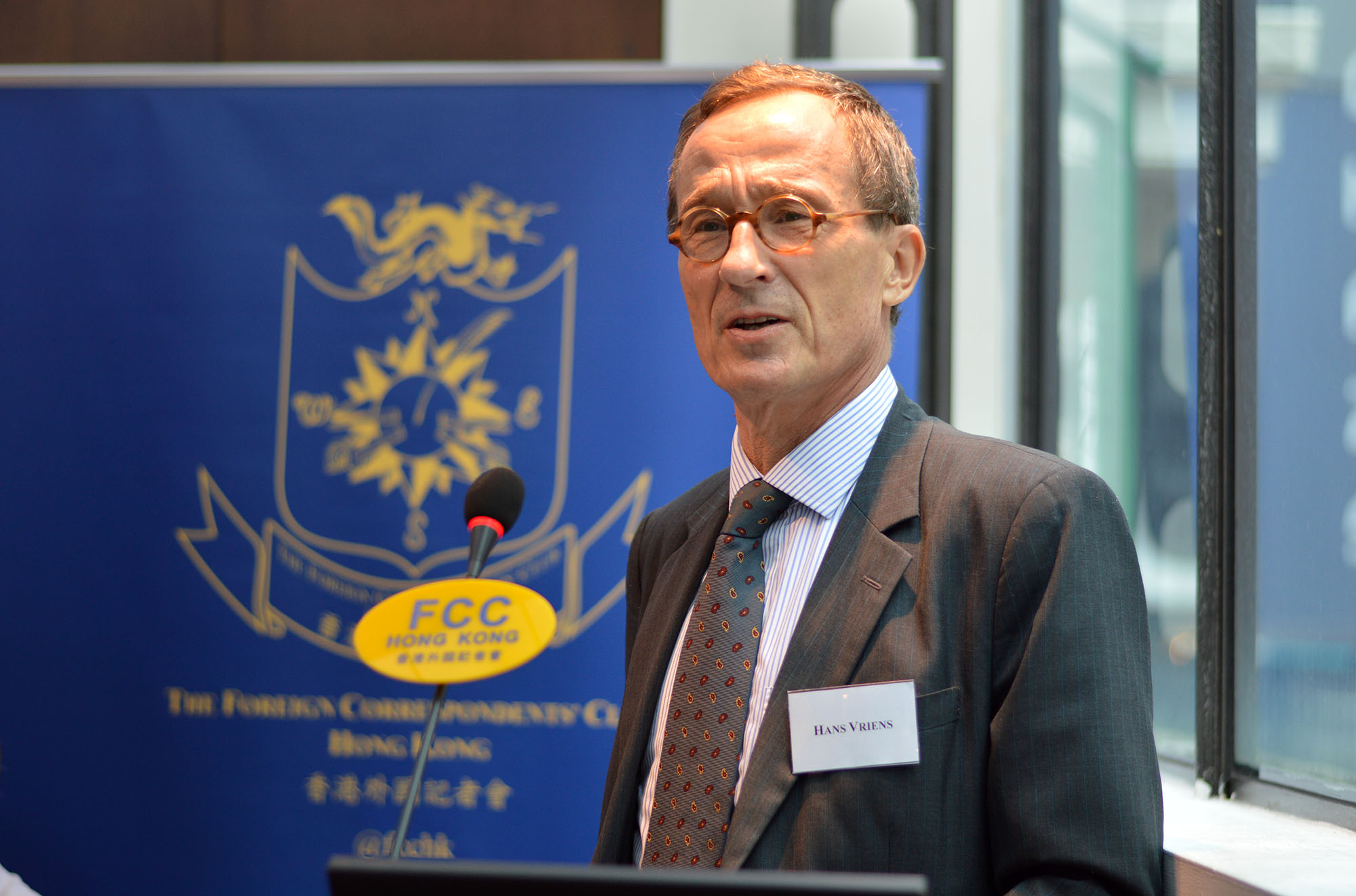
Hans Vriens shared his expert knowledge of ASEAN with FCC members and guests. Photo: Sarah Graham/FCC
Despite its aim to build a single market that would see the free flow of goods, investment and skilled labour, the Association of Southeast Asian Nations (ASEAN) will face challenges for a variety of reasons, many of them governmental, said Vriens, whose club lunch on May 4 sought to answer the question of whether ASEAN was an economic powerhouse in the making, or back to being tribute states of China. The answer, he concluded, was yes and no.
“Not a single government leader in the ASEAN is pushing for this,” he said, adding that member states were not yet serious about giving up their sovereignty.
Vriens, Managing Partner of Vriens & Partners, outlined the major differences between ASEAN’s Economic Community (AEC) and the EU, including that currently there was no parliament, no ASEAN law, a myriad of political systems, and no plan for a monetary union.
“So do not be misled by talk about an ASEAN Economic Community,” Vriens, a past president of the FCC, said.
ASEAN was formed in August 1967 by Indonesia, Malaysia, the Philippines, Singapore and Thailand. It was later joined by Brunei, Cambodia, Laos, Myanmar and Vietnam. Further regional integration saw the creation of ASEAN Plus Three to include China, Japan and South Korea. Much like the EU, it aims to encourage economic growth among its members, as well as social progress. The AEC was established in 2015.
Another reason why regional harmony was not yet in ASEAN’s grasp was China’s growing influence in the region, and in particular the fierce competition between China and Japan over railroads. The Philippines and Vietnam were also involved in disputes with China over sovereignty in the South China Sea, Vriens said.
While ASEAN was diverse with an emerging middle class and relatively low GDP per capita, it faces big challenges, said Vriens. Poor education and infrastructure, coupled with low quality universal healthcare and poverty, were hurdles to overcome, he said.
Vriens examined political developments in Indonesia, Singapore, Thailand, Myanmar, the Philippines, Vietnam and the Philippines. The rise in populist presidents like the Philippines’ Rodrigo Duterte could be positive because “they want to build to show progress”.
Tributes for AFP chief photographer killed in Kabul suicide bombing
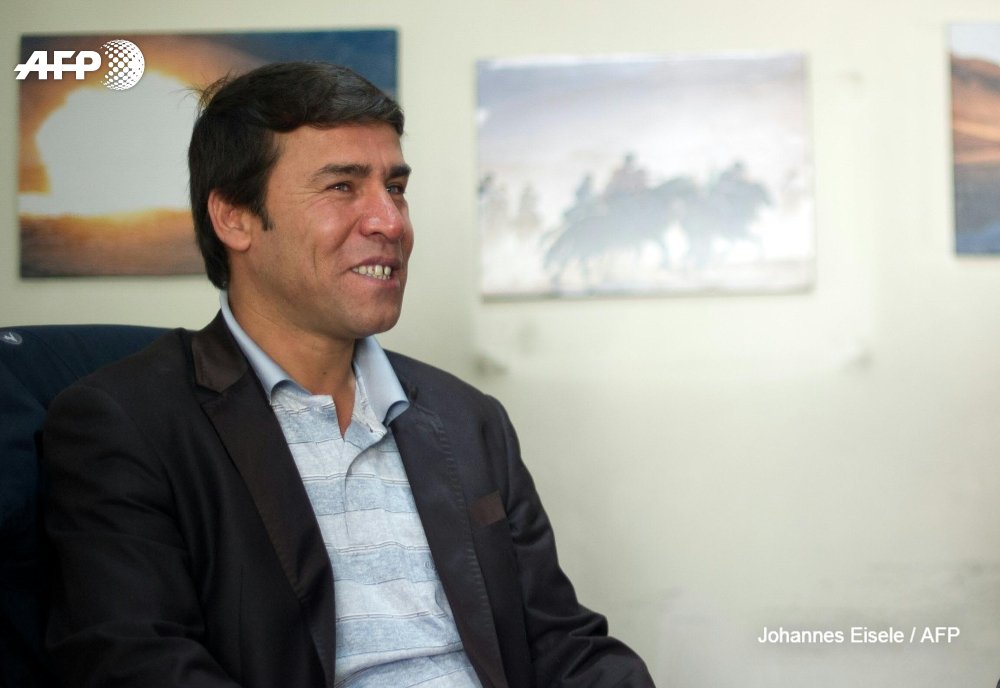
Shah Marai, Agence France-Presse’s chief photographer in Kabul, has died following a suicide bombing in the Afghan capital on April 30.
Shah Marai, Agence France-Presse’s chief photographer in Kabul, died on April 30. Photo: Johannes Eisele/AFP
Marai joined AFP as a driver in 1996, the year the Taliban seized power, and began taking pictures on the side, covering stories including the US invasion in 2001.
In 2002 he became a full-time photo stringer, rising through the ranks to become chief photographer in the bureau. He leaves behind six children, including a newborn daughter.
In a statement posted on Twitter, AFP’s Global News Director, Michele Leridon said the news was a “devastating blow” to colleagues and the organisation.
A statement from AFP Global News Director Michele Leridon on the death of Shah Marai, AFP’s chief photographer in Kabul (Part 1 of 2) pic.twitter.com/QwtLWUBzmm
A statement from AFP Global News Director Michele Leridon on the death of Shah Marai, AFP’s chief photographer in Kabul (Part 2 of 2) pic.twitter.com/LGPBayOE58
Ministry spokesman Wahid Majroh told Afghanistan’s largest private TV channel Tolo news that at least 27 people were wounded and rushed to hospital. Marai was among three journalists reportedly killed in the blast.
“The bomber disguised himself as a journalist and detonated himself among the crowd,” police spokesman Kabul Hashmat Stanikzai said.
On days like this, truth sucks. Truth hurts.
Yes it’s true, and confirmed. Our friend, the great photographer Shah Marai, is among the dead of the second Kabul explosion this morning.
He was doing his job, like he had over two decades.
In 2016, Marai wrote a blog, When Hope Is Gone, for AFP detailing his life in Afghanistan, and how the return of the Taliban more than a decade after the American invasion in 2001 was once again devastating the country.
“Fifteen years after the American intervention, the Afghans find themselves without money, without work, just with the Taliban at their doorstep,’ he wrote. “I have never felt life to have so little prospects and I don’t see a way out. It’s a time of anxiety.”
From Coral Reefs to Carbon Markets: Paula DiPerna on her life’s journey
The journey from journalist to film producer to environmental crusader was the subject of a talk by Paula DiPerna, who spoke (through an intermediary) about working with legendary filmmaker and ocean explorer, Jacques Cousteau.
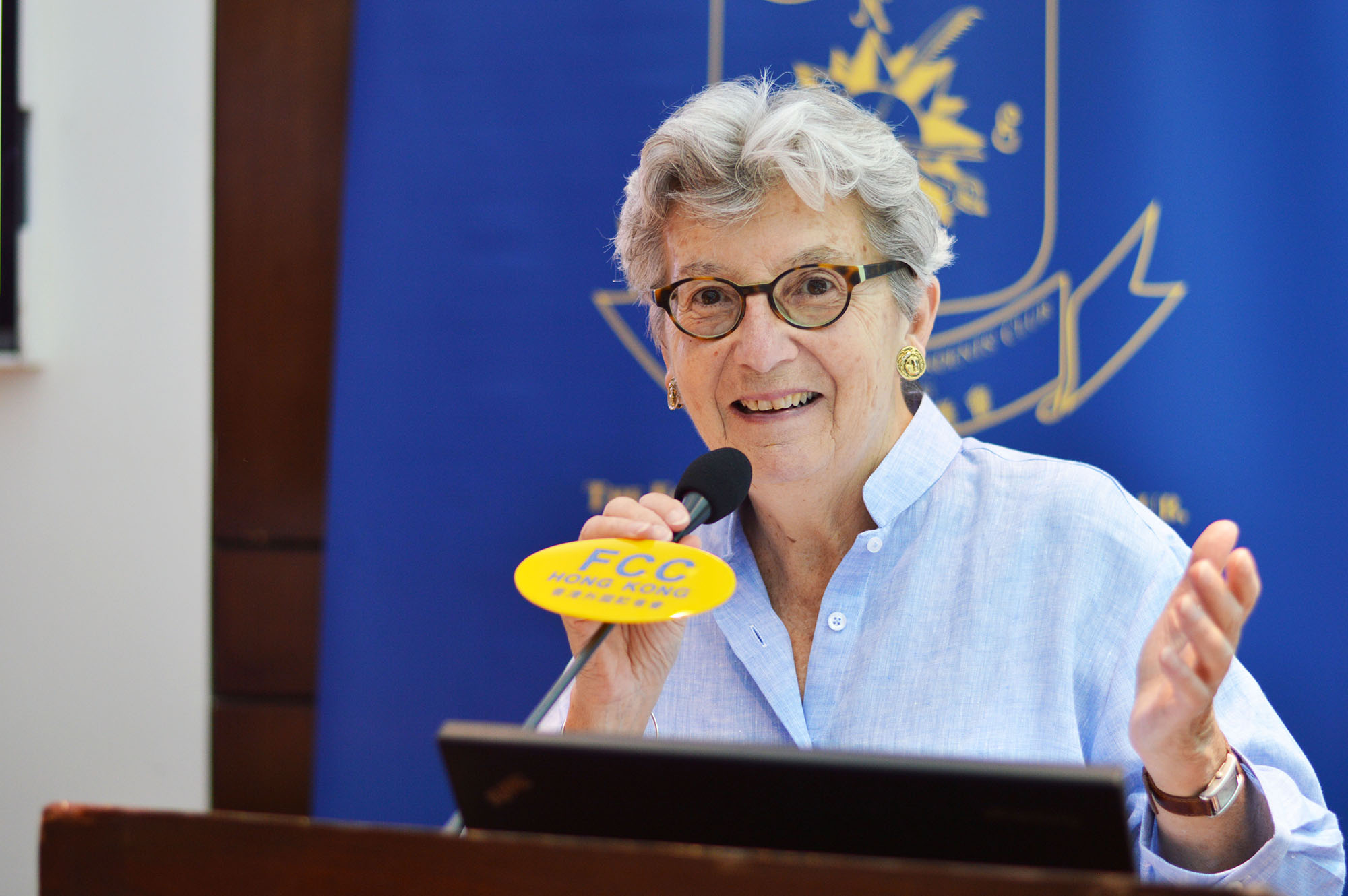
Despite losing her voice, Paula DiPerna managed to communicate her life story to FCC members. Photo: Sarah Graham/FCC
Unfortunately, DiPerna, a visiting fellow of the Civic Exchange who has been in Hong Kong for eight weeks giving talks, had lost her voice by the time she arrived for her April 25 club lunch appearance. Joyce Lau, the Civic Exchange’s Communications Director, stepped in to read out her speech and DiPerna managed to whisper answers to questions from guests.
The documentary maker’s story began as a New York high school teacher with a burning passion to write stemming from an “early fascination with books and the stories my mother would make up and tell me when I was little”. An opportunity to indulge her yearning came when the city, facing bankruptcy, decided to axe the schools budget, “including letting go the teachers with least seniority, meaning me and my peers”.
“I found that so short-sighted and detrimental to the city’s welfare, and was burning to tell the story,” DiPerna said.
And write about it she did, albeit a first attempt described by Village Voice editor Ross Wetzsteon as “too boring… a perfect example of an interesting story that turns boring on the page”.
Despite her underwhelming start in journalism, DiPerna kept writing and eventually took a role as a volunteer editor on a book called The Cousteau Almanac. “I volunteered, thinking it would be a good way to learn about ocean science although at that time I had no interest in the environment per se,” she said.
But an interest in the environment did develop through her close working relationship with Cousteau himself, whose pioneering TV series The Undersea World of Jacques Cousteau was watched by millions, and who co-invented the the breathe-on-demand valve for SCUBA diving. Her work with Cousteau took her into film production and narration, and together they traveled the world to highlight environmental issues.
“Cousteau was so famous he could secure a meeting with anyone, and we worked closely with Heads of State and just about anyone he wanted to meet wanted to meet him. So we had fantastic access to the top and I began also to see how big decisions get made – quickly very often,” she said. “Although to avoid inertia, implementation is key and that was my key role for Cousteau on the policy side. To implement the big ideas he was launching to this or that high level person.”
During the talk, DiPerna showed photos of her expeditions with Cousteau to Antarctica and Alaska, among other far-flung places. But perhaps one of their most important trips was to Cuba, where they helped secure the release of 50 political prisoners being held under the Castro regime.
“Suffice it to say here that no three people were ever less destined to meet than me, Jacques Cousteau and Fidel Castro, and yet not only did we meet, we got along well enough to develop a trust that enabled Castro to release these prisoners as a token of his respect for Cousteau, and for me to able to work with the US government – when we had no official diplomatic relations – to get entry visas for the prisoners – all men,” DiPerna said.
Having developed the Chicago Climate Exchange (CCX), the first integrated cap-and-trade system in the world that handled all six greenhouse gases; and subsequently the Tianjin Climate Exchange, the first of China’s seven pilot carbon markets; DiPerna now spends her time promoting the concept of making pollution more expensive than not polluting.
“So now, today, I try to pull all the threads of my life together wherever and however I can, giving talks (too many I guess given the state of my voice) and writing and affixing myself to strategic organisations such as CDP and Civic Exchange,” she said.
China’s flouting of global trade rules is too big to ignore, says Hong Kong’s U.S. Consul
China must play by global trade rules and raise its game on economic reform, warned the U.S. Consul General to Hong Kong and Macau as he said the problem of Beijing’s “market-distorting policies and practices” was too big to ignore.
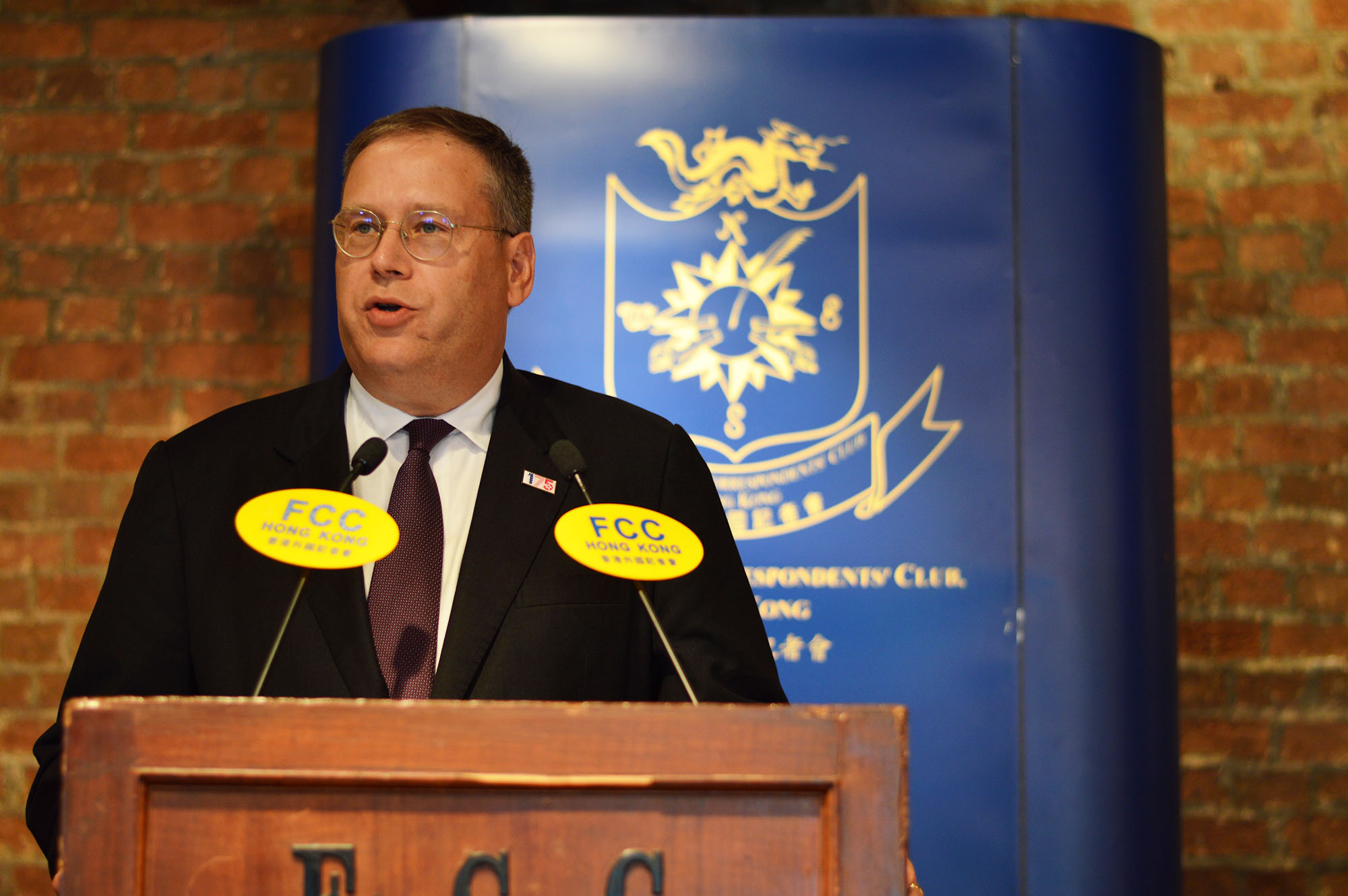
U.S. Consul General Kurt Tong discussed the recent trade developments between China and the United States. Photo: Sarah Graham/FCC
Kurt Tong said that America’s tough stance on trade tariffs was “well-justified by the facts – and perhaps overdue”. He said China’s World Trade Organisation (WTO) commitments “reflect somewhat of a broken record” and added that the United States was “justified in claiming damages”.
“To borrow a metaphor from my favourite sport, China has drawn a deserved yellow card,” said Tong, a keen footballer. “Yellow cards are an opportunity for a player to change their style of play before someone gets hurt,” he added.
In March 2018, U.S. President Donald Trump imposed tariffs on steel imports. Soon after, China – the world’s biggest steel exporter – retaliated with tariffs on U.S. imports. The dispute has stoked fears of an all-out trade war that could damage the global economy.
During his April 24 appearance at the club, Tong said that the United States sensed that China’s forward progress on economic reform had stalled, adding that there were were “worrisome signs” that the country was moving backward.
“Some analysts have said that, given its size and importance, China is now too big to be challenged. I would submit that the opposite is true. I think that the China problem is too big to ignore,” he added.
Tong identified high tariffs, unfavourable terms for inward foreign investment, and lack of protection for intellectual property rights as America’s main problems with China. In fact, he said, other WTO partners are lodging many of the same complaints.
In a bid to allay fears within Hong Kong’s business community over the prospect of a trade war, Tong said the city had an opportunity to stand as an example of how an economy can be part of China but also play by the rules.
“Hong Kong has an opportunity to proactively use its autonomy to further strengthen its impressive economic competitiveness, as well as its inherent value proposition in the eyes of foreign partners,” he said.
Human Rights Watch calls on China to end gender discrimination in job ads
The Chinese government and private companies must end gender discrimination in job advertisements, said Human Rights Watch as it launched a new report such behaviour on the mainland.
Kenneth Roth, executive director of Human Rights Watch, unveils a report on gender discrimination in job ads in China. Photo: Sarah Graham/FCC
Kenneth Roth, executive director, revealed that well-known companies including tech giant Alibaba were guilty of gender discriminationin their recruitment practices, adding that this facilitated the creation of workplace environment conducive to sexual harassment.
The 99-page report, Only Men Need Apply, analysed more than 36,000 job advertisements posted between 2013 and 2018 on Chinese recruitment websites and social media. It found that in many cases, ads specified a preference for men. Other ads required women to look a certain way even though it was irrelevant to the job. One posting sought ‘fashionable and beautiful high-speed train conductors. Other companies used the physical attributes of female employees to attract applicants.
“In a moment of #MeToo, I want to say I too am worried about gender discrimination,” said Roth as he called on the Chinese government to enforce laws preventing gender discrimination, rather than wait to act – inadequately, he added – on complaints about it.
Roth said gender discrimination was ‘rampant’ among China’s private companies, where some ads called for a ‘trim figure’, or for the applicant to be ‘aesthetically pleasing’. He said China was falling behind the rest of the world when it came to gender discrimination, particularly in its attitude towards enforcing the ‘very vague’ law. In some cases, companies would be told to remove the offending material, and in rare cases a firm would be fined.
More worryingly, the report found that in the 2017 Chinese national civil service job list, 13 per cent of the postings specified ‘men only’, ‘men preferred’, or ‘suitable for men’.
Roth said the findings of the report were sent to the government and all companies highlighted. However, only one company had responded.
Journalists earning big money? The lavish lifestyles of Shanghai’s foreign press corps revealed
Shanghai in the lead-up to World War Two was a hotbed of writers and journalists covering an infinitely bigger China story than is being covered today, according to the author of a new book about the city during that time.
Acclaimed writer Paul French recounts tales from old Shanghai at the FCC. Photo: Sarah Graham/FCC
With more trade coming out of Shanghai before the Japanese invasion of 1937 than comes from the entire country today (depending on how you calculate it), it was not only the big global story of the day, but it was being read around the world by those watching the build-up to World War Two, said Paul French.
Award-winning author French shed light on a lawless city, partitioned into various international settlements, that was a haven for outlaws from all over the world – larger-than-life characters who, due to the lack of immigration control at the time, were able to reinvent themselves and make their fortunes. Some ran casinos in the Shanghai Badlands, others brothels.
And there to capture it all was the foreign press corps, itself leading a fascinating existence in the so-called Paris Of The Orient, many being freelancers reporting for major international newspapers including the New York Times, Reuters and the Times of London. And in contrast to freelancers today, they made a significant amount of money that afforded them a lavish lifestyle in the city.
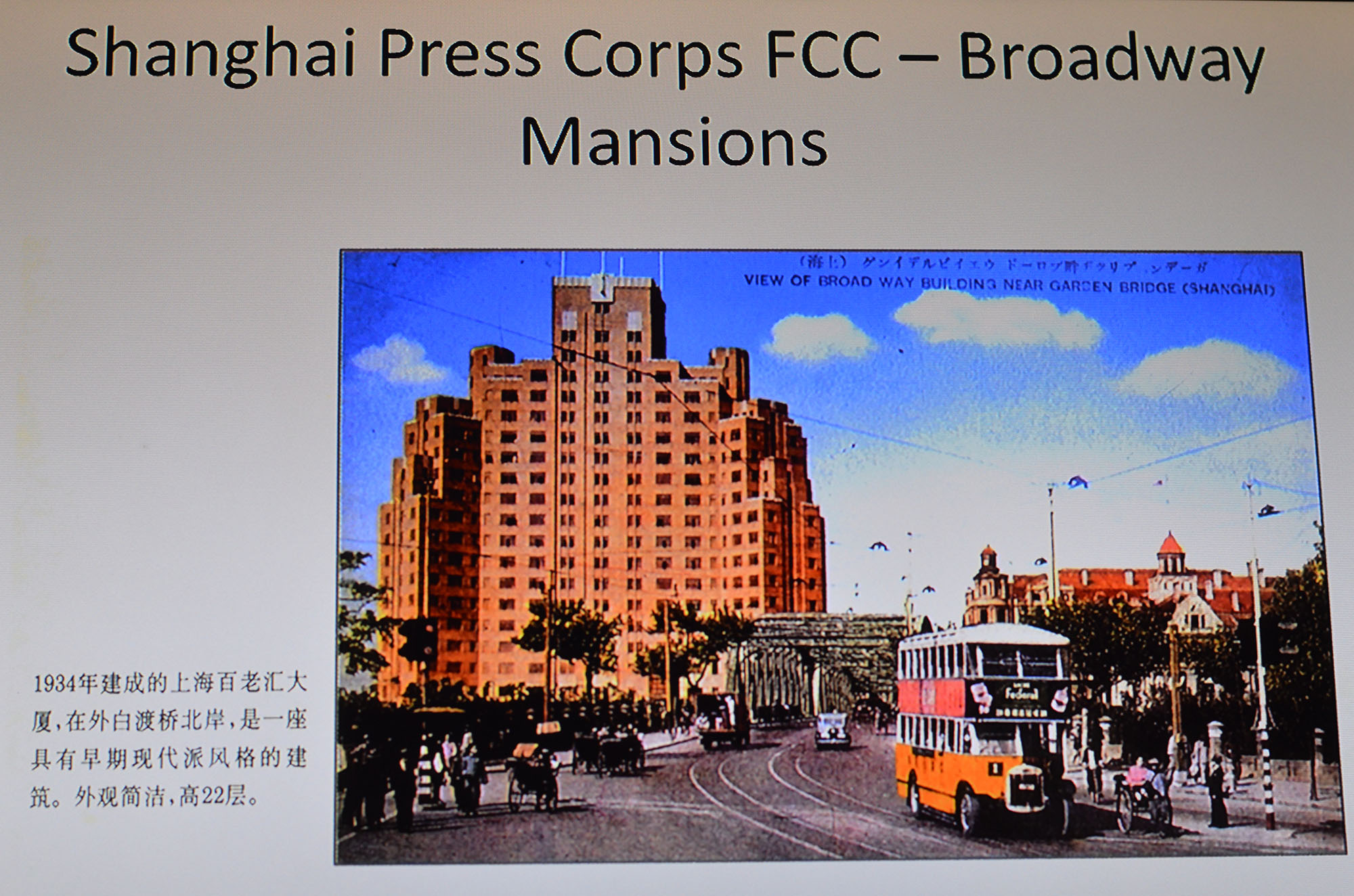
Broadway Mansions, home to the Shanghai FCC during World war Two. The club later became the Hong Kong FCC. Photo: Sarah Graham/FCC
French told of writers Edgar and Helen Snow’s sumptuous hutong courtyard home where they had seven servants and a racehorse; The New Yorker’s Emily Hahn and her stylish Shanghai apartment; and the city’s largest private library, owned by Times of London correspondent George Morrison, aka Morrison of Peking.
When asked how journalists of the time could afford such lavish lifestyles, French said: “There were so many journalist jobs – everybody had two or three jobs.”
He said writers were often stringers for international newspapers but would also get jobs on local English-language newspapers in Shanghai. The world was fascinated by what was happening in the cosmopolitan city pre-1937, particularly as the Battle of Shanghai kicked off fighting between China’s National Revolutionary Army and the Imperial Japanese Army during the Second Sino-Japanese War.
“China was such a bigger story then that it is now,” said French, adding that far more column inches were given to coverage, whereas now China’s economy is the only story being covered by the international media.
The colourful characters of the time are brought together by French in his soon-to-be published book, City Of Devils: A Shanghai Noir, a painstakingly researched novel about a now vanished old China.
French’s talk on April 19 included photos of the old Shanghai FCC building in Shanghai’s Broadway Mansions, which would later become to the FCC Hong Kong when, in 1949, its president, Clyde Farnsworth, moved the club to the city after the Nationalists retreated to Taiwan and Mao’s Communists created the PRC.
Watch the video
We will keep publishing for as long as we can: New Naratif editor on the challenges facing independent news in Singapore
The challenges of running an independent news website in Singapore on a shoestring budget as the government continues to squeeze press freedom were discussed by freelance journalist and editor Kirsten Han.
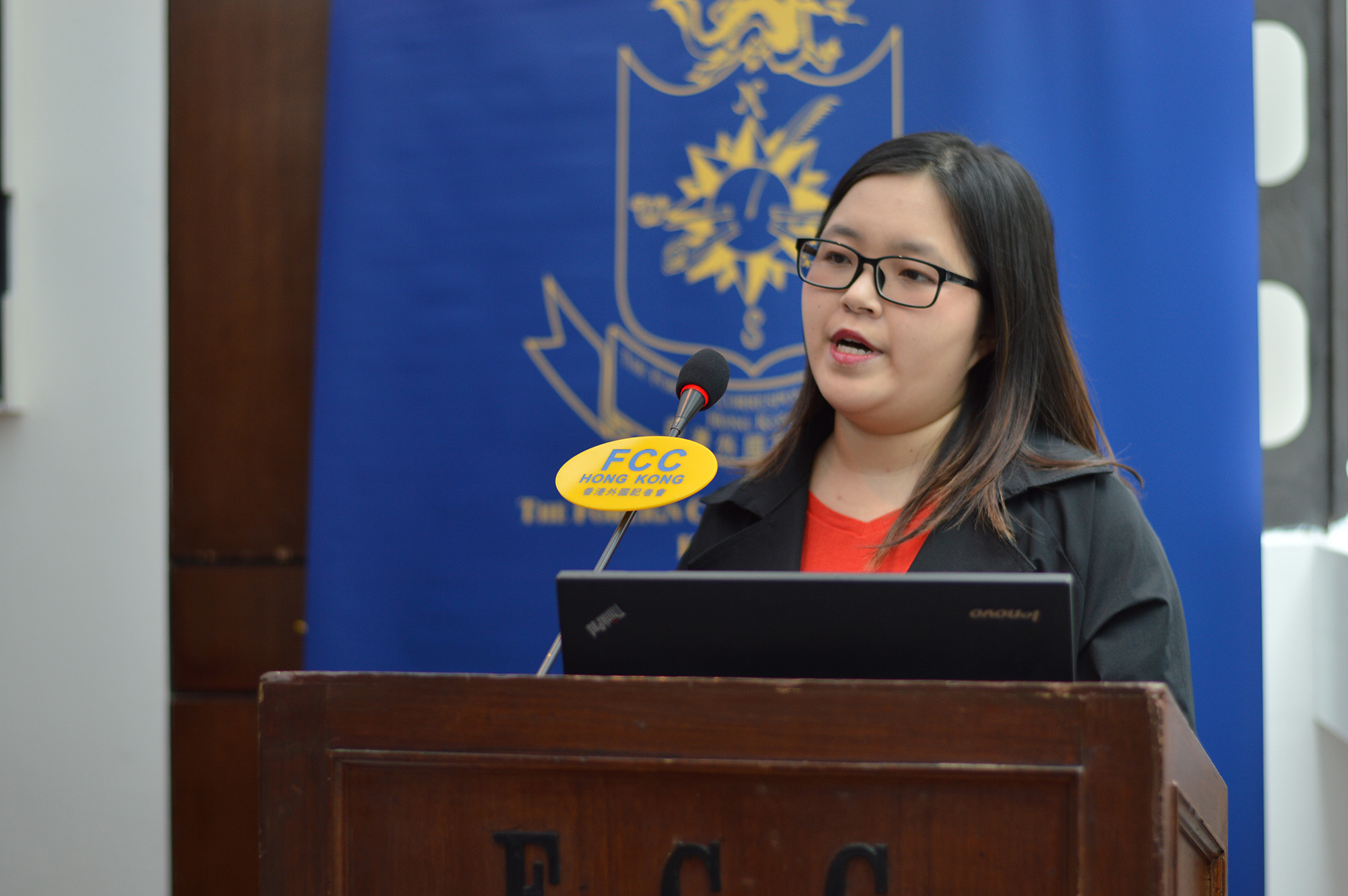
Kirsten Han, editor-in-chief of Singaporean news website, New Naratif, has been accused of publishing political material. Photo: Sarah Graham/FCC
Fresh from her appearance on the Fighting Fake News In Asia panel at the 3rd FCC Journalism Conference on April 14, Han told of her battle with Singapore’s accounting and corporate regulatory authority to have New Naratif, the website of which she is editor-in-chief, registered as a subsidiary company. Currently, the fledgling news operation is owned by Observatory Southeast Asia Ltd (OSEA UK), a company incorporated in the United Kingdom.
Singapore’s Accounting and Corporate Regulatory Authority (Acra) has rejected the application, saying it “would amount to allowing a foreign entity or foreigners to fund and influence political activities in Singapore”. Acra added that granting the application would be “contrary to Singapore’s national interests”.
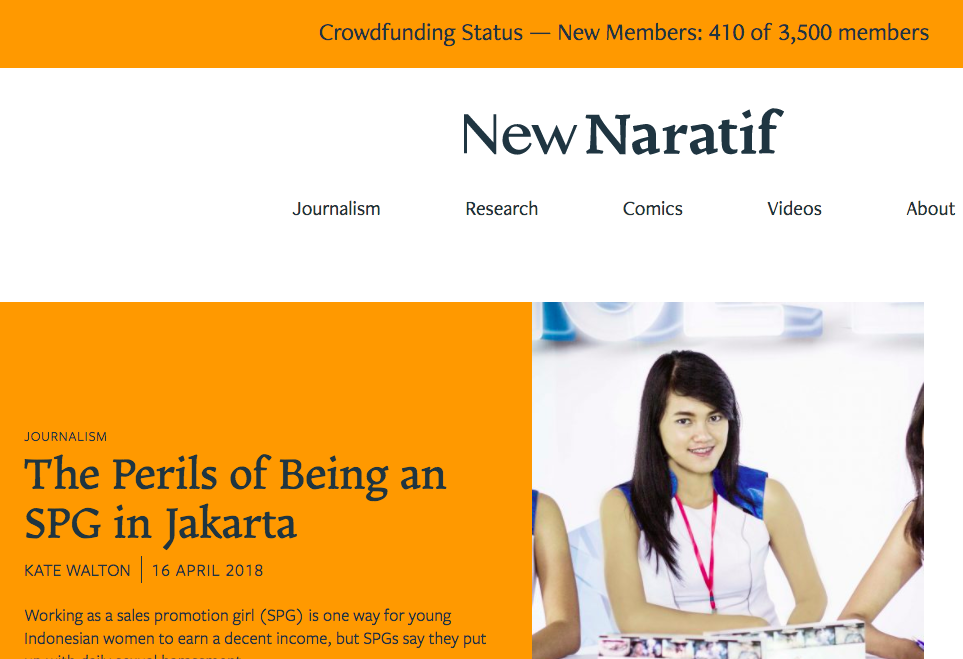
New Naratif, launched in September 2017, is subscriber-funded and has 457 members in 17 different countries. It describes itself as a “platform for journalism, art, research, and community-building for the people of this region” and seeks to “go deeper” than rival news organisations covering Southeast Asia.
New Naratif website.
“We’re not interested in reporting events,” Han said, adding that she left the day-to-day news coverage to rivals, instead opting for providing different perspectives and insights on a story. “If we cannot beat them on their own turf, we will take the turf they cannot stand on,” she added.
New Naratif is non-profit and operates on a tiny budget. It relies heavily on freelancers, who, Han said, get paid before the editors pay themselves. She said she doesn’t believe in not paying contributors as is common practice with some news organisations. The site takes on staff with no journalism experience because “we want to get more local writers writing about Southeast Asia”, Han said.
Singapore ranked #151 in last year’s World Press Freedom Index, an annual survey produced by Reporters Without Borders (RSF), which described the country as having an intolerant government, and self-censorship. It also highlighted various legislation it believes will stifle independent reporting, including a proposed law that would allow the police to search homes and electronic devices without a warrant, posing “a grave threat to the confidentiality of journalists’ sources”.
But Han said she is undeterred: “We will keep publishing for as long as we can,” she said.
Clarification: An earlier version of this article incorrectly stated that New Naratif had 3,500 members. We apologise for the error.
Fake news, authoritarian regimes, and women in journalism: the FCC’s 3rd Journalism Conference leaves no stone unturned
The challenges of reporting Asia in the shadow of creeping authoritarianism and under a tidal wave of fake news was the recurring topic of discussion at the FCC’s 3rd Journalism Conference.
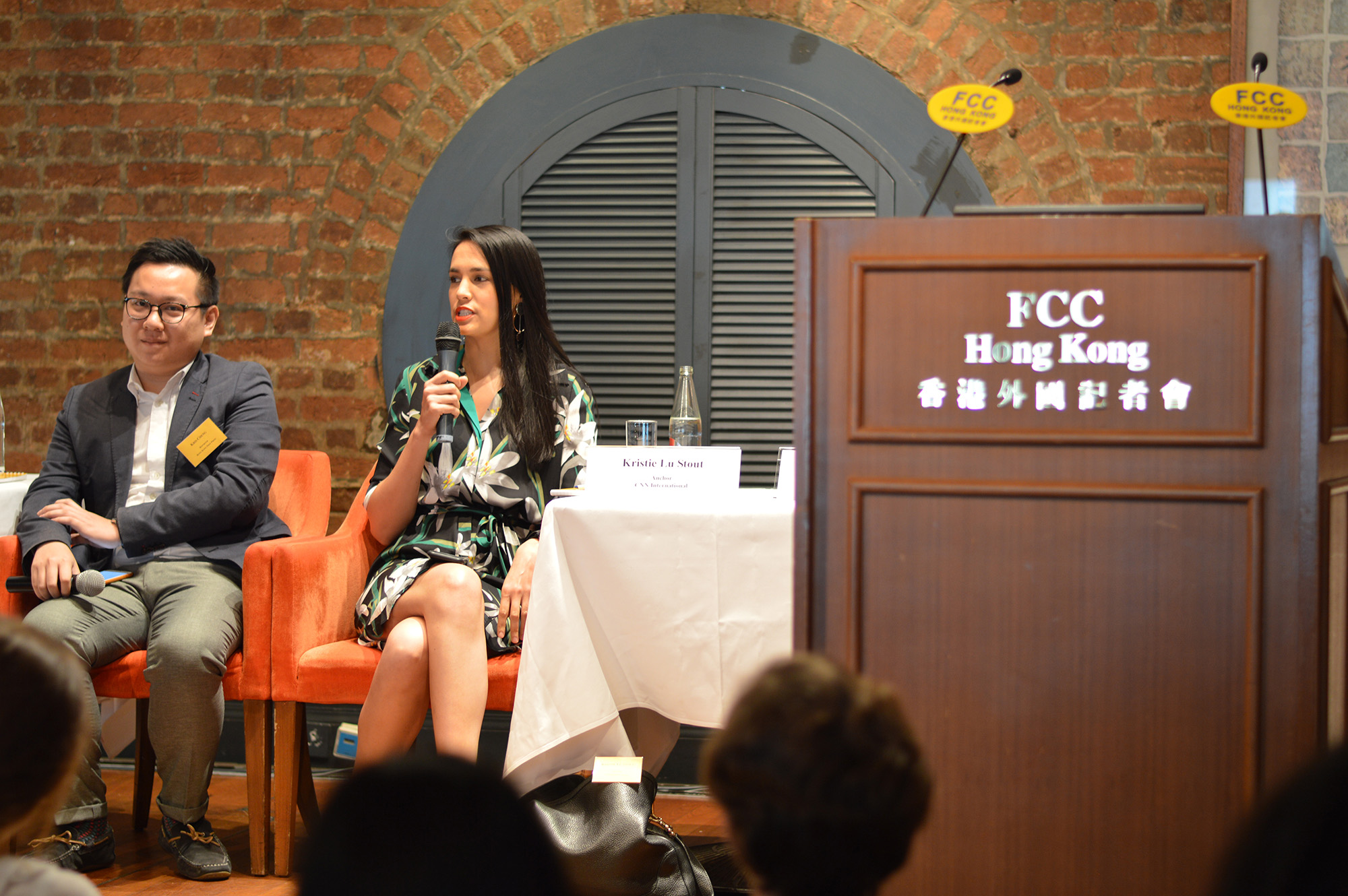
Hong Kong Free Press’ Kris Cheng, left, and CNN’s Kirstie Lu Stout talk about confronting stereotypes at the 3rd FCC Journalism Conference. Photo: Sarah Graham/FCC
The cream of Asia’s media, from reporters to editors, gathered to share their journalistic experiences amid an ever-increasing squeeze on press freedom in the region.
Throughout the day lively panels and workshops took place covering a range of topics including confronting stereotypes, women in journalism, investigative reporting, the fight against fake news in Asia, and reporting under authoritarian regimes.
Keynote speaker Maria Ressa, CEO of rappler.com, the news website battling Philippines President Rodrigo Duterte’s assault on press freedom in the country, emphasised the invaluable role journalism plays in holding authoritarian governments to account. “If we’re not the five-year-old kid telling the emperor he has no clothes on we’re not doing our job,” she said.
In the week that Facebook CEO Mark Zuckerberg appeared before a US congressional committee to explain how the data of millions of its users ended up in the hands of a third party, the world’s biggest social media platform came under the spotlight during the panel discussion on fake news in Asia. George Chen, Facebook’s Head of Public Policy for Hong Kong and Taiwan, found himself the target of several questions about the role the social media giant plays in the spread of missinformation.
“There’s no silver bullet,” Chen said of the fight against fake news. However, a multi-stakeholder approach – between a network of academics, journalists, news room managers and tech companies – is what is needed to stem the flow.
FCC Correspondent Governor Enda Curran, who organised this year’s conference, said it was a huge success. “The conference drew a bumper crowd and generated insightful discussion with speakers from around the region. We look forward to next year’s conference,” he said.
Watch some of the day’s panel discussions here:
Confronting stereotypes
Women In Journalism
Meet The Editors
Keynote speaker Maria Ressa
Investigative reporting
The Fight Against Fake News in Asia
Reporting Under Authoritarian Regimes
Why China watchers are getting it wrong: Controversial author on how everyone is skirting around the real issues
A tendency towards skirting around the real issues in China rather than talking about the problems the country suffers is the reason China watchers get it so wrong, says the author of a new book pointing out what he sees as the deep flaws in Chinese culture.
Author Paul Midler aired some grievances about the way the Chinese do business when he appeared at the FCC. Photo: Sarah Graham/FCC
The frustration of doing business in China was a particular area of focus for controversial author Paul Midler, who took aim at the nation’s penchant for long and drawn out negotiations, combined with a frustrating lack of openness, when it came to striking deals. In fact, this procrastination was probably the reason why the Chinese were to blame for the Opium Wars, he said, to the dismay of at least one guest who made it clear she was offended by the comment.
“Part of the trouble is we don’t have a vocabulary to discuss the sort of shenanigans that pass for business-as-usual in China,” said the American.
According to Midler, the over-politeness now employed when talking about social and business issues in China stems from post-World War Two liberalisation. Prior to that, he said, the conversation was inspired by social Darwinism, allowing debates on what made certain populations around the world more successful than others. Midler called the 1920s and 1930s a ‘golden era’ for China watching due to its ‘very frank’ discussions about what was and wasn’t working in China.
But things are improving, he conceded, in that China’s big fails – pollution being one example – are being openly discussed globally and positively responded to by Beijing. But he said the general conversation around China remained largely focused on economics because it relieved us of the burden of having to discuss the real issues that are more painful.
Midler went on to explain that the media-projected image of Chinese people being ‘wholly innocent’ hostages to the Communist Party was ‘fiction’, and in fact 95% of the Chinese population freely supports the government.
“The reality is China watchers walk on egg shells,” Midler, who was promoting his latest book, What’s Wrong With China, said.
However, the era of Donald Trump and his incendiary approach to diplomacy is changing the conversation. “I think we’re getting closer and closer to people expressing what they actually mean,” Midler said.

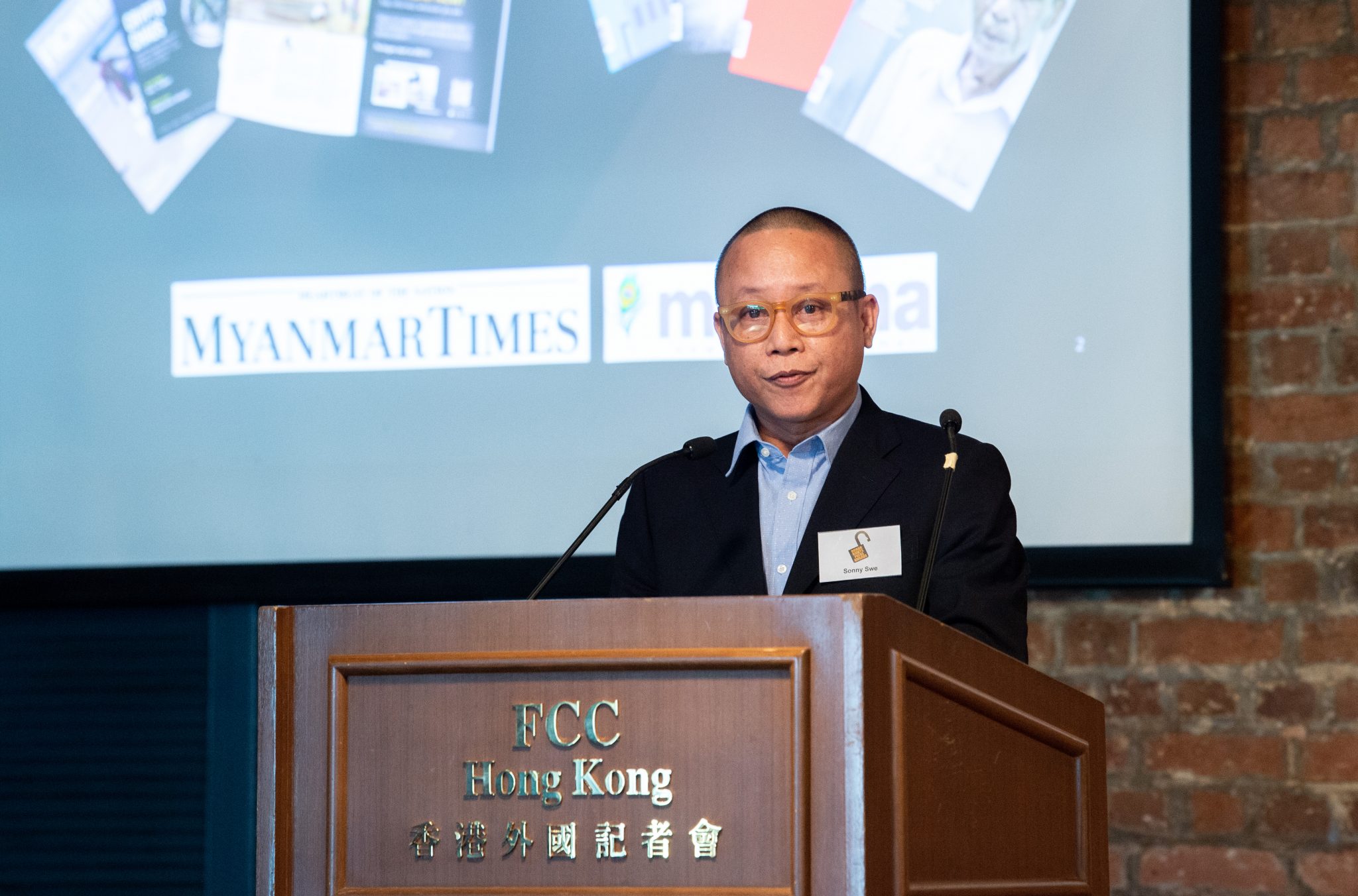 Keynote speaker Sonny Swe. Photo: Jayne Russell