
Neon is not dead: How a cultural icon is being preserved in Hong Kong
By Hugo Novales
Hong Kong’s iconic neon signage began with the discovery of noble gases in 1898. The unique properties of neon, argon, and other elements were used to create commercial signage unlike anything seen before. Neon quickly took off in the US, Shanghai, and eventually Hong Kong.
Hong Kong’s first neon sign went up in 1929 and was followed by a boom in the 1950s due to an influx of experts from Shanghai resettling in the city. Since then, Hong Kong has become the global hub for a community of neon artists and enthusiasts.
But that community is shrinking. In 2010 the local government introduced the Signboard Control System (SBCS), which instantly applied to all commercial signage. As a result, many neon signs disappeared seemingly overnight, and today only about 500 neon signs – as opposed to LED – can be spotted around Hong Kong.
Zolima CityMag recently published Neon Is Not Dead, the second volume in their Culture Guide series, which covers the full history of Hong Kong’s neon signs.
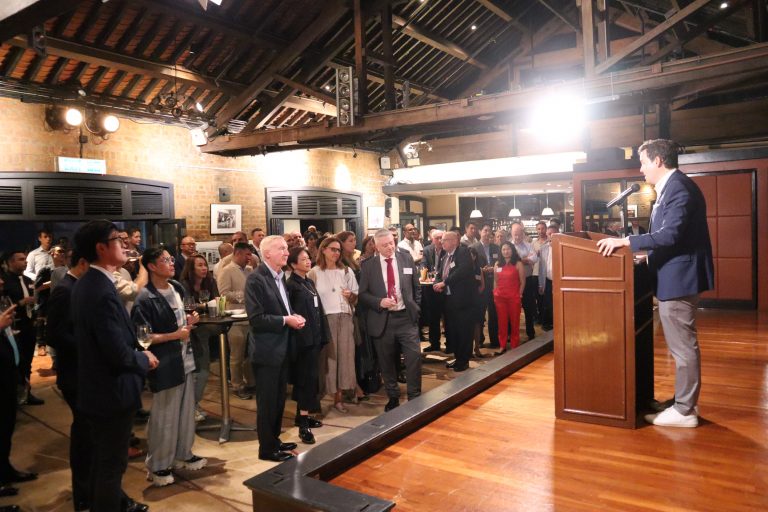
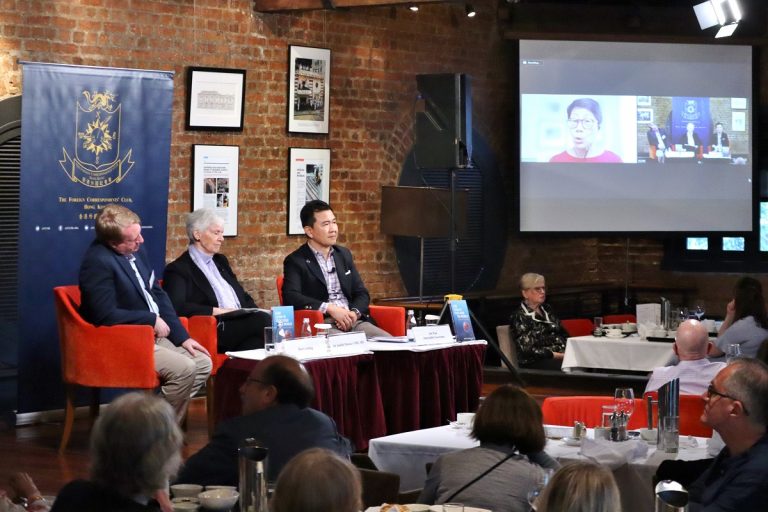
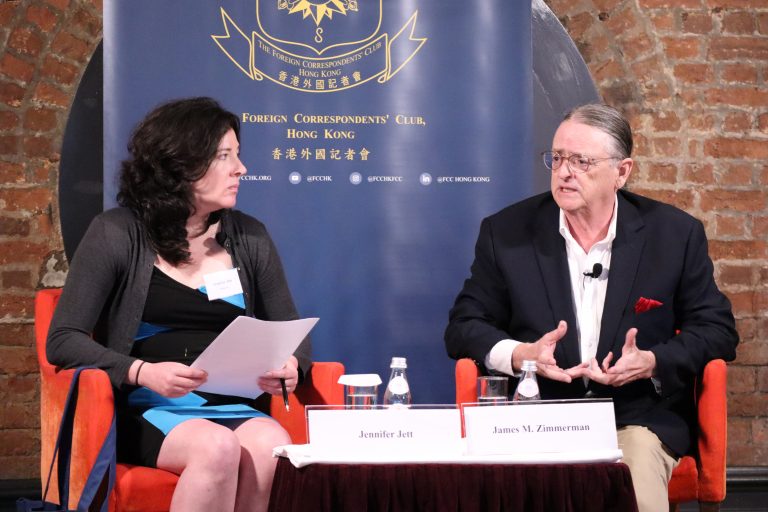
Shortly after its release in January, the new guide was discussed at an FCC Club Lunch hosted by Correspondent Governor Jennifer Jett, who sat alongside three of Hong Kong’s most knowledgeable neon experts.
“We didn’t want to be too backwards looking, too nostalgic. We wanted to make the case that neon culture is still alive in Hong Kong, and that it will continue to evolve,” said Christopher DeWolf, author of Neon Is Not Dead.

As Zolima CityMag’s Managing Editor since 2015, DeWolf has covered Hong Kong’s cultural landscape extensively throughout his writing career, with particular focus on the city’s unique urban history.
In line with the book’s title, DeWolf didn’t just want to write about neon as something that’s already gone — or soon will be. Instead, he aimed to highlight neon’s cultural significance that may go unnoticed by the average person in Hong Kong.
“Generally, I think people weren’t really aware of neon as something that could be historically significant or of heritage value. It wasn’t seen as a very pressing kind of thing to care about. There were other things on the agenda,” he said.
Cardin Chan, a contributor to Neon Is Not Dead, also spoke at the FCC panel, highlighting her efforts in neon conservation. To her, preventing old neon from ending up in a rubbish bin is one part of her job, but changing the conversation around neon is a bigger and more important task she constantly works towards.
“Through trial and error, I tried to actually save not just neon signs, the tangible assets, but also the intangible part of the story,” said Chan, who was the general manager of Tetra Neon Exchange and now runs her own cultural agency, The Indispensible Hong Kong.

Chan said that despite the local government’s initial push to replace neon with LEDs and other types of signage that fall within SBCS regulations, as well as misconceptions around neon, her persistence is leading to a better public understanding of it.
“I try to actually collect stories from the histories, the signs, and also what [artists] have been doing and what they want,” Chan said.
Panel speaker Jive Lau, who is also featured in Neon Is Not Dead, provided an artist’s perspective.

Born and raised in Hong Kong, Lau became interested in neon at a young age and eventually made it his career, founding the neon studio Kowloneon. After training with a neon master in Taiwan and returning to Hong Kong, Lau began hosting workshops at Kowloneon and has had his artworks displayed in galleries across Hong Kong and in international arts events.
As a neon artist, Lau was asked about the future of neon and whether it has already reached its full potential. To him, much more can still be done.
“I can imagine [that] neon can be another dimension. It’s not only the glass form with different interpretations, it’s still going beyond our imagination,” he said.
To watch the full discussion, please visit the FCC’s YouTube channel: