
Remembering the Vietnam War Through FCC Eyes
By Hugo Novales
The Vietnam War ended on April 30, 1975, just over 50 years ago. Spanning nearly two decades and resulting in a total loss of over a million lives, it was one of the longest and deadliest conflicts that shaped history and still echoes today.
The Vietnam War also made an impact on the FCC and the journalism industry as a whole.
During the war, the FCC became a hotspot for journalists covering the conflict, as did Saigon, the former capital of South Vietnam where correspondents were free to live and work — much unlike the arrangements for journalists in World Wars I and II. Many of the war’s iconic photographs, including the last helicopter out of Saigon, were even taken by FCC members.
The FCC’s Bunker, a quiet room located next to the Main Bar and Lounge, is dedicated to the Vietnam War and all the correspondents who risked their lives to cover it. Photographs, memorial plaques, and even some of the original cameras that these journalists used are all on display.
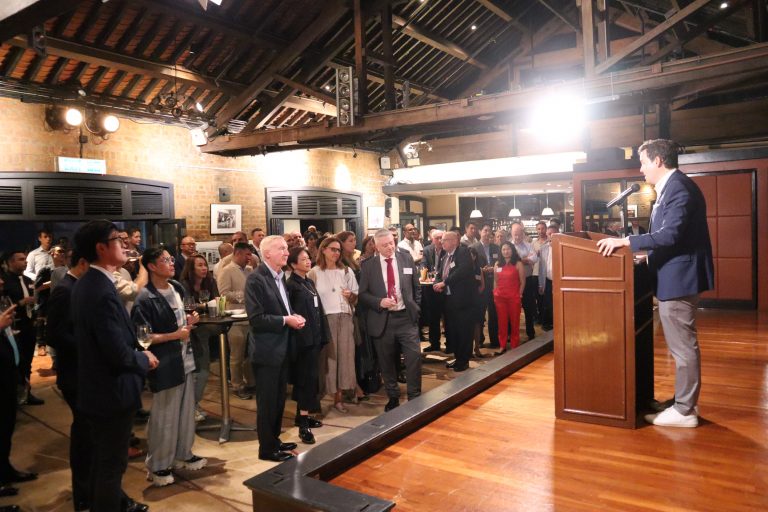
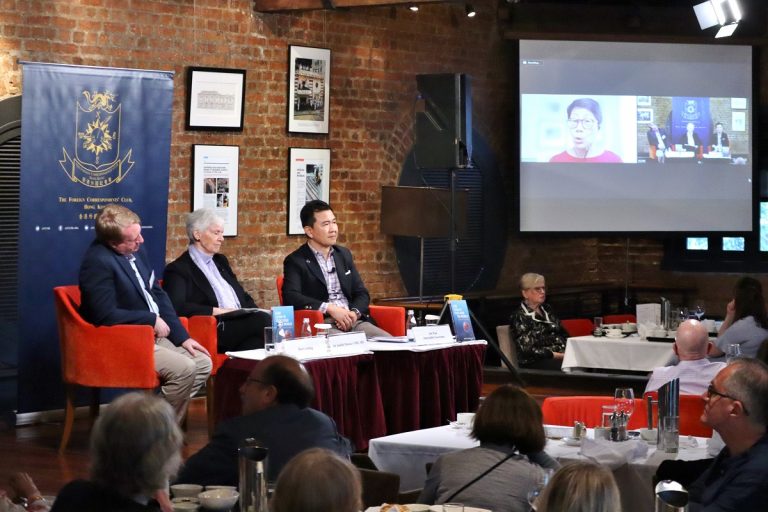
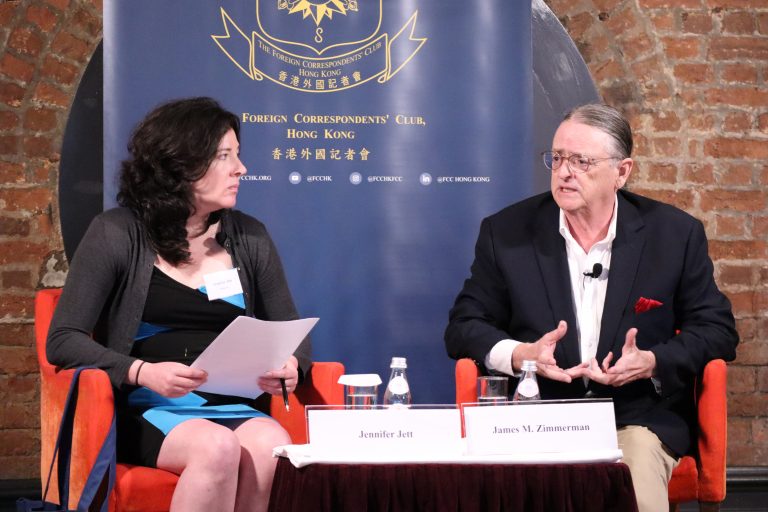
Earlier this year, the FCC hosted a Club Lunch to commemorate the 50th anniversary of the end of the war with a panel of correspondents and other notable FCC members who witnessed the conflict firsthand.
Moderating the discussion was Correspondent Governor Jennifer Jett, who asked Edie Lederer, the first panelist, about this year’s Reunification Day celebrations which she attended at the invitation of the Vietnamese government.
“[It was] very, very joyous,” she said.

Lederer was the first woman to cover the Vietnam War full time for the Associated Press and later became the AP’s first female bureau chief overseas, in Lima, Peru. She also lived and worked in Hong Kong. She has been the AP’s chief correspondent at the United Nations for the past 25 years, and her reporting career has taken her to every continent except Antarctica.
Previous celebrations (which Lederer also attended) didn’t have as many young people show up when compared to this year’s event. The Covid-19 pandemic canceled the 45th Reunification Day parade that would have taken place in 2020, which ultimately led to a massive and highly anticipated parade this year — the first in 10 years.
Lederer, along with other correspondents from the Vietnam era, was able to reminisce about her days as a war correspondent during the occasion. She shared what it was like for her and others to relive some of the most dangerous days of their lives.
“[It’s a] terrific, emotional, cathartic experience for a lot of them as it was for me,” she said.
Annie van Es, the second panelist, was not a journalist herself but was able to witness her late husband Hubert “Hugh” van Es and his fellow correspondents relive their “shared danger” back when they lived in Saigon from 1969 to 1972.

She described Saigon as a “very livable and fun place” that was actually far away from the battlefield. When Hugh would come back from his reporting trips, the couple would often gather with his fellow war correspondents at bars across Saigon so they could decompress over a few drinks. This is where Annie was able to hear their stories and see how Vietnam correspondents bonded over their “close brushes with death.”
The panel then explored Hugh van Es’s self-assessment of his own work covering the Vietnam War.
Kees Metselaar, a fellow Dutchman and close friend of Hugh van Es, was willed Hugh’s collection of photographs and other journalistic materials after he passed away in 2009. As the third panelist, he shared what Hugh thought of his own work, revealing that while his photo of evacuees lined up on a Saigon rooftop trying to escape via helicopter was one of the most iconic photos from the war’s end, it was merely “accidental.”

Hugh, accompanied by a group of soldiers and other correspondents, noticed that the roof of the building across the street from their office was being reinforced with steel just a couple of days before the evacuation. They kept a close eye on the building and Hugh was able to capture the iconic shot as if it were just another day on the job — nothing more, nothing less.
Metselaar said Hugh was more proud of his work covering the Battle of Hamburger Hill, a controversial battle that resulted in the loss of many American lives despite holding little strategic value in the conflict.
Hugh’s photos, along with the coverage from various other news organizations, spurred widespread U.S. criticism of the battle as well as the overall U.S. involvement in the Vietnam War, which continued to be mired in controversy until its chaotic end in 1975.
To watch the full discussion, please visit the FCC’s YouTube channel: