
The role of theology in an increasingly secular global society, as explained by Reverend Dr Michael Lloyd
By Hugo Novales
According to the Pew Research Center, about 62% of adults in the United States self-identified as Christian from 2023-2024. The decline of Christianity over the past few decades in the US has now plateaued, with young Americans from “Gen Z” now surpassing previous generations’ interest in the Christian faith.
On the global scale, Christianity remains to be the most popular religion with 2.3 billion followers, but its growth wasn’t in pace with the global population increase from 2010-2020. Other religions, particularly Islam, reported higher growth during the same timeframe, as did the number of people who do not follow any religion.
In a modern world with increasingly secularised governance and societies, where exactly does theology fit? How does Christianity hold up now with the outstanding progress of science and technology, as well as the presence of other religions? How is faith still relevant today?
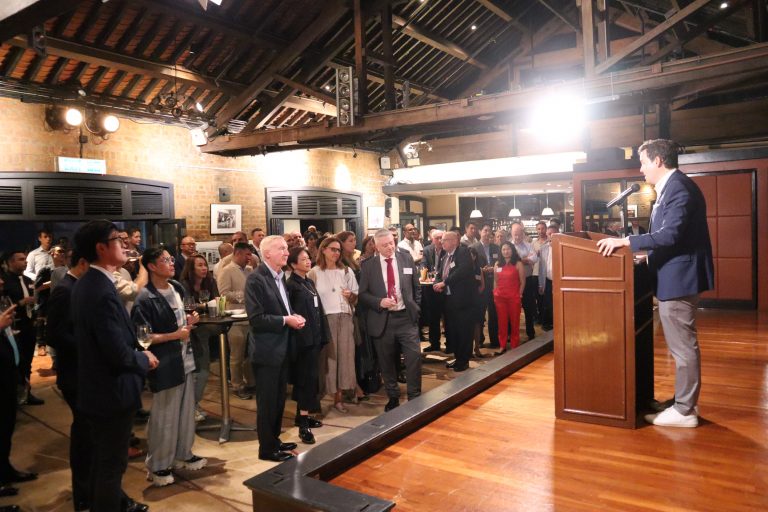
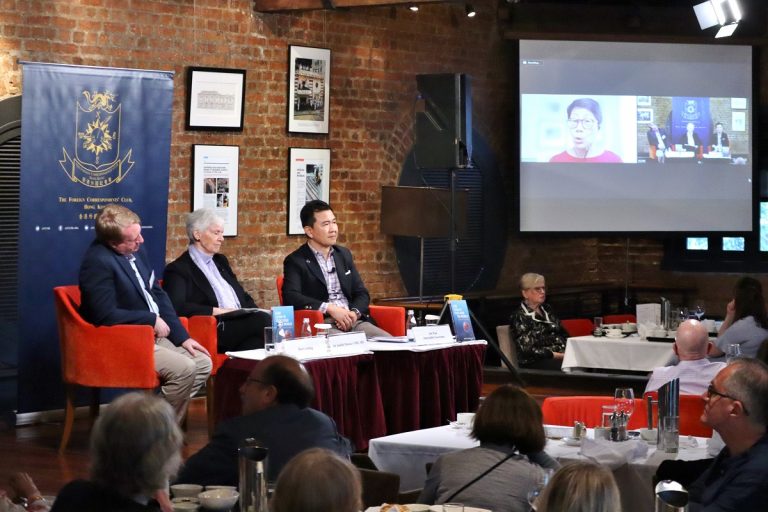
To discuss theology’s continued role in 2025 and onwards, the FCC hosted a Club Lunch with Reverend Dr Michael Lloyd just a few weeks after the Roman Catholic Church elected its new leader, Pope Leo XIV.
Dr Lloyd serves as the Principal of Wycliffe Hall, a permanent private hall at the University of Oxford, where he teaches theology. He’s also the author of Café Theology (2012), a co-author of Image Bearers (2023), and co-host of GodPod, a faith-based podcast run by St Mellitus College.
Sitting alongside Dr Lloyd was then-FCC President Lee Williamson (now Correspondent Governor) who first asked why studying theology was important for everyone, even for people who do not believe in religion. Dr Lloyd responded by highlighting various examples of how previous generations have used religion as a blueprint for how societies should operate.
“Whether one believes or not, theology has shaped society in extraordinary ways all the way down through history. You don’t understand the world if you don’t understand the role that religion and theology have played in that world,” he said, adding that religion “puts ground under our feet.”
Williamson followed up by addressing the political polarisation that has dominated global headlines, particularly in the US where President Donald Trump has found increased support amongst evangelical Christians despite his views and policies that some find to be against biblical values. Dr Lloyd and Williamson discussed how this differs from their home country, the UK, where, as Dr Lloyd put it, “political maps” don’t necessarily overlap with the “church map”.

Dr Lloyd cautioned against the church – any church – from allowing political differences to seep into the social fabric of their congregations.
“I think it’s really important that the church doesn’t fight the culture wars. It’s got to be a place where those debates can happen civilly, rationally, charitably, in a way that people will actually listen to each other,” Dr Lloyd said.
Williamson also asked if Dr Lloyd thought Trump was a good Christian. Dr Lloyd laughed and said that this particular judgment is best left to God and that his role as a religious leader was not to know anyone’s heart.
The discussion then shifted into a broader look at how religion can be used to understand why suffering exists despite the presence of a forgiving and loving God.
Dr Lloyd, as an expert in the faith-based analysis of evil, its origins, and the pain it causes, explained how suffering allows humans to feel compassion for others. His belief is that God is right where suffering occurs, too, and that He is also against it.
So then why do things like this happen in the first place? Dr Lloyd attributes this to the free will that God has granted to humanity. This same free will that causes pain and suffering is also what enables people to take action to prevent further pain and suffering versus just waiting for God to intervene every time something bad happens.
“If God were always intervening whenever we didn’t bother, we wouldn’t bother,” Dr Lloyd said.
The pair also discussed how the church is using AI, how Christianity can build better relationships with other religions, and how the existence of life on other planets might affect religion.
To watch the full discussion, please visit the FCC’s YouTube channel: