Members Area Logout

On The Wall: Young Lenses

Photographs by students of HKU, City University, Baptist University and SCAD

How do the youth of Hong Kong view their world? In the FCC’s Young Lenses exhibition, students presented photos of Hong Kong as they see it. With their images, these budding photographers and photo-journalists capture poignant moments of Hong Kong in the news, Hong Kong on the streets and Hong Kong life as it happens.

In this first exhibition by student photographers, the FCC presented works by our future colleagues and contributors to the world of media and journalism.

The FCC Wall committee would like to thank Kees Metselaar of The University of Hong Kong, Birdy Chu of City University of Hong Kong, Robin Ewing of Hong Kong Baptist University and Adam Kuehl of SCAD Hong Kong for their assistance in selecting photographs by their students for submission to this exhibition.

Adam White & Cammy Yiu, FCC Wall committee

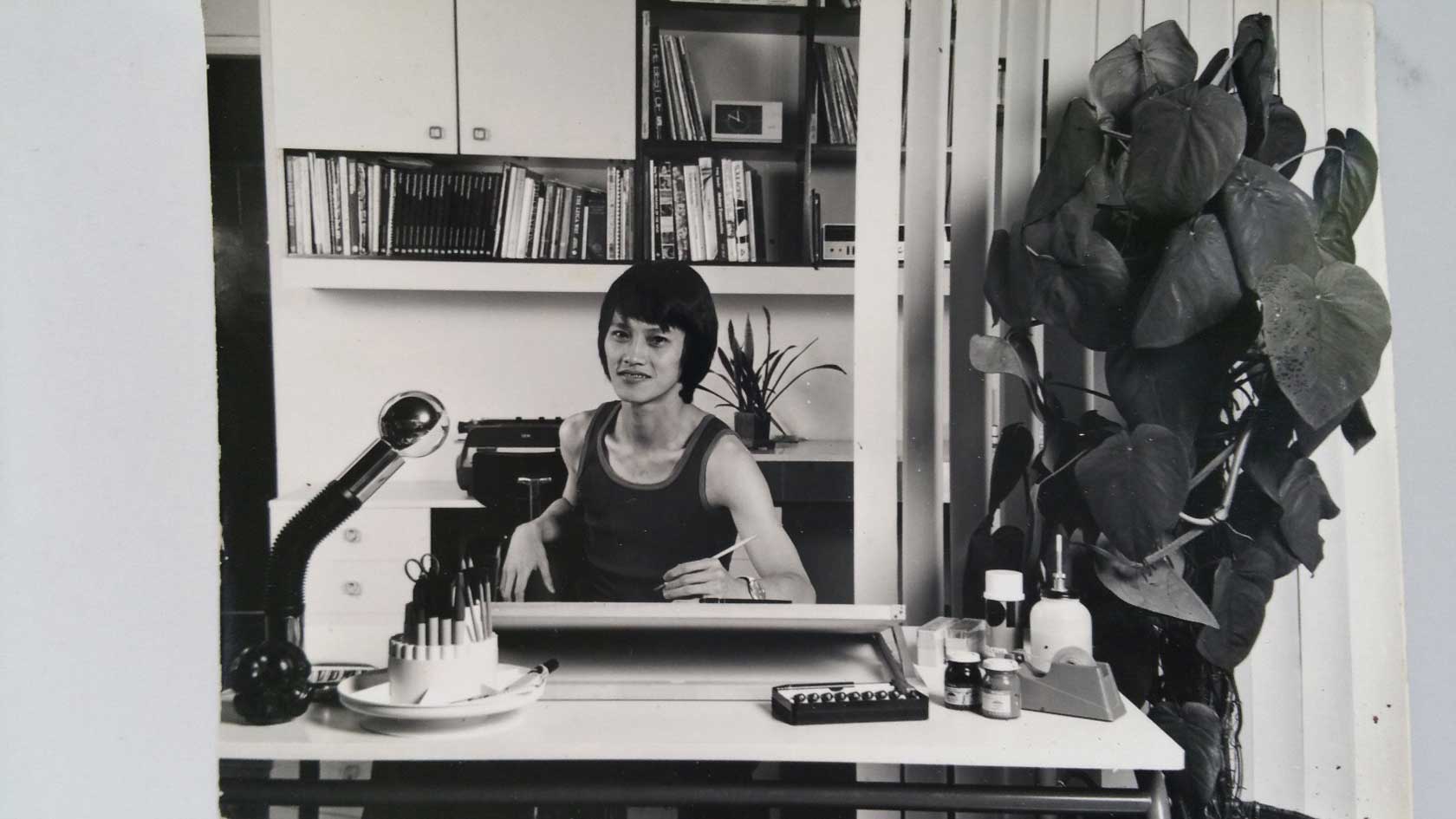
Krupenina Katerina, City University: Caroline was one of the first people I met in Hong Kong. It is her undying love for this city and its people that makes her so special. Krupenina Katerina, City University: Caroline was one of the first people I met in Hong Kong. It is her undying love for this city and its people that makes her so special.
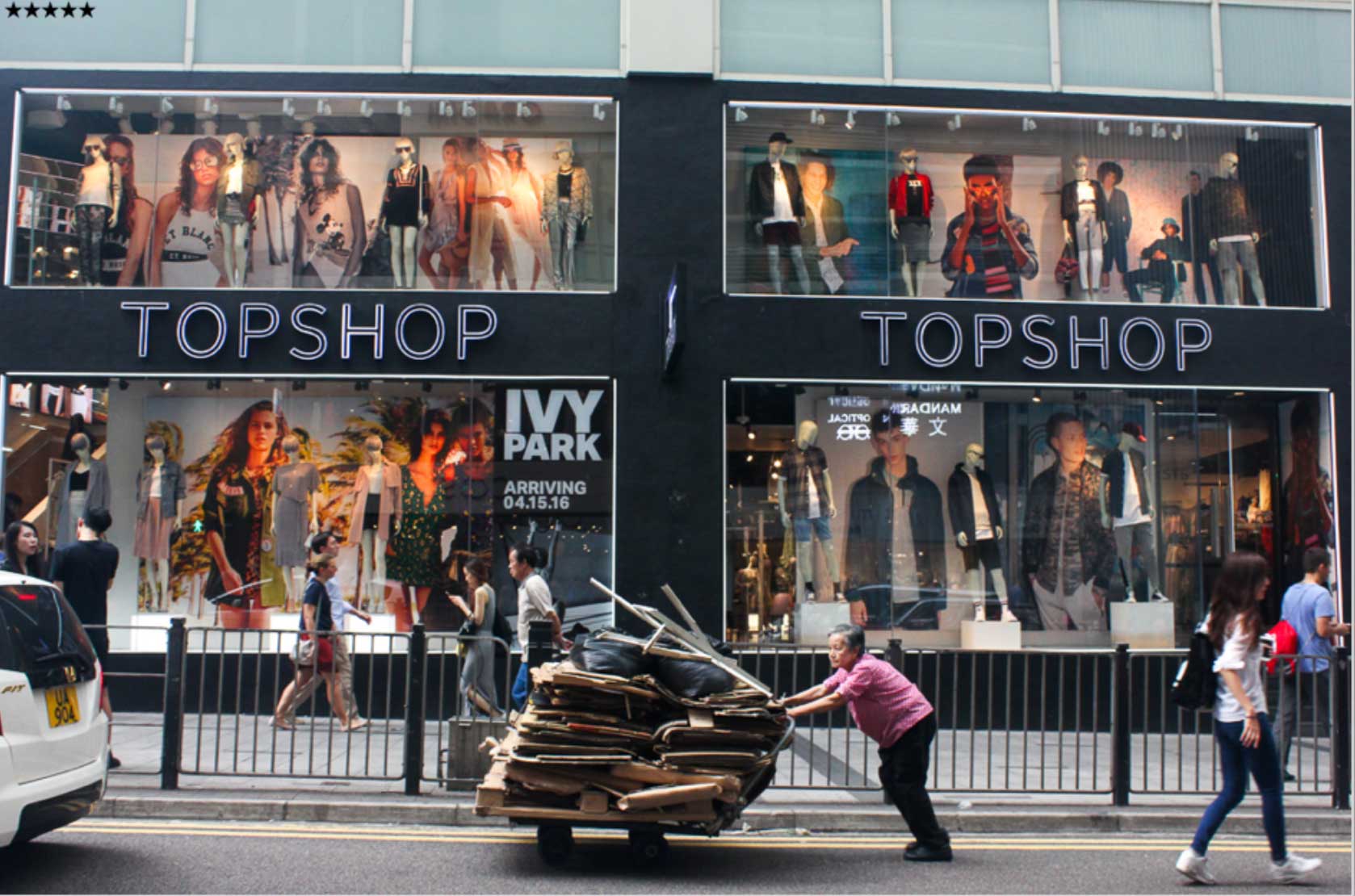
Magoo Sahil, University of Hong Kong: A poor woman pushes her four-wheeler loaded with cardboard on one of the streets in Central, Hong Kong, 2016. The different lifestyle of the rich and poor people can be seen as she waits at the red light in front of a shopping mall Magoo Sahil, University of Hong Kong: A poor woman pushes her four-wheeler loaded with cardboard on one of the streets in Central, Hong Kong, 2016. The different lifestyle of the rich and poor people can be seen as she waits at the red light in front of a shopping mall.
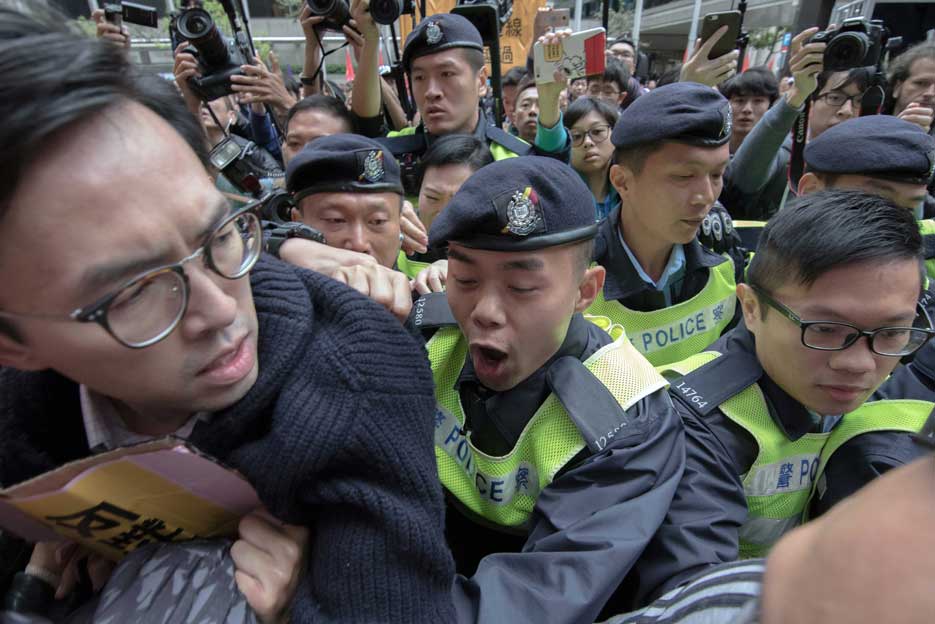
Lee Yui Chit Eugene, Hong Kong Baptist University: Avery Ng Man-yuen, chairman of the League of Social Democrats, is grabbed by police at a protest on March 26, 2017 outside the Hong Kong Convention and Exhibition Centre during the chief executive election. Lee Yui Chit Eugene, Hong Kong Baptist University: Avery Ng Man-yuen, chairman of the League of Social Democrats, is grabbed by police at a protest on March 26, 2017 outside the Hong Kong Convention and Exhibition Centre during the chief executive election.
Engh Cara, SCAD: Tung Wan Beach, Cheung Chau. Engh Cara, SCAD: Tung Wan Beach, Cheung Chau.
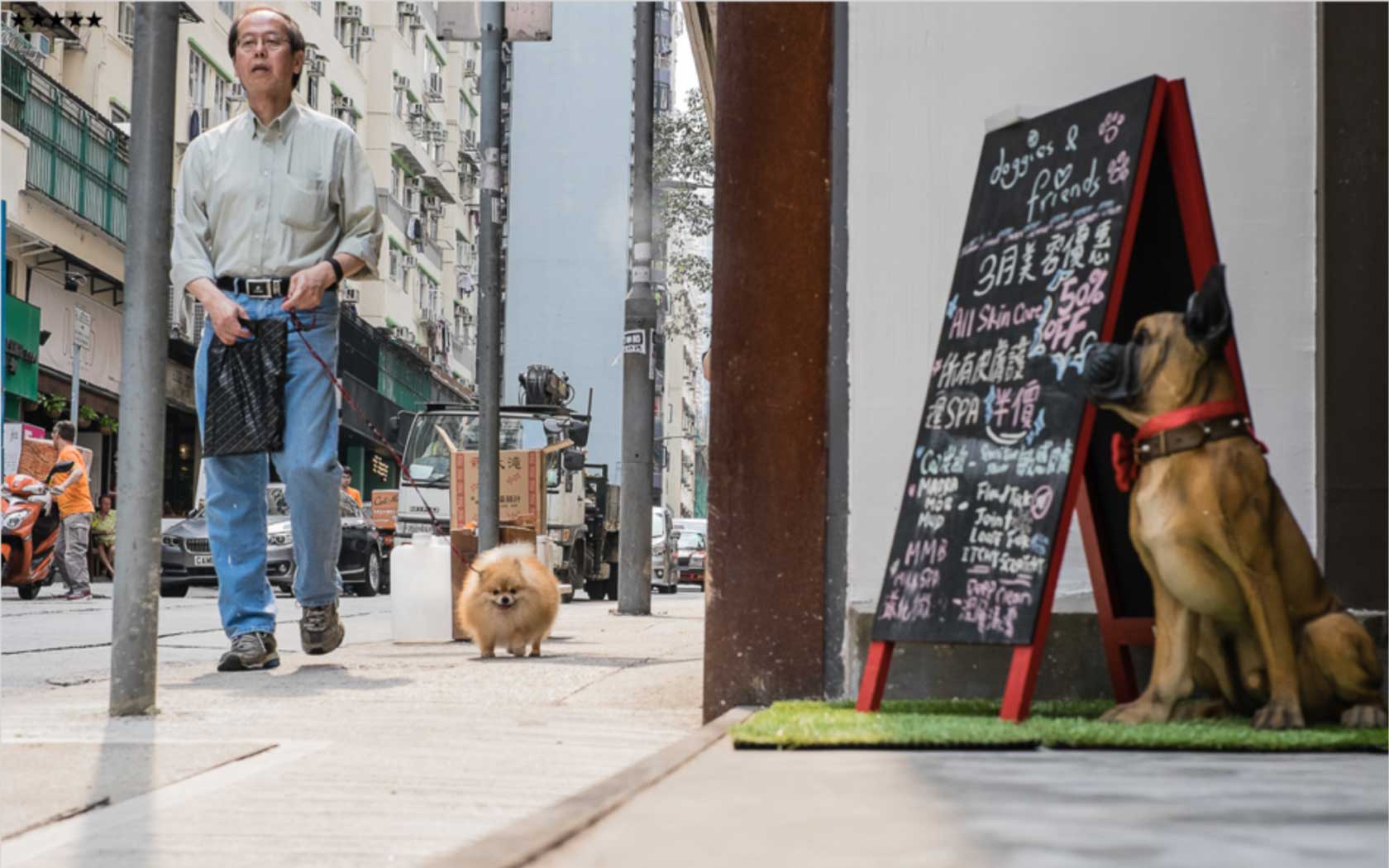
Loho Petra, University of Hong Kong: Male dog owner walks past a dog spa on High Street, Sai Ying Pun, 2016, with his Pomeranian. Loho Petra, University of Hong Kong: Male dog owner walks past a dog spa on High Street, Sai Ying Pun, 2016, with his Pomeranian.

Battle is on to stop 25-storey hospital casting a shadow over the FCC

Across the road from The Foreign Correspondent’s Club is the Bishop’s House, a heritage landmark with a distinctive octagonal tower, writes John Batten.

Artist’s impression of proposed 25-storey hospital at the SKH site. Artist’s impression of proposed 25-storey hospital at the SKH site.

Dating from 1843, it is one of Hong Kong’s oldest colonial buildings and housed the original St Paul’s College. Despite its bona
fide
heritage credentials, it has only been accorded a Grade 1 heritage grading by the Antiquities Advisory Board, rather than the higher ‘Monument’ status – a heritage grading ensuring its full preservation and protection from demolition.

Scroll down for the latest update on how you can comment on this application

A long land lease for this site was granted to the Hong Kong Sheng Kung Hui (SKH or Anglican Church) in the first year of British rule in Hong Kong. This lease allows the SKH to operate a theological college, a school, St Paul’s Church, a hospital and provide staff accommodation.

For over 160 years, Bishop Hill has been home and office of the Bishop of Hong Kong, the most senior Anglican cleric in the city. The Bishop’s home is sited mid-distance between the former Government House, now-Chief Executive’s House, and St John’s Cathedral.

It occupied a traditionally strategic and symbolically important position in the colonial pecking order: Government Hill with its (former) Central Government Offices and government decision-makers were just across the road.

In addition to the Bishop’s House, there are three other graded heritage buildings on the site and a beautiful grassy open space runs up the hillside parallel with Glenealy. In Hong Kong, with the exception of the just-renovated and opened Tai Kwun/Central Police Station, Bishop Hill has the highest concentration of graded heritage buildings in one dedicated area.

Following the controversial demolition of the ‘Star’ Ferry building in Central in 2006 and the success of the Central & Western Concern Group’s advocacy to preserve the modernist PMQ buildings, the government was pressed to formulate a heritage policy for the city’s Central district.

In 2009 the Development Bureau announced its Conserving Central policy of “eight initiatives to preserve many of the important cultural, historical and architectural features in Central while adding new life and vibrancy to the area”. The SKH site was one of those initiatives.

In 2011 it was announced that Bishop Hill would include a redeveloped 18-storey community centre (on the site of the former Central Hospital) and relocation of the church’s theological college and kindergarten, now operating inside St Paul’s Church, to a property owned by the SKH on Mt Butler.

Legislative Councillors inspecting Bishop Hill in response to a complaint to the Legislative Council’s Complaints Committee Legislative Councillors inspecting Bishop Hill in response to a complaint to the Legislative Council’s Complaints Committee.

However, this plan was stymied by strong opposition from the well-heeled residents of Mt Butler. They argued, among other considerations, that there would be greater traffic congestion if the kindergarten were relocated.

In 2017, documents were tabled to the Central & Western District Council outlining a new initiative for the site by the SKH. A few months later, illustrated plans for a 25-storey “non-profit-making private hospital” were unveiled with the new hospital closely wedged between the site’s historic buildings and covering the site’s grassed areas.

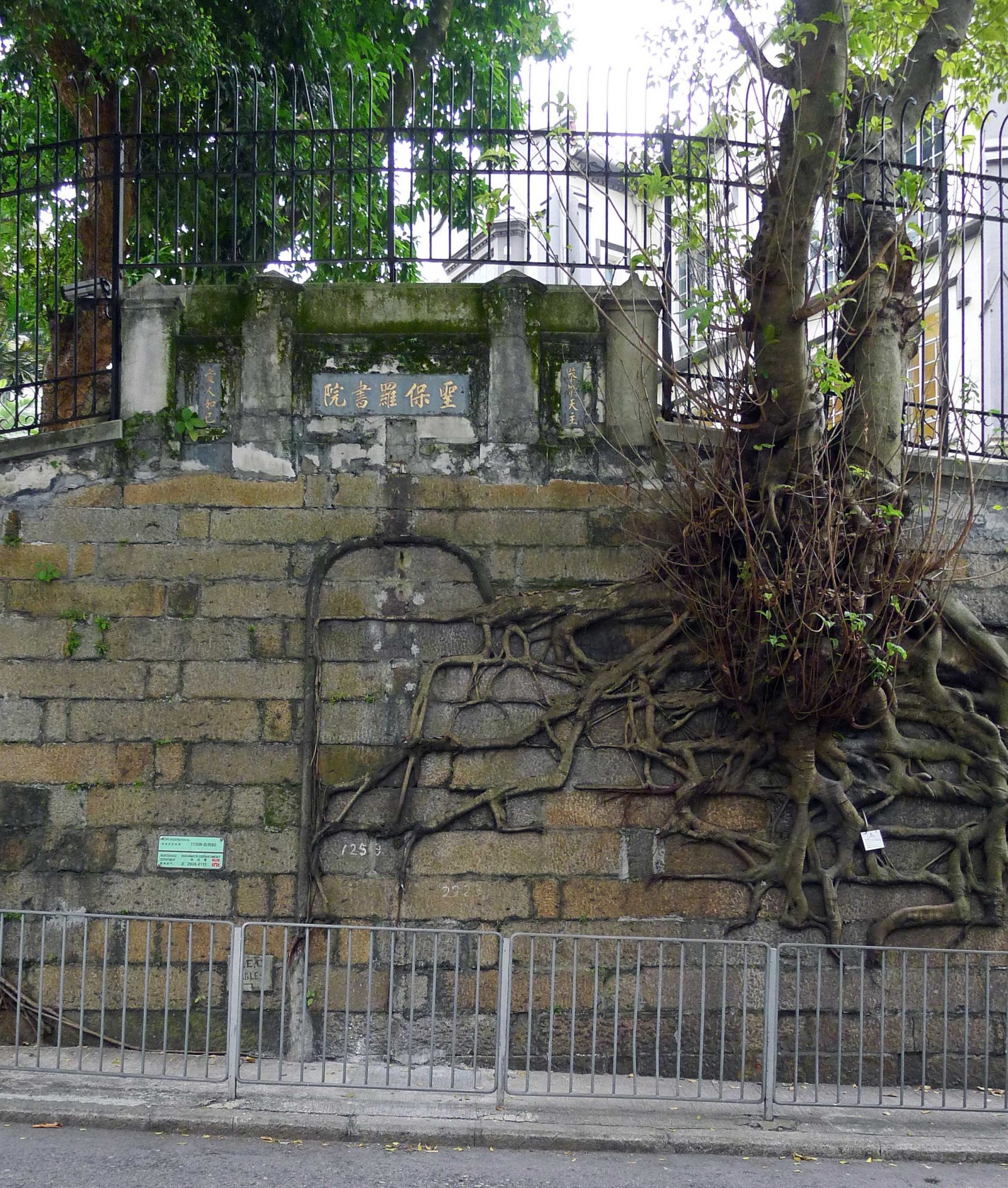
Signage for St Paul’s College on Bishop Hill’s Lower Albert Road exterior wall Signage for St Paul’s College on Bishop Hill’s Lower Albert Road exterior wall.

This huge building would straddle the entire Bishop Hill, running uphill between Lower Albert and Upper Albert Roads. The SKH’s proposal includes car parking facilities and a new run-in/run-out entrance on Lower Albert Road, with little consideration for pedestrians and current traffic congestion. This plan was presented with no prior discussion with the public.

The proposed hospital is out of proportion to the site’s other low-rise heritage buildings and adjacent heritage buildings, including the Chief Executive’s House and the FCC. This development will have a detrimental visual impact on a unique heritage corridor that begins at the low-rise FCC building and ends at St John’s Cathedral and the former Court of Final Appeal – both heritage buildings accorded Monument status.

Heritage and conservancy groups have again come together to object to the SKH’s Bishop Hill redevelopment. Under the umbrella of the Government Hill Concern Group, which previously successfully campaigned for the retention of the West Wing of the former Central Government Offices when it was threatened with demolition, a pre-emptive planning application has been filed with the Town Planning Board.

The application has a simple proposal: that any redeveloped hospital be of the current hospital’s 6-storey height and footprint and that the entire Bishop Hill site and its four heritage buildings are preserved and treated with respect within a new statutory heritage zoning encompassing a heritage corridor that also includes the former Central Government Offices and St John’s Cathedral. Determined public support for this proposal will ensure that ‘Conserving Central’ lives up to its promise! n

  • The application can be read at www.info.gov.hk, the government’s website. 

    UPDATE 27/9/2019: Town planning in Hong Kong can take ages to complete and the process can be complex. The proposed redevelopment by the Hong Kong Sheng Kung Hui (Anglican Church) of the former Central Hospital next to the Bishop House and across from the FCC is currently going through another stage of its planning. I have previously outlined in the FCC’s The Correspondent* magazine the historic importance of the entire Bishop Hill site with its four heritage buildings, trees and greenery. Below is an update on efforts to protect it from overdevelopment.

    The Government Hill Concern Group (GHCC) is a group of heritage advocates who came together to campaign against the demolition of the West Wing, one of the three wings of the former Central Government Offices (CGO), sitting on Lower Albert Road adjacent to the Bishop House, Government House and the FCC. Demolishing the West Wing would have destroyed the modernist architectural integrity of this historic site, the city’s original seat of government administration from the first days of British colonial rule in Hong Kong.

    After a concerted campaign, culminating in a meeting with then-Development, now Financial Secretary Paul Chan Mo-po, the West Wing was saved. Its renovation for the Department of Justice is nearing completion and it will soon reopen. You may recall that the West Wing previously had an elevator that gave public access from Queen’s Road Central up to Lower Albert Road. Once the West Wing reopens, this lift access should again be available to give the public an alternative, non-hill route to the Bishop Hill area.

    The integrity of the former government hill site is now assured and the GHCC has regrouped to campaign for the adjacent Bishop Hill site to be similarly and appropriately conserved. A planning application was made last year requesting the Town Planning Board properly plan the site rather than immediately allow the Anglican Church to redevelop it without additional public consultation. The Town Planning Board agreed with the concern group, and an Outline Zoning Plan (OZP) has been prepared by the Planning Department and was recently open for public scrutiny. In this OZP – which outlines broad-brush statutory planning details for all areas of Hong Kong – a height restriction of 135 metres (about 25 storeys) has been recommended for Bishop Hill by the Planning Department.

    The GHCC argues this height is too high and any new development of consequent scale and bulk would overwhelm this sensitive heritage site. The group has now submitted a considered counter proposal in a submission to the Town Planning Board. The GHCC argues that the entire site should have a height restriction of no higher than 80 metres (about 20 metres higher than the former Central Hospital’s current height), and that any new development only be allowed to be built on the footprint of the current buildings. This proposal will still allow the Anglican Church to develop, or renovate, the former Central Hospital, but will not overwhelm the site’s heritage and greenery. This restricted height will also contain the bulk and form of any new building, alleviate traffic congestion, and retain the unique historic ambience of the entire Bishop Hill.

    The GHCC will make oral submissions to the Town Planning Board at a hearing to discuss the OZP in the next months. Anyone else who makes a comment on this application can also address the Town Planning Board – which makes a decision after hearing all submissions. Please make a comment – forms are here and here.

Your FCC needs you… to drink more beer

The FCC’s F&B operation is central to the heart of the club, supporting and supplying our outlets with attractive food and drink options. Or so we hope.

Come and enjoy a pint at the FCC. Come and enjoy a pint at the FCC.

This means the kitchen, with its Chinese, Western and Indian sections, is tasked with coming up with innovative menus and promotions to get members to spend, spend, spend, every month. Apart from monthly subscriptions and joining fees, F&B and banqueting are our main revenue source and therein lies our current challenge.

The downturn in restaurant and bar business in recent years is all around Central and not unique to the FCC.

Unfortunately our kitchen was closed for renovation for several months in mid-2016 and it seems many members found alternative places to go, as revenues have yet to return to pre-kitchen closure levels. So that’s been a double-whammy.

We cannot be in denial of the fact that the FCC continues to operate at a deficit. From my calculations, we are currently running at a deficit up until November 2017 (for this financial year, i.e. since April 2017) of just over HK$1 million.

What this means is while we are going to come in for the full year at below the budgeted deficit, there will be a deficit nonetheless and this now looks like it will be a recurring deficit. We also face a huge bill for building renovations soon and the unpalatable fact is that while the FCC has reserves, these are going to be burned up at a ferocious rate.

The new minimum spend measure will help, but it can not compensate for slackening demand and increased food costs as these trends are well established.

So what are we doing to stem our losses? Good housekeeping and innovation have been our twin goals this year.

FCC bar staff are ready to serve. FCC bar staff are ready to serve.

Starting with beer. To stop the crazy wastage costing the Club HK$300-$400 per day, caused by having the beer kegs stored outside in the alley, we brought them indoors. That’s why beer kegs and a low white storage cupboard now sit near the back door. With a little reorganisation we made room for all our draught beer kegs under the main bar. Beer quality has improved markedly and we have updated our selection to reflect changing tastes. That means less lager, more draught beer. We’ve introduced beers from local breweries Gweilo and Young Master. Latest arrivals are a lighter beer, the 3.5% Another One from Young Master, and a traditional hand-pumped real ale is being installed as I write. Available in only a few Hong Kong pubs, this adds a new dimension to our beer offering. Draught Kronenbourg 1664 has also joined the stable.

Drinkers can also look forward to our own FCC label beer, coming soon. Fitting all the draught beers indoors took some juggling between Bert’s and the Main Bar, but thanks to the ingenuity and determination of Beverage sub-committee head Joel Leduc and cooperation from staff, everything has been accommodated. None of this could have been done without the years of groundwork by the late Walter Kent and Tony Beaurain on the Beer Committee. We wish you both were here to enjoy the results of your efforts.

On the wine side, we continue to offer the widest choice at best prices to members but this is increasingly hard with no dedicated wine buyer, a situation we hope to remedy soon. Wine socials continue to be a great way for members to choose the wines of the month, please continue to support these. Our current Correspondents’ Choice red, “Seduction,” is a runaway success selling more than 500 bottles a month.

Long time FCC member Simon Twiston Davies tries Bitter. “At last, a genuine draught bitter.” Long time FCC member Simon Twiston Davies tries Bitter. “At last, a genuine draught bitter.”

On the spirits side, again in line with popular tastes, we introduced a range of premium Sipsmith gins and Fever Tree tonic. Bar staff were given training in special gin cocktails, with another round soon for the many new staff. High staff turnover is an ongoing challenge.

On the food side we have trimmed costs by binning irrelevant promotions and focusing on popular and profitable items. Our Indian chefs continue to outperform and the Indian tasting menu was a resounding success, both vegetarian and meat versions. There is an ongoing mission to promote non-meat dishes because it’s healthy and the demand is there, but this is not always easy. To this end food items such as foie gras, which involve extreme cruelty, have been delisted, as have products such as Indonesian snake meat where we could not establish the snake species or even if farmed or wild caught. We uphold our commitment to sustainable farming of fish and meat. Once the holiday season is done, we plan a thorough review of all our F&B suppliers to ensure they meet our ethical and quality standards.

Efforts to reduce the still vast main bar menu to cut wastage and storage space continue. We have also made menus for speaker events more diner-friendly with meat, fish and vegetarian choices.

When it comes to Club functions, such as the recent New Year’s Eve party, F&B handled the event and catering organisation this year. After heavy losses over the previous four years, a policy of great food, fun music and keeping it simple was adopted. We cut costs with a DJ instead of a live band and Chef George devised a stunning four-course menu. Result: 160 dinners were served, admission to the main bar remained open to all throughout and we made a profit of $65,000. Well done to the staff for making it such a successful event. It shows what can be done.

Thank you to all members for your continued support. All I can add is please realise that the Club’s finances are fragile and our future in this building far from certain. By supporting F&B you keep your Club healthy. It’s simple: if you don’t use it, you lose it.

Anna is the F&B committee convener.

Lord Ashdown: Mutual respect between the US and China is key to peace

British peer Lord Paddy Ashdown was the guest speaker at a club lunch on November 28, where he shared his refreshingly frank views on the US-China relationship and a wide range of other issues.

Lord Ashdown speaking at the FCC in November 2017. Photo: Sarah Graham/FCC Lord Ashdown speaking at the FCC in November 2017. Photo: Sarah Graham/FCC

Ashdown, the former leader of Britain’s Liberal Democrat party and onetime International High Representative for Bosnia and Herzegovina, has taken an active interest in Hong Kong’s political and social affairs throughout his long and varied career. He studied Mandarin in Hong Kong for three years in the 1960s while serving with the Royal Marines and joined Britain’s overseas Secret Intelligence Service (MI6) after leaving the military and before entering Parliament. He also took part in demonstrations in Hong Kong in the aftermath of the Tiananmen Square protests in Beijing during 1989, and led the call for the then colony’s UK passport holders to have the Right of Abode in Britain.

Ashdown’s core message to the well-attended lunch was that peace in the future will depend on two questions: How will the US cope with its relative decline and how will China behave as a rising superpower? His view is that the world is currently transitioning from a unipolar system dominated by the US to a bipolar polity where China has an undisputed seat at the table.

The means by which new powers rise and the causes of decline among the mature nations have historically served to determine whether there is peace or conflict. China is working hard to be seen as a good “world citizen”, engaging constructively with the World Trade Organisation, participating in United Nations peacekeeping missions, helping with international disaster relief efforts and generally seeking to engage with the wider world.

Ashdown as a soldier in the Malayan Emergency in the 1960s. Ashdown as a soldier in the Malayan Emergency in the 1960s.
In contrast, US President Donald Trump’s policies that emphasise isolationism, protectionism and confrontation with China are ”foolish and dangerous”, not least because abandoning Washington’s leadership of the multi-lateral space creates a vacuum China has shown itself only too willing to fill. Ashdown believes the US should in its own interests remain engaged, form alliances and promote as the best way to avoid what a growing number of analysts consider to be the next area of confrontation – the Pacific Basin – if China’s core economic, security and diplomatic interests are needlessly and provocatively challenged.

In Ashdown’s phrase, we should remain “wary and alert” to these dangers as China seemingly reverts to the attitudes and rhetoric of the “old China” that many observers had assumed was discarded during the era of economic liberalisation. While this has manifestly not occurred, Ashdown remains optimistic, arguing that, “I know of no instance in history where the sustainable greatness of a nation has been built on a market that is free and a public voice that is suppressed.”

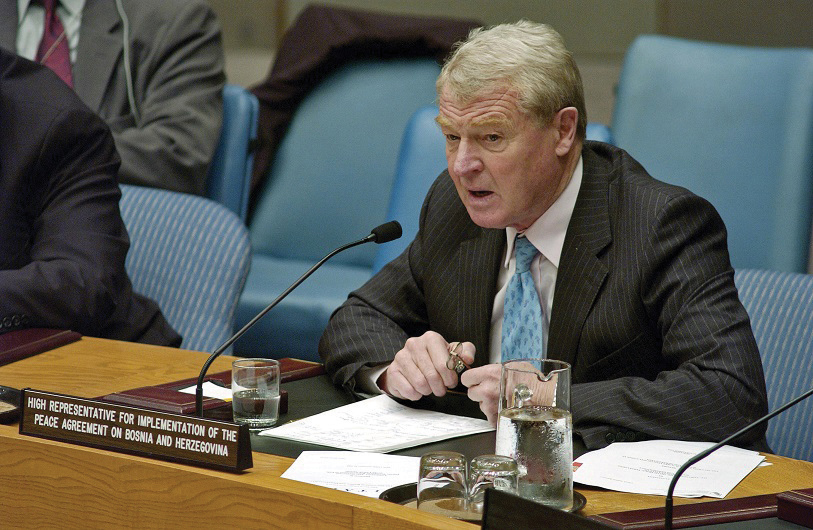
Ashdown as International High Representative for Bosnia. Ashdown as International High Representative for Bosnia.
Security Council Meeting: The situation in Bosnia and Herzegovina.

His optimism also encompasses Hong Kong, noting that the world is watching how Beijing deals with the territory. “If China wants genuinely to pursue a soft power policy… it’s not going to help by taking a hard line against Hong Kong.” He added that it would be foolish for China to wreck the unique relationship it has with Hong Kong, while observing that the formula “‘One Country, Two Systems’ is far easier as a slogan than it is to put into practice”.

Ashdown’s overall message was that working as a team is far better – and safer – than going it alone. He suggested, for example, that Australia should engage more with ASEAN and Europe should remain united, scathingly commenting that Brexit “will go down in history as one of the most extraordinary examples of a country doing itself gross self-harm while in full possession of its faculties… we have one of the most dysfunctional, dystopian governments I have ever known… this government couldn’t deliver the Sunday papers without a scrap.”

An optimist to the end, however, Ashdown concluded that such political incoherence and ineptitude could ultimately lead to Brexit simply not happening in any meaningful way.

Hong Kong whistleblower

Paddy Ashdown's memoir, A Fortunate Life. Paddy Ashdown’s memoir, A Fortunate Life.

Paddy Ashdown, in Hong Kong on a fact-finding tour, said he would “favour very strongly the BNO being extended to the right of abode if it is the case that the conditions in Hong Kong are created by whatever force that enables those who hold the BNO passport to feel so vulnerable that they can’t live here any longer”.

However, the SAR passport “is probably a better travel document than the BNO”, he added.

The BNO (British Nationals Overseas) passport was created in 1987 and is issued to permanent residents of Hong Kong. Holders can visit the UK for up to six months.

Ashdown said he was in Hong Kong to set up a parliamentary system called Hong Kong Watch. He said: “It’s not just directed at one side of the joint agreement, it’s there to act as a prod for the British government too. The British government is now obsessed with Brexit (and) trying to build trade deals – it’s a huge plum for the British to have a trade deal with China.

“We must ensure that Britain fulfils its legal and duty of honour to Hong Kong and we’ll be doing that. It will look at the actions of both sides and it will act as a whistleblower.”

Ashdown criticised Britain’s handling of Hong Kong’s handover to China, saying there was a degree of hypocrisy beneath its calls for democracy.

“British rule in Hong Kong was economically successful, but politically it was shameful,” he said, adding that a promise that the city “would never have to walk alone” is not a promise that “can be broken because it proves inconvenient to a British government obsessed with finding trade deals because it wishes to be outside Europe”.

“What happens next here in Hong Kong will be judged by a watching world,” he said.

Wall exhibition: Blue House

Ernest Chang is an American-born, Hong Kong millennial artist and photographer who suffers from deuteranopia (red-green colour blindness). Despite his condition, he has shown his mixed-media artworks and photography in multiple exhibitions and venues, most notably this collection of photographs taken inside the original Blue House that won wide media acclaim in September 2017.

Blue House by Ernest Chang Blue House by Ernest Chang

The Blue House is one of the oldest Tong Lau buildings in Hong Kong and was painted blue in the 1990s because the Hong Kong Government had surplus blue paint from painting the Water Supplies Bureau offices. The Blue House Series was created in collaboration with St James Settlement, to raise awareness and support for the Blue House’s heritage and preservation.

“I shot the series on the 8th of March in 2016, right before the renovations on the 9th. I initiated the project because I wanted to do my part for the community I live in,” said Chang. “I also wanted to help preserve the authentic, local beauty that is the original Blue House because generations of Hong Kong people, originating from different places, have passed through here, and I wanted to record the evidence of these lives in a thoughtful, personal way. My series focuses on realistic details of still-life objects within the building, zooming in on the evocative stories written in the textures, patinas, colours, objects, and time.

“I am proud to say that the Blue House Clutter Project, led by the relentless efforts at St James Settlement, recently won the UNESCO Award for Highest Heritage Conservation in November 2017,” he added.

Blue House by Ernest Chang Blue House by Ernest Chang

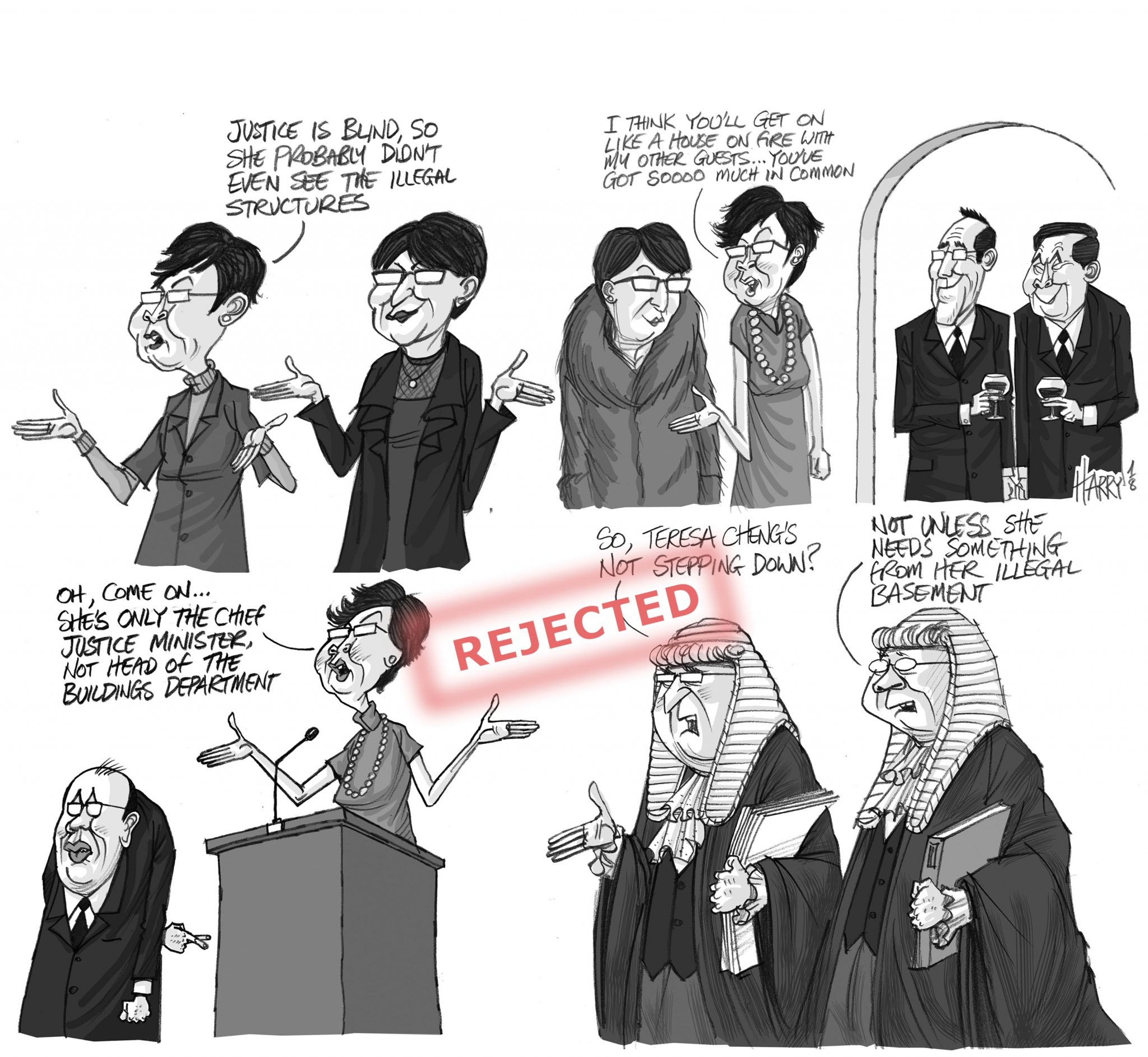
Harry’s rejects: Blind Justice as Harry takes aim at Teresa Cheng

Wall exhibition: Singapore Runaways

The images in the exhibition are part of a global project undertaken by Xyza Bacani to explore the intersection between migration and human rights. The project is supported by the Pulitzer Center. Bacani is a Filipino street photographer and a Magnum Foundation Human Rights Fellow, known for her stunning B&W images of Hong Kong street life.

Female migrant workers waits for the train in Orchard, Singapore. Orchard is full of migrants every Sunday. Photo: Xyza Bacani Female migrant workers waits for the train in Orchard, Singapore. Orchard is full of migrants every Sunday. Photo: Xyza Bacani

Singapore is a prosperous country in Asia and migrant workers have played an important role in its success, but at what cost? Hidden behind a shelter in Singapore are hundreds of distressed migrant workers of different nationalities waiting for their cases to be heard and hoping to move on. These people are victims of human labour trafficking, emotional, psychological and physical abuses.

Women are most vulnerable to these types of abuses, but even male migrant workers are subject to exploitation. Migrant workers from China, Bangladesh, India and other Asian countries go to Singapore to work as construction workers with little protection from local labour laws.

When the article was published, a spokeswoman for the Ministry of Manpower of Singapore said that ‘Singapore authorities take strong action against employers who do not comply with the law in their management of migrant workers’. She noted that nine in 10 foreign workers reported that they were satisfied with working in Singapore, according to a survey published in 2014, but for hundreds of these migrants, it’s far from reality.”

A portrait of Huang Mei Xin, 32-year-old from China. According to him, he  filed a work injury case when he broke his arm while at work. He said the alleged company misreported his case and  he was not paid for his medical certificate wages. He is still waiting for his final medical assessment and still wants to continue working in Singapore. A portrait of Huang Mei Xin, 32-year-old from China. According to him, he filed a work injury case when he broke his arm while at work. He said the alleged company misreported his case and he was not paid for his medical certificate wages. He is still waiting for his final medical assessment and still wants to continue working in Singapore. Photo: Xyza Bacani
Male migrant workers spending their day off in Little India. Most construction workers are usually from South East Asia and are paid less than locals on their work in Singapore. Photo: Xyza Bacani Male migrant workers spending their day off in Little India. Most construction workers are usually from South East Asia and are paid less than locals on their work in Singapore. Photo: Xyza Bacani
Nre Nie Win and Phoo Phoo, age 26 and 25, from Myanmar, watch a movie on a mobile phone. According to them they were not given any holiday, wages were unpaid and they're not allowed to use mobile phones. Photo: Xyza Bacani Nre Nie Win and Phoo Phoo, age 26 and 25, from Myanmar, watch a movie on a mobile phone. According to them they were not given any holiday, wages were unpaid and they’re not allowed to use mobile phones. Photo: Xyza Bacani

What next for struggling photographers? Put it in a book

Professional photographers in the past decade or so have had to struggle with declining markets for their photos as publications around the world have faded in the face of online competition. One way around this for many photographers has been to produce books, nearly always associated with an accompanying exhibition.

Hong Kong’s raging sky from “Wind Water” by Palani Mohan Hong Kong’s raging sky from “Wind Water” by Palani Mohan

This is the route Indian-born Australian Palani Mohan took when he left the Fairfax group of newspapers in the late 1990s. He has just completed his sixth book, with more to come.

“When I was 17 and just out of school I got a photography cadetship with the Sydney Morning Herald. Those times were also the generous years and they put me through university as well.”

He then spent about 17 years as a news photographer. “I enjoyed the photography world — earning money while doing something you liked to do.”

Out of the mist at the Big (Tian Tan) Buddha on Lantau. Photo: Palani Mohan Out of the mist at the Big (Tian Tan) Buddha on Lantau. Photo: Palani Mohan

Although he had been part of various books projects published by the Fairfax group, “it wasn’t until the late 1990s when I moved to Hong Kong that I approached a publisher to produce my own book”.

At the time he was regularly doing a two-page column in the Sunday Post’s “day in the life” series and decided he would compile about 20 of those stories into a book. Called “Hong Kong Lives”, it was published by Joint Publishing, which now produces mostly Chinese books.

“What attracted me about doing a book is that it is all about your idea — it’s purely the way you see the world. You also have more control of the images which are there for life,” he said.

Palani, who has always been a buyer and collector of photography books, based his second book on a collation of stories he had done for the likes of Time, Newsweek, The Observer, The New York Times and Asiaweek in the early 2000s.

“This was pretty much at the end of the golden era of good work and good money for freelance photographers — it was great while it lasted,” he said.

The book became the “Hidden Faces of India” published by an Anglo/Australian company, New Holland.

Image taken with an iPhone from Palani’s fourth book, “Vivid Hong Kong”. Image taken with an iPhone from Palani’s fourth book, “Vivid Hong Kong”.

“I found with my second book that thinking about doing books was liberating which allowed ideas to burst out. So I quickly became hooked on the whole idea of planning books. This was helped by working with a publisher who saw the world with my eyes.”

His third book, “Vanishing Giants: Elephants of Asia”, was published by Editions Didier Millet in Singapore in 2008.

“I was living in Bangkok at the time and looked out the window and saw Asian elephants wandering down Sukhumvit, which somehow didn’t seem to fit: but at the same time to me they seemed to be saying ‘Here I am’ and I accepted the call.

From Palani’s fourth book, “Vivid Hong Kong”. From Palani’s fourth book, “Vivid Hong Kong”.

“I was first intrigued by elephants when I was growing up in India and have always been interested in the lives of the people who exist alongside them.”

This project was spread over five years. He photographed the elephants while doing other jobs in 13 countries around South and Southeast Asia seeing how the demands of industry and agriculture, burgeoning populations and environmental degradation had reduced the wild Asian elephant’s habitats and their numbers, which now hover below 40,000.

“When I arrived in Hong Kong after the elephant book the iPhone 3S was just out and the possibilities for taking photos with the iPhone was only just starting. I thought that using the iPhone unobtrusively to take photos might make a good book.”

From Palani’s fourth book, “Vivid Hong Kong”. From Palani’s fourth book, “Vivid Hong Kong”.

He approached Asia One Books to see if they would be interested in the idea of doing a book. “Without seeing any sample photos, Asia One grabbed on to the idea and so my fourth book, ‘Vivid Hong Kong’, was born and was published in 2011.”

Palani roamed the streets in all weathers and seasons to compile his take on the city. By forgoing traditional photographic equipment in favour of an iPhone, he was able to wend his way through the crowds, seizing those everyday, fleeting moments.

“When I started out not much had been done with iPhone photography,” he said. “It turned out to be a lot of fun and the quality was much better than I thought it would be which meant I could do exhibition prints and I was able to sell big prints.”

From Palani’s fourth book, “Vivid Hong Kong”. From Palani’s fourth book, “Vivid Hong Kong”.

The striking duotone images from Palani’s fifth book, “Hunting with Eagles: In the Realm of the Mongolian Kazakhs” by Merrell Publishers, were an On the Wall exhibition at the FCC in November 2015.

Palani spent some years seeking out the Kazakh golden eagle hunters on the far-western Mongolia and China border in the Altai Mountains. He got to know the hunters, or burkitshis, well as he photographed their vanishing culture, threatened by dwindling golden eagle numbers and the hunters’ children, who forsook the brutal winters and moved to Ulan Bator for a better life.

His sixth and most recent book, “Wind Water”, is quite a departure from his previous books as it’s a visual and artistic reflection on the feng shui elements — wind, water, wood, metal, earth and fire – and “the chi that powers this great harbourside city”, he said.

From Palani’s fourth book, “Vivid Hong Kong”. From Palani’s fourth book, “Vivid Hong Kong”.

“I have used the feng shui elements to make a personal portrait of the city which I think captures the energetic spirit of Hong Kongers. Although the geomancers will tell you this is no coincidence as Hong Kong has the most powerful feng shui of any place on earth.”

As well as exploring all the coastal corners of Hong Kong, it also entailed spending many hours on his roof in Happy Valley with camera and tripod in hand to photograph the shifting patterns of clouds in relation to the water.

For this book Palani approached a German publisher, Kehrer Verlag, “who were excellent to work with on this dream-like book — it was a work of love for me and the publisher, exemplified by their efforts to get a feng-shui-correct ISBN number.

From "Wind, Water", by Palani Mohan From “Wind, Water”, by Palani Mohan

“This book was three years in the making and I don’t think I have ever worked this hard,” he said. “It’s probably the most difficult thing I have done, it demands everything of you.”

Palani will be having a major exhibition early this year at the F22 photo space. Having exhibitions is a way to encourage print sales, which is necessary as there is not a whole lot of money in books.

“You could say that doing a book elevates you as an artist, rather than your bank balance,” he said. “I learned a long time ago that in this line of work you are never rich, but have a rich life.”

Having said that, Palani says he has picked up quite a lot of commercial work as a direct result of the books.

From "Wind, Water", by Palani Mohan From “Wind, Water”, by Palani Mohan

For Joshua Wong and pro-democracy activists, a rush of jail time

Student protesters were getting increasingly gun-shy as jail sentences were handed out during January. Even Joshua Wong, who was awaiting appeal for his previous conviction, was jailed for three months on a separate case.

Bailed democracy activists Joshua Wong (C) and Nathan Law (L) speak to the press after their arrival at the Court of Final Appeal for the first hearing in their bid to appeal their jail sentences in Hong Kong on November 7, 2017. Bailed democracy activists Joshua Wong (C) and Nathan Law (L) speak to the press after their arrival at the Court of Final Appeal for the first hearing in their bid to appeal their jail sentences in Hong Kong on November 7, 2017.

The judges in these cases seemed to take Henry Litton’s advice to heart when he had said that any charge that led to violence should result in jail time.

Earlier, when a still defiant Wong spoke at a press conference following his release on bail pending his appeal, he vowed to continue the “fight for greater democracy”, the SCMP reported. Last August, that meant 20,000 were out on the streets, now there are subdued handfuls.

Joshua Wong and Raphael Wong returned to prison — Raphael for four-and-a-half months — after being convicted of contempt for failing to comply with an injunction to clear the 2014 protest site in Mong Kok, HKFP reported. Another activist, Lester Shum, received a one-month sentence, suspended for 12 months, in addition to a HK$10,000 fine.

Some 17 other activists were also convicted of criminal intent. Joshua and Lester, along with nine others, pleaded guilty. Raphael Wong and eight others pleaded not guilty. The court found all 20 of them guilty in October. In December, four defendants were given 12-month suspended jail terms and fined HK$10,000 each. The other 13 defendants all received suspended jail sentences on January 17.

And there is more to come: Chief prosecutor David Leung has said additional legal action against more than 700 is being considered.

Separately, the VOA reported that the chairmen of the US Congressional Executive Commission on China said they planned to nominate Wong and the Umbrella Movement for the 2018 Nobel Peace Prize.


Censorship in China: Now academics face the music

China has moved from censoring domestic and foreign news media to cracking down on academic publications as well.

Journal of Chinese History Journal of Chinese History

Right from the start of Xi Jinping’s tenure in 2012, the authorities have been exerting control over what is said not only on domestic media websites but also on foreign media organisations’ websites.

One of the first foreign media to run afoul of China’s tougher censorship stance was The New York Times’s English and Chinese-language websites which have been blocked since October 2012 over a story about then prime minister Wen Jiabao’s family.

In fact, there aren’t many foreign news organisations’ websites that haven’t been blocked at some time or another, including the Wall Street Journal, SCMP, BBC, Reuters, Bloomberg, The Independent, The Economist, Le Monde, Time, Radio Australia and SBS radio. Facebook, Twitter, YouTube, Instagram, most Google services and certain search engine terms are blocked as well.

If you Google “NYT and China censorship” you can see how relentless NYT has been in covering every aspect of China’s censorship drive since 2012. At the time of the People’s Congress in October NYT’s Paul Mozur wrote about the composition of the new Politburo Standing Committee, identifying Wang Huning, who had previously been the man behind the throne for the past three leaders, as the architect of China’s authoritarian drive for “security and order on the Internet”.

NYT Chinese NYT Chinese

Of course there have been some major beneficiaries of the squeezing of Western technology giants like Google. Chinese businesses such as Baidu, Tencent and Alibaba, some of the world’s largest Internet enterprises, benefited from the way China has blocked international rivals from the market, according to the BBC.

Not content to simply harass news organisations, the authorities (General Administration of Press and Publications) have now turned their attention to foreign academic journal websites. As a result academic publishers are deeply divided over how to respond between the resist or cave-in camps.

The FT revealed that the publisher in response to the authorities had blocked access to at least 1,000 academic articles in China that mention subjects deemed sensitive by Beijing, including Taiwan, Tibet and Hong Kong.

Of course, academic publishers have been dealing with censorship for centuries, although many now see that China’s censorship is an unprecedented assault in “Xi’s efforts to export the Chinese Communist party’s heavily circumscribed view of intellectual debate as part of his push to promote Chinese soft power”, the FT reported.

The latest publisher to feel the pinch is Springer Nature, a German group that publishes among others Nature and Scientific American. The FT revealed that the publisher in response to the authorities had blocked access to at least 1,000 academic articles in China that mention subjects deemed sensitive by Beijing, including Taiwan, Tibet and Hong Kong.

Springer Nature has been very defensive, saying in a statement that it was obliged to comply with “local distribution laws” and was trying to avoid its content being banned outright.

Earlier in August Cambridge University Press, under an order from its Chinese importer, reluctantly decided to block within China some 315 articles in its publication The China Quarterly. This was later reversed under pressure from academic staff, with the publisher pledging to “uphold the principle of academic freedom on which the university’s work is founded”.

NYT English NYT English

University of Chicago Press (CUP), which publishes the highly regarded China Journal, said in the FT it had not yet blocked content in China but, if asked, would cut off access to institutions overseen by the government. Similarly, Lord Patten, chancellor of Oxford University, said that even though China was a “hugely important income stream” for the institution, Oxford University Press had not and would not block content.

The Association for Asian Studies said in a statement it was “extremely concerned about this violation of academic freedom, and the AAS is in ongoing discussions with CUP about how it will respond to the Chinese government. We oppose censorship in any form and continue to promote a free exchange of academic research among scholars around the world.”

Another CUP publication that was in line for censorship was the Journal of Asian Studies, edited by Jeffrey Wasserstrom, who is also professor of Chinese history at the University of California, Irvine.

Wasserstrom noted that some academics whose articles were not proscribed feel a bit left out, as if they need to try harder to get banned.

When CUP first announced it was going to pull articles from its website in China, said Wasserstrom at the FCC in November, “it was often said that people could not access those articles in China anyway. This is true, but what is worse is that when you searched the journal site for articles about Tiananmen or Tibet or the Cultural Revolution it made it seem that those articles did not exist.”

Wasserstrom said he was given a list of 100 or so articles the authorities “wanted to have disappear from our site, but fortunately nothing happened because of the blow-back from The China Quarterly situation.

“In fact one of the journal articles which wasn’t listed was about Tiananmen, but we had it under the title ‘Acting out democracy’, and somehow it slipped right through.” Wasserstrom noted that some academics whose articles were not proscribed feel a bit left out, as if they need to try harder to get banned.

Wasserstrom said he also had an upcoming article in the Journal of Chinese History “which I am sure will be on the taboo list as it’s titled ‘The Red Guard generation revisited’”.

Wasserstrom said that academic publishers need to have some kind of coordinated strategy, “but at a certain point you have to be prepared to walk away from the Chinese market no matter how lucrative”.

Hong Kong’s creeping censorship

Hong Kong is feeling the creeping hand of censorship from Xi as he exercises a tightening of control over the city and mainland China, says Wasserstrom.

The disappearance of the Hong Kong booksellers, the silencing of previously vocal critics of China, and the flooding of pro-China posters around the city during the 20th anniversary of the handover celebrations are all signs of tightening control, said Wasserstrom.

Jeffrey Wasserstrom revealed to FCC Club Lunch attendees that he had been given a list of 100 or so articles Chinese authorities “wanted to have disappear". Jeffrey Wasserstrom revealed to FCC Club Lunch attendees that he had been given a list of 100 or so articles Chinese authorities “wanted to have disappear”.

And he warned that a general concept that, until now, applied a different set of rules to Hong Kong was coming to an end. Wasserstrom described how, rather than One Country, Two Systems – the framework around which Hong Kong was to be reintegrated with the mainland – there had been One Country, Three Systems. He explained this as one set of rules applied in Tibet and Xinjiang; a second set of rules applying to the mainland; and a third set of rules that allowed Hong Kong media to freely report on issues including the pro-democracy movement. But the case of the missing booksellers, along with a push for a China-approved national curriculum, was a sign that this third rule no longer applied to Hong Kong.

He said the increase in China-centric posters around Hong Kong suggested that efforts to spread propaganda had become more obvious, and said future signs to look out for would be banks in the city using the Belt and Road Initiative to promote themselves.

Referring to Hong Kong and the silencing of some well-known anti-establishment figures, Wasserstrom used the metaphor of the canary in the mineshaft: “One other thing that can happen to a canary is it can find it possible to keep breathing but is unable to sing,” he said, before adding: “We need not just to keep watching the dramatic moments when the canaries disappear and die, but when they stop singing.”


We measure site performance with cookies to improve performance.