What a life. What a larger than life character. In order to get to grips with the immense scale of the life and times of Clare Hollingworth and the earth-shaking events that punctuated her 105 years of life, it is worth recalling that she was born on October 10, 1911.
That was the very day a revolt broke out that led to the downfall of China’s last imperial dynasty. It was also only eight years after the Wright brothers’ first flight. Clare died on January 10, 2017, just 10 days before a blustering, damn-your-eyes businessman and reality TV host was sworn in as the 45th President of the United States.
And for a remarkable amount of what happened in between those bookend dates – or more particularly the war-torn and otherwise violent and tumultuous events that took place during that time – foreign correspondent and FCC legend Clare Hollingworth was there.

Clare on assignment in Palestine in the mid-1960s.
She is most remembered, of course, for the amazing news coup she pulled off, literally in her first few days as a working journalist: the massing of German tanks and troops on the Polish border in readiness for the opening bludgeon blows of World War II.
But that was merely an opening salvo in an extraordinary career that took her to the war-racked Balkans, Greece, North Africa, Middle East, India, Pakistan, Vietnam and then to the rather more peaceful, if still fraught, Middle Kingdom of Mao Zedong. As chronicled in “Of Fortunes and War”, the superb new biography by Clare’s great-nephew Patrick Garrett, Clare managed to be in the right place at the right time to bear witness to a succession of seismic and often violent events. And she did so often by putting herself in harm’s way with an apparent fearlessness and even insouciance that made many of her male journalistic peers break out in a cold sweat.
Before she walked into the Fleet Street offices of the Daily Telegraph in August 1939 and got a job, Clare was rushing around East Europe assisting literally thousands of vulnerable people to escape from the growing menace of Nazi Germany.
It was, Garrett says, “manic story-chasing” and a “perverse pleasure in warfare”. Clare explained her apparent sang froid as she chased after the sound of guns as follows: “If I stopped to think about it, I would probably be terrified. It’s just that I don’t feel frightened under machine-gun fire. The excitement of the job overcomes it.”
But while the tales of Clare’s derring-do are always worth re-telling, as Garrett does with panache, there was much more to Clare than the endearing image of a doughty and slightly dotty Englishwoman roaming the world’s battlefields equipped with little more than a toothbrush, a typewriter and a pistol or two (she once had three, including a pearl-handled revolver tucked in her handbag).
For a start, she was remarkable because she not only survived, but thrived, in a line of work in which, in her early days at least, women were not supposed to get a look-in. We talk nowadays of mould-breakers, destroying gender barriers, smashing glass ceilings, abolishing stereotypes, and so on. Clare was doing all that before any of those terms came into common parlance.

A young Clare Hollingworth on the job in the early 40s.
It was not just in her profession that Clare faced a daunting wall of sexist prejudice (in North Africa in World War II British General Bernard Montgomery, learning that Clare was present somewhere near the battlefield, said, “I’ll have no women correspondents in my army…Get rid of her”).
Her whole background, born and raised in bucolic, rural and deeply traditional England, militated against her pursuing any activity as hare-brained as journalism. In those days, most women didn’t even have their own passport, merely being listed as “Wife” in their husband’s travel documents.
“My mother thought journalism frightfully low, like trade,” Clare told the Daily Telegraph in 2011. “She didn’t believe anything journalists wrote and thought they were only fit for the tradesmen’s entrance.” There were few freelancers in those days, so just to get taken on by a newspaper was a challenge, let alone to be allowed to report a war.
But, even before Clare cut her teeth as a foreign correspondent in such spectacular fashion, she was exhibiting those qualities of determination, persistence, resourcefulness and sheer bloody mindedness that not only served her well as a journalist but also set her apart from almost all of her generation of women.
Even at night, before she would settle to sleep, Clare still insisted that her shoes be ready, right at her bedside, in case she had to leave in a hurry, and that her passport be always within reach on the dresser.
Before she walked into the Fleet Street offices of the Daily Telegraph in August 1939 and got a job, Clare was rushing around East Europe assisting literally thousands of vulnerable people to escape from the growing menace of Nazi Germany. By wily hook or by crook, Clare provided these frightened refugees on the Gestapo’s wanted list the documentation they needed to reach a relatively safe haven. While Clare was dubbed the Scarlet Pimpernel by the UK press, British officialdom looked askance at what she was doing, and may even have suspected she was part of a network of Communist agents. It was a typically dramatic episode in Clare’s life, but one that she gives only brief mention in her 1990 memoir “Front Line”. This is possibly because, Garrett suggests, Clare felt guilty that she had not been able to save even more lives.
When married, Clare retained her name, not taking those of her two husbands, Vandeleur Robinson and Geoffrey Hoare. (The latter was no marital paragon: Clare threatened to shoot one of his mistresses, but still spoke fondly of Geoffrey after his death.)

Clare and Tim Page in Saigon during the Vietnam War in the early 1970s.
Clare eschewed the terms Miss/Mrs/Ms. When she received her Order of the British Empire honour from the Queen, she asked to be referred to simply as Clare Hollingworth.
But if that makes Clare sound like a fervent feminist, that would be a mistaken conclusion, Garrett says. “I don’t think Clare really was a feminist. She was an ‘equalist’, if the term exists.” Because she strove to be seen on equal terms as her male peers in journalism, she was not in favour of any kind of special treatment on account of her gender. She believed that in the long term, any positive discrimination for women worked against their interests, particularly women journalists. Her thinking was that by having additional help in the field, women would be regarded by the powers that be as a nuisance, a liability, and therefore less likely to get the necessary access and facilities to do their work.
Janine di Giovanni, the award-winning foreign correspondent, wrote in the Spectator that Garrett’s book about Clare is “a tribute to all the great women who’ve made it possible for today’s female reporters to work in conflict zones.” However, she noted that Clare never gained the renown that her contemporary Martha Gellhorn did. Gellhorn’s life was “perhaps more bling”, wearing handmade Belgian shoes to the front line and marrying Ernest Hemingway. Clare’s standard working attire, in Asia at least, was a safari suit.
Clare would not have approved of the Daily Mail’s Ann Leslie, who during the Bosnian war was reported to be wearing a full-length mink coat and was advising her female colleagues: “Shake your bangles at the soldiers. It doesn’t do any harm for them to think you’re a birdbrain.” However, while Clare disapproved in principle of women using their femininity to get ahead, she herself did once throw off all her clothes to avoid being arrested by police in Bucharest, her theory being that police might strip her but could hardly force her to dress.

Clare Hollingworth.
Only once did I witness Clare threatening to deploy her perceived feminine weaknesses in an effort to get what she wanted. In the early 1980s, when China had started opening up to the world but was still bureaucratically hidebound, I was helping her to book a room in a Beijing hotel (Clare had next to no Chinese – she knew the word for “beer” but that was about it). However, the man at hotel reception was adamant. Yes, he said, the hotel had lots of empty rooms but Clare couldn’t have one because she didn’t have the official piece of paper authorizing him to allow her in. In a last-ditch bid to weaken the man’s idiotic obduracy, Clare whispered to me: “Should I start to cry now?” I advised against that as being pointless. Conceding defeat, we left.
While Clare was understandably pleased to be the first female defence correspondent of the Daily Telegraph, what really made her proud was to be first civilian to land the job. Her predecessors had been superannuated brigadiers. She was also scornful of men correspondents who she thought were not pulling their weight. In Saigon she was horrified about the men who topped their stories with datelines where they had never been. She reckoned that unlike conscripted or drafted soldiers, male hacks had volunteered be in conflict zones and should make the most of the opportunities presented to get as close as possible to combat.
She is most remembered, of course, for the amazing news coup she pulled off, literally in her first few days as a working journalist: the massing of German tanks and troops on the Polish border in readiness for the opening bludgeon blows of World War II.
Garrett says her great aunt could be catty about female rivals, but she was willing to help women as long as they were not a direct threat. She was also something of a snob and accused by some of being too close to senior establishment figures, particularly in the military. Robert Fisk, the much-garlanded British foreign correspondent, wrote: “Ms Hollingworth’s snobberies are very tiring, her cozy relations with British embassies irritating.” It was true that, in her imperious manner, Clare tended to regard any British diplomatic mission as some sort of support team, put there for her benefit. It was a British consulate car that she “borrowed” to cross the Polish-German border in 1939 and gain her greatest scoop. And once having acquired that habit, it died hard. A British diplomat who was in Beijing during Clare’s time there in the 1970s recalled – quite cheerfully – that “she latched on to me as a helpful young unmarried bag-carrier in the Embassy”.
While clearly relishing the company of the high and mighty, Clare was generous with her time and hospitality with young people. One such person was Isabel Hilton, the distinguished writer, journalist and broadcaster, who was a student in China in the early 1970s.
“The characteristic I most remember about Clare was her curiosity about everything, no matter how insignificant it seemed to us. She lived for journalism. She was always in pursuit of a story or writing one and she once said that she expected to write a story every day… She was definitely an inspiration. I was a hopeful, aspirant journalist but not what you would call firmly on the path.”
And as Hilton found out, Clare did not take kindly to being offered help she felt she didn’t need. “I do remember once making the mistake of taking her arm at the top of a staircase. Her eyesight was really terrible by then. She snatched it away and I never tried to help again.”
But Clare did need help in her final years, after a legal tangle over her finances left her struggling to make ends meet and relying on the support of friends. It was a sorry end for such a seemingly indomitable figure who, as Garrett recounts, persisted with her end-of-the-day foreign correspondent rituals even nearing the end of her many days: “Even at night, before she would settle to sleep, Clare still insisted that her shoes be ready, right at her bedside, in case she had to leave in a hurry, and that her passport be always within reach on the dresser.”
So where did Clare’s swashbuckling gene come from? Could it be from her great-great-great grandfather, who was a highway robber (and hanged for his pains 219 years ago)?
—————
Clare’s Halcyon Hong Kong Years
By Sarah Monks
It’s a balmy southern California morning in July 1990 as Cathay Pacific’s inaugural service to Los Angeles touches down – completing the longest non-stop flight of its time – to kick-start a major Hong Kong promotion.
Striding out through the VIP channel with the official party is a diminutive figure of determination in a Vietnam War-era safari suit – Clare Hollingworth.
“Clare, why don’t you take the car?” offers mission leader and then Trade Development Council Chairman Baroness (Lydia) Dunn, pointing to a Hollywood-style stretch limousine, complete with fully-stocked bar. As the glamourous peer boards the coach with the rest of the Hong Kong group, including several FCC members, this writer is assigned as Clare’s escort.
All is cruisy until we approach the portico of the appointed five-star hotel in Beverly Hills. A brass band strikes up; the hotel manager and staff form a receiving line. A look of terror flashes across Clare’s face as she realises they think she is Baroness Dunn. Slumping below the rim of the smoked-glass window, she reaches for the door handle. While the limo is still moving Clare is out the door, darting behind pot plants and columns and disappearing into the hotel through a side entrance. As the band’s jaunty tune unravels, it remains only to explain that the lady who just vanished was not the baroness but the great and fearless war correspondent Clare Hollingworth.
By 1990, Clare had been residing in Hong Kong for nearly a decade since leaving London and her post as The Daily Telegraph’s defence correspondent.
By 1990, Clare had been residing in Hong Kong for nearly a decade since leaving London and her post as The
Daily Telegraph’s defence correspondent. Woe betide anyone who assumed that Clare had retired here. Au contraire, as she would say. These were active and productive years. Aside from still “calling London” each evening, Clare wrote “Mao and the Men Against Him” (1985) and finished her 1990 memoir “Front Line”. She was also writing columns for The Daily Telegraph, The Sunday Telegraph, International Herald Tribune and The Wall Street Journal, and held a research position at HKU’s Centre of Asian Studies.

Clare on the job in the Main Bar.
It surely helped that Clare’s next door neighbour in Upper Albert Road was the Governor. Sir Murray (later, Lord) MacLehose, was a particular friend from Saigon days, when he was British ambassador and, before that, Paris. Clare enjoyed weekends on the Governor’s yacht Lady Maurine in once-pristine waters at the colony’s marine edges. She also enjoyed swimming privileges “at the pool next door” in the grounds of Government House. Clare loved swimming. Indeed, the first words she uttered to this writer back in 1981 were: “I knew your father. We used to swim across the Bay of Beirut together during the war”.
When Clare began frequenting “the Club” at Sutherland House, she had to overcome an uncharacteristic fear of lifts to reach the dining room on the 15th floor. “Give me a restaurant that’s under fire, any day,” she would say. “I will crouch under the table. But never trap me in a lift.”
Clare soon re-encountered Richard Hughes, whom she had first met in Cairo during the North African campaign, after he had taken to wearing a monocle (a whole other story). It was a cordial if respectfully distant reunion of two legends in each other’s lifetimes; doyen and doyenne. “His Grace”, holding court at his usual table, would smile benignly whenever Clare stepped out of the lift, raising his hand to dispense a blessing and greeting her as “Mother Superior”. Clare would respond with equal noblesse to this unsolicited Vatican honour.
When Clare began frequenting “the Club” at Sutherland House, she had to overcome an uncharacteristic fear of lifts to reach the dining room on the 15th floor. “Give me a restaurant that’s under fire, any day,” she would say. “I will crouch under the table. But never trap me in a lift.”
It doubtless helped that Clare’s arrival and friendship with Sir Murray coincided with the Club’s search for a new home, spearheaded by then Club President Donald Wise, another living journalistic legend. Spiralling rents portended the end of the Club’s “borrowed time” at Sutherland House (with its famous “loo with a view”) and he had already written to the Governor. Just as Sir Murray was leaving office in 1982 came the happy news that the government would allow the FCC to lease the old Ice House.
An FCC evening with Clare was a ticket to the front row of some of the 20th century’s stranger moments, such as the drunken misdeeds of diplomat (and spy) Donald Maclean in Cairo when out carousing with journalist pal Philip Toynbee (“they urinated in front of Egyptian ladies-in-waiting during an official reception at King Farouk’s palace”), and how she ended up with Melinda Maclean’s fur coat after the defector’s wife joined him in Moscow. She got on well with “the Shah” (of Iran), witnessed the spittle on the hands of “Charlie” (Charles De Gaullle) from the kisses of Arabs in Algiers who moments earlier had surrounded the French President with fists raised in menace, could offer a firsthand opinion of Wallis Simpson (“I never cared for her. But he was very charming”), and gave instructions on how to sleep in the desert (“you make a little hole for your hip”).

Clare with Sir Edward Heath at a Club function in 1987.
But the lion’s share of Clare’s time in those earlier Hong Kong years was spent “smelling the breezes” to stay informed both for her work and the powerful who sought her out. Her classic opening line at dinner “a deux” was: “In deep confidence, tell me what you think is going on with…”
Smelling the breezes also meant travelling. Clare was still doing a lot of that, always with a small shortwave radio tuned to the BBC World Service. She went often to her old stamping ground in Beijing, where she was a welcome guest of successive British ambassadors. Summers took her on a circuit of visits in Europe and the US to a who’s who of global diplomacy, military and the secretive spaces in between.
She would stay at her strategically-located “pads” in Dorset Square and the Rue Saint Honore, where she met the ultra-connected at “the Travellers” (Club) in London and “the Cercle” (Cercle de l’Union Ineralliee) in Paris. If she holidayed at all, it was to see her great friend the remarkable Dowager Lady Egremont at her castle in Cumbria, or to the south of France where there was a veritable FCC colony in residence with the likes of Donald and Daphne Wise, Derek and Shizue Davies, and former Hong Kong solicitor Brian Tisdall.
And there was always former British Prime Minister Edward Heath, with whom Clare had another important, longstanding friendship. Returning from one UK sojourn, when both were into their 80s, Clare mentioned that “Ted”, ever a bachelor, had invited her to stay with him at his home in Salisbury. “I said no,” she confided. “People might have talked”.
Clare’s ongoing connections across the Atlantic were just as illustrious. During her time as The Daily Telegraph’s first correspondent in Beijing she had befriended the first US emissary to the People’s Republic, David Bruce, and his wife Evangeline. Years after his death, she continued to visit the celebrated “Vangie” when in the US “catching up on gossip” and on latest military and geostrategic developments monitored at the Center for Strategic & International Studies.

Clare and Club President Diane Stormont welcome Chris Patten to the Club for the launch of his book “East and West” in 1999. Photo by Kees Metselaar
On that score, Clare never lost her youthful gift of prescience. “Muslim fundamentalism is fast becoming the chief threat to global peace and security as well as a cause of national and local disturbance through terrorism,” she wrote in an article for the International Herald Tribune in 1993. “So far there has been scant reaction from the Western world, but it is increasingly important that members of Nato sit up and pay attention to aggressive Islamic trends.”
At the Club’s reception to celebrate Clare’s 85th birthday, a message was read from a veteran war correspondent that went something like: “Clare, the tanks you saw entering Poland in 1939 have just arrived in Kabul. Wish you were here.” “Rather!” Clare responded loudly from the floor. “I’d much rather be there!”
With her passing, along with that of the unforgettable Anthony Lawrence and others of their generation, an era has truly come to an end for the Club, correspondents in general and war correspondents in particular. Peace at last, Clare. Sorry.
Clare’s readers and helpers
By Joyce Lau
I met Clare when I was an editorial assistant, barely a rung up from unpaid intern on the journalism ladder. I was also a new member at the FCC, and settled quickly into my favourite spot in the far corner of the “quiet room,” also known as The Bunker.
Perched in the opposite corner was the wizened figure of Clare Hollingworth, wrapped in a shawl, listening to the BBC on giant headphones. I didn’t realise who she was at first, but soon noticed that anyone presuming to sit at her table incurred the wrath of the FCC staff, who were fiercely protective their “Po Joi” (little grandmother). When I discovered her back story I became fascinated by her.

Cathy Hilborn Feng and Clare cut her birthday cake on the occasion of her 89th birthday.
I started reading to Clare by happenstance. I read the papers at the FCC anyway, and she was clearly struggling to do the same. She was in her 90s then, and I had never met anyone so old. Even my sole surviving grandparent was a generation younger than she was.
I soon leaned that hidden behind the frustrating barriers of deafness and blindness were a sharp intellect, dark humour, and keen news judgement. And that is how I spent a decade reading to a war correspondent more than 60 years my senior.
There were many friends who supported Clare, the most dedicated of which was Cathy Hilborn Feng, a Canadian working in Hong Kong as an editor. “Her legend had preceded her,” Hilborn remembered about meeting Clare in 1994. “I was somewhat wary of her, at first I thought, ‘Oh my God, she’s so famous’. And I thought she’d be very unapproachable. But I found that to be so far from the truth.
Clare never spoke of her situation – possibly out of pride, but more likely out of disinterest. This was a woman who bragged about sleeping in trenches, who trudged through war-torn Europe carrying little more than a pistol, a typewriter and a pillow-case of clothes.
“I think as people age, younger people especially tend to avoid them,” she said. “So she didn’t have too many younger people approaching her. Although she had lots of friends and lots of older people giving her respect. I noticed she was having trouble reading and using a great big magnifying glass.
“She needed human contact,” Hilborn said. “She needed someone who will read those stories with her and discuss those stories with her. She wanted to be engaged and interactive.” So she and the Women in Publishing Society arranged for a different reader each day. It was a joy to do. Well into her 90s, Clare was both a colourful storyteller and gossip.

Clare at the piano.
“There was a long period when Conrad Black, her former employer at The Telegraph, was in the news himself, so it was my job to find all the relevant articles and read them to Clare and she delighted in that because she knew Conrad,” she said. “And she had her own wonderful stories to tell about Conrad, so that was quite fun.
Patrick Garrett, Clare’s great-nephew who would later become her biographer, started checking in with her daily around 1997. Clare, then in her 80s, was still sprightly enough to get around or book a plane ticket without warning – but also in denial about her own failing eyesight and memory.
“That’s the period when I flew up to Beijing she would (without warning) just follow,” Garrett said. “And the first I’d know, I’d get the 7am call at the hotel, checking to see what I was working on.”
When I met Clare, she was still living independently, with no live-in helper, in the elegantly decaying Ridley House on Upper Albert Road. She boasted that she was perfectly happy “rolling down the hill” to the FCC. But the reality was that she was a legally-blind nonagenarian, navigating the steep hill of Glenealy next to busy traffic.
I offered to pick her up at home one day, and I was dismayed at the state of her one-bedroom flat. There was a sagging single mattress and a kitchenette with a mostly empty refrigerator.
That day, I learned the hard truth that greatness from a half-century ago doesn’t pay the current-day bills. Even if Clare had (modest) sums in the bank – as well as friends and relatives with good intentions – it was not enough to secure the sort of 24/7 care needed for a person of her age.

Clare shares her 100th birthday party with a full house of family and friends in the Main Dining Room in 2011
Clare never spoke of her situation – possibly out of pride, but more likely out of disinterest. This was a woman who bragged about sleeping in trenches, who trudged through war-torn Europe carrying little more than a pistol, a typewriter and a pillow-case of clothes.
In time a move was organised, first to a modern serviced apartment right next to the FCC, and then to another space.
Susan Perez, a Filipina domestic helper, was hired in 2004 – and she stayed loyally with Clare for 13 years, until her death. Susan was joined by
her sister, Helen Penuranda, and the two became Clare’s family and constant companions. They would sit at Clare’s table in The Bunker, drizzling her food with honey to tempt her to eat, and watering down her daily glass of white wine.
They remembered blasting the BBC so loudly that everyone – even the neighbours – could hear the news. Clare would listen until the football came on, and then yell ‘No! Put it off! Put it off. I’m not interested in sport, it is rubbish!’”
Susan and Helen also remember taking Clare back home with them to the Philippines on vacation.
“She was able to walk at that time, still no wheelchair,” Susan said. “Caring for Clare, there was no other option. She would not be comfortable with anybody else. She couldn’t see, so she was insecure. We arranged between the two of us so one of us would always be with her. She would not complain as long as we were there. She could recognise our voices.
Photos: FCC Archive

 The New York Times app was wiped from Apple’s App Store in China in January.
 Citizen News website offers grants to journalists covering issues that are ignored by the media.
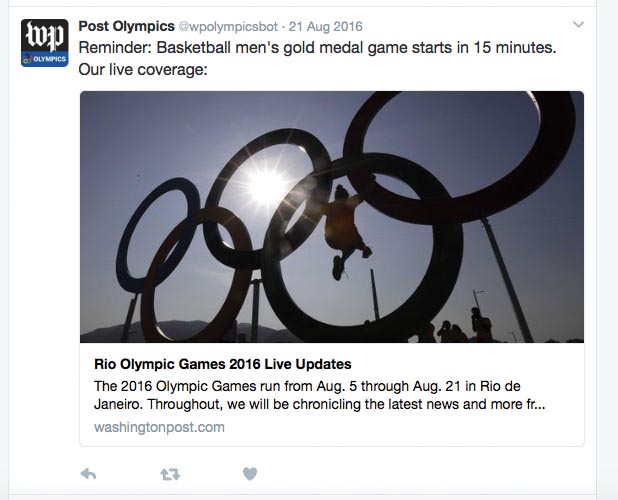 The Washington Post’s automated Twitter feed covering the Rio Olympics in real time.
 Keith Richburg said JMSC students would learn from professionals and get exposure. Photo: Sarah Graham
 Ken Tsang assaulted and arrested by Hong Kong Police during the Occupy Central protests. Photo: AFP