Members Area Logout

Ambassador Kurt Tong on What Hong Kong Can Expect from the Biden Presidency

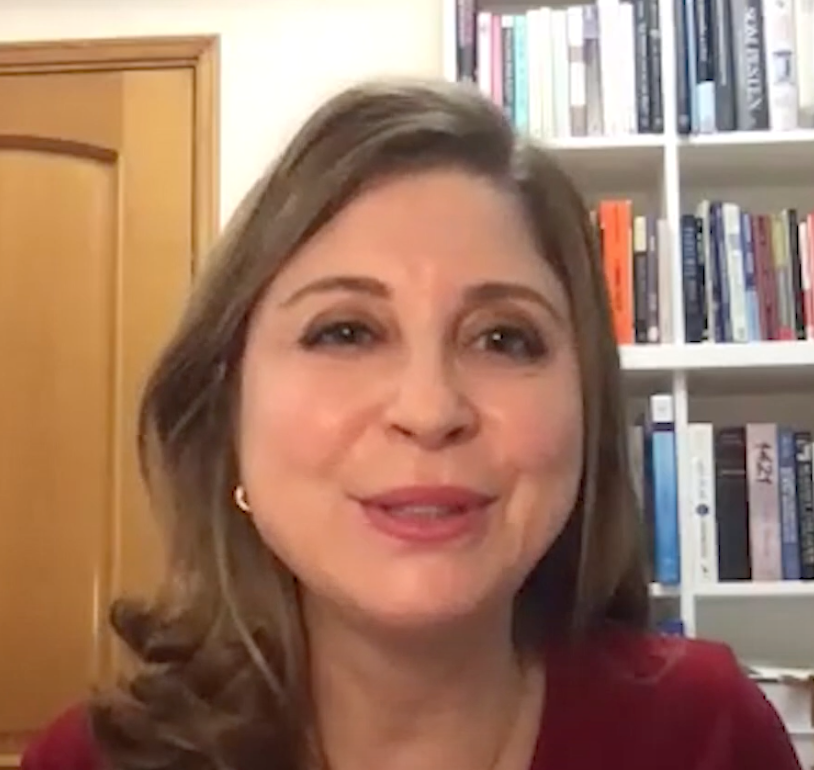
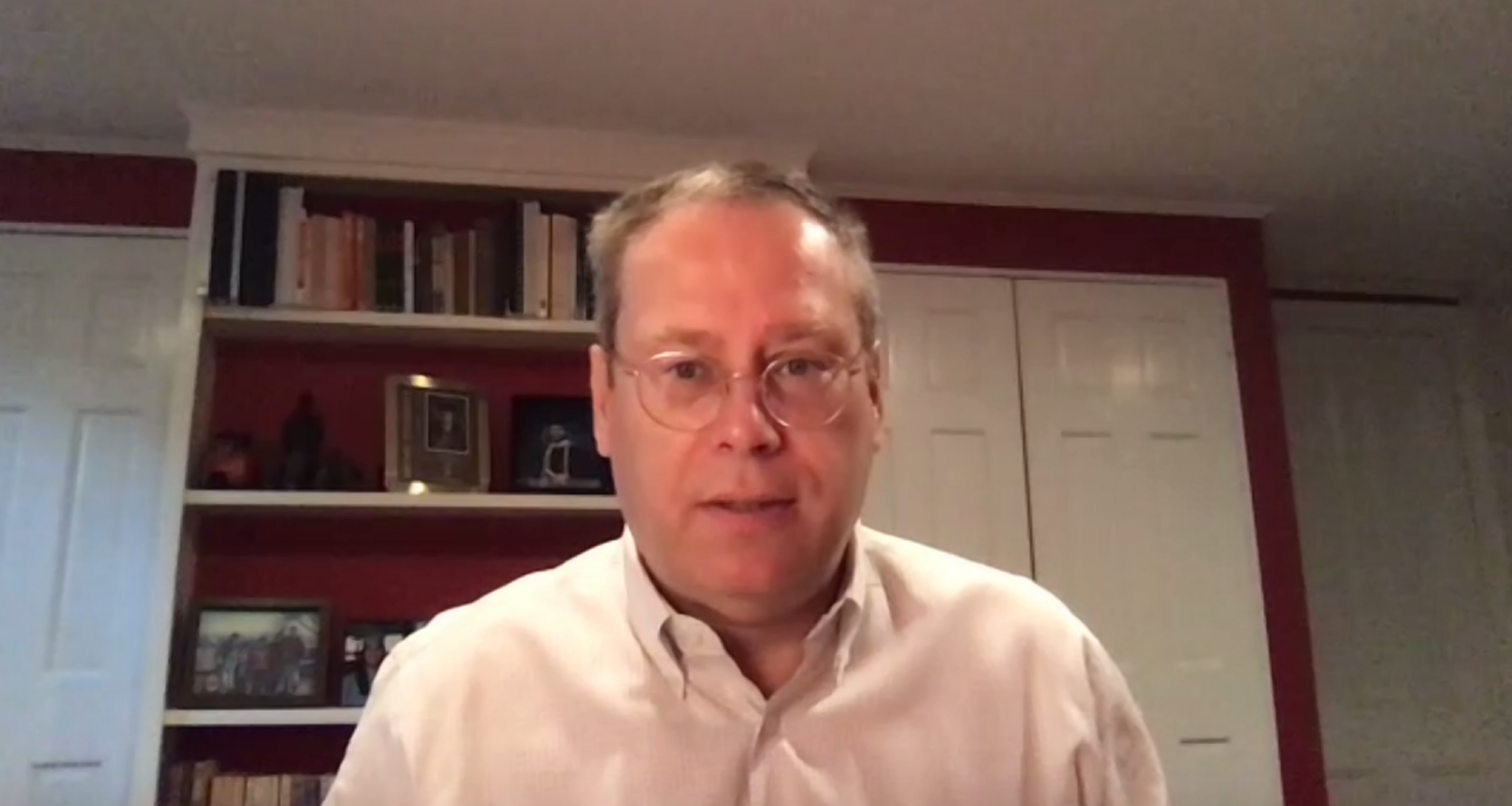
Changing Hong Kong’s trade status is not likely to be a priority for President-elect Joe Biden, said Ambassador Kurt Tong, the former U.S. consul general in Hong Kong, in a Zoom interview with the FCC on Tuesday night. Though he was cautious not to speculate on any specific policies the new administration might implement in Asia, he said Biden and his advisors understand the importance of dealing with China, a task that might intentionally be made more challenging by the outgoing Trump administration over the next two months.

“The diplomatic dance between China and Biden is going to be an interesting one, and one worth watching,” said Tong, who has left public service and now works for strategic advisory firm The Asia Group in Washington. However, due to limitation in political bandwidth and a need to focus on challenging domestic issues including the coronavirus pandemic and economic stimulus, he projected that foreign policy would not be at the top of the new administration’s agenda.

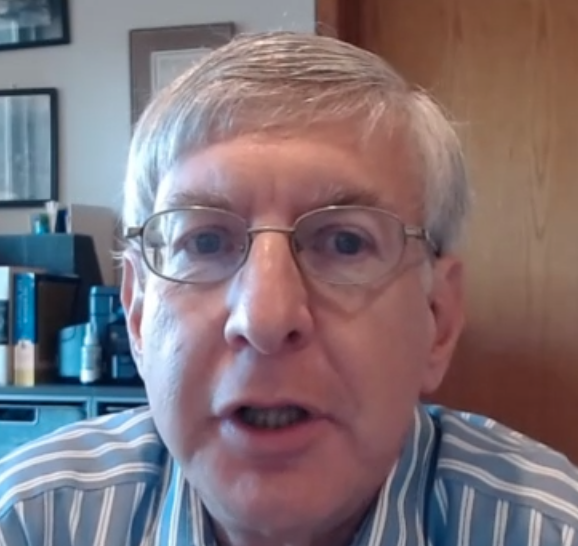
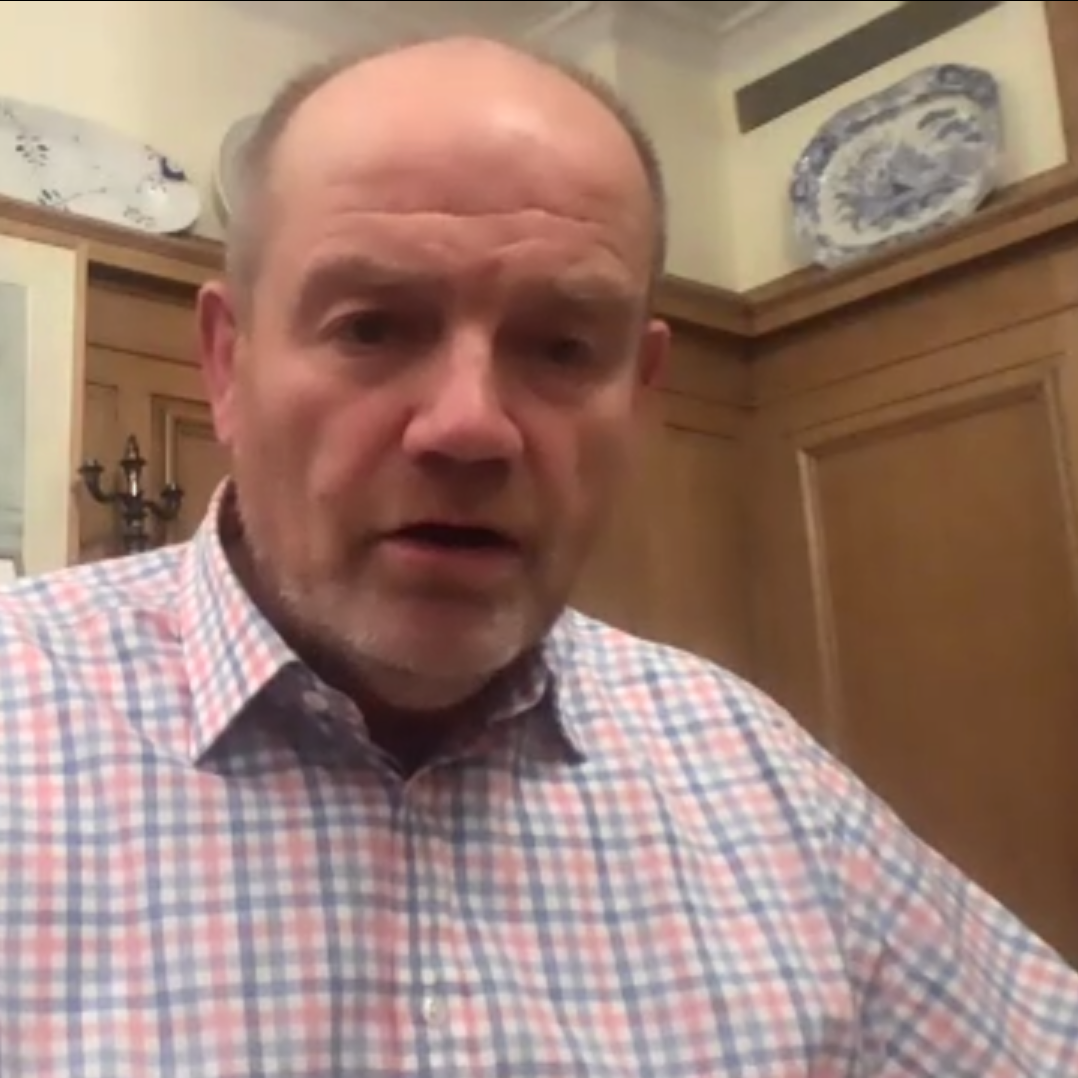
Ambassador Kurt Tong Ambassador Kurt Tong

Asked what the Biden administration could to do reset U.S.-China relations, Tong said, “I question that ‘reset’ is the right word. I think the idea that the U.S. and China are in a relationship that is characterized by competition is widely accepted, so it’s not how do we get back to friendly, but rather how do we make this competition healthy?” He also predicted that the world could expect to see a see a more calm and consistent approach to international negotiations from the new administration.

“Trump’s negotiating style is to be unpredictable,” said Tong. “That is great when you’re signing leases in New York City. That is harder to make work when you’re dealing with other cultures and countries that don’t trust you. Being unpredictable tends to lead the other party to not continue the conversation.”

Commenting on the unpredictable transition period between presidents that lies ahead, Tong expressed concerns. “The focus over the past six months has been on rhetorical one-upmanship and high-profile but not terribly effective measures,” he noted, citing TikTok and WeChat as examples. “I worry that the Trump administration will try to do more of these things in the next couple of months in ways that may box in the Biden administration.”

“There are plenty of people already thinking about the 2024 election,” he remarked.

Reflecting on his time in Hong Kong, the former U.S. envoy wondered whether the 2019 protests may have gone too far and inadvertently led to the passage of the National Security Law. “The first time that tear gas started flying around made me very uncomfortable, because that can always lead to escalation, which it did,” said Tong.

“The two large peaceful marches in June – if it had stopped there and given the Hong Kong government a little bit of time to digest that and realize they needed to walk back from the extradition bill, there could have been a different outcome,” he added.

Tong also expressed doubts about some of the protesters’ tactics: “Invading the Legislative Council, it’s hard to see how that could appeal to the ‘better angels’ in the Hong Kong government and Beijing.” Still, he was cautious not to describe the protests and National Security Law as a simple case of cause and effect. “It’s hard to second-guess history,” he said.

Tong also criticized the framing of Hong Kong being caught between the West and China. Instead, he argued, the city is actually caught between two Chinese impulses: the desire to have a London-style economy inside China, and the desire to control.

“It’s those competing urges that determine the future of the city,” said Tong. “What foreign government policy does is not irrelevant, but it’s not the determining factor. The fate of Hong Kong is decided in Beijing and Hong Kong’s interaction with Beijing.”

Asked how the international community should interact with Hong Kong, Tong said the “U.S. and other countries should keep Hong Kong high on their list of priorities in dealing with China but not actively discourage business activity, because that’s the city’s lifeblood. If you make it harder for business to be done, that can have a lasting effect and you can’t always turn the dial back.”

Tong also argued that the international community should keep an open door to Hong Kong residents, but commented that “what foreign countries say about welcoming Hongkongers is less important than what Hongkongers actually decided to do. If a lot of people leave, that would be bad for China. If Hongkongers decided to move to the U.S., that would be great for the U.S.”

Will the former U.S. consul general have any role to play in policymaking? Asked whether he would accept an appointment in the Biden administration and what position he would be interested in, Tong demurred: “Yeah, I’m not going to negotiate that over the Internet.”

Watch the full interview:

COVID-19 Panel: Hong Kong Resists ‘Infodemic,’ Offers Lessons on How to Avoid Winter Virus Wave

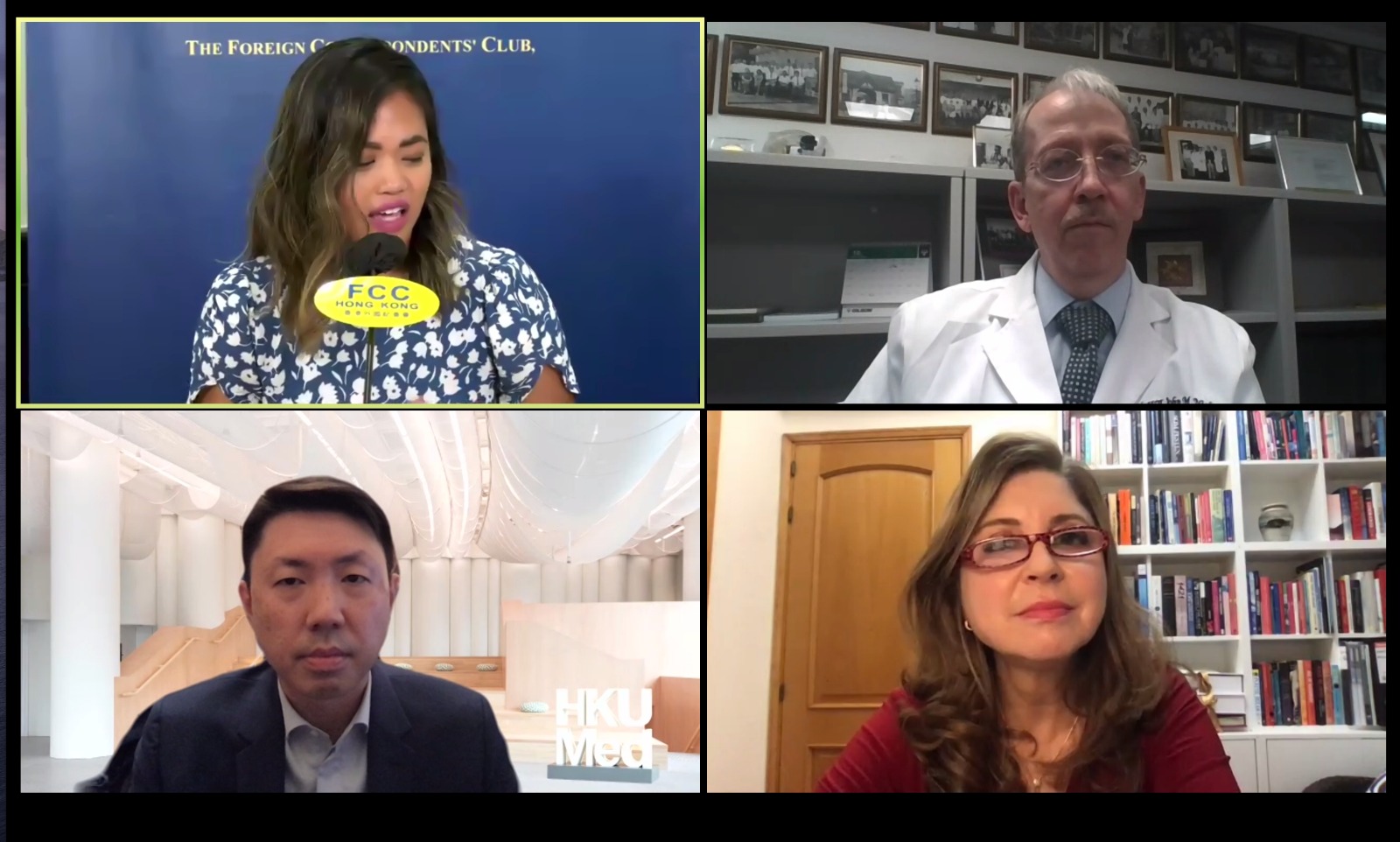
Hong Kong may not be badly affected by a winter-driven COVID-19 wave as the city continues to adopt health precautions it learned from the 2003 SARS epidemic, said top virus experts.

“We’ve learned that delay is deadly – that you have to act quickly,” said Sarah Borwein, a Hong Kong-based general practitioner, who ran the Infection Control program for the only expatriate hospital in Beijing during SARS.

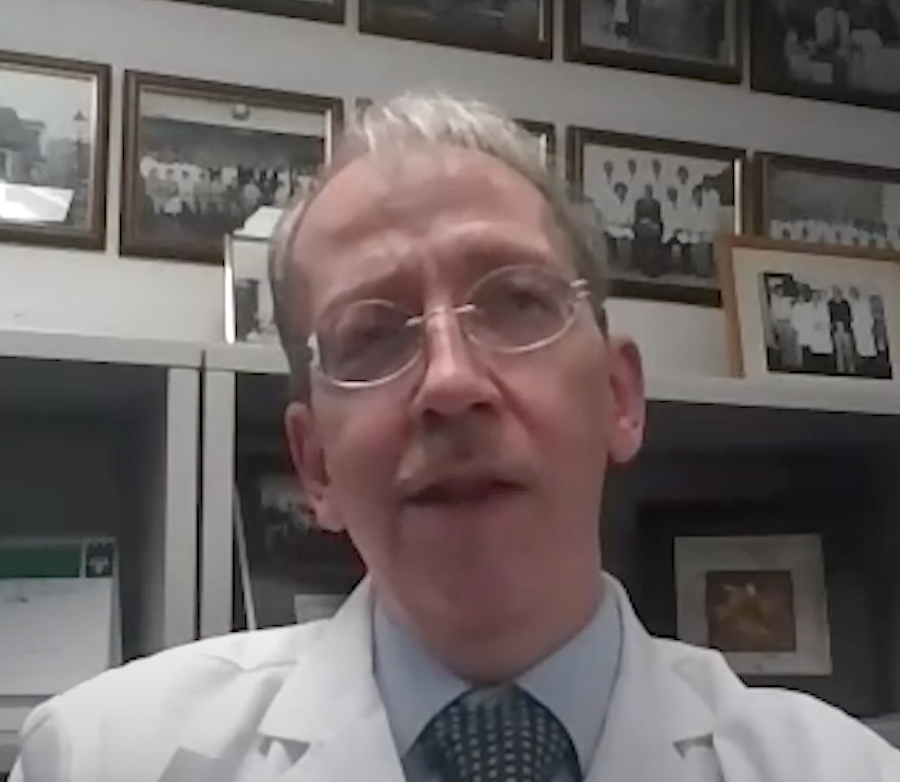
COVID-19 Panel

“We’ve learned that clear, consistent, honest public health messaging is really important. We’ve had that here [in Hong Kong] and other parts of Asia,” she said at an FCC forum on Oct. 22.

In Hong Kong, “things we learned in 2003 from SARS have helped us contain COVID-19 with infection control measures,” said Professor Ivan Hung, a clinical professor and assistant dean in the University of Hong Kong’s Department of Medicine. He cited early responses including the wearing of face masks and social distancing.

Those measures may help the city avoid a spike in winter infections as seen in North America and the U.K., as the virus becomes more active and transmissible in cooler temperatures and as people spend more time gathering indoors.

“Hong Kong has been relatively well spared because we’ve been wearing masks and we’ve got good social distancing. We won’t be as badly affected as some of the other European countries,” said Professor John Nicholls, a clinical professor in pathology at the University of Hong Kong.

However, Borwein said the public needs to stay vigilant about following hygiene protocols rather than being lulled into a sense of security from “hygiene theatre” – the constant cleaning of surfaces, which may not have as much of an impact as masks and social distancing. 

What remains to be seen is how the pandemic will progress during the Northern Hemisphere’s winter months, particularly as it coincides with flu season. “We’re already seeing detrimental effects in these countries,” said Professor Nicholls. “My concern is, if you get a double infection, you’re going to see an increase in transmission because of the coughing and sneezing caused by influenza.”

The experts also warned about another challenge in fighting the virus: “infodemics,” a tide of misinformation about the pathogen. 

“Many people don’t get their information from the mainstream media – they get it from social media,” said Borwein. “If you like to read articles about the pandemic being a hoax, then soon that’s all you’re going to see on your feed.”

“Given the role of Google and the lack of fact-checking, the public has a hard time knowing what’s really going on,” said Nicholls. “Actually working out what’s true and not true is quite confusing,” he added, pointing out his concern with media outlets reporting information from studies that haven’t been peer-reviewed.

The panel also discussed what is known – and remains to be discovered – about COVID-19, which has infected 41.3 million people and claimed 1.1 million lives. “From recent research, we know that this virus is very good at suppressing the host’s immune system, allowing the virus to replicate rapidly,” said Professor Hung. “We know quite a lot about the biology,” added Professor Nicholls. “What we really don’t know is how much it’s going to mutate in the future.”

As to when a vaccine the panel was not overly optimistic. “I think it won’t be a magic bullet but it will be a major weapon,” said Professor Hung. “My own suspicion is that it will be an important part of the fight but not a magic bullet,” Borwein said.

Nicholls, meanwhile, raised several potential threats to the success of any future vaccine, including large portions of the global population being resistant to the idea of vaccination, the logistical difficulties of distribution, and the fact that vaccinations result in a less robust immune response, and therefore weaker immunity, among the elderly.

Even without a vaccine, panelists expressed hope for resuming international travel as soon as possible. “I see no reason why Hong Kong cannot have a travel bubble with, for instance, Taiwan,” said Professor Nicholls. “I’m very much for the travel bubble for place like Taiwan, Singapore, Korea, and Japan,” added Professor Hung. “This would be very important for the economy and travel industry, and it would also encourage people to get vaccinated in the future.” 

Even once the COVID-19 pandemic ends, however, the panel expressed concerns about future viral outbreaks. “You have to respect nature,” said Professor Hung. “The next pandemic will most likely be linked to human consumption of meat.”

Nicholls said a pandemic could start “wherever animals are being mass produced for human consumption. It’s not going to be ‘if’ but ‘when.’”

Watch the full discussion:

‘New Yorker’ Writer Jiayang Fan on Her Mother, Social Media, China and Fact-Checking: An FCC Zoom Event

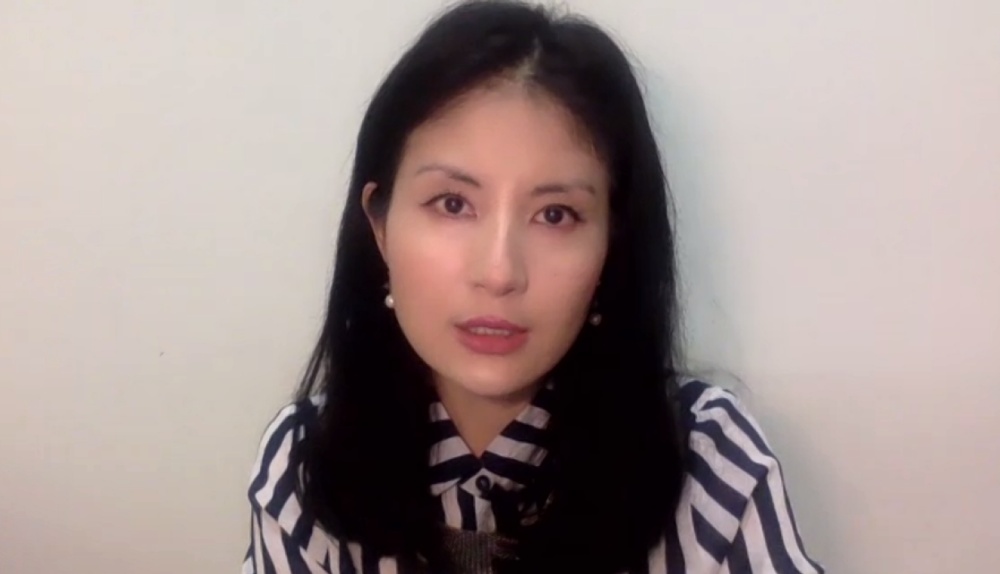
Social media can be a force for good, but it also has a destructive side, which New Yorker staff writer Jiayang Fan recounted in an FCC interview Tuesday, detailing how she and her mother were branded as traitors in a social media campaign in China.

“Twitter, at its worst, has this unique opportunity to magnify opposition and flatten all complexity,” Fan said in the FCC Zoom event. The Chongqing-born writer has experienced firsthand the dark underbelly of social media, a subject she wrote about in her recent New Yorker cover story “How My Mother and I Became Chinese Propaganda.” The moving essay recounted how publicizing her mother’s struggle with ALS in the midst of the coronavirus pandemic led to the dark social media campaign in which they both ended up being portrayed as traitors by Chinese nationalists.

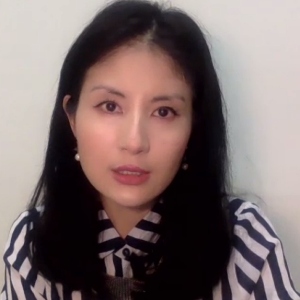
Jiayang Fan

Yet Fan, a journalistic celebrity with more than 62,000 followers on Twitter, noted that sometimes, “Twitter feels like a family of kind strangers. I’m grateful for the kindness of strangers on this website.”

“To this day, I have an ambivalent relationship to social media, which you wouldn’t be able to tell from my prolific tweeting,” she said. “At times, I think Twitter is the worst thing to have happened to journalism. At other times, I think it offers me a conduit to my readers and the ability to be a bit more three-dimensional.”

Fan said she did not initially intend to write her recent cover story as a personal essay, but it developed into one after she began receiving disturbing messages on Twitter. “I was struck by the specificity of their insults,” she said. “There is so much rage and fury on the other side of a computer.”

Despite being subjected to online abuse, Fan said the experience only served to spark her journalistic curiosity. “What injustices did they feel they had suffered to merit such vicious attacks on someone they’ve only read about on the Internet?” she said. “As a writer, you have a responsibility to probe into the impulses of what people do, even if it seems counterintuitive.”

Fan’s cover story in the Sept. 14 issue of the magazine, which went viral and has led to a book deal, is the latest highlight of her tenure at The New Yorker, where she started as a fact-checker when Evan Osnos’s articles on China for the magazine required a staffer with Chinese language skills. She explained that serendipity and luck were responsible for her rise at the storied publication.

“I was told that there would be no upward mobility,” Fan said.

She continues to have great respect for fact-checkers. “I feel incredibly lucky,” she added, noting the foundational role fact-checkers play in journalism. “They do heroic work. They’re so vital.”

In addition to her recent personal essay, Fan has written about the Hong Kong protests, Hong Kong activist and singer Denise Ho, and the National Security Law. “I’ve watched with alarm and not a little bit of grim, heart-in-throat expectations as the National Security Law came into effect,” she said. “I hate to say this, but I haven’t been terribly encouraged by the turn of events. I’m sure I’m not alone in feeling this way.”

Asked if she would feel safe traveling to China given recent events, she said, “I really wish someone could answer that question for me. I miss going to China to report. In the short term, for various reasons, I won’t be going there.” Commenting on China’s role in the world, Fan said she felt that the ongoing pandemic had made things worse: “It’s distracted the world from China’s encroachment.”

As for U.S.-China relations and the Nov. 3 U.S. election, she noted that the Trump presidency, with its chaotic nature, has been a useful tool for Chinese leaders looking for real-life examples of the downsides of democracy. “Every time Trump does a faux pas, Xi and team at Zhongnanhai must feel some glee,” she commented.

Claiming that Biden would be a more predictable president, which has both pros and cons for the Chinese Communist Party, Fan added, “On the whole, I think Xi’s been grateful for the Trump presidency for the way it’s taken the U.S. down a peg – or 12.”

Watch the full interview:

U.S. election disinformation worse than ever – Craig Silverman

The spread of disinformation and fake news is far worse than four years ago and is fuelling a deluge of lies in the run-up to the U.S. election, Buzzfeed media editor Craig Silverman said in an FCC panel discussion.

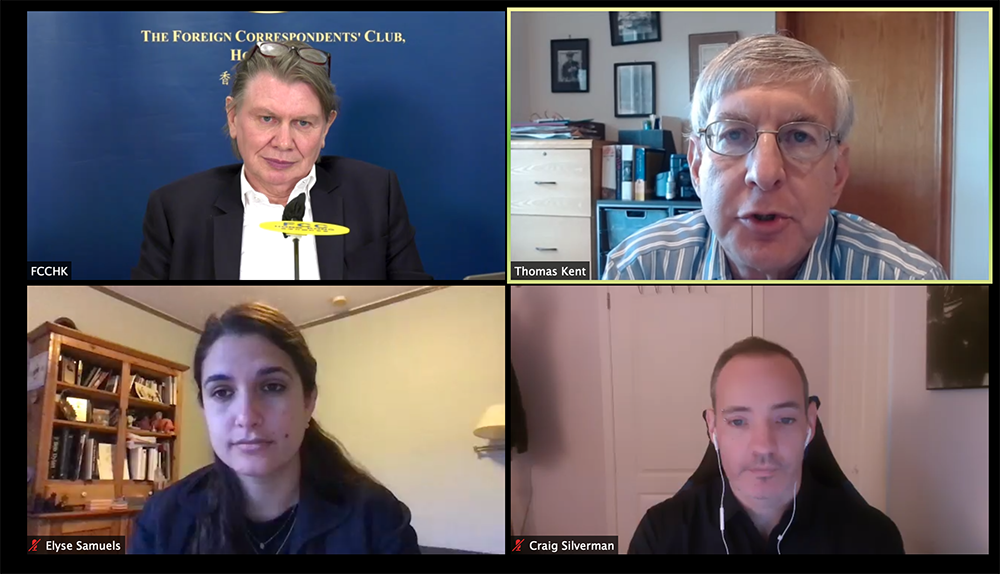
Eric Wishart interviews (clockwise) Thomas Kent, Craig Silverman, and Elyse Samuels. Eric Wishart (left) interviews (clockwise) Thomas Kent, Craig Silverman, and Elyse Samuels.

Silverman, creator of the Verification Handbook – For Disinformation and Media Manipulation, appeared with Elyse Samuels, video reporter for the Washington Post’s visual forensics team; and Thomas Kent, former president and CEO of Radio Free Europe/Radio Liberty and author of Striking Back: Overt and Covert Options to Combat Russian Disinformation in the October 15 webinar.

He said that conspiracy theories and an alternate reality ecosystem had flourished on the internet since the last election. In 2016, social media platforms were criticised for disseminating fake news ahead of the election of President Donald Trump.

“What’s incredible to me is thinking about what I was seeing in 2016 in the U.S. and how that just felt like an incredible high watermark for conspiratorial thinking infecting the mainstream, for viral falsehoods, gathering a huge amount of attention and interactions… And all of that seemed like ‘how could it get worse?’, and here we are,” Silverman said.

He criticised social media platforms for not doing enough to curb the continued rise of disinformation and fake news on their sites.

Twitter and Facebook were late to act against the spread of fake news due to a sense of American “free speech”. He said the firms were led by people “very much in favour of leaving up rather than taking down”.

Silverman acknowledged that platforms were beginning to crack down on disinformation. However, highlighting Facebook’s recent commitment not to accept political ads after the U.S. election polls close on November 3, he added: “It’s fair to point out a lot of this stuff is coming very close to the election. They’ve had four years and while they’re banking massive profits they have not really invested as much as they could have.”

Samuels discussed the rise in deep fakes – manipulated videos or photos – with the most common form being clips used out of context. As an example, she spoke of the recent controversy surrounding a Donald Trump campaign video in which White House coronavirus advisor Dr. Anthony Fauci appears to praise the president’s response to the COVID-19 pandemic. Dr. Fauci subsequently issued a statement saying his quote was taken out of context.

“It just shows how easy it is to take something out of context and change the narrative,” Samuels said.

She conceded that once a video clip had gone viral it was “harder to put the genie back into the bottle” but added that she hoped articles that debunked misinformation were having a positive effect.

Samuels said both the Trump and Biden campaigns were guilty of spreading disinformation, although she said there were more instances of the Trump campaign using this strategy.

Kent discussed interference in elections by Russia. Although the Kremlin was widely believed to have helped elect Trump in 2016, Kent argued that Russia is also “on the other side too”. He cited Russian-created content that was both critical and supportive of the Black Lives Matter movement.

“You can look at this in two ways: the classical explanation of this would be that the Russians are trying to hedge their bets, to have some allies on both sides depending on who wins the election,” he said. “However, the general thrust of Russian information operations in the United States has not been aimed particularly at making allies for Russia anywhere. Instead, it’s been aimed at sewing disruption in general in U.S. society.”

Kent suggested one solution to the divisive spread of disinformation was to change the way people think about politics and democratic values.

“The problem is we are too defensive; we spend all our time saying don’t believe this don’t believe that… If you want to affect the way people think about politics you need to present a positive message as well as a negative message,” he said.

Watch the video

Why COVID-19 has hurt China’s standing in Southeast Asia – Sebastian Strangio

China’s dominance in Southeast Asia has been hit by its response to the COVID-19 pandemic, according to author Sebastian Strangio.

Sebastian Strangio talks to Shibani Mahtani on October 12. Sebastian Strangio talks to Shibani Mahtani on October 12.

The Southeast Asia editor of The Diplomat told an October 12 FCC webinar that the onslaught of the coronavirus had furthered a trend that was already underway in the region which was that the “image of both the United States and China are suffering in Southeast Asia”.

This trend was borne out before the pandemic in the surveys conducted by the ISEAS-Yusof Ishak Institute in Singapore that showed amongst elites and opinion leaders in the 10 nations of ASEAN “a pretty significant souring on both of these powers for different reasons”, Strangio said.

“What we see is a lot of Southeast Asia nations concerned about China’s initial response to the pandemic.. allowing it to get out in the first place. Concerns about the region’s over-reliance on China in terms of when the pandemic arose there – the first cases outside China arose in Thailand I think … Also the fact that China took the opportunity to assert its maritime sovereign claims in the South China Sea. I think in the affected nations that was seen with a great deal of negativity,” he added.

However, Strangio said he believed the pandemic would not ameliorate China’s main advantage in the region – its geographic proximity which, he said, is a “structural underpinning of Southeast Asian relations with China”. As COVID-19 and its  economic after-effects continue to ravage the region, he added, “China is looking more and more like an unavoidable economic partner”.

Strangio, author of In the Dragon’s Shadow: Southeast Asia in the Chinese Century, said China is currently reaffirming its commitment to Southeast Asia, assuring ASEAN partners that it will help the region recover from the virus physically (via its signing of vaccine access agreements), economically, and politically.

China, he said, has a basic security dilemma in that it has “formidable rivals” on every side: nuclear powers India and Russia, and “a string of U.S. treaty allies – Japan, South Korea, the Philippines, and Taiwan”. Southeast Asia is the one region in China’s neighbourhood that does not have an incumbent great power constricting the power of Chinese influence, Strangio said. This made it a region “relatively amenable to the extension of Chinese influence”. The Chinese economy relies heavily on the vital sea lanes of the South China Sea and wants to protect them, he said.

“China views itself as a dominant power in the region once again, it is reclaiming a mantle that it lost 150 years ago with the rise of western empires and I think what we can glean from its behaviour occasionally from the comments of its officials is that China wants the region to be deferential, it wants the region to acknowledge China’s size and prominence through deference to Chinese aims.”

On China’s relationship with the United States, Strangio said a Biden presidency would not bring any significant shift in America’s policy towards China, adding: “I think a corner has been turned that will not be reversed.”

Watch the video

“Wolf warrior” diplomacy ‘has hurt China’s global reputation’

China’s “wolf warrior” diplomacy has contributed towards its damaged global reputation, according to author and China scholar, Professor Rana Mitter.

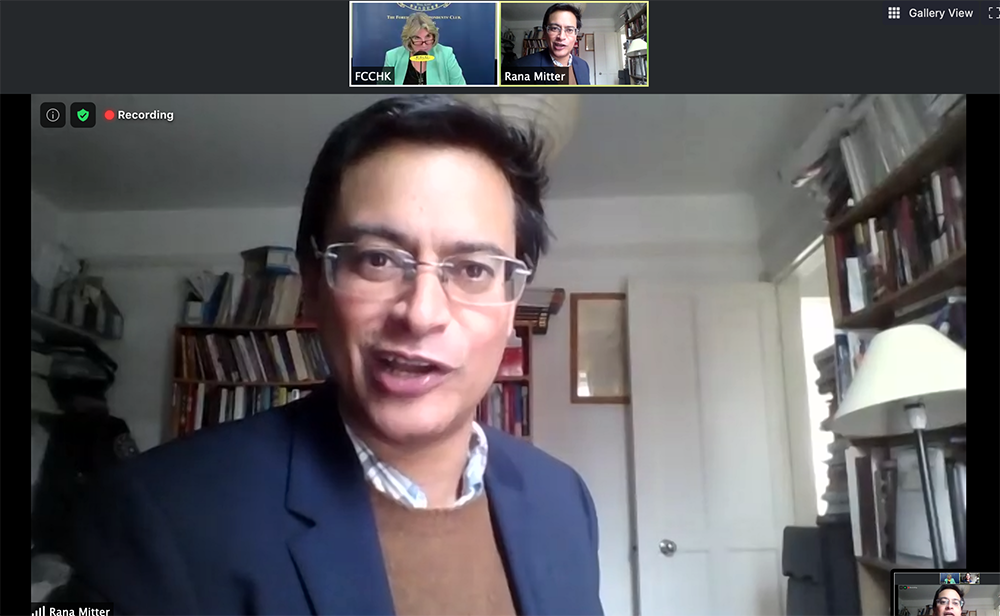
Professor Rana Mitter talks to FCC president, Jodi Schneider. Professor Rana Mitter talks to FCC president, Jodi Schneider.

Speaking in the week that new research showed unfavourable views of China has reached record highs, Mitter told an October 7 FCC webinar that the country’s often aggressive style of diplomacy could have influenced the United Kingdom ’s decision to drop Huawei as a provider of 5G.

The report from Pew Research Center found that sentiment towards China had grown more negative in recent years across many advanced economies, and in particular unfavourable option had soared in the past year.

Mitter, Director of the China Centre at the University of Oxford, noted that an escalation of “wolf warrior” diplomacy had appeared to occur at the peak of the COVID-19 pandemic. He added that there was a sense within the Chinese Communist Party that such an approach had “been really damaging to China’s reputation”.

“Anyone who thinks it’s been part of some great wider thought-through propaganda effort I think needs to look at the results of it,” he said, citing Huawei’s failed 5G bids. He added: “It seems to me if you were actually sitting in Beijing plotting and planning you would not do the things that have happened which, as we say in Britain, tends to suggest cock-up rather than conspiracy.”

While the research found China had firm support at home over its handling of the pandemic, “it’s got a very bad reputation in the global north and it will need to start from there in terms of thinking where are they going now”.

Addressing relations between the United States and China, Mitter said he believed a Joe Biden administration would lead to better diplomatic relations between the two countries.

President Donald Trump’s “aggressive rhetoric” and China’s “wolf warrior” mode response has led to a deterioration in relations between the world’s two largest economies. Mitter said he believed a change of government in the United States would reset the relationship.

My sense is if we have a Trump administration I think we’re going to go further down the route we are now which is with a huge amount of very confrontational rhetoric on both sides. People talk about Trump’s aggressive rhetoric – I think that’s true – China has been responding a lot in the ‘wolf warrior’ mode. Both of these things have to be acknowledged,” he said.

Mitter added that Democratic hopeful Biden would find a new way of addressing “the problems that involve dealing with a large, growing authoritarian powerful economy in the shape of China”. He acknowledged that “many people in western Europe” were concerned about China’s growth, its expanding military and its stance on Hong Kong.

The United States, he said, had abandoned alliances and “respect” for the post-1945 world order which was also problematic for Europe.

“The Biden administration, if there is one, would be able I think to pick up the phone to the EU, it would be able to talk to London … talk to Japan, talk to South Korea – all the people who for 75 years have been part of that wider ecosystem of shared norms and liberal norms… and actually say ‘let’s talk about how we do this together’,” Mitter said.

On the topic of Hong Kong, Mitter said it was important that authorities outline their vision for the city in the context of the new national security law, which was imposed on July 1. He said it was not clear from the outside what the various interest groups involved want to happen.

“And this is as true, I think, for those protesting as it is for those upholding what they would portray as being the current status quo,” he added.

Mitter discussed his latest book, China’s Good War: How World War II is Shaping a New Nationalism, which explores how influential World War Two is on today’s China. From this summer’s wartime blockbuster, The Eight Hundred, to the successful TV series, Autumn Cicada, the Second World War is “an historical obsession” in China.

He explained that U.S. participation in World War Two was ‘good’ in that it created a “narrative of moral purpose, of how America had stood up and fought against dark forces”. China, he said, has turned back to its World War Two experience, when over 10 million died, and 100 million people became refugees.

“All of this has gone to construct a narrative today and over the last 20-30 years in which China seeks to portray itself to the world as also having taken part in a ‘good’ war in the sense of a World War Two that helped make the world safe for decent forces rather than the forces of the axis power,” Mitter added.

Watch the video

How the Mulan controversy highlights Hollywood’s ‘greed’

China’s Communist Party has ‘weaponised’ the greed of America’s film industry, resulting in increasing self-censorship by Hollywood in its bid to reach Chinese audiences.

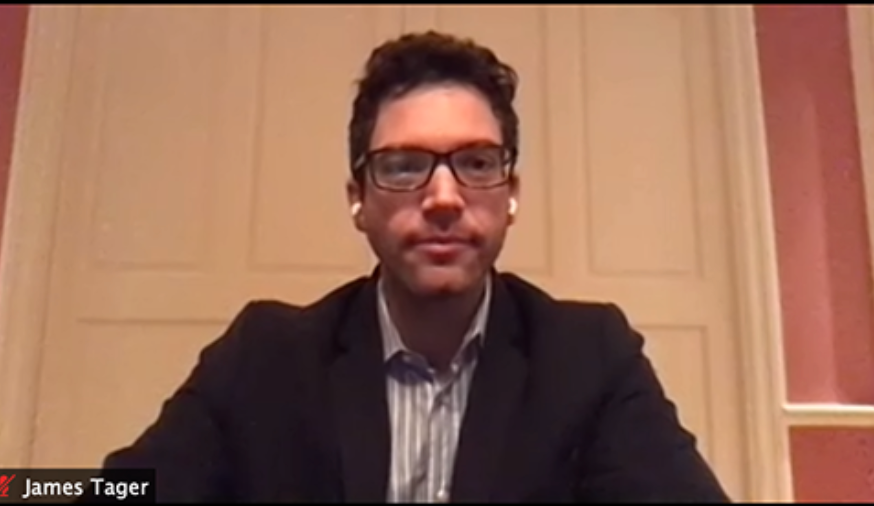
James Tager, Bethany Allen-Ebrahimian and Rebecca Davis are interviewed by the FCC's Shibani Mahtani. James Tager, Bethany Allen-Ebrahimian and Rebecca Davis are interviewed by the FCC’s Shibani Mahtani.

That was the consensus of a panel of experts discussing China’s influence over Hollywood during a webinar on October 5.

James Tager, Bethany Allen-Ebrahimian and Rebecca Davis were appearing just weeks after the release of Disney’s Mulan, a big-budget Hollywood retelling of the Chinese folklore, The Ballad of Mulan, which flopped at the Chinese Box Office. The movie, the most expensive ever directed by a female, was beset by controversy surrounding director, Niki Caro’s choice to film in Xinjiang. The region is home to Uighur Muslims who are oppressed the Chinese government, which has been accused of detaining hundreds of thousands in mass internment camps in what Allen-Ebrahimian described as “cultural and demographic genocide”. In the film’s credits, Disney thanks several government departments of Xinjiang, prompting an international backlash against the movie.      

“It was just shocking”, said Allen-Ebrahimian, China reporter at Axios. “It would have been bad no matter what but it landed in the midst of this controversy which is basically more or less about how powerful rich Americans and a powerful American corporation have sold out any semblance of values to the Chinese Communist Party.”

She speculated that either Disney had been “asked to put it in there to make Xinjiang look better and whitewash Xinjiang”, or that “whoever was in charge of this was so removed from all these debates and issues about human rights in China that they didn’t even realise what it would do”.

Either way, she said, Disney had failed to show “democratic morality”.

“Let’s be clear: this isn’t Chinese cultural pressure, this is Chinese government pressure. They’ve weaponised the greed of Americans,” Allen-Ebrahimian added.

Tager, deputy director of free expression research and policy at PEN America, discussed the organisation’s recent report on the topic. Titled Made in Hollywood, Censored in Beijing, it revealed how Hollywood’s most influential professionals are increasingly making decisions about their films in an effort to avoid antagonising Chinese officials who control whether their films gain access to the world’s second largest movie market.

He gave 2013’s Brad Pitt movie, World War Z, as an example of how Hollywood was pandering to Beijing’s desire to promote narratives of which it approves. In the original novel by Max Brooks, the virus that led to the zombie outbreak originated in China. Yet in the film, that storyline was dropped.

“Chinese regulators offer a carrot and stick to Hollywood studios determining their stance on cooperation with Chinese governmental censorship. The carrot is ‘well if we really like your movie we can offer better release dates, we can offer more preferential marketing buys… essentially we can create a more  favourable regulatory climate for your movie to succeed. We can remove barriers out of your way’. And the stick of course is ‘ultimately if we don’t like your movie we won’t show it within China’. They (CCP) are the sole gatekeeper to what is becoming the most important Box Office in the world.“

Only 34 foreign films per year are permitted for release in China, and the four big studios – Disney (which now owns 20th Century Fox), Paramount Pictures, Warner Bros., and Metro-Goldwyn-Mayer – dominate those slots. Scripts are checked by the Chinese government before permission is granted to shoot in the country. The origins of China’s censorship, said Allen-Ebrahimian, stem from the first Cold War and Hollywood’s subsequent depictions of Russians as ‘evil’ and ‘incompetent’, Allen-Ebrahimian said.

Tager and Davis agreed that Hollywood had come a long way in recent years in terms of diverse representation, with an increasing number of Asian and Asian American actors winning top roles.

Davis, China bureau chief for Variety, said that while Hollywood would continue in its bid to appeal to Asian audiences, there would be no Chinese/American co-productions in the near future.

She said a “total disengagement” and cinematic “decoupling” from China on Hollywood’s part would be “a tragedy” and that “we should still keep trying”.

Watch the video

Indonesia’s struggle with COVID-19 due to Widodo’s ‘lack of leadership’

Indonesia’s president, Joko Widodo, has shown a lack of leadership in the fight against COVID-19, according to the author of a book on the former furniture maker who took office six years ago.

Ben Bland talks to Keith Richburg. Ben Bland talks to Keith Richburg.

Indonesia currently ranks 23rd of 217 countries in terms of the number of infections and deaths from coronavirus, with more than 250,000 infected and almost 10,000 dead at the time of writing.

Widodo, once considered the embodiment of hope and change, has shown himself in office to be a consummate pragmatist. But he is now being tested by the COVID-19 pandemic.

Benjamin Bland said that while many countries were experiencing second and third waves, Indonesia was similar to the United States in that it still in ‘an endless first wave’.

The author of Man of Contradictions: Joko Widodo and the Struggle to Remake Indonesia, described the effect on the country as ‘extremely concerning’, adding that the ‘majority of the workforce is employed informally’ – motorcycle taxi drivers, domestic helpers, for example – professions that cannot work from home. The result was increasing inequality as millions were pushed into poverty. Bland added that ‘very confused messaging’ from the government had aided the spread of COVID-19 and put pressure on a health system already deeply underfunded and stretched.

He said that the virus had increased Indonesia’s reliance on China, with the country now waiting for a vaccine from Beijing. Indonesia was already enjoying Chinese funding for various infrastructure projects, Bland said. On its relationship with China, Bland said Indonesia’s desire was to maintain strategic autonomy in the region ‘and keep out of trouble as much as possible’ which frustrates neighbouring Australia and Washington who see the country as potentially a ‘third force’ in Asia, pushing back against China.

In a wide ranging talk, he also touched on the threat of climate change to Indonesia. Its capital city, Jakarta, has sunk 2.5 metres in the last decade. Home to 10 million people, almost half the swampy city is below sea level. Widodo was, pre-COVID, instrumental in a plan to move the capital to Kalimantan on the island of Borneo. The plan is currently on hold.

On Widodo himself, Bland said the book had been difficult to write as he struggled to ‘get a handle on exactly what kind of leader he is’. Having only been in politics for nine years, and in power for six, Widodo has been given many labels – reformer, liberal, pragmatist, technocrat – with something in almost all.

Watch the video

Bishop Hill hospital plan curtailed following Town Planning Board decision

Plans for a large, looming hospital to be built on historic Bishop Hill, adjacent to the FCC, have been curtailed after the Town Planning Board officially supported height restrictions.

Plans for a new 25-storey hospital proposed by the Sheng Kung Hui (Anglican church) – occupants of the site since the 1840s – had prompted significant objections from those in the neighbouring area. In February, the Town Planning Board imposed an 80 metres height restriction on any newly-built structure on the northern part of the site. Then, in early September, the Town Planning Commission officially confirmed these height restrictions, which ensures that the historic atmosphere of Bishop Hill will not be overwhelmed by new developments.

Campaigner and FCC member, John Batten, said: “This is a good decision for Hong Kong. The Anglican Church should now take a good look at the wonderful history of Bishop Hill and give up any judicial review that it is considering to challenge the Town Planning Board’s decision.”

Room for cooperation with China if Biden wins U.S. election, says Joseph Stiglitz

The United States and China could enjoy greater cooperation if Joe Biden wins the Presidential Election in November, Nobel prize winner Joseph Stiglitz told an FCC webinar.

Joseph Stiglitz talks to Club President Jodi Schneider on September 15, 2020. Joseph Stiglitz talks to Club President Jodi Schneider on September 15, 2020.

He said the possibility of decoupling between the two nations depended on the results of the election, adding that there were ‘very strong strands in the United States that are very concerned’ about China’s human rights record and believe America should express its views on the matter.

Stiglitz, who was awarded the Nobel Memorial Prize in Economics in 2001, said the Trump administration had moved the relationship between China and the U.S. into issues of ‘second-rate importance, away from issues of real importance’.

“I hope we can cooperate, because we can cooperate if there is a restoration of democracy to Hong Kong, there’s respect for human rights, the Uyghurs… if there’s a movement away from the surveillance state… there’s lots of room for cooperation. But I worry about whether we’ll achieve that,” said Stiglitz.

On Hong Kong, Stiglitz – a professor at Columbia University – warned of the ‘profound effect’ the national security law would have on China’s relationship with the West.

The ‘ambiguity’ of the law itself is already making people ‘nervous’ about going to China, he said.

“I’m not very optimistic about Hong Kong. I think that the national security law is going to have big reverberations for all of China. I know a lot of people who are now nervous about going to China because they’ve been outspoken about democracy, about Hong Kong, about human rights and they worry ‘will they be entrapped by the new law?’” he added.

Stiglitz, author of several acclaimed books on economic policy, said Hong Kong is not being forgotten by the rest of the world, adding: “I think what is happening to Hong Kong is going to have a profound effect on the relationship between China and the West.”

Turning to the coronavirus pandemic, Stiglitz, author of People Power, and Profits: Progressive Capitalism for an Age of Discontent, said America’s handling of COVID-19 was ‘an utter disaster’ because the ‘pre-existing conditions were already bad’. He cited lower life expectancy under Trump, a lack of hospital beds and vital protective equipment, and the defunding of the Center for Disease Control as pre-existing conditions.

He said Trump’s ‘vaccine nativism’ was an ‘ugly aspect’ of the aftermath of the pandemic, which he said could only be solved by global solidarity, not by attempting to hoard a vaccine.

Stiglitz said Trump’s ‘America first’ stance had made it increasingly difficult for the United States to cooperate with other countries. He added that Trump ‘seems to have a love affair with every authoritarian figure in the world’.

“This is a global issue of the democracies of the world – Europe, the United States, Canada, Australia, New Zealand – versus authoritarian governments. It’s not a battle over the ideologies in the way that it was communism versus capitalism – it’s really a very simple battle between democracy and authoritarian respect for human rights,” he said.

Watch the video

We measure site performance with cookies to improve performance.